- Guides
- B2B
-
#19607 (no title)
-
#15972 (no title)
- Climb Elbrus Individually
- Climb Elbrus from the South, 9 Days
- Climb Elbrus from the South, 7 Days
- Climb Elbrus from the South with Oxygen
- Climb Elbrus from the North, 10 Days
- Two Summits of Elbrus, 9 Days
- Elbrus Traverse from South to North, 9 Days
- Elbrus Traverse from North to South, 10 Days
- Cross of Elbrus, South to North, 9 Days
- Cross of Elbrus, North to South, 10 Days
- Climb Kazbek and Elbrus — 10-Day Two-Summit Expedition
- Climb Elbrus from the West, 11 Days
- Elbrus by Private Helicopter, 3 Days
- Elbrus Region Holiday and Trekking, 9 Days
- Elbrus Region Holiday, 7 Days
- Elbrus Dating
- Climb Elbrus from the South, 9 Days with Sergey Baranov
-
#15539 (no title)
- Climb Carstensz Pyramid, 8 Days with Helicopter Access
- Climb Mont Blanc, 4810 m — 8-Day Guided Ascent
- Climb the Matterhorn, 4478 m — 8-Day Guided Ascent
- Climb Mount Vinson, 15-Day Antarctic Expedition
- Climb Kosciuszko and Travel in Australia, 7 Days
- Climb Fisht, 2868 m — 3-Day Ascent by the 1B Route
- Climb Mount Wilhelm, 6 Days
-
#15546 (no title)
- Climb Kilimanjaro: the Marangu Route
- Climb Kilimanjaro: the Lemosho Route
- Climb Ararat, 5137 m — 7-Day Classic Climb
- Climb Kazbek from the South, 5033 m — 8 Days in Georgia
- Climb Kazbek and Elbrus — 10-Day Two-Summit Expedition
- Climb the Volcanoes of Mexico — Orizaba and Iztaccíhuatl, 9 Days
- Climb Alpamayo — 16-Day Technical Expedition
- Climb Margaret Peak (Stanley), 5109 m
- Climb Mount Kenya: Point Lenana, 4985 m
- Climb Dykh-Tau by the North Ridge, 13 Days
-
#15554 (no title)
- Aconcagua Climb — 17-Day Guided Expedition
- Island Peak Climb — 18-Day Expedition
- Climb Mera Peak, 6476 m — 16-Day Hinku Valley Expedition
- Climb Ama Dablam, 6812 m — 24-Day Expedition with Island Peak
- Climb Island Peak and Mera Peak — 24-Day Two-Summit Expedition
- Aconcagua and Ojos del Salado — 25-Day Combined Expedition
- Ojos del Salado Climb — 15-Day Expedition
- Climb Chimborazo and Cotopaxi — 14-Day Ecuador Expedition
- Climb Huascarán — 8-Day Technical Ascent
- Climb Razdelnaya Peak, 6148 m — 15-Day Pamir Expedition
- Climb Denali by the West Buttress, 23 Days
- #15565 (no title)
- #15572 (no title)
-
#15972 (no title)
-
#19592 (no title)
-
Trekking in Nepal: routes to the eight-thousanders
- K2 Base Camp Trek via the Gondogoro La
- Everest Base Camp Trek — 14 Days
- Everest Base Camp via Gokyo Lakes — 15 Days
- Short Everest Base Camp Trek in 10 Days
- Annapurna Circuit and Tilicho Lake Trek
- Manaslu Circuit Trek
- Kanchenjunga Circuit Trek (XXL)
- Kanchenjunga North Base Camp Trek (Short)
- Kanchenjunga from India: the Goecha La Trek in Sikkim
- Makalu Base Camp Trek
- Annapurna Base Camp Trek
- Trekking in South America
- Asia
- Trekking in Africa
-
Trekking in Russia
- Elbrus Region Holiday and Trekking, 9 Days
- Elbrus Region Holiday, 7 Days
- Oshten + Kardyvach — 9-Day Western Caucasus Trek
- Lake Kardyvach — 5-Day Base-Camp Trek
- Route 30: Through the Mountains to the Sea, with Oshten — 4 Days
- Trekking in Arkhyz — 7 Days over the Ayulyu Pass
- Gvandra Trek — 7 Days to the Ullu-Kyol Lakes
- Trekking in Dombai — 7 Days with the Murudzhu Lakes
- Europe
-
Trekking in Nepal: routes to the eight-thousanders
-
Adventure expeditions
-
Trekking in Africa
- 모로코 투어:북아프리카의 심장
- 투브칼 등반과 모로코 문화
- Eritrea: the Dahlak Archipelago and the Rashaida Nomads
- Rwanda: Mountain Gorillas and the Bisoke Volcano
- Ethiopia: Otherworldly Landscapes and the Peoples of the Omo Valley
- 우간다 투어:퀸즈 파크와 마운틴 고릴라
- Tanzania Safari: Serengeti, Ngorongoro and Tarangire
- 우간다 투어:흰 코뿔소와 산 고릴라
- Zimbabwe and South Africa: Victoria Falls, Cape Town and the Cape of Good Hope
- Namibia: Etosha National Park and the Himba
- Kenya Safari: the African Big Five
- 보츠와나 투어:오카방고 델타와 초베 공원
- Trekking in South America
- Asia
-
Trekking in Africa
- Ski touring and ski mountaineering: chasing freedom in the mountains
- VIP tours
- #19722 (no title)
- About
Climb Korzhenevskaya Peak, 7105 m — 17-Day Pamir Expedition
Temporarily unavailable
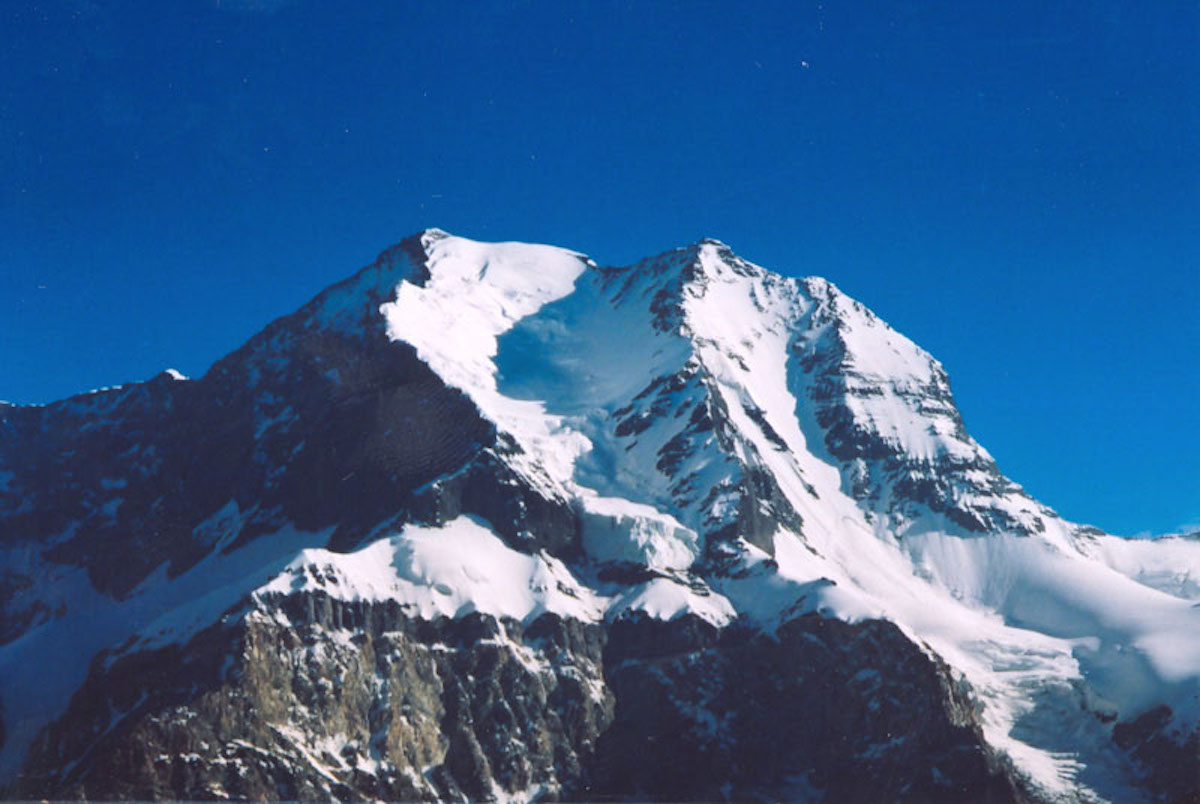
Climbing Korzhenevskaya Peak, 7105 m — a technical expedition to one of the five seven-thousanders of the Snow Leopard challenge. The classic route follows the south ridge from the Moskvin Base Camp and calls for experience above 6000 m and confident work in crampons, with an ice axe and on fixed ropes.
The route suits experienced mountaineers who need a next step after easier seven-thousanders. What matters here is not only endurance but the ability to move safely on the glacier and on steep snow, ice and mixed ground, to live in high camps and to stay effective for several days in a row.
- A 7105 m summit in the Academy of Sciences range
- The classic route along the south ridge
- The Moskvin Base Camp at about 4360 m
- Staged acclimatisation through the high camps
- Helicopter logistics from the Jirgatal area
- Professional guiding and Base Camp infrastructure
Reaching the summit is not guaranteed. The guide may change the tactics of the day or the altitude of a camp, or turn a participant back, because of the weather, the state of the route, insufficient acclimatisation or signs of altitude illness.
Important — the dates, the price, the language of the guiding, the baggage allowance and the final composition of services are confirmed in an individual offer before booking.
About the Korzhenevskaya Peak expedition
Korzhenevskaya Peak, also known as Ozodi Peak, stands in the Tajik Pamir and is one of the five seven-thousanders of the Snow Leopard challenge. At 7105 m it is a full high-altitude expedition, not an enlarged version of a trek or of a simple climb.
The starting point is the Moskvin Base Camp at about 4360 m, at the confluence of the Moskvin and Walter glaciers. Access is by helicopter from the Jirgatal area. The remoteness of the camp means that a participant must arrive with a fully checked set of equipment: once you have been flown in, replacing anything critical quickly is no longer possible.
The classic route follows the south ridge. From Base Camp the group crosses the Moskvin glacier, walks the scree approach and climbs in stages through camps at roughly 5100, 5300, 5800, 6100 and 6400 m. The route has crevasses, steep snow and ice terrain, an ice wall and open mixed sections of ridge.
The logic of the expedition is built on rotations. On the first excursion participants gain altitude, sleep above Base Camp and come back down to recover. The second rotation leads to the summit through the system of high camps. Carrying personal equipment and part of the group load is part of the expedition.
Before the trip you need a confirmed record of ascents above 6000 m, the skill of moving in crampons, self-belay on fixed ropes, climbing a rope with an ascender and descending safely. If those skills are not yet in place, it is better to build the preparatory sequence through Lenin Peak, Khan Tengri or another agreed trip.
The main risks are connected with altitude, crevasses, rockfall and ice terrain, frostbite, deteriorating weather and accumulated fatigue on the descent. The guide manages the pace and the tactics, but the participant is responsible for their own preparation, for discipline, for reporting symptoms in good time and for acting on the leader’s decisions.
Before the expedition you should build general and strength endurance, walk regularly with a rucksack, train technique on snow and ice and test your tolerance of altitude.
Korzhenevskaya Peak climbing itinerary, 17 days
The trip runs for 17 days. The high-altitude section depends on the weather, the state of the glacier, the pace of the group and how the participants are feeling. The guide may redistribute the reserve and the overnight stops, while keeping the logic of gradual acclimatisation and a safe return.
Day 1. Arrival in Dushanbe.
Meeting at the airport, transfer and check-in. The guide checks documents and key equipment, so that incompatible crampons or boots, parts of a harness or insufficiently warm clothing can be replaced before departure. Night in Dushanbe.
Day 2. Drive to Jirgatal.
After breakfast the group drives to the area of the helipad. The journey is not only logistics: participants finish packing, distribute the group load and prepare for an early flight. Night in a guest house.
Day 3. Helicopter flight to the Moskvin Base Camp, about 4360 m.
In suitable weather the group flies to Base Camp, settles in and learns its way around. After such a rapid gain in altitude the priorities are rest, fluid intake and watching how everyone is feeling. Night at Base Camp.
Day 4. Acclimatisation and technical preparation.
A short excursion near the camp starts the adaptation and shows how the body is reacting. The guide briefs the group on the glacier, the fixed ropes, radio procedure and what to do if the weather deteriorates, and then checks each personal kit. Night at Base Camp.
Day 5. First excursion to Camp 1, about 5100 m.
The group crosses the Moskvin glacier and climbs the scree terrain. The stage is used to gain altitude, to get to know the line of the route and to carry part of the equipment. Night in tents.
Day 6. Acclimatisation climb towards Camp 2, about 5300 m.
Participants continue the rotation over snow and glacier terrain and check their work roped up and on fixed ropes. The altitude reached and the length of the excursion depend on the state of the route and of the group. Night in a high camp.
Day 7. Descent to Base Camp.
Coming back down starts an important phase of recovery after the first rotation. At Base Camp participants dry their equipment, restore their energy and report every symptom to the guide. Night at Base Camp.
Day 8. Rest and preparation for the summit rotation.
The day is given to sleep, food, hydration and repairing equipment. The guide assesses the acclimatisation and the forecast and distributes food and group equipment for the next departure. Night at Base Camp.
Day 9. Second climb to Camp 1, about 5100 m.
The familiar line allows a more economical pace and better control of the rhythm. Participants carry personal equipment and the agreed share of the group load. Night in tents.
Day 10. Move to Camp 2, about 5300 m.
The group crosses the glacier sections and prepares to move into the more technical upper part of the route. After settling in it is necessary to recover and to prepare the protection equipment in advance. Night in tents.
Day 11. Move to Camp 3, about 5800 m.
The climb brings the group into the zone of sustained work at altitude. The pace stays slow, and each participant’s condition is assessed before the rotation continues. Night in tents.
Day 12. Climb to the high bivouac, about 6100 m.
The more open and technical part of the south ridge begins. Participants work on fixed ropes, carry equipment and prepare for the next section of the ridge. Night in tents.
Day 13. Move to the assault camp, about 6400 m.
The group crosses mixed terrain and reaches the last camp before the summit. Once the tents are up, the priorities are rest, food and preparing clothing, headtorches, crampons and harness for an early start. Night in tents.
Day 14. Ascent of Korzhenevskaya Peak, 7105 m.
An early start follows the upper ridge, with the climb alternating between ascents and descents. The group stays on the summit only in safe conditions and then returns to the high camp. The decision to continue or to turn around rests with the guide. Night in tents.
Day 15. Descent to Base Camp.
The long descent demands no less concentration than the climb. The group strikes the agreed share of the camps, carries the equipment down and returns to Base Camp for food and recovery. Night at Base Camp.
Day 16. Reserve and preparation for the flight.
The day is used for the weather, for extra recovery or for completing the descent. If the high-altitude section has gone to plan, the group packs its baggage and prepares for the helicopter. Where the night is spent depends on the actual logistics.
Day 17. Return to Dushanbe.
In flyable weather the group leaves Base Camp, followed by the road journey to Dushanbe. The time of the international flight is agreed with a margin for a possible helicopter delay. The trip ends once the confirmed transfer is complete.
What's included
- Meeting at Dushanbe airport and the group transfers set out in the confirmed itinerary
- The road journey Dushanbe – Jirgatal – Dushanbe
- Accommodation in Dushanbe and Jirgatal as set out in the itinerary
- The helicopter flight from Jirgatal to the Moskvin Base Camp and back
- Accommodation and meals at the Moskvin Base Camp
- Food for the high-altitude section of the expedition
- A professional mountain guide on the route
- Registration of the group with the rescue service
- The border-zone permit and the compulsory local fees
- Use of the fixed ropes prepared on the route
- Tents and the agreed group equipment for the high camps
- Radio communication for coordinating the group on the route
- A hot shower and a place to charge electronics at Base Camp
- Route advice and first aid within the capabilities of the expedition team
What's not included
- International flights to Dushanbe and back
- The Tajikistan visa, where a participant requires one
- Meals in Dushanbe and Jirgatal that are not specified in the confirmed itinerary
- Single occupancy, early check-in and late check-out
- Medical insurance for high-altitude mountaineering, search and rescue and helicopter evacuation
- Personal climbing equipment and its hire
- High-altitude porter services
- Gas cylinders for the high camps
- Excess baggage on the helicopter and on flights
- Personal expenses, additional drinks and services
- Costs arising from ending the expedition early, from a change of route or from an individual evacuation
- Tips for the guides and the support team
Private groups: the Korzhenevskaya Peak climb
A private group can request a closed Korzhenevskaya Peak expedition with its own participants and a dedicated guide. The format suits clubs, established teams, corporate climbing groups and anyone who wants personal oversight of their preparation.
Agreed individually: the period within the base camp’s operating season and the helicopter logistics, the working language, accommodation in Dushanbe and at base camp, extra baggage and whether porters are needed. The trip cannot be changed by cutting the key acclimatisation rotations.
Before confirming a private expedition, Mountain Guide assesses each participant’s altitude and technical experience, proposes a preparation plan and checks that the team fits together.
Documents you need for the Korzhenevskaya Peak climb
Start preparing your documents well in advance. The expedition runs in a high-altitude border area of Tajikistan and depends on permits and on helicopter logistics. Before buying tickets, agree the recommended flights and arrival times with Mountain Guide.
Your policy must expressly cover mountaineering at an altitude of at least 7105 m, search and rescue, medical care and helicopter evacuation in Tajikistan. General travel policies that do not cover high-altitude mountaineering are not suitable for this trip. There is more in our piece on insurance for mountaineers.
Documents
- A passport with enough validity for entry and exit
- A Tajik visa, if one is required for your nationality
- International air tickets to Dushanbe and back
- Medical insurance covering mountaineering to at least 7105 m
- Your policy number and the 24-hour assistance service’s contact details
- Your booking confirmation for the trip and the organisers’ contact details
- Digital copies of your passport, tickets and insurance
- Waterproof document wallet
The first name and surname on every document must match the spelling in your passport. Carry the originals of your passport, tickets and policy in your hand luggage. The procedure for registration, border permits and expedition lists is confirmed before the trip.
Weather and seasons on the Korzhenevskaya Peak climb
The main climbing season on Korzhenevskaya Peak is July and August, when the Moskvin base camp operates and the agreed helicopter logistics run. The exact period of the expedition is set by the flight schedule, the state of the route and how the group comes together.
Even in the main season, a seven-thousander can bring snowfall, strong wind, a sudden loss of visibility and a long wait for a suitable weather window. Cold, high UV levels and the risk of frostbite persist on the glacier and in the high camps. Good weather does not remove the need for full winter kit.
Reserve days are part of the safety strategy. They are used for recovery, for waiting out acceptable weather, or for adjusting the schedule after slow acclimatisation. The guide decides on setting out, on continuing the climb and on turning back, taking account of the forecast, the state of the route and how the group is doing.
Accommodation and meals on Korzhenevskaya Peak
In Dushanbe participants stay in a hotel, and in Jirgatal in a guest house or another pre-confirmed property. The room category and configuration are given in the offer for each expedition. Single occupancy is agreed separately.
Moskvin Base Camp sits at about 4360 m, where the Walter and Moskvin glaciers meet. Depending on the package confirmed, you are accommodated either in a tent or in a heated building in camp. Meals at base camp are planned so that you can recover between trips to altitude.
In the high camps participants live in expedition tents and take part themselves in carrying, pitching and running the camp. Food is issued for the high-altitude section, and the group cooks together with the guide. The menu, any food restrictions and whether you need your own sports snacks are agreed before departure.
Day-to-day conditions on the Korzhenevskaya Peak expedition
Life at base camp is noticeably more comfortable than on the route. There is a hot shower here, and a dedicated place to charge and store electronics. Whether a sauna is available, how the electricity is run and the type of accommodation all depend on the package confirmed, and are settled before the trip.
The high camps have no shower, no permanent toilet, no mains electricity and no laundry service. The toilet is arranged according to the camp’s rules and the environmental requirements of the route. Water comes from snow or from available sources, after treatment and boiling.
Mobile signal and internet in the area are not guaranteed. Radio is the expedition team’s main means of coordination. You need a power bank for your own electronics, though its capacity drops in the cold. Plan laundry and proper drying for the town, or for base camp where conditions allow.
You must be ready to carry your own personal equipment and an agreed share of the group load between the high camps. High-altitude porter services are not included automatically and must be requested in advance if needed, as their availability is not guaranteed.
Insurance
НаверхEquipment for the Korzhenevskaya Peak climb
Скачать PDFThe list is written for a technical high-altitude climb to 7105 m. You bring all of your own personal equipment. Before buying anything, agree your boots, crampons, harness, ascender, descender, ice axe, sleeping bag and high-altitude clothing with the guide.
Documents and baggage
- Passport, air tickets and insurance policy
- Expedition duffel bag for your main baggage
- Summit pack of about 45-55 litres
- A waterproof cover and dry bags for the inside of your pack
- An expedition-grade sleeping bag, agreed with the guide
- Insulated sleeping mat with a repair kit
- Trekking poles
- Vacuum flask and water containers
Technical equipment
- Climbing helmet
- Climbing harness
- Crampons compatible with high-altitude boots
- Classic ice axe with a leash
- Ascender with a foot loop
- Descender
- Cow’s-tail lanyards
- Screwgate karabiners and slings, following the guide’s list
- Accessory cord for a prusik knot
- Full-finger gloves for handling rope
Clothing and footwear
- Double or high-altitude mountaineering boots
- Light footwear for town and base camp
- Base layer, top and bottoms
- Fleece or synthetic insulating layer
- A high-altitude down suit, or a set of down clothing agreed with the guide
- Waterproof shell jacket with a hood
- Waterproof shell trousers
- Warm high-altitude mittens
- Thin gloves and insulated gloves
- Spare dry gloves
- Warm hat and buff
- Sun cap
- Warm socks and spare dry sets
- Gaiters, unless they are built into your boots
Useful extras
- Head torch and two independent sets of batteries
- High-category sunglasses
- Ski goggles
- Sun cream and lip balm
- Power bank and charging cables
- Chemical hand warmers
- A personal first-aid kit suited to your own medical needs
- Blister prevention and treatment
- Quick-drying towel and toiletries
- Your own high-altitude snacks
The complete set is checked before departure and again in Dushanbe. It is worth reading the Mountain Guide piece on choosing equipment for high-altitude climbs in advance.
You may also like
-
 6,000 $
Climb Khan Tengri, 7010 m — 22-Day Tien Shan Expedition
- Height (m)
- 7010
- Duration
- 21 day
- Difficulty
- Average
- Continent
- Asia
- Children
- Not suitable for children
- Accommodation
- Some nights in tents
-
 4,710 $
Climb Muztagh Ata, 7546 m — Classic Route Expedition
- Height (m)
- 7546
- Duration
- 22, 26 days
- Difficulty
- Challenging
- Continent
- Asia
- Children
- Not suitable for children
- Accommodation
- Some nights in tents