- Guías
- B2B
-
Ascensiones
-
Ascensión al Elbrus
- Elbrus individually
- Elbrus from the South, 9 days
- Elbrus from the South, 7 days
- Elbrus from the South in 1 day
- Elbrus from the North
- Elbrus Two Summits
- Escalada en Elbrus, travesía de sur a Norte
- Escalada en Elbrus, travesía de Norte a sur
- Elbrus "Cross" from South
- Elbrus "Cross" from North
- Kazbek+Elbrus
- Elbrus from the West
- Elbrus en helicóptero
- Vacaciones en el Elbrus, 9 días
- El descanso en prielbrusye, 7 días
- Tinder Tour, escalada en Elbrus
- Elbrus desde el sur 9 días con Sergei Baranov
- Under 5000 m
- 5000+ meters
- 6000+ meters
- 7000+ meters
- 8000+ meters
-
Ascensión al Elbrus
-
Trekking
-
See 8000m
- K2 base camp
- Everest base camp
- Everest base camp via Gokyo
- Everest base camp in a week
- Anillo de trekking Annapurna + lago Tilicho
- Anillo De Trekking Manaslu
- Trekking al campamento base de Kanchenjunga
- Trekking al campamento base de Kanchenjunga (corto)
- Trekking al campamento base de Kanchenjunga (India)
- Trekking al campamento base de Makalu
- Trekking al campamento base de Annapurna
- South America
- Asia
- Africa
- Russia
- Europe
-
See 8000m
-
Adventures
-
Africa
- Tour por Marruecos: el corazón del Norte de África
- Morocco: Toubkal and the mysteries of the Sahara
- Tour a Eritrea: el archipiélago de Dahlak y los nómadas de Rashaid
- Tour a Ruanda: gorilas de montaña y volcán Bisoke
- Tour a Etiopía: paisajes espaciales y tribus del valle de Omo
- Tour a Uganda: parque de la Reina y gorilas de montaña
- Tour a Tanzania: Safari en el Serengeti, Ngorongoro y Tarangira
- Tour a Uganda: rinocerontes blancos y gorilas de montaña
- Tour por Zimbabue y Sudáfrica: cataratas victoria, ciudad del cabo y cabo De buena Esperanza
- Tour a Namibia: parque Etosha y tribus Himba
- Tour a Kenia: los Cinco grandes africanos
- Tour a Botswana: Delta del Okavango y parque Chobe
- South America
- Asia
-
Africa
- Ski-touring
- VIP
- Useful
- About
Climb Kilimanjaro: the Northern Circuit
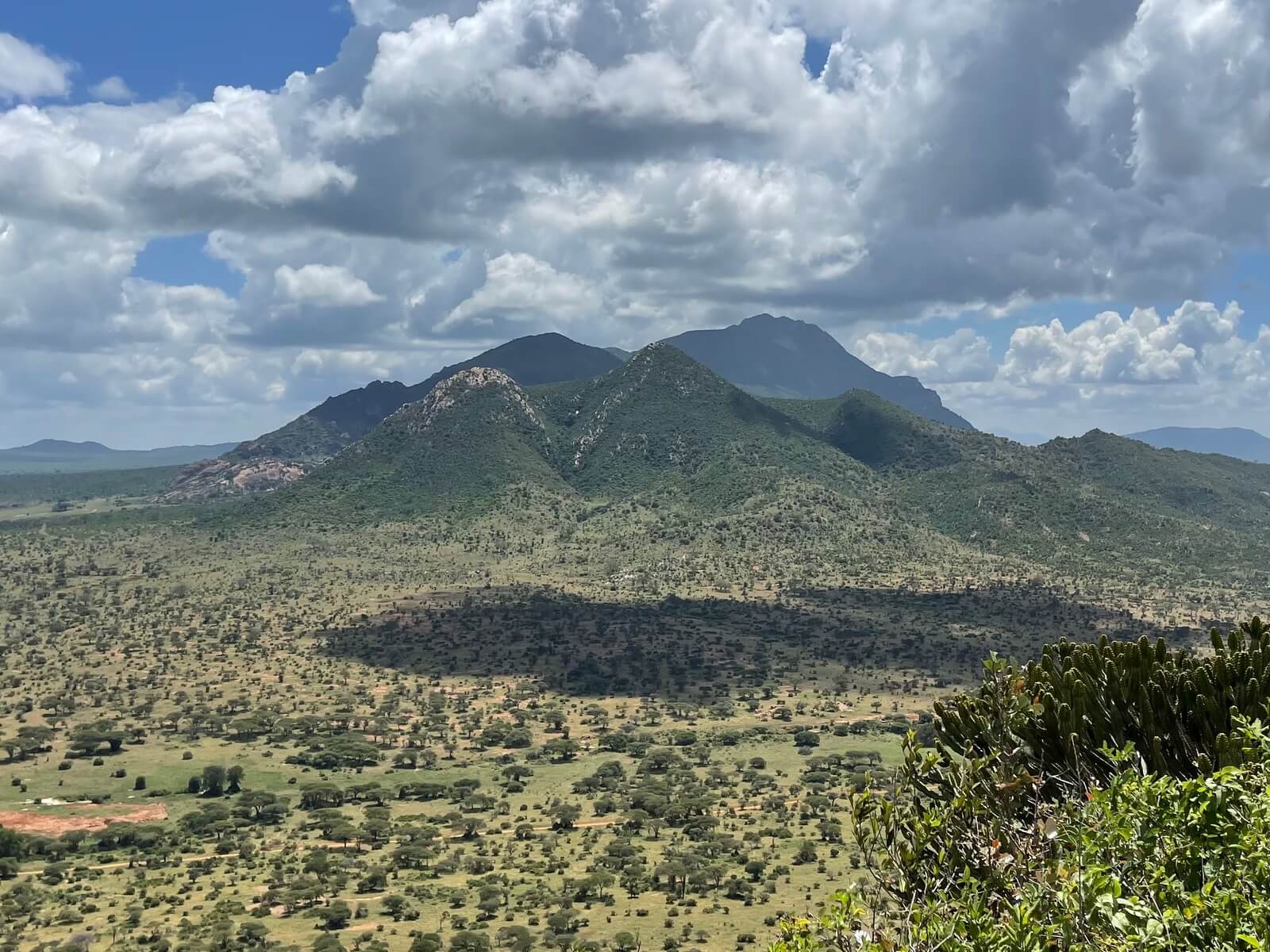
The Northern Circuit does not hurry to the summit by the shortest line – it goes almost all the way round Kibo. After the Lemosho forest and the spacious Shira plateau the team heads for the part of the mountain where camps and people become noticeably fewer. By day the angles on the glaciers and volcanic walls keep changing; by night the Milky Way opens above the tents; and the teeth of Mawenzi move gradually from the horizon round to the other side.
This is the longest Mountain Guide route on Kilimanjaro and the best choice for anyone who wants to feel the scale of the mountain rather than simply reach the sign on the summit. Nine days on the route give more time to adapt, but they call for a liking for the long road and good general endurance.
The Northern Circuit is the longest of the five main Mountain Guide products on Kilimanjaro. The preliminary eleven-day trip begins the climb on Lemosho, crosses the Shira plateau, rounds Kibo on the northern side and reaches Uhuru Peak at 5895 m.
Nine days on the mountain give more time for a gradual gain in altitude and suit participants who put acclimatisation above speed. The route is longer in distance and calls for good general endurance.
With a group of four participants or more a Mountain Guide team leader is planned to accompany the trip. A private format is available for any group size against an custom quote.
Our company does not buy or sell air tickets and does not arrange visas, and is therefore not responsible for disruption beyond its control involving flights or border crossings.
In Tanzania, small, worn or old dollar notes may be refused. We recommend bringing recent notes in good condition.
About climbing Kilimanjaro by the Northern Circuit
The Northern Circuit uses the western Lemosho entrance, passes through the forest and the Shira plateau, and then separates from the crowded southern circuit in the Moir area. From there the trail rounds the northern slopes of Kibo through Buffalo and Third Cave.
The long arc around the massif creates a more gradual profile. Participants spend several nights above 3500 m before moving to the assault camp, which gives the body extra time to adapt.
The advantage of the route is the quiet of the northern side and the variety of views. The price of that advantage is more days in tents and a greater cumulative load, so the route cannot be considered easy simply because its acclimatisation logic is good.
The summit push begins from the School Hut area, after which the group descends south through Barafu and Mweka. Between them, the ascent and the descent cover the western, northern and southern sides of Kilimanjaro.
Before the trip, follow the guidance on preparing for mountain ascents and study the symptoms of altitude sickness.
The northern arc reveals how the whole massif is put together. Participants see the remains of the ancient Shira volcano, the broad dome of Kibo, the dry northern slopes and Mawenzi, and then cross the mountain to the southern descent. No other standard route offers so many different angles.
A gradual profile helps acclimatisation but does not cancel accumulated fatigue. Several long stages in succession call for a steady pace, good sleep and discipline in eating and drinking. Participants must arrive ready for nine days of walking, rather than expecting the length of the route to make the summit easy by itself.
In the private version the Northern Circuit can be extended with a night in the crater. That is a separate high-altitude trip with a different schedule, different equipment and a different price. After the descent, a safari and a stay on Zanzibar are both available.
Itinerary of the Kilimanjaro climb by the Northern Circuit
Day 1. Arrival in Tanzania.
Meeting at Kilimanjaro International Airport and transfer to Moshi. After check-in there is a detailed briefing and an equipment check. The guide explains the logic of the long route, the rules of acclimatisation and how the team works in tented camps. Night at the hotel.
Day 2. Moshi to the Londorossi gate to the forest camp.
Drive to the western side of the massif, registration at the Londorossi gate and the drop-off at the start of the Lemosho trail. The first stage passes under a dense canopy of mountain forest, where it is still hard to imagine that in a few days nothing will be left around but volcanic rock and ice. Night in tents.
Day 3. Forest camp to Shira 1.
The trail leaves the forest for the heather moorland and climbs to the western part of the Shira plateau. The space opens abruptly, and Kibo appears for the first time above the ancient Shira caldera. The pace remains steady so as not to spend reserves at the start of a long route. Night in tents.
Day 4. Shira 1 to Shira 2.
The team crosses the wide Shira plateau among lava ridges and high-altitude vegetation. After check-in, and if everyone is feeling well, there is a short acclimatisation walk with a return to camp. In the evening the western sun lights up the glaciers of Kibo. Night in tents.
Day 5. Shira 2 to the Lava Tower to the Moir camp.
The route climbs into high-altitude desert to the Lava Tower, where black volcanic walls create an almost extraterrestrial landscape. The team then heads for the secluded Moir camp on the north-western side of Kibo. The altitude profile of the day works towards acclimatisation. Night in tents.
Day 6. Moir camp to the Buffalo camp.
The Northern Circuit proper begins. The trail rounds Kibo through the Lent Hills area and moves away from the main flow of the southern routes. Through the day the angle on the glaciers and lava walls changes, and by evening the camp stands above the plains of northern Tanzania. Night in tents.
Day 7. Buffalo camp to Third Cave.
The gradual traverse of the northern slope continues. The changes in altitude are moderate, but the accumulated length of the route is already felt, so it is important to keep up food, fluid intake and an even step. Mawenzi appears gradually ahead and marks the approach to the eastern side of the massif. Night in tents.
Day 8. Third Cave to School Hut.
The team leaves the northern arc and climbs to the assault camp. Vegetation disappears, leaving the dry saddle between Kibo and Mawenzi. After an early dinner participants prepare warm layers, head torches, water and snacks and try to rest before the night departure. Night in tents.
Day 9. Ascent of Uhuru Peak, 5895 m, and descent to Mweka.
At night the team climbs to the crater rim and, in safe conditions, continues to Uhuru Peak at 5895 m. After the long days around the massif, dawn lets you see the mountain you have walked from the highest point in Africa. A long descent south then begins, through the Barafu area to the Mweka camp. The decision to continue the ascent is taken by the guide, taking account of the weather, the pace and each participant's condition. Night in tents.
Day 10. Mweka camp to the Mweka gate to Moshi.
The final descent brings the team back from the high-altitude zone into warm forest. The route formalities are completed at the gate, after which participants drive to Moshi, shower and rest after nine days on the mountain. Night at the hotel.
Day 11. End of the trip.
Breakfast and transfer to Kilimanjaro International Airport. Any onward journey to a safari or a flight to Zanzibar is carried out under a separately confirmed trip.
What's included
- A Mountain Guide team leader with groups of four participants or more
- The services of a local English-speaking mountain guide
- The services of a cook and porters
- Meeting at Kilimanjaro International Airport and transfer to the hotel
- Transfer from the hotel to Kilimanjaro International Airport after the trip
- All the road transfers set out in the itinerary
- Two nights in a three-star hotel in Moshi, twin occupancy, with breakfast
- The Kilimanjaro National Park permit and compulsory fees
- Accommodation in twin tents during the mountain part of the trip
- Full board during the mountain part of the trip – breakfast, lunch and dinner
What's not included
- International flights to Tanzania and back
- The transfer between Nairobi and Moshi, if a participant chooses to fly via Kenya
- Medical insurance covering high-altitude trekking to 5895 m and evacuation – compulsory for participation
- A Tanzanian visa, if the participant requires one for their nationality – $50 for most nationalities; requirements depend on nationality, and a different visa type applies to US citizens
- Lunches and dinners at the hotel before and after the climb
- Single occupancy – the cost is confirmed separately
- Personal equipment and clothing
- Tips for the local mountain team – the recommended amount is confirmed before the trip
- Any costs arising from a departure from the itinerary
The Kilimanjaro climb by the Northern Circuit for private groups
The Kilimanjaro climb by the Northern Circuit can be run privately on your own dates. This format suits a single participant, a family, a group of friends or a corporate team. A Russian-speaking Mountain Guide leader can be added to a private trip for a group of any size, quoted individually. There is more detail on the private Kilimanjaro climbs page.
On a private expedition you can add a reserve day or a night in the Kibo crater. A night in the crater is not part of the basic trip: it needs a separate permit, additional high-altitude logistics, specialist equipment and an assessment of participants' experience beforehand.
A private trip can add a safari after Kilimanjaro, or time on Zanzibar. The dates, hotels, internal flights within Tanzania and the final price of any additional sections are confirmed separately before the contract is signed.
To receive a quote, write to us through the Contacts page and tell us the make-up of your group, your preferred dates, your altitude experience and whether you need a Russian-speaking guide.
Documents for the Kilimanjaro climb by the Northern Circuit
Entry requirements depend on your nationality and on your flight routing. Before buying tickets, check the rules for Tanzania and for every transit country against official sources.
To take part you will need:
- A passport valid for at least six months on the date of entry and with at least one free page
- A return ticket or confirmation of onward travel
- A Tanzanian visa, where one is required; you can apply through the official eVisa system
- Medical insurance covering high-altitude trekking to 5895 m and evacuation
- An international yellow fever vaccination certificate, if you are arriving from a country at risk or have spent at least 12 hours in transit through one
- Your booking confirmation for the trip and the host team's contact details
We recommend keeping digital copies of your documents on your phone and in cloud storage. Check the current visa and health requirements again before you fly.
Weather and season on the Kilimanjaro climb by the Northern Circuit
Kilimanjaro climbs run all year round. The driest and most popular periods usually fall between January and early March, and from June to October. This does not mean clear weather is guaranteed: cloud, rain, snow, strong wind and a sharp drop in temperature are possible in any month.
The main rainy season around Kilimanjaro usually falls between March and May, and above all in April and May. A shorter rainy spell runs from October to December and is often most noticeable in November. Climbing is possible in these months, but the lower trails can be wet and slippery, kit is harder to keep dry, and cloud can limit the views.
The northern side is often drier than the southern circuit, but the route is long and crosses several climate zones. Be prepared to meet rain, wind and snow within a single trip.
It can be warm and humid at the start of the route, while night temperatures in the high camps fall below 0 °C. The coldest stage is the night start for the summit. You need warm layers, protection from wind and rain, and waterproof packing for your sleeping bag, clothing, documents and electronics.
A detailed month-by-month comparison is published in our article on the best time to climb Kilimanjaro.
Accommodation and meals on the Kilimanjaro climb by the Northern Circuit
Two nights in a 3-star hotel in Moshi, in twin rooms, are provided before the mountain section and after it finishes. Breakfasts are included. The specific hotel is confirmed before departure.
During the climb the group sleeps in two-person tents. The local team moves and pitches the camp. You provide your own sleeping bag and mat, following the equipment list.
Full board is provided during the climb. Agree the menu in advance, along with any vegetarian, allergy or other dietary requirements. Lunches and dinners at the hotel before and after the mountain are paid separately.
Day-to-day conditions on the Kilimanjaro climb by the Northern Circuit
The Northern Circuit is a camping route. Toilet and washing facilities in the camps are basic and depend on the infrastructure of each site. There is no proper shower during the mountain section.
On the mountain section you cannot count on a shower, mains power, Wi-Fi or regular mobile signal. Signal depends on the camp, the weather and the network, so it should not form part of a work or family communication plan.
Charge your phone, camera gear and power bank before the route starts, and protect them from cold and damp. Earplugs are useful for sleeping. In the wet season, damp clothing cannot always be dried out completely before the next stage.
Seguro
НаверхEquipment list for the Kilimanjaro climb by the Northern Circuit
Скачать PDFCheck and test your equipment before the trip. Pay particular attention to broken-in footwear, a warm set for the summit night, and keeping your kit dry. The permitted weight of your duffel bag is confirmed before departure.
Personal equipment
- Day pack of 25-35 litres with a rain cover
- Duffel bag for the items your porter carries
- Sleeping bag with a comfort rating of -5 to -10 °C
- Foam sleeping mat
- Trekking poles
- Dry bags or strong waterproof sacks for your sleeping bag and clothing
Clothing and footwear
- Broken-in trekking boots with good grip
- Light footwear for the hotel and for town
- Waterproof shell jacket
- Waterproof shell trousers
- Quick-drying trekking trousers
- A set of base layers
- Fleece jacket or another warm mid layer
- Down jacket with a hood
- Warm gloves or mittens
- Thin gloves
- Warm hat
- Buff or balaclava
- Sun hat
- Trekking socks, plus a separate warm pair for summit day
- Gaiters
Other items
- Head torch with spare batteries
- Power bank and charging cables
- Sunglasses
- Ski goggles for wind and snow
- Vacuum flask, 1 litre, without a push-button lid
- Reusable water bottle
- Sun cream and lip balm with SPF
- Insect repellent for the lower part of the route
- Quick-drying towel
- Personal toiletries
- A personal first-aid kit suited to your own medical needs; take medicines only as directed
Discuss malaria risk and prophylaxis with your doctor before the trip. There is background information in our article on avoiding malaria.