- Guías
- B2B
-
Ascensiones
-
Ascensión al Elbrus
- Elbrus individually
- Elbrus from the South, 9 days
- Elbrus from the South, 7 days
- Elbrus from the South in 1 day
- Elbrus from the North
- Elbrus Two Summits
- Escalada en Elbrus, travesía de sur a Norte
- Escalada en Elbrus, travesía de Norte a sur
- Elbrus "Cross" from South
- Elbrus "Cross" from North
- Kazbek+Elbrus
- Elbrus from the West
- Elbrus en helicóptero
- Vacaciones en el Elbrus, 9 días
- El descanso en prielbrusye, 7 días
- Tinder Tour, escalada en Elbrus
- Elbrus desde el sur 9 días con Sergei Baranov
- Under 5000 m
- 5000+ meters
- 6000+ meters
- 7000+ meters
- 8000+ meters
-
Ascensión al Elbrus
-
Trekking
-
See 8000m
- K2 base camp
- Everest base camp
- Everest base camp via Gokyo
- Everest base camp in a week
- Anillo de trekking Annapurna + lago Tilicho
- Anillo De Trekking Manaslu
- Trekking al campamento base de Kanchenjunga
- Trekking al campamento base de Kanchenjunga (corto)
- Trekking al campamento base de Kanchenjunga (India)
- Trekking al campamento base de Makalu
- Trekking al campamento base de Annapurna
- South America
- Asia
- Africa
- Russia
- Europe
-
See 8000m
-
Adventures
-
Africa
- Tour por Marruecos: el corazón del Norte de África
- Morocco: Toubkal and the mysteries of the Sahara
- Tour a Eritrea: el archipiélago de Dahlak y los nómadas de Rashaid
- Tour a Ruanda: gorilas de montaña y volcán Bisoke
- Tour a Etiopía: paisajes espaciales y tribus del valle de Omo
- Tour a Uganda: parque de la Reina y gorilas de montaña
- Tour a Tanzania: Safari en el Serengeti, Ngorongoro y Tarangira
- Tour a Uganda: rinocerontes blancos y gorilas de montaña
- Tour por Zimbabue y Sudáfrica: cataratas victoria, ciudad del cabo y cabo De buena Esperanza
- Tour a Namibia: parque Etosha y tribus Himba
- Tour a Kenia: los Cinco grandes africanos
- Tour a Botswana: Delta del Okavango y parque Chobe
- South America
- Asia
-
Africa
- Ski-touring
- VIP
- Useful
- About
Climb Klyuchevskaya Sopka, Kamchatka, 8 Days
- Height (m)
- 4750
- Duration
- 8 días
- Difficulty
- Moderate
- Continent
- Europe
- Children
- Not suitable for children
- Accommodation
- Some nights in tents
2240 $
¿Por qué tal precio?
El tour no está disponible temporalmente
Private groups only. There are currently no open departures and no fixed cost. Whether the climb is possible, and its timing, route and cost, are confirmed individually after the current conditions, restrictions, logistics and team composition have been checked.
The ascent of Klyuchevskaya Sopka is an unforgettable journey that combines adventure, nature and the singular atmosphere of Kamchatka. Our trip is built so that you can enjoy the climb fully and experience everything that makes this one of the most remarkable volcanoes in the world.
The route to Klyuchevskaya Sopka is laid out to provide gradual acclimatisation, to minimise risks and to give you the chance to enjoy the magnificence of the Kamchatka Peninsula. As part of the trip participants get to know the extraordinary nature of the region, from scenic valleys and thermal springs to striking views of the Kamchatka volcanoes.
Important information:
- Hotel check-in and check-out times are set by the hotel: check-in from 15:00, check-out by 11:00–12:00. Luggage can be left at reception while you explore the surroundings, or, where the hotel can arrange it, you can pay for early check-in or late check-out
- For foreign citizens we can issue invitation letters for our tours where these are required
About the Klyuchevskaya Sopka climb
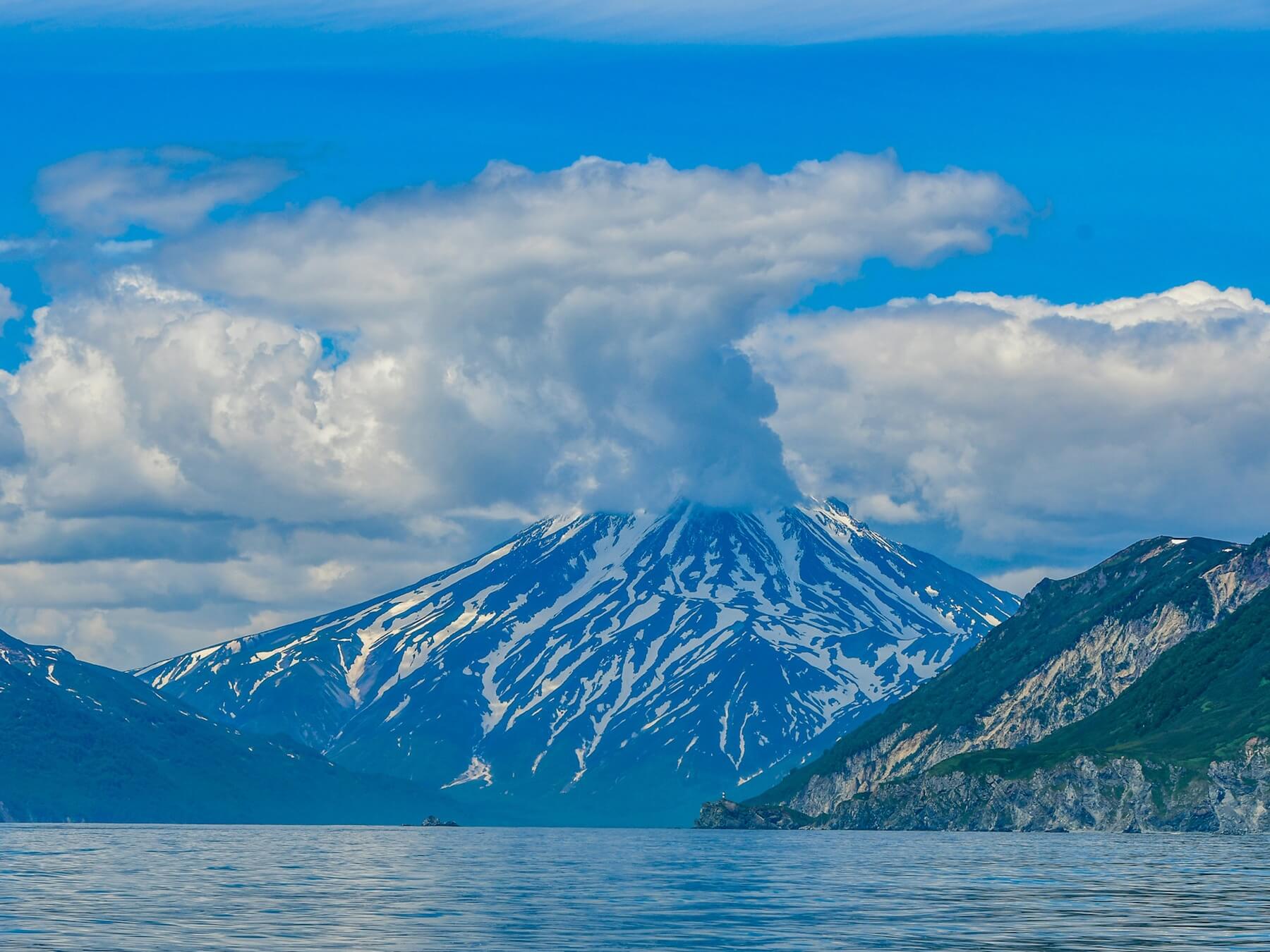
The ascent of Klyuchevskaya Sopka is a journey into the heart of Kamchatka and a meeting with one of the highest active volcanoes in Eurasia. This immense mountain, rising to 4750 m, is not only a natural landmark but a symbol of the power of this volcanic region.
An expedition to Klyuchevskaya Sopka is not only a test of physical endurance but a chance to find yourself among wild landscapes and to see lava fields, frozen flows and active craters. Here, on the boundary between sky and earth, participants are immersed in an atmosphere of adventure and discovery, where every step brings the summit closer and the view from its height leaves a lasting impression.
The trip is designed for people in good physical condition who are ready for hard work and unpredictable weather. Throughout the route participants are accompanied by experienced guides who look after the safety and the comfort of the group. The climb is made in small groups, which creates a friendly atmosphere and lets everyone feel part of a team.
The safest and most practical route to the summit of Klyuchevskaya Sopka runs from the north-eastern side. The climate and the altitude of Kamchatka differ considerably from other mountain regions such as Elbrus, which makes the physical preparation of participants a key factor in success. Group ascents here call for particular attention to the condition of every participant, because what matters is not only experience but team spirit, mutual support and readiness for whatever the route brings.
We also organise ascents by alternative routes, including the use of a helicopter to the Antarctica Plateau at about 2000 m, followed by a climb to the col at 3100 to 3400 m. An ascent from the Klyuchevskaya-Kamen col is also possible, but the trekking route from Kopyto takes 4 to 5 days one way, with no roads and no transport. Please contact us for more detailed information.
Whichever route you choose, this journey will be a genuine challenge for body and spirit, and the memories of it will stay with you for life.
Klyuchevskaya Sopka climbing itinerary, 8 days
Day 1. Arrival in Petropavlovsk-Kamchatsky. On the first day you fly to Petropavlovsk-Kamchatsky, where a company representative meets you at the airport and takes you to the hotel. We stay in a comfortable hotel where you can sleep well before the busy day ahead. In the evening the whole group gathers to get to know one another and to attend a short briefing with the guide, at which you can also ask any questions you have. Night in a hotel.
Day 2. Journey to the village of Klyuchi. Early in the morning we begin our journey across Kamchatka. Our route leads to the village of Klyuchi, where a genuinely Kamchatkan atmosphere awaits. On the way we stop in Milkovo for lunch at a cafe that takes us back to the atmosphere of an old Soviet canteen. By evening we reach Klyuchi and check into the hotel, where a rest awaits us after the long drive. The evening promises to be calm and warm, full of impressions from the first day of the journey. Night in a hotel.
Day 3. Drive to 1445 m and climb to the shelter at 2600 m. The third day begins with the drive out of Klyuchi to an altitude of 1445 m. The road ahead is not an easy one and is difficult in places, but the untouched landscapes of Kamchatka take your breath away. By midday we reach the starting point, from where we begin the climb to 2600 m. The route crosses a closed glacier, which adds a real sense of adventure. The climb takes about 4 to 5 hours, and on arrival we stay in a bunker shelter at 2600 m with six sleeping places. Night in the shelter.
Day 4. Acclimatisation at 2600 m. The fourth day of the route is devoted to acclimatisation at 2600 m. This is time to rest, recover and adapt to the altitude. The day also serves as a reserve in case of unforeseen circumstances connected with the participants’ health. We spend the day at an unhurried pace, enjoying the views around us and preparing for the next stages of the climb. Night in the shelter.
Day 5. Second day at 2600 m. The fifth day is spent at 2600 m. In some cases we climb to the assault camp at 3100 m, but it is usually very crowded there. That makes it hard for participants to sleep properly before the summit push, so we often prefer a quieter and more secluded night in the shelter at 2600 m. Night in the shelter.
Day 6. Ascent of Klyuchevskaya Sopka. The sixth day is the culmination of the journey: the ascent of Klyuchevskaya Sopka. Depending on the condition of the participants, the start may be at 2:00 or later. Crampons and ice axes are compulsory for safe movement on the glacier. With the guide you follow a safe route from the north-eastern side. You will feel extraordinary emotions as sunrise slowly appears on the horizon and the majestic landscapes of Kamchatka open up before you. Return to the camp at 2600 m once the ascent is complete. Night in the shelter.
Day 7. Descent to 1445 m. The seventh day is the descent day. We leave the camp at 2600 m early and descend to the 1445 m level, where transport is waiting. Depending on how quickly we descend and on the state of the road, we either head for Petropavlovsk-Kamchatsky and arrive late at night, or stay overnight in the village of Klyuchi and spend another quiet evening surrounded by the calm of Kamchatkan nature.
Day 8. Reserve day. The eighth day is a reserve day in case of bad weather or other unforeseen circumstances. If all the earlier stages have gone well, the day can be used for additional rest or for local sightseeing. We enjoy the views and recover after the intense days of the ascent.
What's included
- Guides: a leader throughout the trip and assistant guides on summit day, strictly at a ratio of one guide to three clients, so that a group of four clients already has two guides
- Hotels in Petropavlovsk-Kamchatsky and Klyuchi, in twin rooms, for the number of nights set out in the itinerary
- Accommodation in the shelter, for the number of nights set out in the itinerary
- All transfers set out in the itinerary, airport or station to airport
- Three meals a day throughout the trip, with dinner on the first day and breakfast on the last
- All the necessary permits and registrations
- Group equipment (ropes, ice screws, radios, satellite navigators, first-aid kit)
- Hire of a duffel bag for rented and personal equipment for the duration of the climb
What's not included
- Single occupancy
- Early check-in or late check-out at the hotel before or after the trip (we always try to agree additional benefits for our guests with our partners, and early check-in or late check-out is often granted at no charge)
- Personal equipment
- The helicopter approach, if an alternative ascent option is chosen
- Any departure from the itinerary
- Any costs connected with change to the itinerary
Klyuchevskaya Sopka for private groups
The trip is available only to a private group formed in advance, with suitable experience. There is currently no open-group departures, no fixed dates and no published price.
Before confirming the trip we check afresh the current conditions, any access restrictions, the safety of the route, the logistics and the team’s availability. The dates and the costing are worked out around the particular group’s preparation.
Documents you need
To prepare a private trip we need:
- A valid passport
- Tickets to Petropavlovsk-Kamchatsky and back, once the dates and logistics are agreed
- Medical insurance covering mountaineering, the maximum altitude of the trip, search and rescue, transport and medical evacuation
- The details needed to arrange permits for the nature park and to register the group
- Any further documents required under the access rules in force for the route
Depending on your nationality, a visa may be required. Where necessary, Mountain Guide provides documents in support of a visa application. We recommend keeping electronic copies of your passport, tickets, insurance and permits on your phone and in a cloud service.
Weather and seasons
Klyuchevskoy is an active volcano, so whether a climb is possible is determined not only by the season and the weather but above all by the current volcanic activity, by official restrictions and by the actual state of the route. No open dates are published: before each private group is organised we check afresh the bulletins from the relevant services, access to the nature park, the route and the arrangements for evacuation.
The climb does not go ahead where warnings are in force or where the team considers conditions unsafe. On the route you can meet strong wind, precipitation, poor visibility, sub-zero temperatures, snow and ice. The exact dates and the equipment list are confirmed only after the situation has been checked for your particular dates.
Accommodation and meals
Under the current itinerary the first and last nights are spent in hotels in Petropavlovsk-Kamchatsky and the village of Klyuchi. During the mountain section the group stays in a basic high-altitude hut at about 2600 m. The particular properties and the number of nights are confirmed along with the route before booking.
Three meals a day are included, as set out in the itinerary: from dinner on the day of arrival to breakfast on the day of departure. On the mountain section the team provides the food and does the cooking. Food allergies, a vegetarian diet and any other restrictions must be reported before the private trip is quoted; whether they can be accommodated depends on what can be supplied to a remote route.
Facilities on the route
The town hotels have the usual facilities: a shower, toilet, electricity and somewhere to charge devices. Conditions at the high-altitude hut are a great deal simpler and depend on its actual state before the trip.
On the mountain section you cannot count on a shower, laundry, reliable mobile internet or continuous electricity. The toilet arrangements, the water supply and the possibility of charging are confirmed before the start. You need your own toiletries, a power bank and spare battery packs.
The area is a long way from any settlement, and the drive in depends on the state of the roads and the weather. The group observes the hut’s rules, uses water and electricity sparingly, and follows the guide’s decisions on accommodation, communications and movement.
Seguro
НаверхEquipment and useful extras for the Klyuchevskaya Sopka climb
Скачать PDFDocuments:
- Passport
- Air or rail tickets
- Medical insurance
- Voucher (for foreign nationals)
Personal equipment:
- Rucksack, 30-40 litres
- Duffel bag, 80-100 litres
- Sleeping bag with a comfort rating of 0 to +10 °C from June to September inclusive, and -10 to -20 °C from October to May inclusive
- Trekking poles must have baskets of at least 70 mm.
- Crampons
- Classic ice axe, with 2-3 metres of 5-6 mm accessory cord for clipping to your harness
- Climbing harness
- Helmet
- 3 karabiners (large ones are better – noticeably easier to work in mittens)
- Cow’s-tail lanyards
Clothing and footwear:
- Double or triple mountaineering boots, plastic or leather. Single boots are acceptable if used with an overboot (not to be confused with a gaiter)
- Trekking shoes or trekking boots. In May and early June you can still meet snow on the first acclimatisation days, and boots are then clearly better than trainers. From mid-June to the end of September, though, trainers will do instead — with some risk of turning an ankle — so make sure they are still waterproof
- Waterproof shell: jacket and trousers, with a membrane rated 10,000/10,000 or better
- Fleece top and bottoms
- Base layer, top and bottoms
- A thick, warm down jacket with a hood; one suitable for Elbrus normally weighs upwards of 700 grams
- Warm mittens
- Thick gloves (ski gloves)
- Thin gloves (fleece)
- Bandana (as well as sun protection in the valley, it can keep your throat or face warm in the cold)
- Warm hat
- Warm trekking socks for summit day
- Sun hat
- Trekking trousers and T-shirts (preferably long-sleeved)
- Trekking socks for the trekking days (ideally one pair per day)
Other items:
- LED head torch with at least 12 hours of battery life
- Sunglasses, category 3-4, which must shield the eyes completely from side light
- Ski goggles, lens category 1-2 (for bad weather, not for good)
- Vacuum flask, 1 litre, preferably without a push-button lid
- Windproof face mask for the lower face (a scarf will do at a pinch)
- Branded sun cream, SPF 30-50 (whatever you may read, in practice the difference between 30 and 50 is negligible)
- SPF 15 lip balm
- Personal first-aid kit
- Elastic bandage and/or a support brace
- Gaiters (not compulsory, but they can be needed, especially in May and June)
- Chemical hand warmers (not compulsory, but they can be very useful)