- Guides
- B2B
-
#19607 (no title)
-
#15972 (no title)
- Climb Elbrus Individually
- Climb Elbrus from the South, 9 Days
- Climb Elbrus from the South, 7 Days
- Climb Elbrus from the South with Oxygen
- Climb Elbrus from the North, 10 Days
- Two Summits of Elbrus, 9 Days
- Elbrus Traverse from South to North, 9 Days
- Elbrus Traverse from North to South, 10 Days
- Cross of Elbrus, South to North, 9 Days
- Cross of Elbrus, North to South, 10 Days
- Climb Kazbek and Elbrus — 10-Day Two-Summit Expedition
- Climb Elbrus from the West, 11 Days
- Elbrus by Private Helicopter, 3 Days
- Elbrus Region Holiday and Trekking, 9 Days
- Elbrus Region Holiday, 7 Days
- Tinder Tour: Climbing Mount Elbrus, 9 Days
- Climb Elbrus from the South, 9 Days with Sergey Baranov
-
#15539 (no title)
- Climb Carstensz Pyramid, 8 Days with Helicopter Access
- Climb Mont Blanc, 4810 m — 8-Day Guided Ascent
- Climb the Matterhorn, 4478 m — 8-Day Guided Ascent
- Climb Mount Vinson, 15-Day Antarctic Expedition
- Climb Kosciuszko and Travel in Australia, 7 Days
- Climb Fisht, 2868 m — 3-Day Ascent by the 1B Route
- Climb Mount Wilhelm, 6 Days
-
#15546 (no title)
- Climb Kilimanjaro: the Marangu Route
- Climb Kilimanjaro: the Lemosho Route
- Climb Ararat, 5137 m — 7-Day Classic Climb
- Climb Kazbek from the South, 5033 m — 8 Days in Georgia
- Climb Kazbek and Elbrus — 10-Day Two-Summit Expedition
- Climb the Volcanoes of Mexico — Orizaba and Iztaccíhuatl, 9 Days
- Climb Alpamayo — 16-Day Technical Expedition
- Climb Margaret Peak (Stanley), 5109 m
- Climb Mount Kenya: Point Lenana, 4985 m
- Climb Dykh-Tau by the North Ridge, 13 Days
-
#15554 (no title)
- Aconcagua Climb — 17-Day Guided Expedition
- Island Peak Climb — 18-Day Expedition
- Climb Mera Peak, 6476 m — 16-Day Hinku Valley Expedition
- Climb Ama Dablam, 6812 m — 24-Day Expedition with Island Peak
- Climb Island Peak and Mera Peak — 24-Day Two-Summit Expedition
- Aconcagua and Ojos del Salado — 25-Day Combined Expedition
- Ojos del Salado Climb — 15-Day Expedition
- Climb Chimborazo and Cotopaxi — 14-Day Ecuador Expedition
- Climb Huascarán — 8-Day Technical Ascent
- Climb Razdelnaya Peak, 6148 m — 15-Day Pamir Expedition
- Climb Denali by the West Buttress, 23 Days
- #15565 (no title)
- #15572 (no title)
-
#15972 (no title)
-
#19592 (no title)
-
Trekking in Nepal: routes to the eight-thousanders
- K2 Base Camp Trek via the Gondogoro La
- Everest Base Camp Trek — 14 Days
- Everest Base Camp via Gokyo Lakes — 15 Days
- Short Everest Base Camp Trek in 10 Days
- Annapurna Circuit and Tilicho Lake Trek
- Manaslu Circuit Trek
- Kanchenjunga Circuit Trek (XXL)
- Kanchenjunga North Base Camp Trek (Short)
- Kanchenjunga from India: the Goecha La Trek in Sikkim
- Makalu Base Camp Trek
- Annapurna Base Camp Trek
- Trekking in South America
- Asia
- Trekking in Africa
-
Trekking in Russia
- Elbrus Region Holiday and Trekking, 9 Days
- Elbrus Region Holiday, 7 Days
- Oshten + Kardyvach — 9-Day Western Caucasus Trek
- Lake Kardyvach — 5-Day Base-Camp Trek
- Route 30: Through the Mountains to the Sea, with Oshten — 4 Days
- Trekking in Arkhyz — 7 Days over the Ayulyu Pass
- Gvandra Trek — 7 Days to the Ullu-Kyol Lakes
- Trekking in Dombai — 7 Days with the Murudzhu Lakes
- Europe
-
Trekking in Nepal: routes to the eight-thousanders
-
Adventure expeditions
-
Trekking in Africa
- جولة المغرب: قلب شمال أفريقيا
- تسلق توبقال وثقافة المغرب
- Eritrea: the Dahlak Archipelago and the Rashaida Nomads
- Rwanda: Mountain Gorillas and the Bisoke Volcano
- Ethiopia: Otherworldly Landscapes and the Peoples of the Omo Valley
- جولة أوغندا: كوينز بارك والغوريلا الجبلية
- Tanzania Safari: Serengeti, Ngorongoro and Tarangire
- جولة أوغندا: وحيد القرن الأبيض والغوريلا الجبلية
- Zimbabwe and South Africa: Victoria Falls, Cape Town and the Cape of Good Hope
- Namibia: Etosha National Park and the Himba
- Kenya Safari: the African Big Five
- جولة بوتسوانا: دلتا أوكافانغو وتشوبي بارك
- Trekking in South America
- Asia
-
Trekking in Africa
- Ski touring and ski mountaineering: chasing freedom in the mountains
- VIP tours
- #19722 (no title)
- About
Island Peak Climb with a Local Guide, 18 Days
- Height (m)
- 6165
- Duration
- 18 дней
- Difficulty
- Moderate
- Continent
- Asia
- Children
- Not suitable for children
- Accommodation
- Includes camping
- suitable-for-beginners
- With preparation
155136 $
Почему такая цена?
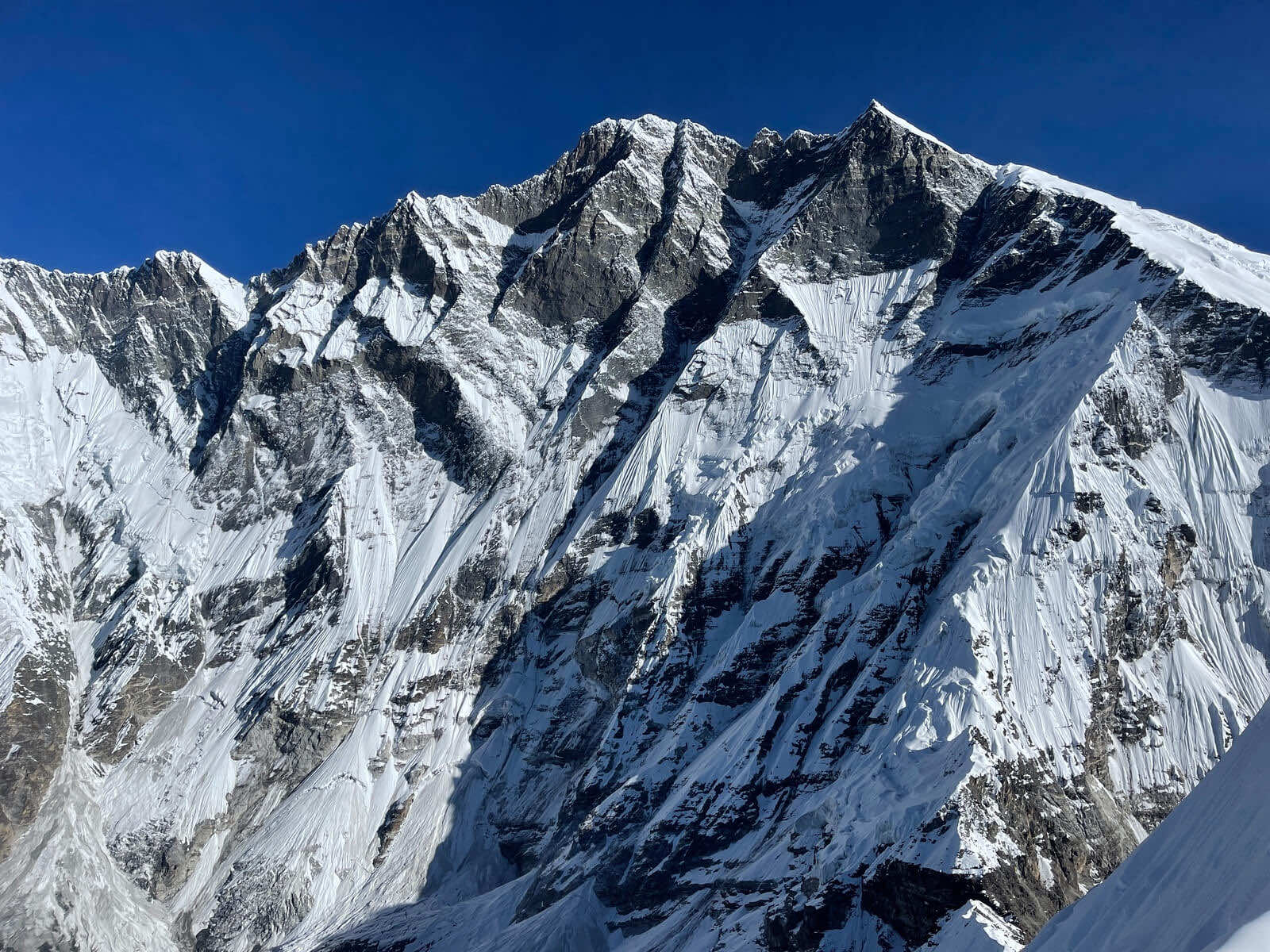
The ascent of Island Peak combines the classic trek to Everest with a first technical summit above 6000 m. Over 18 days the group passes through Namche Bazaar, Everest Base Camp and Kala Patthar, then moves to Chhukhung and climbs Island Peak from a high tented camp.
- The summit of Island Peak, 6165 m
- Everest Base Camp, 5364 m
- Kala Patthar, 5645 m
- Acclimatisation along the classic Khumbu route
- Work in crampons and with a harness, ice axe and ascender
- A high camp before the summit day
- A local Nepali guide with the group under the package option selected
- Assistant guides on summit day, no more than 3 participants per guide
The trip is designed for prepared beginners and entry-level mountaineers, but it is not ordinary trekking. Good endurance, experience of working with basic technical equipment and readiness for a long night start on snow and ice are required.
The price of this trip is fixed in US dollars.
Important
- Internal flights and the Ramechhap transfers, meals in the lodges and a personal porter are paid separately
- All personal technical equipment is agreed with the guide before the trip
- The state of the glacier and of the summit section determines the tactics of the ascent
- Everest Base Camp, Kala Patthar and the summit are not guaranteed; safety takes priority
- Mountain Guide does not sell air tickets and does not process visas
About the ascent of Island Peak
Island Peak lies in the Imja valley of the Nepali Khumbu region. The approach to the summit is built around the key points of the classic route to Everest: Lukla, Namche Bazaar, Pangboche, Pheriche, Lobuche, Gorak Shep, Everest Base Camp and Kala Patthar. Only after this acclimatisation section does the group move through Dingboche to Chhukhung and climb to the high camp.
This route solves two problems at once. Participants see Everest Base Camp and the panorama from Kala Patthar, while the body gets a consistent adaptation before a summit at 6165 m.
Island Peak is regarded as an accessible technical summit, but that description refers to the standards of Himalayan mountaineering and not to physical ease. The summit day includes snow and ice, work in crampons and with a harness, ice axe, ascender and descender. The condition of the route changes, so the guide decides the belay arrangements and the rope work on the spot.
Participants need regular endurance training, experience of a multi-day trek and basic technical skills practised in advance. Kala Patthar serves both as an important acclimatisation point and as a test of readiness for the further height gain. The day in the high camp is used for rest, an equipment check and an early start. On summit day one guide works with a maximum of three participants.
The main risks are altitude, cold, wind, crevasses and icy ground, fatigue after a night start and changeable weather. The guide may change the start time, limit the outing or turn a participant back. Before the trip it is necessary to study information on the prevention of altitude sickness and to agree the personal kit.
Anyone who prefers a less visited valley and a higher but usually less technical objective can consider Mera Peak, and there is an expedition combining Island Peak and Mera Peak for experienced participants. Both are sold as separate products.
This listing is the local-guide format, run with a local Nepali guide. The composition of the local team, the working language and the ratio of participants to assistants are confirmed before booking. A trip with a leader from the Mountain Guide team is sold under a different package and can be quoted individually on request.
Itinerary of the guided ascent of Island Peak
Day 1. Arrival in Kathmandu.
Participants make their own way to Kathmandu international airport. A team representative arranges the transfer to a hotel in the Thamel district. After check-in there is an introduction, a check of technical equipment and a briefing. This day is needed to recover from the flight and to replace unsuitable kit before departure for the mountains. In the evening there is dinner in a restaurant serving Nepali cuisine. Night in a hotel.
Day 2. Transfer to Ramechhap, flight to Lukla, 2860 m, and trek to Phakding, 2610 m.
The group travels to Ramechhap airport in accordance with the confirmed flight time and flies to Lukla. After collecting the baggage the walking part begins: a calm stage through the villages and farms of the Dudh Koshi valley to Phakding. The night below the altitude of Lukla allows acclimatisation to begin without unnecessary height gain. Night in a lodge.
Day 3. Trek to Namche Bazaar, 3440 m.
The route crosses the river on suspension bridges and passes through Monjo and the entrance to Sagarmatha National Park. After Jorsale the long climb to Namche Bazaar begins. The local guide sets an even pace and monitors wellbeing, because this is the first serious effort at altitude. Night in a lodge.
Day 4. Acclimatisation in Namche Bazaar, 3440 m.
The group spends a second night at the same altitude and makes an acclimatisation outing with a return to Namche. The specific route depends on the weather and the condition of the participants. The day helps the body to adapt and lets the local guide judge the pace before the stages above 3900 m. Free time can be used to learn about Sherpa culture. Night in a lodge.
Day 5. Trek to Pangboche, 3928 m.
In 5 to 6 hours the group covers a section alternating descents and climbs, with forest and suspension bridges. As height is gained, views of Ama Dablam open up. Rest and monitoring of wellbeing matter after arrival, because the overnight stop is almost at 4000 m. Night in a lodge.
Day 6. Trek to Pheriche, 4240 m.
The trail comes out into more open high-altitude terrain and in places runs above gorges and fast streams. The pace remains steady. After check-in the local guide assesses the participants' reaction to the altitude and repeats what to do if symptoms of altitude sickness appear. Night in a lodge.
Day 7. Trek to Lobuche, 4940 m.
The group climbs onto the plateau and approaches the moraine of the Khumbu Glacier. At this altitude recovery slows down, so the pace must not be forced. In the lodge participants prepare warm clothing, water and head torches for the next long day. Night in a lodge.
Day 8. Gorak Shep, 5164 m, and Everest Base Camp, 5364 m.
After the stage from Lobuche the group settles in Gorak Shep and walks out to Everest Base Camp over stony ground beside the Khumbu Glacier. This outing adds an altitude load and requires strength in reserve for the return. The local guide sets the timing and the highest point according to the weather and the condition of the participants. Night in a lodge.
Day 9. Kala Patthar, 5645 m, and descent to Dingboche.
In suitable conditions the group makes an early start for Kala Patthar. The climb is not technically difficult but is physically hard because of the altitude, and it serves as an important test before Island Peak. After the descent to Gorak Shep participants continue to Dingboche, where the lower altitude helps recovery. Night in a lodge.
Day 10. Trek from Dingboche to Chhukhung.
The route turns into the Imja valley and leads to Chhukhung. The day is used to move closer to Island Peak, to recover after Kala Patthar and to make a final assessment of the group's readiness. In the evening the local guide checks personal technical equipment and explains the procedure for moving up to the high camp. Night in a lodge.
Day 11. Climb to the Island Peak high camp.
The stage takes about 5 to 6 hours over stony high-altitude ground. After the tents are pitched participants rest, eat and prepare crampons, harness, ice axe, ascender, torch and clothing for the night start. The local guide announces the rope teams and the provisional start time. Night in tents.
Day 12. Ascent of Island Peak, 6165 m, and descent to Chhukhung.
The start is in the middle of the night. The ascent takes approximately 6 to 7 hours and includes a snow and ice section using technical equipment. After a short stop at the point reached the group descends to the camp in about 3 to 4 hours, rests and continues to Chhukhung. The decision on the summit or on turning back is taken by the lead local guide. Night in a lodge.
Day 13. Reserve day.
The day is provided in case of bad weather, a change in the state of the glacier or the need to postpone the attempt. Whether a second attempt is possible is determined by the group's resources and by the decision of the lead local guide. If the reserve is not needed, participants rest in Chhukhung and prepare for the descent. Night in a lodge.
Day 14. Descent to Pangboche.
The group leaves the Imja valley and returns to the main Khumbu trail. Losing height helps recovery after the ascent, but tired muscles and the stony trail require attention. On arrival participants rest and dry their kit. Night in a lodge.
Day 15. Trek to Namche Bazaar.
The route returns to the greener part of the valley and includes not only descents but also separate climbs. The group keeps an even pace. In Namche Bazaar the local guide checks the onward logistics and the condition of the participants before the last walking stage. Night in a lodge.
Day 16. Trek from Namche Bazaar to Lukla.
The final stage follows the familiar trail along the Dudh Koshi and over the suspension bridges. After check-in the local team prepares the baggage for the flight and the local guide confirms the flight information. Night in a lodge.
Day 17. Flight to Ramechhap and return to Kathmandu.
In suitable weather the group flies from Lukla to Ramechhap and returns to Kathmandu by transfer. The arrival time depends on how the mountain airport is actually operating. After check-in participants rest and prepare for the international departure. Night in a hotel.
Day 18. End of the trip.
Breakfast in the hotel and a transfer to the international airport at the agreed time. Participants check in on their own. The return ticket must be chosen with a possible delay to the Lukla flight in mind.
What's included
- A Nepali mountain guide in a group of up to 3 participants
- Assistant guides on summit day, no more than 3 participants per guide
- Meeting and seeing off at Kathmandu airport
- Accommodation in a four-star hotel in Kathmandu, 2 nights
- Accommodation in lodges on the trek
- Accommodation and meals in tents during the ascent
- Group equipment: high-altitude tents, gas, stoves and ropes
- Porters for the group equipment and the high camp supplies
- A soft duffel bag for personal belongings, provided locally
- The Island Peak permit and the permissions for the confirmed trekking route
- The compulsory rubbish fee
What's not included
- International flights
- The internal flights Ramechhap to Lukla and Lukla to Ramechhap
- Transfers Kathmandu to Ramechhap airport to Kathmandu
- A Nepal visa, 50 US dollars for a 30-day visa; the validity matches the length of the trip
- Personal mountaineering and trekking equipment
- Mountaineering medical insurance covering an ascent to an altitude of at least 6165 m, search and rescue operations and helicopter evacuation
- Single occupancy
- Early check-in, late check-out and additional nights
- Meals in the lodges during the trek, 30 to 50 US dollars a day
- A personal porter for a participant's baggage, 30 US dollars a day including transport. In a trekking group one porter can carry the belongings of two participants
- Tips for the local team
- Costs arising if a participant ends their participation early
- Additional costs caused by delays, weather or forced change to the itinerary
Private groups - a bespoke Island Peak climb
How you are accompanied. The price shown on this page is the format with a local Nepali guide. Their name, experience, working language and the make-up of the assistant team are confirmed before booking. A Russian-speaking leader from the Mountain Guide team can be requested separately; availability depends on the dates and the size of the group.
Island Peak can be arranged for a closed group of friends, a climbing club, a suitably prepared family or a corporate team. The dates, the language the group is led in, the guiding team, personal porters, single occupancy and extra days in Kathmandu are all agreed individually.
When the route is adapted, the acclimatisation night at Namche Bazaar, the sequence of high-altitude stages, the outings to Everest Base Camp and Kala Patthar and the reserve before the descent are all kept. These elements must not be cut to suit a convenient schedule. The tactics for the summit are decided by the lead guide.
A Russian-speaking leader from the Mountain Guide team and the number of assistants are confirmed before booking.
Documents for the Island Peak climb
Prepare your documents before you buy non-refundable tickets. The international flight, the flights to Lukla, the permit and the insurance are all issued against your passport details. The given name and surname on every confirmation must match your passport exactly.
Check the current visa requirements and the passport validity you need on the website of the Nepal Department of Immigration. Mountain Guide does not arrange visas and does not sell air tickets.
Documents
- A passport that meets Nepal's current requirements
- A tourist visa or another valid entry permit
- International and domestic air tickets
- An insurance policy covering mountaineering to at least 6165 m, rescue and helicopter evacuation
- Your policy number and the insurer's 24-hour emergency contact details
- Your booking confirmation and the organisers' contact details
- Documents for a participant under 18, where these apply
- Digital copies of your passport, visa, tickets and insurance
- Waterproof document wallet
The Island Peak permit and the route permits are arranged by the local team. You must supply photographs and copies of your documents in advance, in the format requested.
Weather and seasons for the Island Peak climb
Dates are chosen for the periods when the route is normally open and steady visibility is more likely than during the summer monsoon. The weather at Lukla, in the Khumbu valley, at Gorak Shep and on Island Peak can differ on the same day, so decisions are taken for each particular departure.
On the lower trail you can meet rain and humidity. Above 5000 m there is snow, strong wind, ice and sub-zero temperatures. The state of the glacier and of the summit section changes, so the guide decides on the spot which line to take, how the ropework is run and the safe turnaround time.
The mountain flights depend on visibility and wind. The reserve day applies above all to the mountain section and does not rule out delays at Lukla. Buy international tickets leaving time in hand after the planned return.
Accommodation and meals on Island Peak
Two nights in a 4-star hotel in Kathmandu are included. The particular hotel and room category are named in your trip confirmation. Single occupancy, early check-in, late check-out and additional nights are paid separately.
On the trek the group stays in lodges, which become more basic as the route climbs. The particular properties are chosen according to availability. At the high camp below Island Peak participants sleep in tents; the group tents, fuel and meals on the camping stage are included in the price.
Meals at the lodges are ordered from the menu and paid for by participants themselves. The choice of dishes in the higher villages can be limited. Drinks and your own snacks are not included. Tell us about dietary restrictions in advance, though a special menu cannot be guaranteed at every lodge.
Day-to-day conditions on Island Peak
Showers and water. A hot shower may be offered for a charge in some lodges. At Gorak Shep, Chhukhung and the high camp there is no guarantee of one. On the high-altitude section you rely on your own toiletries and on a limited supply of water.
Toilets. Washing facilities depend on the lodge. At the tented camp there is a field toilet arrangement, which the team will explain. You need a head torch for moving about at night.
Power and charging. At the lodges, charging may cost money and is not always available. There are no power sockets at the high camp. You will need a power bank, your own cables and spare batteries.
Internet and phone signal. Wi-Fi and a mobile signal are found on parts of the route, but neither is guaranteed in the upper valley or at the camp. Warn your family that there may be breaks in communication.
Laundry and drying. High in the mountains, clothing dries slowly and proper laundry is impractical. You need spare socks, underwear and gloves, and a dry set sealed in a waterproof bag.
Страхование
НаверхEquipment and useful extras for the Island Peak climb
Скачать PDFYou bring all of your own personal equipment. Before the trip you must agree your boots, crampons, ice axe, harness, karabiners, ascender, descender and sleeping bag with your guide. The check in Kathmandu is no substitute for agreeing the models and their compatibility beforehand.
Documents
- Passport
- Air tickets or e-ticket receipts
- Mountaineering medical insurance
- Digital copies of your documents
- Waterproof cover
Personal and technical equipment
- Rucksack of 30-50 litres
- Soft duffel bag, provided locally
- A sleeping bag with a comfort rating of -20 °C or lower
- Insulated sleeping mat
- Two trekking poles with baskets at least 70 mm across
- Steel crampons
- Ice axe with a leash
- Climbing harness
- Climbing helmet
- Karabiners - 4
- Cow's-tail lanyards
- Ascender
- Descender
- Mug, spoon and bowl
Clothing and footwear
- Triple or double mountaineering boots
- Broken-in waterproof trekking boots
- Light footwear for towns and lodges
- Waterproof shell jacket and waterproof trousers
- Fleece set
- Base layer, top and bottoms
- Down jacket with a hood
- Warm mittens
- Thick and thin gloves
- Buff or bandana
- Warm hat
- Warm trekking socks
- Windproof mask for the lower face
- Gaiters
Useful extras
- Head torch with at least 12 hours of battery life
- Power bank
- Sunglasses
- Ski goggles
- Rain jacket
- Vacuum flask, 1 litre, without a push-button lid
- SPF 50 sun cream
- Lip balm with sun protection
- Chemical hand warmers, optional
- Personal first-aid kit
- Elastic bandage or a personal support brace
- Personal toiletries and a quick-drying towel
- Toilet paper