- Guides
- B2B
-
#19607 (no title)
-
#15972 (no title)
- Climb Elbrus Individually
- Climb Elbrus from the South, 9 Days
- Climb Elbrus from the South, 7 Days
- Climb Elbrus from the South with Oxygen
- Climb Elbrus from the North, 10 Days
- Two Summits of Elbrus, 9 Days
- Elbrus Traverse from South to North, 9 Days
- Elbrus Traverse from North to South, 10 Days
- Cross of Elbrus, South to North, 9 Days
- Cross of Elbrus, North to South, 10 Days
- Climb Kazbek and Elbrus — 10-Day Two-Summit Expedition
- Climb Elbrus from the West, 11 Days
- Elbrus by Private Helicopter, 3 Days
- Elbrus Region Holiday and Trekking, 9 Days
- Elbrus Region Holiday, 7 Days
- Tinder Tour: Climbing Mount Elbrus, 9 Days
- Climb Elbrus from the South, 9 Days with Sergey Baranov
-
#15539 (no title)
- Climb Carstensz Pyramid, 8 Days with Helicopter Access
- Climb Mont Blanc, 4810 m — 8-Day Guided Ascent
- Climb the Matterhorn, 4478 m — 8-Day Guided Ascent
- Climb Mount Vinson, 15-Day Antarctic Expedition
- Climb Kosciuszko and Travel in Australia, 7 Days
- Climb Fisht, 2868 m — 3-Day Ascent by the 1B Route
- Climb Mount Wilhelm, 6 Days
-
#15546 (no title)
- Climb Kilimanjaro: the Marangu Route
- Climb Kilimanjaro: the Lemosho Route
- Climb Ararat, 5137 m — 7-Day Classic Climb
- Climb Kazbek from the South, 5033 m — 8 Days in Georgia
- Climb Kazbek and Elbrus — 10-Day Two-Summit Expedition
- Climb the Volcanoes of Mexico — Orizaba and Iztaccíhuatl, 9 Days
- Climb Alpamayo — 16-Day Technical Expedition
- Climb Margaret Peak (Stanley), 5109 m
- Climb Mount Kenya: Point Lenana, 4985 m
- Climb Dykh-Tau by the North Ridge, 13 Days
-
#15554 (no title)
- Aconcagua Climb — 17-Day Guided Expedition
- Island Peak Climb — 18-Day Expedition
- Climb Mera Peak, 6476 m — 16-Day Hinku Valley Expedition
- Climb Ama Dablam, 6812 m — 24-Day Expedition with Island Peak
- Climb Island Peak and Mera Peak — 24-Day Two-Summit Expedition
- Aconcagua and Ojos del Salado — 25-Day Combined Expedition
- Ojos del Salado Climb — 15-Day Expedition
- Climb Chimborazo and Cotopaxi — 14-Day Ecuador Expedition
- Climb Huascarán — 8-Day Technical Ascent
- Climb Razdelnaya Peak, 6148 m — 15-Day Pamir Expedition
- Climb Denali by the West Buttress, 23 Days
- #15565 (no title)
- #15572 (no title)
-
#15972 (no title)
-
#19592 (no title)
-
See 8000m
- K2 Base Camp Trek via the Gondogoro La
- Everest Base Camp Trek — 14 Days
- Everest Base Camp via Gokyo Lakes — 15 Days
- Short Everest Base Camp Trek in 10 Days
- Annapurna Circuit and Tilicho Lake Trek
- Manaslu Circuit Trek
- Kanchenjunga Circuit Trek (XXL)
- Kanchenjunga North Base Camp Trek (Short)
- Kanchenjunga from India: the Goecha La Trek in Sikkim
- Makalu Base Camp Trek
- Annapurna Base Camp Trek
- South America
- Asia
- Africa
-
Russia
- Elbrus Region Holiday and Trekking, 9 Days
- Elbrus Region Holiday, 7 Days
- Oshten + Kardyvach — 9-Day Western Caucasus Trek
- Lake Kardyvach — 5-Day Base-Camp Trek
- Route 30: Through the Mountains to the Sea, with Oshten — 4 Days
- Trekking in Arkhyz — 7 Days over the Ayulyu Pass
- Gvandra Trek — 7 Days to the Ullu-Kyol Lakes
- Trekking in Dombai — 7 Days with the Murudzhu Lakes
- Europe
-
See 8000m
-
Adventures
-
Africa
- جولة المغرب: قلب شمال أفريقيا
- تسلق توبقال وثقافة المغرب
- Eritrea: the Dahlak Archipelago and the Rashaida Nomads
- Rwanda: Mountain Gorillas and the Bisoke Volcano
- Ethiopia: Otherworldly Landscapes and the Peoples of the Omo Valley
- جولة أوغندا: كوينز بارك والغوريلا الجبلية
- Tanzania Safari: Serengeti, Ngorongoro and Tarangire
- جولة أوغندا: وحيد القرن الأبيض والغوريلا الجبلية
- Zimbabwe and South Africa: Victoria Falls, Cape Town and the Cape of Good Hope
- Namibia: Etosha National Park and the Himba
- Kenya Safari: the African Big Five
- جولة بوتسوانا: دلتا أوكافانغو وتشوبي بارك
- South America
- Asia
-
Africa
- Ski-touring
- VIP
- #19722 (no title)
- About
Ojos del Salado Climb — 15-Day Expedition
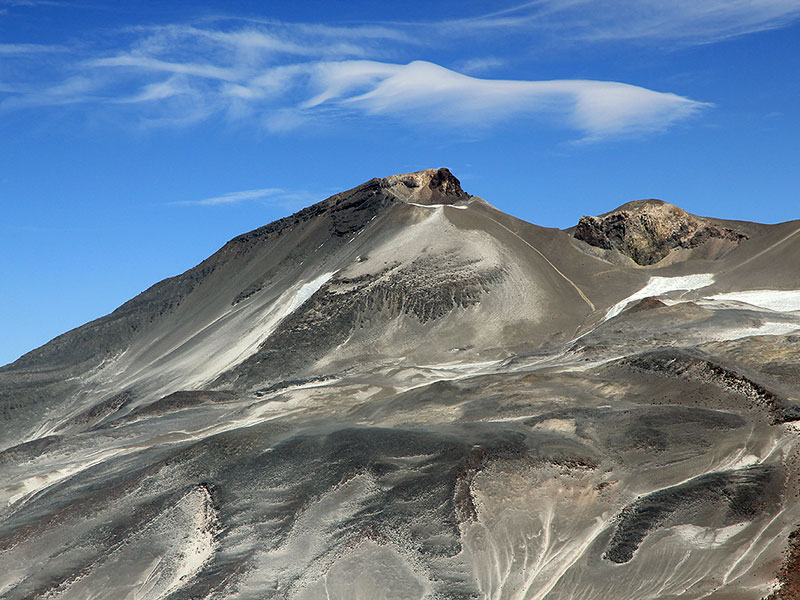
- Height (m)
- 6893
- Duration
- 15 дней
- Difficulty
- Moderate
- Continent
- South America
- Children
- Ages 14+
- Accommodation
- Tented accommodation
- suitable-for-beginners
- No
6000 $
Почему такая цена?
Ojos del Salado, 6893 m, is the highest volcano in the world and the second highest summit in South America. This fifteen-day trip works its way through the high lakes of the Atacama, a series of acclimatisation ascents including the summit of San Francisco, and the Atacama and Tejos camps.
Vehicle support removes much of the load carrying, but it does not lower the demands of altitude. The final part of the ascent includes a rock section, and the weather of a high-altitude desert can change quickly. The trip suits well-prepared participants with previous altitude experience and basic technical skills.
The price covers a Mountain Guide expedition leader for groups of three or more, the stated transfers, one hotel night in Copiapó, local mountain guides on the ascent, and food and group equipment as listed. The permit, insurance, porters and personal equipment are paid separately.
Important
- Access, road conditions and the requirements of the controlling authorities are checked before every departure.
- Vehicle support is not a substitute for acclimatisation or physical preparation.
The strength of the fifteen-day route is its sequential acclimatisation in the Atacama. The group raises its sleeping altitude through Laguna Santa Rosa and Laguna Verde, makes ascents of "Seven Brothers" and San Francisco, and gets to know Tejos before the final move up. Two reserve days leave room for decisions about weather and road conditions, but they do not guarantee the summit.
This trip does not drive you to the top: the final attempt remains a long, high-altitude climb.
If you want two summits in one altitude chain, see the Aconcagua and Ojos del Salado combined expedition.
About the Ojos del Salado climb
Ojos del Salado stands in the high Atacama desert on the border between Chile and Argentina. The trip starts in Copiapó and then climbs in stages to Laguna Santa Rosa, Laguna Verde, the Atacama camp and the Tejos refuge. Acclimatisation ascents of “Seven Brothers” and San Francisco prepare the group for the 6893 m summit.
Most of the logistics are handled by four-wheel-drive vehicles, but the upper camps remain remote and self-contained. The cold desert-mountain climate brings a large daily temperature range, strong wind and possible snow even in summer. The state of the access roads and entry to individual sections depend on the weather.
The route runs mainly over scree and snowfields. Immediately below the summit there is a short rock section where a belay may be needed. The guide decides on the start, the equipment and whether the team can continue, based on the conditions on the day.
Why the route starts a long way from the summit
The good vehicle access to Ojos del Salado creates a dangerous illusion of simplicity. A four-wheel-drive can carry people, water, food and camp equipment, but it does not speed up physiological adaptation. That is why the trip does not drive straight to Atacama or Tejos. Sleeping altitude is raised in stages, and the out-and-back ascents let you go high and come back down to sleep.
The ascent of San Francisco, 6018 m, is a serious day in its own right. It shows how you move above 5000 m, how you stay warm, drink, eat and recover. Reaching that summit is useful, but it is not an automatic clearance for Ojos del Salado. After each stage we assess the state of the team, the weather and the logistics of the next camp.
How Ojos del Salado differs from an ordinary trekking volcano
The route combines high altitude, a cold desert, strong wind, remoteness and unreliable roads. Snow and ice are possible in the upper section, and there is a short rock step immediately before the summit. Its actual condition determines what equipment and what protection will be needed. Even where the bulk of the route is technically straightforward, fatigue at nearly 7000 m changes both speed and precision of movement.
Dry air makes fluid loss easy to miss. You need to drink and eat on an agreed schedule rather than by thirst or appetite. At the same time water has to be used carefully, because the camps are remote and the supply is part of the vehicle logistics.
How the two reserve days are used
The reserve is not allocated in advance to a second attempt. Snow or wind can affect the road between the camps well before summit day. Extra time may be needed for rest, for waiting until a section is safe to drive, for postponing the move to Tejos or for organising the descent. The team on the ground makes that decision, keeping enough fuel, water and margin to get out of the area.
Who the fifteen-day trip suits
- A participant with previous high-altitude experience and systematic physical preparation;
- Someone ready for camp life, dry cold and several days of remoteness;
- A climber with basic skills in crampons and in working with a belay;
- A person who reports symptoms honestly and accepts the guide’s decision to turn back;
- A participant who does not treat vehicle access as a substitute for acclimatisation.
Departure availability is published in the Mountain Guide calendar. If you already hold fresh high-altitude acclimatisation from Aconcagua or another 6000 m peak, a short eight-day Ojos del Salado format also exists; it is being prepared as a separate English page.
Ojos del Salado climbing itinerary, 15 days
Day 1. Arrival in Copiapó.
Meeting at the airport and transfer to the hotel. Food for the climb is bought and the necessary paperwork is completed. An optional walk around the town. Night in a hotel.
Day 2. Drive to Laguna Santa Rosa, 3700 m — one of the most scenic lakes around Ojos del Salado, with large numbers of flamingos.
Setting up camp. Lunch. Walks on the surrounding hills for better acclimatisation, then rest. Night in camp.
Day 3. Acclimatisation ascent of “Seven Brothers”, 4800 m.
Descent to camp. Rest. Dinner.
Day 4. Drive to Laguna Verde — the Green Lake — 4250 m, about 2 hours.
Night in tents.
Day 5. Acclimatisation ascent of San Francisco, 6018 m.
It is possible to drive to 4900 m, from where a straightforward slope leads to the summit in about 4–6 hours. Descent to Laguna Verde. Night in tents at 4250 m.
Day 6. Rest and acclimatisation at Laguna Verde.
Day 7. Drive to the Atacama camp, 5300 m.
Camp is set up beside the Atacama refuge, followed by rest.
Day 8. Acclimatisation walk to the assault camp of Ojos del Salado (Tejos refuge, 5800 m) and return to the Atacama camp.
Day 9. Rest day at the Atacama camp.
A drive down to the Laguna Verde camp for a day’s rest is possible; the night is spent at the Atacama camp.
Day 10. Final preparation and move to the Tejos camp, 5800 m.
An early dinner and a night in the refuge or in tents.
Day 11. Summit attempt on Ojos del Salado, 6893 m.
An early start at 5 a.m. The way to the summit usually takes around 9–12 hours. Descent to the Atacama refuge at 5260 m. A further drive to the refuge at 4500 m is possible. Dinner and rest.
Day 12. Reserve day.
Day 13. Reserve day.
Day 14. Drive to Copiapó.
Flight to Santiago.
Day 15. Departure.
What's included
- Mountain Guide expedition leader throughout the trip, for groups of 3 participants or more
- Airport–hotel–airport transfer
- Hotel in Copiapó, 1 night, twin room with breakfast
- Assistance with obtaining the necessary permits
- Transfer Copiapó — Ojos del Salado — Copiapó
- Food and fuel for the high camps
- Mountain guides — one guide for every 3 climbers on the ascent
- Group equipment — tents, stoves, cooking pots
- Group first-aid kit
What's not included
- International flights
- Climbing permit, charged separately at the rate in force at the time of the climb
- Porters
- Personal equipment
- Additional costs arising from any departure from the itinerary
- Medical insurance covering the stated activity and the maximum altitude of the trip
- Personal expenses such as drinks, internet and phone calls
- Any costs arising from change to the itinerary
Private groups
A private group can choose the dates, the number of mountain guides and any extra reserve days. Before confirming, we check the state of the roads, the access rules, whether the refuges are operating and the current requirements for the climb. The route can be strengthened with extra acclimatisation, but it cannot be shortened in a way that breaks a safe rate of altitude gain.
Documents you need
- A valid passport
- Medical insurance covering the stated activity and the maximum altitude of the trip
- The documents and permits required for access to the area and for the climb on your travel dates
- Depending on your nationality, a visa may be required
- We recommend keeping digital copies of your documents on your phone and in cloud storage
Entry requirements for Chile and for the route are checked before the trip, against your nationality and the rules in force.
Weather and seasons
The dates fall in the southern hemisphere summer. The Ojos del Salado area is cold high-altitude desert, with a wide gap between day and night conditions, strong wind and the chance of snow even in summer. Weather affects not only the summit push but also the state of the roads. In winter, snow can restrict access. Before every expedition we check the forecast, road access and the instructions of the local authorities.
Accommodation and meals
One night in a hotel in Copiapó, in a twin room with breakfast, is included. The route uses tented camps at Laguna Santa Rosa, Laguna Verde and Atacama; at Tejos you sleep either in the refuge or in tents, depending on what is actually available. Food and fuel for the high-altitude section, together with the group tents and kitchen equipment, are part of the services provided. An extra night in Copiapó after you return is listed as possible and is confirmed separately. Tell us about dietary restrictions and allergies in advance.
Facilities on the route
After Copiapó the route runs through remote high-altitude desert. The tented camps and the Tejos refuge give basic shelter, not hotel comfort. A constant supply of water, showers, toilets, electricity, charging and internet is not guaranteed in the camps. Vehicle support helps with transport, but you still need a power bank, spare batteries, a head torch and your own toiletries. Signal depends on where you are on the route and on the weather; you cannot count on it every day.
Страхование
НаверхEquipment and useful extras for the Ojos del Salado climb
Скачать PDF- Passport
- Air tickets
- Medical insurance
- Rucksack. 50-60 litres
- Sleeping bag with a comfort rating of -15 to -25 °C
- Sleeping mat
- Trekking poles, which must have baskets
- Crampons; aluminium is acceptable
- Ice axe. Classic, on a leash. A lightweight axe, or one combined with a ski pole, is acceptable
- Helmet
- Climbing harness
- 3 karabiners
- Mug, spoon and bowl
- Triple or double mountaineering boots. Doubles are either plastic or leather. In plastic we recommend the Scarpa Vega, probably the warmest of all the double boots
- Trainers or trekking boots. Ideally both. Trainers for the trek to base camp, and light boots for the acclimatisation day and for base camp. Trainers alone will do, though
- Waterproof shell: jacket and trousers. The market runs from simple 5000/5000 membranes through to Gore-Tex garments
- Fleece top and bottoms
- Base layer, top and bottoms
- Down jacket with a hood. Thick and warm
- Warm mittens
- Thick gloves
- Thin gloves
- Bandana (as well as sun protection in the valley, it can keep your throat or face warm in the cold)
- Warm hat
- Warm trekking socks for summit day
- LED head torch with at least 12 hours of battery life
- Sunglasses
- Ski goggles
- Vacuum flask, 1 litre. Preferably without a push-button lid
- Windproof face mask for the lower face (a scarf will do at a pinch)
- Gaiters
- Sun cream and lip balm
- Chemical hand warmers (not compulsory, but they can be very useful)
- Personal first-aid kit
- Elastic bandage and/or a support brace
Вам также будет интересно:
-
 8,785 $
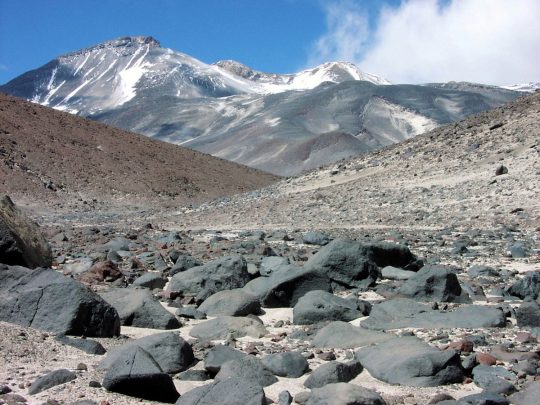
Aconcagua and Ojos del Salado — 25-Day Combined Expedition
- Height (m)
- 6962
- Duration
- 25 дней
- Difficulty
- Moderate
- Continent
- South America
- Children
- Ages 14+
- Accommodation
- Tented accommodation
- suitable-for-beginners
- No
-
 3,900 $
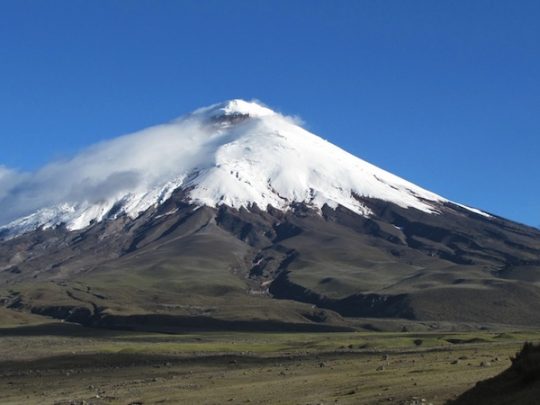
Climb Chimborazo and Cotopaxi — 14-Day Ecuador Expedition
- Height (m)
- 5897, 6384
- Duration
- 11 дней
- Difficulty
- Moderate
- Continent
- South America
- Children
- Ages 14+
- Accommodation
- Hotels only
-
 18,690 $
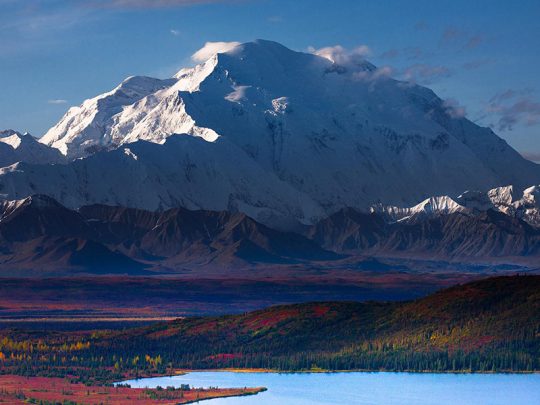
Climb Denali by the West Buttress, 23 Days
- Height (m)
- 6193
- Duration
- 21 день
- Difficulty
- Average
- Continent
- North America
- Children
- Not suitable for children
- Accommodation
- Some nights in tents
-
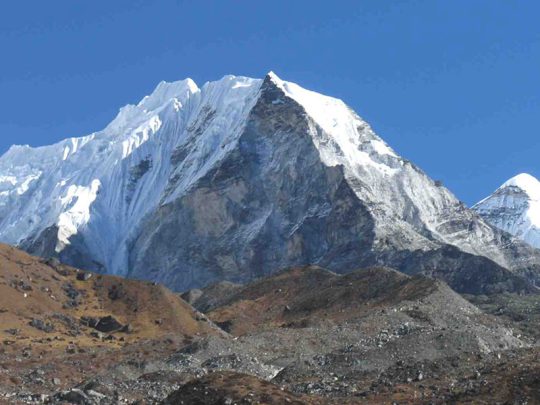 3,129 $
Island Peak Climb — 18-Day Expedition
- Height (m)
- 6165
- Duration
- 18 дней
- Difficulty
- Moderate
- Continent
- Asia
- Children
- Not suitable for children
- Accommodation
- Some nights in tents