- Guides
- B2B
-
#19607 (no title)
-
#15972 (no title)
- Climb Elbrus Individually
- Climb Elbrus from the South, 9 Days
- Climb Elbrus from the South, 7 Days
- Climb Elbrus from the South with Oxygen
- Climb Elbrus from the North, 10 Days
- Two Summits of Elbrus, 9 Days
- Elbrus Traverse from South to North, 9 Days
- Elbrus Traverse from North to South, 10 Days
- Cross of Elbrus, South to North, 9 Days
- Cross of Elbrus, North to South, 10 Days
- Climb Kazbek and Elbrus — 10-Day Two-Summit Programme
- Climb Elbrus from the West, 11 Days
- Elbrus by Private Helicopter, 3 Days
- Elbrus Region Holiday and Trekking, 9 Days
- Elbrus Region Holiday, 7 Days
- Tinder Tour: Climbing Mount Elbrus, 9 Days
- Climb Elbrus from the South, 9 Days with Sergey Baranov
-
#15539 (no title)
- Climb Carstensz Pyramid, 8 Days with Helicopter Access
- Climb Mont Blanc, 4810 m — 8-Day Guided Ascent
- Climb the Matterhorn, 4478 m — 8-Day Guided Ascent
- Climb Mount Vinson, 15-Day Antarctic Expedition
- Climb Kosciuszko and Travel in Australia, 7 Days
- Climb Fisht, 2868 m — 3-Day Ascent by the 1B Route
- Climb Mount Wilhelm, 6 Days
-
#15546 (no title)
- Climb Kilimanjaro: the Marangu Route
- Climb Kilimanjaro: the Lemosho Route
- Climb Ararat, 5137 m — 7-Day Classic Programme
- Climb Kazbek from the South, 5033 m — 8 Days in Georgia
- Climb Kazbek and Elbrus — 10-Day Two-Summit Programme
- Climb the Volcanoes of Mexico — Orizaba and Iztaccíhuatl, 9 Days
- Climbing Alpamayo — 16-Day Technical Expedition
- Climbing Margaret Peak (Stanley), 5,109 m
- Climbing Mount Kenya: Point Lenana, 4,985 m
- Climb Dykh-Tau by the North Ridge, 13 Days
-
#15554 (no title)
- Aconcagua Climb — 17-Day Guided Expedition
- Island Peak Climb — 18-Day Expedition
- Climb Mera Peak, 6476 m — 16-Day Hinku Valley Programme
- Climb Ama Dablam, 6812 m — 24-Day Expedition with Island Peak
- Climb Island Peak and Mera Peak — 24-Day Two-Summit Expedition
- Aconcagua and Ojos del Salado — 25-Day Combined Expedition
- Ojos del Salado Climb — 15-Day Expedition
- Climb Chimborazo and Cotopaxi — 14-Day Ecuador Programme
- Climb Huascarán — 8-Day Technical Ascent
- Climb Razdelnaya Peak, 6148 m — 15-Day Pamir Expedition
- Climb Denali by the West Buttress, 23 Days
- #15565 (no title)
- #15572 (no title)
-
#15972 (no title)
-
#19592 (no title)
-
See 8000m
- K2 Base Camp Trek via the Gondogoro La
- Everest Base Camp Trek — 14 Days
- Everest Base Camp via Gokyo Lakes — 15 Days
- Short Everest Base Camp Trek in 10 Days
- Annapurna Circuit and Tilicho Lake Trek
- Manaslu Circuit Trek
- Kanchenjunga Circuit Trek (XXL)
- Kanchenjunga North Base Camp Trek (Short)
- Kanchenjunga from India: the Goecha La Trek in Sikkim
- Makalu Base Camp Trek
- Annapurna Base Camp Trek
- South America
- Asia
- Africa
-
Russia
- Elbrus Region Holiday and Trekking, 9 Days
- Elbrus Region Holiday, 7 Days
- Oshten + Kardyvach — 9-Day Western Caucasus Trek
- Lake Kardyvach — 5-Day Base-Camp Trek
- Route 30: Through the Mountains to the Sea, with Oshten — 4 Days
- Trekking in Arkhyz — 7 Days over the Ayulyu Pass
- Gvandra Trek — 7 Days to the Ullu-Kyol Lakes
- Trekking in Dombai — 7 Days with the Murudzhu Lakes
- Europe
-
See 8000m
-
Adventures
-
Africa
- جولة المغرب: قلب شمال أفريقيا
- تسلق توبقال وثقافة المغرب
- Eritrea: the Dahlak Archipelago and the Rashaida Nomads
- Rwanda: Mountain Gorillas and the Bisoke Volcano
- Ethiopia: Otherworldly Landscapes and the Peoples of the Omo Valley
- جولة أوغندا: كوينز بارك والغوريلا الجبلية
- Tanzania Safari: Serengeti, Ngorongoro and Tarangire
- جولة أوغندا: وحيد القرن الأبيض والغوريلا الجبلية
- Zimbabwe and South Africa: Victoria Falls, Cape Town and the Cape of Good Hope
- Namibia: Etosha National Park and the Himba
- Kenya Safari: the African Big Five
- جولة بوتسوانا: دلتا أوكافانغو وتشوبي بارك
- South America
- Asia
-
Africa
- Ski-touring
- VIP
- #19722 (no title)
- About
Climb Mount Vinson, 15-Day Antarctic Expedition
- Height (m)
- 4892
- Duration
- 21 день
- Difficulty
- Moderate
- Continent
- Antarctica
- Children
- From 14 years old
- Accommodation
- There are tents
62000 $
Почему такая цена?
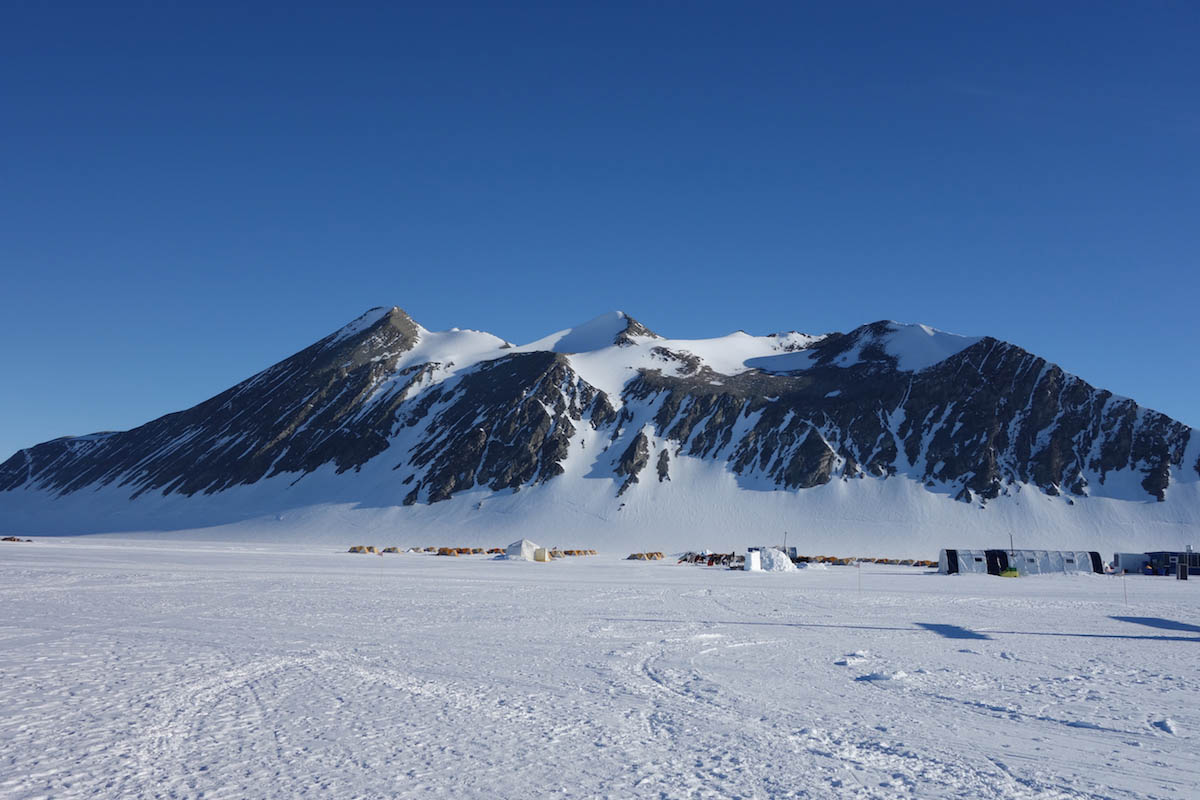
Climbing Vinson is an expedition to the highest point in Antarctica, 4892 m, and one of the key stages of the Seven Summits project. The trip runs in a small team, with no more than four participants to one guide. That format allows more attention to be given to each climber and lets the plan be adjusted flexibly for the weather, the condition of the route and flight logistics.
The journey begins in Punta Arenas: after an equipment check and the pre-flight briefing the team travels to Union Glacier camp and then on to Vinson Base Camp. The ascent by the Branscomb Glacier route is broken into stages with two high camps, rest days and training in roped travel, ice-axe self-arrest, crevasse rescue and work on fixed ropes.
The trip is not suitable for beginners. Participation requires experience of climbing in cold conditions, confident glacier travel skills and the readiness to work for long periods with a rucksack of about 18 kg. The summit day follows snow and ice slopes and a final ridge, after which the team returns to Camp 2.
The main value of the trip is the full experience of a self-supported Antarctic expedition: polar daylight, a glacier route, tented camps and teamwork in conditions where every movement depends on the weather. That experience is useful for higher and harder expeditions later on.
Important
- Flights in Antarctica depend on the weather and can be delayed. For the return journey we recommend allowing about five additional days and buying a ticket that can be rebooked
- Medical and evacuation insurance covering the stated activity and an altitude of 4892 m is compulsory for participation
About the Vinson climb
The Vinson Massif lies in the Sentinel Range of the Ellsworth Mountains in West Antarctica. Its highest point, Mount Vinson at 4892 m, is the highest summit on the continent and one of the Seven Summits. The defining feature of the expedition is the combination of altitude, Antarctic cold, self-supported teamwork and complete dependence on polar aviation and weather windows.
The Antarctic part of the trip is prepared and run with an international team that has more than 30 successful Vinson expeditions since 2009 behind it. A standard group has no more than four participants to one international guide. A Mountain Guide team leader accompanies the team in addition and helps participants at every stage of the trip.
The climb begins in Punta Arenas. After the equipment check and the compulsory pre-flight briefing the team flies by charter across the Drake Passage to Union Glacier camp. The flight takes about four hours. Participants normally spend one or two nights here before flying on to Vinson Base Camp in a Twin Otter. That flight takes about 45 minutes, but the departure time is always set by the actual weather.
The route follows the Branscomb Glacier and takes in base camp, Camp 1 and Camp 2. Moves alternate with rest days and technical preparation. After the climb to Camp 1 the team recovers and repeats its work on fixed ropes. After the move to Camp 2 there is a rest day before the summit attempt. This sequence helps the team adapt to altitude and to the accumulated load without pushing the trip unnecessarily fast.
The expedition runs in a self-supported team format. On the gentler glacier sections participants move roped up, haul sleds carrying part of the personal and group equipment and carry rucksacks. Under the guides’ direction the team shares out loads, pitches and strikes tents, organises the camps, melts snow for water and helps prepare meals. Readiness for this work is a compulsory part of the Vinson climb.
Between Camp 1 and Camp 2 the route follows a long, steep snow and ice slope equipped with fixed ropes. Above the ropes the team continues over the gentler upper glacier plateau and establishes the high camp. The summit day goes up glacier slopes and a final ridge, by which participants reach the highest point in Antarctica. After the ascent the team returns to Camp 2.
Before the mountain part begins, the guides go over roped travel, ice-axe self-arrest and what to do if someone falls into a crevasse. Participation requires experience of climbing and living in cold conditions, confident use of crampons, ice axe and ascender, roped glacier travel skills and readiness to work for long periods with a rucksack of about 18 kg. The trip is not suitable for beginners without the corresponding mountaineering experience.
Flights to Antarctica, flights between Union Glacier and Vinson Base Camp and the return flights are made only in suitable weather. The wait can last several days, and on some expeditions aviation delays have exceeded a week. Reserve days reduce the risk of missing the return flight, but they do not make an exact return date possible to guarantee.
During the climb the team sends regular messages from the route. Where possible, Mountain Guide publishes photographs, short text and audio messages, and news of moves between camps, expected weather, the summit attempt and the team’s return. How often messages appear depends on the quality of communications and on current safety priorities. After the trip ends, the material is kept in the expedition archive.
Vinson climbing itinerary, 15 days
Camp altitudes are approximate: the exact position of tents and landing areas can change slightly with the condition of the glacier and the decisions of the Antarctic operator.
Day 1. Arrival in Punta Arenas. An expedition representative meets participants at the airport and arranges the transfer to the hotel. After check-in there is a full check of personal equipment and a meeting with the guides. In the evening the group gathers for dinner together. Accommodation and meals in Punta Arenas are paid separately. Night in a hotel.
Day 2. Preparation for the flight to Antarctica. Participants attend the compulsory pre-flight briefing given by the Antarctic air operator. It covers expedition logistics, safety rules, baggage limits and the particular features of the flight. Expedition duffel bags are handed over for checking, weighing and loading. The rest of the day is free. Night in a hotel.
Day 3. Flight to Antarctica and arrival at Union Glacier, about 700 m. Weather permitting, the group flies out of Punta Arenas on a charter jet. The flight across the Drake Passage takes about four hours and ends with a landing on the ice runway beside Union Glacier camp. The team normally spends one or two nights here before flying on. Night at Union Glacier camp.
Day 4. Technical training on the glacier at Union Glacier, about 700 m. The guides run practical sessions on roped glacier travel, ice-axe self-arrest and what to do if a member of the team falls into a crevasse. The day also allows recovery after the flight and preparation for safe work on the glaciers of the Vinson Massif. Night at Union Glacier camp.
Day 5. Flight to Vinson Base Camp, about 2100 m. In favourable weather the group flies to Vinson Base Camp on a Twin Otter aircraft. The flight takes about 45 minutes. On arrival participants pitch tents, distribute personal and group equipment and prepare sleds and harnesses for the move to Camp 1. Night at base camp.
Day 6. Move to Camp 1 (Low Camp), about 2780 m. The team begins the climb and moves roped up along the Branscomb Glacier. Participants haul sleds carrying part of the personal and group equipment and also carry rucksacks. On arrival the team pitches tents, organises the camp, melts snow for water and prepares meals. This move opens the main mountain part of the trip and gives the first sustained load at altitude. Night at Camp 1.
Day 7. Rest at Camp 1, about 2780 m, and preparation for the fixed ropes. The day is set aside for recovery after the move and for additional technical preparation. The guides go over the rules for ascending and descending fixed ropes with the participants. The team checks personal equipment and prepares the loads for the next stage of the route. Night at Camp 1.
Day 8. Move to Camp 2 (High Camp), about 3780 m. The team climbs a steep snow and ice slope using fixed ropes. Above the roped section the route reaches the gentler upper glacier plateau and continues to Camp 2. Participants pitch tents, set up the high camp and prepare water and meals. The summit attempt will be made from this camp. Night at Camp 2.
Day 9. Rest at Camp 2, about 3780 m, before the summit attempt. Participants recover after the climb and prepare their personal equipment for the summit day. The guides review the weather forecast, the condition of the route and the state of the team, and then decide when the ascent should begin. Night at Camp 2.
Day 10. Ascent of Vinson, 4892 m. The team climbs the glacier slopes to the summit ridge, follows it and reaches the highest point in Antarctica. After the ascent participants return to Camp 2. The duration and the start time depend on the weather, the condition of the route and the pace of the team. Night at Camp 2.
Day 11. Descent to base camp, about 2100 m. The team strikes the high camp, descends the fixed ropes and continues through Camp 1 to Vinson Base Camp. After the long descent participants rest, sort out equipment and prepare for the return flight. Night at base camp.
Day 12. Return to Union Glacier, about 700 m. Weather permitting, the group flies from Vinson Base Camp to Union Glacier camp. The departure time depends on visibility, wind and the state of the landing areas. On arrival participants settle into the camp and wait for confirmation of the return flight to Chile. Night at Union Glacier camp.
Day 13. Flight to Punta Arenas. In favourable weather the group flies out of Antarctica to Punta Arenas. On arrival participants check into the hotel and rest after the expedition. Accommodation and meals in Punta Arenas are paid separately. Night in a hotel.
Day 14. Free day in Punta Arenas. The day is for rest, walking around the city and preparing for the journey home. Night in a hotel.
Day 15. End of the trip. Participants check out of the hotel and travel to the airport for the flight home.
Days 16-21. Reserve for delays. Reserve days are provided in case of poor weather, changes to the climbing schedule and rescheduled Antarctic flights. The actual sequence of moves and flights may change at the decision of the expedition leader, taking account of the weather, the condition of the route, the aviation situation and the state of the participants. Even with reserve days the exact return date cannot be guaranteed. On some past expeditions the wait for aircraft exceeded a week. We recommend buying a changeable return ticket departing about five days after the planned end of the trip, and not committing to important obligations immediately after your return.
What's included
- Meeting at Punta Arenas airport and transfer to the hotel on Day 1
- An experienced Mountain Guide team leader accompanying the group
- An experienced international expedition guide
- Expedition guiding at no more than four participants to one expedition guide
- Charter flights from Punta Arenas to Antarctica and back
- All internal Antarctic flights to Vinson Base Camp and back
- Accommodation and expedition services throughout the stay in Antarctica
- Meals throughout the Antarctic part of the trip
- Group expedition equipment – tents, ropes and kitchen equipment
- Team communications – VHF radios and a satellite phone
- A daily specialist weather forecast during the climb
What's not included
- International and domestic flights to Punta Arenas and back
- Accommodation and meals in Punta Arenas
- Visas and transit permissions where these are required by nationality and flight routing
- Personal equipment, clothing, sleeping bag and other items from the compulsory kit list
- A waterproof, hard-wearing 150 l expedition duffel bag for the sled
- Medical and evacuation insurance – compulsory for participation
- Trip cancellation insurance – strongly recommended
- Bank transfer fees where these apply
- Additional costs arising from weather or aviation delays or from other circumstances beyond the organisers’ control
- Personal expenses and services not expressly listed under what is included
The Vinson climb for private groups
The form a private expedition takes depends on the number of participants. One or two Mountain Guide clients normally join an existing international Madison Mountaineering group. In that format a dedicated Russian-speaking guide is not automatically included and is confirmed separately. For a closed group of 3-5 participants, the partner gives written approval for a Russian-speaking Mountain Guide leader to work within the Madison and ALE team. Madison’s published standard is no more than four participants per international guide; a fifth person and the final ratio of guides must be set out separately in the specification for the particular expedition. The route, the sequence of camps and the acclimatisation plan are kept. The make-up of the team, the dates, the price, the availability of polar aviation and each guide’s role are confirmed before booking. Decisions on start times, on moving days around and on turning back are taken by the guiding team, in the light of the weather, the state of the route and participants’ safety. On request, a private expedition can be extended with a flight to the South Pole or a trip including a night at the South Pole. Whether that is possible, how long it takes and what it costs are confirmed separately. The climb is not intended for children or for companions without the necessary mountaineering and expedition experience.
Documents required for the Vinson climb
A participant is accepted on the expedition only after meeting the requirements of Mountain Guide, Madison Mountaineering and the Antarctic air operator ALE. The registration documents are issued to a named participant once their name and email address have been supplied.
- A valid passport meeting the requirements of the countries on the route
- A visa and any transit permits required for your nationality and your chosen flights
- The expedition organiser’s registration, personal and medical forms, completed
- Medical and evacuation insurance with cover of at least USD 150,000
- A policy valid for the whole trip and for at least seven days after the scheduled return flight from Antarctica
- An explicit statement in the policy that it covers mountaineering, roped travel, climbing and evacuation from altitudes up to 4892 m
- Copies of your passport, insurance policy and other documents in the format requested
- Electronic copies of your documents, available offline during the trip
Send us the terms of your policy for approval before you buy it. Trip cancellation insurance is not required for acceptance, but is strongly recommended, given the strict refund terms and the risk of flight delays.
Weather and seasons for the Vinson climb
The climbing season on Vinson falls in the Antarctic summer, from late November to January. Most expeditions run in December and January, when the weather is usually more settled and the sun never sets. The polar day gives more scope in choosing when to move and when to go for the summit, but it does not make conditions warm or predictable.
The average temperature during the season stays well below -18 °C. In stronger wind the cold bites far harder, and gusts can reach around 65 km/h. Even in summer, participants must be ready for prolonged hard frost, strong wind and waiting in tents for suitable conditions. Every flight to Antarctica and within the continent runs only in favourable weather. The departure from Punta Arenas, the flight to Vinson base camp and the return can all be delayed as a result. The climbing schedule is likewise adjusted to the actual state of the route and the forecast. For the return flight we recommend a ticket that can be changed, and allowing about 5 extra days after the trip’s scheduled end.
Accommodation and meals on the Vinson expedition
In Punta Arenas participants stay in a hotel before flying to Antarctica and after returning from the continent. Accommodation and meals in Punta Arenas are not part of the expedition price and are paid separately. Any extra nights needed because of weather delays are also at the participant’s expense.
In Antarctica the accommodation is in expedition tents. Before the flight to Vinson the team stays at Union Glacier camp, and during the climb it sleeps at base camp and two high camps. All accommodation and camp services in the Antarctic part of the trip are included in the price. Meals in Antarctica are included throughout. The menu provides hot breakfasts and full dinners: depending on the stage of the expedition, that means eggs, pancakes, meat or fish, vegetables, rice and potatoes. At the high camps the food and the way it is cooked are adapted to the weather and to conditions on the route. A vegetarian or vegan diet, food allergies and medical restrictions must be reported before booking. Whether a suitable diet can be provided is confirmed by the organiser in advance.
Day-to-day conditions on the Vinson expedition
Conditions change markedly as the team moves from Union Glacier camp up to Vinson’s high camps. Union Glacier has shared showers and toilets. To save water we recommend showering no more than once every 2-3 days; washbasins are available at other times. There is no laundry in Antarctica.
Vinson base camp has simple outdoor toilets with screening walls, but no showers. Above base camp there are no fixed toilet and washing facilities at all. Everyone must follow the environmental rules: solid waste is packed into sealed bags and carried out, and designated places are used for liquid waste. You need your own toiletries, wet wipes and a personal pee bottle. Union Glacier and Vinson base camp run mainly on solar power. Limited charging is available in the communal tents, via USB and 120 V American type A and B sockets. We recommend bringing a suitable adapter, a power bank and spare batteries, and charging every device fully while still in Punta Arenas. There is no way to recharge at the high camps. Starlink internet is available in the communal areas at Union Glacier and Vinson base camp, though it can be slow or drop out because of the weather. Operational messages always take priority over personal use of the network. Above base camp there is no internet access, and the radios and satellite phone are used above all for the guides’ communications, for coordinating the expedition and for emergencies. In Punta Arenas the facilities depend on the hotel chosen. Accommodation, meals, laundry and other hotel services before and after the Antarctic part of the trip are paid separately.
Страхование
НаверхEquipment list for the Vinson climb
Скачать PDFEquipment and useful extras for the Vinson climb
The organiser provides the group tents, ropes, gas, stoves, kitchen equipment and expedition communications. You bring the personal equipment listed below yourself. Check and break in everything beforehand, and show it to your guide in Punta Arenas.
Base layers
- Synthetic underwear – 2-3 sets
- Lightweight base layer, long-sleeved top and long johns – 1-2 sets
- Warm base layer – 1 set
- Short-sleeved synthetic T-shirts – 1-2
- Cotton clothing is not suitable for the climb
Mid layers
- Softshell jacket
- Softshell trousers
- A lightweight insulating mid layer
- Light nylon trousers – 1-2 pairs
Protection from wind and precipitation
- A waterproof, waterproof, breathable shell jacket with a hood
- Waterproof, waterproof, breathable shell trousers with full-length side zips
Insulating layers
- A warm expedition down or synthetic jacket with a hood
- Insulated trousers with full-length side zips
Headwear and face protection
- A warm wool or synthetic hat
- A balaclava to protect your face and neck from the wind
- Cap or other sun hat
- Buff or bandana
- A neoprene face mask
- A nose guard against the sun – optional
Eyewear
- Glacier sunglasses with side shields or a close-fitting frame
- Ski goggles for strong wind
- Spare ski goggles – optional
Gloves
- Thin synthetic gloves – 2 pairs
- Softshell gloves
- Windproof gloves with insulated lining
- Warm expedition mittens to go over the thin gloves
- Electrically heated gloves – optional
Footwear and socks
- Thin liner socks – 3 pairs
- Warm wool or synthetic mountaineering socks – 3 pairs
- Electrically heated socks – optional
- Warm expedition mountaineering boots compatible with crampons
- Warm boots for camp
- Down camp booties – optional
Sleeping equipment
- An expedition sleeping bag rated to at least -40 °C
- A full-length self-inflating or inflatable sleeping mat
- A full-length closed-cell foam mat, to use together with the inflatable one
- Earplugs
- An eye mask for sleeping during the polar day – optional
Climbing equipment
- An expedition rucksack of about 105 litres
- Compression dry bags for your sleeping bag, warm clothing and other bulky items
- Heavy-duty plastic bags to protect your kit inside the rucksack and dry bags
- Adjustable trekking poles with snow baskets
- A classic mountaineering ice axe about 65 cm long
- A leash for the ice axe, attached to your harness rather than your wrist
- Mountaineering crampons
- A climbing helmet that fits over a warm hat
- A handled ascender for climbing rope
- 9 m of 6 mm accessory cord
- A climbing harness with adjustable leg loops
- Snapgate karabiners – 6
- Standard screwgate karabiners – 2
- Large screwgate karabiners – 2
- A belay and descending device
- A hard-wearing waterproof 150-litre expedition duffel for the sled
For the journey
- A small lockable bag for storing things at the hotel during the climb
- A cabin bag of about 46 x 41 x 26 cm
- Town clothes and shoes for Punta Arenas
- Notebook and pen
- A small amount of US dollars in cash for personal spending
Extra food
- Several days’ worth of your favourite climbing snacks
- Energy bars, gels, nuts, dried fruit or whatever else you are used to
- A mix of sweet and savoury snacks
Utensils and hydration
- A plastic mug of at least 470 ml
- Large plastic bowl
- A sturdy plastic spoon
- Wide-mouthed 1-litre bottles – 2-3
- Insulated bottle covers – 2
- Vacuum flask of 1 litre
Personal items and toiletries
- Chemical hand and foot warmers
- Electrically heated insoles – optional
- SPF 50 or higher sun cream
- SPF 30 or higher lip balm – 2
- Toothbrush, toothpaste, dental floss, hand sanitiser and wet wipes
- Toilet paper – 2 rolls in sealed bags
- A personal pee bottle of at least 1 litre
- A female urination device – if needed
- A small knife or multi-tool
- A personal first-aid kit, without duplicating the group medical kit
- Your own prescribed medication, with enough spare for possible weather delays
- A shower towel
Electronics – optional
- An adapter for American type A and B sockets, and a voltage converter if your devices need one
- Avalanche transceiver
- A sports watch
- A GPS unit or personal satellite communicator
- A power bank and your own charging set-up, with a portable solar panel if you need one
- A smartphone, tablet or e-reader with material downloaded in advance
- Camera, spare batteries, charger and memory cards
Вам также будет интересно:
-
 19,000 $
Climb Carstensz Pyramid, 8 Days with Helicopter Access
- Height (m)
- 4884
- Duration
- 7 дней
- Difficulty
- Average
- Continent
- Australia
- Children
- From 14 years old
- Accommodation
- There are tents
-
 18,690 $
Climb Denali by the West Buttress, 23 Days
- Height (m)
- 6193
- Duration
- 21 день
- Difficulty
- Average
- Continent
- North America
- Children
- No
- Accommodation
- There are tents