Many people think a guide is someone who knows the route and accompanies a group into the mountains. That is an extremely superficial view. The true role of a guide goes much deeper: it takes in care for the life and health of everyone, keeping spirits up and bringing the climb to a successful end. Under a guide’s leadership participants feel more confident, and their safety and comfort rest on that professionalism. A professional guide is not simply someone who shows the way. He is a mentor, a support and a motivator, who helps participants deal with their own fears, work through their doubts and find the strength in themselves to reach the summit. He knows how to create an atmosphere of unity and trust in a group, inspiring everyone towards the goal even when the way is hard and demands a great deal of effort.
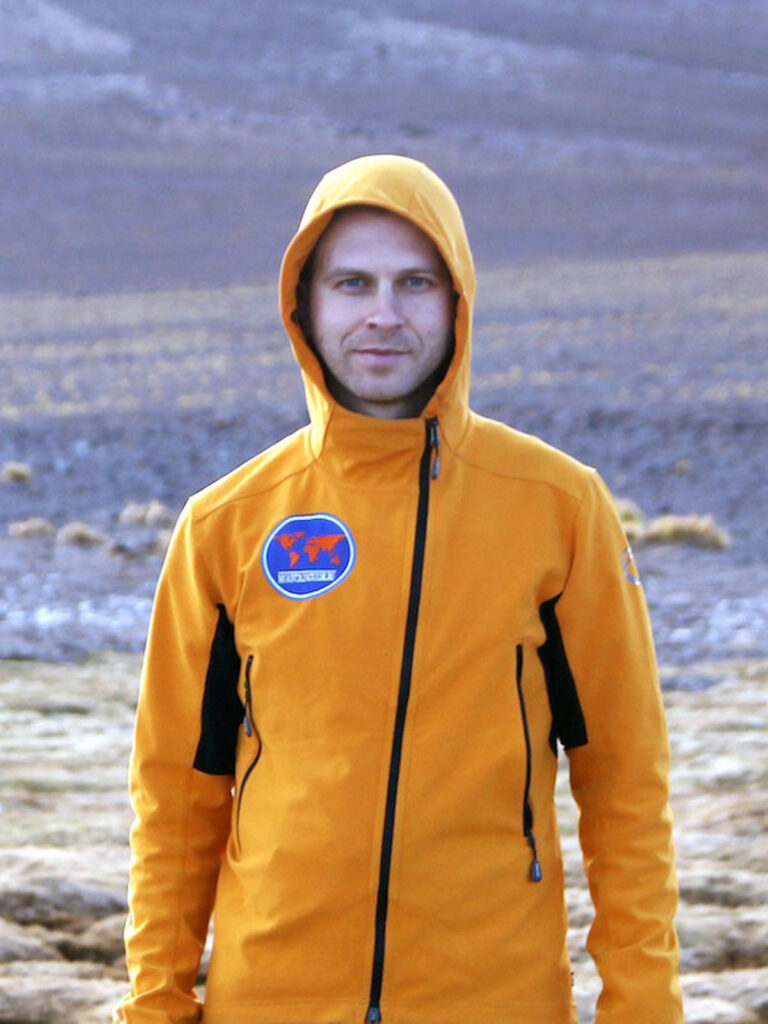
Sergey Baranov
Officially – 1st Class in mountaineering
Working as a guide since 2001
Instructor-guide in mountain tourism and mountaineering
licence of instructor-guides of the Russian Federation, register number В011-00161-77/01343562
Completed a first-aid course
Experience of rescue work up to 7200 m
Holder of the medal “For Loyalty to Duty and Fatherland”
Candidate Master of Sport in orienteering
Candidate Master of Sport in track and field
1st Class in sport shooting
3rd Class in mountain, sport and walking tourism.
Candidate of Sciences in Economics.
215 ascents of Elbrus with clients (about 184 of them as leader). Took part in the Tequilajazzz concert on Elbrus;
2003 — Winter ascent of Volnaya Ispaniya, Osipov route, 4b;
2004 — Khan Tengri Peak (7010 m), Lenin Peak (7135 m), attempted winter ascent of Shkhelda by “the board”, 5b;
2005 — Winter ascent of Ullutau, Burlutsky route, 5b;
2006 — Organiser and guide of an expedition to Lenin Peak (7135 m), Kyrgyzstan;
2007 — Member of a sport expedition to Broad Peak (to 7900 m) and K2 (to 8000 m), took part in the rescue work on K2. Organiser and guide of an expedition to Lenin Peak (7135 m), Kyrgyzstan;
2008 — Organiser and guide of an expedition to Lenin Peak (7135 m), Kyrgyzstan;
2009 — Organiser and guide of an expedition to McKinley (6193 m), Alaska;
2011 — Organiser and guide of an expedition to McKinley (6193 m), Alaska
Organiser and guide of an expedition to Chimborazo (6300 m) and Cotopaxi (5900 m), Ecuador
Guide to an Indonesian climber with a disability, the first person to reach the summit of Elbrus (from the north) without technical aids;
2012 — Organiser and guide of an expedition to Aconcagua (6967 m, several times);
Organiser and guide of an expedition to Lenin Peak (7135 m), Kyrgyzstan;
2013 — Organiser and guide of expeditions to Kilimanjaro (5895 m); Aconcagua (6967 m, several times)
2014 — Ascent of Elbrus with quad bikes, certificate from the Russian book of records awarded, height of 5250 m reached; ascent of Elbrus from the south with a climber with a disability (without prostheses); Aconcagua (6967 m, several times);
2015 — Ascent of Elbrus with a 10-year-old boy, Ararat, Kazbek, attempted ascent of Ojos del Salado;
2016 — Successful expedition to bring a quad bike to the summit of Elbrus, Russian book of records, candidates for the Guinness book of records;
2017 — Guide and organiser of an ascent of Muztagh Ata (7546 m), Lenin Peak (7135 m), member of an ascent of Manaslu (8156 m);
2018 — Ascent with a climber with a disability on the “Elbrus Cross” programme
2019 — Ascent of Elbrus with a paralysed combat veteran. Ascent of Carstensz Pyramid, Indonesia. Ascent of Lobuche Peak (6100), Ararat (5136);
2021 — Organiser and guide of expeditions: Kilimanjaro (5895 m), Cotopaxi (5900 m), Island Peak (6165 m);
2022 — Organiser and guide of expeditions: Kilimanjaro (5895 m), Island Peak (6165 m);
2023 — Organiser and guide of expeditions: Kilimanjaro*2 (5895 m), Aconcagua (6957 m), Ararat, Damavand, Toubkal
2024 — Organiser and guide of an expedition: Island Peak (6165 m)
Organiser and guide of an expedition: Manaslu (8163 m);
2025 — Kilimanjaro (5895 m);
2026 — Aconcagua (6961 m), two ascents
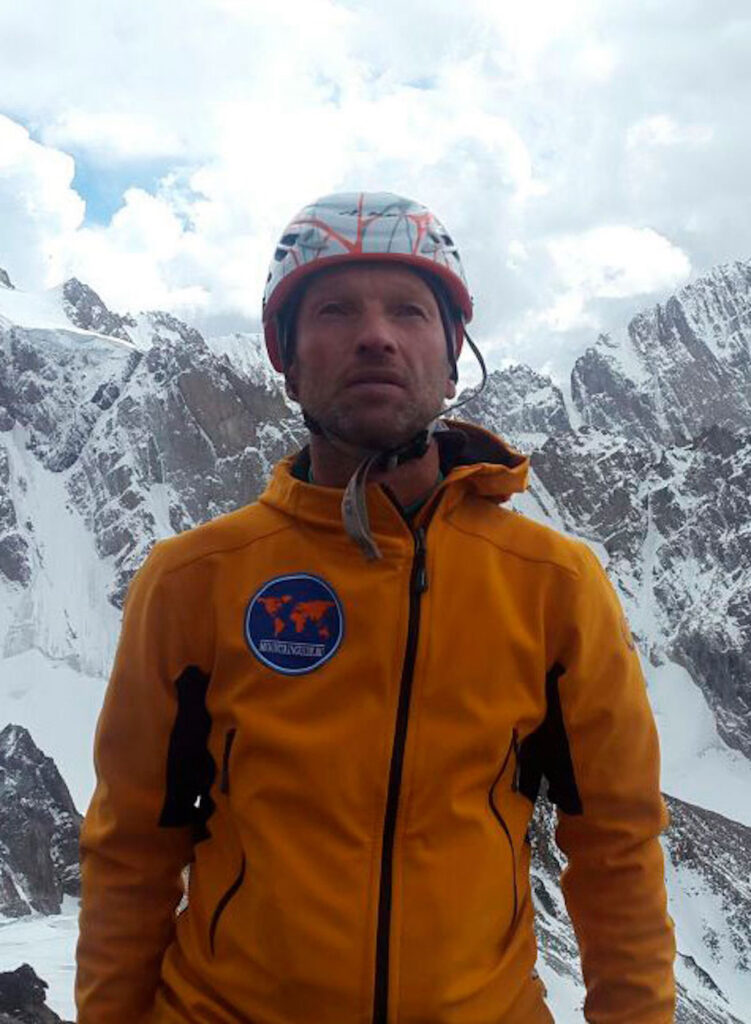
Pavel Vorobyev
Officially — Candidate Master of Sport in mountaineering.
Twice a “Snow Leopard” — in 2009 and 2025.
Mountaineering instructor
Rescue Squad badge
Technical director of the Kyrgyzstan Mountain Guides Association.
Completed a first-aid course
Completed the Heli-Ski guide school
Took part in rescue operations at altitudes up to 6900 m. More than 300 helicopter hours as a Heli-Ski guide, trained at the Swiss mountain guides school. Spent a total of 320 days in the mountains as an instructor on training camps.
2 Two higher degrees.
1999 — Elbrus;
2003 — Elbrus, first ascent of the West Summit by the North-West Ridge;
2005 — Khan Tengri (7010);
2006 — Peak Communism (7495) and Peak Korzhenevskaya (7100 m);
2007 — Lenin Peak (7134 m, several times), Vazha Pshavela (6900) — rescue work;
2008 — Lenin Peak (7134 m, several times);
2009 — Pobeda Peak (7439), Peak Boks (Mikhaylov route 5B) in winter as a two-person team;
2010 — Peak Communism (7495 m);
2011 — Lenin Peak (7134 m), Muztagh Ata (7546 m), Nanga Parbat to 7600;
2012 — 2 ascents of Lenin Peak, descent from Lenin on skis, 5 ski descents from Peak Korona (4860 m);
2013 — Lenin Peak, Muztagh Ata (7546);
2014 — Lenin Peak;
2015 — Lenin Peak;
2016 — Elbrus, Lenin Peak, attempted ascent of Pobeda Peak, ascent of Aconcagua (twice);
2017 — Muztagh Ata (7546 m), Lenin Peak (7135 m).
2018 — Lenin Peak (7134 m)
2019 — Lenin Peak (7134 m)
2021 — Lenin Peak (7134 m)
2022 — Peak Korzhenevskaya (7100 m), Peak Communism (7495 m)
2023 — Lenin Peak (7134 m)
2024 — Lenin Peak (7134 m)
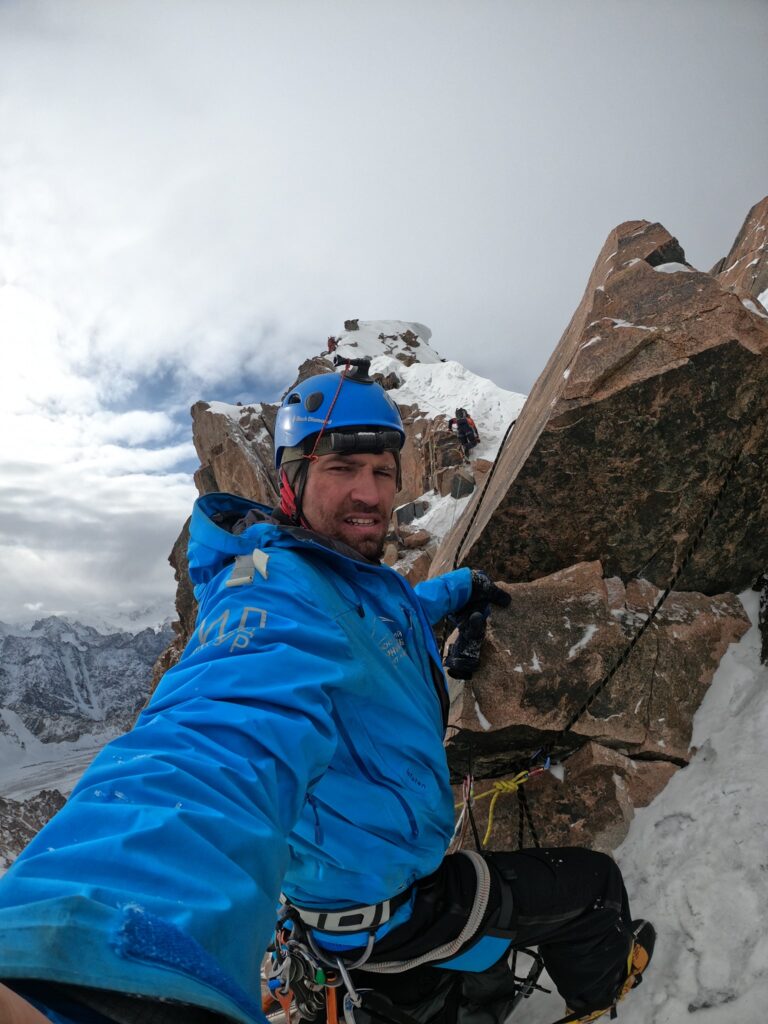
Maksim Cherkasov
Officially — certified mountain guide (KGMA/IFMGA.)
Certified snowboard instructor, category C (ISIA/NLI)
Candidate Master of Sport in mountaineering.
More than 15 years in mountaineering.
Technical ascents up to grade 6a: Ala-Archa, Karakol, Karavshin, Inylchek;
High-altitude ascents:
Lenin Peak (7134 m) (29 times on the summit);
Khan Tengri (7010 m);
Muztagh Ata (7540 m);
Makalu (8485 m);
Broad Peak (8051 m) (climbed without supplementary oxygen);
Winter ascent of the north face of Peak Communism (7495 m) (Ismoil Somoni Peak).
Ski touring and freeriding: Kyrgyzstan, the Karakol gorge, the Terskey Alatau range, Ala-Archa National Park, the Aksay glacier, the Ala-Archa glacier;
Snowboard descent from the summit of Lenin Peak (7134 m);
Ski touring in the Pamir, in China (Muztagh Ata 7540 m), and in Buryatia, eastern Siberia and central Siberia;
Competitor and prizewinner in Russian freeride competitions.
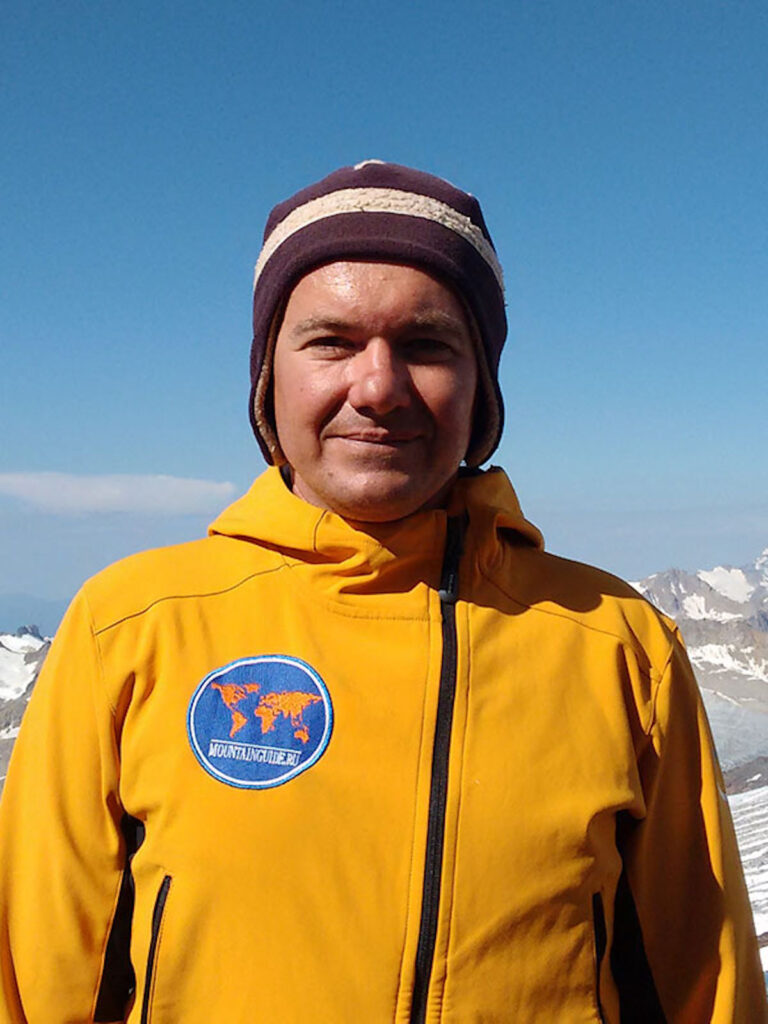
Roman Demenko
Officially – 1st Class in mountaineering
Working as a guide since 2009
Instructor-guide in mountain tourism and mountaineering, licence of instructor–guides of the Russian Federation register number В011-00161-77/01365728
Completed a first-aid course
Ski instructor of level “B” under the classification of the international association of ski instructors (IsiA)
Qualified snowboard instructor
1987 — first experience of mountain tourism;
1996 — first experience of mountaineering;
1996 — first ascent of Elbrus;
2008 — began working as a guide;
2008 — Zamok, 5A;
2009 — Fisht, 5A;
2010 — Cheget-Tau-Chana, 5A;
2011 — Sobor-Skala, 5A first ascent of the route, West Dombai, 5B;
2013 — Instructors’ school;
2014 — Lenin Peak (7134 m) as guide;
2017 — member of an ascent of Manaslu (8156 m);
2019 — Dzhailyk, 5A by “the Monk”
Has been on the summit of Elbrus 209 times (as at 2024).
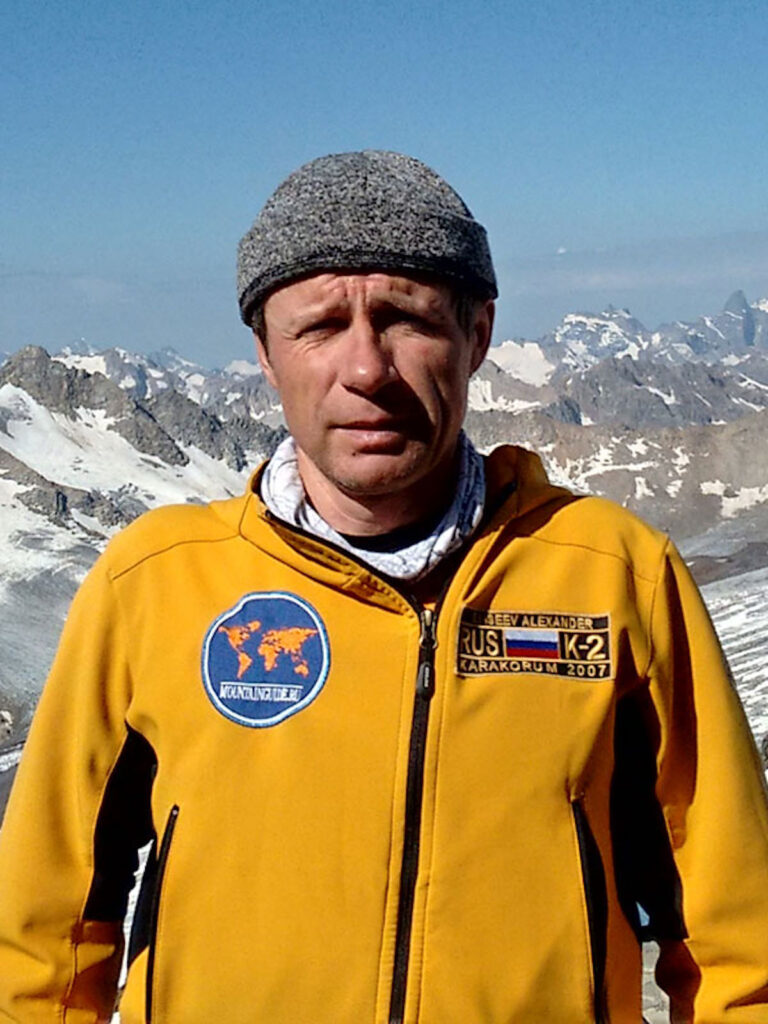
Alexander Eliseev
Officially — Master of Sport in mountaineering
Working as a guide since 2012
Instructor-guide in mountain tourism and mountaineering, licence of instructor-guides of the Russian Federation register number В011-00161-77/01386435
Completed a first-aid course
A repeated prizewinner of the championships of Krasnodar Krai and southern Russia in mountaineering, skyrunning and orienteering
Chairman of the Krasnodar Krai mountaineering federation
Ascents in the Caucasus:
Traverse of Dzhuguturluchat 5A;
West Dombai by the south ridge 5A;
West Dombai by the south face 5B;
West Dombai by the west buttress 5B;
West Dombai by the south-east buttress 5B, first ascent of the route;
Amanauz Dvuzubka 6A;
Dalar 6A;
Gaykomd 6A.
1988 – 2023 — more than 200 ascents of Elbrus, more than 15 of them in winter.
2006 — Khan Tengri Peak (7010 m), Pobeda Peak (7400 m);
2007 — K2 Peak (8611 m); member of an ascent of Broad Peak (8051 m)
2014 — Lenin Peak (7135 m);
2015 — Aconcagua (6967 m, several times);
2016 — Ushba (4810, Classic, 4A, solo), Dombai Glavny (as guide), Aconcagua (6967 m, several times), Gaykomd (3200 m, 6A);
2017 — Manaslu (8163 m), Aconcagua (6967 m, several times), Morcheka (5A, 5B, 3*6A), Ushba (4810, Classic, 4A); Aconcagua (6967 m, several times)
2018 — Aconcagua (6967 m, several times), Gaykomd 5B twice in winter, Erydag 6B;
2019 — Erydag 5A and 5B in winter (Russian championship), Aconcagua (6967 m, several times), Muztagh Ata (7546 m);
2020 — East Dombai-Ulgen (3950 m, 6A);
2021 — Aconcagua (6967 m, several times), Ushba (4810 m, Classic, 4A);
2022 — Aconcagua (6967 m, several times), Dzhailyk (4533 m, 4A), Annapurna IV (7525 m)
2023 — Aconcagua (6967 m, several times)
2024 — Aconcagua (6967 m, several times)
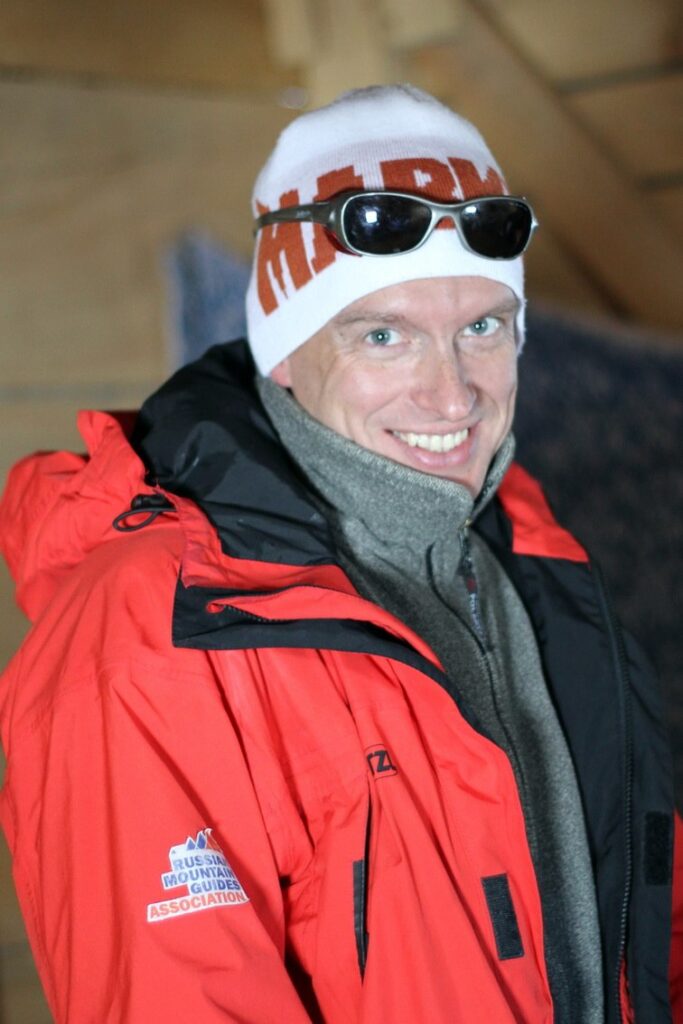
Vladimir Khrabovchenko
Officially — 2nd Class in mountaineering
Instructor-guide in mountain tourism and mountaineering, licence of an instructor-guide of the Russian Federation – register number В011-00161-77/01451458
Completed a first-aid course
Certified avalanche training instructor of the Canadian Avalanche Association
Ski guide of the Russian Mountain Guides Association. CAA Avalanche Operations Level 1 diploma. Current member of the Canadian Avalanche Association.
Candidate of Sciences in Geography.
Alpine ski instructor category B – certificate 1759
Climbing instructor – certificate 7384
Since 2000 – guide on ascents of Elbrus (5642 m) and Kazbek (5033 m).
Freeriding and ski touring in the Caucasus (Krasnaya Polyana, Arkhyz, Dombai, the Elbrus region, Lago-Naki), the Transcaucasus (Georgia, Armenia), Siberia (Sheregesh, Luzhba, Priiskovy), Baikal (Mamay), Kamchatka, the Tien Shan and the Pamir
Ski touring and ascents of Elbrus, Kazbek, Fisht and Oshten
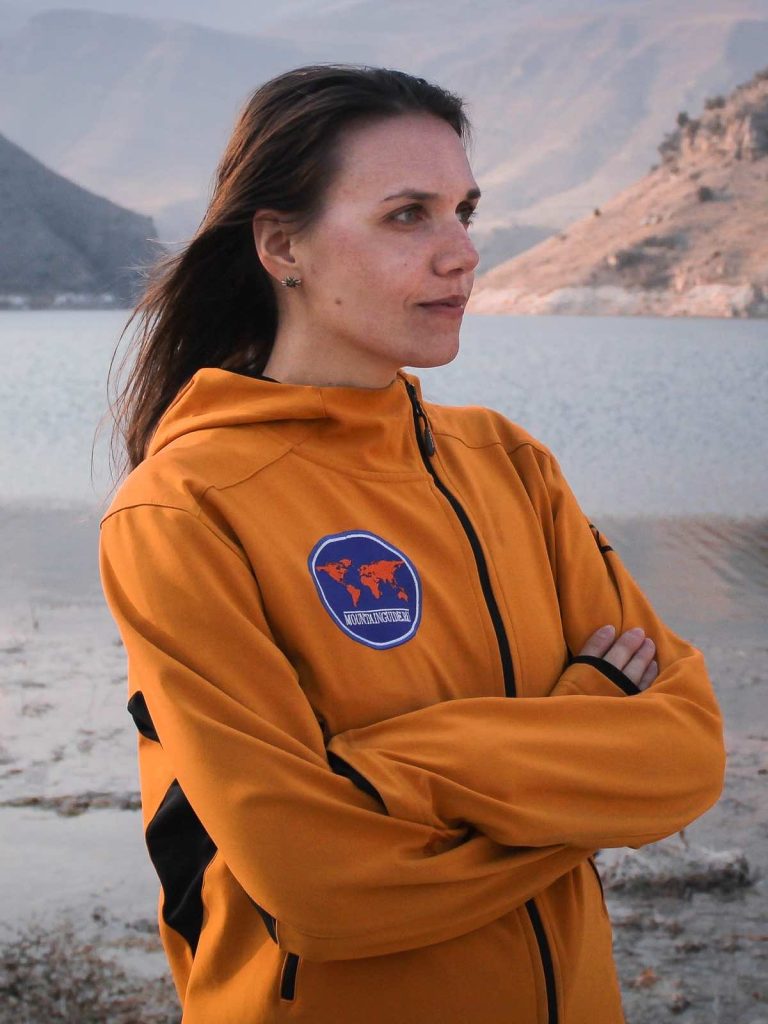
Nadezhda Ermakova
Officially – 2nd Class in mountaineering.
Instructor-guide in mountain tourism and mountaineering,
licence of instructor-guides of the Russian Federation register number В011-00161-77/01368276
Successful delivery of a project to bring a wheelchair user to the summit of Manaslu (8163 m);
Ascent of Elbrus with a climber with cerebral palsy;
Ascent of Elbrus with a deaf climber.
Completed a first-aid course
Candidate Master of Sport in skyrunning.
European and Russian champion in rogaining (rogaining is twenty-four-hour orienteering).
Keen on trail running, skyrunning and mountain running.
Personal record for a speed ascent of West Elbrus from the Azau meadow – 5:03 hours
Personal record for a speed ascent of Lenin Peak from camp 1 (4400 m) – 6:20 hours
More than 130 ascents of Elbrus from various sides (120+ of them as a guide).
2012 – Aconcagua 6961 m;
2013 – Khan Tengri 7010 m;
2014, 2019 – Monte Rosa 4634 m;
2014 – 2020 – Lenin Peak 7134 m (7 times);
2014 – Ascent of Elbrus with a climber with cerebral palsy;
2015 – Ascent of Elbrus with a deaf climber;
2017 – 2022 – Several successful ascents of Elbrus from the south with children aged 14;
2019 – Mont Blanc 4810 m;
2019 – 2023 – Kazbek 5033 m;
2021 – Manaslu 8163 m;
2021 – Successful delivery of a project to bring a wheelchair user to the summit of Manaslu (8163 m);
2023 – Kazbek 5033 m;
2023 – Damavand 5610 m;
2023 – 1st place at the Elbrus World Race 135 km;
2023 – Dagestan Wild Trail 35 km (2nd place),
Vertical Kilometre – Mt. Elbrus – 57:36 min (1st place among amateurs), Arhyz Wild Trail 33 km (2nd place).
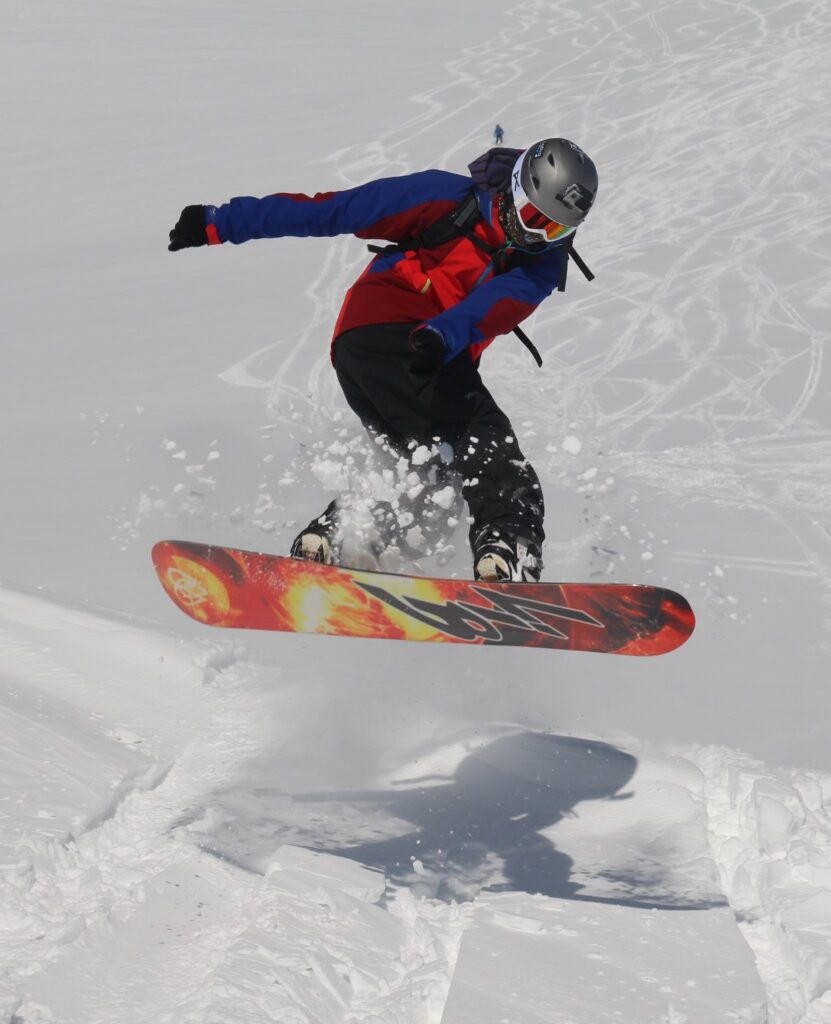
Dmitry Pasechnik
Instructor-guide in mountain tourism and mountaineering, licence of instructor-guides of the Russian Federation register number В011-00161-77/01374125
Completed a first-aid course
Snowboard instructor, UTsFGSS of Russia
2001-2024 — More than 350 ascents of Elbrus, 180 of them as leader
2003-2023 — Ski touring in the mountains of the North Caucasus (more than 100)
2005 — Speed ski descent from the West Summit of Elbrus 5642 to the Azau meadow 2350 – 45 min
2005 — 2008 – Finalist in rounds of the Russian freeride cup (Dombai, Krasnaya Polyana, Elbrus)
2007 — Nike Free Mountain competition, Krasnaya Polyana (2nd place)
2008 — Took part in the Tequilajazzz concert on Elbrus
2009 — Finalist in X-box 360 Dombai Open (freeride competition)
2017 — Trek to Everest Base Camp
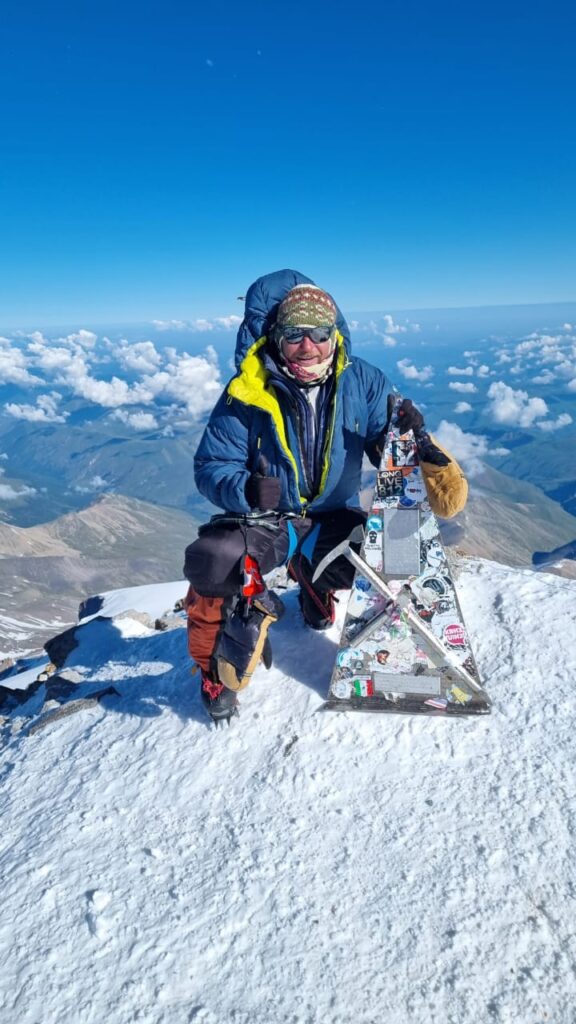
Mikhail Vorushilin
Officially – 3rd Class in mountaineering
Instructor-guide in mountain tourism and mountaineering, licence of instructor-guides of the Russian Federation register number В011-00161-77/04399848
Working as a guide since 1999
Instructor-guide in mountain tourism and mountaineering
Rescuer, 2nd class
Elbrus – more than 400 ascents.
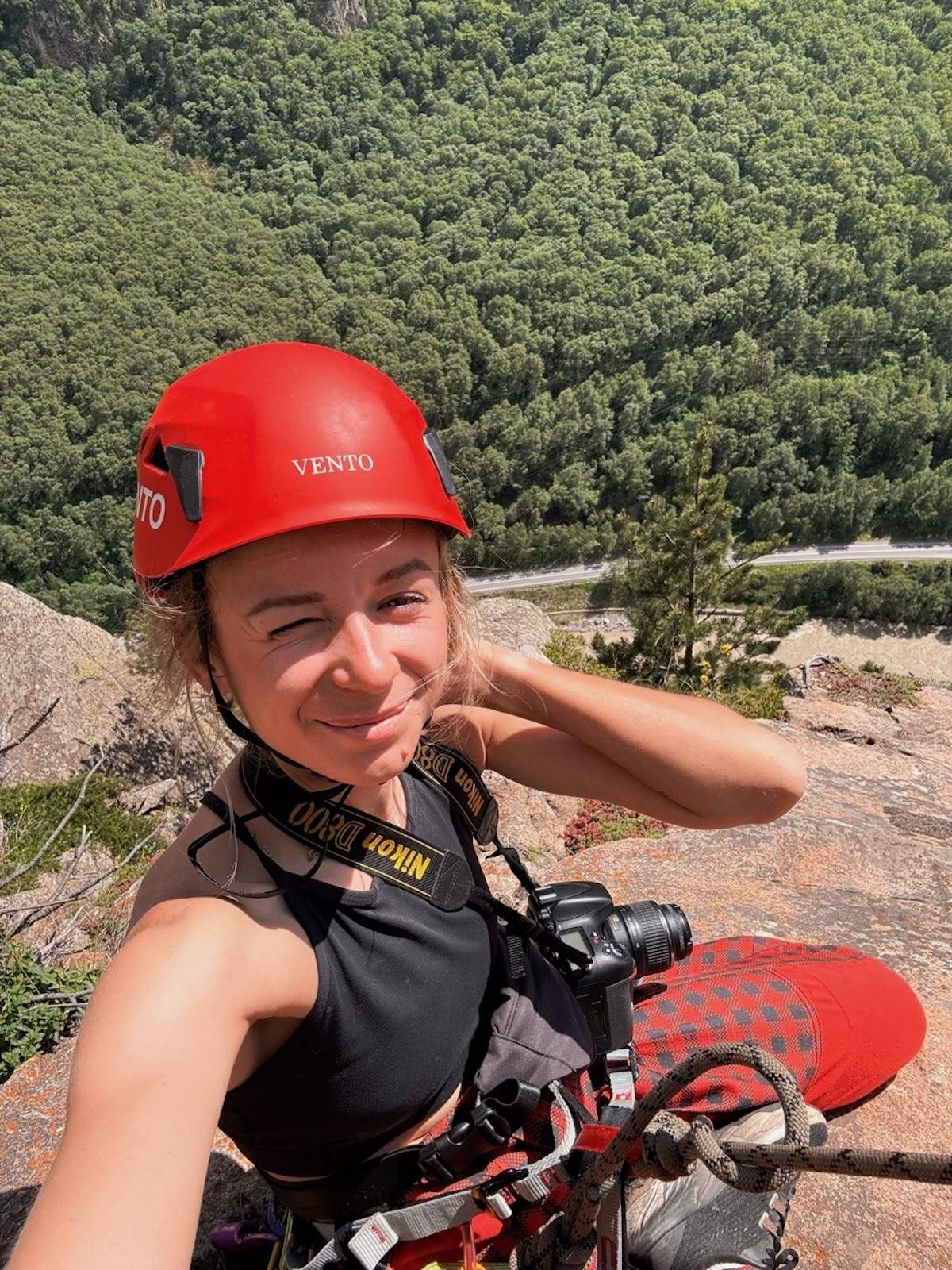
Valeria Guzarevich
Officially – 3rd Class in mountaineering
Instructor-guide in mountain tourism and mountaineering, licence of instructor-guides of the Russian Federation register number В011-00161-77/04942179
Certified instructor-guide in walking tourism and trekking.
Trained in mountain rescue work.
Completed a first-aid course.
Snowboard instructor, category C.
Leading ascents of Elbrus. South, east and north sides.
Leading trekking programmes in the Elbrus region.
Leading treks on the Lycian Way (Turkey).
Work on technical mountaineering routes in the Caucasus.
Support for high-altitude expeditions using oxygen equipment.
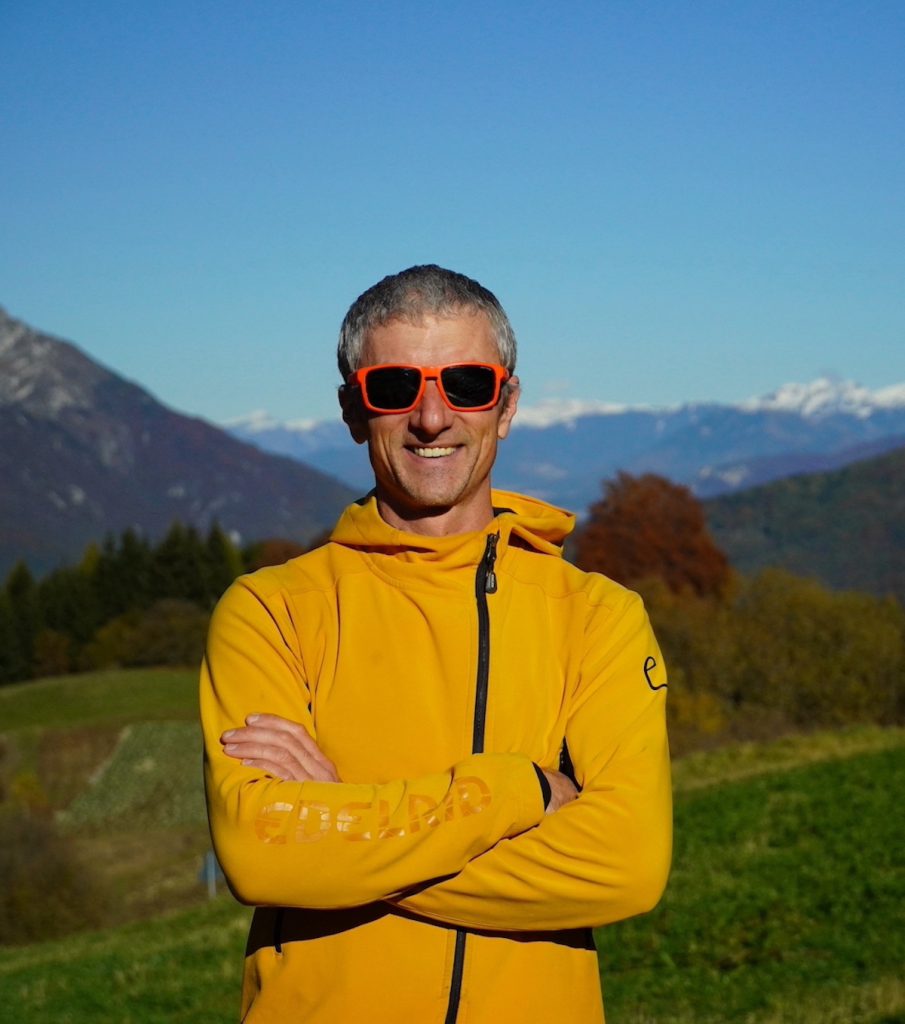
Maksim Foygel
Officially Candidate Master of Sport in mountaineering and rock climbing.
Instructor-guide in mountain tourism and mountaineering
licence of instructor-guides of the Russian Federation register number В011-00161-77/01451462
Trained at the professional mountain guide schools of Russia and Kyrgyzstan.
IFMGA mountain guide diploma.
Alpine ski instructor
Sport climbing coach.
In the mountains since 1998. Behind him is experience of high-altitude and winter ascents, and he has taken part in and authored a number of first ascents of routes in the Caucasus, the Alps and the Tien Shan.
Working as a guide since 2005.
Working languages: Russian, English, German.
A list of the most interesting ascents:
2004 – first ascent of a route on West Dombai 4036 (Caucasus) from the south, 5B;
2005 – winter ascent of Ullutau 4200 (Caucasus) by the N face, 5B;
2006 – Parandas 4100 (Pamir, Fann Mountains), Arkhipov route, 6A
2009 – Fisht North 2100 (Caucasus), second ascent of the Andryushchenko route, 5B;
2011 – Piz Badile 3308 (Alps, Switzerland), Cassin route, 6A;
2016 – first ascent of a route on the Grandes Jorasses 4208 (Alps, Italy) by the E face, 6A;
2022 – first ascent of Nomads Peak 3640 (Tien Shan, Ala-Archa) by the N face, 5B.
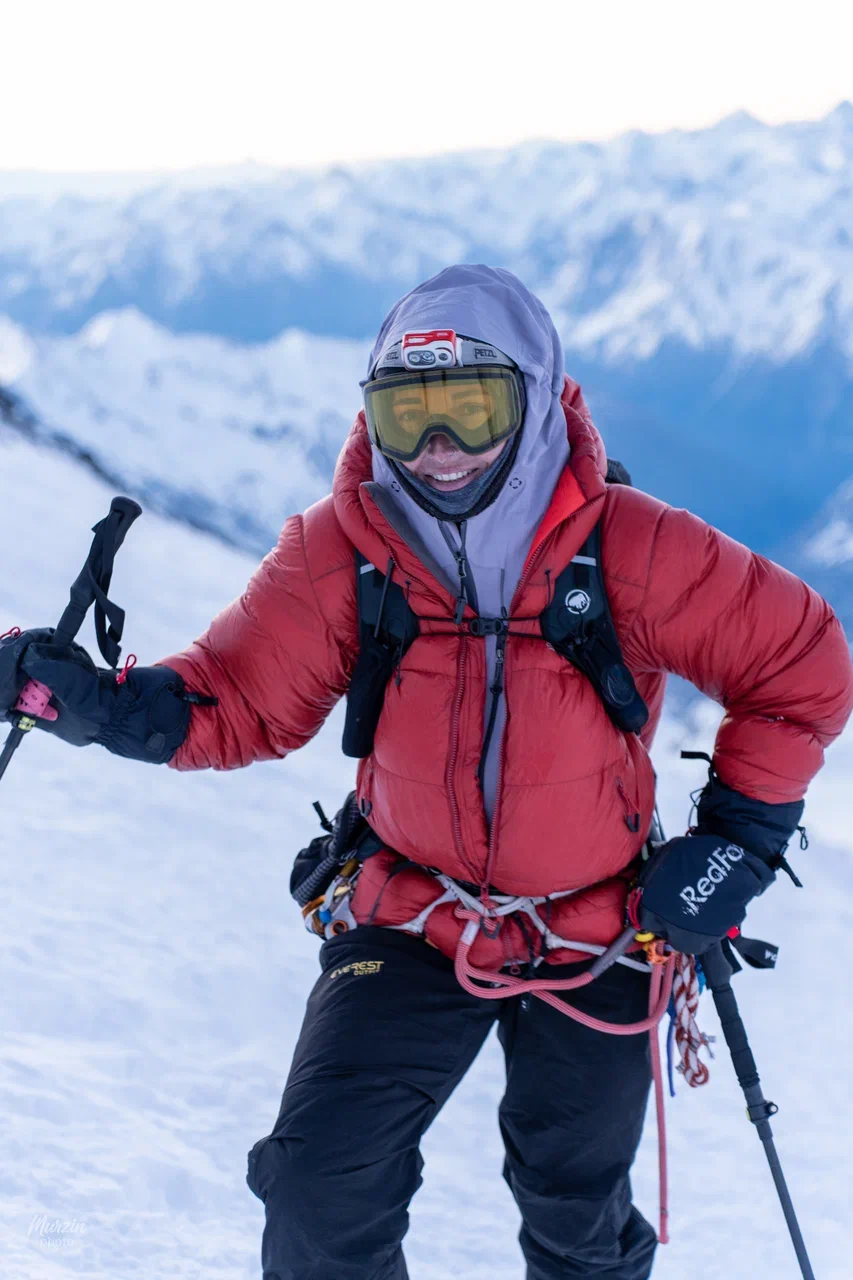
Alina Giniyatullina
Officially 2nd Class in mountaineering
Instructor-guide in mountain tourism and mountaineering
licence of instructor-guides of the Russian Federation register number В011-00161-77/01451427
Certified snowboard instructor of category “B” and ski instructor of category “C” of the National League of Instructors
Cadet of the Russian Mountain Guides School
Member of the Russian Mountaineering Federation
Member of the Russian Mountain Guides Association
Competitor and prizewinner in FWQ freeride competitions
Instructor-guide in mountaineering and mountain tourism, 3rd category
50+ successful ascents of Elbrus, Kazbek, Kilimanjaro, Island Peak and Lenin Peak
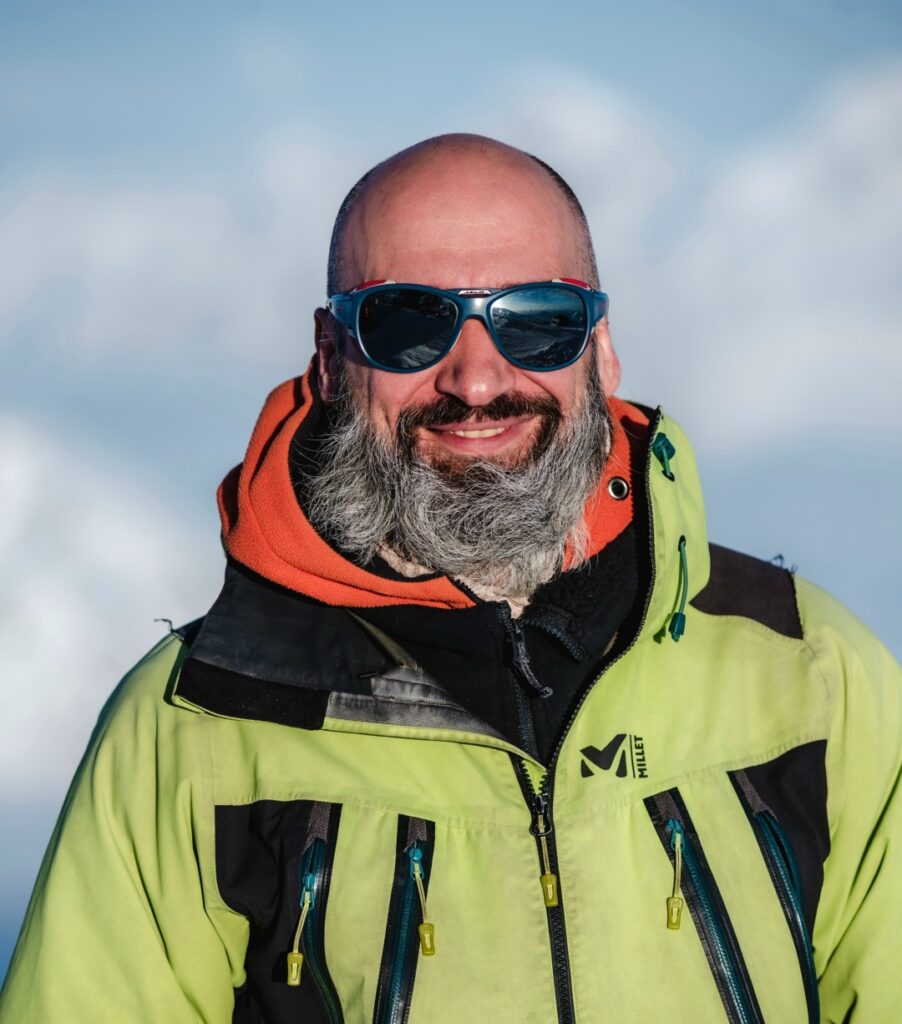
Sergey Belyaev
Officially 1st Class in mountaineering
Instructor-guide in mountain tourism and mountaineering
licence of instructor -guides of the Russian Federation, register number В011-00161-77/01451426
Has been in the mountains for more than 25 years.
Mountain tourism (Candidate Master of Sport)
Completed the programme “the 17 laccolith mountains of the Caucasian Mineral Waters”.
Leads groups on walks in the Caucasus, on Kazbek and on Elbrus from any side, and treks and walks in the North Caucasus. More than 150 ascents of Elbrus and Kazbek.
Ascents of category 5 in mountaineering.
Runs rock-climbing and ice-climbing courses.
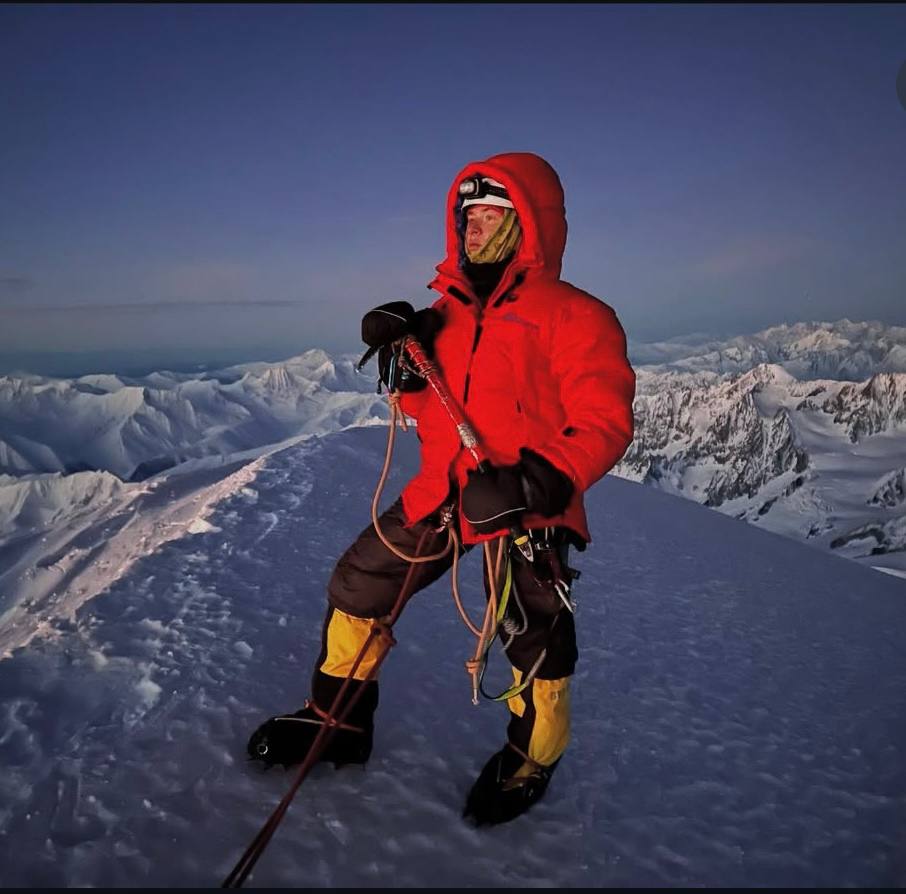
Elena Rudakova
Officially 1st Class in mountaineering
Instructor-guide in mountain tourism and mountaineering,
licence of instructor -guides of the Russian Federation, register number В011-00161-77/01451719
Guide and leader on:
Elbrus from the south;
Elbrus from the north;
Kazbek from the south;
Kazbek from the north;
More than 50 ascents of Elbrus and Kazbek as group leader.
Guide and leader on sport ascents:
2023 – Dzharlam, Central, 2B;
2024 – Tsey-Loam (Kyazi), 3Az;
2024 – Bashnya, 3B;
2025 – Zub, 4B;
2025 – Tyutyu, 2nd West, 5A.
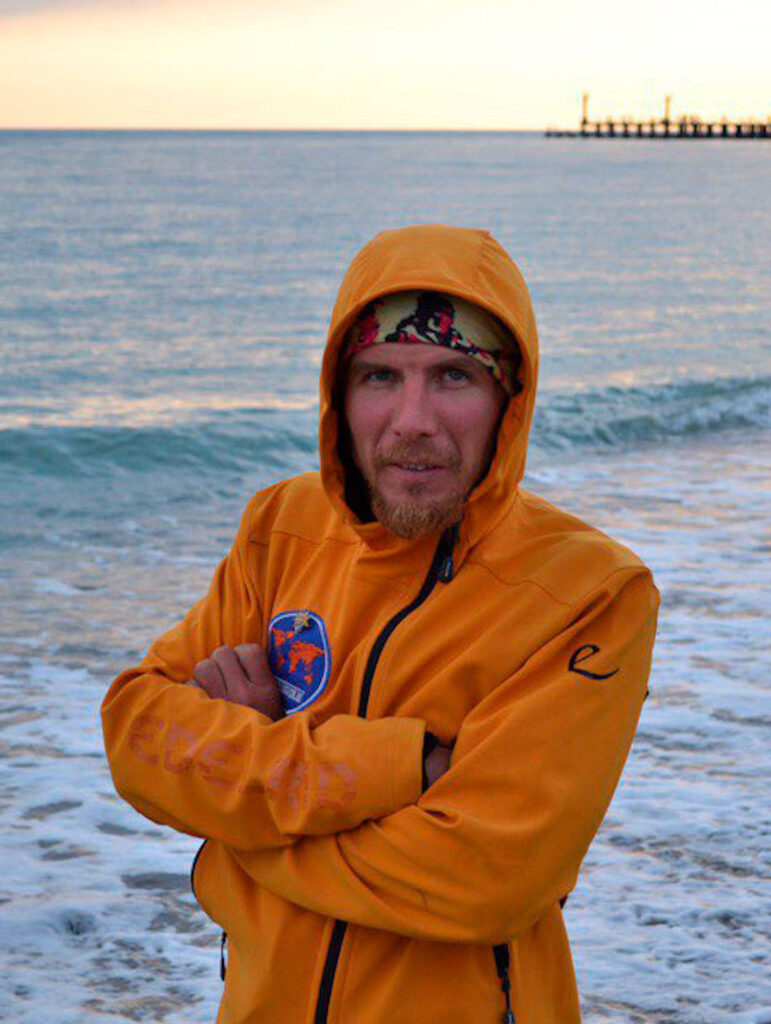
Pavel Chernov
Officially – 1st Class in mountain tourism, 2nd Class in mountaineering
Working as a guide since 2015
Instructor-guide in mountain tourism and mountaineering, licence of instructor-guides of the Russian Federation register number В011-00161-77/01386445
Completed a first-aid course
Higher education
141 ascents of Elbrus from various sides.
1998 – took up mountain tourism;
2009 – moved to mountaineering. Ascent of Mount Belukha (4499 m);
2011 – Lenin Peak (7135 m), Pamir.
Annual and numerous ascents of Elbrus (5642 m) by various routes, Kazbek (5033 m) from Russia and from Georgia, Belukha (4499 m), Aktru (4044 m), technical ascents in the Baksan gorge and the Bezengi gorge. Winter ascents in the middle and northern Urals;
2015 – Gestola (4860 m), speed ascents of summits in the Bezengi area;
2016 – Tetnuld (4859 m), Georgia, Svaneti. Technical ascents in the Bezengi gorge;
2017 – Manaslu (8163 m), Lenin Peak (7135 m);
2019 – Lenin Peak (7135 m);
2022 – Member of an expedition to Annapurna IV (7525 m);
2023 – Kilimanjaro (5895 m), by the Umbwe route;
2023 – 2024 Annapurna Circuit trek, Everest Base Camp trek, Kangchenjunga Base Camp trek;
2024 – Island Peak (6100 m);
2024 – Matterhorn (4470 m).
Hobbies — mountain running, skyrunning and trail running. Competes regularly at various levels;
8 times at the Konzhakovsky mountain marathon (best time 4:17);
2 times in the ultramarathon on Mount Iremel;
5 times in the Elbrus race (best time 4:53, starting from Azau);
2013 – Transalpine marathon (260 km, 8 days);
2016 – Fisht-o-ran mountain marathon (1st place);
2016 – Elbrus World Race (112 km, 5000D+);
2016 – TorDesGeants (330 km, 24000D+);
2017 – Beshtaugorsky Cross (1st place);
2017 – Markotkh trail (96 km, trail running);
2017 – ElbrusRace (Sport, Azau to West Elbrus, 5:09:16, skyrunning).
2018 – Markotkh trail 54 km. 2nd place.
2018 – Grom Anapa trail 18 km. 3rd place.
2018 – Swiss Peaks Trail 170 km. Finished XVI.
2019 – CUT 100 miles across the Caucasus.
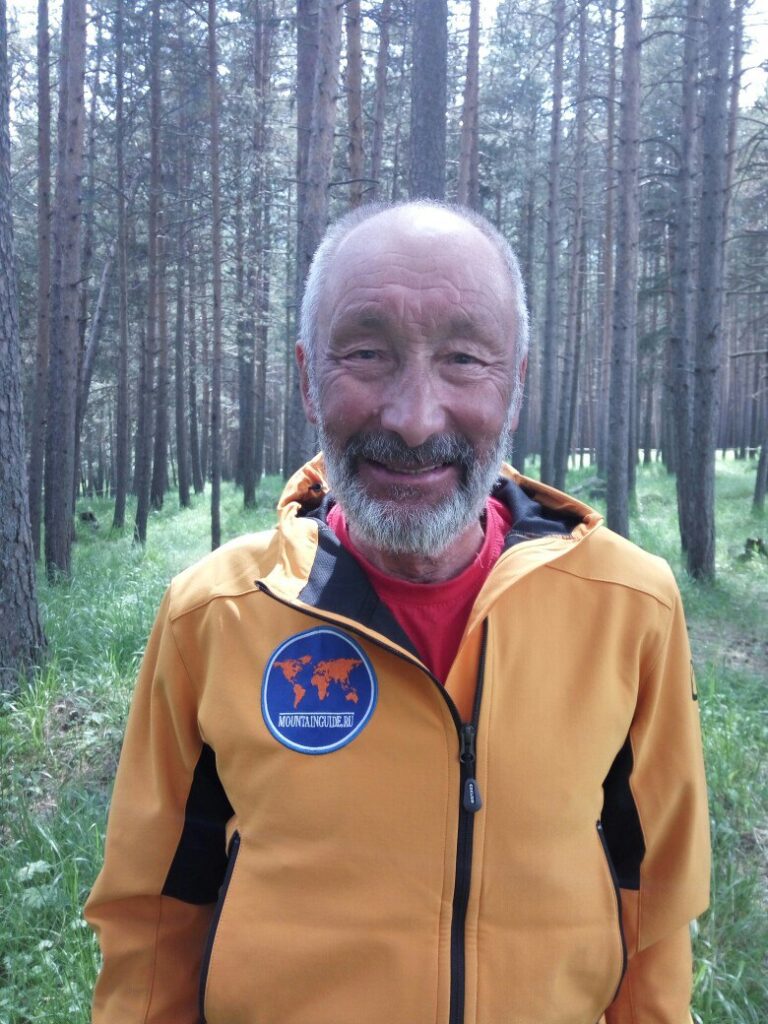
Nikolay Chernyy
Member of the first Soviet national mountaineering squad
Officially — Honoured Master of Sport and International Master of Sport in mountaineering
Honoured Coach of Russia
Working as a guide since the 1980s.
Since 1988 — Executive Secretary of the USSR Mountaineering Federation
In 1989 he was awarded the title of Honoured Coach of the USSR
Coach of the Russian national mountaineering team
Holder of the Order of the “Edelweiss”, 2nd class
The medal “For Courage”
The Order of the “Badge of Honour”
The medal “For Distinguished Labour”
Higher education
Since 2008 he has taken part every year as a judge in the May race on Elbrus
More than 20 ascents of the Soviet seven-thousanders
1968 — rescue work on Lenin Peak (7135 m)
Member of the first Soviet expedition to Everest in 1982.
1986 — McKinley (6193 m)
1989 — Kangchenjunga (8586 m)
1990 — rescue work on Lenin Peak
1990 — leader of an expedition to Cho Oyu (8201 m)
1991 — Annapurna (8091 m)
1992 — Shishapangma (8027 m)
1993 — coach of the Moscow expedition to Everest (8848 m)
1994 — South Annapurna (7219 m), the first winter ascent by Russian climbers in the Himalaya
1996 — Aconcagua (6960 m)
1999 — Lhotse Main (8516 m) and Cho Oyu (8201 m)
2001 — leader of an expedition to Lhotse Middle (8413 m) – the last unclimbed 8000er on the planet
2005 — Everest (8848 m)
2007 — coach of the Russian team on the ascent of K2 by the West Face (8611 m)
2009 — Everest (8848 m) – an age record
He has now decided to end his career as a guide; at exactly 80 he said it was a good date to stop the bustle of organising ascents, and he continues to go into the mountains for the love of it.
We have also worked with
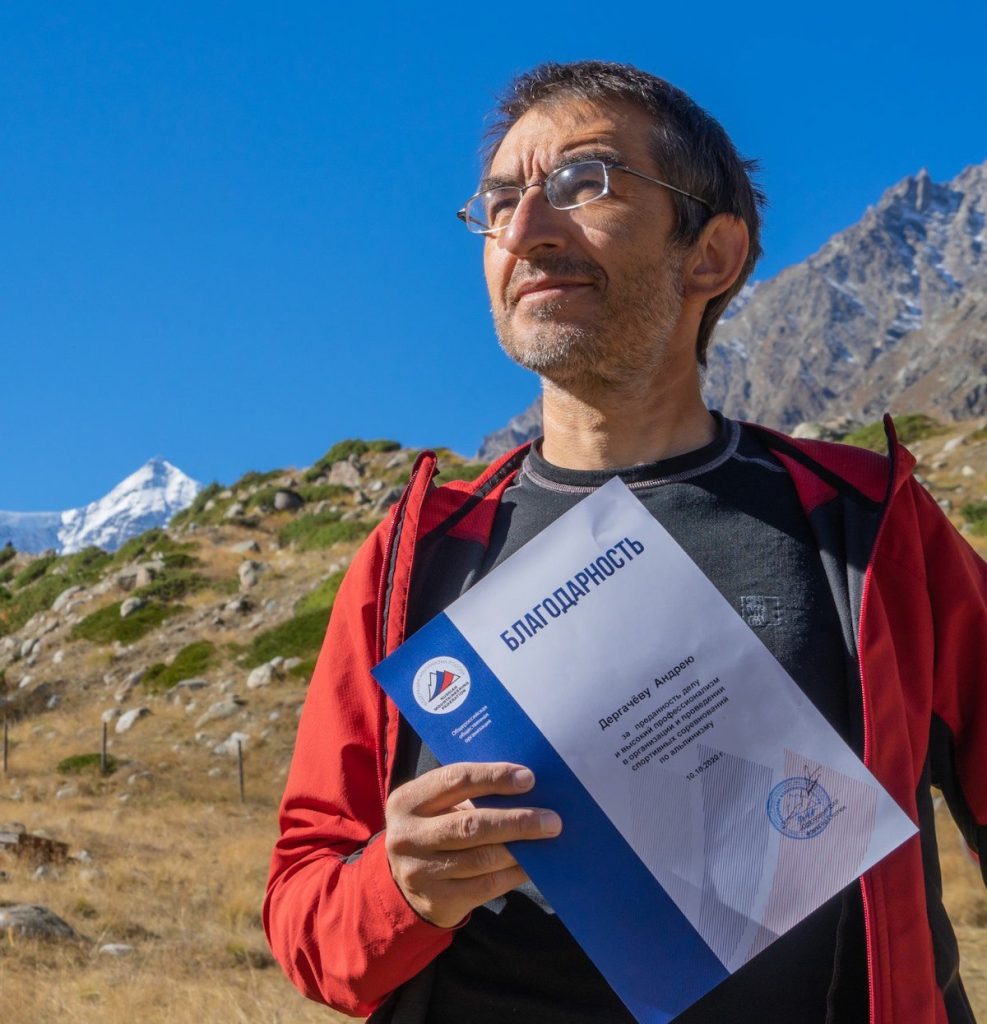
Andrey Dergachev
Officially — 1st Class in mountaineering
Working as a guide since 2004
Instructor-guide in mountain tourism and mountaineering
licence of instructor-guides of the Russian Federation register number В011-00161-77/01462189
Mountaineering instructor, 3rd category
Completed a first-aid course
Member of the avalanche control service of the “Rosa Khutor” resort
Has been climbing since 1990. Made his first ascent of Elbrus in 1991.
Mountaineering instructor since 2003.
Has climbed in the Caucasus, the Pamir, the Altai, Kamchatka and the Himalaya.
More than 50 ascents of Elbrus.
Organiser of expeditions and ascents in various mountain areas of Russia and the world.
Organiser of and competitor in mountain races. 5 successful races around Elbrus (more than 110 km)
2007 – Lenin Peak (7135 m);
2017 – Manaslu (8156 m);
2018 – Island Peak (6165 m);
2022 – Annapurna IV (7525 m);
2023 – Lenin Peak (7135 m)
Nikolay Totmyanin
Officially – Honoured Master of Sport in mountaineering
Seven times a “Snow Leopard”
Rescue Squad badge
Mountaineering instructor
Judge at mountaineering championships, and coach.
Repeated laureate and nominee of the “Golden Ice Axe” and “Golden Ice Axe of Russia” awards, Order of the “Edelweiss”, 2nd class.
Captain of the Russian national mountaineering team.
Speed ascents of Lenin, Communism and Khan Tengri
Nikolay Totmyanin has about 200 ascents of summits in the Caucasus, the Pamir, the Tien Shan, the Swiss Alps, the Himalaya and the Karakoram to his name, among them: 27 of grade 5A, 20 of 5B and 16 of grade 6.
First ascents of routes of grade 6:
1984 — Aksu by the North Face, 1986 Sabakh by the North Face;
1988 — Free Korea by the North;
1990 — Lhotse Main (8516 m) by the South Face;
2004 — Jannu (7710 m) by the North Face (Golden Ice Axe);
2007 — K2 by the West Face, “Golden Ice Axe of Russia”.
Winter ascents of grades 5-6:
1984 — Shchurovsky Peak by the bastion of the North Face, Caucasus, first winter ascent;
1985 — Free Korea by the centre of the North Face, Tien Shan, first winter ascent;
1986 — Peak Korzhenevskaya (7105 m), Pamir, first winter ascent;
1989 — Krumkol by the North Ridge, Caucasus, second winter ascent
1997 — the Eiger by the North Face, Swiss Alps;
2001 — Urriellu by the West Face, Cordillera Cantabrica, Spain, first winter ascent;
2014 — the first winter traverse of the Bezengi Wall, Caucasus;
2015 — Nanga Parbat, Schell route, to an altitude of 7150.
High-altitude ascents:
On Lenin solo from 4200 m to the summit and back in 12 hr 46 min.
On Peak Communism – from base camp to the summit and back in 28 hours.
On Khan Tengri – solo from base camp to the summit and back in 14 hr 03 min.
Member of the first winter traverse of the Bezengi Wall
1982 — Lenin Peak (7134 m);
1983 — Peak Korzhenevskaya (7105 m), Peak Communism (7495 m);
1984 — Pobeda Peak (7439 m);
1986 — Peak Korzhenevskaya (7105 m) — first winter ascent;
1988 — Peak Communism (7495 m);
1990 — Peak Korzhenevskaya (7105 m), Peak Communism (7495 m), Peak Communism (7495 m) – ascent from base camp to the summit and back in 28 hours, Lhotse Main (8516 m), first ascent of the route by the South Face, climbed to 8350 m;
1991 — Lenin Peak (7134 m) as a two-person team;
1993 — Khan Tengri (6995 m) in August, Khan Tengri (6995 m) in October — twice;
1994 — Peak Korzhenevskaya (7105 m) — twice, Peak Communism (7495 m) — twice;
1995 — Khan Tengri (6995 m);
1996 — Peak Korzhenevskaya (7105 m) — twice, Peak Communism (7495 m);
1997 — Lenin Peak (7134 m) as a two-person team, Khan Tengri (6995 m) — solo ascent from base camp to the summit and back in 14 hours 03 minutes, Pobeda Peak (7439 m);
1998 — Pobeda Peak (7439 m);
1999 — Khan Tengri (6995 m) — twice, Pobeda Peak (7439 m);
2000 — Lenin Peak (7134 m) as a two-person team, Peak Korzhenevskaya (7105 m) as a two-person team, Peak Communism (7495 m) as a two-person team;
2001 — Lenin Peak (7134 m), Lenin Peak (7134 m) — solo ascent by the directissima of the North Slope from camp (4200 m) to the summit and descent over Razdelnaya summit to camp (4200 m) in 12 hours 46 minutes;
2002 — Khan Tengri (6995 m), Pobeda Peak (7439 m) as a two-person team;
2003 — Everest (8848 m) from the North via the North Col, without oxygen;
2004 — Jannu (7710 m) by the North Face — the best mountaineering achievement of the year — the ascent of Jannu (7710 m) by the North Face with the team “Russian Way — Walls of the World” was awarded the “Golden Ice Axe”;
2006 — Everest (8848) from the North via the North Col, without oxygen; 2007 — K2 (8611) by the West Face, without oxygen;
2007 — K2 by the West Face, “Golden Ice Axe of Russia”;
2008 — Dhaulagiri (8167 m) by the classic route with V. Babanov as a two-person team;
2009 — Khan Tengri (7010 m), Pobeda Peak (7439 m) as a two-person team;
2011 — Kangchenjunga Main (8586 m) by the classic route without oxygen, Lenin Peak (7134 m);
2012 — Lenin Peak (7134 m) solo by the classic route to the summit and back in 13 hours 50 min, Lenin Peak by the classic route to the summit (7 hours 20 min) and back in 4 hours (Lenin Race competition)
2013 — Lenin Peak (7134 m) by the classic route
2014 — Lenin Peak (7134 m) by the classic route, solo
2015 — Winter ascent of Nanga Parbat to 7150 m, Lenin Peak (7134 m) by the classic route three times
2016 — Lenin Peak (7134 m) by the classic route, Lenin Peak (7134 m) by the directissima of the North Slope, solo from camp 1 (7 hours to the summit) and descent over Razdelnaya to camp 1
2017 — Lenin Peak (7134 m) three times
2018 — Lenin Peak (7134 m)
2019 — Lenin Peak (7134 m) twice
2021 — Khan Tengri (6995 m) from the North, Pobeda Peak (7439 m) by the Abalakov route
2022 — Lenin Peak (7134 m)
2023 — Lenin Peak (7134 m)
2024 — Lenin Peak (7134 m) twice
2025 — Vazha Pshavela Peak (6918 m)
How a professional mountain guide works
During a climb the guide is responsible for the well-being of every participant, watching closely for any change in their condition. The guide’s task is to notice the signs of tiredness or of a decline in a participant’s condition in good time and to take the appropriate measures. The guide must also be able to give first aid, because in mountain country a timely response to participants’ health becomes critically important.
Beyond that, the guide has to check that participants are ready, including their equipment and clothing suitable for the weather, and to oversee their preparation before setting out on the route. Maintaining order and observing every safety rule is an inseparable part of the job.
The guide helps not only physically but psychologically, supporting every participant. In difficult moments he can calmly and confidently urge people to keep going, helping them work through tiredness and doubt. An experienced professional watching the group closely can see when a person has genuinely run out of strength and when they have simply given in to weakness. A guide’s real care shows in honesty, in strict love, and in a readiness to lead and support even when that calls for firmness.
Often the guide has to take difficult decisions, including turning the group back if there are signs of bad weather or of other threats. That is not easy, especially when ambitious participants may not understand and may even express their displeasure. But the guide’s professionalism lies in ensuring the safety of the group despite the pressure, because their lives may depend on it.
A guide’s work involves constant learning and improvement. He not only goes through mountaineering training but also builds up knowledge of meteorology, avalanche safety, psychology and physiology in order to support participants. A specialist like that can do more than accompany a group: he can help every participant work through their own weaknesses and difficulties, so that the climb leaves vivid and happy memories.
Work in the mountains demands enormous flexibility of mind and a reserve of energy, because a guide often deals with newcomers for whom the mountains are an entirely new experience. That is why the “Mountain Guide” team pays enormous attention to training its staff, developing not only their physical preparation but their skills in mentoring and in working with people.
To become a guide you have to meet strict standards. An applicant must be over 22 and have at least four years of mountaineering experience. Confident competence on rock, snow and ice terrain is also required. The candidate must be entirely comfortable climbing rock while placing their own protection at grade 6a, and on sport routes at grade 6b, and must feel confident on ice routes of grade V.
Full development as a guide calls for solid experience of mountain ascents. Specifically, the total should be no fewer than 35 ascents, of which at least 10 must be ice or mixed mountain routes with a height gain of at least 800 metres, at least 5 of them of grade 4B or harder, and at least one of grade 5B. At least ten rock routes of grade 4A or harder are also required, with a height gain of at least 250 metres and with your own protection. And at least half of the ascents, including at least one route of grade 5B, must have been done in high mountains such as the Caucasus, the Alps or the Tien Shan.
The guide must also have experience of ascents above 4000 metres, from 4 to 5 routes. These routes assume an approach and descent over mountain terrain or glaciers, and the completion of an alternative route for the descent. In addition, 5-10 rock-climbing routes of grade 6a or harder and 5-10 ice-climbing routes of grade 4 or harder must be completed.
Before an expedition begins, the guide helps participants prepare: advising them, answering all their questions and checking that everyone is ready to set out. But his care shows on the route as well, where he provides help to anyone who needs it, even someone who is not in his group. He shares his own reserves at the moments when participants tire, inspires them to keep moving forward and motivates them to reach the summit.
You can check a guide’s professional status and whether they meet the requirements by looking at the register of instructor-guides at this link: https://www.economy.gov.ru/material/directions/turizm/reestry_turizm/provodnik/.
A true guide combines many qualities and skills, which let him inspire and support participants and keep them safe at every stage of the route.