Aconcagua, 6,961 m in the Argentine province of Mendoza, is the highest mountain outside Asia. The normal route is not a technical climb, but it is a sustained walk at very high altitude on dry, exposed ground, with a summit day that is longer and colder than most people expect. Walkable terrain and serious altitude together are what make the mountain easy to underestimate.
The wind is the mountain’s real signature. Aconcagua stands isolated at the edge of the Andes and takes the full force of the westerlies, which is why camp organisation and the ability to sit out a bad day matter more here than technique.
Choosing a format
Every Aconcagua programme on this site follows essentially the same ground. What differs between them is time — and on a mountain this high, time is acclimatisation, weather margin and the difference between reaching the summit and turning round two days short.
The 17-day expedition is the full format. It builds in graded ascents to intermediate altitudes, descents to base camp for recovery, and reserve days for weather. It is the version to choose if this is your first 6,000 m mountain or if you have travelled a long way and want the best chance of using the trip properly.
The 12-day programme compresses that into a fortnight. It works for people who have already been to altitude and know how they respond, but it carries noticeably less margin for a bad weather week.
The 7-day programme is for climbers who arrive already acclimatised — typically straight off another Andean objective. It is not a shortcut for a fit sea-level climber.
The honest way to choose is to work backwards from your acclimatisation history rather than forwards from your holiday allowance. Anyone without recent time at altitude has more to gain from the longer formats, and each programme states its own requirement.
What to compare on the itineraries
Because all three formats climb the same route, the comparison is not about the summit day. Three things separate them and all three are visible on the programme pages: how many nights are spent above 4,000 m before the summit push, whether the itinerary descends to base camp to recover between carries, and how many reserve days exist if the wind does not drop.
That last point deserves emphasis. Teams can be held at high camp by weather for a day or more, and a schedule with no slack in it converts a weather delay into a failed trip. The extra days in the longer formats are not comfort — they are the mechanism by which the expedition absorbs a bad week.
Combining with Ojos del Salado
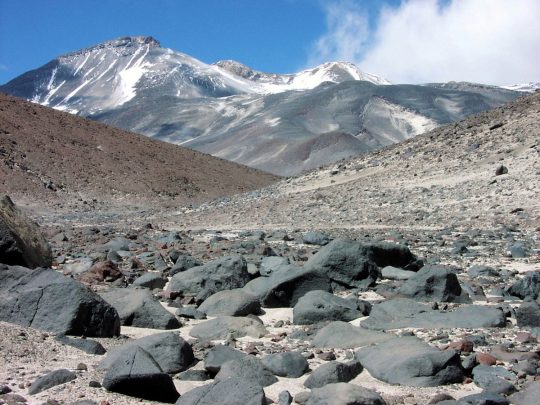
Aconcagua sits in the same season and the same corner of the continent as Ojos del Salado, 6,893 m — the highest volcano in the world, on the Chile-Argentina border in the Atacama. Aconcagua with Ojos del Salado is a single combined expedition taking in both, which avoids two separate journeys to South America and carries the acclimatisation from the first mountain to the second.
Ojos del Salado on its own remains a separate programme, and for some people the better one: the approach is more vehicle-supported, the summit involves a short scramble rather than a walk, and the whole trip has a desert character that Aconcagua does not.
Logistics without a guide
Experienced teams and climbers who intend to go unguided still need ground support in Mendoza and in the park: transfers, mule loads, base camp services and the paperwork that goes with them. Two packages cover that. The base logistics package is the shorter option; the extended full-board package covers up to seven full-board days. They differ in the number of catered days rather than in the services offered, and they are deliberately kept as separate products so nobody buys the wrong one.
Agencies placing their own groups, and leaders travelling with a team, should start from agency and team logistics instead of from the guided programmes.
Getting ready
Aconcagua asks for endurance and altitude tolerance, and neither of those stands in for the mountain skills and judgement the itinerary assumes. The useful preparation is months of steady aerobic volume with long days on your feet, which is what training guidance covers. A 5,000 m objective beforehand — Elbrus is one on this site — is worth having, because the thing worth knowing before committing three weeks is how your body behaves on the third night above 4,000 m.
The guide records list which of the guides have been up this mountain and in which years; several have multiple ascents. For everything else on the continent, see the South America hub.
Climb Aconcagua: tours
-
 8,785 $
Aconcagua and Ojos del Salado — 25-Day Combined Expedition
- Height (m)
- 6962
- Duration
- 25 дней
- Difficulty
- Moderate
- Continent
- South America
- Children
- Ages 14+
- Accommodation
- Tented accommodation
- suitable-for-beginners
- No
-
 4,000 $
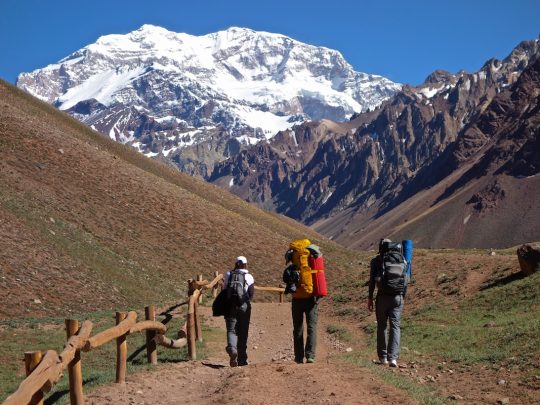
Aconcagua Blitz — 7-Day Climb
- Height (m)
- 6962
- Duration
- 7 дней
- Difficulty
- Moderate
- Continent
- South America
- Children
- Not suitable for children
- Accommodation
- Tented accommodation
- suitable-for-beginners
- No
-
 4,500 $
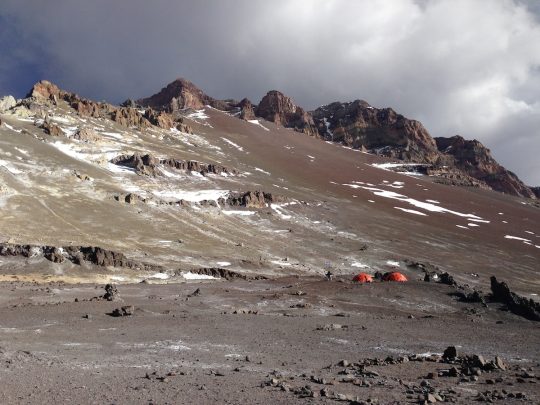
Aconcagua Climb — 12-Day Guided Climb
- Height (m)
- 6962
- Duration
- 12 дней
- Difficulty
- Moderate
- Continent
- South America
- Children
- Not suitable for children
- Accommodation
- Tented accommodation
- suitable-for-beginners
- No
-
 6,650 $
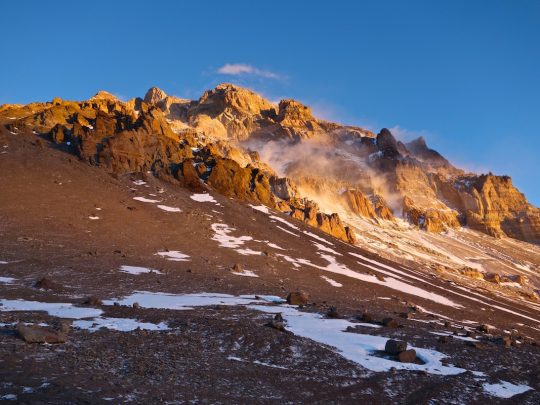
Aconcagua Climb — 17-Day Guided Expedition
- Height (m)
- 6962
- Duration
- 17 дней
- Difficulty
- Moderate
- Continent
- South America
- Children
- Ages 14+
- Accommodation
- Some nights in tents