- Guides
- B2B
-
Climbs
-
Climb Elbrus
- Elbrus individually
- Elbrus from the South, 9 days
- Elbrus from the South, 7 days
- Climb Elbrus with Oxygen
- Elbrus from the North
- Elbrus Two Summits
- Elbrus Traverse from South to North, 9 Days
- Elbrus Traverse from North to South, 10 Days
- Elbrus "Cross" from South
- Elbrus "Cross" from North
- Kazbek+Elbrus
- Elbrus from the West
- Elbrus by Private Helicopter, 3 Days
- Elbrus Region Holiday and Trekking, 9 Days
- Elbrus Region Holiday, 7 Days
- Elbrus Dating
- Climb Elbrus from the South, 9 Days with Sergey Baranov
- Under 5000 m
- 5000+ meters
- 6000+ meters
- 7000+ meters
- 8000+ meters
-
Climb Elbrus
-
Trekking
-
Trekking in Nepal: routes to the eight-thousanders
- K2 base camp
- Everest base camp
- Everest base camp via Gokyo
- Everest base camp in a week
- Annapurna Circuit and Tilicho Lake Trek
- Manaslu Circuit Trek
- Kanchenjunga Circuit Trek (XXL)
- Kanchenjunga North Base Camp Trek (Short)
- Kanchenjunga from India: the Goecha La Trek in Sikkim
- Makalu Base Camp Trek
- Annapurna Base Camp Trek
- Trekking in South America
- Asia
- Trekking in Africa
-
Trekking in Russia
- Elbrus Region Holiday and Trekking, 9 Days
- Elbrus Region Holiday, 7 Days
- Oshten + Kardyvach — 9-Day Western Caucasus Trek
- Lake Kardyvach — 5-Day Base-Camp Trek
- Route 30: Through the Mountains to the Sea, with Oshten — 4 Days
- Trekking in Arkhyz — 7 Days over the Ayulyu Pass
- Gvandra Trek — 7 Days to the Ullu-Kyol Lakes
- Trekking in Dombai — 7 Days with the Murudzhu Lakes
- Europe
-
Trekking in Nepal: routes to the eight-thousanders
-
Adventure expeditions
-
Trekking in Africa
- Tour to Morocco for New Year
- Morocco: Toubkal and the mysteries of the Sahara
- Eritrea: the Dahlak Archipelago and the Rashaida Nomads
- Rwanda: Mountain Gorillas and the Bisoke Volcano
- Ethiopia: Otherworldly Landscapes and the Peoples of the Omo Valley
- Tanzania Safari: Serengeti, Ngorongoro and Tarangire
- Zimbabwe and South Africa: Victoria Falls, Cape Town and the Cape of Good Hope
- Namibia: Etosha National Park and the Himba
- Kenya Safari: the African Big Five
- Trekking in South America
- Asia
-
Trekking in Africa
- Ski touring and ski mountaineering: chasing freedom in the mountains
- VIP tours
- Useful
- About
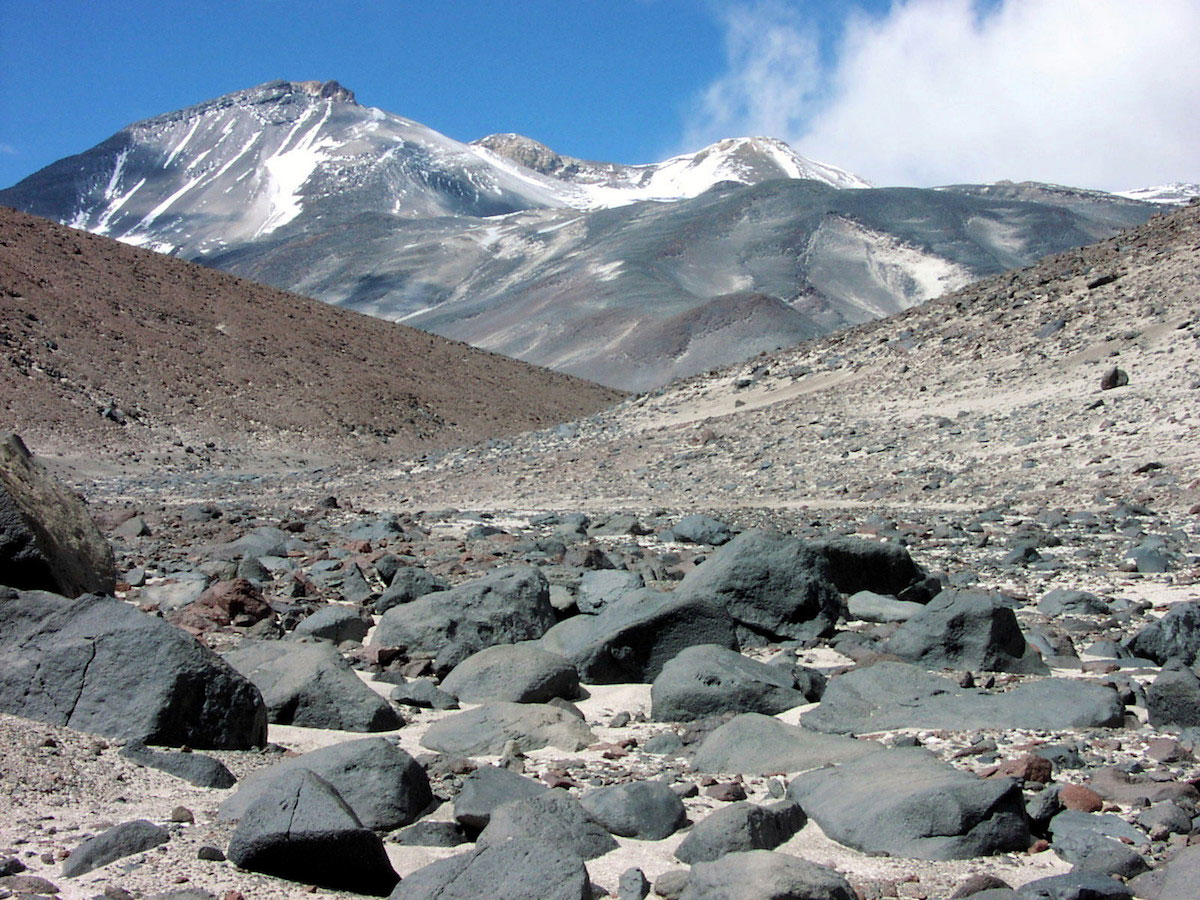
Aconcagua and Ojos del Salado — 25-Day Combined Expedition
- Height (m)
- 6962
- Duration
- 25 days
- Difficulty
- Moderate
- Continent
- South America
- Children
- Ages 14+
- Accommodation
- Tented accommodation
- suitable-for-beginners
- No
8785 $
Why to go with us?
Two summits in one altitude chain: the unchanged 17-day Aconcagua expedition, followed by the short Chilean Ojos del Salado section for participants who arrive at it with fresh acclimatisation.
The complete expedition lasts 25 days. The Aconcagua part is not shortened for this combination, and the standalone 15-day Ojos del Salado trip remains a separate departure with its own acclimatisation cycle.
About the Aconcagua and Ojos del Salado combination
Aconcagua and Ojos del Salado as one sequential expedition
This combination is not built by cutting the main Aconcagua trip. You complete the published 17-day expedition in full and only then travel on to Chile for the eight-day Ojos del Salado section. The published departures of the standalone 17-day Aconcagua expedition are not altered to accommodate this combination.
The total is 25 days. The great advantage is a single altitude logic; the main risk is accumulated fatigue. Continuing after Aconcagua depends on recovery, on the absence of injury and on the guides’ decision — not simply on whether you reached the summit.
Who is eligible for the short Ojos del Salado section
- Only a participant who has completed the Aconcagua high-altitude trip, or equivalent acclimatisation, immediately beforehand.
- Reaching the summit of Aconcagua is not a condition, but the guide assesses your actual condition and the freshness of your acclimatisation.
- Injury, infection, marked exhaustion or poor recovery can be grounds for ending the trip after the first part.
- The two reserve days on Ojos del Salado do not guarantee a summit and do not override the guide’s safety decision.
Why 25 days rather than the former 22
The earlier version of this page used a shortened Aconcagua scheme. The current trip honestly keeps all 17 days of the main expedition: normal acclimatisation, carries to the high camps and two reserve days. The eight-day Ojos del Salado section is added after it, without competing with the standalone Aconcagua page.
Logistics between Argentina and Chile
The Aconcagua route ends with an airport transfer. The Mendoza/Santiago/Copiapó flights and the applicable baggage allowances are confirmed against the actual schedule; no ticket is bought before a manager has checked the connection. If the first part runs late, an additional night or a change to the internal flight may be required.
The services included in the Argentine and Chilean parts are defined by the published trips and by the written booking confirmation. Permits, insurance, personal equipment and porter services are checked separately for each mountain.
Booking
Before a booking is confirmed, the manager recalculates the internal flights, the permits and the ground logistics for the current season. An application is not treated as confirmed until both parts and the transition between them are fixed in writing.
How to choose between the Aconcagua and Ojos del Salado formats
- Aconcagua in 17 days — the full standalone expedition.
- Ojos del Salado in 15 days — a separate, complete expedition with its own acclimatisation.
- The short eight-day Ojos del Salado format — for participants who already hold fresh high-altitude acclimatisation. See the separate eight-day Ojos del Salado programme.
Departure availability is published in the Mountain Guide calendar.
Aconcagua and Ojos del Salado itinerary, 25 days
Day 1. Arrival in Mendoza.
Meeting and transfer to the hotel. Introductions, a check of documents and equipment, and preparation of personal baggage for the mountain. This day exists to settle the practical arrangements before the route begins. Night in a hotel.
Day 2. Mendoza — Penitentes, 2700 m — Laguna Horcones — Confluencia, 3300 m.
Transfer to Penitentes, handover of the main loads to the mules and transfer to the national park entrance. The walk from Laguna Horcones to Confluencia takes 2–3 hours and begins the gradual gain in altitude. Night in camp.
Day 3. Acclimatisation walk to Plaza de Francia, 4200 m.
An out-and-back walk to the viewpoint below the roughly 2700 m South Face of Aconcagua. The outing takes 4–5 hours. Returning to Confluencia gives an acclimatisation load without moving camp higher.
Day 4. Confluencia — Plaza de Mulas, 4350 m.
A long day through the wide Playa Ancha valley, usually 8–9 hours. The aim is to cover a lot of ground calmly and settle into the main base camp without rushing. Night at Plaza de Mulas.
Day 5. Rest day at Plaza de Mulas, 4350 m.
Recovery after the approach and a short acclimatisation walk onto the Horcones glacier. The day helps us judge how everyone is before the first night above 5000 m and to prepare the loads for the high camps.
Day 6. Plaza de Mulas — Plaza Canadá, 5000 m.
The first move to a high camp and the first night at this level. A steady pace and attention to how you feel matter more than speed: the first high-altitude rotation begins here.
Day 7. Plaza Canadá — Nido de Cóndores, 5600 m.
The first rotation continues. The group gains altitude, sets up camp and prepares to move towards 6000 m. Night in tents.
Day 8. Carry to Cólera, 6000 m, and descent to Plaza de Mulas, 4350 m.
The climb to the top camp completes the first acclimatisation cycle. After the carry the group descends to base camp to recover lower before going high again.
Day 9. Rest day at Plaza de Mulas, 4350 m.
Full recovery, eating, rehydration, monitoring of condition and preparation for the second rotation. The decision to continue takes account of how everyone handled the first cycle.
Day 10. Plaza de Mulas — Nido de Cóndores, 5600 m.
The second high-altitude cycle begins. Thanks to the previous rotation the group returns to Nido de Cóndores with additional adaptation and a rest at base camp behind it. Night in tents.
Day 11. Nido de Cóndores — Cólera, 6000 m.
The move to the top camp, then rest and preparation for an early summit start. Equipment, water, clothing and each participant’s condition are checked before nightfall.
Day 12. Summit attempt on Aconcagua, 6962 m.
An early start from Cólera, the summit attempt and the descent back to the top camp. This is the longest and hardest day of the trip. Whether we continue depends on the weather, route conditions, pace and how the team is coping; the summit is not guaranteed.
Day 13. First reserve day.
The reserve is used at the guides’ discretion, taking account of weather, the state of the team and the actual schedule. It may be needed before the summit push and does not imply an automatic second attempt.
Day 14. Second reserve day.
An additional weather and operational window. If it is used, the time needed for a safe descent and exit from the national park is still preserved.
Day 15. Descent to Plaza de Mulas.
Return from the high camps to base camp. After the summit cycle the priority is to lose altitude calmly, recover and prepare the baggage for the walk out.
Day 16. Plaza de Mulas — Laguna Horcones — Mendoza.
Walk out from base camp to Laguna Horcones and transfer to Mendoza. The mountain section ends here: rest and a night in a hotel.
Day 17. Transfer to the airport.
End of the Aconcagua trip and transfer for the onward flight. Additional nights in Mendoza are arranged separately.
Transition to the Chilean section. Once the main Aconcagua trip is complete, the group follows the confirmed flight plan via Santiago to Copiapó. The next eight days build on fresh high-altitude acclimatisation, but they do not remove the need to monitor recovery.
Day 18. Arrival in Copiapó.
Flight Santiago — Copiapó, meeting at the airport and transfer to the hotel. We check documents, permissions, personal equipment and each participant’s actual condition after the previous high-altitude trip. Food for the mountain section is bought. Night in a hotel.
Day 19. Copiapó — Atacama camp, 5260 m.
Final preparations and the drive by four-wheel-drive vehicles to the Atacama camp. Moving to this altitude quickly is only acceptable with acclimatisation confirmed in advance. On arrival: settling in, rest, food and a check on how everyone is doing. Night in camp.
Day 20. Move to Tejos, 5800 m.
The climb to the assault camp and the Tejos refuge. After settling in we prepare clothing, water, food and technical equipment for the night start. The night is spent in the refuge or in tents, depending on actual availability.
Day 21. Summit attempt on Ojos del Salado, 6893 m.
Wake-up at about 04:00, breakfast and an early start. The way to the summit usually takes around 10–11 hours. The route crosses volcanic scree, possible snowfields and a short rock section in the upper part. From the summit, or from the highest point reached, we descend to Atacama at 5260 m. In suitable conditions the group may continue by vehicle to the refuge at around 4500 m. The guide decides according to the state of the team, the road and the weather.
Day 22. Reserve day.
The reserve is used to move the summit push if road conditions, wind, snow or other factors prevent us from following the main schedule. If the attempt has already taken place, the day is used for recovery and to organise the descent.
Day 23. Second reserve day.
An additional weather window and operational margin. A reserve day does not mean a compulsory second attempt: the decision depends on the participants’ condition, the team’s workload, the remaining resources and safe logistics.
Day 24. Return to Copiapó.
The drive to Copiapó, usually about six to seven hours depending on road conditions. Hotel accommodation, rest and preparation for the flight. Night in a hotel.
Day 25. Copiapó — Santiago.
Transfer to the airport and flight to Santiago. The trip ends once the stated Chilean logistics have been completed. International flights and any additional nights after the return are arranged separately.
What's included
- Mountain Guide expedition leader throughout the trip, for groups of 3 participants or more
- Mountain guides — one guide for every 3 climbers on summit day
- Airport–hotel–airport transfer
- Assistance with obtaining the necessary permits
- Transfer Mendoza — Puente del Inca
- Transfer Puente del Inca — Santiago
- Hotel in Puente del Inca with breakfast
- Mules for equipment and food from Puente del Inca (Los Puquios) to Plaza de Mulas and back; personal baggage up to 20 kg
- Two nights in Confluencia with full board
- Base camp at Plaza de Mulas (3 nights)
- Food and fuel for the high camps
- Flight Santiago — Copiapó — Santiago
- All transfers in Chile
- All accommodation in Chile as set out in the itinerary
- Meals in Chile as set out in the itinerary; in the towns, breakfast only
- Group first-aid kit
What's not included
- International flights
- Climbing permits for both mountains, charged separately at the rates in force at the time of the climb
- Porters
- Personal equipment
- Additional costs arising from any departure from the itinerary
- Medical insurance covering the stated activity and the maximum altitude of the trip
- Personal expenses such as drinks, internet and phone calls, including base-camp services that are paid locally at the rates current on the mountain
- Any costs arising from change to the itinerary
Private groups
A closed group can choose the dates, the number of guides and extra days for recovery or reserve. The Aconcagua to Ojos del Salado order is kept unless a different sequence is confirmed by a separate acclimatisation plan. We quote once permits, internal flights, transfers, camps and team availability in both countries have been checked.
Documents you need
- A valid passport
- Medical insurance covering the stated activity and the maximum altitude of the trip
- Permits and clearances for both summits, issued before the relevant part of the route begins
- Depending on your nationality, a visa may be required
- We recommend keeping digital copies of your documents on your phone and in cloud storage
Entry requirements for Argentina and Chile, and for the route, are checked before the trip against your nationality and the rules in force.
Weather and seasons
Both parts of the expedition are scheduled for the southern hemisphere summer. On Aconcagua the main constraints are wind, cold and snow; around Ojos del Salado the state of the high-altitude roads is added to those. Three reserve days are built into the Argentine section and two into the Chilean one. They give you a choice of weather window, but they do not guarantee either summit. There is more on the Argentine section in our article on the weather on Aconcagua.
Accommodation and meals
The Argentine section uses hotels and camps as set out in the itinerary, with two nights at Confluencia on full board and three nights at Plaza de Mulas. The high camps on Aconcagua are tented. Accommodation in Chile is included as set out in the itinerary. On Ojos del Salado you use tents and, where it is available, the Tejos refuge. Meals are included on the mountain section; in the towns only breakfasts are included. Single occupancy, extra nights and a special menu are confirmed separately.
Facilities on the route
The town nights offer the usual comforts. On both mountains a large part of the trip is spent in tented and high-altitude camps. Showers, electricity, charging, mobile signal and internet are not guaranteed on the mountain section. Between the two climbs it matters to charge your devices fully, restock your personal supplies and sort out your clothing. For the self-sufficient sections you need a power bank, spare batteries, a head torch and your own toiletries.
Insurance
Show insurance calculator (Russian)
This calculator is provided by an external provider and uses a Russian-language interface.
Equipment and useful extras for Aconcagua and Ojos del Salado
Download PDF- Passport
- Air tickets
- Medical insurance
- Rucksack. 50-60 litres
- Sleeping bag with a comfort rating of -15 to -25 °C
- Sleeping mat
- Trekking poles, which must have baskets of at least 70 mm
- Crampons; aluminium is acceptable
- Ice axe. Classic, on a leash. A lightweight axe, or one combined with a ski pole, is acceptable
- Helmet
- Climbing harness
- Cow’s-tail lanyards
- 2 karabiners
- Mug, spoon and bowl
- Triple or double mountaineering boots. Doubles are either plastic or leather. In plastic we recommend the Scarpa Vega, probably the warmest of all the double boots
- Trainers or trekking boots. Ideally both. Trainers for the trek to base camp, and light boots for the acclimatisation day and for base camp. Trainers alone will do, though
- Waterproof shell: jacket and trousers. The market runs from simple 5000/5000 membranes through to Gore-Tex garments
- Fleece top and bottoms
- Base layer, top and bottoms
- Down jacket with a hood. Thick and warm
- Warm mittens
- Thick gloves
- Thin gloves
- Bandana (as well as sun protection in the valley, it can keep your throat or face warm in the cold)
- Warm hat
- Warm trekking socks for summit day
- LED head torch with at least 12 hours of battery life
- Sunglasses
- Ski goggles
- Vacuum flask, 1 litre. Preferably without a push-button lid
- Windproof face mask for the lower face (a scarf will do at a pinch)
- Gaiters
- Sun cream and lip balm
- Chemical hand warmers (not compulsory, but they can be very useful)
- Personal first-aid kit
- Elastic bandage and/or a support brace
You may also like
-
 3,900 $
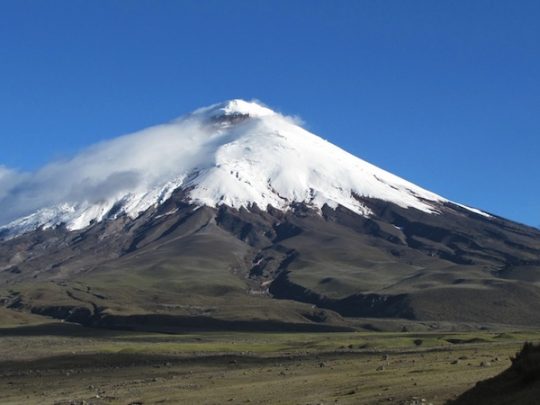
Climb Chimborazo and Cotopaxi — 14-Day Ecuador Expedition
- Height (m)
- 5897, 6384
- Duration
- 11 days
- Difficulty
- Moderate
- Continent
- South America
- Children
- Ages 14+
- Accommodation
- Hotels only
-
 3,200 $
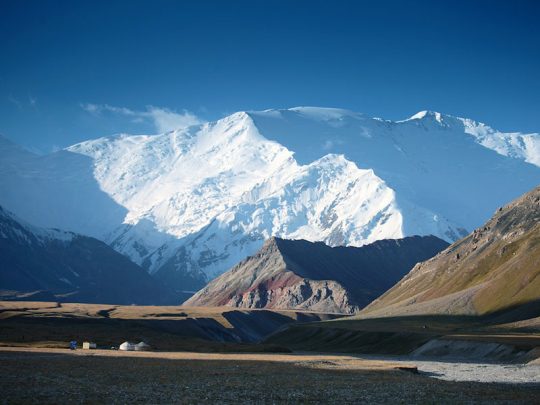
Climb Lenin Peak, 7135 m — 21-Day Pamir Expedition
- Height (m)
- 7135
- Duration
- 21 day
- Difficulty
- Moderate
- Continent
- Asia
- Children
- Not suitable for children
- Accommodation
- Some nights in tents
-
 3,129 $
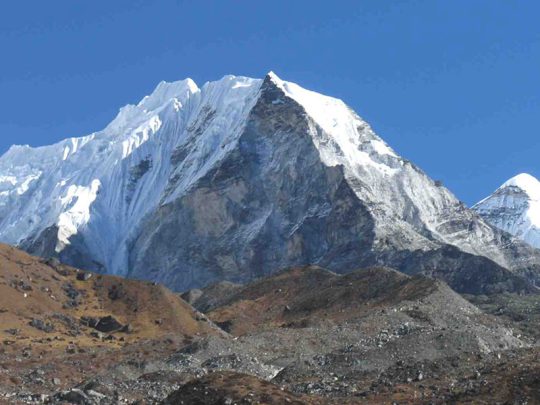
Island Peak Climb — 18-Day Expedition
- Height (m)
- 6165
- Duration
- 18 days
- Difficulty
- Moderate
- Continent
- Asia
- Children
- Not suitable for children
- Accommodation
- Some nights in tents