- Guides
- B2B
-
Climbs
-
Climb Elbrus
- Elbrus individually
- Elbrus from the South, 9 days
- Elbrus from the South, 7 days
- Climb Elbrus with Oxygen
- Elbrus from the North
- Elbrus Two Summits
- Elbrus Traverse from South to North, 9 Days
- Elbrus Traverse from North to South, 10 Days
- Elbrus "Cross" from South
- Elbrus "Cross" from North
- Kazbek+Elbrus
- Elbrus from the West
- Elbrus by Private Helicopter, 3 Days
- Elbrus Region Holiday and Trekking, 9 Days
- Elbrus Region Holiday, 7 Days
- Elbrus Dating
- Climb Elbrus from the South, 9 Days with Sergey Baranov
- Under 5000 m
- 5000+ meters
- 6000+ meters
- 7000+ meters
- 8000+ meters
-
Climb Elbrus
-
Trekking
-
Trekking in Nepal: routes to the eight-thousanders
- K2 base camp
- Everest base camp
- Everest base camp via Gokyo
- Everest base camp in a week
- Annapurna Circuit and Tilicho Lake Trek
- Manaslu Circuit Trek
- Kanchenjunga Circuit Trek (XXL)
- Kanchenjunga North Base Camp Trek (Short)
- Kanchenjunga from India: the Goecha La Trek in Sikkim
- Makalu Base Camp Trek
- Annapurna Base Camp Trek
- Trekking in South America
- Asia
- Trekking in Africa
-
Trekking in Russia
- Elbrus Region Holiday and Trekking, 9 Days
- Elbrus Region Holiday, 7 Days
- Oshten + Kardyvach — 9-Day Western Caucasus Trek
- Lake Kardyvach — 5-Day Base-Camp Trek
- Route 30: Through the Mountains to the Sea, with Oshten — 4 Days
- Trekking in Arkhyz — 7 Days over the Ayulyu Pass
- Gvandra Trek — 7 Days to the Ullu-Kyol Lakes
- Trekking in Dombai — 7 Days with the Murudzhu Lakes
- Europe
-
Trekking in Nepal: routes to the eight-thousanders
-
Adventure expeditions
-
Trekking in Africa
- Tour to Morocco for New Year
- Morocco: Toubkal and the mysteries of the Sahara
- Eritrea: the Dahlak Archipelago and the Rashaida Nomads
- Rwanda: Mountain Gorillas and the Bisoke Volcano
- Ethiopia: Otherworldly Landscapes and the Peoples of the Omo Valley
- Tanzania Safari: Serengeti, Ngorongoro and Tarangire
- Zimbabwe and South Africa: Victoria Falls, Cape Town and the Cape of Good Hope
- Namibia: Etosha National Park and the Himba
- Kenya Safari: the African Big Five
- Trekking in South America
- Asia
-
Trekking in Africa
- Ski touring and ski mountaineering: chasing freedom in the mountains
- VIP tours
- Useful
- About
Tanzania Safari: Serengeti, Ngorongoro and Tarangire
1900 $
Why to go with us?
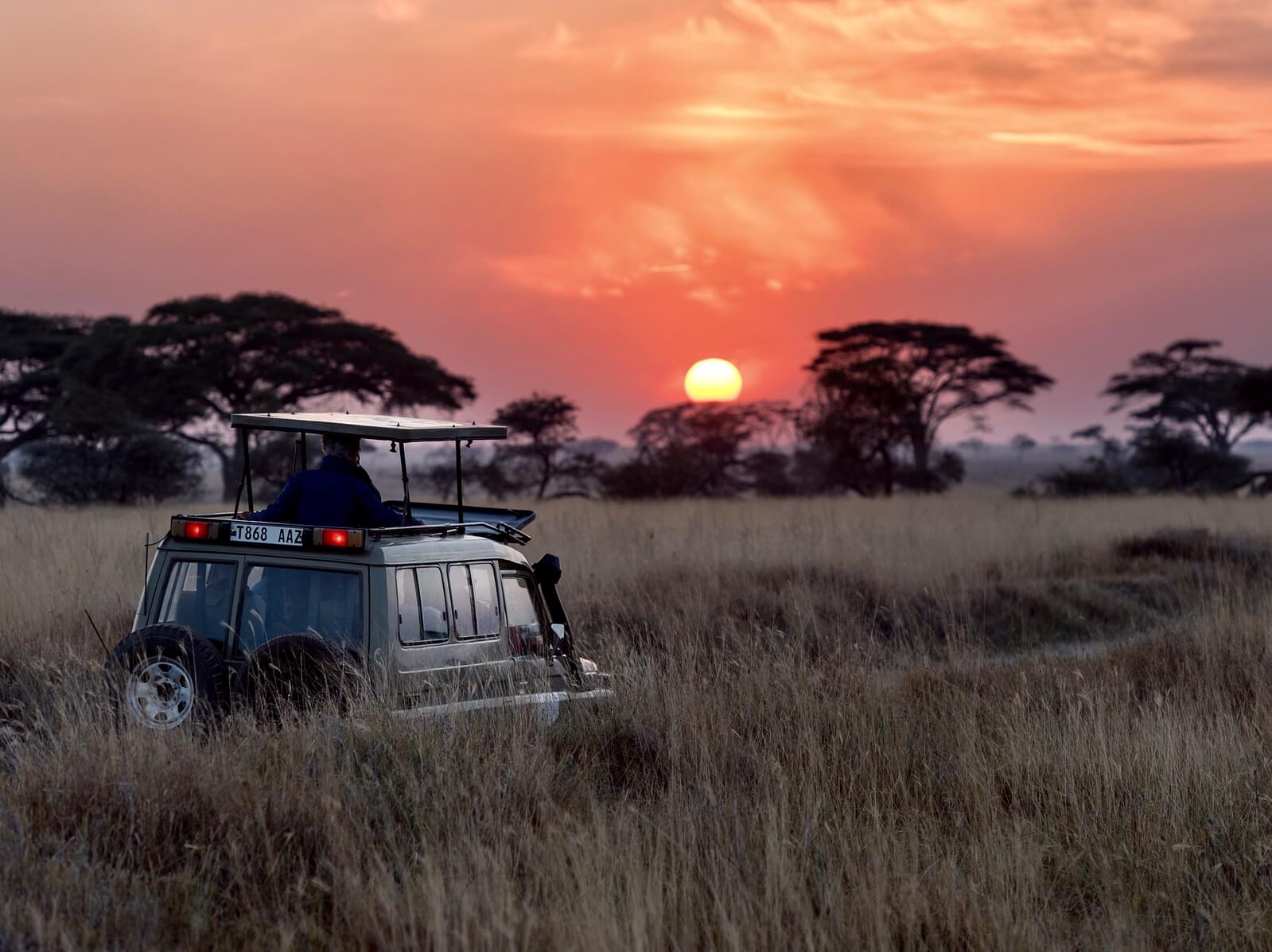
A safari in Tanzania is a journey through a land of baobabs, endless plains and ancient volcanoes. In the morning the vehicle follows the tracks of predators through the golden grass of the Serengeti, by day it stops beside a herd of elephants in Tarangire, and at first light it descends the wall of Ngorongoro into the vast green caldera. The trip sets the direction, but each day is written by the wildlife itself.
The route is built for a first major safari in East Africa: in seven days participants see four different natural areas and spend two days in the central Serengeti, rather than trading the depth of the journey for a race between photo stops. It is a self-contained tour and a natural continuation of a Kilimanjaro climb.
This seven-day safari across northern Tanzania combines Tarangire, Serengeti and Lake Manyara national parks with the Ngorongoro Conservation Area. The route starts and finishes in Arusha and suits anyone who wants to see several different ecosystems in one trip.
Game viewing is done from a safari vehicle with a driver-guide. Lions, elephants, giraffes, buffalo, antelope and other animals live here in their natural environment, so specific encounters, and the passage of the Great Migration through any particular area, are never guaranteed.
In northern Tanzania the main rainy periods fall in March to May and in October to December. Heavy rain, washed-out roads, changed transfer times and an adjusted sequence of parks are all possible then. Participants must be prepared for such conditions, and the trip is confirmed for specific dates.
The safari can be added after a Kilimanjaro climb, booked as a private continuation of a mountain trip, or finished with a stay on Zanzibar. All connections and additional services are quoted separately.
Please note that our company does not buy or sell air tickets and does not arrange visas, and is therefore not responsible for disruption beyond its control involving flights or border crossings.
In Africa there may be difficulties exchanging small, worn or pre-2009 US dollar notes. An additional commission or a refusal to exchange is possible.
About the Tanzania safari
The safari in Tanzania follows the northern circuit of national parks. Over seven days participants move in sequence through the baobab landscapes of Tarangire, the savannahs of the central Serengeti, the volcanic caldera of Ngorongoro and the natural systems of Lake Manyara. It is a self-contained journey that is also easy to combine with Kilimanjaro or Zanzibar.
Tarangire is known for its large baobabs and its elephant herds. How the animals are distributed depends on water, grazing and the season. The Serengeti covers an enormous area, so the trip sets aside two days for the central part of the park. Ungulates, big cats, hyenas, jackals, hippos and a great many birds are found here, but a safari remains the observation of wild animals and not a demonstration to a timetable.
The Ngorongoro Conservation Area is formed around a large volcanic caldera. The descent into the crater makes it possible to see several types of landscape within a single day. Even here a full set of the Big Five cannot be promised: the vehicle route, the visibility and the encounters are determined by the rules of the area and by where the animals actually move.
Lake Manyara closes the trip. The park combines forest sections, open ground and wetlands. The water level, the condition of the tracks and the presence of individual species change through the year, so this description contains no promise of thousands of flamingos or of a certain encounter with tree-climbing lions.
With a group of four participants or more a Mountain Guide team leader accompanies the journey. Game viewing and movement through the parks are organised by an English-speaking driver-guide. Participants must follow the driver-guide’s instructions, must not leave the vehicle without permission and must not approach animals.
The safari involves long transfers and early starts. Families with children, older participants and people with health limitations must discuss the length of each day, the accommodation and their ability to take part in advance. Age on its own does not replace an individual assessment of the conditions of the trip.
The exact names of hotels, lodges and safari camps, the room types, the meal plan and the transport are confirmed in the quote for specific dates. Substitutions are possible only on agreed terms, or in circumstances that require an immediate decision for the sake of safety and of completing the route.
Before travelling, read up on malaria prophylaxis and on travel insurance. Medication and vaccination are chosen with a doctor, not from a universal list issued by a travel company.
The main thing that distinguishes a good safari is the time left to nature. The driver-guide is not obliged to drive to a lion promised in advance: they read tracks, listen to reports from colleagues and judge the light, the roads and the behaviour of the animals. Sometimes the strongest moment is not a predator’s chase but the silence at a waterhole, a herd against a storm sky, or the first light over Seronera.
Northern Tanzania is easy to compare with a safari in Kenya and with a journey through Uganda. The Tanzanian trip puts its emphasis on the Serengeti, the Ngorongoro caldera, Tarangire and the ability to connect the savannah with Kilimanjaro and Zanzibar through one set of logistics.
If the safari is planned after the mountain, read about the Kilimanjaro seasons in advance. The weather windows on the mountain and the best conditions in a particular part of the Serengeti do not always coincide, so the combined route has to be built around the main priority of the trip.
Itinerary of the Tanzania safari
Day 1. Arrival in Arusha.
Meeting at Kilimanjaro International Airport and transfer to a hotel in Arusha. After check-in there is a briefing on the route, the safety rules and conduct in the national parks. The guide confirms departure times, meals, participant restrictions and how luggage is stowed in the vehicle. If the flight arrives in daylight, the outline of Kilimanjaro or Mount Meru may already be visible on the drive. Night at the hotel.
Day 2. Arusha to Tarangire National Park.
After breakfast the group meets the driver-guide and sets off for Tarangire. The road leads into a world of baobabs, sandy riverbeds and wide savannah. Game viewing is done from the safari vehicle with stops where the park rules permit. Encounters depend on the season and on water, but Tarangire is particularly striking for its elephants and the scale of its landscape. A lunch box is provided during the drive. In the evening the group settles into a lodge or safari camp for dinner and rest.
Day 3. Tarangire to the central Serengeti.
An early departure after breakfast for Serengeti National Park. As the drive continues, wooded stretches give way to open plains and the horizon becomes almost endless. The route leads to the central part of the park and the Seronera valley, where permanent water sources support rich wildlife in different months of the year. Game viewing continues on the way to the accommodation. In the evening, check-in at a lodge or safari camp and dinner.
Day 4. The central Serengeti.
A full day of game viewing in the central Serengeti. The times of departure and the length of each drive are set by the driver-guide, taking account of the park rules, the weather, the state of the tracks and current information on the movement of the animals. Early light is good for watching predator activity, and during the day the route may cross open plains, river valleys and granite outcrops. The Great Migration is not tied to an exact date, so the guide looks for the best encounters in the conditions that actually apply. Return to the accommodation and dinner.
Day 5. Serengeti to Olduvai, Ngorongoro and Karatu.
After breakfast the group leaves the Serengeti and heads for the Ngorongoro Conservation Area. The trip includes a stop in the area of Olduvai Gorge, associated with some of the most important finds in the history of early humans. The road climbs from the savannah to the cool volcanic highlands. In good visibility the wall of the caldera offers a panorama of Ngorongoro. The group then transfers to Karatu, checks into a lodge and rests.
Day 6. Ngorongoro Crater and back to Arusha.
An early start and the descent into the Ngorongoro Crater. Game viewing follows the permitted tracks of the caldera among grassland, marsh, forest patches and a salt lake. The steep walls create the sense of a separate world, but the animals move freely, so specific encounters are not guaranteed. When game viewing ends, the vehicle climbs back to the crater rim and the group returns to Arusha. Night at the hotel.
Day 7. Lake Manyara National Park. End of the trip.
After breakfast, departure for Lake Manyara National Park. On the way the landscape changes from the foot of the Great Rift Valley to dirt roads through forest and wetland. The level of the lake and the distribution of the animals depend on the season, so the guide chooses accessible sections according to the actual conditions. When the game drive ends, the group returns to Arusha or moves on to the agreed finishing point of the trip. An international flight or a continuation on Zanzibar should only be planned once the transfer time has been confirmed.
Important.
The sequence of the parks, the departure times and the length of the transfers may change because of the weather, the state of the roads, national park rules and other circumstances. Operational decisions are taken by the driver-guide and the trip leader.
What's included
- A Mountain Guide team leader accompanying the group, with four participants or more
- The work of an English-speaking driver-guide
- Meeting at Kilimanjaro International Airport and airport – hotel – airport transfers
- Ground transport along the published safari route
- Accommodation in the hotels, lodges and safari camps set out in the itinerary, twin occupancy
- Breakfasts in the hotels and lodges
- Three meals a day during the safari section of the trip
- Park and entry fees for the participants and for the safari vehicle
- Permits for the overnight stays in protected areas set out in the itinerary
What's not included
- International and domestic air tickets
- A Tanzanian visa and transit permits, where these are required
- Medical insurance
- Single occupancy
- Meals, drinks and snacks not expressly listed in the inclusions
- Balloon flights, horse rides and other additional activities
- Vaccination, medical consultations and prophylactic medication
- Tips for the driver-guide, the accompanying team leader and the staff
- Personal expenses
- Costs arising from a departure from the itinerary, flight delays or individual changes
- Any service not expressly listed in the inclusions
The Tanzania safari for private groups
The Tanzania safari can be arranged privately, with a vehicle of your own. This suits families, small groups, photographers and anyone who wants to combine the trip with Kilimanjaro or Zanzibar.
Dates, the team, accommodation, the catering plan, the form of Russian-speaking support and the price are all quoted individually. For a group of fewer than four participants, a Russian-speaking trek leader is confirmed separately.
A private format does not mean park rules can be varied freely. Departure times, where you stop, whether you may get out of the vehicle and any change to the route are decided by the driver-guide, taking account of safety, the weather and the requirements of the protected areas.
For a ready-made combination after the climb, see our Safari after Kilimanjaro page.
Documents for the Tanzania safari
Which documents you need depends on your nationality, your flight routing and your transit airports. You are responsible for having them and for keeping them current. Check the passport and health rules again before you fly.
- A passport valid for the period the entry rules require
- A visa or other entry permit for Tanzania, where required
- E-ticket receipts for every flight
- Confirmation of the itinerary and the host’s contact details
- Medical insurance for the whole of the trip
- A yellow fever vaccination certificate, where your route and transit require one
- Documents for a travelling minor, where these apply
Check the official requirements on the website of the Tanzania Immigration Services Department. Whether a yellow fever certificate is required depends not only on your destination but on the route you took to get there and how long you spent in transit.
Weather and seasons on the Tanzania safari
Northern Tanzania has two main rainy periods. The longer rains normally fall between March and May, and the second wet season between October and December. Season boundaries are not a guarantee of the weather in any particular week.
In the wetter months roads can soften, some sections become slower, and cloud and rain change visibility. The advantages can be greener landscapes and fewer people in some areas, but the itinerary is only confirmed once conditions on your chosen dates have been assessed.
In the relatively dry periods expect dust, strong sun and cool early departures. Temperature feels different in the Serengeti, on the rim of Ngorongoro and in an open vehicle, so bring layers and protection from both rain and sun.
The route of the Great Migration depends on rainfall and grazing. Neither a calendar nor a marketing description can guarantee that the herds will be in any particular part of the Serengeti.
Accommodation and meals on the Tanzania safari
Twin accommodation in hotels, lodges and safari camps is provided in Arusha, Karatu and on safari, as set out in the itinerary. The exact properties, room categories and bed types are confirmed in the offer for your dates. Single occupancy is paid separately.
Three meals a day are provided on safari, and breakfasts in the town hotels and lodges, as set out under “What’s included”. Drinks, special diets and meals outside the itinerary must be agreed in advance.
Allergies, medical restrictions and dietary requirements are notified before booking. Whether a particular diet can be provided is confirmed by the host, not assumed.
Day-to-day conditions on the Tanzania safari
Most of the day is spent in a safari vehicle. Drives between parks can be long, and the roads unsurfaced and rough. Expect dust, a bumpy ride, heat, cool early mornings and limited access to toilets between permitted stops.
You may only get out of the vehicle with the driver-guide’s permission. Do not feed the animals, attract them with sounds, approach them for a photograph, or cross the boundaries set by the national park.
Signal and electricity depend on where you are staying. Bring a charged power bank, something to protect your equipment from dust and damp, and enough of any medication you take regularly.
Insurance
Show insurance calculator (Russian)
This calculator is provided by an external provider and uses a Russian-language interface.
Equipment and packing list for the Tanzania safari
Download PDFThe list is written for a seven-day driving safari in northern Tanzania. The final set depends on the season, the airlines and the accommodation chosen.
Documents and baggage
- Passport, visa and health documents
- Air tickets and insurance policy
- A soft holdall or suitcase within the confirmed baggage allowance
- Small day pack
- Waterproof bags for documents and electronics
Clothing and footwear
- Comfortable closed shoes and light spare footwear
- Lightweight long trousers and long-sleeved shirts
- T-shirts and underwear for the length of the trip
- Fleece jacket or another warm layer
- Lightweight waterproof jacket
- Sun hat
- Swimming things, if you need them for the accommodation chosen or for the rest of your trip
Protective gear and electronics
- Sunglasses
- SPF 50 sun cream
- Lip balm with SPF
- Insect repellent
- Binoculars, if you want them
- Camera, memory cards and something to keep dust off
- Power bank, charging cables and a suitable plug adapter
- Personal first-aid kit and any medication you take regularly
Antimalarial medication is prescribed by your doctor. There is more in the Mountain Guide article on malaria.