- Guides
- B2B
-
Climbs
-
Climb Elbrus
- Elbrus individually
- Elbrus from the South, 9 days
- Elbrus from the South, 7 days
- Elbrus from the South in 1 day
- Elbrus from the North
- Elbrus Two Summits
- Elbrus Traverse from South to North, 9 Days
- Elbrus Traverse from North to South, 10 Days
- Elbrus "Cross" from South
- Elbrus "Cross" from North
- Kazbek+Elbrus
- Elbrus from the West
- Elbrus by Private Helicopter, 3 Days
- Elbrus Region Holiday and Trekking, 9 Days
- Elbrus Region Holiday, 7 Days
- Elbrus Dating
- Climb Elbrus from the South, 9 Days with Sergey Baranov
- Under 5000 m
- 5000+ meters
- 6000+ meters
- 7000+ meters
- 8000+ meters
-
Climb Elbrus
-
Trekking
-
Trekking in Nepal: routes to the eight-thousanders
- K2 base camp
- Everest base camp
- Everest base camp via Gokyo
- Everest base camp in a week
- Annapurna Circuit and Tilicho Lake Trek
- Manaslu Circuit Trek
- Kanchenjunga Circuit Trek (XXL)
- Kanchenjunga North Base Camp Trek (Short)
- Kanchenjunga from India: the Goecha La Trek in Sikkim
- Makalu Base Camp Trek
- Annapurna Base Camp Trek
- Trekking in South America
- Asia
- Trekking in Africa
-
Trekking in Russia
- Elbrus Region Holiday and Trekking, 9 Days
- Elbrus Region Holiday, 7 Days
- Oshten + Kardyvach — 9-Day Western Caucasus Trek
- Lake Kardyvach — 5-Day Base-Camp Trek
- Route 30: Through the Mountains to the Sea, with Oshten — 4 Days
- Trekking in Arkhyz — 7 Days over the Ayulyu Pass
- Gvandra Trek — 7 Days to the Ullu-Kyol Lakes
- Trekking in Dombai — 7 Days with the Murudzhu Lakes
- Europe
-
Trekking in Nepal: routes to the eight-thousanders
-
Adventure expeditions
-
Trekking in Africa
- Tour to Morocco for New Year
- Morocco: Toubkal and the mysteries of the Sahara
- Eritrea: the Dahlak Archipelago and the Rashaida Nomads
- Rwanda: Mountain Gorillas and the Bisoke Volcano
- Ethiopia: Otherworldly Landscapes and the Peoples of the Omo Valley
- Tour to Uganda: Queen Elizabeth National Park and Mountain Gorillas
- Tanzania Safari: Serengeti, Ngorongoro and Tarangire
- Safari Uganda
- Zimbabwe and South Africa: Victoria Falls, Cape Town and the Cape of Good Hope
- Namibia: Etosha National Park and the Himba
- Kenya Safari: the African Big Five
- Tour to Botswana: Okavango Delta and Chobe National Park
- Trekking in South America
- Asia
-
Trekking in Africa
- Ski touring and ski mountaineering: chasing freedom in the mountains
- VIP tours
- Useful
- About
Kailash Kora — 16-Day Journey through Tibet
- Height (m)
- 5669
- Duration
- 16 days
- Difficulty
- Low
- Continent
- Asia
- Children
- Ages 14+
- Accommodation
- No nights in tents
3850 $
Why to go with us?
Temporarily unavailable
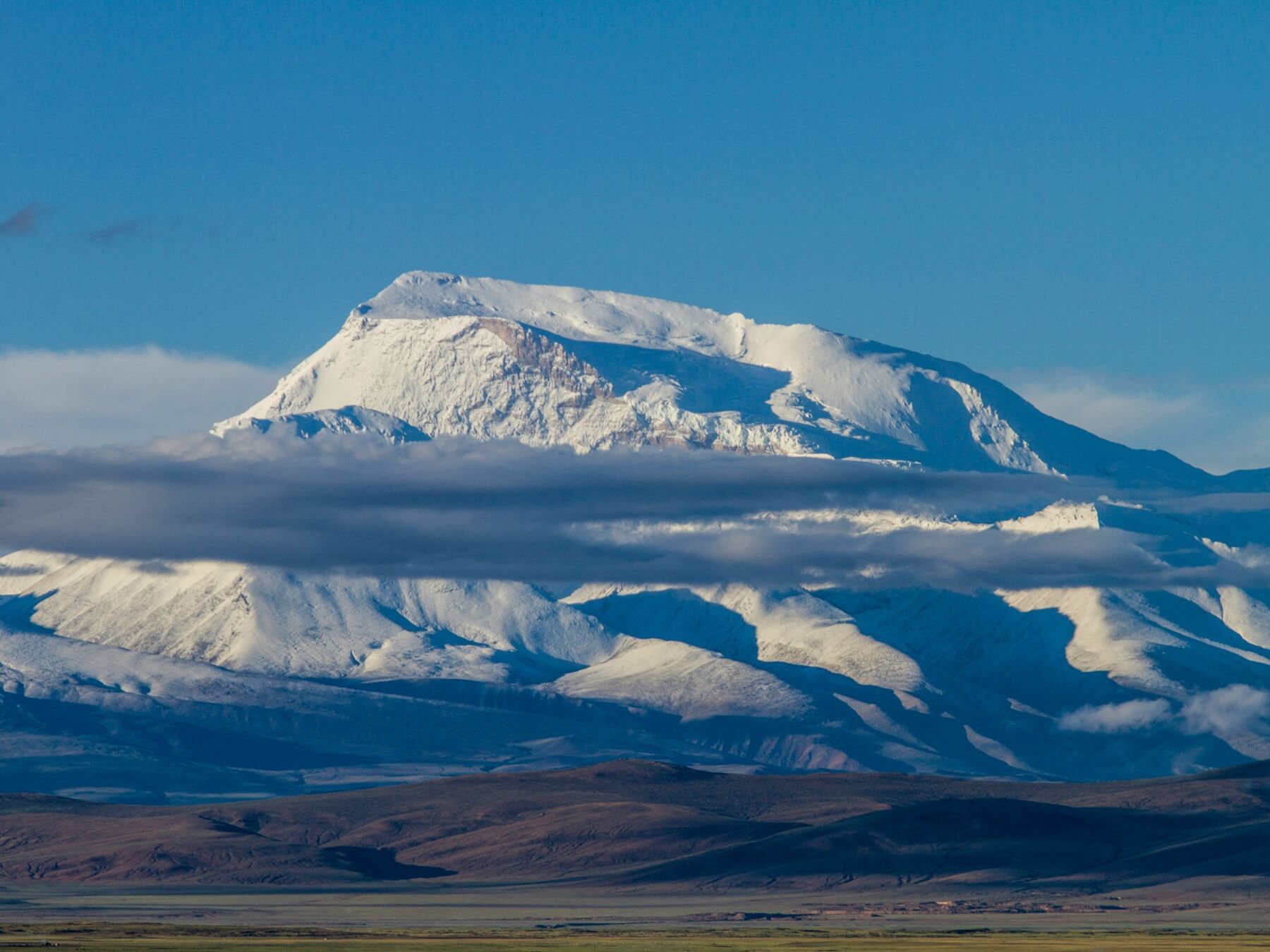
The kora around Mount Kailash — a 16-day high-altitude journey from Kathmandu through Lhasa and western Tibet. The trip combines cultural days in Kathmandu and Lhasa, the monasteries of central Tibet, the lakes Manasarovar and Rakshastal, and the three-day walk around the sacred mountain.
The main physical section is the kora itself, about 53 km, crossing the Drolma La at 5669 m. No technical mountaineering experience is required, but the altitude, the long pass day, simple high-altitude accommodation and the remoteness all call for good condition and a willingness to follow the guide's decisions.
Kailash is revered in Buddhism, Hinduism, Jainism and the Bon tradition. The route allows you to see the living pilgrimage culture of Tibet, but it does not promise any religious or spiritual outcome. A Mountain Guide leader accompanies groups of four participants or more.
Important. Access to Tibet, the permits, the visa arrangements and the Kathmandu — Lhasa flight are confirmed before any non-refundable tickets are bought. The weather, the state of the road, a closure of the area or a participant's health may change the trip or stop the kora. Mountain Guide does not sell air tickets and does not process entry visas.
About the Kailash kora
The journey to Kailash begins not with the walking route but with a measured entry into the region. After three days in Kathmandu the group flies to Lhasa, sees the Potala, the Jokhang and the monasteries, and takes a separate acclimatisation day. The road route then leads through Shigatse and Saga, gradually approaching the lakes Manasarovar and Rakshastal and the village of Darchen at the start of the kora.
That sequence is not only there for the cultural activities. Lhasa already stands at considerable altitude, and the road beyond it goes higher still. Days without sharp gains on foot allow you to judge your sleep, your appetite and your body’s response before the main crossing, but they do not rule out altitude sickness. Good athletic condition helps you carry the load, but it does not substitute for acclimatisation.
The kora takes three days. The first stage leads from Darchen to Dirapuk. The hardest day is the Drolma La, 5669 m, where altitude, wind, cold, possible snow or ice and a long descent all act at once. On the third day the group completes the circuit and returns to the road section of the route.
This is high-altitude trekking, not an ascent of Kailash itself. Crampons, ropes and an ice axe are not the standard basis of the trip unless the host team reports a change in conditions. The main requirements are endurance, a steady pace, suitable footwear and clothing, the ability to spend several days in simple lodges and discipline when anyone starts to feel unwell.
Kailash is a sacred place for followers of Buddhism, Hinduism, Jainism and the Bon religion. Participants walk the route alongside pilgrims and observe local rules. The cultural meaning of the kora matters for understanding the journey, but Mountain Guide does not turn religious belief into a promise of purification, healing or a changed life.
The decision to continue rests with the guide, taking account of the weather, the state of the road and the trail, the pace and the health of participants. If symptoms increase, further gain in altitude stops. Insurance must cover high-altitude trekking to at least 5669 m, search and rescue and emergency evacuation.
Documents for China and Tibet are arranged under the rules in force with the host party. The passport, the route of entry and the dates cannot be changed once the permit procedure has begun without prior agreement.
Kailash kora itinerary, 16 days
Day 1. Arrival in Kathmandu.
You arrive in Kathmandu, the capital of Nepal, a city that seems to join the past to the present. Bright colours, the scent of spices and the sound of prayer from ancient temples meet you, with the Himalaya above as a reminder that the journey is only beginning. After the flight you go to a hotel in the centre of Thamel, the historic and cultural heart of the city, where every corner is full of life: busy markets, the smiles of local people, quiet lanes of centuries-old houses. Today we walk the old streets of Kathmandu and take in its atmosphere. There is enough time to rest and gather strength after the flight. In the evening the group meets, gets acquainted with each other and with the guide, and has dinner. Night at the hotel.
Day 2. Sightseeing in Kathmandu.
Kathmandu opens up. The day begins with a visit to the Swayambhu stupa, which stands above the city like a spiritual beacon. We climb the 365 steps to meet the sunrise over the city, where red roofs merge into the horizon. The next stop is the Pashupatinath temple, one of the most sacred places in Hinduism, where the Bagmati river carries its waters past the sacred fires and ancient rituals are performed. We finish the sightseeing day in the Boudhanath district, where the stupa painted with the eyes of the Buddha seems to watch over the world. In the evening there is dinner at a traditional restaurant, where the group shares its expectations for the journey ahead. Night at the hotel.
Day 3. Preparation for the journey, and Patan.
The morning in Kathmandu begins with the noise of the bazaars. We go to the Thamel district, where Asia comes alive in sound, colour and scent, and where everything can be found, from bright woollen carpets to Tibetan pieces. For anyone already fully equipped, we offer an excursion to Patan, an open-air museum of a city. Among the ancient temples and carved wooden buildings you can feel like a traveller in time. The royal Durbar square in Patan reads like a living page from a book of legends, and a glimpse of the living goddess Kumari, if you are lucky, is a moment that stays with you. Night at the hotel.
Day 4. Flight to Lhasa.
After breakfast, transfer to the airport and the flight to Lhasa, a gateway to another world. From the window you see the Himalaya standing guard over this sacred region. When the aircraft lands you are met by air carrying the scent of incense and the freshness of the mountains. Lhasa is not simply a city but the heart of Tibet. On the first day we go to the old Barkhor district. Narrow lanes, brightly coloured stalls and the ancient Jokhang temple make it feel like an old legend. Walking the kora, the ritual circuit of the temple, you become part of the flow of pilgrims who come here.
Day 5. The Potala and the monasteries of Lhasa.
Lhasa opens its greatest treasures. We go to the Potala, the palace that seems to float on the Red Hill. This residence of the Dalai Lamas, rising above the city, speaks of the spiritual strength and grandeur of Tibet; among the treasures, sacred relics and gilded statues, time seems to lose its meaning. We then visit the Drepung and Sera monasteries. At one of them you will see monks debating the sacred texts, an absorbing ritual full of energy and depth. The day closes with the Jokhang temple and its shrine, the jewelled statue of Shakyamuni Buddha. Night at the hotel.
Day 6. Acclimatisation day in Lhasa.
We begin the morning at the Ramoche temple, which holds a statue of Maitreya Buddha, a symbol of hope and of the future. We take part in the morning service, where the sound of mantras fills the space. After breakfast the day is your own: a walk through the Tibetan quarter, buying souvenirs, or resting in a tea house with a cup of masala tea. The day exists so that you can feel the rhythm of Lhasa properly. Night at the hotel.
Day 7. Drive to Shigatse.
We leave Lhasa for Shigatse, following winding roads along the Brahmaputra river. Snow peaks, wide plains and old Tibetan settlements pass by the windows. At Shigatse we visit the Tashilhunpo monastery, seat of the Panchen Lamas. Its centre is the Jampa temple, with a giant gilded statue of the Buddha of the future. Night at the hotel.
Day 8. Drive to Saga.
A day full of change. We drive to Saga, crossing high passes and desert valleys. The Sakya monastery is the main stop: its grey and red walls seem to merge into the mountains, and inside are some of the greatest relics of Tibetan Buddhism. The monastery is the centre of the Sakya school, which places its emphasis on philosophy, ritual and practice in ways that differ from other Tibetan schools, and which is known for its own tradition of writing and of transmitting knowledge. Night at the hotel.
Day 9. Lake Manasarovar and Darchen.
The morning continues the journey deeper into Tibet, towards the sacred lake Manasarovar. The road is a succession of landscapes: snow peaks, sand dunes, pastures with yaks and high plains. On the Mayum La, 5211 m, the air is cold and clear. Ahead lies the first sight of Mount Kailash, its white summit on the horizon. Our next stop is Lake Manasarovar, whose water reflects the surrounding peaks and which has been regarded since ancient times as an abode of the gods and a symbol of purity. We spend the night at a guest house in Darchen, the village at the foot of the sacred mountain. Night at the hotel.
Day 10. Lakes Rakshastal and Manasarovar.
The day is given to the sacred lakes of Tibet. First we go to Rakshastal, whose lifeless water sits beside Manasarovar, the lake of life. We then travel to Manasarovar itself, its emerald water ringed by the Himalaya. We visit the Chiu monastery, which stands above the cave of Padmasambhava, the great yogin. Later we drive back to Darchen to rest and prepare for the main undertaking, the kora around Kailash. Night at the hotel.
Day 11. First day of the kora — Dirapuk.
The kora around the sacred mountain begins. We leave Darchen on a trail that opens onto the Lha Chu valley. Along the way stand the great peaks named for deities: Amitayus, Chenrezig and Vajrapani. Our first objective is the Dirapuk monastery, from where there is the famous view of the north face of Kailash, known as the mirror. Night in a very simple but atmospheric lodge, where the plainness of the surroundings only emphasises the scale of the landscape. Night in a lodge.
Day 12. The Drolma La, 5669 m.
The main day of the kora. We set out for the Drolma La, the highest point of the route at 5669 m. Every step here is a genuine test. At the pass, prayer flags stand out in the wind, and pilgrims traditionally leave something behind to mark a break with the past. From the pass we descend into the valley below the north face of Kailash. The night is spent at the Zutulpuk monastery, built above the cave of Milarepa, the legendary yogin. Night at the monastery.
Day 13. End of the kora and drive to Saga.
The final stage of the kora returns to Darchen. This section is less demanding but still striking. We walk beside a loud river, through small gorges and across plains that open onto Gurla Mandhata, the peak that stands opposite Kailash. The return to Darchen marks the end of the circuit. After lunch we drive to Saga for the night, taking stock of the route behind us. Night in a lodge.
Day 14. Drive to Kyirong.
The drive from Saga to Kyirong, a village on the border with Nepal. This part of the route is a display of landscape: high plateaux give way to green valleys and the mountains grow lower. Kyirong meets us with the scent of pines and moist, fresh air. After a long stay above 4000 metres, breathing is easy here and the body begins to recover. The evening is quiet. Night at the hotel.
Day 15. Return to Kathmandu.
We cross the border and travel back to Kathmandu. The road runs through Himalayan gorges, over bridges above fast rivers, past rice fields and terraces worked by local farmers. Kathmandu meets us again with its noise, colour and scent, but now the city feels familiar. Night at the hotel.
Day 16. End of the trip.
The last day of the journey. There is a chance to walk the streets of Kathmandu once more, visit the souvenir shops and finish any shopping left over. In the evening you go to the airport, taking with you not only souvenirs but the memory of Kailash, the high passes, the ancient monasteries and the sacred lakes. Flight home.
What's included
- An experienced Mountain Guide leader, for groups of 4 participants or more
- Meeting and seeing off at the airport
- Hotel accommodation in Kathmandu — 2 nights, 4-star
- Accommodation in lodges and hotels according to the itinerary
- A duffel bag for personal belongings, provided by our team on arrival
- Arrangement of all the permit documentation required for the trek, including trekking permits and national park entries, where these are required by law or by local rules
What's not included
- The international flight
- The domestic flight Kathmandu — Lhasa
- Visas
- Insurance covering mountaineering and helicopter evacuation
- Single-room accommodation
- Early check-in or late check-out at the hotel before or after the trip. We always try to arrange additional benefits for our guests with our partners, and early check-in or late check-out is often granted free of charge
- Meals on the trek — USD 25–35 a day
- A personal porter — USD 25 a day for up to 20 kg, usually shared between two participants; the porter’s insurance is included, as we insure all staff
- Tips
- Any departure from the itinerary
- Any costs arising from a change to the itinerary
Private groups
The Kailash kora can be arranged for a closed group of friends, a club or a corporate team, with no outside participants joining. Dates, the make-up of the guiding team and any extra services available on the route are agreed individually. For a closed group you can confirm in advance the working language, a dedicated leader from the Mountain Guide team, the standard of accommodation and porter services. Private dates depend on the flights, the permits and the group’s clearance for the region. The acclimatisation before the kora and the logic of the three high-altitude days are not shortened. Whether you can take part is assessed individually, because although the route is not technically hard it runs at considerable altitude and includes the Drolma La pass. The price depends on the number of participants, the dates you choose, the make-up of the team and any extra services confirmed.
Documents you need
Document requirements depend on your nationality and can change. Check them before you buy non-refundable tickets, and again before you fly. The first name and surname on every booking must match the spelling in your passport exactly. Mountain Guide does not sell air tickets and does not arrange entry visas, but it does provide the booking confirmations it holds and the documents issued by the host team.
Documents
- A valid passport
- A visa or other entry permit for Nepal and China, if one is required for your nationality
- International and domestic air tickets, or e-ticket receipts, for the trip
- Medical insurance covering high-altitude trekking, a maximum altitude of at least 5669 m, search and rescue, and emergency evacuation
- Your insurance policy number and the insurer’s 24-hour emergency contact details
- Your booking confirmation for the trip and the organisers’ contact details
- The documents for the Chinese visa, the group permit and the Tibet permit, in the format the host requests
- Confirmation of the Kathmandu – Lhasa flight and back, or of the other agreed transport segment
- Documents for a participant under 18, where these apply
- Digital copies of your passport, visa, tickets and insurance on your phone and in cloud storage
- Waterproof wallet for your original documents
The procedure for the Chinese visa, the group permit and the Tibet permit depends on your nationality, your point of entry and the rules in force. You may not change passport once the application process has begun without agreeing it with the organisers.
Weather and seasons
The dates of the kora are set by access to Tibet, by the host’s operations, by the flights and by the seasonal passability of the high-altitude route. Before buying tickets you need confirmation of the specific departure and of the entry arrangements in force. In Lhasa and on the way to Kailash there can be strong sun, dry air, wind and a sharp drop in temperature after sunset. On the kora, and especially around the Drolma La pass, there can be snow, ice, precipitation and sub-zero temperatures even when it is noticeably warmer in the valleys. Weather affects the roads, the pace of the stages and whether the pass can be crossed. Holding permits and having paid for the trip does not guarantee access if the area is temporarily closed. The decision to set out and to turn back is taken on the actual conditions and on how the participant is doing.
Accommodation and meals
Two nights in a 4-star hotel are provided in Kathmandu. For the rest of the journey you use hotels and lodges as set out in the itinerary. The specific properties, room category and availability of single occupancy are confirmed for the group’s dates. Conditions become considerably simpler on the high-altitude section. Nights during the kora are spent in basic accommodation, where heating, sanitation and privacy may differ from a town hotel. Meals on the trekking section are not included and are paid for by participants themselves. Choice on the kora is limited by what is available locally, so discuss food allergies and strict dietary requirements in advance. The daily food budget given on this page must be confirmed before the trip, as prices and what is on offer can change.
Facilities on the route
Showers and hot water. Kathmandu has the usual hotel facilities. The further you travel from the towns, the more likely hot water and showers are to cost extra, be limited, or be unavailable. A regular shower is not guaranteed on the kora.
Toilets. Conditions depend on the particular hotel or lodge. At the high-altitude stops the toilet and washing facilities are basic and may be outside the room.
Power and charging. Plan reliable charging for the towns. On the kora the electricity may run to a schedule or not at all, so you need a power bank and spare cells.
Internet and phone signal. Ordinary mobile signal and internet depend on the area and on local restrictions. On the high-altitude section there can be long periods without access. Agree before the trip which communication devices you may use.
Laundry and drying. Plan laundry for before the kora begins. On the route you need a change of dry clothing and dry bags for your kit.
Insurance
Back to topEquipment and useful extras
Download PDFYou bring all of your own personal equipment. Before the trip, agree your footwear, sleeping bag and personal kit with the guide, taking the season and the conditions on the route into account.
Documents
- Passport
- Air tickets or e-ticket receipts
- Medical insurance covering helicopter evacuation
- We recommend keeping digital copies of your documents on your phone and in cloud storage
Personal equipment
- Rucksack of 30-50 litres
- Duffel bag for your kit (our team provides one locally)
- Sleeping bag with a comfort rating from -20 °C
- Sleeping mat
- Trekking poles, which must have baskets of at least 70 mm
- Steel crampons
- Ice axe with a leash
- Climbing harness
- Helmet
- 4 karabiners
- Cow’s-tail lanyards
- Ascender
- Descender
- Mug, spoon and bowl
Clothing and footwear
- Triple or double mountaineering boots. Doubles, plastic or leather
- Trekking boots, thoroughly treated with a waterproofing product beforehand
- Trainers (for town)
- Waterproof membrane shell: jacket and trousers
- Fleece top and bottoms
- Base layer, top and bottoms
- Mid-weight down jacket with a hood
- Warm mittens
- Thick gloves
- Thin gloves
- Bandana or buff (as well as sun protection in the valley, it can keep your throat or face warm in the cold)
- Warm hat
- Warm trekking socks for summit day
- Windproof mask for the lower face
Other items
- LED head torch with at least 12 hours of battery life
- Power bank
- Sunglasses
- Ski goggles
- Rain jacket
- Vacuum flask, 1 litre. Preferably without a push-button lid
- Gaiters
- SPF 50 sun cream
- SPF 10-15 lip balm
- Chemical hand warmers (not compulsory, but they can be very useful)
- Personal first-aid kit
- Elastic bandage and/or a support brace
- Toothpaste, toothbrush, soap, shampoo and flip-flops
- Towel
- Toilet paper (on sale in the lodges along the way