- Guides
- B2B
-
Climbs
-
Climb Elbrus
- Elbrus individually
- Elbrus from the South, 9 days
- Elbrus from the South, 7 days
- Climb Elbrus with Oxygen
- Elbrus from the North
- Elbrus Two Summits
- Elbrus Traverse from South to North, 9 Days
- Elbrus Traverse from North to South, 10 Days
- Elbrus "Cross" from South
- Elbrus "Cross" from North
- Kazbek+Elbrus
- Elbrus from the West
- Elbrus by Private Helicopter, 3 Days
- Elbrus Region Holiday and Trekking, 9 Days
- Elbrus Region Holiday, 7 Days
- Elbrus Dating
- Climb Elbrus from the South, 9 Days with Sergey Baranov
- Under 5000 m
- 5000+ meters
- 6000+ meters
- 7000+ meters
- 8000+ meters
-
Climb Elbrus
-
Trekking
-
Trekking in Nepal: routes to the eight-thousanders
- K2 base camp
- Everest base camp
- Everest base camp via Gokyo
- Everest base camp in a week
- Annapurna Circuit and Tilicho Lake Trek
- Manaslu Circuit Trek
- Kanchenjunga Circuit Trek (XXL)
- Kanchenjunga North Base Camp Trek (Short)
- Kanchenjunga from India: the Goecha La Trek in Sikkim
- Makalu Base Camp Trek
- Annapurna Base Camp Trek
- Trekking in South America
- Asia
- Trekking in Africa
-
Trekking in Russia
- Elbrus Region Holiday and Trekking, 9 Days
- Elbrus Region Holiday, 7 Days
- Oshten + Kardyvach — 9-Day Western Caucasus Trek
- Lake Kardyvach — 5-Day Base-Camp Trek
- Route 30: Through the Mountains to the Sea, with Oshten — 4 Days
- Trekking in Arkhyz — 7 Days over the Ayulyu Pass
- Gvandra Trek — 7 Days to the Ullu-Kyol Lakes
- Trekking in Dombai — 7 Days with the Murudzhu Lakes
- Europe
-
Trekking in Nepal: routes to the eight-thousanders
-
Adventure expeditions
-
Trekking in Africa
- Tour to Morocco for New Year
- Morocco: Toubkal and the mysteries of the Sahara
- Eritrea: the Dahlak Archipelago and the Rashaida Nomads
- Rwanda: Mountain Gorillas and the Bisoke Volcano
- Ethiopia: Otherworldly Landscapes and the Peoples of the Omo Valley
- Tanzania Safari: Serengeti, Ngorongoro and Tarangire
- Zimbabwe and South Africa: Victoria Falls, Cape Town and the Cape of Good Hope
- Namibia: Etosha National Park and the Himba
- Kenya Safari: the African Big Five
- Trekking in South America
- Asia
-
Trekking in Africa
- Ski touring and ski mountaineering: chasing freedom in the mountains
- VIP tours
- Useful
- About
Cultural Tour of Nepal: Kathmandu, Patan and Bhaktapur
- Height (m)
- Under 2,000
- Duration
- 3 days
- Difficulty
- Low
- Continent
- Asia
- Children
- Ages 2+
- Accommodation
- Hotels only
300 $
Temporarily unavailable
A three-day cultural tour of Nepal – Kathmandu, Patan and Bhaktapur
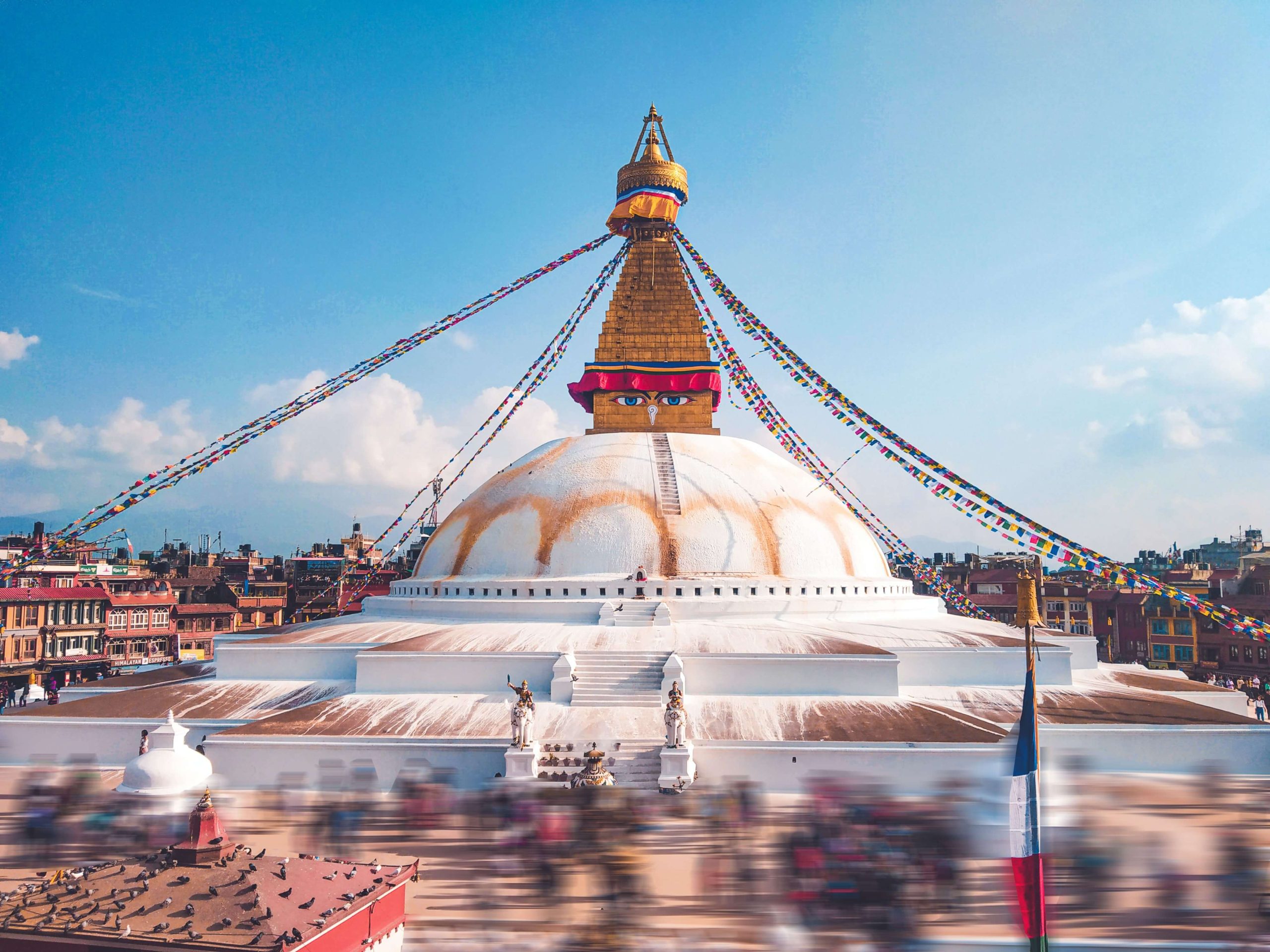
The trip introduces the culture of the Kathmandu valley without trekking or high-altitude exertion. Over three days participants visit the historic squares of three ancient cities, the Buddhist stupas of Swayambhunath and Boudhanath, the Hindu complex of Pashupatinath, and the markets and craft quarters.
- Six monument zones of the UNESCO World Heritage property along the route
- Three former city states – Kathmandu, Patan and Bhaktapur
- Buddhist and Hindu shrines in one compact trip
- The old Asan and Thamel markets, palaces, temples and Newar workshops
- An English-speaking local guide throughout the sightseeing part
- All transfers along the sightseeing route and entrance tickets are included
The tour suits travellers with no special physical preparation and can serve either as a city journey in its own right or as a cultural addition to a trek in the Himalaya. The first day is very full, so the pace for a family or private group is best agreed in advance.
The tour price is fixed in US dollars.
Important
- The basic price covers an English-speaking guide
- Accommodation and breakfasts are not named in the confirmed set of services and are clarified before booking
- Lunches, snacks, international flights, the visa and insurance are paid separately
- The route stays in the Kathmandu valley and does not include Lumbini, the birthplace of the Buddha
- Mountain Guide does not sell air tickets and does not arrange visas
About the cultural tour of Nepal
The tour takes place in the Kathmandu valley and introduces three ancient cities in turn – Kathmandu, Patan and Bhaktapur. Each developed as an independent city state and each has kept its palace square, its temples and the craft traditions of the Newar people.
The first day combines modern city life with the main religious centres of the capital. After the Garden of Dreams, Thamel and the Asan market, the group visits Kathmandu Durbar Square, Swayambhunath, Boudhanath and Pashupatinath. The second day is devoted to Patan and its craftspeople, the third to Bhaktapur and the legacy of the Malla era. The six zones visited belong to the single UNESCO World Heritage property of the Kathmandu Valley.
The trip is not a journey to the birthplace of the Buddha and does not include Lumbini. Its subject is the religious, artistic and urban culture of the Kathmandu valley. That is worth bearing in mind when choosing between a short cultural tour and a longer journey around the country.
No special physical preparation is required, but the first day involves a long guided trip, walking in the city and several road transfers. In temples and at ceremonial sites you must follow the guide’s instructions, observe the rules on photography and respect the religious rites taking place. A visit to the cremation area at Pashupatinath should be discussed in advance with children and with sensitive participants.
Three days are easy to add before or after a mountain trip. The cultural part can be combined with a trek to Everest Base Camp, with the short Everest route, with the Gokyo lakes trek or with the Annapurna Circuit.
No altitude acclimatisation is needed for this trip: all the excursions take place in the cities of the Kathmandu valley without entering a high-altitude route. The main practical factors are traffic, a dense urban environment, long walks and the weather. The guide may change the pace or the order of visits if conditions and site rules require it.
Itinerary of the Kathmandu, Patan and Bhaktapur tour
Day 1. Kathmandu, Swayambhunath, Boudhanath and Pashupatinath.
We begin the morning at the Garden of Dreams, then walk through Thamel to the Asan market and Durbar Square. The guide explains how the old city is arranged, the history of the royal era, the significance of the Kumari and the religious imagery of the square. We then drive to the Swayambhunath stupa, on to the Boudhanath district and to the Pashupatinath temple complex on the bank of the Bagmati. Rituals may be observed only from the areas open to visitors, and an appearance by the Kumari or the holding of any particular ceremony cannot be guaranteed in advance. A lunch stop at La Casita is kept in the itinerary; lunch is paid for separately by participants. The order of sites may be adjusted because of city traffic and opening hours. The first day exists to show the main layers of the capital – everyday life, the Buddhist tradition and the Hindu shrines – and to give context for the two cities that follow.
Day 2. Patan – Newar crafts and architecture.
We travel to ancient Patan, also known as Lalitpur. With the guide we look at Durbar Square, the temples, the courtyards and the workshops of local artisans, and become acquainted with Newar art and urban culture. Unlike the busy overview of the first day, this stage concentrates on a single historic centre and allows a closer look at the layout of the temple courtyards, at the woodwork and metalwork, and at a living craft tradition. Covered clothing is needed to visit religious sites, and shoes should be easy to take off. The exact order of stops is set by the accessibility of the sites on the day of the excursion.
Day 3. Bhaktapur – a city of the Malla era.
After breakfast we drive to Bhaktapur. On Durbar Square we look at the Palace of Fifty-Five Windows, the Vatsala temple, the Nyatapola and the surviving wood carving. The historic centre is mainly explored on foot, so comfortable shoes and protection from sun or rain according to the season are needed. We finish the excursion with a tasting of traditional lassi in a clay cup. Bhaktapur shows a third way in which an ancient city of the valley developed and completes the comparison of Kathmandu, Patan and Bhaktapur within a single cultural programme. The finishing time is confirmed with the return journey and participants’ onward plans in mind.
What's included
- An English-speaking local guide throughout the three-day sightseeing programme
- All transfers along the stated sightseeing route in the Kathmandu valley
- Entrance tickets and compulsory fees at the sites included in the itinerary
What's not included
- International flights to Nepal and back
- A tourist visa or any other entry permit required
- Medical insurance covering a cultural tour in Nepal
- Accommodation and breakfasts – their inclusion is not confirmed by the published list of services and is clarified before booking
- Lunches, snacks, dinners and drinks
- Tips for the guide
- Souvenirs and other personal purchases
A bespoke sightseeing tour of Nepal for private groups
The sightseeing tour can be arranged on your own dates for a closed, family, friends’ or corporate group. Before booking we agree who is coming, the language the guide will work in, the start time of each day, transport and the list of additional services.
For a family with young children, the pace and the length of the first day are assessed separately. The catalogue lists the trip as suitable from the age of two, but a long day’s sightseeing and a visit to the cremation area at Pashupatinath will not suit every family. Where necessary we can discuss a gentler pace or leaving out the sensitive part, if that is possible without disrupting the confirmed logistics.
For a corporate or private trip you can ask for a Russian-speaking member of the Mountain Guide team to accompany you, along with extra transport, photography and video, restaurants or an onward journey. These services are not part of the basic fare and are confirmed subject to availability. The order of the visits can be changed only within the constraints of opening hours, traffic and the sites’ own rules.
Documents required for the sightseeing tour of Nepal
The requirements depend on your nationality, your transit route and the rules in force on your travel dates. According to the Nepal Department of Immigration, your passport must be valid for at least six months on the date of travel. Whether a visa on arrival is available, and any restrictions applying to particular nationalities, should be checked before you buy tickets.
Mountain Guide does not arrange visas and does not sell air tickets. Current links and the order in which to prepare are gathered in our piece on documents, visas and insurance for Nepal.
Documents
- A passport valid for at least six months on the date of travel
- A tourist visa or other entry permit, if one is required for you
- International air tickets or e-ticket receipts
- Medical insurance covering a cultural tour in Nepal
- Your booking confirmation for the trip and the organisers’ contact details
- Documents for a participant under 18, where these apply
- Digital copies of your documents on your phone and in cloud storage
- A waterproof wallet for your passport and insurance policy
The given name and surname on your tickets, visa and insurance must match your passport. Carry your original documents in your hand luggage.
Weather and seasons for the sightseeing tour of Nepal
The sightseeing programme in the Kathmandu valley can run in any season, as it involves no high passes or remote trails. Spring and autumn are usually the most comfortable for long walks; in summer you need to allow for monsoon rain, and in winter for cooler mornings and evenings.
According to the Nepal Tourism Board’s climate overview, the average temperature in the Kathmandu valley runs roughly from 20 to 35 °C in summer and from 2 to 12 °C in winter. Most of Nepal’s rainfall comes with the monsoon, from June to September.
These figures describe the seasonal pattern, not a forecast for any particular day. Check the current weather before the trip and agree the start times of the excursions with your guide. Rain, heat, mist and traffic can all change the pace or the order of the visits. More on choosing when to go is gathered on our page about the seasons in Nepal.
Accommodation and meals on the sightseeing tour of Nepal
The particular hotel, the number of nights and breakfasts are not named in the confirmed list of included services. Before booking, obtain separate written confirmation of whether accommodation is included in the package you have chosen. A hotel mentioned in the description of a day is not a substitute for the list of included services.
Lunches, snacks, dinners and drinks are at participants’ own expense. On the first day there is a lunch stop at La Casita, though the meal itself is not included in the price. The actual venue and whether a table can be booked are confirmed before the trip.
Tell us in advance about vegetarian or vegan meals, allergies and medical restrictions. Whether a particular menu is possible depends on the restaurant or hotel chosen. Practical information is gathered on our page about accommodation, food and communications in Nepal; the arrangements for this city trip are confirmed separately.
Day-to-day conditions on the sightseeing tour of Nepal
Every sightseeing day takes place in the built-up part of the Kathmandu valley, with no tents and no self-sufficient camps. The exact level of comfort depends on the hotel chosen, which is not named in the confirmed list of services.
Whether a shower, hot water, a private toilet, electricity, sockets and Wi-Fi are available must be confirmed for the particular property. A universal adapter is useful for charging your phone, along with a power bank in case of power cuts.
Mobile signal and internet are usually available in the cities, but the quality depends on the network, the district and how busy it is. Uninterrupted daily coverage is not guaranteed. Laundry is not part of the basic trip; given how short the tour is, it is normally arranged through your chosen hotel or done yourself.
Insurance
Show insurance calculator (Russian)
This calculator is provided by an external provider and uses a Russian-language interface.
Equipment and useful extras for the sightseeing tour of Nepal
Download PDFNo technical, trekking or mountaineering equipment is needed. What you bring should suit long walks around the cities, visits to temples and changeable weather.
Documents
- Passport
- A visa or other entry permit, if one is required
- Air tickets or e-ticket receipts
- Medical insurance
- Digital copies of your documents on your phone and in cloud storage
Personal items
- A small day pack
- Waterproof document wallet
- Reusable water bottle
- Power bank and charging cables
- Universal plug adapter
Clothing and footwear
- Comfortable broken-in shoes for long walks
- Light clothing for warm weather
- A warm layer for cool mornings and evenings
- A light waterproof jacket or an umbrella
- Clothing that covers shoulders and knees for visits to religious sites
- Sun hat
Useful extras
- Sunglasses
- Sun cream
- Insect repellent for the warm, humid months
- Hand sanitiser and wet wipes
- Small quick-drying towel
- A personal first-aid kit suited to your own medical needs