- Guides
- B2B
-
#19607 (no title)
-
#15972 (no title)
- Climb Elbrus Individually
- Climb Elbrus from the South, 9 Days
- Climb Elbrus from the South, 7 Days
- Climb Elbrus from the South with Oxygen
- Climb Elbrus from the North, 10 Days
- Two Summits of Elbrus, 9 Days
- Elbrus Traverse from South to North, 9 Days
- Elbrus Traverse from North to South, 10 Days
- Cross of Elbrus, South to North, 9 Days
- Cross of Elbrus, North to South, 10 Days
- Climb Kazbek and Elbrus — 10-Day Two-Summit Programme
- Climb Elbrus from the West, 11 Days
- Elbrus by Private Helicopter, 3 Days
- Elbrus Region Holiday and Trekking, 9 Days
- Elbrus Region Holiday, 7 Days
- Tinder Tour: Climbing Mount Elbrus, 9 Days
- Climb Elbrus from the South, 9 Days with Sergey Baranov
-
#15539 (no title)
- Climb Carstensz Pyramid, 8 Days with Helicopter Access
- Climb Mont Blanc, 4810 m — 8-Day Guided Ascent
- Climb the Matterhorn, 4478 m — 8-Day Guided Ascent
- Climb Mount Vinson, 15-Day Antarctic Expedition
- Climb Kosciuszko and Travel in Australia, 7 Days
- Climb Fisht, 2868 m — 3-Day Ascent by the 1B Route
- Climb Mount Wilhelm, 6 Days
-
#15546 (no title)
- Climb Kilimanjaro: the Marangu Route
- Climb Kilimanjaro: the Lemosho Route
- Climb Ararat, 5137 m — 7-Day Classic Programme
- Climb Kazbek from the South, 5033 m — 8 Days in Georgia
- Climb Kazbek and Elbrus — 10-Day Two-Summit Programme
- Climb the Volcanoes of Mexico — Orizaba and Iztaccíhuatl, 9 Days
- Climbing Alpamayo — 16-Day Technical Expedition
- Climbing Margaret Peak (Stanley), 5,109 m
- Climbing Mount Kenya: Point Lenana, 4,985 m
- Climb Dykh-Tau by the North Ridge, 13 Days
-
#15554 (no title)
- Aconcagua Climb — 17-Day Guided Expedition
- Island Peak Climb — 18-Day Expedition
- Climb Mera Peak, 6476 m — 16-Day Hinku Valley Programme
- Climb Ama Dablam, 6812 m — 24-Day Expedition with Island Peak
- Climb Island Peak and Mera Peak — 24-Day Two-Summit Expedition
- Aconcagua and Ojos del Salado — 25-Day Combined Expedition
- Ojos del Salado Climb — 15-Day Expedition
- Climb Chimborazo and Cotopaxi — 14-Day Ecuador Programme
- Climb Huascarán — 8-Day Technical Ascent
- Climb Razdelnaya Peak, 6148 m — 15-Day Pamir Expedition
- Climb Denali by the West Buttress, 23 Days
- #15565 (no title)
- #15572 (no title)
-
#15972 (no title)
-
#19592 (no title)
-
See 8000m
- K2 Base Camp Trek via the Gondogoro La
- Everest Base Camp Trek — 14 Days
- Everest Base Camp via Gokyo Lakes — 15 Days
- Short Everest Base Camp Trek in 10 Days
- Annapurna Circuit and Tilicho Lake Trek
- Manaslu Circuit Trek
- Kanchenjunga Circuit Trek (XXL)
- Kanchenjunga North Base Camp Trek (Short)
- Kanchenjunga from India: the Goecha La Trek in Sikkim
- Makalu Base Camp Trek
- Annapurna Base Camp Trek
- South America
- Asia
- Africa
-
Russia
- Elbrus Region Holiday and Trekking, 9 Days
- Elbrus Region Holiday, 7 Days
- Oshten + Kardyvach — 9-Day Western Caucasus Trek
- Lake Kardyvach — 5-Day Base-Camp Trek
- Route 30: Through the Mountains to the Sea, with Oshten — 4 Days
- Trekking in Arkhyz — 7 Days over the Ayulyu Pass
- Gvandra Trek — 7 Days to the Ullu-Kyol Lakes
- Trekking in Dombai — 7 Days with the Murudzhu Lakes
- Europe
-
See 8000m
-
Adventures
-
Africa
- मोरक्को टूर: उत्तरी अफ्रीका का दिल
- चढ़ाई टूबकल और मोरक्को की संस्कृति
- Eritrea: the Dahlak Archipelago and the Rashaida Nomads
- Rwanda: Mountain Gorillas and the Bisoke Volcano
- Ethiopia: Otherworldly Landscapes and the Peoples of the Omo Valley
- युगांडा टूर: क्वीन्स पार्क और माउंटेन गोरिल्ला
- Tanzania Safari: Serengeti, Ngorongoro and Tarangire
- युगांडा टूर: सफेद गैंडे और पर्वत गोरिल्ला
- Zimbabwe and South Africa: Victoria Falls, Cape Town and the Cape of Good Hope
- Namibia: Etosha National Park and the Himba
- Kenya Safari: the African Big Five
- बोत्सवाना टूर: ओकावांगो डेल्टा और चोब पार्क
- South America
- Asia
-
Africa
- Ski-touring
- VIP
- #19722 (no title)
- About
Eritrea: the Dahlak Archipelago and the Rashaida Nomads
- Height (m)
- 2450
- Duration
- 5 дней
- Difficulty
- Low
- Continent
- Africa
- Children
- From 6 years old
- Accommodation
- There are tents
2800 $
Почему такая цена?
Тур временно недоступен
This tour of Eritrea introduces highland Asmara, the ancient port of Massawa, the Red Sea and the Dahlak archipelago. Over a few days, modernist architecture and mountain switchbacks give way to coral islands, fishing boats and a night sky above the sea.
The route combines hotels with one simple island overnight. The sea section depends on permits, the weather and the actual navigational situation, so the order of visits may be changed without losing the main logic of the journey.
With a group of four participants or more a Mountain Guide team leader accompanies the trip. The sea crossing is confirmed according to the weather, the permits and the navigational situation.
Our company does not buy or sell air tickets and does not arrange visas, and is therefore not responsible for disruption beyond its control involving flights or border crossings.
In some African countries small, worn or pre-2009 US dollar notes may be refused. We recommend bringing recent notes in good condition.
About the Eritrea tour
Asmara stands high above the Red Sea and holds one of the most complete ensembles of modernist architecture in Africa. Cinemas, cafes, villas and public buildings make a city that rewards walking, with details to notice and a calm rhythm to its streets.
The road to Massawa loses height quickly and passes through several climatic zones. By the sea the air becomes hotter and more humid, and the city greets you with coral stone, Ottoman heritage and its port quarters.
The Dahlak archipelago is the most remote part of the journey. There is no conventional hotel service here: the day depends on the boat, the sea and the permits, and the night is spent in a simple camp. It is precisely this exchange of city architecture for island silence that makes the route a rare one.
The trip is run only after entry formalities and access to each area have been confirmed.
Itinerary of the Eritrea tour
Day 1. Arrival in Asmara.
Your journey begins with arrival in Asmara, the capital of Eritrea, where the highland air and the mild climate create an atmosphere of their own. The city greets its visitors with elegant Art Deco architecture, narrow streets where the past can be felt at every corner, and welcoming cafes filled with the smell of fresh coffee. After the meeting at the airport there is a transfer to a characterful hotel set among greenery, offering a comfortable rest after a long journey. In the evening you walk the central streets of Asmara, take in the buildings raised during the Italian colonial period, and watch the history of the city come alive. Night at the hotel.
Day 2. Asmara to Massawa. The Rashaida.
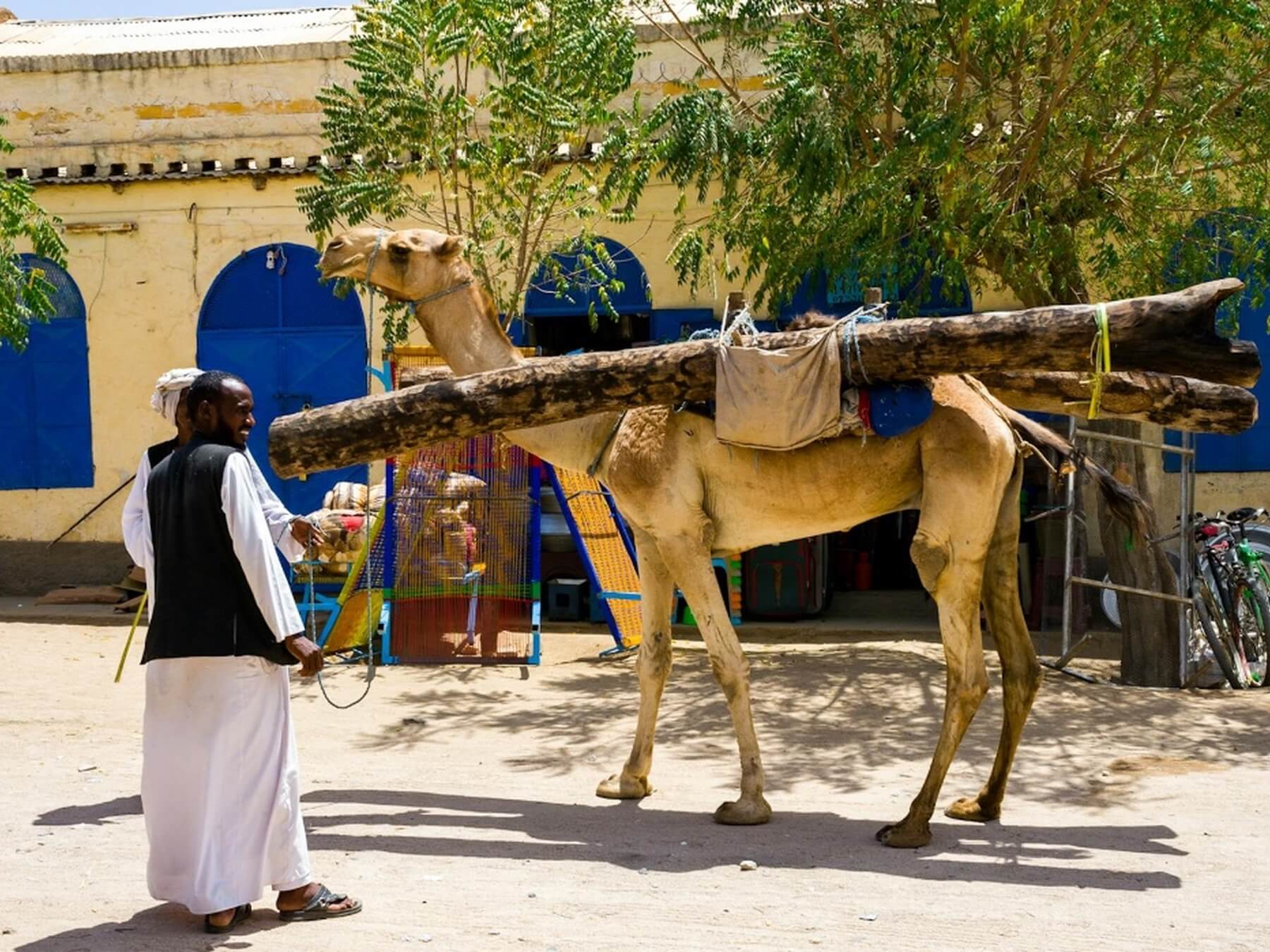
The morning in Asmara begins with a tour of its remarkable landmarks. You visit the cemetery of military equipment, which has become a symbol of Eritrea’s difficult road to independence. Sunlight breaking through the dust of time gives the place an atmosphere of its own. You then travel by mountain roads towards Massawa. Striking views of green valleys, steep slopes and winding switchbacks accompany you the whole way. Arriving in the ancient port city, you enter a world where eastern tradition and colonial elegance are mixed. Turkish palaces, mosques with a thousand years of history and houses of coral stone carry you into another era. The evening closes with an introduction to the Rashaida people, whose bright traditional dress and long-established customs create a character all their own. Night at the hotel.
More about the Rashaida nomads: they are a nomadic ethnic group with deep roots in the history of East Africa. They originally migrated to the region from Yemen and Saudi Arabia roughly four centuries ago. The Rashaida traditionally practise herding and trade, moving along the Eritrean coast as far as Sudan. They are known for a distinctive culture that combines Arab tradition with local custom. They preserve their language and their customs and follow a traditional way of life that includes nomadic practice. The community still keeps a strong connection to the art, the music and the dress of its Arab origins.
Day 3. The Dahlak archipelago. Madote and Dessie.
The sea journey to the Dahlak archipelago begins with the first light. The outlines of the islands appear on the horizon, surrounded by clear water that reflects the blue sky. Here, on one of the untouched beaches of Madote island, you can swim in crystal-clear water, look at the coral reefs and feel yourself at one with the natural world. Towards evening, as the sun begins to drop towards the horizon, you arrive at Dessie island, where a comfortable tent camp is prepared under the stars. Silence broken only by the light sound of the waves, and an endless starry sky, give a feeling of harmony that is hard to convey. This night is spent surrounded by nature on Dessie island. Night in tents.
Day 4. Back to the mainland. Nefasit and Debre Bizen.
The morning begins with the return to the mainland. On the way to Asmara you take in the changing landscape, from coastal plains to mountain passes where every summit seems to reach for the sky. The route includes a stop at the village of Nefasit, at the foot of the celebrated Debre Bizen monastery. This spiritual centre, surrounded by an almost mystical silence, stands at an altitude of 2450 metres. Here you feel the spirit of ancient Eritrea and enjoy views that take the breath away. By evening you arrive in Asmara, where you can relax and enjoy the calm of the city. Night at the hotel.
Day 5. Asmara and departure.
The last day in Asmara is a farewell to this remarkable city. You take a walk through its historic streets, where Art Deco buildings such as the Albergo Italia, the Cinema Roma and the Villa Roma tell the story of the Italian period. After the walk there is a coffee break at the well-known Tirestele bar, which serves one of the best coffees in Africa, each cup carrying the taste of tradition and history. At 14:00 there is a transfer to the airport for the return flight.
What's included
- A Mountain Guide team leader accompanying the group
- Meeting and send-off at the airport
- Hotel accommodation, twin occupancy, for the number of nights set out in the itinerary
- Breakfasts at the hotels
- Transport with experienced drivers along the whole route
What's not included
- International flights
- Visa
- Medical insurance and emergency evacuation
- Lunches and dinners
- Tips
- Single occupancy
- Early check-in or late check-out at the hotel before or after the trip. We always try to agree additional benefits for our guests with our partners, and early check-in or late check-out is often allowed free of charge
- Any departure from the itinerary
- Any costs arising from change to the itinerary
The Eritrea tour for private groups
The trip can be run privately for a single participant, a family, a group of friends, photographers or a corporate team. Dates, pace, accommodation category and any permitted additions are discussed before booking. The sea section, the island permits and the accommodation are confirmed before payment. Shortening the route must not create a risk of missing your international flight. A private format does not override national park rules, visa requirements, ranger decisions or carrier restrictions. We confirm the final trip in writing once all the key services are secured.
Documents for the Eritrea tour
Entry rules depend on your nationality, your country of residence and your transit airports. Before buying non-refundable tickets, check the current requirements of the consulates, immigration services and airlines yourself. The passport details on your tickets, visas and permits must match exactly.
- A passport valid for the whole trip and for the entry requirements in force
- International and domestic air tickets
- Medical insurance valid in every country on the route and covering the planned activities
- Emergency evacuation cover for remote areas, if this is not part of your main insurance policy
- An Eritrean visa and the internal permits required for the confirmed route
- A yellow fever vaccination certificate, where one is required because of your country of departure or transit
- Digital and paper copies of your passport, insurance, tickets, visas and emergency contacts
Documents for a child, consent from legal guardians and the requirements for under-18s are checked separately. Keep originals and copies separately.
Weather and seasons on the Eritrea tour
Highland Asmara and the Red Sea coast have different climates. Evenings in Asmara can be cool, while Massawa and the Dahlak islands stay hot and humid. The most comfortable combination for the whole route is usually from October to April. Between May and September the sea section can run in severe heat. Getting out to the islands depends on the wind, the sea state, the permits and the captain’s decision; in poor conditions the order of the trip changes.
Accommodation and meals on the Eritrea tour
Hotels with twin rooms are used in Asmara, Massawa and the other towns. On Dissei island there is one simple night under canvas, without the usual hotel infrastructure. Breakfasts at the hotels are included. Lunches, dinners and meals on the sea section are confirmed separately. Bring your own snacks and any special dietary items yourself, once the import rules have been checked.
Day-to-day conditions on the Eritrea tour
The town section uses ordinary hotel accommodation; the sea section runs on expedition lines. The island may have no shower, no reliable signal and no electricity. Fresh water is used sparingly, and rubbish is carried back out. Border and internal checks are possible on the drives. Photograph people, military installations, port infrastructure and government buildings only with the guide’s permission.
Страхование
НаверхEquipment and useful extras for the Eritrea tour
Скачать PDFThe final list is confirmed once the season, transport and accommodation are settled. Check everything in advance, and carry medication in its original packaging together with a prescription where one is needed.
Documents and baggage
- Passport, tickets, insurance and permits
- A soft suitcase or holdall that meets the limits for internal flights
- Day pack of 20-30 litres
- Dry bags for documents, electronics and spare clothing
Clothing and footwear
- Broken-in trekking shoes or light boots
- Light, covering, long-sleeved clothing
- Quick-drying trousers and T-shirts
- waterproof shell jacket or a reliable rain jacket
- Fleece top
- Sun hat
- A lightweight sleeping bag or liner for the night on the island, if the host team confirms you need one
- Head torch
- Dry bag for the sea crossing
- Swimming things and reef shoes
- Modest, covering clothing for the towns and religious sites
Useful extras
- Sunglasses
- SPF 50 sun cream and lip balm with SPF
- Insect repellent
- Reusable water bottle
- Power bank and charging cables
- Personal first-aid kit and any medication you take regularly
- Hand sanitiser and wet wipes
- Earplugs
- Camera and spare memory cards, if you want them