- Guides
- B2B
-
#19607 (no title)
-
#15972 (no title)
- Climb Elbrus Individually
- Climb Elbrus from the South, 9 Days
- Climb Elbrus from the South, 7 Days
- Climb Elbrus from the South with Oxygen
- Climb Elbrus from the North, 10 Days
- Two Summits of Elbrus, 9 Days
- Elbrus Traverse from South to North, 9 Days
- Elbrus Traverse from North to South, 10 Days
- Cross of Elbrus, South to North, 9 Days
- Cross of Elbrus, North to South, 10 Days
- Climb Kazbek and Elbrus — 10-Day Two-Summit Programme
- Climb Elbrus from the West, 11 Days
- Elbrus by Private Helicopter, 3 Days
- Elbrus Region Holiday and Trekking, 9 Days
- Elbrus Region Holiday, 7 Days
- Tinder Tour: Climbing Mount Elbrus, 9 Days
- Climb Elbrus from the South, 9 Days with Sergey Baranov
-
#15539 (no title)
- Climb Carstensz Pyramid, 8 Days with Helicopter Access
- Climb Mont Blanc, 4810 m — 8-Day Guided Ascent
- Climb the Matterhorn, 4478 m — 8-Day Guided Ascent
- Climb Mount Vinson, 15-Day Antarctic Expedition
- Climb Kosciuszko and Travel in Australia, 7 Days
- Climb Fisht, 2868 m — 3-Day Ascent by the 1B Route
- Climb Mount Wilhelm, 6 Days
-
#15546 (no title)
- Climb Kilimanjaro: the Marangu Route
- Climb Kilimanjaro: the Lemosho Route
- Climb Ararat, 5137 m — 7-Day Classic Programme
- Climb Kazbek from the South, 5033 m — 8 Days in Georgia
- Climb Kazbek and Elbrus — 10-Day Two-Summit Programme
- Climb the Volcanoes of Mexico — Orizaba and Iztaccíhuatl, 9 Days
- Climbing Alpamayo — 16-Day Technical Expedition
- Climbing Margaret Peak (Stanley), 5,109 m
- Climbing Mount Kenya: Point Lenana, 4,985 m
- Climb Dykh-Tau by the North Ridge, 13 Days
-
#15554 (no title)
- Aconcagua Climb — 17-Day Guided Expedition
- Island Peak Climb — 18-Day Expedition
- Climb Mera Peak, 6476 m — 16-Day Hinku Valley Programme
- Climb Ama Dablam, 6812 m — 24-Day Expedition with Island Peak
- Climb Island Peak and Mera Peak — 24-Day Two-Summit Expedition
- Aconcagua and Ojos del Salado — 25-Day Combined Expedition
- Ojos del Salado Climb — 15-Day Expedition
- Climb Chimborazo and Cotopaxi — 14-Day Ecuador Programme
- Climb Huascarán — 8-Day Technical Ascent
- Climb Razdelnaya Peak, 6148 m — 15-Day Pamir Expedition
- Climb Denali by the West Buttress, 23 Days
- #15565 (no title)
- #15572 (no title)
-
#15972 (no title)
-
#19592 (no title)
-
See 8000m
- K2 Base Camp Trek via the Gondogoro La
- Everest Base Camp Trek — 14 Days
- Everest Base Camp via Gokyo Lakes — 15 Days
- Short Everest Base Camp Trek in 10 Days
- Annapurna Circuit and Tilicho Lake Trek
- Manaslu Circuit Trek
- Kanchenjunga Circuit Trek (XXL)
- Kanchenjunga North Base Camp Trek (Short)
- Kanchenjunga from India: the Goecha La Trek in Sikkim
- Makalu Base Camp Trek
- Annapurna Base Camp Trek
- South America
- Asia
- Africa
-
Russia
- Elbrus Region Holiday and Trekking, 9 Days
- Elbrus Region Holiday, 7 Days
- Oshten + Kardyvach — 9-Day Western Caucasus Trek
- Lake Kardyvach — 5-Day Base-Camp Trek
- Route 30: Through the Mountains to the Sea, with Oshten — 4 Days
- Trekking in Arkhyz — 7 Days over the Ayulyu Pass
- Gvandra Trek — 7 Days to the Ullu-Kyol Lakes
- Trekking in Dombai — 7 Days with the Murudzhu Lakes
- Europe
-
See 8000m
-
Adventures
-
Africa
- मोरक्को टूर: उत्तरी अफ्रीका का दिल
- चढ़ाई टूबकल और मोरक्को की संस्कृति
- Eritrea: the Dahlak Archipelago and the Rashaida Nomads
- Rwanda: Mountain Gorillas and the Bisoke Volcano
- Ethiopia: Otherworldly Landscapes and the Peoples of the Omo Valley
- युगांडा टूर: क्वीन्स पार्क और माउंटेन गोरिल्ला
- Tanzania Safari: Serengeti, Ngorongoro and Tarangire
- युगांडा टूर: सफेद गैंडे और पर्वत गोरिल्ला
- Zimbabwe and South Africa: Victoria Falls, Cape Town and the Cape of Good Hope
- Namibia: Etosha National Park and the Himba
- Kenya Safari: the African Big Five
- बोत्सवाना टूर: ओकावांगो डेल्टा और चोब पार्क
- South America
- Asia
-
Africa
- Ski-touring
- VIP
- #19722 (no title)
- About
Climb Mera Peak, 6476 m — 16-Day Hinku Valley Expedition
- Height (m)
- 6476
- Duration
- 16 дней
- Difficulty
- Moderate
- Continent
- Asia
- Children
- No
- Accommodation
- There are tents
2950 $
Почему такая цена?
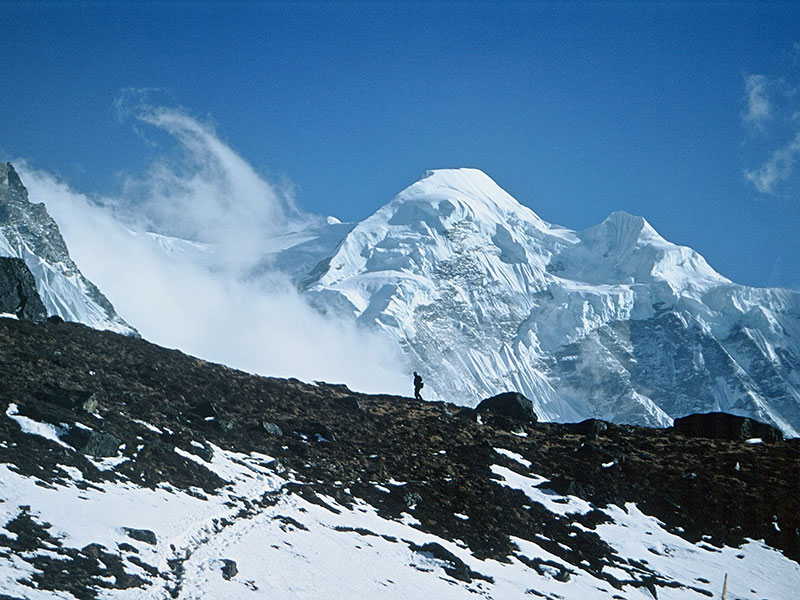
Climbing Mera Peak — a 16-day Himalayan trip for physically prepared participants who want a first experience above 6000 m. The route runs through the Hinku valley and settlements less crowded than the classic trail to Everest, and before the summit it includes acclimatisation in Khare and a night in a high camp.
- The summit of Mera Peak, 6476 m
- A panorama of Everest, Lhotse, Makalu and Kangchenjunga
- The Zatrwa La pass, 4610 m
- Staged acclimatisation in Chutang, Tagnag and Khare
- Training and a check of technical equipment before the climb
- A high camp at 5800 m
- Mountain Guide expedition leader for groups of 4 participants or more
- Assistant guides on summit day — no more than 3 participants per guide
Mera Peak is often chosen as a first Himalayan 6000 m peak, but the word «trekking» does not mean easy. The summit is reached over snow and glacier in crampons, with a harness and an ice axe. The main requirements are endurance, confident use of the agreed equipment and the ability to keep working effectively at high altitude.
The price is fixed in US dollars.
Important:
- International and domestic flights, the transfers to Ramechhap airport, lodge meals and a personal porter are paid for separately
- Flights to Lukla depend on the weather, so plan the international departure with a margin
- Personal technical equipment is always agreed with the guide before the trip
- The summit is not guaranteed — the decision to continue or turn around rests with the lead guide
- Mountain Guide does not sell air tickets and does not process visas
About the Mera Peak climb
Mera Peak lies in the Khumbu region of Nepal, but the approach does not follow the main trail to Everest Base Camp: it runs through the Hinku valley. After the flight to Lukla the group climbs to Chutang, crosses the Zatrwa La pass, descends to Kote and then gains altitude in stages through Tagnag to Khare. That logic combines remote trekking, lodge accommodation and a self-contained high-altitude section in a tented camp.
Mera Peak is one of the popular first 6000 m peaks in Nepal. The route does not require difficult rock climbing, but it crosses snow and glacier terrain. Participants use crampons, an ice axe, a harness, an ascender and a descender. Before the departure the guide checks technique and the compatibility of each personal kit.
Acclimatisation begins immediately after Lukla. In Chutang there is an excursion towards the Zatrwa La, and the overnight altitudes then rise gradually to Tagnag and Khare. An extra day in Khare is needed for recovery, for assessing how everyone feels and for working with equipment. The high tented camp at 5800 m reduces the gain on summit day, but the night itself requires a good sleeping bag and the ability to look after yourself in a cold camp.
On summit day the group sets off before dawn. The climb takes roughly 6–8 hours and the descent to the high camp about 3–4 hours, after which the trip returns to Khare. Altitude, wind, cold and the state of the snow can change both pace and tactics. Assistant guides work at a ratio of no more than three participants to one guide, and the final decision to set off or to turn around rests with the lead guide.
The trip suits someone with good aerobic fitness and experience of multi-day walking. A previous 5000 m summit is desirable: it helps you understand your own reaction to altitude. If your technical skills are minimal, work on them before the trip and go over them again in Khare.
A Mountain Guide expedition leader accompanies groups of 4 participants or more; for a group of up to 3 participants a Nepalese guide is confirmed.
Mera Peak climbing itinerary, 16 days
Day 1. Arrival in Kathmandu.
Participants make their own way to Kathmandu, where a member of the team meets them and takes them to the hotel. After checking in there is an introduction to the guide, a check of personal and technical equipment, distribution of baggage and a route briefing. The day is needed to recover from the flight and to replace anything unsuitable before leaving for the mountains. In the evening there is a group dinner. Night in a hotel.
Day 2. Flight to Lukla, 2800 m.
The group travels to the departure airport and flies to Lukla. The airport, the flight time and the ground logistics are confirmed before the trip. On arrival participants check into a lodge, rest and get used to the altitude. The guide checks the baggage again, because the self-contained walking section starts the next day. Night in a lodge.
Day 3. Walk to Chutang, 3537 m, and acclimatisation excursion.
The first full stage passes through rhododendron, pine and birch forest with a gradual gain in altitude. After checking in at Chutang the group makes an acclimatisation excursion to roughly 4000 m towards the Zatrwa La pass and comes back down. The excursion prepares the body for the next high overnight stop and lets the guide assess the participants’ pace. Night in a lodge.
Day 4. The Zatrwa La pass, 4610 m, and the walk to Tuli Kharka, 4250 m.
An early start is needed for a long stage over the pass. In 6–8 hours the group climbs into the alpine zone, crosses the high point of the day and descends to Tuli Kharka. This is the first serious test of acclimatisation and endurance; the pass may bring cold, wind and snow. On arrival there is recovery and a check on how everyone is feeling. Night in a lodge.
Day 5. Descent to Kote, 3400 m.
A stage of about 4–6 hours leads down through forest and along the valley to the river. Losing altitude after the pass gives the body a chance to recover before the further gain. In Kote participants rest, dry their clothing and prepare their day packs for the upper Hinku valley. Night in a lodge.
Day 6. Walk to Tagnag, 4267 m.
The group climbs along the Hinku river into more open high-mountain terrain. The pace stays even, because the difference in altitude is noticeable and the acclimatisation continues. On arrival it is important to rest, drink enough and report any headache, nausea or unusual weakness to the guide at once. Night in a lodge.
Day 7. Walk to Khare, 4810 m.
In 3–4 hours participants reach the main preparation base before Mera Peak. The short duration does not make it a recovery day: the body takes on a new high-altitude load. After checking in, the guide reviews how everyone is feeling and confirms the plan for the next day, while participants prepare crampons, harness and ice axe. Night in a lodge.
Day 8. Acclimatisation and preparation in Khare.
The group spends a second night in Khare. Depending on the participants’ condition there is a short acclimatisation excursion, and training or revision of work with crampons, ice axe, ascender and descender. The day is also needed for rest, for the final adjustment of equipment and for packing for the high camp. Night in a lodge.
Day 9. Climb to the high camp, 5800 m.
Participants leave Khare and climb over snow and glacier terrain to the camp below the summit. At altitude movement slows down, so keeping the spacing and following the guide’s instructions matters. Once the tents are up the group rests, eats and prepares clothing and technical equipment for the night start. Night in tents.
Day 10. Ascent of Mera Peak, 6476 m.
The start is before dawn. The climb up snow slopes takes roughly 6–8 hours and calls for work in crampons and on the rope as the guides direct. In suitable conditions the summit opens up Everest, Lhotse, Makalu and Kangchenjunga. After a short stop the group descends to the high camp in about 3–4 hours and continues to Khare. This is the hardest day of the trip. Night in a lodge.
Day 11. Descent to Kote.
The long descent takes about 6–8 hours. Losing altitude makes recovery easier, but after summit day it is particularly important to stay attentive on the rocky trail. On arrival the group rests, dries its equipment and takes stock before the final stages. Night in a lodge.
Day 12. Descent to Thuli Kharka.
The route continues through alpine meadows and the forest zone. The day returns participants to a milder climate with more oxygen, though accumulated fatigue calls for a steady pace. In the evening the guide checks the weather and the state of the trail before the stage to Lukla. Night in a lodge.
Day 13. Walk to Lukla.
The final walking stage brings the group to Lukla. After checking in, the local team prepares the baggage for the flight and the guide confirms the flight and ground transfer details. In the evening there is a group dinner to mark the end of the mountain section. Night in a lodge.
Day 14. Reserve day.
The day is kept in case of poor weather, a delay on the route or a need for extra acclimatisation. Its use is decided by the lead guide. If the reserve is not needed, the group rests and stays ready to fly; changing plans independently without agreement is not permitted. Where the night is spent depends on the actual schedule.
Day 15. Flight from Lukla and return to Kathmandu.
In suitable conditions the group flies out of Lukla and, after landing, returns to Kathmandu on the agreed transfer. The actual timing depends on how the mountain airport is operating. After checking into the hotel, participants rest, sort out their equipment and prepare for the international flight. Night in a hotel.
Day 16. End of the trip.
After breakfast there is a transfer to the international airport. Participants check in themselves. Choose return tickets with possible weather delays in Lukla and the confirmed itinerary reserve in mind.
What's included
- Mountain Guide expedition leader for groups of 4 participants or more
- A Nepalese mountain guide for groups of up to 3 participants
- Assistant guides on summit day — no more than 3 participants per guide
- Meeting and seeing off at Kathmandu airport
- Accommodation in a 4-star hotel in Kathmandu — 2 nights
- Breakfasts in Kathmandu
- Lodge accommodation on the trek
- Accommodation and meals in tents during the high-altitude section
- Group climbing equipment — high-altitude tents, gas, stoves and ropes
- Porters for the group equipment and the high-camp supplies
- A soft duffel bag for personal belongings — provided on arrival
- The climbing permit and the route permits required
- The mandatory rubbish fee
What's not included
- International flights
- Domestic flights Ramechhap – Lukla – Ramechhap
- Transfers Kathmandu – Ramechhap airport – Kathmandu
- The Nepal visa — a 30-day visa covers the length of the trip; the fee is set by the Nepalese authorities and paid by the participant
- Personal climbing and trekking equipment
- Mountaineering medical insurance covering climbing to an altitude of at least 6476 m, search and rescue and helicopter evacuation
- Rescue operations and evacuation
- Single occupancy
- Early check-in, late check-out and additional nights
- Lunches and dinners in Kathmandu
- Lodge meals during the trek — USD 30–50 a day
- Drinks
- A personal porter for a participant’s baggage — USD 30 a day including transport. In a trekking group one porter may carry the belongings of two participants
- Tips for the local team
- Costs arising from ending your participation early
- Additional costs caused by delays, the weather or forced change to the itinerary
Private groups: a private Mera Peak climb
The Mera Peak expedition can be arranged for a closed group of friends, a climbing club, a family with confirmed altitude experience or a corporate team. Dates, the working language, the guiding team, personal porters, single rooms in Kathmandu and extra days before or after the route are all agreed individually. The itinerary can only be adapted in ways that do not shorten the key acclimatisation stages. The nights in Chutanga, Tagnag and Khare, the training day and the high camp each serve a specific safety purpose. The lead guide decides on postponing the summit day, on using the reserve and on turning back. A Russian-speaking leader from the Mountain Guide team, and the number of assistants needed, are confirmed before booking.
Documents for the Mera Peak climb
Start preparing your documents before you buy non-refundable tickets. The international routing, the internal flights to Lukla, the permit and the insurance policy are all issued against your passport details, so the first name and surname on every document must match your passport. Visa requirements and the passport validity you need are checked on the website of the Nepal Department of Immigration for your own nationality. Mountain Guide does not arrange visas and does not sell air tickets.
Documents
- A passport that meets Nepal’s current requirements
- A tourist visa or another valid entry permit
- International air tickets to Kathmandu and back
- Tickets or confirmations for the internal flights
- An insurance policy covering mountaineering to at least 6476 m, rescue operations and helicopter evacuation
- Your policy number and the insurer’s 24-hour emergency contact details
- Your booking confirmation and the organisers’ contact details
- Documents for a participant under 18, where these apply
- Digital copies of your passport, visa, tickets and insurance
- Waterproof document wallet
The local team obtains the Mera Peak permit and the other permissions for the confirmed route. You provide photographs and document copies in the format requested, in good time.
Weather and seasons on the Mera Peak climb
The climbing dates are chosen for the periods when the route is usually accessible and steady visibility is more likely than during the summer monsoon. Even within the season, conditions on the Zatrwa La, in the Hinku valley and above Khare can differ greatly. The final assessment is made against your particular dates and the current state of the route. The forested section can bring rain and humidity. The pass, Khare and the high camp can bring snow, strong wind, ice and sub-zero temperatures. The state of the glacier changes, so the guide decides the line to take, whether to rope up and the start time immediately before setting out. Flights to Lukla operate only in suitable weather. A reserve day is built into the itinerary, but it does not rule out a longer delay. Buy international tickets with a margin after the planned return from the mountains.
Accommodation and meals on Mera Peak
Two nights in a 4-star hotel in Kathmandu, with breakfast, are included. The specific property and room type are named in your booking confirmation. Single occupancy, early check-in, late check-out and additional nights are paid separately. For most of the trek the group stays in mountain lodges. The more remote and higher the village, the simpler the rooms, the sanitation and the services available. Which lodges are used depends on availability. At the high camp at 5800 m participants sleep in tents; group tents, fuel and meals on the tented stage are included in the price. Meals in the lodges, and lunches and dinners in Kathmandu, are paid for by participants themselves. The menu can be limited in the remote part of the valley. Drinks and your own snacks are not included. Tell us about dietary restrictions in advance, though a special diet cannot be guaranteed in every lodge.
Facilities on the Mera Peak route
Showers and water. A hot shower may be available for a charge in some lodges only. It is not guaranteed in Khare or at the tented camp. For the high-altitude section you need wet wipes, a small towel and the habit of using water sparingly.
Toilets. toilet and washing facilities in the lodges vary from village to village. The high camp uses a field toilet arrangement, which the local team explains. A head torch is essential at night.
Power and charging. Charging in the lodges may cost extra and may be limited. You cannot count on a socket at the high camp. You bring your own power bank, spare cells and batteries.
Internet and phone signal. There may be a mobile signal and Wi-Fi on part of the trek, but they can be absent in the Hinku valley and on the high-altitude section. Warn family and friends that there may be gaps in your messages.
Laundry and drying. Do not plan on proper laundry in the mountains. Damp things dry slowly, so bring spare socks, underwear and gloves, and separate dry bags for wet and dry clothing.
Страхование
НаверхEquipment and useful extras for the Mera Peak climb
Скачать PDFYou bring all of your own personal equipment. Before the trip, agree your boots, crampons, ice axe, harness, ascender, descender and sleeping bag with the guide. You may not drop or substitute incompatible or unsuitable technical equipment on your own initiative.
Documents
- Passport
- Air tickets or e-ticket receipts
- Mountaineering medical insurance
- Digital copies of your documents
- Waterproof cover
Personal and technical equipment
- Rucksack of about 60 litres
- Soft duffel bag, provided locally
- Sleeping bag with a comfort rating of -20 to -30 °C
- Insulated sleeping mat
- Two trekking poles with baskets at least 70 mm across
- Steel crampons
- Classic ice axe with a steel pick, or an ice tool agreed with the guide
- Climbing harness
- Climbing helmet
- 3 karabiners
- Cow’s-tail lanyards
- Ascender
- Descender
- Mug, spoon and bowl
Clothing and footwear
- Triple or double mountaineering boots
- Broken-in waterproof trekking boots
- Light footwear for towns and lodges
- waterproof shell jacket and waterproof trousers
- Fleece set
- Base layer, top and bottoms
- Thick down jacket with a hood
- Warm mittens
- Thick gloves
- Thin gloves
- Buff or bandana
- Warm hat
- Warm trekking socks for summit day
- Gaiters
Useful extras
- Head torch with at least 12 hours of battery life
- Power bank
- Sunglasses
- Ski goggles
- Rain jacket
- Vacuum flask, 1 litre, without a push-button lid
- SPF 50 sun cream
- Lip balm with sun protection
- Chemical hand warmers, optional
- Personal first-aid kit
- Elastic bandage or a personal support brace
- Personal toiletries and a quick-drying towel
- Toilet paper
Вам также будет интересно:
-
 8,785 $
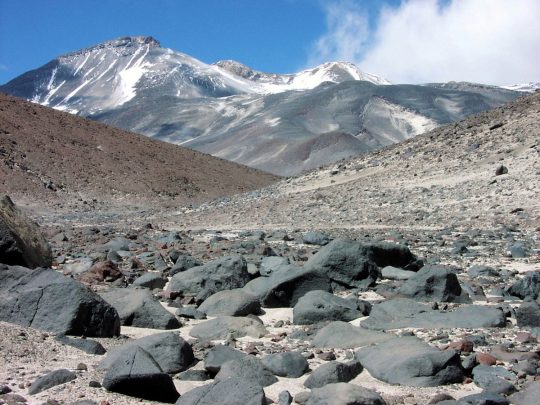
Aconcagua and Ojos del Salado — 25-Day Combined Expedition
- Height (m)
- 6893, 6957
- Duration
- 22 дня
- Difficulty
- Moderate
- Continent
- South America
- Children
- From 14 years old
- Accommodation
- There are tents
-
 3,900 $
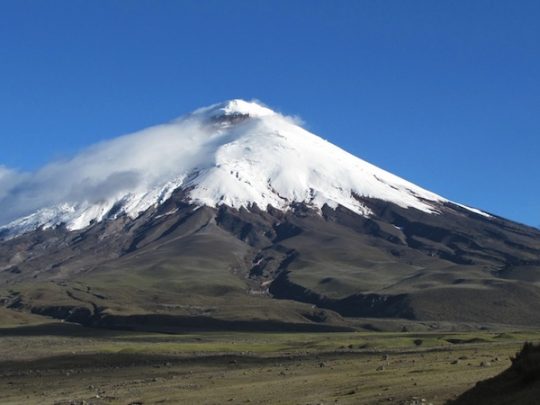
Climb Chimborazo and Cotopaxi — 14-Day Ecuador Expedition
- Height (m)
- 5897, 6384
- Duration
- 11 дней
- Difficulty
- Moderate
- Continent
- South America
- Children
- From 14 years old
- Accommodation
- Hotels only
-
 4,710 $
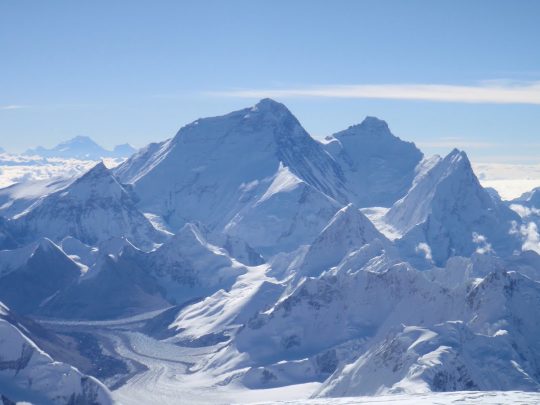
Climb Muztagh Ata, 7546 m — Classic Route Expedition
- Height (m)
- 7546
- Duration
- 22, 26 дня
- Difficulty
- Above average
- Continent
- Asia
- Children
- No
- Accommodation
- There are tents
-
 3,129 $
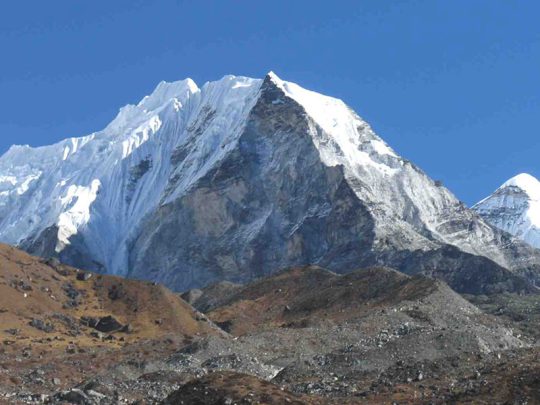
Island Peak Climb — 18-Day Expedition