- Guides
- B2B
-
#19607 (no title)
-
#15972 (no title)
- Climb Elbrus Individually
- Climb Elbrus from the South, 9 Days
- Climb Elbrus from the South, 7 Days
- Climb Elbrus from the South with Oxygen
- Climb Elbrus from the North, 10 Days
- Two Summits of Elbrus, 9 Days
- Elbrus Traverse from South to North, 9 Days
- Elbrus Traverse from North to South, 10 Days
- Cross of Elbrus, South to North, 9 Days
- Cross of Elbrus, North to South, 10 Days
- Climb Kazbek and Elbrus — 10-Day Two-Summit Programme
- Climb Elbrus from the West, 11 Days
- Elbrus by Private Helicopter, 3 Days
- Elbrus Region Holiday and Trekking, 9 Days
- Elbrus Region Holiday, 7 Days
- Tinder Tour: Climbing Mount Elbrus, 9 Days
- Climb Elbrus from the South, 9 Days with Sergey Baranov
-
#15539 (no title)
- Climb Carstensz Pyramid, 8 Days with Helicopter Access
- Climb Mont Blanc, 4810 m — 8-Day Guided Ascent
- Climb the Matterhorn, 4478 m — 8-Day Guided Ascent
- Climb Mount Vinson, 15-Day Antarctic Expedition
- Climb Kosciuszko and Travel in Australia, 7 Days
- Climb Fisht, 2868 m — 3-Day Ascent by the 1B Route
- Climb Mount Wilhelm, 6 Days
-
#15546 (no title)
- Climb Kilimanjaro: the Marangu Route
- Climb Kilimanjaro: the Lemosho Route
- Climb Ararat, 5137 m — 7-Day Classic Programme
- Climb Kazbek from the South, 5033 m — 8 Days in Georgia
- Climb Kazbek and Elbrus — 10-Day Two-Summit Programme
- Climb the Volcanoes of Mexico — Orizaba and Iztaccíhuatl, 9 Days
- Climbing Alpamayo — 16-Day Technical Expedition
- Climbing Margaret Peak (Stanley), 5,109 m
- Climbing Mount Kenya: Point Lenana, 4,985 m
- Climb Dykh-Tau by the North Ridge, 13 Days
-
#15554 (no title)
- Aconcagua Climb — 17-Day Guided Expedition
- Island Peak Climb — 18-Day Expedition
- Climb Mera Peak, 6476 m — 16-Day Hinku Valley Programme
- Climb Ama Dablam, 6812 m — 24-Day Expedition with Island Peak
- Climb Island Peak and Mera Peak — 24-Day Two-Summit Expedition
- Aconcagua and Ojos del Salado — 25-Day Combined Expedition
- Ojos del Salado Climb — 15-Day Expedition
- Climb Chimborazo and Cotopaxi — 14-Day Ecuador Programme
- Climb Huascarán — 8-Day Technical Ascent
- Climb Razdelnaya Peak, 6148 m — 15-Day Pamir Expedition
- Climb Denali by the West Buttress, 23 Days
- #15565 (no title)
- #15572 (no title)
-
#15972 (no title)
-
#19592 (no title)
-
See 8000m
- K2 Base Camp Trek via the Gondogoro La
- Everest Base Camp Trek — 14 Days
- Everest Base Camp via Gokyo Lakes — 15 Days
- Short Everest Base Camp Trek in 10 Days
- Annapurna Circuit and Tilicho Lake Trek
- Manaslu Circuit Trek
- Kanchenjunga Circuit Trek (XXL)
- Kanchenjunga North Base Camp Trek (Short)
- Kanchenjunga from India: the Goecha La Trek in Sikkim
- Makalu Base Camp Trek
- Annapurna Base Camp Trek
- South America
- Asia
- Africa
-
Russia
- Elbrus Region Holiday and Trekking, 9 Days
- Elbrus Region Holiday, 7 Days
- Oshten + Kardyvach — 9-Day Western Caucasus Trek
- Lake Kardyvach — 5-Day Base-Camp Trek
- Route 30: Through the Mountains to the Sea, with Oshten — 4 Days
- Trekking in Arkhyz — 7 Days over the Ayulyu Pass
- Gvandra Trek — 7 Days to the Ullu-Kyol Lakes
- Trekking in Dombai — 7 Days with the Murudzhu Lakes
- Europe
-
See 8000m
-
Adventures
-
Africa
- मोरक्को टूर: उत्तरी अफ्रीका का दिल
- चढ़ाई टूबकल और मोरक्को की संस्कृति
- Eritrea: the Dahlak Archipelago and the Rashaida Nomads
- Rwanda: Mountain Gorillas and the Bisoke Volcano
- Ethiopia: Otherworldly Landscapes and the Peoples of the Omo Valley
- युगांडा टूर: क्वीन्स पार्क और माउंटेन गोरिल्ला
- Tanzania Safari: Serengeti, Ngorongoro and Tarangire
- युगांडा टूर: सफेद गैंडे और पर्वत गोरिल्ला
- Zimbabwe and South Africa: Victoria Falls, Cape Town and the Cape of Good Hope
- Namibia: Etosha National Park and the Himba
- Kenya Safari: the African Big Five
- बोत्सवाना टूर: ओकावांगो डेल्टा और चोब पार्क
- South America
- Asia
-
Africa
- Ski-touring
- VIP
- #19722 (no title)
- About
Bhutan Druk Path Trek — 8 Days, Paro to Thimphu
- Height (m)
- 4090
- Duration
- 8 дней
- Difficulty
- Low
- Continent
- Asia
- Children
- From 8 years old
- Accommodation
- There are tents
5980 $
Почему такая цена?
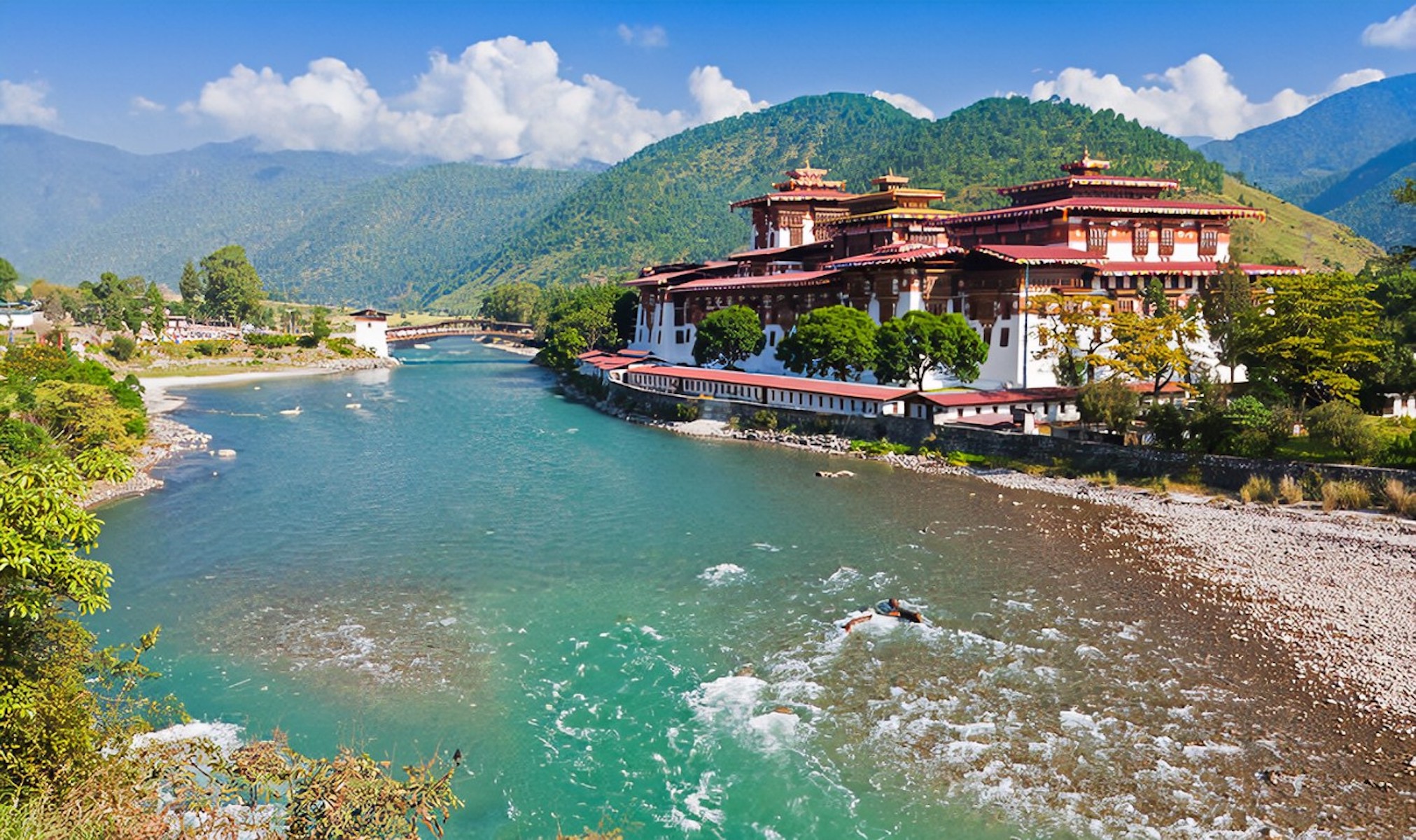
The Druk Path in Bhutan — an eight-day journey with a four-day high-altitude trek between the Paro and Thimphu valleys. One trip combines the Taktsang monastery, forests and open ridges, the Jimilang and Simkotra lakes, tented camps and cultural days in the two main towns of western Bhutan.
The route climbs above 4000 m and includes walking days of up to seven hours. No technical mountaineering experience is required, but participants need good physical condition, experience of long walks on broken ground and a readiness for several nights in tents without hotel comfort.
The price includes a local licensed guide, a Mountain Guide leader for groups of four participants or more, the Delhi — Paro — Delhi flight, accommodation and meals according to the itinerary, the mandatory government fees, baggage transport and camp service.
Important. The international flight to Delhi, insurance and personal expenses are paid separately. The weather, the state of the trail and the rules for visiting religious sites may change the order of a day. Wildlife encounters, fishing and any particular mountain view are not guaranteed.
About the Druk Path trek
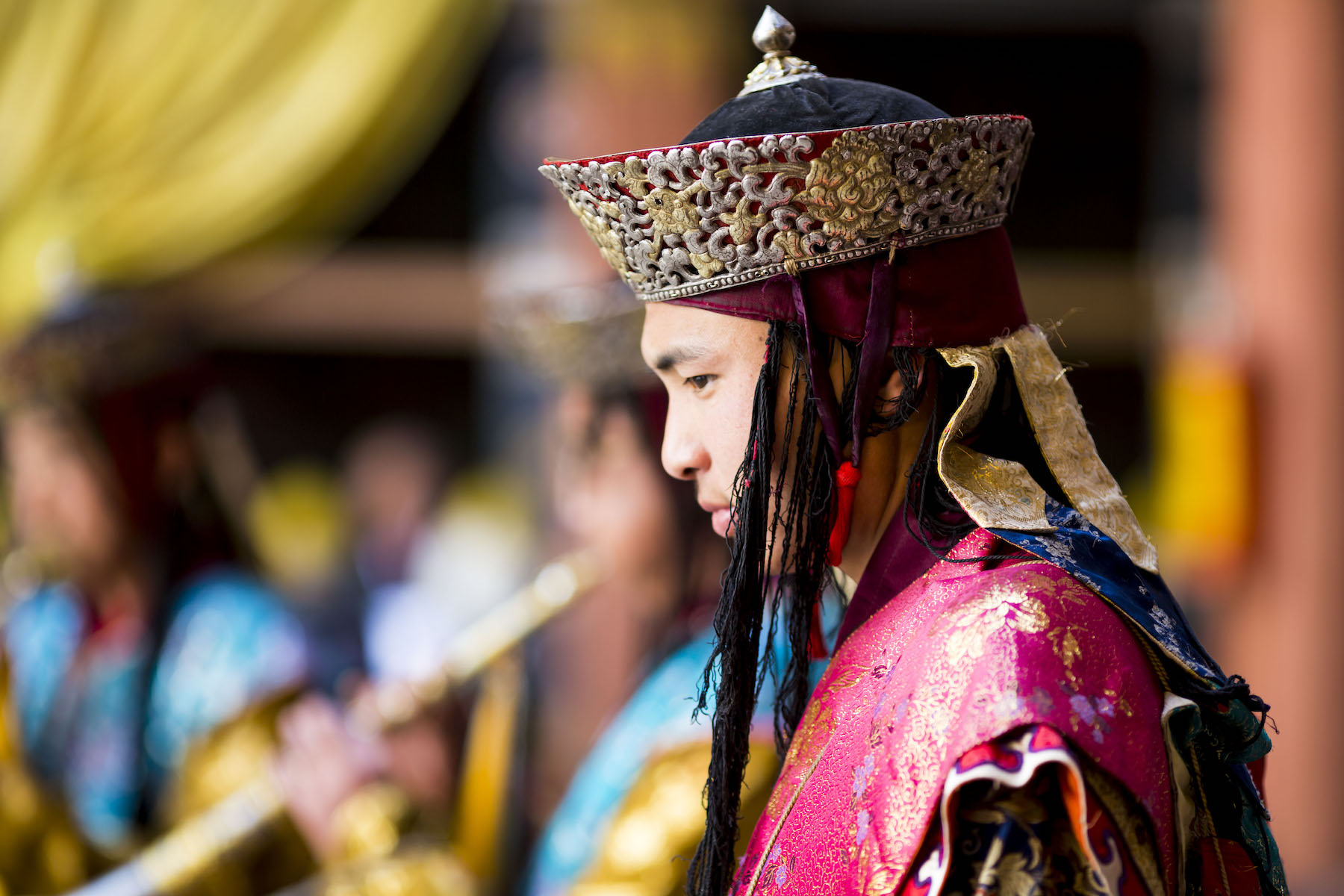
The Druk Path links the Paro and Thimphu valleys and makes it possible to combine four days of high-altitude trekking with the main cultural sites of western Bhutan in a single trip. The route runs through blue pine and rhododendron forest, over open ridges, past lakes and high pasture, and finishes with the descent to the capital. This is not a sightseeing tour with short walks: between the town hotels there is a self-sufficient tented section.
The first two days in Paro serve a practical purpose. The introduction to the dzongs and temples opens up the history and religious culture of the country, while the climb to the Taktsang monastery, the Tiger’s Nest, works as a fitness test and an acclimatisation outing before the nights on the route. You learn your own pace, how your footwear performs and how your body responds to altitude before the trek begins.
The trekking section leads the group steadily out of the valley onto more open and windier ground. There is no hotel service at the camps: the camp, the meals and the transport of group equipment are arranged by the local team within the confirmed services. Even though the route is comparatively short, participants need to be ready for several walking days in a row, changeable weather and nights under canvas.
The main advantage of the Druk Path is variety without long transfers between distant regions. In eight days participants see Paro, Taktsang, high mountain landscapes and Thimphu, yet the trip does not turn into a continuous parade of sights: the cultural days frame a self-contained mountain route.
No technical mountaineering experience is required. The format suits only participants able to walk confidently on mountain trails for several days in a row. The pace, the length of each stage and any decision to change a stage rest with the guide, taking account of the weather and the condition of the group.
In spring the route is valued for the rhododendron flowering and in autumn for clearer views of the snow peaks. Specific dates, the state of the trail and the accessibility of sites are checked before the trip. Monastery visits follow local rules, and encounters with wildlife and particular panoramas cannot be guaranteed.
This is the Druk Path trip. The Jomolhari trek in Bhutan is a separate trip with a different route and a different length, and is not part of this product.
Bhutan Druk Path trekking itinerary, 8 days
Day 1. Delhi — Paro — Ta Dzong and Rinpung Dzong.
Participants fly into Delhi, and once the group has assembled we travel on to Paro, site of the only airport in the Kingdom of Bhutan. In clear weather Everest greets the aircraft through the window as it begins its descent, flying between 4000-metre ranges. A representative of our company meets you at the airport and takes you by comfortable transfer to the hotel through the colourful Paro valley, which resembles a small Switzerland, where thick grass yellows in the bright sun and herds of yaks graze. The Paro valley is home to many of the oldest monasteries and temples in Bhutan, and in its northern part stands Jomolhari, 7300 m, sacred to the Bhutanese, whose glacial meltwater forms the Pachu river running the length of the valley. After checking in and taking the briefing we set out for Ta Dzong, the old watchtower above Paro, six storeys rising in a spiral behind stone walls two and a half metres thick. Ta Dzong was founded in the 17th century as a defence against Tibetan incursions from the north and is now the National Museum, with old weapons, vessels and national costume on display, a good number of Buddhist relics and two altars of value to pilgrims. After the museum we descend the hillside to the second treasure of the Paro valley, Rinpung Dzong, whose name means «fortress on a heap of jewels». Rinpung Dzong is a large monastery built in the 17th century by the Zhabdrung, the founder of the Bhutanese state and a political and spiritual leader still deeply revered. Inside are 14 temples and altars along with administrative buildings. A bridge leads to the fortress and is finely lit after dark, a wooden gallery runs around the courtyard, and the walls carry skilled paintings illustrating Buddhist teaching. We return to town and settle into the hotel. Night at the hotel.
Day 2. Paro — Taktsang Lakhang, the Tiger’s Nest, and Kyichu Lakhang.
In the morning we set out on an acclimatisation walk along a trail winding between moss-covered pines and lines of coloured prayer flags. The path leads to the celebrated Taktsang Lakhang monastery, also known as the Tiger’s Nest, a national shrine and the most revered temple in Bhutan. Its name comes from the tradition that Guru Padmasambhava flew here on the back of a tigress, into which his consort Yeshe Tsogyal had transformed, and meditated for three years, three months, three days and three hours to overcome the demons living in the cave. The setting is remarkable for its strangeness and isolation: the temple seems to hang above the void at a height of 900 metres, now hidden in dense cloud, now opening onto the green landscape of the Paro valley. By midday we return to Paro and go on to the legacy of Bhutan’s oldest legend, the Kyichu Lakhang monastery, founded in the 7th century by the Tibetan king Songtsen Gampo in order, tradition says, to subdue a giant demoness whose body covered the whole of Tibet and the Himalaya and who obstructed the spread of Buddhism. The 108 monasteries built at the king’s command were to pin down the various parts of her body; Kyichu Lakhang holds down her foot. After a full day we return to Paro and gather our strength for tomorrow’s walk in the comfort of the hotel. Night at the hotel.
Day 3. Paro — Jele Dzong — Jangchulakha.
After an early breakfast we drive to the start of the walk, above the Ta Dzong we already know, at 2487 m. We meet our support team and set off along a trail climbing gently uphill. The route passes through dense pine forest, small farms and wide apple orchards, and after an hour and a half enters thick protected forest where the gradient steepens. We reach the Jele Dzong monastery and stop with a view of the Himalayan peaks to eat and to adjust to the altitude, 3490 metres. The monastery, of the early 16th century, has recently been restored, and we may meet the hospitable monks and, if we wish, ask their blessing. After a short rest we continue; the trail drops for a while, then climbs again, and after passing through stands of enormous rhododendrons we reach the emerald meadows of the Jangchulakha pass, 3780 metres, where yak herders camp in winter. We pitch camp beside the slope and settle in for the night surrounded by the panorama of the Himalayan range. Time on the trail: 6 hours. Night in camp.
Day 4. Jangchulakha — Jimilang Tsho.
We wake in the mountains to the best alarm clock there is, the sound of nature waking unhurriedly. After a substantial breakfast we set off along a trail lined with juniper and dwarf rhododendron that runs up the ridge, with the grassy expanses of the Paro and Thimphu valleys spread out below, divided by the mountain massif. Taking in the untouched country of Bhutan, we drop off the ridge to the clear water of Jimilang lake, 3870 metres, whose name means «lake of the sand bull»: legend has it that a huge bull emerged from its depths and joined the cattle grazing around it. From the shore of Jimilang Tsho you can see the peak of Jichu Drake, the protective deity of Paro, and in the clear water an extraordinary number of large trout, which may be fished with a permit. We pitch camp in this secluded place, and there is the option of fishing or of meditating on the mirror surface of the sacred lake. Time on the trail: 7 hours. Night in camp.
Day 5. Jimilang Tsho — Phajoding.
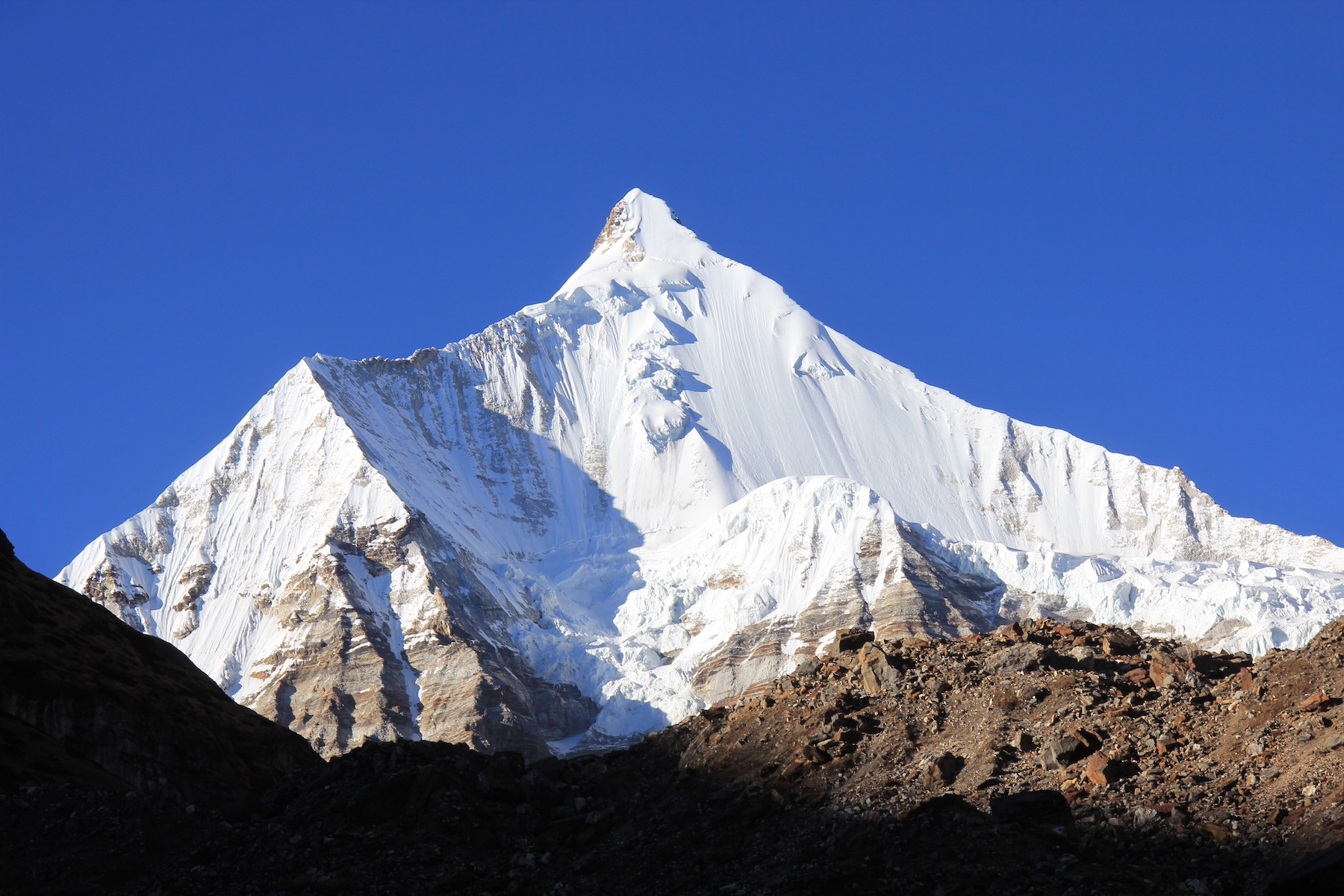
This is the longest stage of the whole trip, so we rise early, eat and set off at once. Ahead lie two more fine mountain lakes: Janetsho at 3956 metres, a favourite camping place for nomadic herders and for trekkers, and Simkotra, south of Jimilang Tsho at 4110 metres, ringed by the ruins of old buildings and a genuine place of power for everyone who passes this way. Every step here opens views over mountains and valleys, the air is crystal clear and nature holds sway. Beyond the second lake we climb steadily to the high point of the ridge and, from the height of a Himalayan falcon’s flight, take in the sight of Gangkhar Puensum, 7570 metres, the highest unclimbed mountain on the planet. After a short rest we begin the gradual descent through juniper forest to Phajoding monastery, which sits proudly on the mountainside, built in the 13th century at 3650 metres and still in use. Phajoding was once among the wealthiest monasteries in Bhutan; today it is at risk, though 40 monks still live here and keep the spiritual traditions, and orphaned children study here. From the viewpoint by the monastery the surroundings lie open below, and in the evening Thimphu is clearly visible, glittering in the darkness of its bowl-shaped valley. Time on the trail: 7 hours. Night in camp.
Day 6. Phajoding — Thimphu.
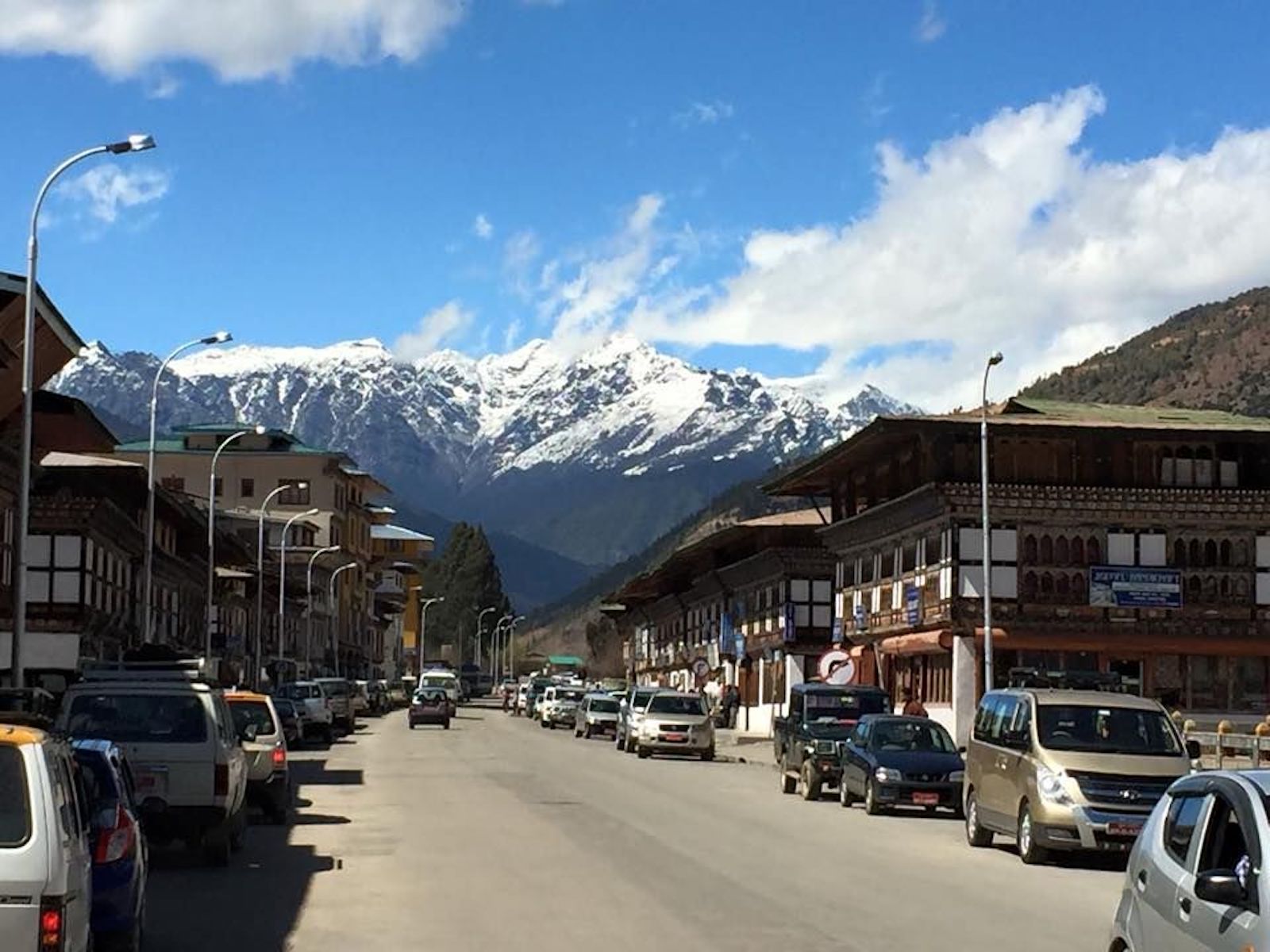
Today is the easiest day of the trek, because the trail descends through remarkable blue pine forest. We reach the Motithang reserve, where takin, sambar and muntjac are kept in a carefully protected natural setting, then transfer to jeeps and drive to Thimphu, the capital of Bhutan and a unique city without traffic lights, where practically every house is a work of architecture and painting and a settled calm prevails. We check into the hotel and, after cold drinks and lunch, begin an introductory walk through the city. We visit the school of painting and the textile museum, where national dress can be tried on, see handmade paper being produced at the works, and explore the farmers’ market, where Bhutanese souvenirs and local produce can be bought. Time on the trail: 3 hours. Night at a hotel in Thimphu.
Day 7. Thimphu — Paro.
We give the whole day to the sights of Thimphu at a comfortable pace. On the summit of Changri Kuensel Phodrang, among the ruins of the palace of one of Bhutan’s rulers, stands the giant 51-metre Buddha Dordenma, the largest Buddha statue in the kingdom and the highest-sited Buddha statue in the world, at 2500 m. Inside it are a temple and more than 120,000 small bronze Buddhas covered in gold. In the northern part of the capital, on the bank of the Wang Chhu river, stands the magnificent Tashichho Dzong complex, the country’s summer capital and the seat of the Dharma Raja. We make a point of visiting the Memorial Chorten, the stupa built in memory of the late third king of Bhutan, Jigme Dorji Wangchuck. The chorten is considered the most prominent religious site in Bhutan: pilgrims come to its walls every day to pray and to honour the departed king, who was said to possess magical power. Here we make the traditional kora, the circuit of the stupa, and read mantras. We also give due attention to the Changangkha Lhakhang monastery, a compact 13th to 14th-century temple complex popular with parents who come for a blessing for their children from Genyen Domtsangpa, the deity of the temple and protector of children. Tradition holds that a great bronze statue of Avalokiteshvara, seated, with eleven heads and many arms, appeared in the temple of itself, not made by human hand. We finish at the new temple of the Drubthob monastery and have free time for shopping at the local market. Towards sunset we gather at the agreed place and drive to the final point of the journey, Paro again, where we spend a warm evening in the company of new friends, sharing impressions and photographs of the landscapes of Bhutan. Night at the hotel.
Day 8. Departure from Paro.
A comfortable transfer with an experienced driver takes us, accompanied by a representative of our company, to Paro international airport for the flight back to Delhi.
What's included
- An experienced Mountain Guide leader, for groups of 4 participants or more
- A local licensed guide
- The Delhi — Paro — Delhi flight
- Meeting and seeing off at Paro airport
- Hotel accommodation, twin occupancy, 3-star
- Three meals a day and snacks throughout the trip
- The government Sustainable Development Fee (SDF)
- A visit to a farmhouse with dinner and a traditional hot stone bath
- Transport according to the itinerary
- Unlimited bottled water at any time during the journey and the trek
- Transport of baggage and camp equipment during the trek
- Assistance with obtaining the Bhutan visa
- Visa fees
- Entrance fees to the sites in the itinerary
What's not included
- The international flight to Delhi and home again
- Insurance covering trekking
- Tips for the guide and the team
- Any departure from the itinerary
- Any costs arising from a change to the itinerary
- Any personal additional expenses
Private groups
The Bhutan trek can be arranged for a closed group of friends, a club or a corporate team, with no outside participants joining. Dates, the make-up of the guiding team and any extra services available on the route are agreed individually. A family, a group of friends or a corporate team can discuss their own dates, single rooms, extra cultural days and separate transport. The trip is confirmed once the licensed local guide, the permits and the campsites have been checked. Changes must not disturb the gradual altitude gain or the approved order of the trekking stages. Whether children and less experienced travellers can join is assessed against the route chosen, physical fitness and readiness for nights under canvas. The price depends on the number of participants, the dates you choose, the make-up of the team and any extra services confirmed.
Documents you need
Document requirements depend on your nationality and can change. Check them before you buy non-refundable tickets, and again before you fly. The first name and surname on every booking must match the spelling in your passport exactly. Mountain Guide does not sell air tickets and does not arrange entry visas, but it does provide the booking confirmations it holds and the documents issued by the host team.
Documents
- A valid passport
- A visa or other entry permit for Bhutan and for any transit country, if one is required for your nationality
- International and domestic air tickets, or e-ticket receipts, for the trip
- Medical insurance covering high-altitude trekking, a maximum altitude of at least 4090 m, search and rescue, and emergency evacuation
- Your insurance policy number and the insurer’s 24-hour emergency contact details
- Your booking confirmation for the trip and the organisers’ contact details
- The Bhutan visa clearance and proof that the compulsory fees have been paid, arranged by the host team
- Documents for a participant under 18, where these apply
- Digital copies of your passport, visa, tickets and insurance on your phone and in cloud storage
- Waterproof wallet for your original documents
The Bhutan visa and the visa fee are part of the confirmed trip. You check the entry and transit requirements of India, or of whichever country you change flights in, separately before buying tickets.
Weather and seasons
The high-altitude treks in Bhutan use spring and autumn dates. The published departures fall in March to April and October to November; the exact route is confirmed once permits, campsites and the local team have been checked. The valleys can bring rain, mist and a warm day, while the high camps bring cold wind, snow and sub-zero night temperatures. Cloud can hide the mountain views even in a suitable season. The licensed local guide sets the pace and the order of the stages. The route may be shortened, a camp moved or the group turned back if the weather, the state of the trail or a participant’s condition worsens. Exact temperatures and rainfall are not guaranteed in advance.
Accommodation and meals
In the towns participants stay in 3-star hotels in twin rooms. The specific properties and the number of nights follow the confirmed itinerary. Single occupancy depends on availability and is paid separately. Tented camps at approved sites are used during the trek. The local team transports the camp equipment and baggage, pitches the camp and provides the meals. You bring your own sleeping bag and the items on the agreed list, unless confirmed otherwise. The price includes three meals a day and a snack throughout the trip. The choice of food is simpler in the remote camps than in the towns, but the diet is planned for sustained physical effort. Tell us about vegetarian meals, allergies and medical restrictions before booking. The host team confirms whether a strict special diet is possible.
Facilities on the route
Showers and toilets. Town hotels have the usual toilet and washing facilities. Showers and hot water are not guaranteed at the tented camps; the local team sets up the toilet at the approved site.
Power and charging. Devices are charged at the hotels. On the trek there is no access to sockets, or very little, so you need a power bank, spare cells and batteries for your torch.
Internet and phone signal. Signal is better in the towns, but on the high-altitude section mobile coverage and internet may be absent for several days. How the local team communicates while working is confirmed before the trip.
Laundry and drying. Plan laundry for the hotel. Drying in the camps depends on the weather, so bring spare underwear, socks and gloves, and dry bags to keep clothing dry.
Environmental rules. Approved trails and campsites are used. Rubbish is handed to the support team; it must not be left on the route.
Страхование
Наверх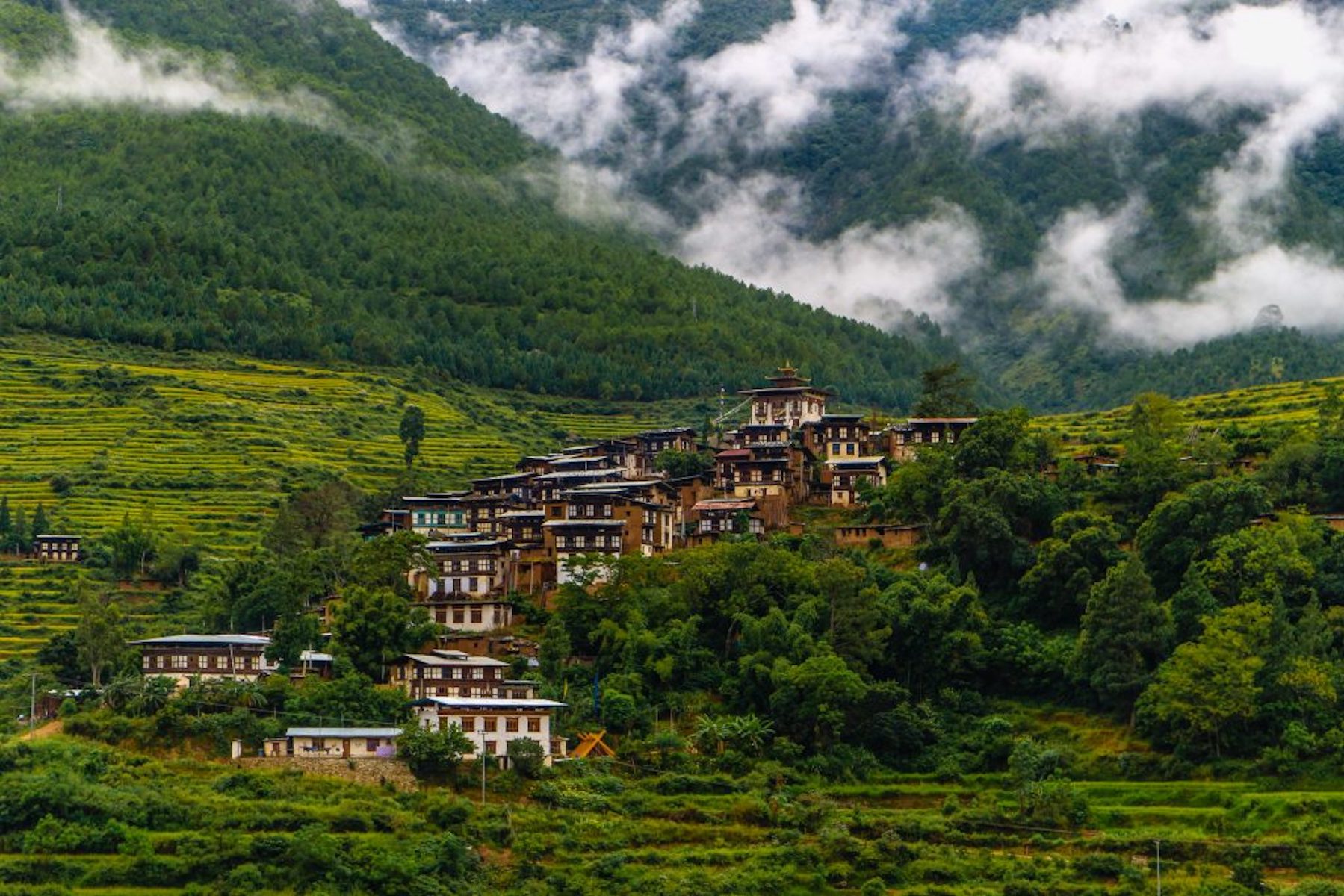
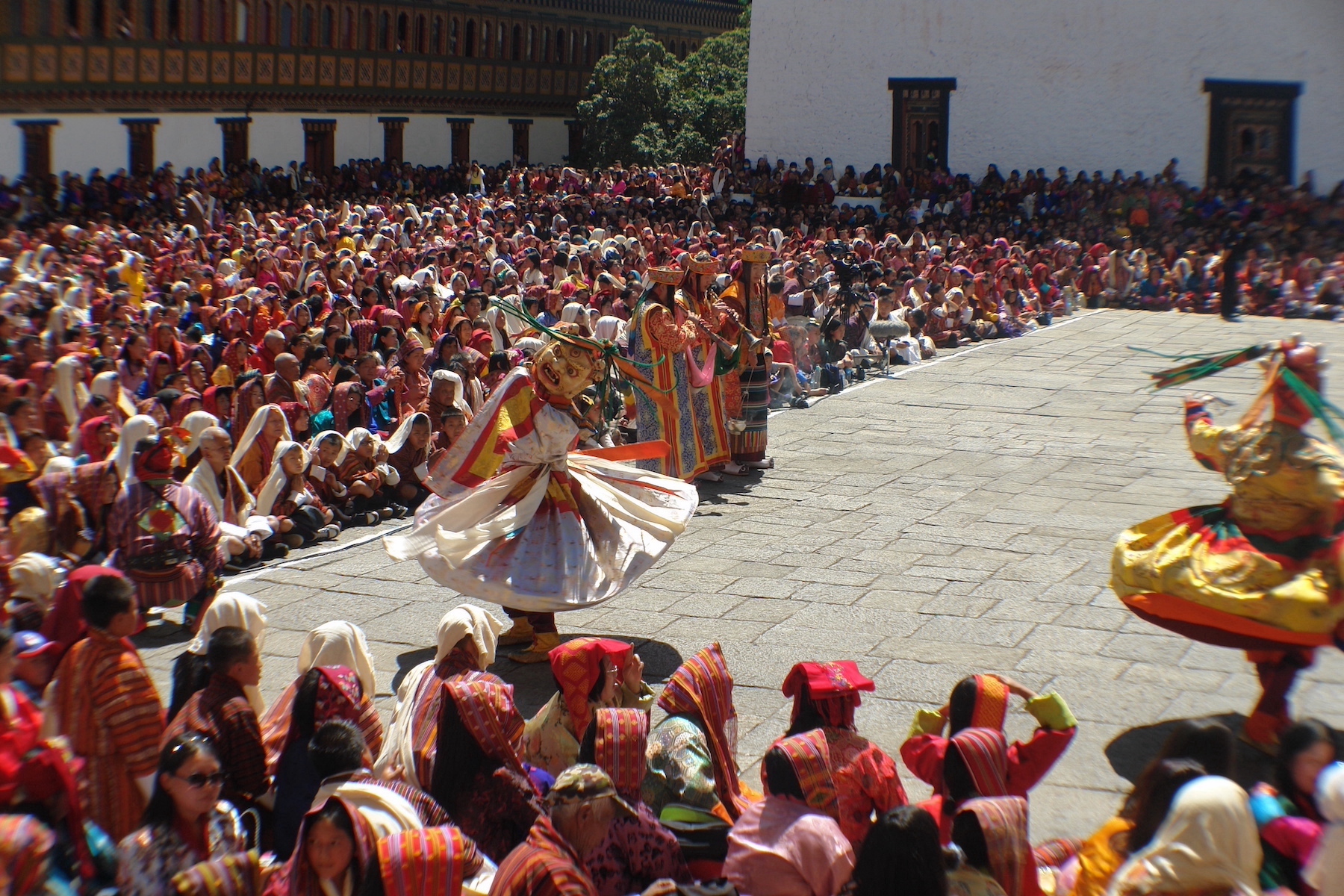
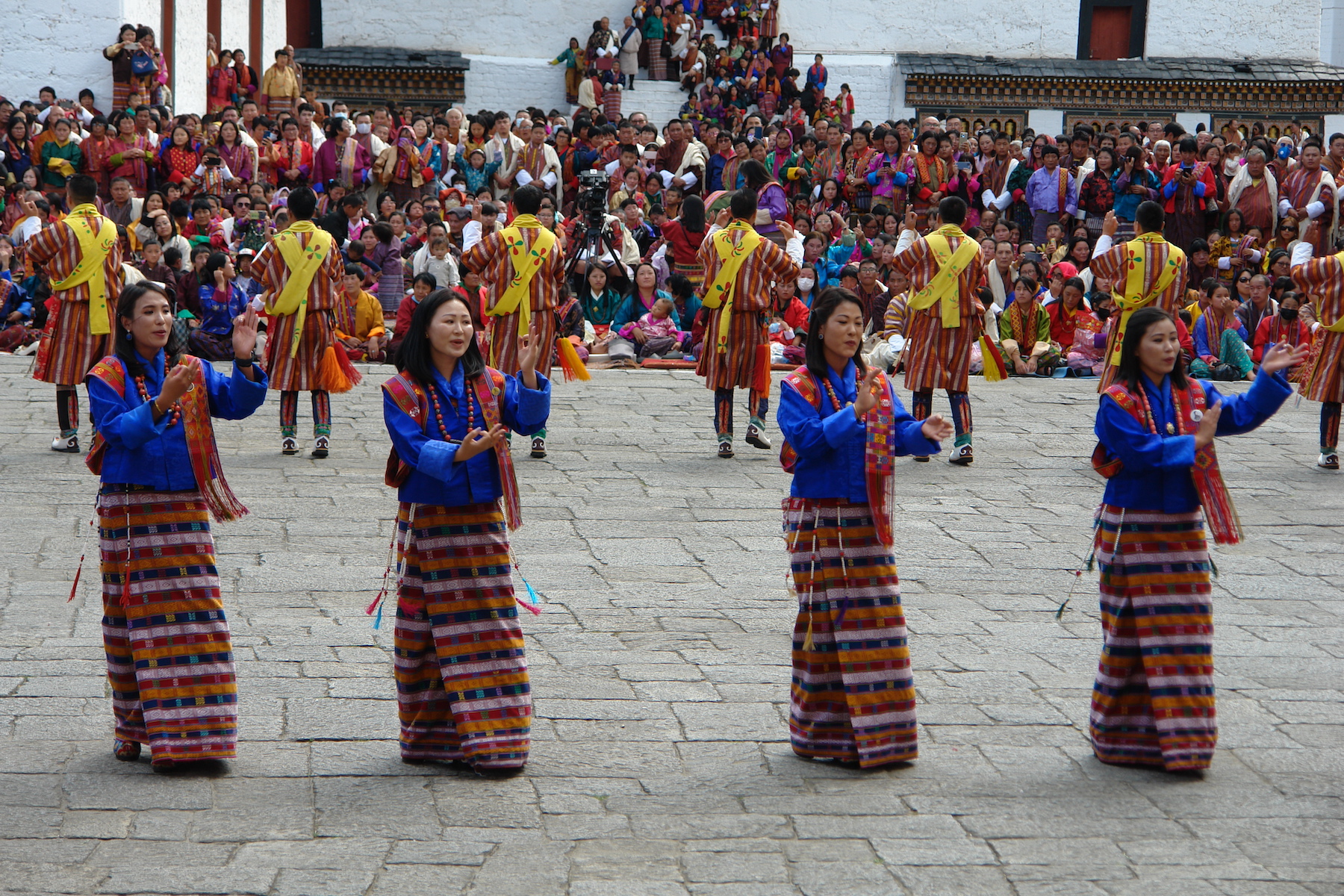
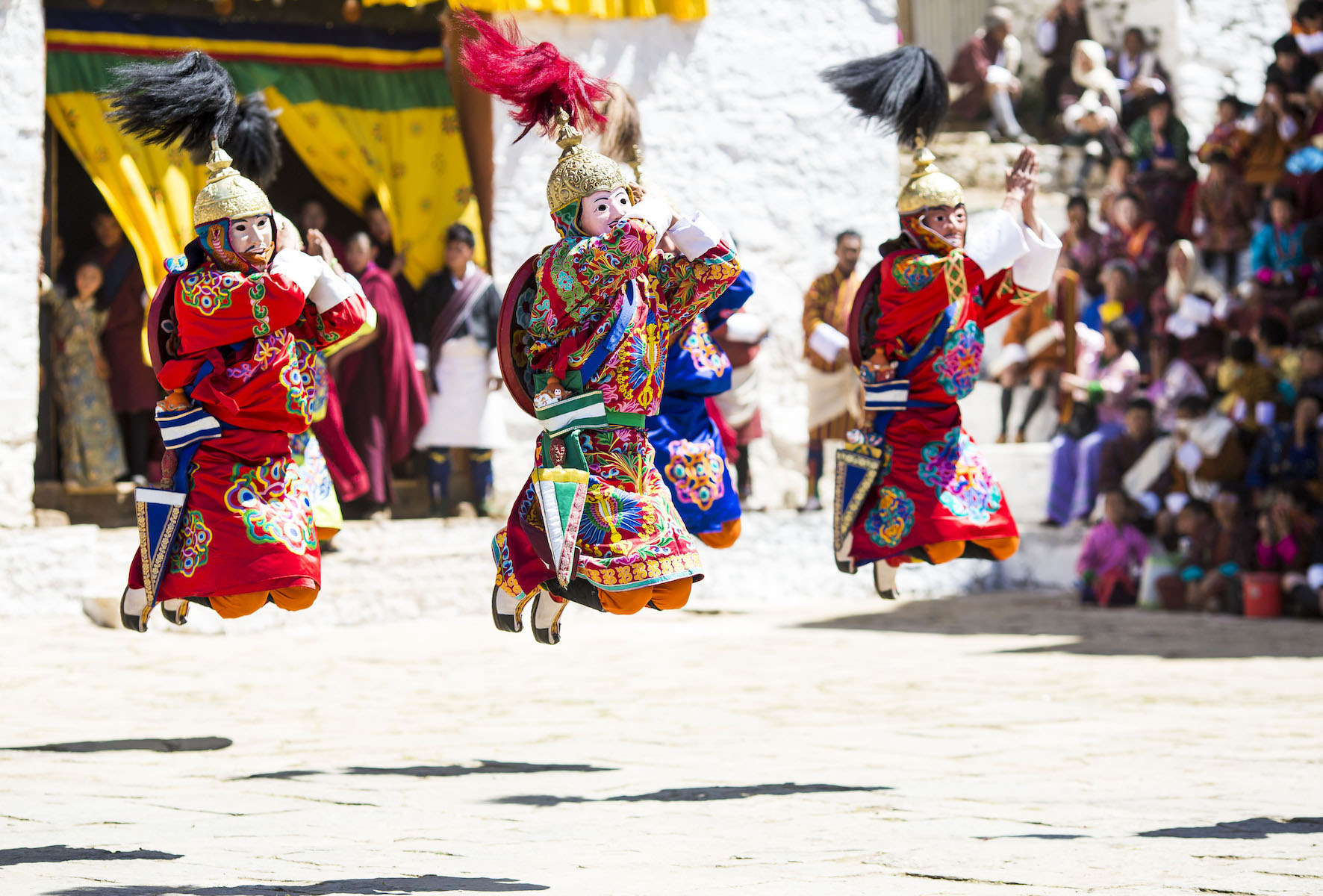
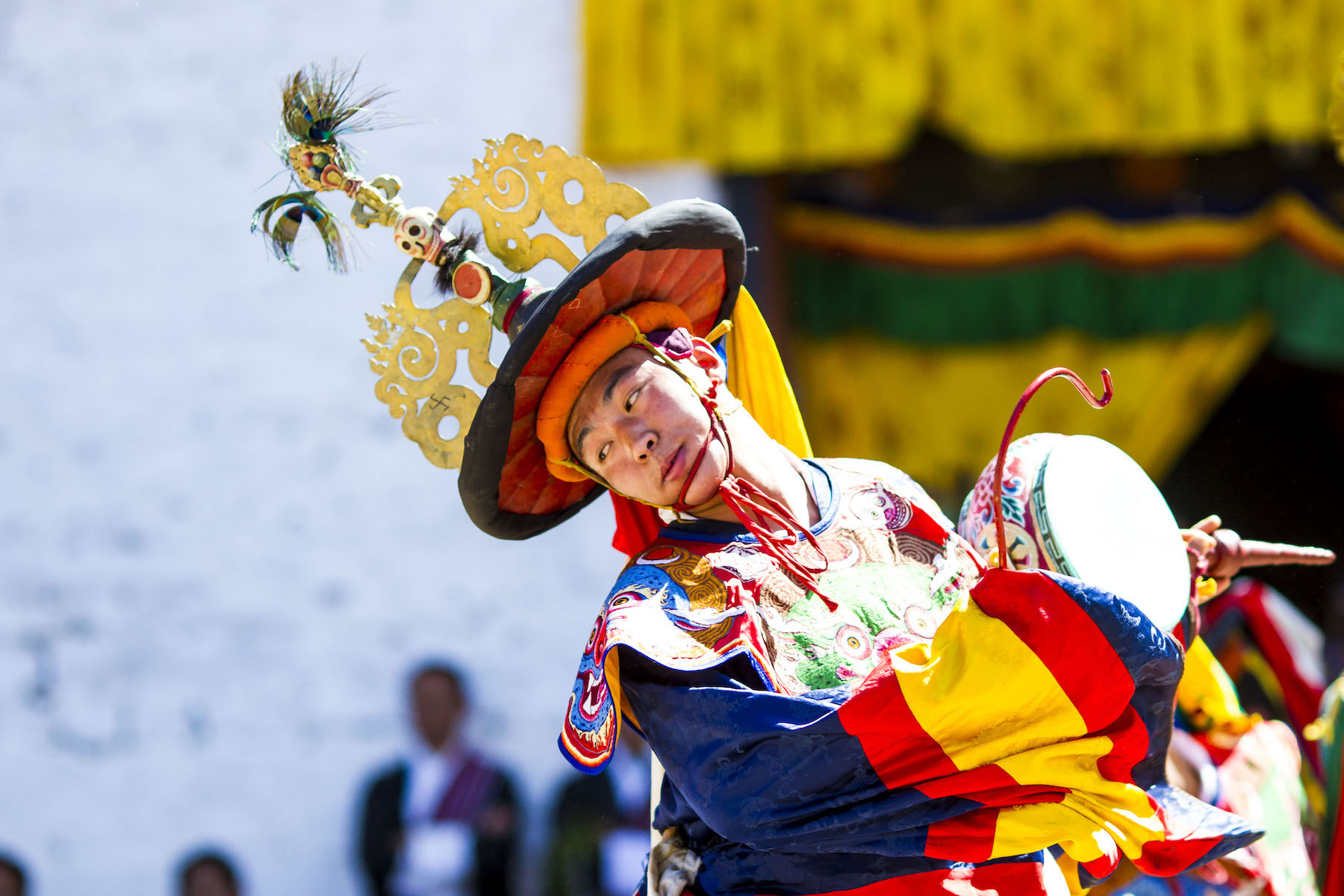
Equipment list for the Bhutan trek: the Druk Path
Скачать PDFYou bring all of your own personal equipment. Before the trip, agree your footwear, sleeping bag and personal kit with the guide, taking the season and the conditions on the route into account.
Documents
- Passport
- Air tickets or e-ticket receipts
- Medical insurance covering helicopter evacuation
- We recommend keeping digital copies of your documents on your phone and in cloud storage
Personal equipment
- Rucksack of 30-50 litres
- Sleeping bag with a comfort rating of -5 °C
- Trekking poles
Clothing and footwear
- Trekking boots, thoroughly treated with a waterproofing product beforehand
- Trainers (for town)
- Waterproof membrane shell: jacket and trousers
- Fleece top and bottoms
- Base layer, top and bottoms
- Down jacket with a hood
- Thick gloves
- Thin gloves
- Bandana or buff (as well as sun protection in the valley, it can keep your throat or face warm in the cold)
- Warm hat
- Warm trekking socks
Other items
- LED head torch with at least 12 hours of battery life
- Power bank
- Sunglasses
- Rain jacket
- Rain cover for your rucksack
- Vacuum flask or water bottle, 1 litre
- Gaiters
- SPF 50 sun cream
- SPF 10-15 lip balm
- Personal first-aid kit
- Elastic bandage and/or a support brace
- Toothpaste, toothbrush, soap, shampoo and flip-flops
- Towel
- Toilet paper