- Guides
- B2B
-
#19607 (no title)
-
#15972 (no title)
- Climb Elbrus Individually
- Climb Elbrus from the South, 9 Days
- Climb Elbrus from the South, 7 Days
- Climb Elbrus from the South with Oxygen
- Climb Elbrus from the North, 10 Days
- Two Summits of Elbrus, 9 Days
- Elbrus Traverse from South to North, 9 Days
- Elbrus Traverse from North to South, 10 Days
- Cross of Elbrus, South to North, 9 Days
- Cross of Elbrus, North to South, 10 Days
- Climb Kazbek and Elbrus — 10-Day Two-Summit Programme
- Climb Elbrus from the West, 11 Days
- Elbrus by Private Helicopter, 3 Days
- Elbrus Region Holiday and Trekking, 9 Days
- Elbrus Region Holiday, 7 Days
- Tinder Tour: Climbing Mount Elbrus, 9 Days
- Climb Elbrus from the South, 9 Days with Sergey Baranov
-
#15539 (no title)
- Climb Carstensz Pyramid, 8 Days with Helicopter Access
- Climb Mont Blanc, 4810 m — 8-Day Guided Ascent
- Climb the Matterhorn, 4478 m — 8-Day Guided Ascent
- Climb Mount Vinson, 15-Day Antarctic Expedition
- Climb Kosciuszko and Travel in Australia, 7 Days
- Climb Fisht, 2868 m — 3-Day Ascent by the 1B Route
- Climb Mount Wilhelm, 6 Days
-
#15546 (no title)
- Climb Kilimanjaro: the Marangu Route
- Climb Kilimanjaro: the Lemosho Route
- Climb Ararat, 5137 m — 7-Day Classic Programme
- Climb Kazbek from the South, 5033 m — 8 Days in Georgia
- Climb Kazbek and Elbrus — 10-Day Two-Summit Programme
- Climb the Volcanoes of Mexico — Orizaba and Iztaccíhuatl, 9 Days
- Climbing Alpamayo — 16-Day Technical Expedition
- Climbing Margaret Peak (Stanley), 5,109 m
- Climbing Mount Kenya: Point Lenana, 4,985 m
- Climb Dykh-Tau by the North Ridge, 13 Days
-
#15554 (no title)
- Aconcagua Climb — 17-Day Guided Expedition
- Island Peak Climb — 18-Day Expedition
- Climb Mera Peak, 6476 m — 16-Day Hinku Valley Programme
- Climb Ama Dablam, 6812 m — 24-Day Expedition with Island Peak
- Climb Island Peak and Mera Peak — 24-Day Two-Summit Expedition
- Aconcagua and Ojos del Salado — 25-Day Combined Expedition
- Ojos del Salado Climb — 15-Day Expedition
- Climb Chimborazo and Cotopaxi — 14-Day Ecuador Programme
- Climb Huascarán — 8-Day Technical Ascent
- Climb Razdelnaya Peak, 6148 m — 15-Day Pamir Expedition
- Climb Denali by the West Buttress, 23 Days
- #15565 (no title)
- #15572 (no title)
-
#15972 (no title)
-
#19592 (no title)
-
See 8000m
- K2 Base Camp Trek via the Gondogoro La
- Everest Base Camp Trek — 14 Days
- Everest Base Camp via Gokyo Lakes — 15 Days
- Short Everest Base Camp Trek in 10 Days
- Annapurna Circuit and Tilicho Lake Trek
- Manaslu Circuit Trek
- Kanchenjunga Circuit Trek (XXL)
- Kanchenjunga North Base Camp Trek (Short)
- Kanchenjunga from India: the Goecha La Trek in Sikkim
- Makalu Base Camp Trek
- Annapurna Base Camp Trek
- South America
- Asia
- Africa
-
Russia
- Elbrus Region Holiday and Trekking, 9 Days
- Elbrus Region Holiday, 7 Days
- Oshten + Kardyvach — 9-Day Western Caucasus Trek
- Lake Kardyvach — 5-Day Base-Camp Trek
- Route 30: Through the Mountains to the Sea, with Oshten — 4 Days
- Trekking in Arkhyz — 7 Days over the Ayulyu Pass
- Gvandra Trek — 7 Days to the Ullu-Kyol Lakes
- Trekking in Dombai — 7 Days with the Murudzhu Lakes
- Europe
-
See 8000m
-
Adventures
-
Africa
- मोरक्को टूर: उत्तरी अफ्रीका का दिल
- चढ़ाई टूबकल और मोरक्को की संस्कृति
- Eritrea: the Dahlak Archipelago and the Rashaida Nomads
- Rwanda: Mountain Gorillas and the Bisoke Volcano
- Ethiopia: Otherworldly Landscapes and the Peoples of the Omo Valley
- युगांडा टूर: क्वीन्स पार्क और माउंटेन गोरिल्ला
- Tanzania Safari: Serengeti, Ngorongoro and Tarangire
- युगांडा टूर: सफेद गैंडे और पर्वत गोरिल्ला
- Zimbabwe and South Africa: Victoria Falls, Cape Town and the Cape of Good Hope
- Namibia: Etosha National Park and the Himba
- Kenya Safari: the African Big Five
- बोत्सवाना टूर: ओकावांगो डेल्टा और चोब पार्क
- South America
- Asia
-
Africa
- Ski-touring
- VIP
- #19722 (no title)
- About
Climb Mont Blanc, 4810 m — 8-Day Guided Ascent
- Height (m)
- 4810
- Duration
- 7 дней
- Difficulty
- Moderate
- Continent
- Europe
- Children
- From 14 years old
- Accommodation
- Without tents
2960 $
Почему такая цена?
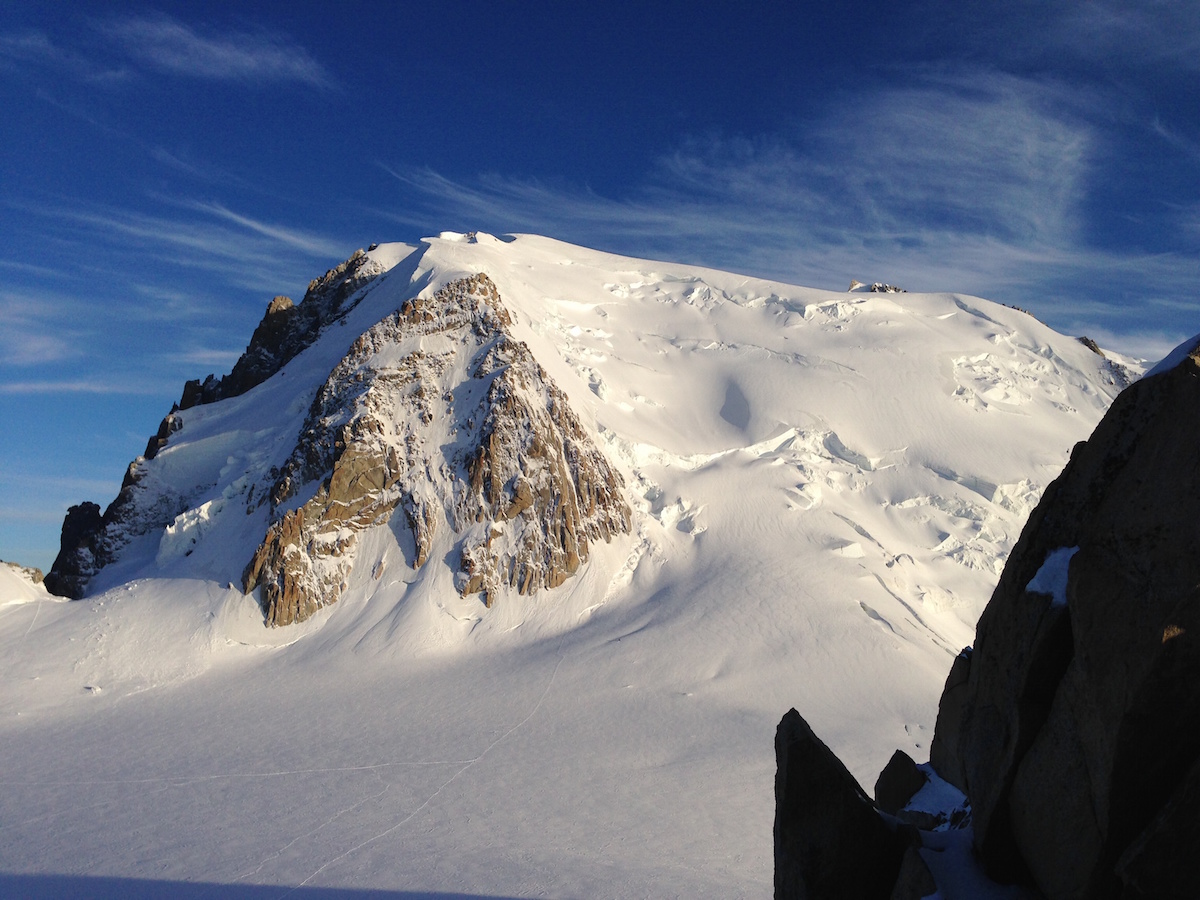
Climbing Mont Blanc — an 8-day guided trip on the highest summit of the Alps, 4810 m. Training and acclimatisation take place in Italy, around Courmayeur and Breuil-Cervinia, after which the team crosses to Chamonix and works towards the summit from the Goûter hut.
- Mont Blanc, 4810 m
- Acclimatisation on Aiguille de Toule, 3534 m, and Breithorn, 4164 m
- A night in a hut above 3000 m before the summit stage
- Summit day via Dôme du Goûter, 4304 m
- Accommodation in hotels and mountain huts, no tents
- One reserve and rest day inside the trip
- Certified mountain or alpine guide
Technically the classic routes are not difficult, but the summit day is long: about 8–10 hours of walking, 980 m of ascent and 2423 m of descent. The trip suits a fit walker with some experience of simple ascents or mountain trips to 3000–3500 m using an ice axe and crampons.
Important:
- Under the safety requirements of the International Federation of Mountain Guides Associations (IFMGA), a guide may work with no more than two participants on Mont Blanc
- Three route variants are possible — the classic Goûter route from France, the Italian route via the Gonella hut, and the «Three Summits» route from France; the choice depends on the condition of the routes and on hut availability
- The cable cars used for the Breithorn acclimatisation run from the second half of June to no later than mid-September; outside that window the acclimatisation is made on another mountain
- Travel to Courmayeur and back, accommodation and meals in Courmayeur and mountain rescue insurance are not included
- Reaching the summit depends on the weather, the state of the route and the guide's decision
About the Mont Blanc ascent
Mont Blanc, 4810 m, is the highest summit of the Alps. Four classic routes lead to it. They are not technically demanding, but each carries its own hazards, they are very popular and they are often crowded — the Goûter route most of all. All the classic lines finish on the same summit ridge, so congestion there is normal. Both the Goûter route and the Grands Mulets route are graded PD.
The trip opens on the Italian side. Preparation and acclimatisation are made from Courmayeur and Breuil-Cervinia: the team spends a night in a hut above 3000 m, climbs the small rock summit of Aiguille de Toule, 3534 m, and then the four-thousander Breithorn, 4164 m. This block sets the working rhythm, confirms that equipment fits and lets the guide judge each participant’s pace before the summit stage.
Three variants of the summit stage are possible: the classic route through the Goûter hut from France, the Italian route through the Gonella hut, and the «Three Summits» route from France. The choice of the line of ascent depends on the condition of the routes and on the availability of places in the mountain huts, and it is made by the guide.
On the confirmed itinerary the team crosses to Chamonix on day six, rides the cable car and the mountain tramway from Les Houches to Nid d’Aigle, 2372 m, walks to the Tête Rousse hut and then climbs roped over the rocks to the Goûter hut, 3835 m. The summit day starts at about three in the morning. A broad snow slope leads to Dôme du Goûter, 4304 m; after a short descent the route climbs again and finishes along a narrow, steep snow ridge. The descent follows the same line back to the hut, the mountain tramway and the valley.
Fitness and experience. Any healthy person can take part in this trip. Training beforehand is always worthwhile and makes the climb easier, but it is not compulsory. Be ready for walking days of 6–7 hours with a small pack of about 8 kg and up to 1000 m of ascent. Experience of simple ascents or of mountain trips to 3000–3500 m using an ice axe and crampons is sufficient.
This page is the guided ascent of Mont Blanc. The circuit trek around the massif is a separate trip and is not part of this product.
Mont Blanc climbing itinerary, 8 days
Day 1. Arrival.
The most convenient airport for arrival is Geneva; Milan and Turin are alternatives. A transfer takes participants on to Courmayeur, where dinner and the briefing follow. Accommodation in a guest house, hotel or apartment.
Day 2. Preparation, acclimatisation and equipment fitting.
In the morning the group meets the guide, checks equipment and settles the practical arrangements. A transfer then goes to the Skyway cable car and up to the Torino hut, 3375 m. From there the team moves out onto the glacier and climbs the small rock summit of Aiguille de Toule, 3534 m. In good weather the summit gives a view of Mont Blanc. After the climb the group returns to Courmayeur.
Total walking time: 3–4 hours. Ascent: 159 m. Descent: 159 m.
Day 3. Acclimatisation outing at the Guide del Cervino hut, 3489 m.
The group transfers to the Valtournenche valley and the town of Breuil-Cervinia at the foot of the Matterhorn. From there a cable car climbs to the Plateau Rosa top station; the hut is about five minutes’ walk away. After settling in, the team makes an acclimatisation outing to 3900 m and prepares for the following day. Night in a mountain hut.
Total walking time: 3–4 hours. Ascent: 411 m. Descent: 411 m.
Day 4. Breithorn, 4164 m, and return to Courmayeur.
This is the training day before the main ascent. The team sets out early for Breithorn, 4164 m. The climb is not technically difficult and opens a panorama of the western and central Alps. After the descent to the hut the group takes the cable car back to Cervinia and transfers to Courmayeur.
Total walking time: 4–5 hours. Ascent: 675 m. Descent: 675 m.
Day 5. Rest before the Mont Blanc ascent.
Night in Courmayeur.
Day 6. Transfer to Chamonix and walk to the Goûter hut.
After breakfast the group crosses to the French side. From the village of Les Houches a cable car and then the mountain tramway lead to the Nid d’Aigle station, 2372 m. The walking part of the route begins here: first the approach to the Tête Rousse hut, then a harder roped ascent over the rocks to the Goûter hut, 3835 m. Night in a mountain hut.
Total walking time: 6–7 hours. Ascent: 1458 m. Descent: none.
Day 7. Mont Blanc, 4810 m, and descent to Chamonix.
The most demanding day of the trip. The team leaves at about three in the morning, in the dark. A broad snow slope leads up to the dome of Dôme du Goûter, 4304 m; after a short descent the route gains height again. The final section follows a narrow, steep snow ridge. The descent takes the same line back to the Goûter hut, then to the mountain tramway station and down to the valley. Transfer to Courmayeur.
Total walking time: 8–10 hours. Ascent: 980 m. Descent: 2423 m.
Day 8. Transfer to Geneva and departure.
What's included
- Services of a certified mountain or alpine guide
- All the guide’s expenses related to the itinerary
- Meeting in Courmayeur
- All ground transfers according to the itinerary
- Accommodation in mountain huts
- Meals in the mountain huts — breakfast and dinner
- Cable cars and the mountain tramway
What's not included
- Travel to Courmayeur and back
- Accommodation in Courmayeur
- Meals in Courmayeur, and in restaurants or cafés in the villages and towns
- Lunches during the walking days. On day walks and ascents a light snack is arranged by the participant; lunch can also be bought in the mountain huts
- Insurance covering the cost of mountain rescue
- Equipment rental
- Tips for the mountain guides — 200 euros per group
- Any costs arising from a change to the itinerary
Private groups
A private group can agree its own dates and the length of the acclimatisation section. The main route on Mont Blanc is chosen only after checking the state of the slopes, the transport, hut availability and the guide’s decision. Acclimatisation cannot be dropped in order to shorten the trip.
Documents you need
- Passport
- The documents you need to enter France, Italy and Switzerland for your nationality
- Medical insurance covering mountaineering above 4800 m, search and rescue and evacuation
- Confirmation of hut and transport bookings
- We recommend keeping digital copies of your documents on your phone and in cloud storage
Weather and seasons
The main period for the classic ascents is the summer months, when the mountain huts and transport are running. Even in summer there can be frost, strong wind, snow and a rapid loss of visibility at altitude. Rockfall, the state of the glaciers and the closure of particular sections can change the route or make the climb impossible.
Accommodation and meals
In the towns participants stay in a hotel, guest house or apartment, depending on the option chosen; town accommodation and meals are paid separately unless they are on the invoice. Mountain huts with shared rooms are used during acclimatisation and the climb; breakfast and dinner in the huts are included.
Facilities on the route
- Accommodation in the mountain huts is shared, and quiet and an early lights-out are compulsory
- Showers, hot water and charging may be limited or charged for separately
- Mobile signal and internet at altitude are unreliable
- You carry your own lunch
- Early starts and changes to the schedule are set by the weather and by the guide’s decision
Страхование
НаверхEquipment list for the Mont Blanc climb
Скачать PDFTechnical clothing
- Layer 1 (top and bottoms): base layers next to the skin
- Layer 2 (top): fleece, Windstopper or similar jackets
- Layer 2 (bottoms): softshell mountaineering trousers
- Layer 3 (top and bottoms): windproof and waterproof clothing (jacket and trousers) suitable for mountaineering
- Layer 4 (top): a light down jacket with a hood, or an equivalent synthetic jacket, rated to -15 °C
- Thick (warm) and medium-weight socks
- Thin windproof gloves
- Warm gloves rated to -15 °C
- Warm hat
- Buff, bandana, cap or a light hat
Personal items
- A water bottle and/or vacuum flask of 1 litre
- Head torch with at least 12 hours of battery life
- A small personal first-aid kit (for example: blister plasters, cold-sore treatment)
- Sunglasses with UV protection category 3 or 4
- Sun cream and lip balm with SPF 50
- Insurance against accidents in the mountains
For the hut
- Personal toiletries
- Silk or cotton sleeping bag liner
Climbing equipment
- Rucksack of 35-40 litres
- High-altitude boots for 4000-5000 m summits, able to take semi-automatic crampons
- Climbing harness
- Helmet
- Crampons with anti-balling plates
- Ice axe
The guide carries the group climbing equipment (rope, slings, quickdraws, ice screws, nuts and so on), together with a first-aid kit and communication equipment
Вам также будет интересно:
-
 18,690 $
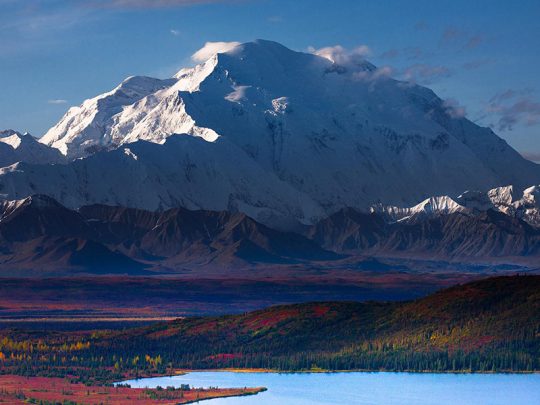
Climb Denali by the West Buttress, 23 Days
- Height (m)
- 6193
- Duration
- 21 день
- Difficulty
- Average
- Continent
- North America
- Children
- No
- Accommodation
- There are tents
-
 3,500 $
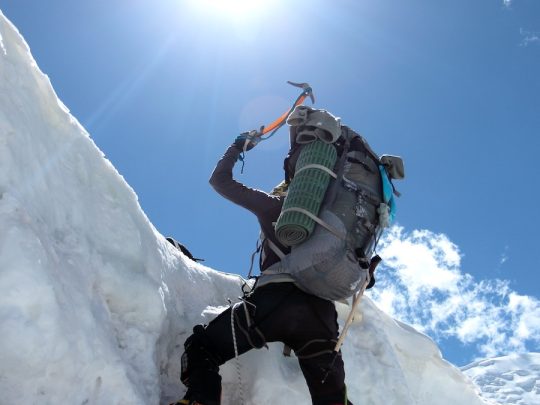
Climb Elbrus from the West, 11 Days
-
 1,960 $
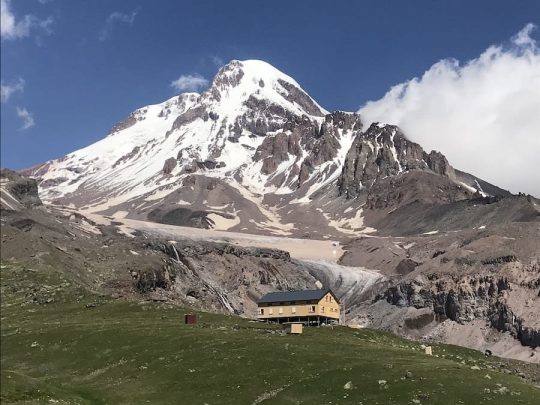
Climb Kazbek from the South, 5033 m — 8 Days in Georgia
-
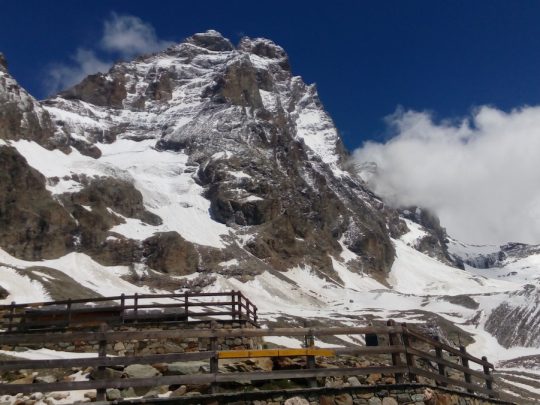 5,238 $
Climb the Matterhorn, 4478 m — 8-Day Guided Ascent