- Guides
- B2B
-
#19607 (no title)
-
#15972 (no title)
- Climb Elbrus Individually
- Climb Elbrus from the South, 9 Days
- Climb Elbrus from the South, 7 Days
- Climb Elbrus from the South with Oxygen
- Climb Elbrus from the North, 10 Days
- Two Summits of Elbrus, 9 Days
- Elbrus Traverse from South to North, 9 Days
- Elbrus Traverse from North to South, 10 Days
- Cross of Elbrus, South to North, 9 Days
- Cross of Elbrus, North to South, 10 Days
- Climb Kazbek and Elbrus — 10-Day Two-Summit Programme
- Climb Elbrus from the West, 11 Days
- Elbrus by Private Helicopter, 3 Days
- Elbrus Region Holiday and Trekking, 9 Days
- Elbrus Region Holiday, 7 Days
- Tinder Tour: Climbing Mount Elbrus, 9 Days
- Climb Elbrus from the South, 9 Days with Sergey Baranov
-
#15539 (no title)
- Climb Carstensz Pyramid, 8 Days with Helicopter Access
- Climb Mont Blanc, 4810 m — 8-Day Guided Ascent
- Climb the Matterhorn, 4478 m — 8-Day Guided Ascent
- Climb Mount Vinson, 15-Day Antarctic Expedition
- Climb Kosciuszko and Travel in Australia, 7 Days
- Climb Fisht, 2868 m — 3-Day Ascent by the 1B Route
- Climb Mount Wilhelm, 6 Days
-
#15546 (no title)
- Climb Kilimanjaro: the Marangu Route
- Climb Kilimanjaro: the Lemosho Route
- Climb Ararat, 5137 m — 7-Day Classic Programme
- Climb Kazbek from the South, 5033 m — 8 Days in Georgia
- Climb Kazbek and Elbrus — 10-Day Two-Summit Programme
- Climb the Volcanoes of Mexico — Orizaba and Iztaccíhuatl, 9 Days
- Climbing Alpamayo — 16-Day Technical Expedition
- Climbing Margaret Peak (Stanley), 5,109 m
- Climbing Mount Kenya: Point Lenana, 4,985 m
- Climb Dykh-Tau by the North Ridge, 13 Days
-
#15554 (no title)
- Aconcagua Climb — 17-Day Guided Expedition
- Island Peak Climb — 18-Day Expedition
- Climb Mera Peak, 6476 m — 16-Day Hinku Valley Programme
- Climb Ama Dablam, 6812 m — 24-Day Expedition with Island Peak
- Climb Island Peak and Mera Peak — 24-Day Two-Summit Expedition
- Aconcagua and Ojos del Salado — 25-Day Combined Expedition
- Ojos del Salado Climb — 15-Day Expedition
- Climb Chimborazo and Cotopaxi — 14-Day Ecuador Programme
- Climb Huascarán — 8-Day Technical Ascent
- Climb Razdelnaya Peak, 6148 m — 15-Day Pamir Expedition
- Climb Denali by the West Buttress, 23 Days
- #15565 (no title)
- #15572 (no title)
-
#15972 (no title)
-
#19592 (no title)
-
See 8000m
- K2 Base Camp Trek via the Gondogoro La
- Everest Base Camp Trek — 14 Days
- Everest Base Camp via Gokyo Lakes — 15 Days
- Short Everest Base Camp Trek in 10 Days
- Annapurna Circuit and Tilicho Lake Trek
- Manaslu Circuit Trek
- Kanchenjunga Circuit Trek (XXL)
- Kanchenjunga North Base Camp Trek (Short)
- Kanchenjunga from India: the Goecha La Trek in Sikkim
- Makalu Base Camp Trek
- Annapurna Base Camp Trek
- South America
- Asia
- Africa
-
Russia
- Elbrus Region Holiday and Trekking, 9 Days
- Elbrus Region Holiday, 7 Days
- Oshten + Kardyvach — 9-Day Western Caucasus Trek
- Lake Kardyvach — 5-Day Base-Camp Trek
- Route 30: Through the Mountains to the Sea, with Oshten — 4 Days
- Trekking in Arkhyz — 7 Days over the Ayulyu Pass
- Gvandra Trek — 7 Days to the Ullu-Kyol Lakes
- Trekking in Dombai — 7 Days with the Murudzhu Lakes
- Europe
-
See 8000m
-
Adventures
-
Africa
- मोरक्को टूर: उत्तरी अफ्रीका का दिल
- चढ़ाई टूबकल और मोरक्को की संस्कृति
- Eritrea: the Dahlak Archipelago and the Rashaida Nomads
- Rwanda: Mountain Gorillas and the Bisoke Volcano
- Ethiopia: Otherworldly Landscapes and the Peoples of the Omo Valley
- युगांडा टूर: क्वीन्स पार्क और माउंटेन गोरिल्ला
- Tanzania Safari: Serengeti, Ngorongoro and Tarangire
- युगांडा टूर: सफेद गैंडे और पर्वत गोरिल्ला
- Zimbabwe and South Africa: Victoria Falls, Cape Town and the Cape of Good Hope
- Namibia: Etosha National Park and the Himba
- Kenya Safari: the African Big Five
- बोत्सवाना टूर: ओकावांगो डेल्टा और चोब पार्क
- South America
- Asia
-
Africa
- Ski-touring
- VIP
- #19722 (no title)
- About
Climb Elbrus from the South with Oxygen
- Height (m)
- 5642
- Duration
- 2 дня
- Difficulty
- Moderate
- Continent
- Europe
- Children
- From 10 years old
- Accommodation
- Without tents
1820 $
Почему такая цена?
Dates for this tour can be arranged at any time when guides are available.
The minimum age for the oxygen trip is 12.
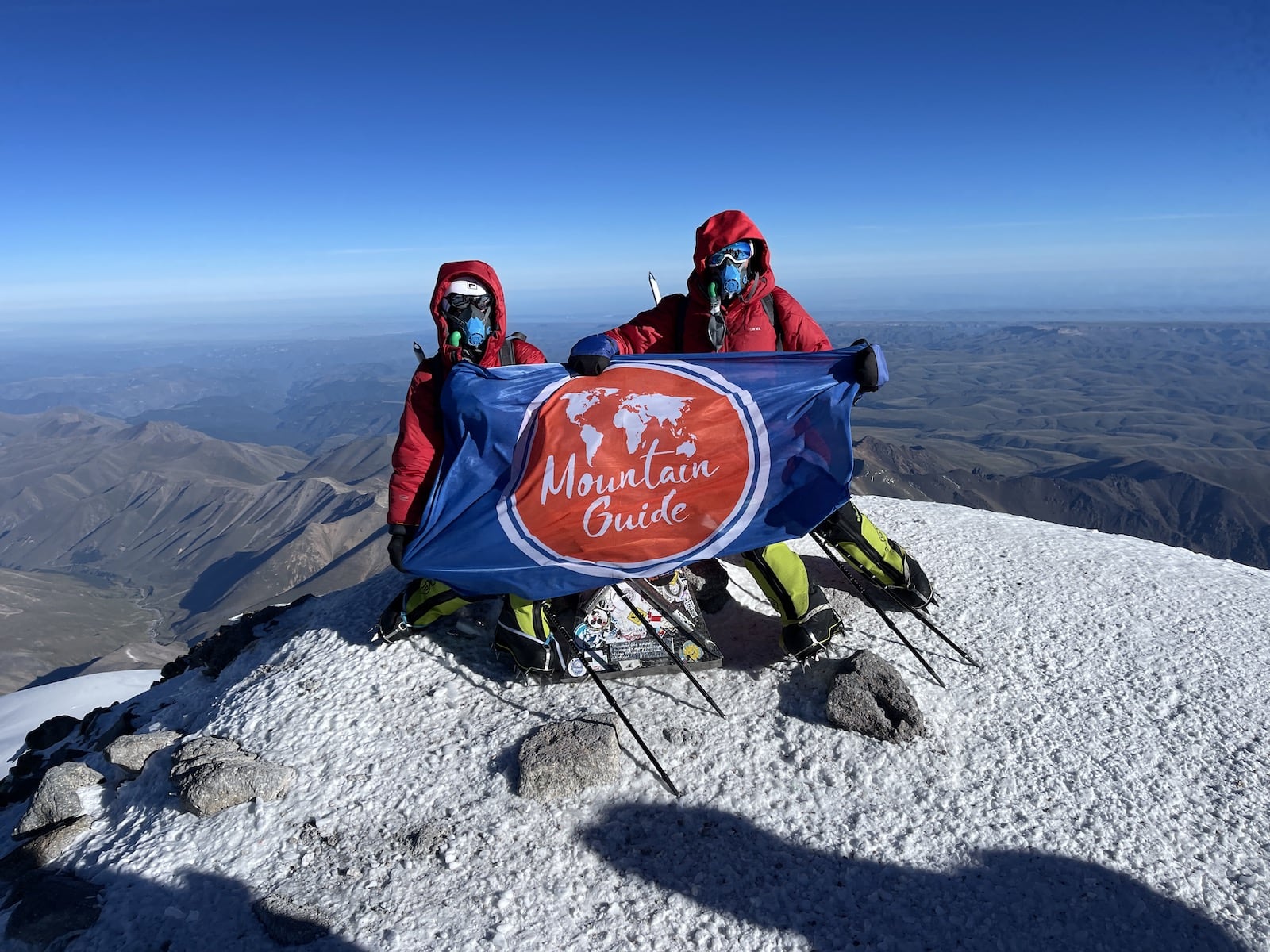
Climbing Elbrus from the south with oxygen is a special trip for participants who want more comfort and a better chance of a successful ascent of the highest summit in Europe. Supplemental oxygen is used during the high-altitude part of the route and helps reduce the effect of thin air on the body.
The format is particularly relevant for participants who are short of time, for those who want the ascent to be as comfortable as possible, and for people who are unsure how well they tolerate altitude. It is important to understand, however, that oxygen does not fully replace acclimatisation, physical preparation and sound organisation of the ascent. The altitude of Elbrus, 5642 m, remains the main factor of difficulty in the itinerary.
The main advantage of climbing Elbrus with oxygen is the ability to reduce the effect of altitude at exactly the most demanding moment of the route: during the climb to the summit and the work above 5000 metres. That lets participants concentrate on technique, pace and the route itself under the direction of experienced guides.
Why climb Elbrus with us? First of all because of the Mountain Guide team. We do not simply write about our guides; unlike many companies, we are not afraid to show you the people who actually lead our groups.
The price includes one summit attempt and one set of oxygen equipment. Additional attempts and additional oxygen sets are not part of the base price.
The comfort of the trip rests on good food at the hotel and at the shelter with fresh meat, fruit and vegetables, our hotel with large rooms and a comfortable dining room, a well-equipped shelter with individual beds in living units, bed linen and a clean toilet, and the option of hiring equipment separately.
We can also arrange a stay in the Elbrus region for family and friends, so that they can spend the time nearby while you are on the mountain.
Would you prefer a private Elbrus ascent with your own group only? We organise private ascents on any dates, with a personal guide and a trip adapted to your experience, pace and objectives. Any Elbrus route can be chosen — south, north or west — with extra acclimatisation days, a different standard of accommodation and a separate trip for accompanying guests.
Important
- Participants carry the food for the high-altitude section themselves. This is a standard feature of how ascents of Elbrus from the south are organised. The food travels up by cable car with the group and is moved onwards by snowcat; it only has to be carried by hand over short sections of no more than 20 m.
- All published departures run with a minimum group size of two participants.
- The price includes one summit attempt and one set of oxygen equipment.
- Any departure from the shelter on summit day counts as a summit attempt.
About the south route ascent with oxygen
This is an exclusive version of the south route ascent of Elbrus with oxygen, for participants who want to climb the highest summit in Europe within a limited amount of time and in the most comfortable format available, using supplemental oxygen.
The defining feature of the trip is the use of supplemental oxygen during the high-altitude part of the route. It helps reduce the effect of thin air on the body and makes the ascent of Elbrus more comfortable for participants who cannot spend a long time in the mountains or who want to reduce the effect of altitude during the main climb.
It is important to understand that climbing Elbrus with oxygen is not a substitute for acclimatisation and preparation. The height of the summit, 5642 m, remains the main factor of difficulty in the itinerary, and every person’s reaction to altitude is individual. Supplemental oxygen is a tool that helps you carry the altitude more easily, but it does not remove the requirements for physical condition, a correct pace and the work of experienced guides.
The trip is built to use participants’ time as efficiently as possible. The preparation, the briefing on using the oxygen equipment, the mountain accommodation and the departure onto the route are all organised around the specifics of a fast ascent of Elbrus by the classic southern route.
Despite the compressed schedule, participants make a full ascent of the West summit of Elbrus, 5642 m, by the classic route from the south. The lead guide decides whether the group can set out, whether it can continue and whether the summit can be reached, taking account of the condition of the group, the weather forecast, the state of the route and the actual conditions on the mountain.
Climbing Elbrus with oxygen suits those who want to achieve the goal of reaching the highest summit in Europe but cannot commit to a long acclimatisation trip. It is also an option for participants who want a more comfortable ascent and less exposure to altitude during the most demanding stage of the route.
Trip for climbing Elbrus from the south with oxygen
Day 1. Arrival in the Elbrus region and preparation for the ascent.
Important: the oxygen trip is an exception to the arrival rules that apply to the standard south route trips. You must choose a flight scheduled to land at Mineralnye Vody airport before 10:00. The group meets at the airport and travels straight to the Elbrus region.
On the day of arrival participants have to complete the drive to the Elbrus region and ride the cable car up to the high-mountain shelter, because the ascent of Elbrus begins during the night between the first and the second day. With a later arrival participants may miss the cable car and be unable to complete the trip as planned. When buying tickets, be sure to allow time for baggage reclaim and for leaving the terminal.
On arrival participants collect the necessary equipment from the hire shop, check their kit and prepare to go onto the route. The group then rides the cable car up the southern slope of Elbrus to the high-mountain shelter.
In September the cable car may be closed for scheduled maintenance. If the cable car cannot be used, the guide decides the onward logistics according to the actual situation; a vehicle is hired for the ascent if necessary. If the cost of the vehicle exceeds the price of a cable car ticket, participants pay the difference.
At the shelter the guides give a detailed safety briefing, explain the specifics of climbing Elbrus with oxygen, go through how the oxygen equipment is used and check that participants are ready for the high-altitude push. Where necessary there is a short session on moving in crampons and working with mountaineering equipment.
After the preparation participants rest before the main departure. Night in the high-mountain shelter.
Day 2. Ascent of the West summit of Elbrus, 5642 m.
The main day of the trip is the ascent of Elbrus with oxygen by the classic southern route to the West summit, 5642 m. The trip is intended for participants who want to make a high-altitude ascent within limited time and to use supplemental oxygen during the most demanding stage of the route.
The departure begins at night, usually between 02:00 and 04:00, depending on the weather, the state of the route and the lead guide’s decision.
Supplemental oxygen is used during the high-altitude part of the ascent and helps reduce the effect of thin air on the body, but it does not replace physical preparation, correct tactics or the supervision of experienced guides.
Where necessary, and by agreement with the group, a snowcat may be used on individual sections of the route. The lead guide decides whether it is used, taking account of the condition of the participants, the weather and the actual conditions on the mountain.
The ascent is led by experienced Mountain Guide’s guides and follows the safety requirements. After the summit the group descends the southern slope of Elbrus and returns to the valley.
This completes the trip for climbing Elbrus with oxygen.
What's included
- Accommodation in the shelter for the number of nights set out in the itinerary
- All transfers on the trip
- The cable car
- Snowcat or snowmobile, ascent and descent
- Meals as set out in the itinerary: lunch and dinner on the first day, breakfast and a packed lunch on the second day
- One summit attempt
- One set of oxygen equipment
- Guides, at a strict ratio of one guide to three clients for the ascent
- Group equipment: rope, ice screws, radio, satellite navigator and other necessary items
- Personal equipment: oxygen equipment, double boots (Lowa, Boreal or La Sportiva), waterproof shell jacket and trousers, down shorts or trousers, headtorch, flask, sunglasses, ski goggles, crampons, heavy down jacket, double mittens, gaiters, sleeping bag, ice axe, trekking poles, harness with lanyards and carabiners, medium rucksack
- Hire of a duffel bag for rented and personal equipment for the duration of the ascent
- Certificate of a successful ascent
What's not included
- Single occupancy
- Other personal equipment
- National park permit, where applicable
- Guides and cooks if the itinerary changes
- Any costs connected with change to the itinerary
- Additional summit attempts and additional oxygen sets beyond those included
- The supplement for an alternative ascent by vehicle if the cable car is closed for maintenance in September and the cost of the vehicle exceeds the price of a cable car ticket
The Elbrus climb from the south with oxygen for private groups
The Elbrus climb with oxygen can be arranged for private groups on your own start dates, where guides are free. We run these trips for small groups of friends, families and corporate teams, adapting the format to participants’ preparation, the time available and the group’s own objectives. For private groups we can offer:
- A dedicated guide
- A change of dates
- Extra days in the Elbrus region
- Preparation before the climb
- Selection and delivery of the equipment you need
- An excursion itinerary and rest days for accompanying non-climbers
If some of the group are climbing Elbrus with oxygen while their companions would rather stay in the valley, we can arrange a comfortable stay for them in the Elbrus region, with accommodation, excursions and an itinerary of their own.
Documents you need for the Elbrus climb with oxygen
To join this trip you will need:
- Passport
- Air or rail tickets
- Medical insurance covering the stated activity, the altitude of the trip and any costs of rescue and evacuation
- We recommend keeping digital copies of your documents on your phone and in cloud storage
- Depending on nationality, foreign participants may need a Russian visa and further documents to enter the country
Where it is needed we provide visa support for foreign participants and supply the documents required for a Russian visa application. We recommend checking the terms of your policy before the trip. It must name mountaineering or climbing, an altitude of at least 5642 m, and cover for search and rescue.
Weather and seasons for the Elbrus climb from the south with oxygen
The best season for climbing Elbrus from the south with oxygen is May to September. That period usually brings the most suitable conditions for climbing Elbrus with supplementary oxygen, though each month has its own character. May is one of the hardest months on Elbrus. Winter conditions persist on the route, with a great deal of snow and low temperatures. The weather can change quickly, with the possibility of strong wind, snowfall and difficult conditions at altitude. May does appeal to experienced participants who are ready for harsher conditions and fewer people on the route. June is the start of the main climbing season on Elbrus. A considerable amount of snow remains at altitude, so parts of the route can still be wintry. In strong wind the summit can feel much colder than the actual temperature, and the conditions call for careful choice of start time. July and August are the most popular months for climbing Elbrus from the south. Settled weather windows are more frequent then, daylight is long, and conditions on the classic route are comfortable. Even in summer, though, at 5642 m there can be frost, strong wind, snowfall and a sudden loss of visibility. September is a good option for participants who prefer a quieter route. Conditions are often still favourable early in the month, but the temperature falls steadily and cold, windy weather becomes more likely. October to April is the winter and shoulder-season period. Climbing Elbrus then is possible only for well-prepared participants with experience of winter mountain routes. Shorter daylight, low temperatures and unsettled weather raise the demands on preparation and equipment considerably. Using supplementary oxygen on Elbrus helps reduce the effect of altitude on the body, but it does not remove the dependence on the weather. Even with oxygen equipment, the lead guide decides whether to set out, whether to continue and whether the summit can be reached, taking account of the forecast, the actual weather, the state of the route and how participants are feeling. At 5642 m conditions can be very different from the weather in the valley. Even with a clear sky in the Elbrus region, the summit can bring strong wind, sub-zero temperatures, cloud and limited visibility. Participants’ safety is always the deciding factor.
Accommodation and meals on the Elbrus climb from the south with oxygen
On the Elbrus climb from the south with oxygen, participants stay in a high-altitude refuge on the south side of Elbrus. Because this is a fast ascent, the time spent in the mountains is limited: the focus is on preparation, rest before setting out, and completing the route safely. The refuge has what a short trip requires: beds, somewhere to store equipment, and facilities for preparing and eating meals. Unlike the standard multi-day climbs, there is no long acclimatisation section here — the trip is built to be as time-efficient as possible. Meals are provided day by day: lunch and dinner on the first day, and breakfast and a packed lunch for the high-altitude day on the second. Participants receive the food and drink provided for in the itinerary in advance, so they can prepare for the night start and keep their strength on the route. On an Elbrus climb with oxygen, using the time before setting out well matters especially. Resting at the refuge, preparing equipment, being briefed on the oxygen equipment and starting early all make the most of a short trip.
Day-to-day conditions on the Elbrus climb from the south with oxygen
During the Elbrus climb from the south with oxygen, participants stay in a high-altitude refuge on the south side of Elbrus before setting out on the classic route. Because this is a fast ascent, the time spent in the refuge is limited — the focus is on preparation, rest before setting out and completing the route safely. The refuge has what you need to prepare and rest before the climb: beds, a toilet, a kitchen and shared areas. Bear in mind that this is mountain accommodation at altitude, not a hotel, so the level of comfort is limited by the demands of a high-altitude route. There is generally mobile coverage on Elbrus. MTS has a signal over much of the southern route as far as the Elbrus saddle, though the quality depends on where you are, on the terrain, on the weather and on how busy the network is. Before the climb, charge all your devices, save anything you need for offline use and check your personal equipment. On a fast ascent, managing your time well, following the guides’ instructions closely and completing the route safely all matter especially.
Страхование
НаверхEquipment and useful extras for the Elbrus climb from the south with oxygen
Скачать PDFRock and Rent has absolutely all the equipment you need for an Elbrus climb with oxygen, all of it good quality. You can fly in wearing shorts, especially if you reserve it all in advance. We chose every item against one factor only: how well it suits conditions on Elbrus, where we have been leading since 2001.
We put a great deal of care into this list; between them the company’s guides have run several thousand ascents, and we do not think there is anything superfluous in it.
Some of the equipment for an Elbrus climb can be hired separately from Rock and Rent. The specific models, availability, hire agreement, payment and correspondence are settled directly with the hire shop. Documents:
- Passport
- Air or rail tickets
- Medical insurance
- Voucher (for foreign nationals)
Personal equipment:
- Rucksack, 30-40 litres
- Duffel bag, 80-100 litres
- Sleeping bag with a comfort rating of 0 to +10 °C from June to September inclusive, and -10 to -20 °C from October to May inclusive
- Trekking poles, which must have baskets of at least 70 mm
- Crampons
- Classic ice axe, with 2-3 m of 5-6 mm accessory cord for clipping to your harness
- Climbing harness
- Helmet
- Three karabiners of them, ideally large ones, which are noticeably easier to handle in mittens
- Cow’s-tail lanyards
- Oxygen equipment (if you are using your own)
Clothing and footwear:
- Is downhill ski clothing suitable for Elbrus?
- Double or triple mountaineering boots, plastic or leather. Single boots are acceptable if used with an overboot (not to be confused with a gaiter)
- Waterproof shell: jacket and trousers, with a membrane rated 10,000/10,000 or better
- Fleece top and bottoms
- Base layer, top and bottoms
- A thick, warm down jacket with a hood; one suitable for Elbrus normally weighs upwards of 700 grams
- Warm mittens
- Thick gloves (ski gloves)
- Thin gloves (fleece)
- Bandana (as well as sun protection in the valley, it can keep your throat or face warm in the cold)
- Warm hat
- Warm trekking socks for summit day
Other items:
- LED head torch with at least 12 hours of battery life
- Sunglasses, category 3-4, which must shield the eyes completely from side light
- Ski goggles, lens category 1-2 (for bad weather, not for good)
- Vacuum flask, 1 litre, preferably without a push-button lid
- Windproof face mask for the lower face (a scarf will do at a pinch)
- Branded sun cream, SPF 30-50 (whatever you may read, in practice the difference between 30 and 50 is negligible)
- SPF 15 lip balm
- Personal first-aid kit
- Elastic bandage and/or a support brace
- Gaiters (not compulsory, but they can be needed, especially in May and June)
- Chemical hand warmers (not compulsory, but they can be very useful)