- Guides
- B2B
-
#19607 (no title)
-
#15972 (no title)
- Climb Elbrus Individually
- Climb Elbrus from the South, 9 Days
- Climb Elbrus from the South, 7 Days
- Climb Elbrus from the South with Oxygen
- Climb Elbrus from the North, 10 Days
- Two Summits of Elbrus, 9 Days
- Elbrus Traverse from South to North, 9 Days
- Elbrus Traverse from North to South, 10 Days
- Cross of Elbrus, South to North, 9 Days
- “उत्तर से क्रॉस” कार्यक्रम के अनुसार माउंट एल्ब्रस पर चढ़ना
- Climb Kazbek and Elbrus — 10-Day Two-Summit Programme
- Climb Elbrus from the West, 11 Days
- हेलीकॉप्टर द्वारा एल्ब्रस
- Elbrus Region Holiday and Trekking, 9 Days
- Elbrus Region Holiday, 7 Days
- एल्ब्रस क्लाइम्बिंग टिंडर टूर
- Climb Elbrus from the South, 9 Days with Sergey Baranov
- #15539 (no title)
-
#15546 (no title)
- Climb Kilimanjaro: the Marangu Route
- Climb Kilimanjaro: the Lemosho Route
- Climb Ararat, 5137 m — 7-Day Classic Programme
- Climb Kazbek from the South, 5033 m — 8 Days in Georgia
- Climb Kazbek and Elbrus — 10-Day Two-Summit Programme
- मेक्सिको में ज्वालामुखी चढ़ना
- Climbing Alpamayo — 16-Day Technical Expedition
- चढ़ाई मार्गरेट पीक (स्टेनली)
- Climbing Mount Kenya: Point Lenana, 4,985 m
- Climb Dykh-Tau by the North Ridge, 13 Days
-
#15554 (no title)
- Aconcagua Climb — 17-Day Guided Expedition
- Island Peak Climb — 18-Day Expedition
- Climb Mera Peak, 6476 m — 16-Day Hinku Valley Programme
- Climb Ama Dablam, 6812 m — 24-Day Expedition with Island Peak
- Climb Island Peak and Mera Peak — 24-Day Two-Summit Expedition
- Aconcagua and Ojos del Salado — 25-Day Combined Expedition
- Ojos del Salado Climb — 15-Day Expedition
- चढ़ाई चिम्बोराजो, कोटोपैक्सी
- हुस्करन चढ़ाई
- Climb Razdelnaya Peak, 6148 m — 15-Day Pamir Expedition
- Climb Denali by the West Buttress, 23 Days
- #15565 (no title)
- #15572 (no title)
-
#15972 (no title)
-
#19592 (no title)
-
See 8000m
- K2 Base Camp Trek via the Gondogoro La
- Everest Base Camp Trek — 14 Days
- Everest Base Camp via Gokyo Lakes — 15 Days
- एक हफ्ते में एवरेस्ट पर ट्रेकिंग
- Annapurna Circuit and Tilicho Lake Trek
- Manaslu Circuit Trek
- Kanchenjunga Circuit Trek (XXL)
- Kanchenjunga North Base Camp Trek (Short)
- Kanchenjunga from India: the Goecha La Trek in Sikkim
- मकालू बेस कैंप के लिए ट्रेकिंग
- अन्नपूर्णा आधार शिविर ट्रेकिंग
- South America
- Asia
- Africa
-
Russia
- Elbrus Region Holiday and Trekking, 9 Days
- Elbrus Region Holiday, 7 Days
- ट्रेकिंग ओश्टेन + कर्डीवाच
- Lake Kardyvach — 5-Day Base-Camp Trek
- Route 30: Through the Mountains to the Sea, with Oshten — 4 Days
- Trekking in Arkhyz — 7 Days over the Ayulyu Pass
- Gvandra Trek — 7 Days to the Ullu-Kyol Lakes
- Trekking in Dombai — 7 Days with the Murudzhu Lakes
- Europe
-
See 8000m
-
Adventures
-
Africa
- मोरक्को टूर: उत्तरी अफ्रीका का दिल
- चढ़ाई टूबकल और मोरक्को की संस्कृति
- इरिट्रिया टूर: दहलाक द्वीपसमूह और रशीदा खानाबदोश
- रवांडा टूर: माउंटेन गोरिल्ला और बिसोक ज्वालामुखी
- इथियोपिया टूर: कॉस्मिक लैंडस्केप और ओमो वैली ट्राइब्स
- युगांडा टूर: क्वीन्स पार्क और माउंटेन गोरिल्ला
- Tanzania Safari: Serengeti, Ngorongoro and Tarangire
- युगांडा टूर: सफेद गैंडे और पर्वत गोरिल्ला
- जिम्बाब्वे और दक्षिण अफ्रीका दौरा: विक्टोरिया फॉल्स, केप टाउन और केप ऑफ गुड होप
- नामीबिया टूर: इटोशा पार्क और हिम्बा जनजाति
- केन्या दौरे: पांच बड़े अफ्रीका के
- बोत्सवाना टूर: ओकावांगो डेल्टा और चोब पार्क
- South America
- Asia
-
Africa
- Ski-touring
- VIP
- #19722 (no title)
- About
Ararat Blitz, 5137 m — 3-Day Climb for Acclimatised Participants
- Height (m)
- 5137
- Duration
- 3 дня
- Difficulty
- Moderate
- Continent
- Europe
- Children
- No
- Accommodation
- There are tents
1100 $
Почему такая цена?
Тур временно недоступен
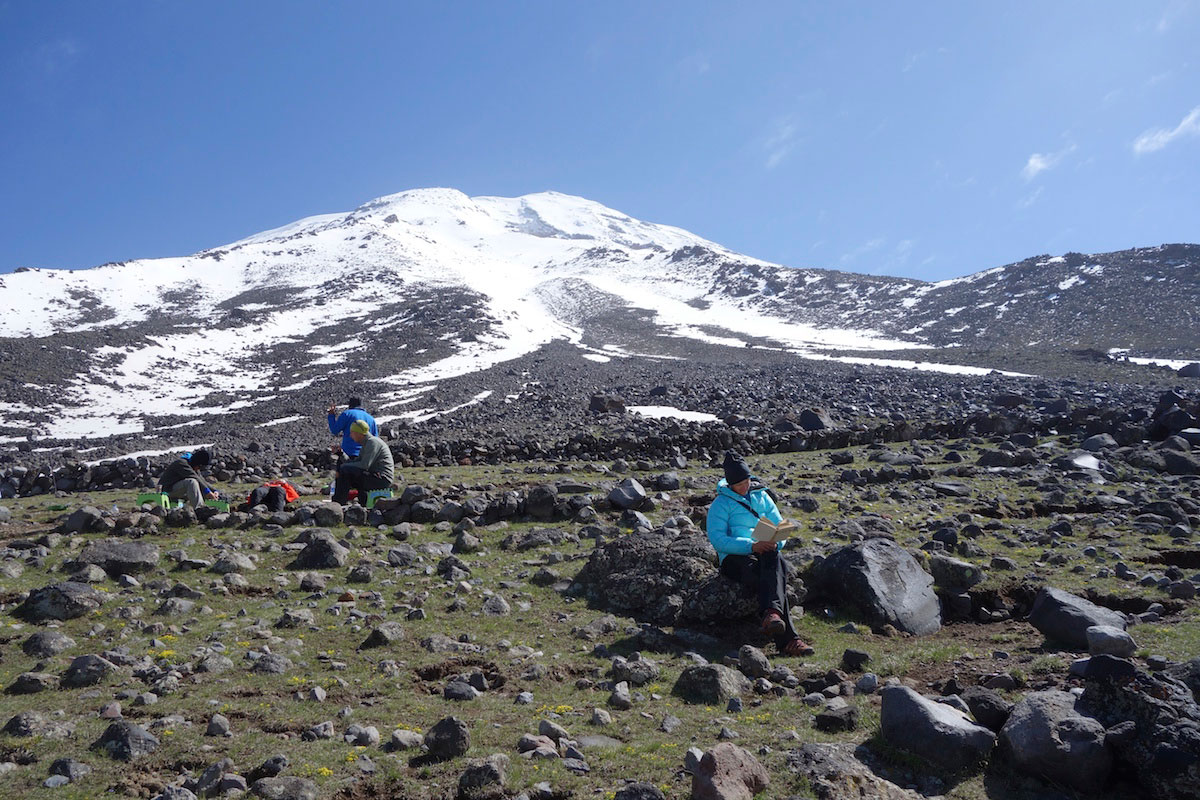
The Ararat blitz — a three-day accelerated programme for experienced or recently acclimatised participants. On day one the group climbs to the camp at 3340 m, on day two it goes for the summit of Ararat at 5137 m, and on day three it returns to the valley and to Igdir airport.
This is not a shortened programme for beginners. The route contains no acclimatisation excursion and no reserve day, so a participant must arrive with current high-altitude acclimatisation, tolerate a long effort confidently and be ready for a rapid gain and loss of altitude.
The blitz is convenient to use after an ascent of Elbrus or Kazbek, while the acclimatisation you gained is still with you. If you have no high-altitude experience, or enough time has passed since your last summit, compare this with the classic seven-day ascent of Ararat, which schedules a staged acclimatisation excursion to 4200 m and a reserve day, neither of which this format includes.
- Three days from the meeting at Igdir airport to the return
- The summit of Ararat, 5137 m
- A format for a long weekend after another high-altitude programme
- Tented nights at the camp at 3340 m
- Horses to carry up to 15 kg of agreed baggage
- No more than 4 participants per assistant guide on summit day
- A combination with Elbrus or Kazbek without losing acclimatisation
Before booking, the guide assesses your recent high-altitude experience, your fitness and how long ago your previous acclimatisation was. Good endurance on its own does not protect you from altitude illness.
Important
- For a group of up to 3 people the programme is led by a local guide according to the tariff chosen
- For a group of 4 people or more the programme is led by a Mountain Guide team guide
- The price differs between the two group sizes
- The programme contains no separate acclimatisation and no reserve day
- Reaching the summit depends on the weather, the state of the route and how the participant is feeling, and is not guaranteed
- Mountain Guide does not sell air tickets and does not process visas
About the Ararat blitz
Ararat is the highest summit in Turkey and a stratovolcanic massif of the Armenian Highlands. Greater Ararat is 5137 m high. The mountain is known as the place where, according to the biblical tradition, Noah’s Ark came to rest.
The classic way up Ararat requires no difficult rock climbing, but the blitz format turns a technically accessible route into a serious high-altitude task. Between the camp at 3340 m and the summit there is almost 1800 m to gain, and then the same distance to descend back to that camp. The main effort falls on a single long day, and there is almost no time for adaptation or recovery.
In the ordinary seven-day programme participants first sleep at 3340 m, make an acclimatisation excursion to 4200 m, return lower down and only then move to the high camp. The blitz has none of those stages. On the very first day after the flight the group climbs to camp, and the following night it sets off for the summit.
The programme is therefore intended for people who have recently been above 4000–5000 m and have kept that acclimatisation, or who have a confirmed high-altitude record and have agreed their participation with Mountain Guide. Isolated successes without acclimatisation are not a reason to recommend that tactic to anyone else.
A sound strategy is to place the Ararat blitz after another summit in the same journey, or soon after it. Combining it with Elbrus or Kazbek allows you to use the adaptation you have already gained, but it requires a separate calculation of flights, of recovery time and of each participant’s condition.
The upper part of the route crosses snow and ice. Whether crampons and an ice axe are needed is decided by the actual state of the slope, not by the calendar alone. Boots, crampons, ice axe, sleeping bag and warm layers must all be agreed before departure.
An early start helps you cross the snow section before the warmth of the day. Once the sun is on it the snow can soften and noticeably increase the effort of the descent. Strong wind, precipitation, poor visibility, a lagging pace or signs of altitude illness may all be reasons to turn around.
The guide sets the time of departure, the pace and the turnaround times. The decision to continue the climb is taken in the light of the weather, the state of the route and how everyone is feeling, and a safe return takes priority over the summit.
If your high-altitude experience is not sufficient, choose the classic programme with acclimatisation instead. Participation in either format requires mountaineering insurance covering an altitude of at least 5137 m, search and rescue and emergency evacuation.
Ararat blitz programme, 3 days
Day 1. Arrival in Igdir and the move to the camp at 3340 m.
Participants fly independently to Igdir airport, where a member of the team meets the group. Once the baggage is collected the transfer to Ararat begins, followed by the walk up to the camp at 3340 m. The guide checks equipment, assesses how everyone is feeling and compares the high-altitude experience you declared with your actual condition. The blitz format does not create acclimatisation in a day: admission assumes recent high-altitude experience and is confirmed by Mountain Guide in advance of booking. After settling in, participants have dinner, prepare clothing, crampons, ice axe and headtorch, and try to conserve energy before the night start. Night in tents.
Day 2. Ascent of Ararat, 5137 m.
The group sets off early in the morning. The start time and the tactics are set by the guide, taking into account the weather, the state of the snow and ice, the pace and how the participants are feeling. On the upper part of the route crampons and an ice axe may be used. A participant is cleared to continue the attempt if they hold a safe pace, follow the guide’s instructions, work confidently with the agreed equipment and pass the checkpoints without signs of a dangerous deterioration. Reaching the summit is not guaranteed: at any sign of altitude illness, in unsafe weather or if the group falls behind the control times, the guide will decide to turn around. After the attempt the group descends to the camp at 3340 m, recovers and prepares to leave the mountain. Night in tents.
Day 3. Descent to the village of Eli and the end of the programme.
After breakfast the group strikes camp and descends to the village of Eli. The task of the day is to finish the route safely after the effort of summit day, so the pace of the descent is set by the guide and it matters that participants stay attentive until the walking section is over. At the vehicles the baggage is handed over to the local team, after which the group leaves for Igdir airport. The departure time is set by the schedule of the agreed flight and the margin needed for the journey and for check-in. At the airport participants check in themselves and the programme ends.
What the Ararat blitz price includes
- Guiding — for a group of 4 people or more, a Mountain Guide team leader; for a group of up to 3 people, a local guide according to the tariff chosen
- Local assistant guides on summit day — no more than 4 participants per guide
- Group transfers on the route Igdir – Ararat – Igdir
- Meals as set out in the programme, from dinner on the day of arrival to breakfast on the day of departure
- All the permissions and registrations required for the route
- Tents for the two nights during the mountain part
- Horses to carry the group equipment and up to 15 kg of personal baggage per participant
What the Ararat blitz price does not include
- International and domestic air tickets to Igdir and back
- A visa and any other entry documents for Turkey, where these are required for your nationality
- Personal climbing and trekking equipment
- Medical insurance covering a high-altitude ascent to 5137 m
- The costs of medical assistance, search and rescue and evacuation that are not covered by your insurer
- Personal expenses, including drinks, communications and shopping
- Additional costs if a participant ends the climb early or separates from the group
- Costs arising from delayed or cancelled flights, unfavourable weather or a forced change to the schedule
Страхование
НаверхEquipment.
Скачать PDFदस्तावेज़:
- पासपोर्ट
- हवाई जहाज़ के टिकट
- चिकित्सा बीमा
व्यक्तिगत साजो-सामान:
- बैकपैक 30–50 लीटर
- स्लीपिंग बैग, आरामदायक तापमान +10°C या उससे कम
- मैट (कैरिमैट)
- ट्रेकिंग पोल
- क्रैम्पॉन (काँटे)
- आइस एक्स (आइस ऐक्स)
कपड़े और जूते:
- ट्रेकिंग बूट्स जिन पर क्रैम्पॉन लगाए जा सकें
- स्नीकर्स
- वॉटरप्रूफ परत – जैकेट और पैंट (5000/5000 मेम्ब्रेन से लेकर Gore-Tex तक के विकल्प उपलब्ध हैं)
- फ्लीस सूट
- थर्मल अंडरवियर (ऊपर और नीचे)
- डाउन जैकेट
- मोटे दस्ताने
- पतले दस्ताने
- बैंडाना / बफ (घाटी में धूप से बचाव के लिए, और ठंड में गर्दन या चेहरे को ढकने के लिए)
- टोपी
- शिखर दिवस के लिए गर्म ट्रेकिंग मोज़े
अन्य:
- हेडलैम्प (एलईडी)
- धूप के चश्मे
- स्की गॉगल्स
- थर्मस – 1 लीटर (ढक्कन पर बटन के बिना होना बेहतर है)
- चेहरे के निचले हिस्से के लिए विंडप्रूफ मास्क (इसे स्कार्फ से भी बदला जा सकता है)
- गेटर्स
- सनस्क्रीन और लिप बाम
- केमिकल हीट पैक (अनिवार्य नहीं, लेकिन बहुत उपयोगी हो सकते हैं)
- व्यक्तिगत फर्स्ट-एड किट
- इलास्टिक बैंडेज और/या सपोर्ट ब्रेस