- Guides
- B2B
-
#19607 (no title)
-
#15972 (no title)
- تسلق البروس بشكل فردي
- تسلق جبل البروس من الجنوب 9 أيام
- تسلق جبل البروس من الجنوب ، 7 أيام
- تسلق جبل البروس من الجنوب بالأكسجين
- تسلق جبل البروس من الشمال
- تسلق قمتي إلبروس
- تسلق جبل البروس ، اجتياز من الجنوب إلى الشمال
- تسلق جبل البروس ، اجتياز من الشمال إلى الجنوب
- تسلق جبل البروس وفقا لبرنامج “الصليب من الجنوب”
- تسلق جبل البروس وفقا لبرنامج “الصليب من الشمال”
- تسلق جبل كازبيك + إلبروس
- تسلق جبل البروس من الغرب
- إلبروس بطائرة هليكوبتر
- العطل في منطقة إلبروس ، 9 أيام
- عطلة في منطقة إلبروس ، 7 أيام
- البروس تسلق صوفان جولة
- إلبروس من الجنوب 9 أيام مع سيرجي بارانوف
- #15539 (no title)
- #15546 (no title)
- #15554 (no title)
- #15565 (no title)
- #15572 (no title)
-
#15972 (no title)
-
#19592 (no title)
-
See 8000m
- الرحلات إلى معسكر قاعدة كي 2
- ايفرست قاعدة مخيم الرحلات
- الرحلات إلى إيفرست عبر بحيرات جوكيو
- الرحلات إلى ايفرست في أسبوع
- أنابورنا حلقة الرحلات + بحيرة تيليشو
- رحلة ماناسلو الدائري
- كانغشينجونغا قاعدة مخيم الرحلات
- كانغشينجونغا قاعدة مخيم الرحلات (قصيرة)
- كانغشينجونغا معسكر قاعدة الرحلات (الهند)
- الرحلات إلى معسكر قاعدة ماكالو
- أنابورنا قاعدة مخيم الرحلات
- South America
- Asia
- Africa
- Russia
- Europe
-
See 8000m
-
Adventures
-
Africa
- جولة المغرب: قلب شمال أفريقيا
- تسلق توبقال وثقافة المغرب
- جولة إريتريا: أرخبيل دهلك ورشيدة البدو
- جولة رواندا: الغوريلا الجبلية وبركان بيسوك
- جولة إثيوبيا: المناظر الطبيعية الكونية وقبائل وادي أومو
- جولة أوغندا: كوينز بارك والغوريلا الجبلية
- جولة تنزانيا: رحلات السفاري سيرينجيتي ونجورونجورو وتارانجيري
- جولة أوغندا: وحيد القرن الأبيض والغوريلا الجبلية
- جولة زيمبابوي وجنوب إفريقيا: شلالات فيكتوريا وكيب تاون ورأس الرجاء الصالح
- جولة ناميبيا: حديقة إيتوشا وقبائل هيمبا
- جولة كينيا: الخمسة الكبار في أفريقيا
- جولة بوتسوانا: دلتا أوكافانغو وتشوبي بارك
- South America
- Asia
-
Africa
- Ski-touring
- VIP
- #19722 (no title)
- About
Everest Base Camp Trek — 14 Days
- Height (m)
- 5645
- Duration
- 14 дней
- Difficulty
- Moderate
- Continent
- Asia
- Children
- From 14 years old
- Accomodation
- Without tents
2130 $
Почему такая цена?
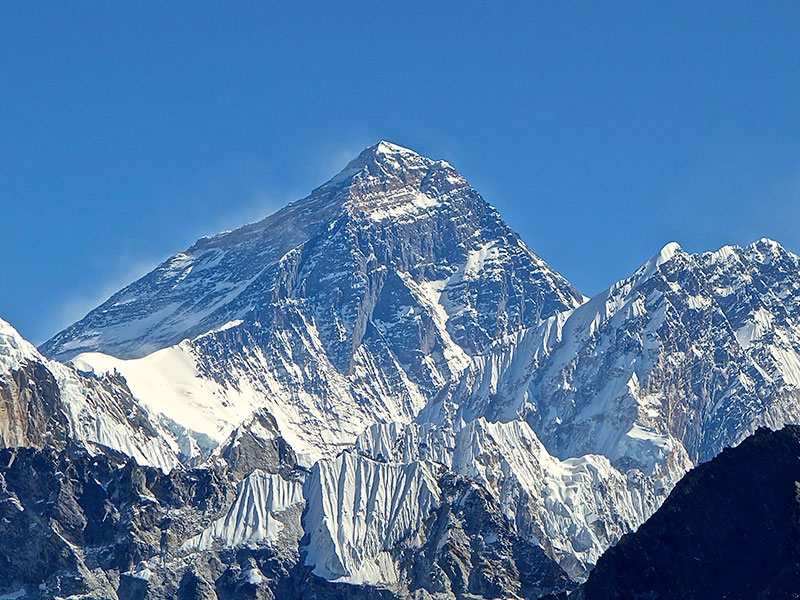
The Everest Base Camp trek is the classic route through the Khumbu valley for anyone who wants to see the highest mountain on earth, the Khumbu glacier and the main peaks of the region without technical climbing. Over 14 days the group walks from Lukla through Namche Bazaar, Pangboche, Pheriche and Lobuche to Everest Base Camp, and then climbs the viewpoint summit of Kala Patthar.
- Everest Base Camp at 5364 m
- Kala Patthar, 5645 m — the main viewpoint of the route
- Acclimatization day in Namche Bazaar
- Views of Everest, Lhotse, Nuptse, Ama Dablam and the Khumbu glacier
- Accommodation in mountain lodges and two nights in a 4* hotel in Kathmandu
- Mountain Guide expedition leader in groups of 4 participants or more
- Nepali guide, permits and group equipment as set out in the programme
The route requires no rock climbing or rope skills, but it cannot be called easy. You need good endurance, readiness for several days above 4000 m and discipline about pace, drinking and acclimatization.
Programme price — $2,130. The price is fixed in US dollars.
Acclimatization is built up step by step. After the first night below Lukla the group climbs to Namche Bazaar, spends an extra day there and only then continues to gain altitude. Higher up, the guide assesses condition, pace and any signs of altitude illness every day. Reaching Base Camp and Kala Patthar is not guaranteed: the guide decides whether to continue or to turn around, and safety takes priority over the result.
The main objective of the route is Everest Base Camp at 5364 m. The summit of Everest itself is hidden from there by the terrain, which is why the programme includes a separate ascent of Kala Patthar, 5645 m, one of the most recognisable viewpoints over Everest, Nuptse, Lhotse, Pumori and the Khumbu glacier.
Important:
- International air tickets, the flights and transfers connected with Lukla, meals on the trek and personal porter services are paid separately
- Flights to Lukla depend on the weather and can be delayed, so the return international flight must be planned with a margin
- The time and the departure airport for the Lukla flight are confirmed before the trip in line with current logistics
- Mountain Guide does not sell air tickets and does not arrange visas
- Hotel check-in and check-out follow the rules of the chosen property; early check-in and late check-out are confirmed separately
If you have more time and want a harder route, consider the trek to Everest via the Gokyo Lakes and the Cho La pass. Published groups are listed in the Mountain Guide calendar.
About the Everest Base Camp trek
The classic trek to Everest Base Camp runs on the Nepali side of the Himalaya, in the Khumbu region. After the mountain flight to Lukla the route follows the Dudh Koshi, crosses suspension bridges, passes through Sherpa settlements and enters Sagarmatha National Park. Namche Bazaar is the first important acclimatization step, and higher up the trail leads the group gradually on to Pangboche, Pheriche, Lobuche and Gorak Shep.
The main objective of the route is Everest Base Camp at 5364 m. The summit of Everest itself is hidden from there by the terrain, so the programme includes a separate ascent of Kala Patthar, 5645 m. That point gives one of the most recognisable views of Everest, Nuptse, Lhotse, Pumori and the Khumbu glacier.
This is a high-altitude walking route, not a mountaineering ascent. Crampons, an ice axe and a harness are not required on the standard programme. The main difficulties come from altitude, long days on the trail, cold, rocky ground and accumulated fatigue. Regular endurance training is essential, and experience of multi-day hiking is desirable, though with good preparation this programme can be your first Himalayan trek.
Acclimatization is built up in sequence: after the first night below Lukla the group climbs to Namche Bazaar, spends an additional day there and only then continues to gain altitude. On the upper part of the route the guide assesses condition, pace and any signs of an altitude reaction every day, and it is worth reading up on the prevention of altitude sickness before you travel. Reaching Base Camp and Kala Patthar is not guaranteed: the guide decides whether to continue or to turn the group around, and safety matters more than a sporting result.
The classic programme suits participants who want the full ground logic of the route and a gradual introduction to the Khumbu. If you have less time or want a more demanding route, other formats exist, including the trek to Everest via the Gokyo Lakes and the Cho La pass.
A Mountain Guide expedition leader accompanies groups of 4 participants or more. In a small group of up to 3 people the route is run with a Nepali guide according to the confirmed rate. The composition of the team and the language of the guiding are fixed before booking.
Everest Base Camp trekking programme
Day 1. Arrival in Kathmandu.
Participants fly to Kathmandu international airport independently. A team representative meets the group and arranges the transfer to the hotel. After check-in there is an introduction to the guide, a check of personal equipment and a route briefing. This day is needed to recover from the flight and to settle organisational matters before leaving for the mountains. In the evening, dinner in a restaurant serving traditional Nepali cuisine. Night in the hotel.
Day 2. Flight to Lukla, 2860 m, and walk to Phakding, 2610 m.
Early in the morning the group drives to Ramechhap airport and flies to Lukla. The exact place and time of departure are confirmed before the trip, because flight logistics depend on current regulations and on the weather. Once the baggage has been collected, the walking part of the route begins. The first stage passes through the settlements and farms of the Dudh Koshi valley, helps you settle into a working rhythm and ends below the altitude of Lukla, in Phakding. Night in a lodge.
Day 3. Walk from Phakding to Namche Bazaar, 3440 m.
The trail crosses the river several times on suspension bridges and passes through Monjo and the entrance to Sagarmatha National Park. After Jorsale the main climb to Namche Bazaar begins. This is the first physically demanding day and an important test of the group’s pace. On the approach, in clear weather, you may get your first view of Everest. Night in a lodge.
Day 4. Acclimatization in Namche Bazaar, 3440 m.
The group stays for a second night in Namche Bazaar and makes an acclimatization walk with a return to the village. The guide chooses the exact route according to the weather and the condition of the participants. The purpose of the day is to give the body time to adapt before the stages above 3800 m, to check how everyone feels and to avoid gaining altitude too quickly. Free time can be used to explore Namche Bazaar and Sherpa culture. Night in a lodge.
Day 5. Walk to Pangboche, 3928 m.
After breakfast the group continues into the upper part of the Khumbu valley. The stage takes about 5–6 hours and alternates between descents and climbs. As you gain altitude the views of Ama Dablam open up particularly well. The day brings the group close to the 4000 m mark, so rest and attention to how you feel matter after check-in. Night in a lodge.
Day 6. Walk to Pheriche, 4240 m.
The trail emerges into more open high-mountain terrain. The pace stays calm, because the body is still adapting to altitude. On arrival the guide assesses the condition of the participants and explains the tactics for the next stage towards the moraine of the Khumbu glacier. In the evening you need to prepare warm clothing and your drinking system. Night in a lodge.
Day 7. Walk to Lobuche, 4940 m.
The group climbs on to the high plateau and approaches the moraine formations of the Khumbu glacier. The altitude gain becomes more noticeable and recovery takes longer. The main task is to complete the stage without forcing the pace, to conserve energy and to report any change in how you feel to the guide in good time. Night in a lodge.
Day 8. Gorak Shep, 5164 m, and Everest Base Camp, 5364 m.
After the walk from Lobuche the group checks into a lodge in Gorak Shep and rests. Participants then walk out to Everest Base Camp over rocky ground alongside the Khumbu glacier. After reaching the objective and a short stop, the group returns by the same route to Gorak Shep before the weather deteriorates and darkness falls. This is a long day at high altitude, so the guide may change the start time or shorten the walk for safety reasons. Night in a lodge.
Day 9. Ascent of Kala Patthar, 5645 m, and descent to Dingboche.
An early start gives a chance to see Everest in the morning light. The climb to Kala Patthar is not technically difficult, but the thin air makes it a slow and demanding effort. The guide decides whether to set out and how high to go, taking account of the weather and the condition of the participants. After descending to Gorak Shep the group continues down to Dingboche, where the lower altitude helps recovery. Night in a lodge.
Day 10. Walk from Dingboche to Pangboche.
The descent continues down the now familiar valley. After several nights at high altitude walking becomes easier, but the rocky trail and accumulated fatigue still call for care. The day is used to lose altitude safely and to recover after the walk to Base Camp and Kala Patthar. Night in a lodge.
Day 11. Walk to Namche Bazaar.
The route returns to the greener part of the Khumbu. The stage takes about 5–6 hours and includes climbs as well as descents, so the group keeps an even pace. In Namche Bazaar there is time to rest before the final walking stage. Night in a lodge.
Day 12. Walk from Namche Bazaar to Lukla.
On the familiar trail the group descends to the Dudh Koshi, crosses the suspension bridges and returns to Lukla. The stage takes about 4–5 hours. After check-in the guide confirms the flight details and the onward ground logistics. In the evening there is a farewell dinner with the local team. Night in a lodge.
Day 13. Flight to Ramechhap and return to Kathmandu.
In suitable weather the group flies out of Lukla and, after landing, drives to Kathmandu. The arrival time depends on the actual schedule and on the state of the mountain airfield. After checking in to the hotel participants rest; free-time activities are only possible if time allows. Night in the hotel.
Day 14. End of the programme.
Breakfast in the hotel and transfer to the international airport at the agreed time. Participants check in for their flights themselves. We recommend planning the international departure with a margin after the return from Lukla, because delays to mountain flights can change the schedule.
What the Everest Base Camp trek price includes
- Mountain Guide expedition leader in groups of 4 participants or more
- Nepali guide
- Meeting and send-off at Kathmandu airport
- Accommodation in a 4* hotel in Kathmandu — 2 nights
- Breakfasts in Kathmandu
- Accommodation in lodges on the trek
- Group equipment — first aid kit and satellite navigator
- Duffel bag for personal belongings — provided on site
- Arrangement of the permits, passes and entry fees required for the confirmed route
What the Everest Base Camp trek price does not include
- International flights to Kathmandu and back
- Domestic flights Ramechhap — Lukla — Ramechhap — the cost and baggage limits are confirmed before the trip
- Transfers Kathmandu — Ramechhap airport — Kathmandu for the Lukla flights
- Optional helicopter flights — availability and cost are quoted separately
- Nepal visa — $30 for a 15-day visa; the validity matches the length of the programme
- Medical insurance covering trekking to an altitude of at least 5645 m, search and rescue operations and emergency helicopter evacuation
- Single occupancy
- Early check-in and late check-out before or after the programme
- Meals during the trek — approximately $30–50 per day in the lodges
- Personal porter services — $30 per day, including transport. In a trekking group one porter can carry the belongings of two participants
- Tips for the local team
- Costs arising if you leave the programme early for health or personal reasons
- Additional costs caused by flight delays, weather or unavoidable changes to the programme
Страхование
НаверхEquipment.
Скачать PDFالمستندات:
- جواز سفر دولي
- تذاكر الطيران
- تأمين طبي يغطي الإخلاء بالمروحية
المعدات الشخصية:
- حقيبة ظهر 30–50 لترًا
- حقيبة دَفّ (Duffel bag) للأغراض الشخصية
- (يوفرها فريقنا في الموقع)
- كيس نوم بدرجة حرارة راحة -5°С (يفضل -10°С)
- عصي تَسلُّق (Trekking poles) مع حلقات إلزامية
الملابس والأحذية:
- أحذية تَسلُّق (Trekking boots) معالجة جيدًا مسبقًا بمادة مقاومة للماء
- أحذية رياضية (للمدن)
- طبقة عازلة ومقاومة للماء – سترة + بنطال (غشاء ممبران)
- بدلة فليس
- ملابس داخلية حرارية (علوي + سفلي)
- سترة ريش (داون) بغطاء رأس
- قفازات سميكة
- قفازات خفيفة
- باندانا أو باف
- (بالإضافة إلى الحماية من الشمس في الوادي، يمكن استخدامها لتدفئة الرقبة أو الوجه في البرد)
- قبعة
- جوارب تَسلُّق دافئة
أغراض متنوعة:
- مصباح أمامي LED بمدة إضاءة لا تقل عن 12 ساعة
- بطارية متنقلة (Powerbank)
- نظارات شمسية
- معطف مطر
- غطاء مطر لحقيبة الظهر
- ترمس أو قارورة ماء – 1 لتر
- واقيات الساق (Gaiters)
- كريم واقٍ من الشمس SPF 50
- مرهم شفاه واقٍ SPF 10–15
- حقيبة إسعافات أولية شخصية
- رباط ضاغط و/أو دعامة داعمة
- معجون أسنان، فرشاة، صابون، شامبو، شبشب
- منشفة
- ورق تواليت
- (يُباع في النُّزل على طول الطريق)