- Guides
- B2B
-
#19607 (no title)
-
#15972 (no title)
- Climb Elbrus Individually
- Climb Elbrus from the South, 9 Days
- Climb Elbrus from the South, 7 Days
- Climb Elbrus from the South with Oxygen
- Climb Elbrus from the North, 10 Days
- Two Summits of Elbrus, 9 Days
- Elbrus Traverse from South to North, 9 Days
- Elbrus Traverse from North to South, 10 Days
- Cross of Elbrus, South to North, 9 Days
- Cross of Elbrus, North to South, 10 Days
- Climb Kazbek and Elbrus — 10-Day Two-Summit Expedition
- Climb Elbrus from the West, 11 Days
- Elbrus by Private Helicopter, 3 Days
- Elbrus Region Holiday and Trekking, 9 Days
- Elbrus Region Holiday, 7 Days
- Elbrus Dating
- Climb Elbrus from the South, 9 Days with Sergey Baranov
-
#15539 (no title)
- Climb Carstensz Pyramid, 8 Days with Helicopter Access
- Climb Mont Blanc, 4810 m — 8-Day Guided Ascent
- Climb the Matterhorn, 4478 m — 8-Day Guided Ascent
- Climb Mount Vinson, 15-Day Antarctic Expedition
- Climb Kosciuszko and Travel in Australia, 7 Days
- Climb Fisht, 2868 m — 3-Day Ascent by the 1B Route
- Climb Mount Wilhelm, 6 Days
-
#15546 (no title)
- Climb Kilimanjaro: the Marangu Route
- Climb Kilimanjaro: the Lemosho Route
- Climb Ararat, 5137 m — 7-Day Classic Climb
- Climb Kazbek from the South, 5033 m — 8 Days in Georgia
- Climb Kazbek and Elbrus — 10-Day Two-Summit Expedition
- Climb the Volcanoes of Mexico — Orizaba and Iztaccíhuatl, 9 Days
- Climb Alpamayo — 16-Day Technical Expedition
- Climb Margaret Peak (Stanley), 5109 m
- Climb Mount Kenya: Point Lenana, 4985 m
- Climb Dykh-Tau by the North Ridge, 13 Days
-
#15554 (no title)
- Aconcagua Climb — 17-Day Guided Expedition
- Island Peak Climb — 18-Day Expedition
- Climb Mera Peak, 6476 m — 16-Day Hinku Valley Expedition
- Climb Ama Dablam, 6812 m — 24-Day Expedition with Island Peak
- Climb Island Peak and Mera Peak — 24-Day Two-Summit Expedition
- Aconcagua and Ojos del Salado — 25-Day Combined Expedition
- Ojos del Salado Climb — 15-Day Expedition
- Climb Chimborazo and Cotopaxi — 14-Day Ecuador Expedition
- Climb Huascarán — 8-Day Technical Ascent
- Climb Razdelnaya Peak, 6148 m — 15-Day Pamir Expedition
- Climb Denali by the West Buttress, 23 Days
- #15565 (no title)
- #15572 (no title)
-
#15972 (no title)
-
#19592 (no title)
-
Trekking in Nepal: routes to the eight-thousanders
- K2 Base Camp Trek via the Gondogoro La
- Everest Base Camp Trek — 14 Days
- Everest Base Camp via Gokyo Lakes — 15 Days
- Short Everest Base Camp Trek in 10 Days
- Annapurna Circuit and Tilicho Lake Trek
- Manaslu Circuit Trek
- Kanchenjunga Circuit Trek (XXL)
- Kanchenjunga North Base Camp Trek (Short)
- Kanchenjunga from India: the Goecha La Trek in Sikkim
- Makalu Base Camp Trek
- Annapurna Base Camp Trek
- Trekking in South America
- Asia
- Trekking in Africa
-
Trekking in Russia
- Elbrus Region Holiday and Trekking, 9 Days
- Elbrus Region Holiday, 7 Days
- Oshten + Kardyvach — 9-Day Western Caucasus Trek
- Lake Kardyvach — 5-Day Base-Camp Trek
- Route 30: Through the Mountains to the Sea, with Oshten — 4 Days
- Trekking in Arkhyz — 7 Days over the Ayulyu Pass
- Gvandra Trek — 7 Days to the Ullu-Kyol Lakes
- Trekking in Dombai — 7 Days with the Murudzhu Lakes
- Europe
-
Trekking in Nepal: routes to the eight-thousanders
-
Adventure expeditions
-
Trekking in Africa
- جولة المغرب: قلب شمال أفريقيا
- تسلق توبقال وثقافة المغرب
- Eritrea: the Dahlak Archipelago and the Rashaida Nomads
- Rwanda: Mountain Gorillas and the Bisoke Volcano
- Ethiopia: Otherworldly Landscapes and the Peoples of the Omo Valley
- جولة أوغندا: كوينز بارك والغوريلا الجبلية
- Tanzania Safari: Serengeti, Ngorongoro and Tarangire
- جولة أوغندا: وحيد القرن الأبيض والغوريلا الجبلية
- Zimbabwe and South Africa: Victoria Falls, Cape Town and the Cape of Good Hope
- Namibia: Etosha National Park and the Himba
- Kenya Safari: the African Big Five
- جولة بوتسوانا: دلتا أوكافانغو وتشوبي بارك
- Trekking in South America
- Asia
-
Trekking in Africa
- Ski touring and ski mountaineering: chasing freedom in the mountains
- VIP tours
- #19722 (no title)
- About
Climb Alpamayo — 16-Day Technical Expedition
- Height (m)
- 5947
- Duration
- 16 дней
- Difficulty
- Average
- Continent
- South America
- Children
- Not suitable for children
- Accommodation
- Some nights in tents
7200 $
Почему такая цена?
Тур временно недоступен
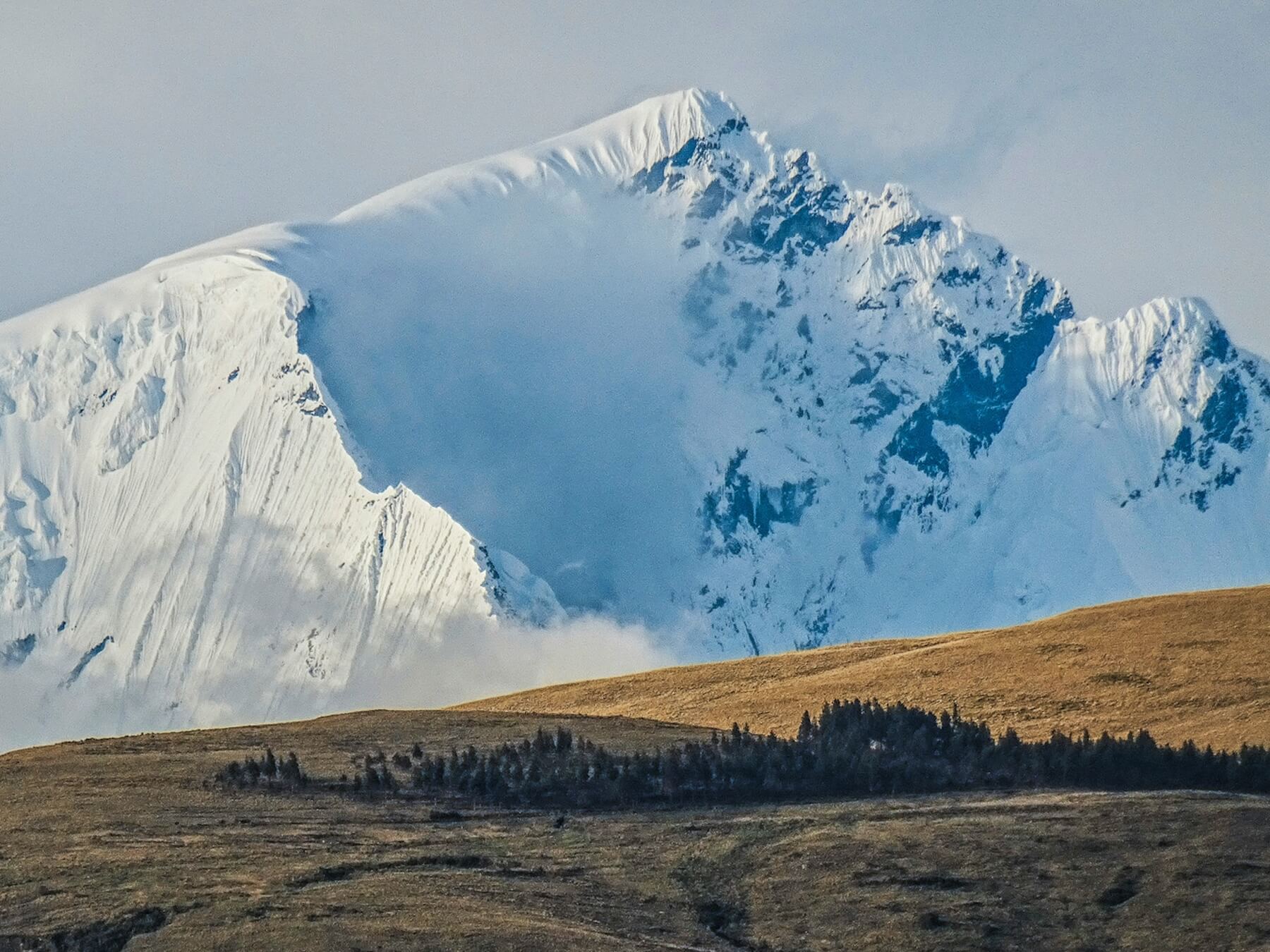
Alpamayo, 5947 m, is one of the most recognisable summits in the Cordillera Blanca. This sixteen-day trip includes acclimatisation around Huaraz, the approach through the Santa Cruz valley, the establishment of base, moraine and col camps, and an attempt on the steep snow-and-ice route.
This is a technical ascent for participants experienced with crampons, ice tools, rope work and multi-day mountain routes. The additional attempt on Quitaraju remains a separate objective and is possible only if there is enough time, if conditions are suitable and if the guides decide to go.
The price covers guiding for groups of four participants or more, the transfers and hotels set out in the itinerary, tented accommodation and meals in the mountains, group equipment, the permit paperwork, porters and pack animals.
Important
- Technical mountaineering experience is mandatory.
- The state of the snow-and-ice route changes from year to year; the guides choose the line of ascent from the conditions on the ground.
Alpamayo is a technical expedition, not a trekking peak. The sixteen days include the drive from Lima to Huaraz, an acclimatisation walk to Laguna Churup, the approach through the Santa Cruz valley, work at the moraine and high camps, and an attempt on the snow-and-ice face. A participant needs confirmed experience of crampons, two tools, fixed ropes and steep descents.
The Quitaraju day is a possible additional objective, not a second guaranteed summit. It is used only after the main objective, once the weather, the condition of the team, the route and the remaining time have been assessed.
About the Alpamayo climb
After arriving in Lima the group travels to Huaraz, makes an acclimatisation walk and then continues through Cashapampa and the Santa Cruz valley to the Alpamayo base camp. The next stage is carrying equipment to the moraine camp, moving up the glacier to the col camp and an attempt on the south-west face.
The route calls for confident use of crampons and ice tools, and for ascending and descending a fixed rope. Snow and ice conditions determine the actual line of the climb. The final choice is made by the guiding team after inspecting the face.
Day 12 is set aside for a possible attempt on Quitaraju or for rest. This is not a guaranteed second summit: the decision depends on the condition of the participants, the weather, the route and the time left after Alpamayo.
Alpamayo lies inside Huascarán National Park. Visits and mountain activity are organised through an authorised operator, and the permit paperwork provided for by the trip is part of the list of included services.
Where the approach ends and the climb begins
The first days give time to travel to Huaraz, make an acclimatisation walk and cover the Santa Cruz valley. From the moraine camp onwards the character of the trip changes: the group carries the technical kit, moves onto the glacier and climbs to the high camp. On the face you have to work confidently with two ice tools, crampons and a fixed rope.
The actual line on the south-west face depends on the state of the snow and ice. The ice conditions, the bergschrund, the crevasses and the danger of falling ice are assessed before the climb. The name of a line and past reports are no substitute for inspecting the route as it is now.
How technical readiness is assessed
- Movement in crampons on steep snow and ice without constant prompting;
- Working with two tools and keeping balance under load;
- Ascending a fixed rope and making a controlled descent;
- Changing anchor points in gloves and in the dark;
- Understanding the guide’s commands and discipline on the rope;
- Experience of self-contained tented camps and of recovering at altitude.
The role of Quitaraju in the itinerary
The published day 12 can be used for an attempt on Quitaraju or for rest. The decision is taken only after the main objective. Fatigue, a late return, the loss of a weather window or the need to bring a camp down safely are all sufficient reasons to give up the second summit.
Porters and pack animals help to organise the approach and the camps, but they do not make the face any easier. Every participant must have their own technical equipment, valid insurance for the stated altitude and activity, and be ready to turn back when the guide decides to.
Alpamayo climbing itinerary, 16 days
Day 1. Arrival in Lima.
The journey begins with the landing in the Peruvian capital. You are met at the airport and transferred to the hotel for a rest after the flight. In the evening the whole team gathers with the guide for a short briefing and dinner. Night in a hotel.
Day 2. Lima to Huaraz.
An early departure from Lima. The road runs past desert plains and climbs steadily into the mountains. After about eight hours of travel we reach Huaraz, a town set among snow-covered peaks, and check into the hotel. Night in a hotel.
Day 3. Acclimatisation walk to Laguna Churup.
The day is given to a first contact with the mountain environment and to gradual acclimatisation. The path leads to Laguna Churup. Back in Huaraz we sort the equipment in detail, ready for what follows. Night in a hotel.
Day 4. Cashapampa and the walk in to Llamacoral camp.
At dawn we travel to the village of Cashapampa, where the walk into the mountains starts. The path crosses valleys with pasture and scrub, with snow peaks in the distance. By evening we reach the Llamacoral camp. Night in tents.
Day 5. Ascent to base camp, 4115 m.
The route continues to climb. The path along the Santa Cruz lakes brings us to base camp at the edge of the forest zone. The camp at 4115 m is our home for the next few days. Night in tents.
Day 6. Acclimatisation carry to the moraine camp, 4877 m.
Today we make an acclimatisation ascent. Glacier fields and steep slopes are part of the way. At 4877 m, at the moraine camp, you leave part of the equipment to lighten the load for the rest of the route, then return to base camp to rest. Night in tents.
Day 7. Rest and rope-work practice.
A day for recovery. A quiet morning, rope technique practice and an unhurried lunch. Night in tents.
Day 8. Base camp to the moraine camp, 4877 m.
Today we leave base camp and climb to the moraine camp. With every step the glaciers come closer. Tents, a hot dinner and rest await at 4877 m. Night in tents.
Day 9. Glacier crossing and the col camp, 5486 m.
One of the hardest days. You cross the glacier, weaving between the crevasses, and climb steep snow slopes. The camp at 5486 m looks out over the surrounding peaks. Night in tents.
Day 10. Summit attempt on Alpamayo, 5947 m.
We start the climb at night by headtorch. Steep ice slopes demanding all your skill and endurance lead towards the summit. From 5947 m you look out over an ocean of snow-covered peaks. After the descent to the col camp, a hot dinner. Night in tents.
Day 11. Rest after the summit attempt.
After the demanding summit push this day is given to rest. Night in tents.
Day 12. Possible ascent of Quitaraju, 6041 m, or a rest day.
For those ready for another challenge, an ascent of Quitaraju is offered. The route is less steep but longer, and the viewpoint at 6041 m is the reward. If you would rather take the day quietly, you can stay in camp and rest. Night in tents.
Day 13. Descent to base camp.
The descent to base camp is easier but no less scenic. The camp meets us with warmth and hot food. Night in tents.
Day 14. Descent to Cashapampa and return to Huaraz.
We descend to the village of Cashapampa and say goodbye to the mountains. In Huaraz a hot shower, a proper bed and a celebration dinner await. Night in a hotel.
Day 15. Return to Lima.
The journey returns to where it began. Night in a hotel in Lima.
Day 16. Departure.
Transfer to the airport and flight home.
What's included
- An experienced Mountain Guide team leader, for groups of 4 participants or more
- Airport meeting and send-off
- Transfers during the trip
- Hotel accommodation, twin rooms, the number of nights set out in the itinerary
- Tented accommodation and meals during the climb
- Group climbing equipment (high-altitude tents, gas, stoves, ropes and so on)
- Preparation of all the permit paperwork required for the climb
- The services of porters and pack animals
What's not included
- International flights
- Visa and other entry documents where these are required by the participant’s nationality
- Medical insurance covering the stated type of activity and the maximum altitude of the trip
- Single occupancy
- Vaccinations
- Early check-in, late check-out and additional nights before or after the trip
- Lunches and dinners in the towns
- Excess baggage charges
- Tips
- Any departure from the itinerary
- Any expenses arising from change to the itinerary
Private groups
A private group can choose the dates and the ratio of guides to participants, and add acclimatisation or reserve days. Adding Quitaraju is considered separately and must not reduce the time held in reserve for the main summit. Before confirmation we check the team’s technical experience, the state of the route and the availability of an authorised operator, guides, porters and pack animals.
Documents you need
- A valid passport
- Medical insurance covering the stated activity and the maximum altitude of the trip
- The details and documents the authorised operator needs to register you with the national park
- Depending on your nationality, a visa may be required
- We recommend keeping digital copies of your documents on your phone and in cloud storage
Entry requirements for Peru and for the route are checked before the trip, against your nationality and the rules in force.
Weather and seasons
The officially recommended season for Huascarán National Park is May to October. From October to April the weather is mainly wet. On the south-west face of Alpamayo the decisive factors remain the actual state of the snow and ice, the temperature, the wind and any precipitation. The choice of line and whether a summit attempt is possible are decided after the route has been inspected. One day after the main attempt may be used for rest or for an additional objective, but it is not a guaranteed weather reserve.
Accommodation and meals
The trip includes hotels in Lima and Huaraz in twin rooms, and tented camps on the approach and during the climb. The number of nights matches the itinerary. Meals on the tented section are included. Lunches and dinners in the towns, single occupancy, early check-in, late check-out and extra hotel nights are paid separately. Tell us about dietary restrictions and allergies in advance.
Facilities on the route
The hotels in Lima and Huaraz offer town-level comfort. On the approach and during the climb the group lives in self-sufficient tented camps. A shower, electricity, charging, internet and mobile signal are not guaranteed on the mountain section. You will need a power bank, spare batteries, a head torch and your own toiletries. Laundry, charging and restocking personal supplies are best finished in Huaraz.
Страхование
НаверхEquipment and useful extras for the Alpamayo climb
Скачать PDF- Passport
- Air tickets
- Medical insurance covering mountaineering
- Rucksack, 50-60 litres
- Sleeping bag with a comfort rating of -20 to -10 °C
- Sleeping mat (self-inflating or foam)
- Trekking poles with wide baskets
- Crampons (steel or aluminium, compatible with your boots)
- Ice axe (classic, with a leash)
- Helmet
- Climbing harness (sit harness)
- Cow’s-tail lanyards with karabiners (screwgate or auto-locking preferred)
- Karabiners (at least 4, two of which must be screwgates)
- Accessory cord (6-7 mm, 2-3 m long, for a prusik knot)
- Ascender
- Descender (a figure of eight or similar)
- Mug, spoon and bowl
- Double or triple mountaineering boots
- Trekking footwear (boots or shoes)
- Waterproof jacket and trousers (membrane rated at least 5,000/5,000, Gore-Tex preferred)
- Fleece jacket and trousers
- Base layer, top and bottoms
- Down jacket with a hood. Thick and warm
- Warm mittens
- Thick gloves
- Thin working gloves
- Bandana or buff
- Warm hat
- Trekking socks (several pairs, including warm ones for the climb)
- Head torch with at least 12 hours of battery life, plus spare batteries
- Sunglasses (category 3-4)
- Ski goggles (for wind protection)
- Vacuum flask (1 litre, preferably with a secure lid)
- Windproof mask or scarf
- Gaiters, to keep snow out
- Sun cream (SPF 50+)
- Lip balm
- Personal first-aid kit
- Elastic bandage and/or a support brace
- Chemical hand warmers (optional)