Acclimatisation on Elbrus is the body’s gradual introduction to altitude before the summit push. It is not built on a single “training session up high”, but on a sequence of ascents, nights spent at different altitudes, rest and close attention to how you feel. Being fit helps you do the work, but it does not protect you from altitude sickness and does not make it safe to skip days.
What changes at altitude
As you go higher, the partial pressure of oxygen falls. The body responds with faster breathing and with other adaptive changes, and those take time. Even so, the most you can do at altitude will still be less than the same person can do lower down.
The CDC Yellow Book 2026 states that the acute phase of acclimatisation is particularly important in the first few days. Individual reactions differ, so good previous experience is useful but is no assurance that you will feel the same on a different schedule and in different conditions.
How the first days of the southern programme are arranged
The nine-day programme from the south spends the second day on Cheget, with an ascent to 3000 m and a return to the hotel. On the third day the group walks to the Maiden’s Braids waterfall and the observatory, up to 3100 m, sleeping in the valley again. These are two successive encounters with altitude without an early night on the slopes of Elbrus.
On the fourth day the group climbs to the hut at 3888 m, settles in and makes a short ascent to 4100 m. The fifth day is planned as an ascent to the Pastukhov Rocks, up to 4700 m. The sixth day is set aside for rest and preparation, and the climb itself is scheduled for the seventh.
Why you climb higher and then come back down
A day ascent above the place you sleep creates a measured load, after which the participant returns lower to rest. It is not a contest for the highest mark reached. Pace, turnaround altitude and duration are set by the guide, according to the plan and the state of the group.
If someone feels unwell, gaining more height is not a treatment. With symptoms of altitude illness you must not hide how you feel, or persuade the group that acclimatisation can be “forced through” by effort.
Why nine days is the baseline option
For someone with no clear record at altitude, a gentler schedule leaves time for two ascents from the valley, the move up to the hut, a separate ascent higher still, and rest. That is why Mountain Guide uses the nine-day southern route as the baseline for a first climb.
The seven-day programme is tighter. It should not be chosen simply because a participant runs fast or wants to save two days of leave. What counts is how they reacted to comparable altitude before, their preparation, and an honest conversation with the operator.
What to watch every day
- Headache, and whether it changes after rest
- Nausea, appetite and the ability to drink
- Unusual weakness, dizziness and coordination
- Sleep quality, and any marked deterioration after a new altitude
- Breathlessness on light effort or at rest
- A sharp drop in your usual capacity for work
The list is not there for diagnosing yourself. Any noticeable symptom is reported to the guide at once. The doctor and the guide assess the whole set of signs, not a single figure for hours, pulse or oxygen saturation.
What does not speed acclimatisation up
A hard training session on the first day, dehydration, alcohol, too little sleep and trying to walk faster than the group produce no useful adaptation. They can make your condition harder to read. You should not take medicines on your own “just in case” on the advice of friends.
If a doctor has prescribed something in advance, the participant needs to know the dose, the contraindications and the plan for taking it before the trip. Tell the operator about significant medical conditions and about medicines that could affect the route.
Does a trip to altitude beforehand help?
Recent nights at a comparable altitude can give useful preliminary adaptation, but the effect depends on the altitude, on how long it lasted and on how long before Elbrus it happened. A trip to the mountains several months earlier does not replace acclimatisation within the main programme.
Do not change the route on your own initiative just because you were at altitude a week ago. Tell the operator the exact heights, the number of nights and how your body reacted. That is information for a decision, not automatic permission to shorten the schedule.
How to behave between ascents
In the valley and at the hut what matters is eating, drinking, drying kit and resting, not adding secret training sessions. A gentle walk is fine if it is in the plan, but an extra hard climb changes the load and stops the guide from reading how your body is responding.
Every morning, and after every ascent, describe your sleep, appetite, headache and capacity for work honestly. Saying “everything is fine” out of fear of losing the summit deprives the group of the information it needs for a safe decision.
The reserve day is not spare
The eighth day of the nine-day programme is designated as a reserve. It gives the programme room for a decision when the weather or the state of the group makes the original schedule unworkable. Having a reserve does not amount to a promise of a second attempt for every participant.
Related programmes
Compare the two southern schedules on their own pages, rather than by the total number of days in the name.
-
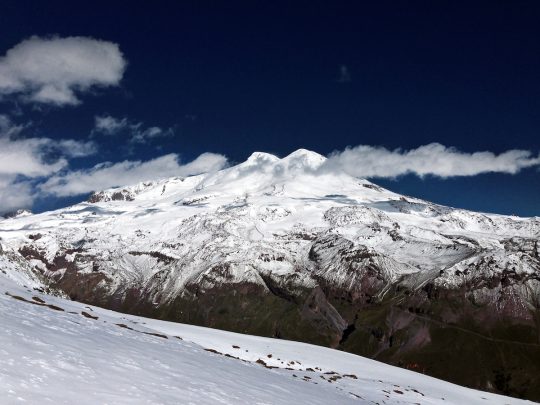 1,450 $
Climb Elbrus from the South, 7 Days
- Height (m)
- 5642
- Duration
- 7 дней
- Difficulty
- Low
- Continent
- Europe
- Children
- Not suitable for children
- Accommodation
- No nights in tents
-
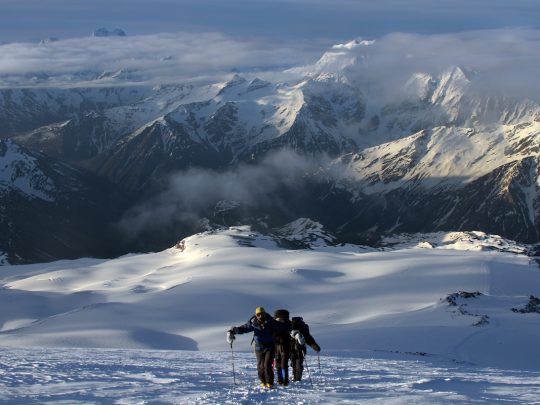 1,770 $
Climb Elbrus from the South, 9 Days
In summary
Acclimatisation calls for gradual height gain, sleep, rest and honest monitoring of symptoms. It cannot be bought with fitness or hurried along by willpower. The choice of schedule can be discussed with Mountain Guide by telephone on +7(988)382-98-44.