- Guides
- B2B
-
#19607 (no title)
-
#15972 (no title)
- Climb Elbrus Individually
- Climb Elbrus from the South, 9 Days
- Climb Elbrus from the South, 7 Days
- Climb Elbrus from the South with Oxygen
- Climb Elbrus from the North, 10 Days
- Two Summits of Elbrus, 9 Days
- Elbrus Traverse from South to North, 9 Days
- Elbrus Traverse from North to South, 10 Days
- Cross of Elbrus, South to North, 9 Days
- Cross of Elbrus, North to South, 10 Days
- Climb Kazbek and Elbrus — 10-Day Two-Summit Programme
- Climb Elbrus from the West, 11 Days
- Elbrus by Private Helicopter, 3 Days
- Elbrus Region Holiday and Trekking, 9 Days
- Elbrus Region Holiday, 7 Days
- Tinder Tour: Climbing Mount Elbrus, 9 Days
- Climb Elbrus from the South, 9 Days with Sergey Baranov
-
#15539 (no title)
- Climb Carstensz Pyramid, 8 Days with Helicopter Access
- Climb Mont Blanc, 4810 m — 8-Day Guided Ascent
- Climb the Matterhorn, 4478 m — 8-Day Guided Ascent
- Climb Mount Vinson, 15-Day Antarctic Expedition
- Climb Kosciuszko and Travel in Australia, 7 Days
- Climb Fisht, 2868 m — 3-Day Ascent by the 1B Route
- Climb Mount Wilhelm, 6 Days
-
#15546 (no title)
- Climb Kilimanjaro: the Marangu Route
- Climb Kilimanjaro: the Lemosho Route
- Climb Ararat, 5137 m — 7-Day Classic Programme
- Climb Kazbek from the South, 5033 m — 8 Days in Georgia
- Climb Kazbek and Elbrus — 10-Day Two-Summit Programme
- Climb the Volcanoes of Mexico — Orizaba and Iztaccíhuatl, 9 Days
- Climbing Alpamayo — 16-Day Technical Expedition
- Climbing Margaret Peak (Stanley), 5,109 m
- Climbing Mount Kenya: Point Lenana, 4,985 m
- Climb Dykh-Tau by the North Ridge, 13 Days
-
#15554 (no title)
- Aconcagua Climb — 17-Day Guided Expedition
- Island Peak Climb — 18-Day Expedition
- Climb Mera Peak, 6476 m — 16-Day Hinku Valley Programme
- Climb Ama Dablam, 6812 m — 24-Day Expedition with Island Peak
- Climb Island Peak and Mera Peak — 24-Day Two-Summit Expedition
- Aconcagua and Ojos del Salado — 25-Day Combined Expedition
- Ojos del Salado Climb — 15-Day Expedition
- Climb Chimborazo and Cotopaxi — 14-Day Ecuador Programme
- Climb Huascarán — 8-Day Technical Ascent
- Climb Razdelnaya Peak, 6148 m — 15-Day Pamir Expedition
- Climb Denali by the West Buttress, 23 Days
- #15565 (no title)
- #15572 (no title)
-
#15972 (no title)
-
#19592 (no title)
-
See 8000m
- K2 Base Camp Trek via the Gondogoro La
- Everest Base Camp Trek — 14 Days
- Everest Base Camp via Gokyo Lakes — 15 Days
- Short Everest Base Camp Trek in 10 Days
- Annapurna Circuit and Tilicho Lake Trek
- Manaslu Circuit Trek
- Kanchenjunga Circuit Trek (XXL)
- Kanchenjunga North Base Camp Trek (Short)
- Kanchenjunga from India: the Goecha La Trek in Sikkim
- Makalu Base Camp Trek
- Annapurna Base Camp Trek
- South America
- Asia
- Africa
-
Russia
- Elbrus Region Holiday and Trekking, 9 Days
- Elbrus Region Holiday, 7 Days
- Oshten + Kardyvach — 9-Day Western Caucasus Trek
- Lake Kardyvach — 5-Day Base-Camp Trek
- Route 30: Through the Mountains to the Sea, with Oshten — 4 Days
- Trekking in Arkhyz — 7 Days over the Ayulyu Pass
- Gvandra Trek — 7 Days to the Ullu-Kyol Lakes
- Trekking in Dombai — 7 Days with the Murudzhu Lakes
- Europe
-
See 8000m
-
Adventures
-
Africa
- मोरक्को टूर: उत्तरी अफ्रीका का दिल
- चढ़ाई टूबकल और मोरक्को की संस्कृति
- Eritrea: the Dahlak Archipelago and the Rashaida Nomads
- Rwanda: Mountain Gorillas and the Bisoke Volcano
- Ethiopia: Otherworldly Landscapes and the Peoples of the Omo Valley
- युगांडा टूर: क्वीन्स पार्क और माउंटेन गोरिल्ला
- Tanzania Safari: Serengeti, Ngorongoro and Tarangire
- युगांडा टूर: सफेद गैंडे और पर्वत गोरिल्ला
- Zimbabwe and South Africa: Victoria Falls, Cape Town and the Cape of Good Hope
- Namibia: Etosha National Park and the Himba
- Kenya Safari: the African Big Five
- बोत्सवाना टूर: ओकावांगो डेल्टा और चोब पार्क
- South America
- Asia
-
Africa
- Ski-touring
- VIP
- #19722 (no title)
- About
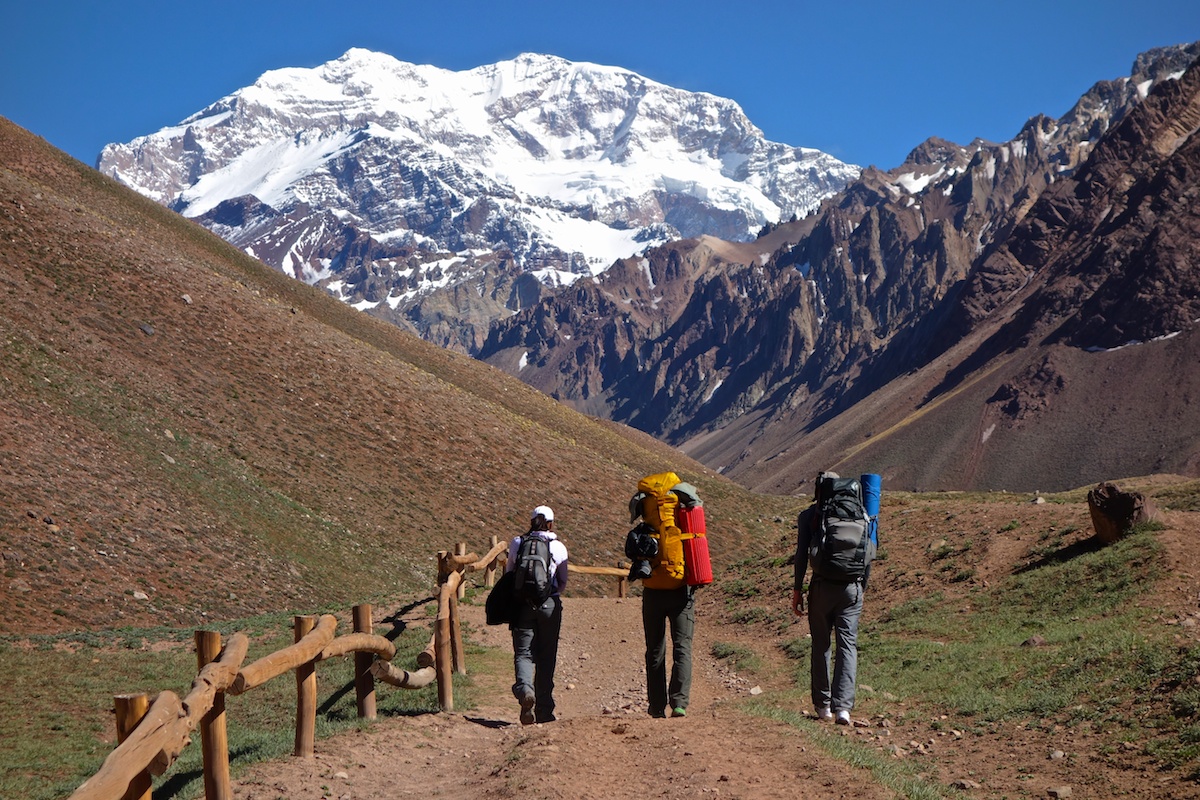
Aconcagua Blitz — 7-Day Climb
- Height (m)
- 6962
- Duration
- 7 дней
- Difficulty
- Moderate
- Continent
- South America
- Children
- Not suitable for children
- Accommodation
- Tented accommodation
- suitable-for-beginners
- No
4000 $
Почему такая цена?
Тур временно недоступен
The Aconcagua Blitz is a seven-day high-altitude module for climbers who are already acclimatised. It is designed for people who worked or climbed above 5500 m immediately before the start and still hold that acclimatisation when they arrive in Mendoza.
The trip moves quickly from the park entrance through Confluencia and Plaza de Mulas to the camps at Nido de Cóndores and Cólera. One reserve day does not compensate for missing preparatory acclimatisation, so every application is reviewed individually against your altitude record and the timing of your previous climb.
The price covers guiding, the stated transfers and accommodation, mules to base camp, and food and fuel for the mountain section. The permit, insurance, porters and personal equipment are paid separately.
If you are choosing between formats, compare this module with the 12-day climb and the 17-day expedition before you apply.
Important
- The trip does not run without fresh acclimatisation.
- No shorter version of the seven-day route is offered.
This is not a self-contained expedition with its own acclimatisation. The seven days are treated as the continuation of a high-altitude trip that finished immediately beforehand. To apply you need dates, the altitudes of your daily outings and of your sleeping camps, notes on how you felt, and your travel plan to Mendoza. If a noticeable pause at low altitude appears between the two routes, the suitability of this format is reassessed.
Physical strength, a past altitude record or the wish to fit a climb into limited leave are not in themselves grounds for the Blitz.
Aconcagua logistics packages: Aconcagua logistics — up to four full-board days or Aconcagua logistics — up to seven full-board days.
About the Aconcagua Blitz trip
The Blitz uses the classic route through the Horcones valley, Confluencia, Plaza de Mulas, Nido de Cóndores and Cólera. In seven days the group covers the altitudes from the park entrance to 6962 m and returns to Mendoza. That schedule is only possible as the continuation of another high-altitude trip or expedition, without a long pause at low elevation in between.
Before confirming a place, Mountain Guide reviews your maximum altitude reached, the number of nights spent above 4500–5000 m and the interval between that acclimatisation and the start. Strong general fitness without altitude adaptation does not make this format acceptable.
One reserve day exists for limited adjustment of the schedule, not to build acclimatisation from scratch. At every camp the guide assesses each participant and can stop any further gain in altitude.
The Blitz begins before you land in Mendoza
The real preparation for a seven-day trip happens on the previous mountain. It is not enough to have touched a mark above 5500 m: you need to have spent enough time at altitude, recovered properly and travelled on to Aconcagua without losing that adaptation. Two identical entries reading “reached 5600 m” can therefore mean completely different levels of readiness — what counts is the sleeping altitudes, the length of the outing, the symptoms, the pace and the interval before the start.
Routes in Bolivia, Ecuador, on Ojos del Salado or at comparable altitude can all be useful if they finish close to the start of this trip. Each combination is assessed individually. We do not promise acceptance on the strength of a summit name alone.
Why there is no day to “settle in”
After the park entrance the schedule leads straight through Confluencia and Plaza de Mulas to Nido de Cóndores and Cólera. These stages continue an acclimatisation that already exists; they do not create it. The single reserve day is there for limited adjustment because of weather or route conditions, and it cannot substitute for a full high-altitude rotation.
The main risks of choosing a format that is too short
- Overestimating how much acclimatisation survives flights and rest days at low altitude;
- Carrying fatigue over from the previous climb without enough time to recover;
- Confusing good athletic form with tolerance of hypoxia;
- Booking a return flight so tightly that the decision to turn back becomes psychologically harder;
- Leaving boots, crampons and warm clothing unchecked until the day of departure.
What to send us for assessment
We need the name and dates of your previous route, your maximum altitude, your sleeping altitudes, the number of days spent above 4000 m and above 5000 m, notes on any symptoms, how you descended and how you will travel to Mendoza. If the members of a closed group are acclimatised to different degrees, the decision is taken separately for each person.
Departure availability for every Aconcagua format is published in the Mountain Guide calendar.
Aconcagua Blitz itinerary, 7 days
Day 1. Mendoza — Laguna Horcones — Confluencia, 3300 m.
After arrival the Aconcagua permit is issued, then the group transfers to the national park entrance and walks in to Confluencia. The walk takes 2–3 hours. This day does not create acclimatisation from scratch; it continues the altitude adaptation gained before the flight to Mendoza.
Day 2. Confluencia — Plaza de Mulas, 4350 m.
A long day through the wide Playa Ancha valley, usually 8–9 hours. The group moves straight up to the main base camp, so pace and condition are watched particularly closely.
Day 3. Plaza de Mulas — Nido de Cóndores, 5600 m.
A fast move onto the high section of the route. This rate of gain is only possible with confirmed fresh acclimatisation. At Nido de Cóndores the group sets up camp and prepares for the next stage.
Day 4. Nido de Cóndores — Cólera, 6000 m.
The move to the top camp, then rest and preparation for an early start. Equipment, water, clothing and each participant’s condition are checked before nightfall.
Day 5. Summit attempt on Aconcagua, 6962 m.
An early start from Cólera, the summit attempt and the descent back to the top camp. Whether we continue depends on the weather, route conditions, pace and how the team is coping. The Blitz format does not lower the safety requirements and does not guarantee the summit.
Day 6. Reserve day.
The only weather and operational window in the itinerary. It is used at the guides’ discretion and does not replace preparatory acclimatisation.
Day 7. Cólera — Plaza de Mulas — Laguna Horcones — Mendoza.
Descent to base camp, exit from the national park and transfer to Mendoza. After a high-altitude cycle the priority is to lose altitude safely and close the route. Rest and farewell dinner.
What's included
- English-speaking guide throughout the trip
- Mountain guides — one guide for every 3 climbers on summit day
- All transfers listed in the itinerary
- All accommodation listed in the itinerary
- Assistance with obtaining the necessary permits
- Meals as set out in the itinerary; in the towns, breakfast only
- Mules for equipment and food from Puente del Inca (Los Puquios) to Plaza de Mulas and back; personal baggage up to 20 kg
- Base camp at Plaza de Mulas (2 nights)
- Food and fuel for the high camps
- Group first-aid kit
What's not included
- International flights
- Climbing permit, charged separately at the park rate in force at the time of the climb; the amount depends on nationality, route category and season
- Porters
- Personal equipment
- Additional costs arising from any departure from the itinerary
- Medical insurance covering the stated activity and the maximum altitude of the trip
- Personal expenses such as drinks, internet and phone calls, including base-camp services that are paid locally at the rates current on the mountain
Private groups
The Blitz can be arranged for a closed group only once recent acclimatisation has been confirmed for every participant. Private dates are chosen to keep the gap between your previous time at altitude and the start on Aconcagua as short as possible.
The seven-day route is not shortened. Where participants are at different levels, we recommend separate guides or a longer trip.
Documents you need
- A valid passport
- Medical insurance covering the stated activity and the maximum altitude of the trip
- An Aconcagua National Park permit, issued and paid for before you enter the route
- Depending on your nationality, a visa may be required
- We recommend keeping digital copies of your documents on your phone and in cloud storage
Entry requirements for Argentina and for the route are checked before the trip, against your nationality and the rules in force.
Weather and seasons
The Blitz is only scheduled within the official Aconcagua summer season. A single reserve day gives a minimal margin for wind, snow and changes in the state of the route.
If the forecast is poor, the compulsory stages cannot be shortened and you cannot set out against the guide’s decision. If there is no weather window, the summit is called off.
The seasonal detail is gathered in our article on the weather on Aconcagua.
Accommodation and meals
The mountain section uses the Confluencia, Plaza de Mulas, Nido de Cóndores and Cólera camps. The published package covers accommodation and meals as set out in the itinerary, two nights at base camp, and food and fuel for the upper camps.
Only breakfasts are included in the towns. The exact town nights and accommodation are fixed in your booking confirmation, taking account of your arrival and departure times.
Tell us about dietary restrictions before we quote.
Facilities on the route
Almost the whole trip is spent in mountain camps. After a short approach the group moves quickly above Plaza de Mulas, where there is very little in the way of comfort.
The high camps have no guaranteed shower, electricity, internet or mobile signal. Charge every device before the start; you need a power bank, spare batteries and your own toiletries.
Страхование
НаверхEquipment and useful extras for the Aconcagua Blitz
Скачать PDF- Passport
- Air tickets
- Medical insurance
- Rucksack. 50-60 litres
- Sleeping bag with a comfort rating of -15 to -25 °C
- Sleeping mat
- Trekking poles
- Crampons; aluminium is acceptable
- Ice axe. Classic, on a leash. A lightweight axe, or one combined with a ski pole, is acceptable
- Helmet
- Mug, spoon and bowl
- Triple or double mountaineering boots. Doubles are either plastic or leather. In plastic we recommend the Scarpa Vega, probably the warmest of all the double boots
- Trainers or trekking boots. Ideally both. Trainers for the trek to base camp, and light boots for the acclimatisation day and for base camp. Trainers alone will do, though
- Waterproof shell: jacket and trousers. The market runs from simple 5000/5000 membranes through to Gore-Tex garments
- Fleece top and bottoms
- Base layer, top and bottoms
- Down jacket. Thick and warm
- Warm mittens
- Thick gloves
- Thin gloves
- Bandana (as well as sun protection in the valley, it can keep your throat or face warm in the cold)
- Warm hat
- Warm trekking socks for summit day
- LED head torch
- Sunglasses
- Ski goggles
- Vacuum flask, 1 litre. Preferably without a push-button lid
- Windproof face mask for the lower face (a scarf will do at a pinch)
- Gaiters
- Sun cream and lip balm
- Chemical hand warmers (not compulsory, but they can be very useful)
- Personal first-aid kit
- Elastic bandage and/or a support brace
Вам также будет интересно:
-
 4,500 $
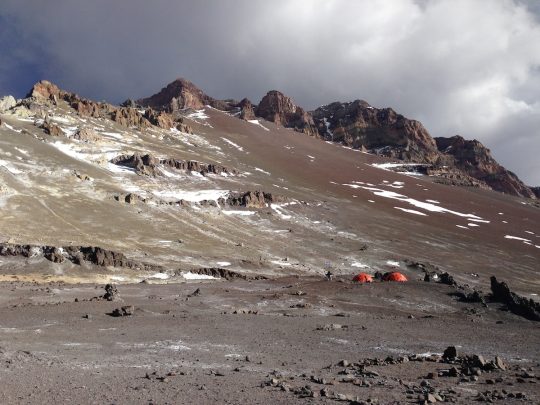
Aconcagua Climb — 12-Day Guided Climb
- Height (m)
- 6962
- Duration
- 12 дней
- Difficulty
- Moderate
- Continent
- South America
- Children
- Not suitable for children
- Accommodation
- Tented accommodation
- suitable-for-beginners
- No
-
 3,900 $
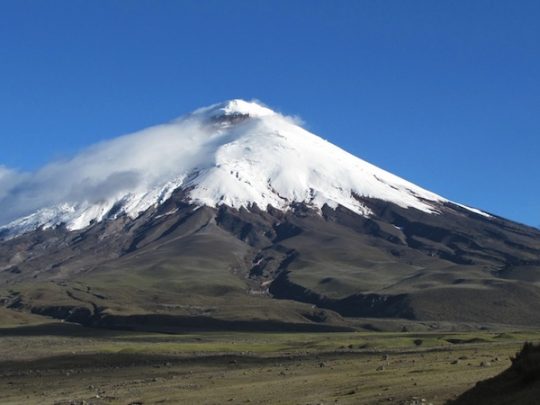
Climb Chimborazo and Cotopaxi — 14-Day Ecuador Expedition
- Height (m)
- 5897, 6384
- Duration
- 11 дней
- Difficulty
- Moderate
- Continent
- South America
- Children
- Ages 14+
- Accommodation
- Hotels only
-
 3,129 $
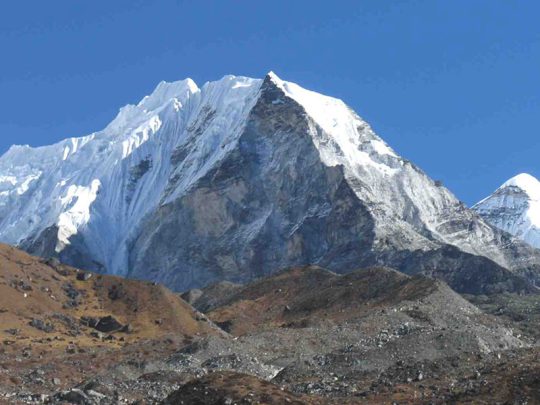
Island Peak Climb — 18-Day Expedition
- Height (m)
- 6165
- Duration
- 18 дней
- Difficulty
- Moderate
- Continent
- Asia
- Children
- Not suitable for children
- Accommodation
- Some nights in tents
-
 6,000 $
Ojos del Salado Climb — 15-Day Expedition
- Height (m)
- 6893
- Duration
- 15 дней
- Difficulty
- Moderate
- Continent
- South America
- Children
- Ages 14+
- Accommodation
- Tented accommodation
- suitable-for-beginners
- No