- Guides
- B2B
-
Climbs
-
Climb Elbrus
- Elbrus individually
- Elbrus from the South, 9 days
- Elbrus from the South, 7 days
- Climb Elbrus with Oxygen
- Elbrus from the North
- Elbrus Two Summits
- Elbrus Traverse from South to North, 9 Days
- Elbrus Traverse from North to South, 10 Days
- Elbrus "Cross" from South
- Elbrus "Cross" from North
- Kazbek+Elbrus
- Elbrus from the West
- Elbrus by Private Helicopter, 3 Days
- Elbrus Region Holiday and Trekking, 9 Days
- Elbrus Region Holiday, 7 Days
- Elbrus Dating
- Climb Elbrus from the South, 9 Days with Sergey Baranov
- Under 5000 m
- 5000+ meters
- 6000+ meters
- 7000+ meters
- 8000+ meters
-
Climb Elbrus
-
Trekking
-
Trekking in Nepal: routes to the eight-thousanders
- K2 base camp
- Everest base camp
- Everest base camp via Gokyo
- Everest base camp in a week
- Annapurna Circuit and Tilicho Lake Trek
- Manaslu Circuit Trek
- Kanchenjunga Circuit Trek (XXL)
- Kanchenjunga North Base Camp Trek (Short)
- Kanchenjunga from India: the Goecha La Trek in Sikkim
- Makalu Base Camp Trek
- Annapurna Base Camp Trek
- Trekking in South America
- Asia
- Trekking in Africa
-
Trekking in Russia
- Elbrus Region Holiday and Trekking, 9 Days
- Elbrus Region Holiday, 7 Days
- Oshten + Kardyvach — 9-Day Western Caucasus Trek
- Lake Kardyvach — 5-Day Base-Camp Trek
- Route 30: Through the Mountains to the Sea, with Oshten — 4 Days
- Trekking in Arkhyz — 7 Days over the Ayulyu Pass
- Gvandra Trek — 7 Days to the Ullu-Kyol Lakes
- Trekking in Dombai — 7 Days with the Murudzhu Lakes
- Europe
-
Trekking in Nepal: routes to the eight-thousanders
-
Adventure expeditions
-
Trekking in Africa
- Tour to Morocco for New Year
- Morocco: Toubkal and the mysteries of the Sahara
- Eritrea: the Dahlak Archipelago and the Rashaida Nomads
- Rwanda: Mountain Gorillas and the Bisoke Volcano
- Ethiopia: Otherworldly Landscapes and the Peoples of the Omo Valley
- Tanzania Safari: Serengeti, Ngorongoro and Tarangire
- Zimbabwe and South Africa: Victoria Falls, Cape Town and the Cape of Good Hope
- Namibia: Etosha National Park and the Himba
- Kenya Safari: the African Big Five
- Trekking in South America
- Asia
-
Trekking in Africa
- Ski touring and ski mountaineering: chasing freedom in the mountains
- VIP tours
- Useful
- About
Aconcagua Climb — 12-Day Guided Climb
- Height (m)
- 6962
- Duration
- 12 days
- Difficulty
- Average
- Continent
- South America
- Children
- Not suitable for children
- Accommodation
- Tented accommodation
- suitable-for-beginners
- No
4500 $
Why to go with us?
Booking is not yet open
The 12-day Aconcagua climb follows the classic Normal Route and is built for climbers who arrive with recent high-altitude acclimatisation and a solid endurance base. The trip keeps Confluencia, the acclimatisation walk to Plaza de Francia, the Plaza de Mulas base camp and one reserve day, but it gains altitude noticeably faster than the 17-day expedition.
This is not a shortened trip for beginners. If you have no confirmed experience above 5000–6000 m, or if a long spell at low altitude preceded your departure, the classic 17-day Aconcagua expedition is the safer choice.
The price covers an English-speaking guide for the whole trip, local mountain guides on summit day, the stated transfers and accommodation, mules to base camp, and food and fuel for the high-altitude section. The park permit and insurance are paid separately.
Important
- Before booking you must tell us your previous altitudes and the dates of that acclimatisation.
- A short schedule leaves no margin for weak preparation or slow adaptation to altitude.
Who this format suits: a climber who has recently acclimatised at altitude, copes confidently with several long days in a row, and understands the difference between an altitude reached at some point in the past and adaptation that is still present. Before we confirm a place we check the date of your last high-altitude trip, your maximum altitude, your sleeping altitudes and how you felt. If that information is not sufficient, we recommend the 17-day route.
Compare the 7-, 12- and 17-day formats first, then send us your altitude summary. One reserve day adds flexibility, but it does not compensate for missing preparation and it does not guarantee a second attempt.
Aconcagua logistics packages: Aconcagua logistics — up to four full-board days or Aconcagua logistics — up to seven full-board days.
About the 12-day Aconcagua climb
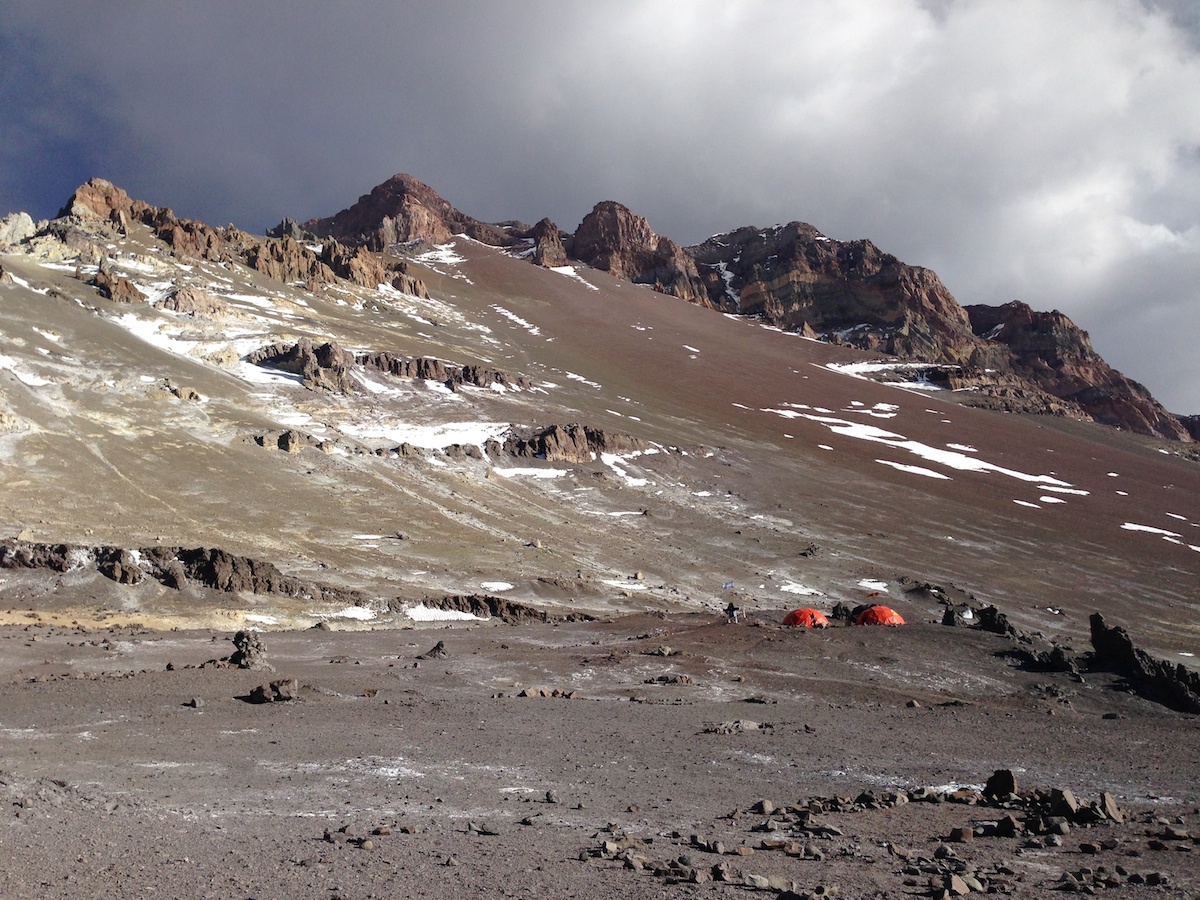
The 12-day trip follows the same classic Normal Route as the full 17-day expedition, but with fewer acclimatisation cycles. After Confluencia and Plaza de Francia the group moves up to Plaza de Mulas, makes one rotation to 5000–5400 m, rests, and then climbs through Nido de Cóndores and Cólera to the summit attempt at 6962 m.
The decisive condition for joining is fresh acclimatisation. Experience from previous years does not replace recent time spent at altitude: after a long period at low elevation, adaptation fades. The trip also demands high endurance, the discipline to hold a slow pace, and the willingness to stop if adaptation is going badly.
One reserve day provides a limited margin. The itinerary may not be reshaped to cut acclimatisation further. Weather, the medical check at base camp and a participant’s condition can all change the actual schedule.
What is shortened compared with the 17-day expedition
This trip keeps the approach through Horcones and Confluencia, the acclimatisation walk to Plaza de Francia and the Plaza de Mulas base camp. The reduction happens above base camp: instead of a full first rotation followed by recovery, the group makes one carry to 5000–5400 m, returns to Plaza de Mulas and, after a rest day, begins the main ascent through Nido de Cóndores and Cólera.
Twelve days therefore cannot be judged by the number of nights alone. You need to arrive with a physiological base that lets the route continue your adaptation rather than start it from zero. Even when you feel good, the pace stays slow: moving faster does not create acclimatisation and only burns energy you will need in the high camps.
What counts as useful acclimatisation
We look at more than your highest recorded altitude. What matters is whether you slept above 4000–4500 m, how much time has passed since you came down, how quickly symptoms cleared, and whether you were still able to eat, drink and sleep normally. A single short summit day several years ago is not fresh acclimatisation. The longer the pause at low altitude, the more cautious the assessment has to be.
If Ecuador, Bolivia, Elbrus, Ojos del Salado or another high-altitude trip is planned before Aconcagua, the dates of both trips have to be read as one scheme. Flights, delayed baggage and days spent low down all count towards the interval between acclimatisation and the start.
One reserve day is a limited resource
The reserve may be needed because of wind, snowfall, trail conditions, the medical check or a group moving more slowly than planned. It cannot be counted in advance as a guaranteed second summit attempt. If conditions call for a descent, safety takes priority over keeping to the schedule or to a return flight.
What to check before you apply
- The real date of your last trip above 5000 m and the altitude you slept at;
- Your ability to carry personal kit between the high camps;
- The fit and compatibility of boots, crampons and the rest of your high-altitude equipment;
- Insurance that covers the altitude and the type of activity involved;
- Your willingness to switch to the 17-day trip if your acclimatisation is not sufficient.
You can compare every Aconcagua format, including the 7-day Aconcagua Blitz and the 17-day expedition, before you send your altitude summary. Departure availability is published in the Mountain Guide calendar.
Aconcagua climbing itinerary, 12 days
Day 1. Arrival in Mendoza — Penitentes, 2700 m.
The permit is issued before entry to the national park. Once the formalities are complete the group transfers to Penitentes, hands the main loads over to the mules and prepares to start the route. Night in a hotel.
Day 2. Laguna Horcones — Confluencia, 3300 m.
Transfer to the national park entrance and the walk in to Confluencia, usually 2–3 hours. An easy acclimatisation walk follows after lunch. The day continues the altitude adaptation you already have and lets us assess how you are after the journey.
Day 3. Acclimatisation walk to Plaza de Francia, 4200 m.
An early out-and-back walk with views of the roughly 2700 m South Face of Aconcagua. The outing takes 4–5 hours. Returning to Confluencia gives an acclimatisation load without moving camp.
Day 4. Confluencia — Plaza de Mulas, 4350 m.
A long day across Playa Ancha, usually 8–9 hours. The group reaches the main base camp and prepares for the single acclimatisation rotation above Plaza de Mulas.
Day 5. Rotation to Plaza Canadá, 5000 m, or the camp at 5400 m.
An acclimatisation climb from Plaza de Mulas followed by a descent back to base camp. The exact high point is set by the guide’s plan and the condition of the group. This rotation is the key altitude load before the main ascent.
Day 6. Rest day at Plaza de Mulas, 4350 m.
Recovery, eating, rehydration and a check on how everyone is doing. One rest day does not make up for missing fresh acclimatisation beforehand, but it does allow us to judge readiness to move up to Nido de Cóndores.
Day 7. Plaza de Mulas — Nido de Cóndores, 5600 m.
The start of the main high-altitude cycle. The group climbs straight to Nido de Cóndores, sets up camp and monitors its response to the altitude. Night in tents.
Day 8. Nido de Cóndores — Cólera, 6000 m.
The move to the top camp, then rest and preparation for an early summit start. Equipment, water, clothing and everyone’s condition are checked before nightfall.
Day 9. Summit attempt on Aconcagua, 6962 m.
An early start, the summit attempt and the descent back to Cólera. Whether we continue depends on the weather, route conditions, pace and how the team is coping. A short schedule does not change the safety criteria and does not guarantee the summit.
Day 10. Reserve day.
A limited weather and operational window. The reserve is used at the guides’ discretion and is not treated in advance as a guaranteed second attempt.
Day 11. Cólera — Plaza de Mulas — Laguna Horcones — Mendoza.
Descent to base camp, exit from the national park and transfer to Mendoza. After a compressed high-altitude schedule the aim of the day is to lose altitude safely and close the route. Rest and farewell dinner.
Day 12. Departure.
End of the trip. Departure time is coordinated with your flight schedule.
What's included
- English-speaking guide throughout the trip
- Mountain guides — one guide for every 3–4 climbers on summit day
- Airport–hotel–airport transfer
- Hotel in Mendoza, 1 night, twin room with breakfast
- Assistance with obtaining the necessary permits
- Transfer Mendoza — Puente del Inca — Mendoza
- Hotel in Puente del Inca with breakfast
- Mules for equipment and food from Puente del Inca (Los Puquios) to Plaza de Mulas and back; personal baggage up to 20 kg
- Two nights in Confluencia with full board
- Base camp at Plaza de Mulas (3 nights)
- Food and fuel for the high camps
- Group first-aid kit
What's not included
- International flights
- Climbing permit, charged separately at the park rate in force at the time of the climb; the amount depends on nationality, route category and season
- Porters
- Personal equipment
- Additional costs arising from any departure from the itinerary
- Medical insurance covering the stated activity and the maximum altitude of the trip
- Personal expenses such as drinks, internet and phone calls, including base-camp services that are paid locally at the rates current on the mountain
Private groups
A private format lets you choose the dates and the guiding team, but it does not remove the requirement for recent acclimatisation. Where more time is needed, the right answer is to lengthen the trip, not to shorten it.
Before quoting, we ask for the altitude experience of every participant and check the availability of permits, camps, mules and guides on your chosen dates.
Documents you need
- A valid passport
- Medical insurance covering the stated activity and the maximum altitude of the trip
- An Aconcagua National Park permit, issued and paid for before you enter the route
- Depending on your nationality, a visa may be required
- We recommend keeping digital copies of your documents on your phone and in cloud storage
Entry requirements for Argentina and for the route are checked before the trip, against your nationality and the rules in force.
Weather and seasons
The trip runs in the official summer season of Aconcagua Provincial Park. Strong wind, frost, snow and sudden changes in the weather persist at altitude.
There is one reserve day in the itinerary, so there is limited scope to reschedule. If the forecast is poor, the guide may change the start time or stop the climb.
Before choosing your dates, read up on the weather and seasons on Aconcagua.
Accommodation and meals
The published itinerary includes one night in a hotel in Mendoza with breakfast, a hotel in Puente del Inca with breakfast, two nights at Confluencia with full board and three nights at the Plaza de Mulas base camp.
The high-altitude section is spent in tents. Food and fuel for the upper camps are included. Extra nights, single occupancy and any meals outside the list above are paid separately.
Tell us about dietary restrictions and allergies in advance; whether a special menu is possible is confirmed before the trip.
Facilities on the route
The hotels in Mendoza and Puente del Inca offer town-level comfort. At Confluencia and Plaza de Mulas the service depends on the camp and the season; above base camp you are self-sufficient.
Showers, electricity, reliable charging, phone signal and internet are not guaranteed on the mountain section. Bring a power bank, spare batteries, a head torch and your own toiletries.
Insurance
Show insurance calculator (Russian)
This calculator is provided by an external provider and uses a Russian-language interface.
Equipment and useful extras for the 12-day Aconcagua climb
Download PDF- Passport
- Air tickets
- Medical insurance
- Rucksack. 50-60 litres
- Sleeping bag with a comfort rating of -15 to -25 °C
- Sleeping mat
- Trekking poles
- Crampons; aluminium is acceptable
- Ice axe. Classic, on a leash. A lightweight axe, or one combined with a ski pole, is acceptable
- Helmet
- Mug, spoon and bowl
- Triple or double mountaineering boots. Doubles are either plastic or leather. In plastic we recommend the Scarpa Vega, probably the warmest of all the double boots
- Trainers or trekking boots. Ideally both. Trainers for the trek to base camp, and light boots for the acclimatisation day and for base camp. Trainers alone will do, though
- Waterproof shell: jacket and trousers. The market runs from simple 5000/5000 membranes through to Gore-Tex garments
- Fleece top and bottoms
- Base layer, top and bottoms
- Down jacket. Thick and warm
- Warm mittens
- Thick gloves
- Thin gloves
- Bandana (as well as sun protection in the valley, it can keep your throat or face warm in the cold)
- Warm hat
- Warm trekking socks for summit day
- LED head torch
- Sunglasses
- Ski goggles
- Vacuum flask, 1 litre. Preferably without a push-button lid
- Windproof face mask for the lower face (a scarf will do at a pinch)
- Gaiters
- Sun cream and lip balm
- Chemical hand warmers (not compulsory, but they can be very useful)
- Personal first-aid kit
- Elastic bandage and/or a support brace
You may also like
-
 4,000 $
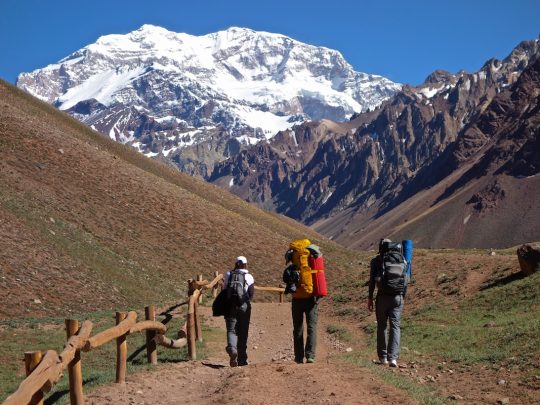
Aconcagua Blitz — 7-Day Climb
- Height (m)
- 6962
- Duration
- 7 days
- Difficulty
- Moderate
- Continent
- South America
- Children
- Not suitable for children
- Accommodation
- Tented accommodation
- suitable-for-beginners
- No
-
 6,650 $
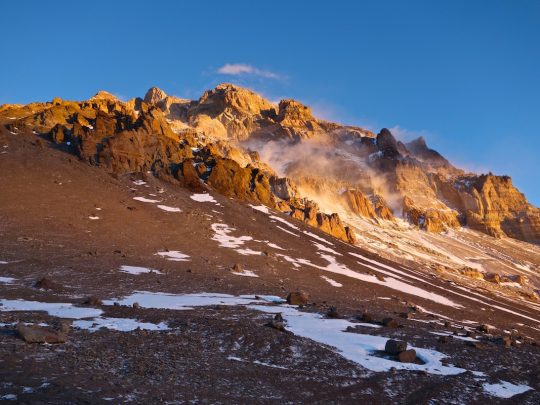
Aconcagua Climb — 17-Day Guided Expedition
- Height (m)
- 6962
- Duration
- 17 days
- Difficulty
- Moderate
- Continent
- South America
- Children
- Ages 14+
- Accommodation
- Some nights in tents
-
 3,900 $
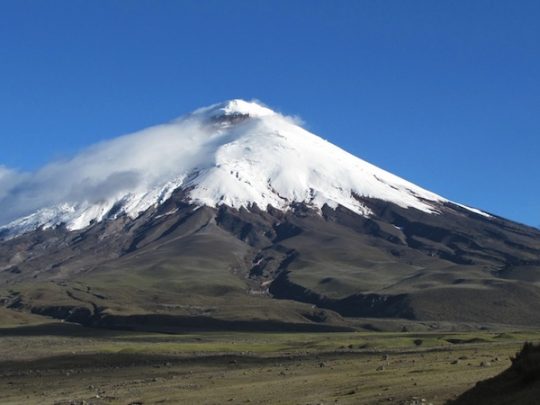
Climb Chimborazo and Cotopaxi — 14-Day Ecuador Expedition
- Height (m)
- 5897, 6384
- Duration
- 11 days
- Difficulty
- Moderate
- Continent
- South America
- Children
- Ages 14+
- Accommodation
- Hotels only
-
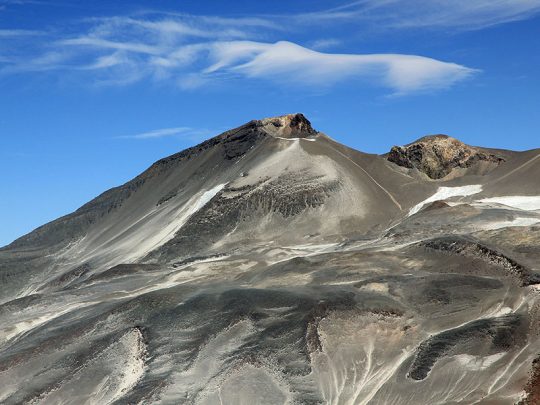 6,000 $
Ojos del Salado Climb — 15-Day Expedition
- Height (m)
- 6893
- Duration
- 15 days
- Difficulty
- Moderate
- Continent
- South America
- Children
- Ages 14+
- Accommodation
- Tented accommodation
- suitable-for-beginners
- No