- Guides
- B2B
-
#19607 (no title)
-
#15972 (no title)
- Climb Elbrus Individually
- Climb Elbrus from the South, 9 Days
- Climb Elbrus from the South, 7 Days
- Climb Elbrus from the South with Oxygen
- Climb Elbrus from the North, 10 Days
- Two Summits of Elbrus, 9 Days
- Elbrus Traverse from South to North, 9 Days
- Elbrus Traverse from North to South, 10 Days
- Cross of Elbrus, South to North, 9 Days
- 「北からの十字架」プログラムに従ってエルブルス山を登る
- Climb Kazbek and Elbrus — 10-Day Two-Summit Programme
- Climb Elbrus from the West, 11 Days
- エルブルス山 ヘリコプター登頂
- Elbrus Region Holiday and Trekking, 9 Days
- Elbrus Region Holiday, 7 Days
- Elbrus登Tinderツアー
- Climb Elbrus from the South, 9 Days with Sergey Baranov
- #15539 (no title)
-
#15546 (no title)
- Climb Kilimanjaro: the Marangu Route
- Climb Kilimanjaro: the Lemosho Route
- Climb Ararat, 5137 m — 7-Day Classic Programme
- Climb Kazbek from the South, 5033 m — 8 Days in Georgia
- Climb Kazbek and Elbrus — 10-Day Two-Summit Programme
- メキシコで火山を登る
- Climbing Alpamayo — 16-Day Technical Expedition
- マーガレットピークを登る(スタンレー)
- Climbing Mount Kenya: Point Lenana, 4,985 m
- Climb Dykh-Tau by the North Ridge, 13 Days
-
#15554 (no title)
- Aconcagua Climb — 17-Day Guided Expedition
- Island Peak Climb — 18-Day Expedition
- Climb Mera Peak, 6476 m — 16-Day Hinku Valley Programme
- Climb Ama Dablam, 6812 m — 24-Day Expedition with Island Peak
- Climb Island Peak and Mera Peak — 24-Day Two-Summit Expedition
- Aconcagua and Ojos del Salado — 25-Day Combined Expedition
- Ojos del Salado Climb — 15-Day Expedition
- クライミングチンボラゾ、コトパクシ
- ワスカランクライミング
- Climb Razdelnaya Peak, 6148 m — 15-Day Pamir Expedition
- Climb Denali by the West Buttress, 23 Days
- #15565 (no title)
- #15572 (no title)
-
#15972 (no title)
-
#19592 (no title)
-
See 8000m
- K2 Base Camp Trek via the Gondogoro La
- Everest Base Camp Trek — 14 Days
- Everest Base Camp via Gokyo Lakes — 15 Days
- 一週間でエベレストへのトレッキング
- Annapurna Circuit and Tilicho Lake Trek
- Manaslu Circuit Trek
- Kanchenjunga Circuit Trek (XXL)
- Kanchenjunga North Base Camp Trek (Short)
- Kanchenjunga from India: the Goecha La Trek in Sikkim
- マカルベースキャンプへのトレッキング
- アンナプルナベースキャンプトレッキング
- South America
- Asia
- Africa
-
Russia
- Elbrus Region Holiday and Trekking, 9 Days
- Elbrus Region Holiday, 7 Days
- トレッキングオシュテン+カルディヴァッハ
- Lake Kardyvach — 5-Day Base-Camp Trek
- Route 30: Through the Mountains to the Sea, with Oshten — 4 Days
- Trekking in Arkhyz — 7 Days over the Ayulyu Pass
- Gvandra Trek — 7 Days to the Ullu-Kyol Lakes
- Trekking in Dombai — 7 Days with the Murudzhu Lakes
- Europe
-
See 8000m
-
Adventures
-
Africa
- モロッコツアー:北アフリカの中心
- トゥブカルの登山とモロッコの文化
- エリトリアツアー:ダラク諸島とラシャイダ遊牧民
- ルワンダツアー:マウンテンゴリラとビソーク火山
- エチオピアツアー:宇宙の風景とオモ渓谷の部族
- ウガンダツアー:クイーンズパークとマウンテンゴリラ
- Tanzania Safari: Serengeti, Ngorongoro and Tarangire
- ウガンダツアー:ホワイトサイとマウンテンゴリラ
- ジンバブエと南アフリカツアー:ビクトリアフォールズ、ケープタウン、ケープオブグッドホープ
- ナミビアツアー:エトーシャパークとヒンバ族
- ケニアツアー:アフリカのビッグファイブ
- ボツワナツアー:オカバンゴデルタとチョベ公園
- South America
- Asia
-
Africa
- Ski-touring
- VIP
- #19722 (no title)
- About
Climb Elbrus from the North, 10 Days
- Height (m)
- 5642
- Duration
- 9 days
- Difficulty
- Moderate
- Continent
- Europe
- Children
- From 14 years old
- Accommodation
- Without tents
1820 $
Why to go with us?
We strongly recommend arriving in Mineralnye Vody a day before the programme starts, so that a rescheduled or delayed flight cannot cost you the start of the tour.
Programme price — $1 820.
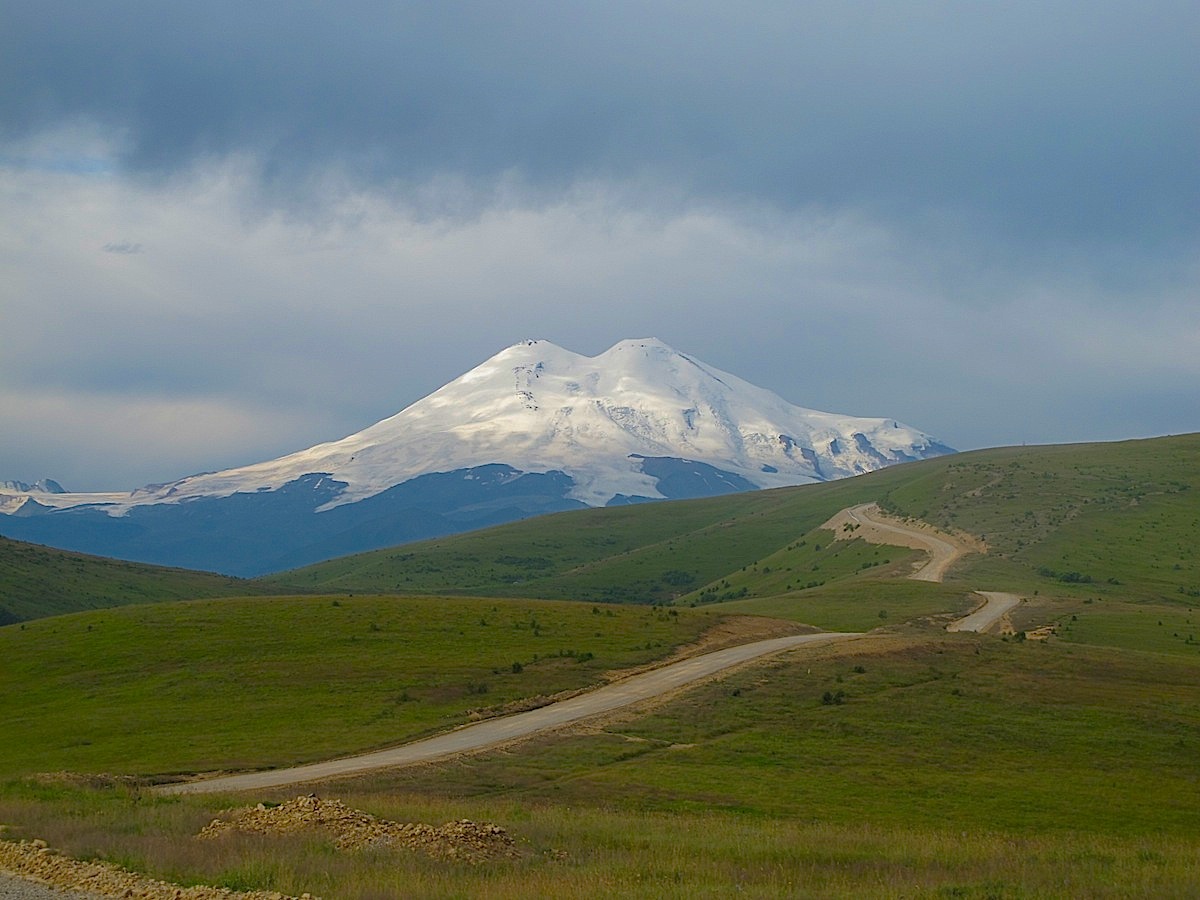
The north route is the classic mountaineering line on the highest summit in Europe, 5642 m, without cable cars and without the developed infrastructure of the southern side. It is chosen by participants who want a more self-reliant route, who want to gain the whole of the altitude on foot, and who want to spend more time in a genuine mountain environment.
The north route is built on gradual acclimatisation and sustained physical work. The group covers the entire distance from base camp to the summit under its own power, so endurance, a correct pace and readiness for long days at altitude matter more here than anywhere else on the mountain.
Previous experience of climbing above 5000 m is required. The north route is not suitable as a first encounter with high altitude: there is no cable car and no way to shorten either the ascent or the descent.
Why climb Elbrus with us? First of all because of the Mountain Guide team, which includes guides with 8000 m experience. A lead guide accompanies the group throughout the programme, and assistant guides join for summit day. The ratio is strict — no more than three climbers to one guide, while the group still moves together.
Mountain Guide has worked on Elbrus since 2001. Every stage of the programme — meeting the group, organising the high-mountain section, acclimatisation and the summit push — has been refined over years of ascents.
If the whole group did not start, or had to turn back because of the weather, a further attempt on an available reserve day carries no extra charge. If part of the group reaches the summit, the ascent counts as completed and additional attempts for the remaining participants are paid separately.
We can also arrange a stay in the Elbrus region for partners, family or friends who want to spend the time nearby while you are on the mountain.
Would you prefer to climb with your own group only? We organise private ascents on convenient dates, with a personal guide and a programme adapted to your experience, pace and objectives. The south, north and west routes can all be arranged privately, with extra acclimatisation or reserve days and a separate programme for accompanying guests.
Important
- All published departures run with a minimum group size of two participants.
- Any departure from the shelter on summit day counts as a summit attempt.
About the north route ascent of Elbrus
Please note: to avoid any disagreement between participants, we always climb the higher West summit of Elbrus, 5642 m, and not the East summit, 5621 m.
The route begins at Emmanuel Glade. After arrival the group spends an additional acclimatisation day in the area of base camp. Participants then make an acclimatisation hike up to the shelter at 3700 m and return to the glade; the following day they move up to the same shelter to live there and prepare for the summit.
The next acclimatisation hike goes to the Lenz Rocks at 4700 m. After it the group returns to the shelter and has a full rest day. This sequence helps the body adapt to the lack of oxygen and recover before the ascent. Altitude nevertheless affects every person differently, and good physical condition does not guarantee easy acclimatisation.
The summit attempt starts from the shelter at 3700 m. The group climbs the West summit of Elbrus, 5642 m, and returns by the same route. The following day is held in reserve and is used if the ascent has to be postponed because of weather or the condition of the group.
On the north route it is not possible to shorten either the ascent or the descent with a cable car. Every metre of altitude is covered on foot, so the main difficulties are sustained physical load, cold, wind and the need to manage your effort correctly. The lead guide decides the start time, the pace and whether the ascent can continue, taking account of the weather and the condition of the group.
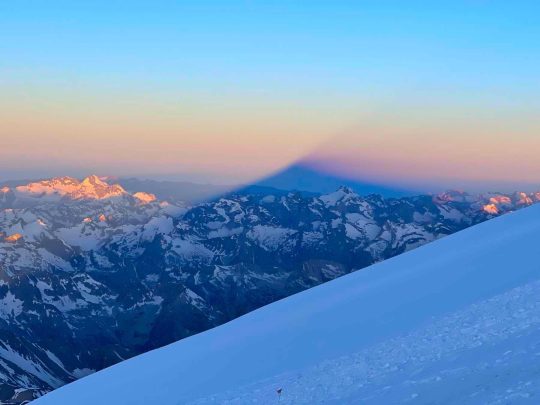
The northern side shows a completely different Elbrus. Here you find ancient moraines, mountain streams, wide snowfields and unusual lava formations. In clear weather the Caucasian Mineral Waters region is visible from the route, and at night the lights of distant towns.
At about 3000 m there is a large plateau resembling a natural airfield. During the Second World War it was used by German forces for landing troops.
If a cable car, a hotel in the valley and developed tourist infrastructure matter more to you, the nine-day south route ascent of Elbrus is the better choice. The north route offers a different format: the full altitude gain on foot and more time spent in the mountains themselves.
It is best to start physical preparation well in advance.
Guided Elbrus north route programme, 10 days
Day 1. Meeting in Mineralnye Vody and transfer to Emmanuel Glade.
The group meets at Mineralnye Vody airport. Two group transfers are provided on the first day of the programme: the first leaves at 12:00 for participants whose flights are scheduled to land no later than 11:00, and the second leaves at 15:00 for participants whose flights are scheduled to land no later than 14:00. Please allow time for baggage reclaim and for leaving the terminal when booking. If a flight is delayed and you miss the group transfer by more than 30 minutes, we will help you order a private transfer, which the participant pays for separately. After the drive to Emmanuel Glade we settle into the shelter and have dinner. The guide then gives a detailed briefing covering the programme, the logic of the acclimatisation plan, the order of movement, how the group works together and the main safety requirements. Overnight in the shelter.
Day 2. Additional acclimatisation hike around Emmanuel Glade.
After breakfast we make an unhurried out-and-back hike from base camp. The guide sets the exact route, its length and its high point according to the weather, conditions on the ground and how the group feels. The purpose of the day is to begin adapting to altitude without a sharp gain, to test clothing and boots in movement and to prepare the body for the next hike to 3700 m. After returning we rest and prepare equipment. Dinner and overnight in the shelter.
Day 3. Acclimatisation hike and equipment carry to the shelter at 3700 m.
After breakfast we make the first acclimatisation hike up to the high shelter at 3700 m. The aim of the day is not speed but a steady gain in altitude and a first check of how the body reacts to high mountains. At the same time participants carry up part of their personal and the group equipment, so that the following day’s move carries less weight. After a rest by the shelter we descend to Emmanuel Glade. Climbing higher and sleeping lower continues the gradual acclimatisation. Dinner and overnight in the shelter.
Day 4. Move up to the high shelter at 3700 m.
We climb the now familiar route to the high shelter. We move at a calm pace and do not force the altitude gain, even if everyone feels well. After settling in we rest and observe how the body responds to the first night at 3700 m. In the evening the guide assesses the condition of the group, checks that participants are ready and confirms the plan for the next acclimatisation hike. Overnight in the shelter at 3700 m.
Day 5. Acclimatisation hike to the Lenz Rocks at 4700 m.
We climb to the Lenz Rocks at 4700 m, roughly 1000 m above the shelter. This hike is needed for further adaptation and to check how participants feel at an altitude close to the upper part of the route. The main task is to reach the planned altitude and keep enough strength for a safe return. After reaching the point set by the guide we descend to the shelter at 3700 m. Gaining altitude by day and sleeping lower again continues the acclimatisation before the ascent. Overnight in the shelter.
Day 6. Rest and preparation for the ascent of Elbrus.
The rest day is a full part of the programme, not simply free time. After the hike to the Lenz Rocks the body needs to recover before a long day of work at altitude. We check personal and group equipment and prepare clothing, boots and everything else that is needed. The guide gives the final briefing and goes through the order of movement, the pace, communication within the group and what to do if the weather changes or someone begins to feel unwell. Overnight in the shelter at 3700 m.
Day 7. Ascent of the West summit of Elbrus, 5642 m, by the north route.
We set out at night, usually between 02:00 and 04:00. The exact start time is decided by the lead guide on the basis of the forecast, the actual weather, the state of the slope and the readiness of the group. The climb to the West summit normally takes 10–12 hours, and the descent to the shelter a further 4–6 hours. The duration depends on the pace of the participants and on conditions along the route. The guide controls the speed of movement and decides whether the ascent can continue. After reaching the summit we make a short stop and begin the descent. The ascent ends not on the summit but when the whole group is safely back at the shelter. Overnight in the shelter at 3700 m.
Day 8. Reserve day for the ascent, or an unhurried descent to base camp.
If the weather or the condition of the group prevented the ascent on the main day, the reserve is used for a second attempt. The decision is taken by the lead guide on the basis of the actual conditions, and the existence of a reserve day is not in itself a guarantee that the group will set out. If the ascent took place on day 7, the group descends without haste from the high shelter to Emmanuel Glade after breakfast, and spends the night in the shelter at base camp on Emmanuel Glade. If the reserve day is used for the ascent, the group spends the night in the high shelter after returning.
Day 9. Descent from the northern slope of Elbrus and return to Mineralnye Vody.
If the ascent took place on day 7, transport meets the group at Emmanuel Glade after breakfast for the drive to Mineralnye Vody. If the reserve day 8 was used for the ascent, the group descends from the high shelter to Emmanuel Glade after breakfast, where transport is waiting. After the drive we check into the hotel and rest. In the evening participants can gather for a celebratory dinner. Overnight at the hotel.
Day 10. End of the programme and departure.
After breakfast a transfer is arranged to the airport or to the railway station in Mineralnye Vody. We recommend choosing evening flights and trains so that there is a margin in case the reserve day is used or the schedule changes for other weather-related reasons.
What the Elbrus north route ascent includes
- Hotel accommodation in Mineralnye Vody — twin rooms for all nights set out in the programme. Please note that hotel check-out is by 12:00.
- Accommodation in the shelters for all nights set out in the programme
- All transfers within the programme, including the drive from Mineralnye Vody to Emmanuel Glade and back
- Three meals a day during the mountain part of the programme, from dinner on the day of arrival to breakfast on the day of descent
- Breakfasts during the stay at the hotel in Mineralnye Vody
- Permits and registrations for the route, with the exact scope and the responsibility of each side confirmed before booking
- Professional guides — a lead guide accompanies the group throughout the programme, and assistant guides join the group on summit day. The ratio is strict: no more than three climbers to one guide, and the group still moves together
- Summit attempts on the main and the reserve day at no extra charge. If part of the group reaches the summit, the ascent counts as completed and additional attempts for the remaining participants are paid separately
- Group mountaineering and emergency equipment — ropes, ice screws, radios, satellite navigators and other necessary items
- Hire of a duffel bag for carrying personal and rented equipment for the duration of the ascent
What the Elbrus north route ascent does not include
- Single occupancy at the hotel
- Personal equipment and the hire of it
- Additional work by guides and cooks if the programme changes
- Lunches and dinners during the stay at the hotel in Mineralnye Vody
- Medical insurance
- Any costs arising from changes to the programme
Insurance
НаверхList of equipment for climbing mount Elbrus from the North.
Скачать PDFRock-and-Rent のレンタルには、最高品質の装備がすべて揃っています。事前に予約していただければ、ショートパンツだけで来ていただいても構いません(特に事前予約の場合、エルブルス北側へもお届けします)。私たちは装備選定においてただ一つの基準だけを重視しました。それは、2001年から登り続けているエルブルスの環境に最大限適合していることです。
そして正直に言いますと、このリストは非常に入念に作成されています。会社のガイドたちは合計で数千回の登頂を経験しており、この中に無駄なものが一つもあるとは思っていません。
ドキュメント:
- パスポート
- 航空券/鉄道チケット
- 医療保険
- バウチャー(外国籍の方)
個人装備:
- バックパック 50~60リットル
- バウル(大型ダッフルバッグ)60~100リットル
- シュラフ:快適使用温度 −15℃~−5℃(6月~9月を含む)、−30℃~−15℃(10月~5月を含む)
- トレッキングポール(必ず直径70mm以上のバスケット付き)
- クランポン
- クラシック型アイスアックス(5~6mmの補助ロープ付き、ハーネスに連結するため 2~3m)
- アイススクリュー(別カラビナに装着)
- クライミングハーネス
- ヘルメット
- カラビナ 5枚(うち最低3枚は大型タイプ推奨。厚手の手袋でも扱いやすい)
- セルフビレイ用ランヤード
衣類・シューズ:
- スキーウェアはエルブルスに適していますか?
- アルパインブーツ(二重/三重構造)― プラスチック製またはレザー製
- トレッキングブーツ
- 防水レイヤー ― ジャケット+パンツ(耐水圧は10,000/10,000以上推奨)
- フリース上下
- 保温インナー上下
- ダウンジャケット(厚手で暖かいもの。エルブルス向けダウンの標準重量は700g以上)
- 防寒ミトン
- 厚手の手袋(スキー用)
- 薄手の手袋(フリース)
- バンダナ(谷間での日除けだけでなく、寒冷時には首や顔の防寒にも使用可能)
- ニット帽
- 登頂日に使用する保温トレッキングソックス
- 日除け用ヘッドウェア
- トレッキングパンツとTシャツ(できれば長袖)
- トレッキング用ソックス(行動日数分が望ましい)
その他:
- ヘッドランプ(連続点灯時間24時間以上)
- サングラス(保護カテゴリー3~4、側面からの光を完全に遮るもの)
- スキーゴーグル(保護カテゴリー1~2、悪天候用)
- サーモス 1リットル(フタにボタンがないタイプ推奨)
- 下半分の顔を覆う防風マスク(スカーフで代用可能な場合もあり)
- 日焼け止め(ブランド品、SPF30~50。実際には30と50の差はほとんどありません)
- リップクリーム SPF15
- 個人用救急セット
- 伸縮包帯および/またはサポーター
- ゲイター(必須ではありませんが、特に5~6月は役立つことがあります)
- 使い捨てカイロ(必須ではありませんが、非常に役立つ場合があります)
You may also like
-
 8,785 $
Aconcagua and Ojos del Salado — 25-Day Combined Expedition
- Height (m)
- 6893, 6957
- Duration
- 22 days
- Difficulty
- Moderate
- Continent
- South America
- Children
- From 14 years old
- Accommodation
- There are tents
-
 1,100 $
Climb Ararat, 5137 m — 7-Day Classic Programme
- Height (m)
- 5137
- Duration
- 7 days
- Difficulty
- Low
- Continent
- Europe
- Children
- From 10 years old
- Accommodation
- There are tents
-
 3,900 $
クライミングチンボラゾ、コトパクシ
- Height (m)
- 5897, 6384
- Duration
- 11 days
- Difficulty
- Moderate
- Continent
- South America
- Children
- From 14 years old
- Accommodation
- Hotels only
-
 2,160 $
Cross of Elbrus, South to North, 9 Days
- Height (m)
- 5642
- Duration
- 9 days
- Difficulty
- Moderate
- Continent
- Europe
- Children
- From 14 years old
- Accommodation
- Without tents