- Guides
- B2B
-
#19607 (no title)
-
#15972 (no title)
- Climb Elbrus Individually
- Climb Elbrus from the South, 9 Days
- Climb Elbrus from the South, 7 Days
- Climb Elbrus from the South with Oxygen
- Climb Elbrus from the North, 10 Days
- Two Summits of Elbrus, 9 Days
- Elbrus Traverse from South to North, 9 Days
- Elbrus Traverse from North to South, 10 Days
- Cross of Elbrus, South to North, 9 Days
- Cross of Elbrus, North to South, 10 Days
- Climb Kazbek and Elbrus — 10-Day Two-Summit Programme
- Climb Elbrus from the West, 11 Days
- Elbrus by Private Helicopter, 3 Days
- Elbrus Region Holiday and Trekking, 9 Days
- Elbrus Region Holiday, 7 Days
- Tinder Tour: Climbing Mount Elbrus, 9 Days
- Climb Elbrus from the South, 9 Days with Sergey Baranov
-
#15539 (no title)
- Climb Carstensz Pyramid, 8 Days with Helicopter Access
- Climb Mont Blanc, 4810 m — 8-Day Guided Ascent
- Climb the Matterhorn, 4478 m — 8-Day Guided Ascent
- Climb Mount Vinson, 15-Day Antarctic Expedition
- Climb Kosciuszko and Travel in Australia, 7 Days
- Climb Fisht, 2868 m — 3-Day Ascent by the 1B Route
- Climb Mount Wilhelm, 6 Days
-
#15546 (no title)
- Climb Kilimanjaro: the Marangu Route
- Climb Kilimanjaro: the Lemosho Route
- Climb Ararat, 5137 m — 7-Day Classic Programme
- Climb Kazbek from the South, 5033 m — 8 Days in Georgia
- Climb Kazbek and Elbrus — 10-Day Two-Summit Programme
- Climb the Volcanoes of Mexico — Orizaba and Iztaccíhuatl, 9 Days
- Climbing Alpamayo — 16-Day Technical Expedition
- Climbing Margaret Peak (Stanley), 5,109 m
- Climbing Mount Kenya: Point Lenana, 4,985 m
- Climb Dykh-Tau by the North Ridge, 13 Days
-
#15554 (no title)
- Aconcagua Climb — 17-Day Guided Expedition
- Island Peak Climb — 18-Day Expedition
- Climb Mera Peak, 6476 m — 16-Day Hinku Valley Programme
- Climb Ama Dablam, 6812 m — 24-Day Expedition with Island Peak
- Climb Island Peak and Mera Peak — 24-Day Two-Summit Expedition
- Aconcagua and Ojos del Salado — 25-Day Combined Expedition
- Ojos del Salado Climb — 15-Day Expedition
- Climb Chimborazo and Cotopaxi — 14-Day Ecuador Programme
- Climb Huascarán — 8-Day Technical Ascent
- Climb Razdelnaya Peak, 6148 m — 15-Day Pamir Expedition
- Climb Denali by the West Buttress, 23 Days
- #15565 (no title)
- #15572 (no title)
-
#15972 (no title)
-
#19592 (no title)
-
See 8000m
- K2 Base Camp Trek via the Gondogoro La
- Everest Base Camp Trek — 14 Days
- Everest Base Camp via Gokyo Lakes — 15 Days
- Short Everest Base Camp Trek in 10 Days
- Annapurna Circuit and Tilicho Lake Trek
- Manaslu Circuit Trek
- Kanchenjunga Circuit Trek (XXL)
- Kanchenjunga North Base Camp Trek (Short)
- Kanchenjunga from India: the Goecha La Trek in Sikkim
- Makalu Base Camp Trek
- Annapurna Base Camp Trek
- South America
- Asia
- Africa
-
Russia
- Elbrus Region Holiday and Trekking, 9 Days
- Elbrus Region Holiday, 7 Days
- Oshten + Kardyvach — 9-Day Western Caucasus Trek
- Lake Kardyvach — 5-Day Base-Camp Trek
- Route 30: Through the Mountains to the Sea, with Oshten — 4 Days
- Trekking in Arkhyz — 7 Days over the Ayulyu Pass
- Gvandra Trek — 7 Days to the Ullu-Kyol Lakes
- Trekking in Dombai — 7 Days with the Murudzhu Lakes
- Europe
-
See 8000m
-
Adventures
-
Africa
- モロッコツアー:北アフリカの中心
- トゥブカルの登山とモロッコの文化
- Eritrea: the Dahlak Archipelago and the Rashaida Nomads
- Rwanda: Mountain Gorillas and the Bisoke Volcano
- Ethiopia: Otherworldly Landscapes and the Peoples of the Omo Valley
- ウガンダツアー:クイーンズパークとマウンテンゴリラ
- Tanzania Safari: Serengeti, Ngorongoro and Tarangire
- ウガンダツアー:ホワイトサイとマウンテンゴリラ
- Zimbabwe and South Africa: Victoria Falls, Cape Town and the Cape of Good Hope
- Namibia: Etosha National Park and the Himba
- Kenya Safari: the African Big Five
- ボツワナツアー:オカバンゴデルタとチョベ公園
- South America
- Asia
-
Africa
- Ski-touring
- VIP
- #19722 (no title)
- About
Climb Khan Tengri, 7010 m — 22-Day Tien Shan Expedition
- Height (m)
- 7010
- Duration
- 21 day
- Difficulty
- Average
- Continent
- Asia
- Children
- No
- Accommodation
- There are tents
6000 $
Why to go with us?
Temporarily unavailable
Guided ascent of Khan Tengri
Khan Tengri is one of the most beautiful and most technically serious seven-thousanders of the Central Tien Shan. The expedition trip runs for 22 days and includes preliminary acclimatisation at Karkara, work from a Base Camp at 4000 m, high-altitude excursions, the establishment of camps and a reserve for the weather. Two confirmed variants are offered — via the South or the North Inylchek.
The route is intended for experienced mountaineers. A participant needs a climbing record no lower than 6000 m, confident use of crampons, ice axe, ascender and descender, readiness for self-sufficient nights at altitude and for long technical days. The trip is not suitable for a first experience of altitude, and it is not suitable for children.
The group works with a lead guide whose high-altitude record extends to 8000 m. Staged acclimatisation, returns to Base Camp between high-altitude cycles and reserve days all improve the chances of running the expedition well, but the summit cannot be guaranteed. Decisions on pace, on setting off and on turning around are taken with safety as the priority.
Important: the side of the route, the dates, the composition of the team, the helicopter logistics and the current conditions must all be confirmed before you buy tickets.
About the Khan Tengri expedition
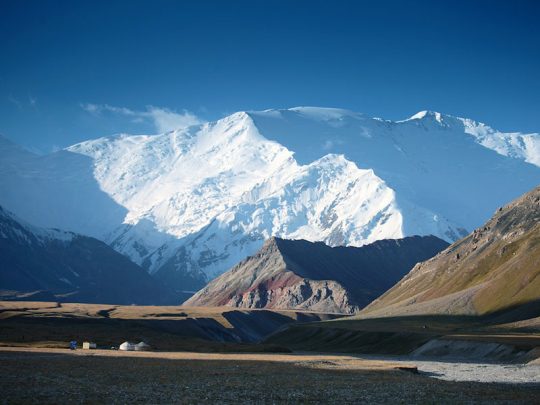
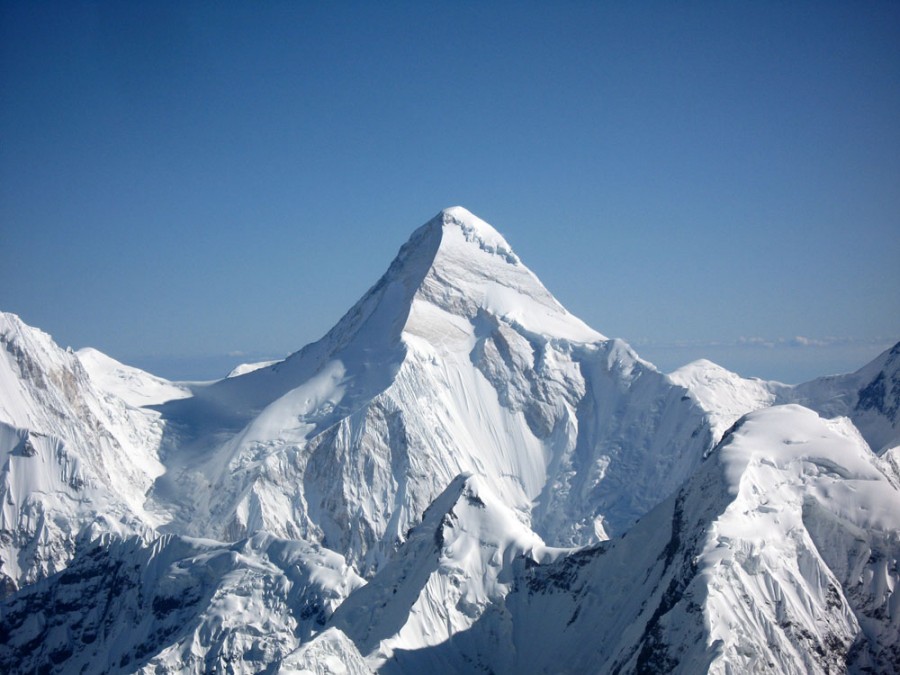
Khan Tengri, 7010 m, stands in the Central Tien Shan between the South and North Inylchek glaciers. Its severe pyramidal form and pale marble massif make the summit recognisable from a great distance, and its technical character sets this trip apart from most popular high-altitude routes. This is a full mountaineering expedition, where the outcome depends not only on fitness but on experience, on the quality of the acclimatisation, on the state of the route and on the weather.
Both trips start in Bishkek and run through the high camp at Karkara. There the group sleeps at 2200 m and makes an acclimatisation excursion to 4100–4200 m, or to the summit of Bas Karkara at 4059 m. That stage allows everyone to check their condition and their equipment before the helicopter flight to Base Camp at 4000 m.
Two independent variants are kept on this page — via the South and via the North Inylchek. They differ in the side of the approach, in the altitudes of the intermediate camps and in the pattern of acclimatisation excursions. The southern trip uses camps at 4300 m, 5400 m and 5800 m; the northern one at 4800 m, 5600 m and about 5900 m. These variants cannot be mechanically combined or shortened: the side of the route is chosen before booking, taking into account the composition of the group, the operation of the Base Camp and the confirmed helicopter logistics.
The logic of the expedition is built on several high-altitude cycles. Participants climb to the intermediate camps, sleep higher, carry and check equipment, and then return to Base Camp to recover. That principle helps the body adapt to the lack of oxygen and allows each climber’s readiness to be assessed before the final departure.
Above Base Camp the route crosses glacial, snow-and-ice and mixed terrain. Participants work in crampons and use an ice axe, a harness, an ascender, a descender and fixed ropes on the key sections. You must be able to move on fixed ropes independently, arrange your own self-belay, descend safely and stay effective after several nights at altitude.
The main objective and subjective risks are connected with altitude, glacier crevasses, the state of the snow and ice terrain, possible avalanches and falling ice or rock, strong wind, deteriorating visibility, hypothermia and accumulated fatigue. The long descent after the summit matters in its own right. The guide assesses the weather, the state of the route, the pace and the participants’ condition at every stage, and has the right to change the time of departure, shorten the high-altitude work or turn the group around.
Khan Tengri is not suitable as a first seven-thousander without a technical foundation. Before the trip you need a confirmed climbing record no lower than 6000 m, practical experience of nights in high-altitude tents and confident handling of your own mountaineering equipment. Porter services on the climb are not included, so a participant must be prepared to carry their personal load and to look after themselves in the high camps.
Physical preparation should include long aerobic work, altitude gain with a rucksack, strength work for the legs, back and core, and recovery across several demanding days in a row. The technical skills for Khan Tengri have to be practised separately.
Agree with the guide, before departure, which boots, crampons, ice axe, harness, sleeping bag and high-altitude clothing you will use. Baggage weight matters particularly: the helicopter transfer covers up to 30 kg per person, and excess is paid for separately at the carrier’s current rate.
Base Camp at 4000 m is the centre for acclimatisation, recovery and preparation for each departure. After every cycle it is important not only to rest but to dry your kit, restore your eating and drinking, check the technical set and decide on the next stage.
Khan Tengri sits between the more accessible high-altitude expeditions and the hardest eight-thousanders. It offers experience of working independently in high camps and on technical terrain, but it requires a mature assessment of your own capabilities. Mountain Guide’s guides help build the tactics and manage safety, but they do not replace a participant’s own preparation and cannot guarantee that the summit will be reached.
Khan Tengri climbing itinerary, day by day
Both variants run for 22 days and keep the confirmed sequence of acclimatisation. The stated altitudes and the order of the high camps are not shortened. The timing and tactics of each departure may be adjusted by the guide only in the light of the weather, the state of the route and the safety of the group.
Route via the South Inylchek
Day 1. Arrival in Bishkek.
Meeting at the airport, a group transfer to the hotel and check-in. After the journey participants rest, meet the guide and hand over the details needed for document checks. The check of personal equipment must be completed, and anything unsuitable replaced, before the departure for Karkara. Night in a hotel.
Day 2. Drive to Karkara, 2200 m.
After breakfast the group drives to the high camp at Karkara. Tented accommodation and full board help everyone recover from the journey and prepare for the first acclimatisation excursion. The guide confirms the plan for the next day and checks the participants’ readiness. Overnight altitude 2200 m.
Day 3. Acclimatisation excursion to 4100–4200 m.
The group climbs the ridge of the Inylchek-Too range to 4100–4200 m, or the summit of Bas Karkara at 4059 m, and then returns to camp. The purpose is to give the body its first stimulus at altitude and to check pace and condition before flying straight to 4000 m. Which option is used is chosen by the guide according to the conditions on the route. Night at Karkara at 2200 m.
Day 4. Flight to the South Inylchek Base Camp, 4000 m.
After breakfast the group prepares its baggage for the helicopter lift and flies to Base Camp. After settling in, participants rest, learn their way around and distribute the expedition equipment. The helicopter schedule depends on the weather and on the carrier’s operations. Night at Base Camp at 4000 m.
Day 5. Rest and a first look at the start of the route.
The day is given to adapting to the altitude of Base Camp after the flight. The group makes a quiet walk to the start of the route, checks the approach and returns without unnecessary load. The guide assesses how everyone is feeling and confirms the tasks of the first high-altitude cycle. Night at Base Camp.
Day 6. Acclimatisation excursion.
The group makes a light excursion along the line of the route and returns to Base Camp. The altitude and the duration are set by the guide according to the weather, the state of the glacier and how participants are reacting at 4000 m. The task of the day is to continue adapting and to rehearse the order of movement before the nights in the high camps. Night at Base Camp.
Day 7. Climb to the camp at 4300 m.
The first high-altitude cycle begins. Participants move to the camp at 4300 m, carry the necessary personal equipment, settle in and prepare their kit for the next climb. The modest gain above Base Camp allows the team to find a working rhythm without forcing it. Night in tents at 4300 m.
Day 8. Climb to the camp at 5400 m.
The group climbs to the next high camp and spends the night at 5400 m. The stage delivers a substantial acclimatisation stimulus and at the same time introduces participants to the technical sections of the route. On arrival it is necessary to recover, dry what equipment can be dried and prepare to go higher. Night in tents at 5400 m.
Day 9. Climb to the camp at 5800 m.
The move to the upper acclimatisation camp at 5800 m. In suitable conditions a further excursion above the camp, returning to sleep, is possible, but whether it is needed and how long it lasts are decided by the guide. The main task is to gain high-altitude experience without a summit attempt and to check readiness for the final cycle. Night in tents at 5800 m.
Day 10. Descent to Base Camp, 4000 m.
After the nights at altitude the group descends to the South Inylchek Base Camp. Losing altitude is necessary for proper sleep, food and recovery, and for assessing how the body has responded to the first cycle. On arrival participants stow and dry their equipment. Night at Base Camp.
Day 11. Recovery at Base Camp.
A day without high-altitude load is used for sleep, food and monitoring how everyone feels. Participants put clothing and technical equipment in order, and the guide assesses the state of the group after the night at 5800 m. Night at Base Camp.
Day 12. Rest and preparation for the final departure.
The group continues to recover and completes the personal load for the summit. The guide checks the forecast, the state of the route and the participants’ readiness, distributes group equipment and sets a provisional start time. This day cannot be removed without a decision by the expedition leader. Night at Base Camp.
Day 13. Climb to the camp at 4300 m.
The final high-altitude cycle begins. The group climbs again to the camp at 4300 m, using the familiar way and conserving energy for the stages to come. After settling in, participants rest and prepare their equipment for the climb to the upper camp. Night in tents at 4300 m.
Day 14. Climb to the camp at 5800 m.
The group moves directly to the upper camp at 5800 m without adding a further night at 5400 m. The task of the day is to take up the starting position for the summit while holding the pace and monitoring condition. On arrival participants prepare high-altitude boots, crampons, harness, headtorch, warm clothing and food. Night in tents at 5800 m.
Day 15. Ascent of Khan Tengri, 7010 m.
The departure is planned according to the weather, the state of the terrain and the pace of the group. This is the longest and most technically demanding day: participants work on fixed ropes, manage their self-belay and conserve energy for the descent. The decision to continue or to turn around rests with the guide. Once the attempt is over the group descends to camp 3 at about 5900 m. Reaching the summit is not guaranteed. Night in tents.
Day 16. Descent to the South Inylchek Base Camp, 4000 m.
The group continues down the familiar route to Base Camp. After summit day, careful movement, control of fatigue and concentration on the technical sections all matter particularly. At Base Camp participants recover and put their equipment in order. Night at 4000 m.
Day 17. First reserve day.
The day is used if the final departure was moved because of the weather, the state of the route or a need for extra recovery. If the summit attempt is already complete and the group is back at Base Camp, the reserve remains a safety margin before the helicopter flight. Night at Base Camp or a high camp according to the actual schedule.
Day 18. Second reserve day.
This additional margin makes it possible to preserve the confirmed acclimatisation and to avoid deciding to set off in clearly unsuitable conditions merely because of the calendar. The actual task of the day is set by the guide. Where the night is spent depends on where the group is.
Day 19. Third reserve day.
The final reserve is intended for completing the high-altitude section safely and returning to Base Camp before the scheduled flight. It also allows for a shift in the expedition schedule, but it does not guarantee the helicopter flight in unflyable weather. The night depends on the actual schedule.
Day 20. Helicopter flight to Karkara and return to Bishkek.
After preparing the baggage the group flies out of Base Camp to Karkara and drives to Bishkek. The timing depends on the weather, the order of the helicopter flights and road conditions. On arrival there is hotel accommodation and recovery after the expedition. Night in Bishkek.
Day 21. Free and reserve day in Bishkek.
The day serves as an additional buffer between weather-dependent helicopter logistics and the international departure. If the return has gone to plan, participants rest and use the free time as they wish. Night in a hotel.
Day 22. End of the trip.
At the agreed time there is a transfer to the airport. Participants check in themselves and fly home. The departure time is set by the flight schedule and the margin needed for the journey.
Route via the North Inylchek
Day 1. Arrival in Bishkek.
Meeting at the airport, a group transfer to the hotel and check-in. After the journey participants rest, meet the guide and complete the check of personal equipment. Anything unsuitable must be replaced before leaving the city. Night in a hotel.
Day 2. Drive to Karkara, 2200 m.
After breakfast the group drives to the high camp at Karkara. Participants settle into tents, recover from the journey and prepare for the acclimatisation excursion. The guide checks how everyone is feeling and confirms the arrangements for the next day. Overnight altitude 2200 m.
Day 3. Acclimatisation excursion to 4100–4200 m.
The group climbs the ridge of the Inylchek-Too range to 4100–4200 m, or the summit of Bas Karkara at 4059 m, then returns to camp. The excursion helps assess the body’s reaction and the participants’ pace before the flight to Base Camp at 4000 m. Which option is used is chosen by the guide according to conditions. Night at Karkara.
Day 4. Flight to the North Inylchek Base Camp, 4000 m.
After breakfast the group prepares its baggage and flies by helicopter to Base Camp. After settling in, participants learn their way around, distribute the expedition equipment and rest. The flight schedule depends on the weather and on the carrier’s operations. Night at Base Camp at 4000 m.
Day 5. Rest, acclimatisation and an equipment carry.
The group adapts to the altitude of Base Camp and prepares the first departure. Part of the equipment is carried to the start of the route, to reduce the following day’s load and to check the approach. The size of the carry and the distribution of loads are decided by the guide. Night at Base Camp.
Day 6. Climb to Camp 1, 4800 m.
The group moves to the first high camp. The climb takes about 5–6 hours and serves as the first full check of pace, movement technique and readiness for a night above Base Camp. After settling in, participants organise the camp and prepare their kit for the descent. Night in tents at 4800 m.
Day 7. Descent to Base Camp, 4000 m.
After the first night at altitude the group returns to Base Camp. The descent restores sleep and eating, and lets the guide assess how participants responded at 4800 m. On arrival the equipment must be dried and checked. Night at Base Camp.
Day 8. Rest at Base Camp.
The day is used to recover from the first cycle. Participants rest, keep up their fluid intake and prepare their personal load for the second climb. The guide checks the forecast and the state of the group. Night at Base Camp.
Day 9. Second climb to Camp 1, 4800 m.
The group returns by the familiar way to the first high camp. A repeated night there consolidates the acclimatisation and allows the next gain in altitude to be approached with less strain on the body. After settling in, participants prepare for the climb to 5600 m. Night in tents.
Day 10. Climb to Camp 2, 5600 m.
The move to the second high camp continues the acclimatisation cycle. Participants work on technical terrain, control their pace and organise the night at 5600 m. The main task is to gain safe high-altitude experience before the final departure. Night in tents.
Day 11. Descent to Base Camp, 4000 m.
The group descends from 5600 m to Base Camp. Returning to a lower altitude is necessary for full recovery after two nights high on the mountain. The guide assesses the participants’ condition and their readiness for the coming climb to the col. Night at Base Camp.
Day 12. Rest and preparation at Base Camp.
Participants recover, assemble their personal load, check technical equipment and prepare clothing for the summit. The guide analyses the forecast, the state of the route and the group’s pace, and then sets the provisional tactics for the final cycle. Night at Base Camp.
Day 13. Climb to Camp 1, 4800 m.
The final departure begins. The group climbs again to the first camp by the familiar route, conserving energy and monitoring condition. After settling in, participants rest and prepare for the next gain in altitude. Night in tents at 4800 m.
Day 14. Climb to Camp 2, 5600 m.
The group moves to the second high camp. This familiar stage is used to hold an even pace and to conserve resources before the climb to the col. After settling in, participants check their kit and rest. Night in tents at 5600 m.
Day 15. Climb to Camp 3, about 5900 m.
The move onto the col and into the third camp. This is the starting position for the summit, so once the tents are up participants keep camp chores to a minimum and prepare boots, crampons, harness, headtorch, warm clothing and food. The departure time is set by the guide. Night at about 5900 m.
Day 16. Ascent of Khan Tengri, 7010 m.
The group sets off on the guide’s decision, taking into account the weather, the state of the terrain and how everyone is feeling. Participants work on the technical sections and the fixed ropes, manage their self-belay and conserve energy for the descent. Once the attempt is over the group returns to camp 3 at about 5900 m. The summit is not guaranteed and safety takes priority. Night in tents.
Day 17. Descent to the North Inylchek Base Camp, 4000 m.
The group continues down the familiar route to Base Camp. After summit day it is important to stay concentrated and to manage fatigue on the technical sections. At Base Camp participants recover and put their equipment in order. Night at 4000 m.
Day 18. First reserve day.
The day is used if the final departure is moved because of the weather, the state of the route or a need for extra recovery. If the high-altitude section is complete, the reserve remains a safety margin before the helicopter flight. Where the night is spent depends on where the group is.
Day 19. Second reserve day.
This additional margin of time makes it possible to complete the high-altitude section without unjustified forcing and to return to Base Camp before the scheduled flight. The reserve does not guarantee the flight in unflyable weather. The task of the day is decided by the guide.
Day 20. Helicopter flight to Karkara and return to Bishkek.
After preparing the baggage the group flies out of Base Camp to Karkara and drives to Bishkek. The timing depends on the weather, the order of the helicopter flights and road conditions. On arrival there is hotel accommodation and rest. Night in Bishkek.
Day 21. Free and reserve day in Bishkek.
The day serves as a buffer between weather-dependent mountain logistics and the international flight. If the return has gone to plan, participants rest and use the free time as they wish. Night in a hotel.
Day 22. End of the trip.
At the agreed time there is a transfer to the airport. Participants check in themselves and fly home. The departure time is set by the flight schedule and the margin needed for the journey.
What's included
- A Mountain Guide lead guide whose high-altitude climbing record extends to 8000 m
- Meeting and seeing off at Bishkek airport or railway station
- All group road transfers set out in the confirmed itinerary
- The helicopter flight from Karkara to Base Camp and back, with up to 30 kg of baggage per participant
- Hotel accommodation in Bishkek with breakfast, as set out in the itinerary
- Registration and the border-zone permit
- Accommodation at the Karkara high camp with full board
- Accommodation and meals at the South or North Inylchek Base Camp, according to the itinerary chosen
- Tents, stoves, cooking pots and radios for the group
- Gas and fuel for cooking on the high-altitude section
- Food for the acclimatisation excursions and the final ascent
What's not included
- International flights to Bishkek and back
- Helicopter excess baggage above 30 kg per participant, at the carrier’s current rate
- Porter services during the acclimatisation excursions and the final ascent
- The participant’s personal high-altitude, technical and bivouac equipment
- Mountaineering medical insurance covering an altitude of 7010 m
- Search and rescue, emergency evacuation and the associated costs
- Costs arising from a change to the itinerary, from ending participation early or from leaving the group route
Private groups: a private Khan Tengri expedition
A private group can have a closed Khan Tengri expedition with no outside participants joining. The format suits a group of friends, a climbing club, a corporate team, or participants who want a consistent level of preparation, their own leader and an agreed way of working together.
Before confirming, we assess each participant’s altitude and technical experience and discuss the South or North Inylchek option, the working language, the size of the team and whether additional specialists are needed. A guide from the Mountain Guide team is chosen to suit the group’s experience and the side of the route selected. The guiding team and the ratio of guides to participants are set out in your own offer.
Private dates are only possible within the operating periods of Karkara, the base camps and the helicopter flights. A closed format does not mean the helicopter will make a dedicated flight for one group: the exact arrangements for the lift in and out are confirmed before booking. Buy international tickets after the start date and the latest arrival time in Bishkek have been agreed.
The trip can be adapted with extra days in Bishkek or Karkara, a larger reserve, a separate equipment check and personal preparation before departure. The confirmed high-altitude cycles cannot be shortened, the recovery between them cannot be removed, and the order of the camps cannot be changed to make the schedule shorter. The expedition leader approves every change, keeping the acclimatisation and safety logic intact.
After an initial assessment the team will confirm the availability of the route, the guiding team and the details that cannot yet be confirmed without specific dates.
Documents you need for the Khan Tengri climb
Start preparing your documents before you buy non-refundable air tickets. The route runs in a border zone, and the helicopter lift requires participants’ details to be submitted in advance. Entry and transit requirements depend on your nationality, so check them against official sources before booking and again before you fly.
Mountain Guide arranges the registration and border-zone permit set out in the itinerary. The exact details and copies required, and the deadline for providing them, are given once the side of the route and the dates are chosen. The company does not sell air tickets and does not apply for visas on your behalf; whether supporting documents can be provided for a visa application is confirmed separately.
Documents
- A passport valid for the whole trip, meeting the entry requirements in force
- A visa or other entry permit, where one is required for your nationality
- International air tickets to Bishkek and back
- Medical insurance covering mountaineering to at least 7010 m, search and rescue and emergency evacuation
- Your insurance policy number and the insurer’s 24-hour emergency contact details
- The details and document copies needed for registration and the border-zone permit, as requested by the organisers
- Your booking confirmation for the trip and the team’s contact details
- Digital copies of your passport, visa, tickets and insurance on your phone and in cloud storage
- Waterproof wallet for your original documents
The first name and surname on every ticket, on the visa and on the insurance policy must match the spelling in your passport exactly. Carry your original passport, insurance policy and flight confirmations in your hand luggage.
Weather and seasons on the Khan Tengri climb
The main season for climbing Khan Tengri, and for the South and North Inylchek base camps, is July and August. For 2026 Ak-Sai publishes a helicopter schedule within those months, but the particular Mountain Guide flight is confirmed separately: departure depends on the side of the route chosen, on seat availability, on the weather and on whether aircraft are actually flying. Do not buy non-refundable tickets before the connection is agreed.
The weather in the Central Tien Shan changes quickly, even in the main season. At altitude there can be snow, strong wind, cloud and a sudden loss of visibility. The state of the glacier, the fixed ropes and the snow and ice sections changes through the summer, so last year’s schedule is not used as a guarantee of current conditions.
The southern itinerary has three reserve days and the northern one two. The reserve is there to complete the high-altitude cycle safely, to descend to base camp and to wait for suitable conditions. It does not guarantee the summit and does not override the guide’s decision to turn back. Helicopter flights, too, run only in suitable weather and in the order they actually come.
Accommodation and meals on the Khan Tengri climb
In Bishkek participants stay in a hotel, with breakfast included. The name of the hotel, the room category, the number of beds and the rules on early check-in or late check-out are confirmed for your particular dates. Extra nights outside the itinerary are paid separately unless your own offer says otherwise.
At Karkara you stay in a high-altitude tented camp at 2200 m, on full board. That stage is there not only for the night before the helicopter, but for initial acclimatisation, checking equipment and recovering after the journey. The type of tent and how many people share one are confirmed before the trip.
At the South or North Inylchek base camp, tented accommodation and meals are provided. Here the group recovers between days out, prepares equipment and collects food for the high-altitude section. The menu, whether there are separate dining tents and whether an individual diet can be accommodated all depend on the side chosen and on how the camp is operating.
Above base camp the nights are spent in high-altitude tents. Participants set up their own sleeping place, look after their own belongings and take part in camp life as the guide allocates. The price includes the food, gas, fuel, stoves and pans needed for the days at altitude.
Tell us about allergies, medical restrictions and dietary requirements before booking. Whether a vegetarian, gluten-free or other special menu is possible is confirmed separately: the choice of food is limited in a remote base camp and in high-altitude tents.
Day-to-day conditions on the Khan Tengri climb
Bishkek. The hotel has an ordinary shower, toilet and electricity. Laundry, early check-in, late check-out and the standard of internet depend on the hotel confirmed.
Karkara. The trip uses tented accommodation. According to the current description of the Ak-Sai camp, the fixed tents have mattresses, lighting, electricity and sockets; shared showers and toilets serve the tented area. Starlink and mobile coverage from Beeline and Megacom are listed. The actual arrangements, and which extra services are included, are confirmed for each departure.
South and North Inylchek. Both seasonal base camps are listed as having two-person tents on wooden platforms, a dining tent, a medical tent, a washing area, a banya, three toilets, a generator, satellite communication and Starlink. The presence of infrastructure does not mean every service is free or available around the clock. The operator lists internet as a paid service, and the times for the shower, the banya and charging must be checked on site.
High camps. Above base camp the conditions are entirely those of an expedition: small tents, cooking on stoves, a field toilet, and no shower, laundry or mains electricity. You need your own power banks for charging, and the group uses radios from the confirmed equipment set for communication.
Laundry. Proper laundry is best done in Bishkek. At Karkara and base camp, laundry depends on the weather, the water and how the camp is running; above base camp there is none.
Insurance
НаверхEquipment and useful extras for the Khan Tengri climb
Скачать PDFYou bring all of your own personal equipment. Before the trip, agree with your guide your high-altitude boots, crampons, ice axe or ice tool, harness, descender, ascender, sleeping bag and outer clothing. Anything incompatible or not warm enough has to be replaced before you leave for Karkara.
The total baggage allowance for the helicopter lift is up to 30 kg per participant. Excess weight is charged separately, so weigh your kit in advance and do not add optional items without agreeing them.
Documents
- Passport
- International air tickets
- Medical insurance covering mountaineering to at least 7010 m, rescue and evacuation
- Digital copies of your documents on your phone and in cloud storage
- Waterproof document wallet
Personal and technical equipment
- Expedition rucksack of 70-80 litres
- Sleeping bag with a comfort rating of -20 to -30 °C
- Insulated sleeping mat
- Folding trekking poles with baskets at least 70 mm across
- Steel crampons compatible with high-altitude boots
- Classic ice axe with a steel pick, or an ice tool agreed with the guide
- Climbing harness
- Climbing helmet
- 5 karabiners
- Cow’s-tail lanyards
- Ascender with a foot loop and an attachment sling
- Ice screw on its own karabiner
- A descender compatible with fixed ropes
- 5 m of 5-6 mm accessory cord
- Mug, spoon and bowl
- Waterproof rucksack cover
- Dry bags, or strong liner bags, for clothing and electronics
Clothing and footwear
- Triple or double high-altitude mountaineering boots
- Insulated outer overboots for double boots, as agreed with the guide
- Waterproof trekking boots with a dependable sole
- Light spare footwear for town and the hotel
- waterproof shell jacket with a hood
- waterproof shell trousers
- Fleece jacket or fleece set
- Base layers, top and bottoms
- Warm down jacket with a hood
- Quick-drying trekking trousers
- Warm high-altitude mittens
- Spare warm mittens
- Thick gloves for handling ropes
- Thin gloves
- Buff or bandana
- Warm hat
- Warm trekking socks for summit day
- Spare dry socks and underwear
- Gaiters
Useful extras
- LED head torch with at least 12 hours of battery life
- A spare set of batteries or cells for your torch
- Sunglasses with UV protection
- Ski goggles for wind, snow and poor visibility
- Vacuum flask of 1 litre, preferably without a push-button lid
- A windproof mask for the lower face, or a warm scarf
- Sun cream
- Lip balm with sun protection
- A high-capacity power bank and the charging cables you need
- Chemical hand warmers, optional
- Personal toiletries and wet wipes
- A personal first-aid kit suited to your own medical needs
- Elastic bandage or a personal support brace
- Blister prevention and treatment