- Guides
- B2B
-
#19607 (no title)
-
#15972 (no title)
- Climb Elbrus Individually
- Climb Elbrus from the South, 9 Days
- Climb Elbrus from the South, 7 Days
- Climb Elbrus from the South with Oxygen
- Climb Elbrus from the North, 10 Days
- Two Summits of Elbrus, 9 Days
- Elbrus Traverse from South to North, 9 Days
- Elbrus Traverse from North to South, 10 Days
- Cross of Elbrus, South to North, 9 Days
- Cross of Elbrus, North to South, 10 Days
- Climb Kazbek and Elbrus — 10-Day Two-Summit Expedition
- Climb Elbrus from the West, 11 Days
- Elbrus by Private Helicopter, 3 Days
- Elbrus Region Holiday and Trekking, 9 Days
- Elbrus Region Holiday, 7 Days
- Elbrus Dating
- Climb Elbrus from the South, 9 Days with Sergey Baranov
-
#15539 (no title)
- Climb Carstensz Pyramid, 8 Days with Helicopter Access
- Climb Mont Blanc, 4810 m — 8-Day Guided Ascent
- Climb the Matterhorn, 4478 m — 8-Day Guided Ascent
- Climb Mount Vinson, 15-Day Antarctic Expedition
- Climb Kosciuszko and Travel in Australia, 7 Days
- Climb Fisht, 2868 m — 3-Day Ascent by the 1B Route
- Climb Mount Wilhelm, 6 Days
-
#15546 (no title)
- Climb Kilimanjaro: the Marangu Route
- Climb Kilimanjaro: the Lemosho Route
- Climb Ararat, 5137 m — 7-Day Classic Climb
- Climb Kazbek from the South, 5033 m — 8 Days in Georgia
- Climb Kazbek and Elbrus — 10-Day Two-Summit Expedition
- Climb the Volcanoes of Mexico — Orizaba and Iztaccíhuatl, 9 Days
- Climb Alpamayo — 16-Day Technical Expedition
- Climb Margaret Peak (Stanley), 5109 m
- Climb Mount Kenya: Point Lenana, 4985 m
- Climb Dykh-Tau by the North Ridge, 13 Days
-
#15554 (no title)
- Aconcagua Climb — 17-Day Guided Expedition
- Island Peak Climb — 18-Day Expedition
- Climb Mera Peak, 6476 m — 16-Day Hinku Valley Expedition
- Climb Ama Dablam, 6812 m — 24-Day Expedition with Island Peak
- Climb Island Peak and Mera Peak — 24-Day Two-Summit Expedition
- Aconcagua and Ojos del Salado — 25-Day Combined Expedition
- Ojos del Salado Climb — 15-Day Expedition
- Climb Chimborazo and Cotopaxi — 14-Day Ecuador Expedition
- Climb Huascarán — 8-Day Technical Ascent
- Climb Razdelnaya Peak, 6148 m — 15-Day Pamir Expedition
- Climb Denali by the West Buttress, 23 Days
- #15565 (no title)
- #15572 (no title)
-
#15972 (no title)
-
#19592 (no title)
-
Trekking in Nepal: routes to the eight-thousanders
- K2 Base Camp Trek via the Gondogoro La
- Everest Base Camp Trek — 14 Days
- Everest Base Camp via Gokyo Lakes — 15 Days
- Short Everest Base Camp Trek in 10 Days
- Annapurna Circuit and Tilicho Lake Trek
- Manaslu Circuit Trek
- Kanchenjunga Circuit Trek (XXL)
- Kanchenjunga North Base Camp Trek (Short)
- Kanchenjunga from India: the Goecha La Trek in Sikkim
- Makalu Base Camp Trek
- Annapurna Base Camp Trek
- Trekking in South America
- Asia
- Trekking in Africa
-
Trekking in Russia
- Elbrus Region Holiday and Trekking, 9 Days
- Elbrus Region Holiday, 7 Days
- Oshten + Kardyvach — 9-Day Western Caucasus Trek
- Lake Kardyvach — 5-Day Base-Camp Trek
- Route 30: Through the Mountains to the Sea, with Oshten — 4 Days
- Trekking in Arkhyz — 7 Days over the Ayulyu Pass
- Gvandra Trek — 7 Days to the Ullu-Kyol Lakes
- Trekking in Dombai — 7 Days with the Murudzhu Lakes
- Europe
-
Trekking in Nepal: routes to the eight-thousanders
-
Adventure expeditions
-
Trekking in Africa
- モロッコツアー:北アフリカの中心
- トゥブカルの登山とモロッコの文化
- Eritrea: the Dahlak Archipelago and the Rashaida Nomads
- Rwanda: Mountain Gorillas and the Bisoke Volcano
- Ethiopia: Otherworldly Landscapes and the Peoples of the Omo Valley
- ウガンダツアー:クイーンズパークとマウンテンゴリラ
- Tanzania Safari: Serengeti, Ngorongoro and Tarangire
- ウガンダツアー:ホワイトサイとマウンテンゴリラ
- Zimbabwe and South Africa: Victoria Falls, Cape Town and the Cape of Good Hope
- Namibia: Etosha National Park and the Himba
- Kenya Safari: the African Big Five
- ボツワナツアー:オカバンゴデルタとチョベ公園
- Trekking in South America
- Asia
-
Trekking in Africa
- Ski touring and ski mountaineering: chasing freedom in the mountains
- VIP tours
- #19722 (no title)
- About
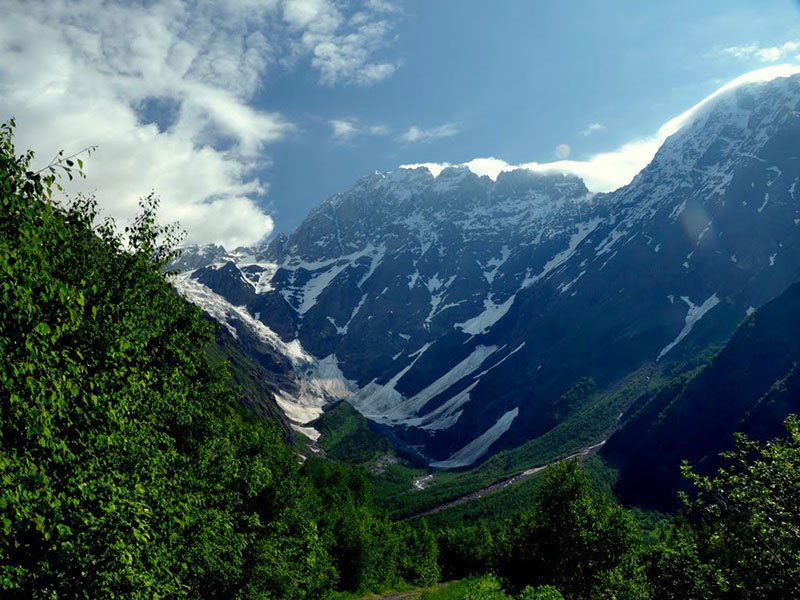
Climb Dykh-Tau by the North Ridge, 13 Days
- Height (m)
- 5204
- Duration
- 13 days
- Difficulty
- Challenging
- Continent
- Europe
- Children
- Not suitable for children
- Accommodation
- Some nights in tents
8480 $
Why to go with us?
Climbing Dykh-Tau, 5204 m, by the north ridge, Russian grade 4B, is a full technical expedition in the Bezengi area rather than an automatic next step after a first 5000 m peak. Over 13 days the group works through an acclimatisation cycle, moves up to high bivouacs and climbs a combined rock and ice route.
Programme price — $8 480.
The trip is intended for participants with proven mountaineering experience, good acclimatisation at altitude and confident skills with rope, crampons and ice axe. Before booking we assess each participant's climbing record: on Dykh-Tau, excess self-confidence weighs noticeably more than a rucksack.
Important
- The cost covers support for one summit attempt
- The final tactics, the make-up of the rope teams and whether the team sets out are decided by the lead guide according to the actual conditions
- The trip is not suitable as a first climb and does not replace prior technical training
About the Dykh-Tau climb
Dykh-Tau is the second highest summit in Russia and in Europe after Elbrus. The mountain stands in the Bezengi area of the Central Caucasus, where altitude is combined with complex ice and rock terrain, long approaches and limited infrastructure. Dykh-Tau features in the Stars of Bezengi and Snow Leopard of Russia trips.
This trip uses the north ridge, Russian grade 4B. In the Russian system, routes run from grade 1 to grade 6 with A and B sub-grades at each level. It is a combined route with snow, ice and rock sections, where what matters is not only endurance and tolerance of altitude but the speed of safe work on a rope team. Participants must move confidently in crampons, use an ice axe, follow the guide’s instructions and work with karabiners, self-belay lanyards, an ascender and a descender.
The acclimatisation logic is built around the Bezengi area. After preparation at the mountaineering camp the group walks up to the Djangi-Kosh hut and makes an ascent of Sella Peak, then returns to the valley to rest. Only then does the high part of the trip on Dykh-Tau begin, with nights at the Russian Bivouac and the VTsSPS bivouac. That scheme does not make the route easy, but it does allow the team to reach the main climb better prepared.
Altitude on Dykh-Tau magnifies the consequences of any technical error and slows down ordinary actions. The decision to set out, the order of movement and the decision to turn back are therefore taken by the guide. It is worth studying the principles of physical preparation for big mountains in advance, but a training plan does not replace real climbing experience.
Guided Dykh-Tau climbing itinerary, 13 days
Day 1. Arrival at Mineralnye Vody and transfer to the Bezengi camp. Arrival at Mineralnye Vody airport, where the guide meets the group. Transfer to the Bezengi mountaineering camp in the heart of the Caucasus (200 km, about four hours on the road). On arrival, accommodation in comfortable cabins, dinner and an evening briefing about the route, including a discussion of the plans for the coming days. Night at the mountaineering camp.
Day 2. Preparation and equipment day. A day of preparation and packing. Equipment checks, training in the use of climbing gear and acclimatisation walks around the camp. You can enjoy the views of the glaciers and peaks that surround Bezengi. In the evening, a discussion of the technical details of the climb. Dinner and night at the mountaineering camp.
Day 3. Approach to the Djangi-Kosh hut. In the morning we set off on the approach to the Djangi-Kosh hut. The path runs through scenic mountain valleys and offers panoramas of imposing peaks and glaciers. The walk takes about 6 to 8 hours. On arrival, accommodation in the hut, rest and dinner.
Day 4. Acclimatisation ascent of Sella Peak. Today we make an acclimatisation ascent of Sella Peak. It is a technically straightforward but scenic route that helps prepare the body for altitude. The summit gives a panoramic view of the Dykh-Tau massif and the surrounding mountains. After the ascent we return to the Djangi-Kosh hut. Dinner and rest.
Day 5. Descent to the Bezengi camp. Descent back to the Bezengi mountaineering camp. The way follows the familiar route, with another chance to enjoy the views of the mountain valleys. Rest at the camp during the day, with free time for walks and relaxation. Dinner in the evening and preparation for the next stages.
Day 6. Rest day at the camp. A rest day at the mountaineering camp. A chance to recover, walk in the surrounding area or enjoy the views of the Bezengi glacier. In the evening the guide gives the final briefing before the climbing route begins.
Day 7. Approach to the Russian Bivouac. Approach to the place known as the Russian Bivouac. This is the first stage of the Dykh-Tau climb and involves a long walk over rocky paths and glacier sections. Accommodation in the high camp, dinner and a night in tents.
Day 8. Move to the VTsSPS bivouac. The move to the VTsSPS bivouac. This day demands good physical condition from participants: the route crosses steep ascents and snow and ice sections. The camp is set up at altitude, followed by dinner and rest.
Day 9. Summit day on Dykh-Tau, 5204 m. The main day of the Dykh-Tau climb. An early start on the route; the ascent requires skill with climbing equipment as well as endurance. The way crosses snow and rock sections, and from the summit at 5204 m there is a striking view of the Caucasus range. After the ascent we return to the VTsSPS bivouac.
Day 10. Descent to the Bezengi camp. Descent to the Bezengi mountaineering camp. This day allows you to relax properly after the demanding days of the climb. At the camp you can enjoy a hot dinner, comfort and good company.
Days 11-12. Reserve days. Reserve days in case of bad weather or other unforeseen circumstances. They can be used for additional walks or for rest at the mountaineering camp.
Day 13. Transfer to Mineralnye Vody. Morning transfer to Mineralnye Vody. On the way you can enjoy the views of the mountain valleys left behind. After arriving at the airport, the flight home, full of vivid impressions of the climb.
What's included
- Guides: a group leader throughout the trip and assistant guides on summit day (one guide for a maximum of one to two climbers). The cost covers support for one summit attempt only
- Hotel accommodation in double or triple rooms, for the number of nights set out in the itinerary
- Transfers and journeys according to the itinerary
- Obtaining all the necessary permits and registrations
- Accommodation in cabins, for the number of nights set out in the itinerary
- The necessary group equipment (ropes, ice screws, tents, kitchen equipment, satellite navigation, radios and so on)
- Three meals a day, including dinner on the first day and breakfast on the last day of the trip
What's not included
- Any personal equipment
- Single occupancy
- Cook’s and guides’ services in the case of additional climbs
The Dykh-Tau climb for private groups
The Dykh-Tau climb can be arranged for a private group, a climbing club or a rope team of prepared climbers on its own dates, subject to guides being free and a suitable seasonal window. Before confirming the trip we review each participant’s experience, their previous high-altitude and technical ascents, their ropework and their ability to move carrying an expedition load. Where necessary we can discuss extra acclimatisation days, preparatory sessions at Bezengi and a different ratio of guides to participants. The route, the high camps and the tactics are not changed merely to suit a convenient calendar. The final decision always rests with the lead guide, in the light of the state of the mountain, the weather and the team’s actual readiness.
Documents required for the Dykh-Tau climb
To join this trip you will need:
- A valid passport
- Tickets to Mineralnye Vody and back
- Medical insurance covering mountaineering, climbing to at least 5204 m, search and rescue and evacuation
- The documents and details the organiser requests in order to arrange registration and access to the Bezengi area
- Digital copies of your main documents, saved on your phone and in cloud storage
The registrations and permits included in the trip are arranged by the organisers. Which documents are needed, and by when, is confirmed before each particular departure, as the rules for visiting mountain areas near the border can change. Before the trip, check your insurance policy by its actual wording, not by the marketing name of the plan. There is useful guidance in our piece on insurance for mountaineers.
Weather and season for the Dykh-Tau climb
The main season for this Dykh-Tau trip is summer and early autumn. The exact dates depend on the state of the north ridge, the snow and ice conditions, the mountaineering camp’s schedule and whether the high camps can be set up safely. Conditions on the route are set not by the calendar but by a combination of temperature, precipitation, wind and the state of the ground. After snowfall the rock sections can be covered in snow and ice; as it warms, the risk of rockfall rises; and strong wind and poor visibility slow progress on the ridge considerably. Reserve days improve the chance of waiting out for suitable conditions, but they do not guarantee the summit. The decision to set out and to continue the climb rests with the lead guide, according to the actual weather and the state of the route.
Accommodation and meals on the Dykh-Tau climb
For the lower part of the trip the group stays in cabins at the Bezengi mountaineering camp, as set out in the itinerary. The acclimatisation outing includes a night near the Dzhangi-Kosh hut, and the high-altitude section on Dykh-Tau is spent in tents at prepared bivouac sites or at sites chosen by the guide. Meals are provided throughout the trip: the price includes dinner on the first day, all meals on the days that follow and breakfast on the day of departure. On the high-altitude section an expedition diet is used, designed for cooking in camp and for long days on the route. If you have a food allergy, an intolerance or a medical restriction, tell us before booking. Whether a special diet is possible must be confirmed in advance: on the self-sufficient section the choice of food is limited.
Day-to-day conditions on the Dykh-Tau climb
The level of comfort changes as the route gains height. The mountaineering camp has basic facilities, places to rest and somewhere to charge devices. On the approaches and at the high bivouacs the group lives in expedition style: tents, limited personal space, very little water for washing and none of the usual infrastructure. There is no electricity and no reliable mobile signal on the high-altitude section. Bring a power bank, spare batteries for your torch, wet wipes and compact toiletries. Protect your electronics and batteries from damp and cold. Participants help keep the camp in order, prepare their own sleeping space and carry an agreed share of the personal and group equipment. The exact weights are shared out before setting off, once the whole team has been checked.
Insurance
НаверхEquipment list for the Dykh-Tau climb
Скачать PDFDocuments:
- Passport
- Air tickets
- Medical insurance
Personal equipment:
- Rucksack. 70-80 litres
- A sleeping bag with a comfort rating of -20 to -30 °C.
- Sleeping mat
- Trekking poles
- Steel crampons
- Classic ice axe with a steel pick, or a technical ice tool
- Climbing harness
- Helmet
- 5 karabiners.
- Cow’s-tail lanyards
- Ascender
- Ice screw on its own karabiner
- Descender
- Mug, spoon and bowl
- 5 m of 5-6 mm accessory cord
Clothing and footwear:
- Triple or double mountaineering boots. Doubles, plastic or leather, ideally with an outer overboot
- Trekking boots
- Trainers (for the towns)
- Waterproof shell: jacket and trousers. The market runs from simple 5,000/5,000 membranes through to Gore-Tex garments
- Fleece top and bottoms
- Base layer, top and bottoms
- Down jacket with a hood. Thick and warm
- Warm mittens
- Spare mittens
- Thick gloves
- Thin gloves
- Bandana (as well as sun protection in the valley, it can keep your throat or face warm in the cold)
- Warm hat
- Warm trekking socks for summit day
Other items:
- LED head torch with at least 12 hours of battery life
- Sunglasses
- Ski goggles
- Vacuum flask, 1 litre. Preferably without a push-button lid
- Windproof face mask for the lower face (a scarf will do at a pinch)
- Gaiters
- Sun cream and lip balm
- Chemical hand warmers (not compulsory, but they can be very useful)
- Personal first-aid kit
- Elastic bandage and/or a support brace
You may also like
-
 19,000 $
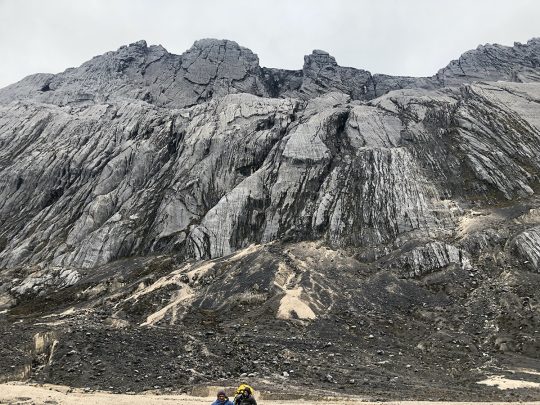
Climb Carstensz Pyramid, 8 Days with Helicopter Access
-
 3,900 $
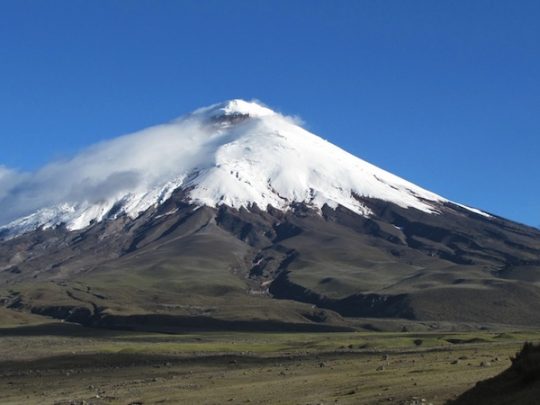
Climb Chimborazo and Cotopaxi — 14-Day Ecuador Expedition
- Height (m)
- 5897, 6384
- Duration
- 11 days
- Difficulty
- Moderate
- Continent
- South America
- Children
- Ages 14+
- Accommodation
- Hotels only
-
 5,238 $
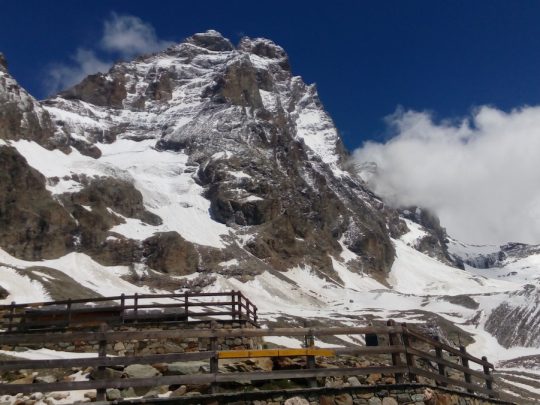
Climb the Matterhorn, 4478 m — 8-Day Guided Ascent
- Height (m)
- 4478
- Duration
- 8 days
- Difficulty
- Average
- Continent
- Europe
- Children
- Not suitable for children
- Accommodation
- No nights in tents
-
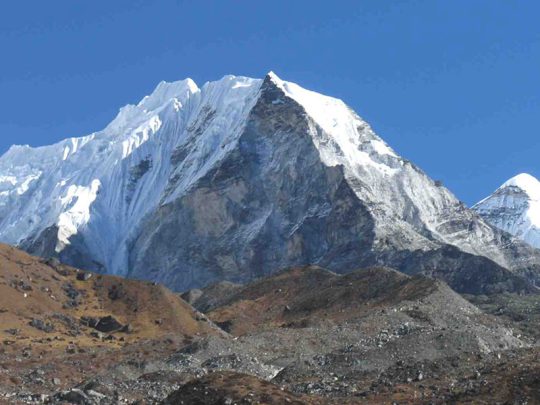 3,129 $
Island Peak Climb — 18-Day Expedition
- Height (m)
- 6165
- Duration
- 18 days
- Difficulty
- Moderate
- Continent
- Asia
- Children
- Not suitable for children
- Accommodation
- Some nights in tents