- Guides
- B2B
-
#19607 (no title)
-
#15972 (no title)
- Climb Elbrus Individually
- Climb Elbrus from the South, 9 Days
- Climb Elbrus from the South, 7 Days
- Climb Elbrus from the South with Oxygen
- Climb Elbrus from the North, 10 Days
- Two Summits of Elbrus, 9 Days
- Elbrus Traverse from South to North, 9 Days
- Elbrus Traverse from North to South, 10 Days
- Cross of Elbrus, South to North, 9 Days
- Cross of Elbrus, North to South, 10 Days
- Climb Kazbek and Elbrus — 10-Day Two-Summit Expedition
- Climb Elbrus from the West, 11 Days
- Elbrus by Private Helicopter, 3 Days
- Elbrus Region Holiday and Trekking, 9 Days
- Elbrus Region Holiday, 7 Days
- Elbrus Dating
- Climb Elbrus from the South, 9 Days with Sergey Baranov
-
#15539 (no title)
- Climb Carstensz Pyramid, 8 Days with Helicopter Access
- Climb Mont Blanc, 4810 m — 8-Day Guided Ascent
- Climb the Matterhorn, 4478 m — 8-Day Guided Ascent
- Climb Mount Vinson, 15-Day Antarctic Expedition
- Climb Kosciuszko and Travel in Australia, 7 Days
- Climb Fisht, 2868 m — 3-Day Ascent by the 1B Route
- Climb Mount Wilhelm, 6 Days
-
#15546 (no title)
- Climb Kilimanjaro: the Marangu Route
- Climb Kilimanjaro: the Lemosho Route
- Climb Ararat, 5137 m — 7-Day Classic Climb
- Climb Kazbek from the South, 5033 m — 8 Days in Georgia
- Climb Kazbek and Elbrus — 10-Day Two-Summit Expedition
- Climb the Volcanoes of Mexico — Orizaba and Iztaccíhuatl, 9 Days
- Climb Alpamayo — 16-Day Technical Expedition
- Climb Margaret Peak (Stanley), 5109 m
- Climb Mount Kenya: Point Lenana, 4985 m
- Climb Dykh-Tau by the North Ridge, 13 Days
-
#15554 (no title)
- Aconcagua Climb — 17-Day Guided Expedition
- Island Peak Climb — 18-Day Expedition
- Climb Mera Peak, 6476 m — 16-Day Hinku Valley Expedition
- Climb Ama Dablam, 6812 m — 24-Day Expedition with Island Peak
- Climb Island Peak and Mera Peak — 24-Day Two-Summit Expedition
- Aconcagua and Ojos del Salado — 25-Day Combined Expedition
- Ojos del Salado Climb — 15-Day Expedition
- Climb Chimborazo and Cotopaxi — 14-Day Ecuador Expedition
- Climb Huascarán — 8-Day Technical Ascent
- Climb Razdelnaya Peak, 6148 m — 15-Day Pamir Expedition
- Climb Denali by the West Buttress, 23 Days
- #15565 (no title)
- #15572 (no title)
-
#15972 (no title)
-
#19592 (no title)
-
Trekking in Nepal: routes to the eight-thousanders
- K2 Base Camp Trek via the Gondogoro La
- Everest Base Camp Trek — 14 Days
- Everest Base Camp via Gokyo Lakes — 15 Days
- Short Everest Base Camp Trek in 10 Days
- Annapurna Circuit and Tilicho Lake Trek
- Manaslu Circuit Trek
- Kanchenjunga Circuit Trek (XXL)
- Kanchenjunga North Base Camp Trek (Short)
- Kanchenjunga from India: the Goecha La Trek in Sikkim
- Makalu Base Camp Trek
- Annapurna Base Camp Trek
- Trekking in South America
- Asia
- Trekking in Africa
-
Trekking in Russia
- Elbrus Region Holiday and Trekking, 9 Days
- Elbrus Region Holiday, 7 Days
- Oshten + Kardyvach — 9-Day Western Caucasus Trek
- Lake Kardyvach — 5-Day Base-Camp Trek
- Route 30: Through the Mountains to the Sea, with Oshten — 4 Days
- Trekking in Arkhyz — 7 Days over the Ayulyu Pass
- Gvandra Trek — 7 Days to the Ullu-Kyol Lakes
- Trekking in Dombai — 7 Days with the Murudzhu Lakes
- Europe
-
Trekking in Nepal: routes to the eight-thousanders
-
Adventure expeditions
-
Trekking in Africa
- モロッコツアー:北アフリカの中心
- トゥブカルの登山とモロッコの文化
- Eritrea: the Dahlak Archipelago and the Rashaida Nomads
- Rwanda: Mountain Gorillas and the Bisoke Volcano
- Ethiopia: Otherworldly Landscapes and the Peoples of the Omo Valley
- ウガンダツアー:クイーンズパークとマウンテンゴリラ
- Tanzania Safari: Serengeti, Ngorongoro and Tarangire
- ウガンダツアー:ホワイトサイとマウンテンゴリラ
- Zimbabwe and South Africa: Victoria Falls, Cape Town and the Cape of Good Hope
- Namibia: Etosha National Park and the Himba
- Kenya Safari: the African Big Five
- ボツワナツアー:オカバンゴデルタとチョベ公園
- Trekking in South America
- Asia
-
Trekking in Africa
- Ski touring and ski mountaineering: chasing freedom in the mountains
- VIP tours
- #19722 (no title)
- About
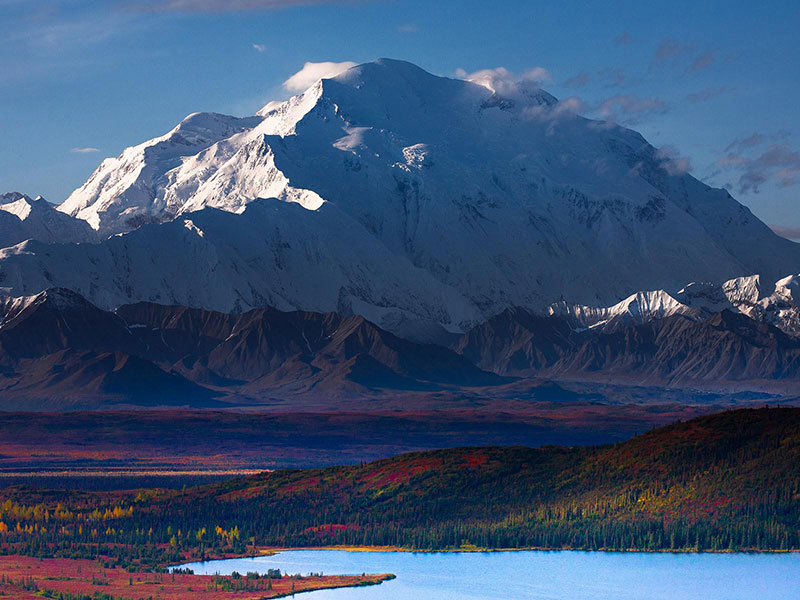
Climb Denali by the West Buttress, 23 Days
- Height (m)
- 6193
- Duration
- 21 day
- Difficulty
- Average
- Continent
- North America
- Children
- Not suitable for children
- Accommodation
- Some nights in tents
18690 $
Why to go with us?
Temporarily unavailable
- An ascent of the highest summit in North America, often compared to climbing Everest
- A genuine, vivid adventure in Alaska
- A fully self-supported expedition in severe conditions
- It demands a considered approach and determination: temperatures down to −45 °C at night, glaciers, crevasses and a heavy sled hauled behind you
- The expedition runs under the leadership of an experienced guide
Please note that our company does not buy or sell air tickets and does not arrange visas, and therefore accepts no responsibility for disruption beyond its control involving flights and border crossings.
Important information:
- Hotel check-in and check-out times are set by the hotel: check-in from 15:00, check-out by 11:00–12:00. Luggage can be left at reception while you walk around town, or, where the hotel can arrange it, you can pay for early check-in or late check-out
- We recommend arriving one to two days before the expedition starts, for fuller recovery and adjustment to the change of time zones
- Please note that the Denali (McKinley) trip includes four reserve days in case of bad weather or other unpredictable circumstances
About the Denali climb
We offer our participants an ascent of Denali, formerly known as McKinley, by the classic route along the West Buttress. Most of the route runs over a “closed” glacier, whose surface is covered by snow that hides deep crevasses, yet the route remains relatively easy technically. The most dangerous part of the way, at 4300 m, where the slope reaches 45 degrees, is climbed on fixed ropes, which safeguards the section.
Reaching base camp, the key point of the climbing trip, means covering about 30 km across the Kahiltna Glacier and passing intermediate camps at 2400 m, 3000 m and 3300 m. As far as the camp at 3300 m the route requires every climber to haul a loaded sled behind them on skis or snowshoes; on reaching the third camp the sleds are left behind. The onward climb to 4330 m is made in crampons and with rucksacks, through Windy Corner, and the group often has to cover this section more than once in order to move all the loads. At 4300 m stands the advanced base camp, also known as Basin Camp. The final stage is the climb to 5200 m and the high camp, from which the summit push on Denali (McKinley) begins by way of Denali Pass. The difficulty of this route comes from the low temperatures and the many crevasses on the surface of the glacier.
Guided Denali (McKinley) climb by the classic West Buttress route, 23 days
Day 1. Arrival in Anchorage. You arrive in Anchorage, where a company representative meets you at the airport and drives you to the hotel so that you can rest and recover after the long journey. In the evening you meet the guide and the other participants, and we go through the route, the stages of the expedition and the safety rules. Participants can of course ask the guide every question they have about the coming Denali climb, and the day ends with dinner in a restaurant. Night in a hotel.
Day 2. Shopping in Anchorage and transfer to Talkeetna. After a good breakfast at the hotel we go out to buy expedition food, fuel and equipment in local shops. The guide helps you choose what is needed so that every participant has everything the climb may require. We then transfer to the small, welcoming town of Talkeetna, some 200 km away; the drive takes about two to three hours, and on arrival we check into the hotel. In the evening we walk around Talkeetna and visit the legendary bar that serves as the unofficial meeting point for climbers from all over the world, which certainly gives the place its own atmosphere. Night in a hotel.
Day 3. Final briefing and flight to the Kahiltna Glacier, 2225 m. In the morning the whole group gathers for a last check of all the equipment and the guide’s final briefing. The guide explains the details of the route ahead and the rules for moving on glaciers, checks that each participant is ready and confirms that everyone has the kit the trip requires. Once preparation and the equipment check are complete we board a ski-equipped aircraft and fly towards the Kahiltna Glacier at 2225 m. During the flight we take in the extraordinary views of the Alaskan mountains, among them Foraker, Hunter and the Moose’s Tooth. On landing we set up base camp on the glacier and devote the rest of the day to adapting to the unfamiliar conditions. Night in tents.
Day 4. Glacier training and the move to Camp 1. This day is given over to training in glacier travel and crevasse rescue, an essential stage of any self-supported expedition. After the training, participants leave base camp and move up to Camp 1, getting used along the way to working with the sleds that are the key element of this climb. One further practical point: human waste from the route below 4300 m must be carried off the mountain, which forms part of a national park, in a special container issued individually to every participant before the climb begins. Night in tents.
Day 5. Move to Camp 2, 3000 m. In the morning, after breakfast and packing up Camp 1, we begin the move to Camp 2 at 3000 m. The route runs over the Ski Hill slope, whose gradient eases closer to Camp 2, making the second half of the day easier than the first. On arrival we set up camp, rest, cook, prepare equipment for the next stage and discuss the plan for the following day. Night in tents.
Day 6. Move to Camp 3, 3300 m. Today we face a demanding and long move to Camp 3 at 3300 m, which takes about five hours. The particular feature of this section is that the gradient increases steadily, which makes the climb harder, partly because of the heavy sled behind you. In good weather the section is reasonably straightforward, but deep snow turns it into a real test. On reaching Camp 3, participants set up camp, cook dinner and rest. Night in tents.
Day 7. Carry to Basin Camp, 4300 m, and return to Camp 3. Today we leave the sleds and snowshoes, which are no longer needed, at camp and continue the Denali climb in crampons. After breakfast we start the ascent to Basin Camp at 4300 m. We carry a load up to that camp and return to Camp 3 to rest. It is a full day that demands considerable physical endurance and patience, with significant height gain and some short technical sections. Night in tents.
Day 8. Move to Camp 4. After a night’s rest and breakfast we make the final move to Camp 4, the camp from which the summit is attempted. Climbing to it along the now familiar route, we set it up and work on acclimatising at altitude, which prepares us for the days ahead and helps to avoid altitude sickness. Night in tents.
Day 9. Acclimatisation and rest at Camp 4. This day is set aside for acclimatisation and rest. In some cases the guide may decide to skip it when weather conditions are suitable and the participants feel well. The time can also be used for camp work, equipment checks and rest before the more serious stages of the expedition.
Day 10. Carry to 5000 m and return to Camp 4. On this day the group carries part of the equipment up to 5000 m in preparation for the next stage of the climb. The move consists of several sections: first a height gain of 335 m up the slope to the start of the fixed ropes, and then an ascent of a 300 m snow and ice slope at a gradient of about 45 degrees leading to the West Buttress ridge. From this point the terrain becomes more serious, with deep drops on both sides, and demands full concentration from the climbers. After the carry the group returns to Camp 4 to rest and prepare for the next day. Night in tents.
Day 11. Rest day at Camp 4. Today is a rest day: we recover after the hard, energy-sapping carry of the previous day. The day helps the body adapt further to altitude and lets participants build strength before the moves to come. The rest of the day can also be given over to checking equipment. Night in tents.
Day 12. Move to the high camp, 5200 m. Participants face a demanding day climbing to the high camp at 5200 m. The route to it includes the difficult section known as the Sixteen Ridge. Camp 5 itself stands on a small plateau with a view of Camp 4, 850 m below. Participants set up camp and spend the night there before the final summit push. Night in tents.
Day 13. Summit day on Denali, 6193 m. Today is the long-awaited summit day on McKinley. The climbers’ route begins at Denali Pass, on a steep snow-covered slope. As we move forward the gradient eases and the route leads to the plateau known as the Football Field at 5900 m. The group then crosses gently broken ground to the summit ridge. On the last section a climb of about 100 m awaits, and there it is: the long-awaited highest summit in North America. From here there is a magnificent view of the Alaska Range, Mount Foraker to the west and Mounts Huntington and Hunter to the south. We will have enough time for photographs and for taking in the views before beginning the unhurried descent from the summit of Denali to the high camp. Night in tents.
Day 14. Descent to 4300 m. After summit day the group begins the gradual descent to base camp, which is much easier than the ascent thanks to full acclimatisation and the loss of height. On this day we descend to the camp at 4300 m, rest and recover for the rest of the way. Night in tents.
Day 15. Descent to 3350 m. On this day the group continues the descent from the summit towards base camp, down to 3350 m. Night in tents.
Day 16. Descent to the airstrip, 2200 m. Participants continue the descent, now on snowshoes or skis, with the aim of reaching the airstrip at 2200 m. Night in tents.
Day 17. Flight to Talkeetna. The flight to Talkeetna is planned for this day and depends on the weather; delays because of unflyable conditions are common. Reserve days are built into the schedule for bad weather and other unforeseen circumstances, so that these risks are avoided. In suitable weather, arrival in Talkeetna. Night in a hotel.
Day 18. Transfer to Anchorage. Transfer to Anchorage and a celebration dinner to mark the end of the expedition. Night in a hotel.
Day 19. Departure. Transfer to the airport and flight home.
Day 20. Reserve day. Reserve day in case of bad weather or other unforeseen circumstances.
Day 21. Reserve day. Reserve day in case of bad weather or other unforeseen circumstances.
Day 22. Reserve day. Reserve day in case of bad weather or other unforeseen circumstances.
Day 23. Reserve day. Reserve day in case of bad weather or other unforeseen circumstances.
What's included
- An experienced Mountain Guide team leader, in groups of four or more participants
- Local American guides
- Domestic flights Talkeetna – Kahiltna Glacier (2200 m) – Talkeetna
- Meet and greet at the airport
- Transfer Anchorage – Talkeetna – Anchorage
- Hotel accommodation in Anchorage, 2 nights, 4*
- Hotel accommodation in Talkeetna, 2 nights
- Accommodation and meals in tents during the ascent
- Group climbing equipment (high-altitude tents, gas, stoves, shovels, ropes and so on)
- A duffel bag for personal belongings (provided by our team on site)
- Assistance with preparing all the documentation needed to obtain the permit
What's not included
- International flights
- Visa
- Climbing permit (from USD 450)
- Lunches and dinners in Anchorage and Talkeetna
- Porters
- Insurance covering mountaineering and helicopter evacuation
- Single occupancy
- Early check-in or late check-out at the hotel before or after the trip (we always try to agree additional benefits for our guests with our partners, and early check-in or late check-out is often granted at no charge)
- Tips (from USD 500)
- Any departure from the itinerary
- Any costs connected with change to the itinerary
Insurance
НаверхEquipment list for the Denali climb
Скачать PDFDocuments:
- Passport
- Air tickets
- Medical insurance
Personal equipment:
- Rucksack. 60-70 litres
- Snowshoes
- A sleeping bag with a comfort rating of -20 °C or lower.
- Sleeping mat
- Trekking poles, which must have baskets of at least 70 mm
- Steel crampons
- Classic ice axe with a steel pick, or a technical ice tool
- Climbing harness
- Helmet
- 5 karabiners.
- Cow’s-tail lanyards
- Ascender
- Descender
- Ice screw on its own karabiner
- A holdall (100 litres or more).
- Mug, spoon and bowl
- 10 m of accessory cord.
Clothing and footwear:
- Triple or double mountaineering boots. Doubles, plastic or leather, ideally with an outer overboot
- Trekking boots
- Trainers (for the towns)
- Waterproof shell: jacket and trousers. The market runs from simple 5,000/5,000 membranes through to Gore-Tex garments
- Fleece top and bottoms
- Base layer, top and bottoms
- Down jacket with a hood. Thick and warm
- Warm mittens
- Spare mittens
- Thick gloves
- Thin gloves
- Bandana (as well as sun protection in the valley, it can keep your throat or face warm in the cold)
- Warm hat
- Warm trekking socks for summit day
Other items:
- LED head torch with at least 12 hours of battery life
- Sunglasses
- Ski goggles
- Vacuum flask, 1 litre. Preferably without a push-button lid
- Windproof face mask for the lower face (a scarf will do at a pinch)
- Gaiters
- Sun cream and lip balm
- Chemical hand warmers (not compulsory, but they can be very useful)
- Personal first-aid kit
- Elastic bandage and/or a support brace
You may also like
-
 19,000 $
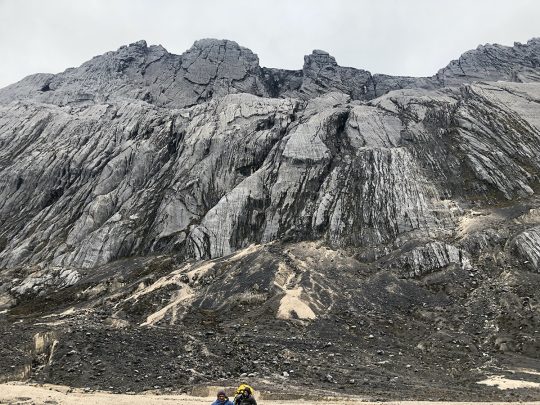
Climb Carstensz Pyramid, 8 Days with Helicopter Access
-
 3,200 $
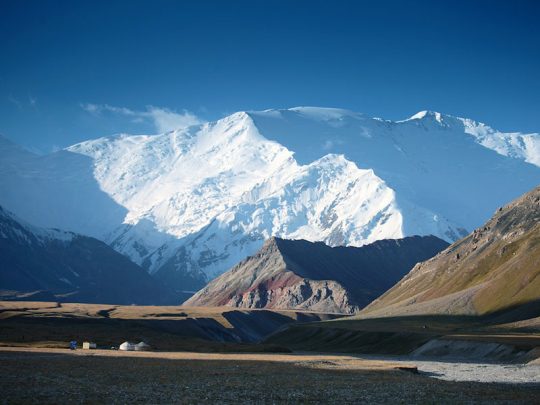
Climb Lenin Peak, 7135 m — 21-Day Pamir Expedition
- Height (m)
- 7135
- Duration
- 21 day
- Difficulty
- Moderate
- Continent
- Asia
- Children
- Not suitable for children
- Accommodation
- Some nights in tents
-
 62,000 $
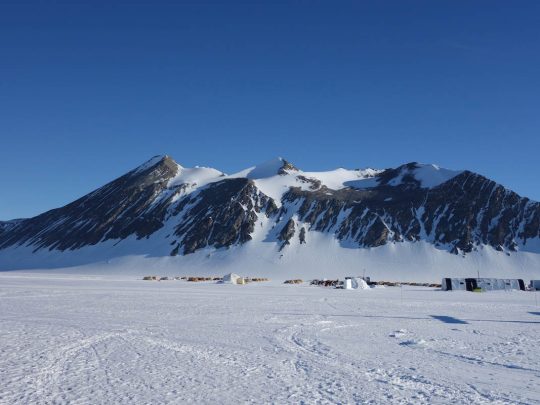
Climb Mount Vinson, 15-Day Antarctic Expedition
- Height (m)
- 4892
- Duration
- 21 day
- Difficulty
- Moderate
- Continent
- Antarctica
- Children
- Ages 14+
- Accommodation
- Some nights in tents