- Guides
- B2B
-
#19607 (no title)
-
#15972 (no title)
- Climb Elbrus Individually
- Climb Elbrus from the South, 9 Days
- Climb Elbrus from the South, 7 Days
- Climb Elbrus from the South with Oxygen
- Climb Elbrus from the North, 10 Days
- Two Summits of Elbrus, 9 Days
- Elbrus Traverse from South to North, 9 Days
- Elbrus Traverse from North to South, 10 Days
- Cross of Elbrus, South to North, 9 Days
- Cross of Elbrus, North to South, 10 Days
- Climb Kazbek and Elbrus — 10-Day Two-Summit Expedition
- Climb Elbrus from the West, 11 Days
- Elbrus by Private Helicopter, 3 Days
- Elbrus Region Holiday and Trekking, 9 Days
- Elbrus Region Holiday, 7 Days
- Elbrus Dating
- Climb Elbrus from the South, 9 Days with Sergey Baranov
-
#15539 (no title)
- Climb Carstensz Pyramid, 8 Days with Helicopter Access
- Climb Mont Blanc, 4810 m — 8-Day Guided Ascent
- Climb the Matterhorn, 4478 m — 8-Day Guided Ascent
- Climb Mount Vinson, 15-Day Antarctic Expedition
- Climb Kosciuszko and Travel in Australia, 7 Days
- Climb Fisht, 2868 m — 3-Day Ascent by the 1B Route
- Climb Mount Wilhelm, 6 Days
-
#15546 (no title)
- Climb Kilimanjaro: the Marangu Route
- Climb Kilimanjaro: the Lemosho Route
- Climb Ararat, 5137 m — 7-Day Classic Climb
- Climb Kazbek from the South, 5033 m — 8 Days in Georgia
- Climb Kazbek and Elbrus — 10-Day Two-Summit Expedition
- Climb the Volcanoes of Mexico — Orizaba and Iztaccíhuatl, 9 Days
- Climb Alpamayo — 16-Day Technical Expedition
- Climb Margaret Peak (Stanley), 5109 m
- Climb Mount Kenya: Point Lenana, 4985 m
- Climb Dykh-Tau by the North Ridge, 13 Days
-
#15554 (no title)
- Aconcagua Climb — 17-Day Guided Expedition
- Island Peak Climb — 18-Day Expedition
- Climb Mera Peak, 6476 m — 16-Day Hinku Valley Expedition
- Climb Ama Dablam, 6812 m — 24-Day Expedition with Island Peak
- Climb Island Peak and Mera Peak — 24-Day Two-Summit Expedition
- Aconcagua and Ojos del Salado — 25-Day Combined Expedition
- Ojos del Salado Climb — 15-Day Expedition
- Climb Chimborazo and Cotopaxi — 14-Day Ecuador Expedition
- Climb Huascarán — 8-Day Technical Ascent
- Climb Razdelnaya Peak, 6148 m — 15-Day Pamir Expedition
- Climb Denali by the West Buttress, 23 Days
- #15565 (no title)
- #15572 (no title)
-
#15972 (no title)
-
#19592 (no title)
-
Trekking in Nepal: routes to the eight-thousanders
- K2 Base Camp Trek via the Gondogoro La
- Everest Base Camp Trek — 14 Days
- Everest Base Camp via Gokyo Lakes — 15 Days
- Short Everest Base Camp Trek in 10 Days
- Annapurna Circuit and Tilicho Lake Trek
- Manaslu Circuit Trek
- Kanchenjunga Circuit Trek (XXL)
- Kanchenjunga North Base Camp Trek (Short)
- Kanchenjunga from India: the Goecha La Trek in Sikkim
- Makalu Base Camp Trek
- Annapurna Base Camp Trek
- Trekking in South America
- Asia
- Trekking in Africa
-
Trekking in Russia
- Elbrus Region Holiday and Trekking, 9 Days
- Elbrus Region Holiday, 7 Days
- Oshten + Kardyvach — 9-Day Western Caucasus Trek
- Lake Kardyvach — 5-Day Base-Camp Trek
- Route 30: Through the Mountains to the Sea, with Oshten — 4 Days
- Trekking in Arkhyz — 7 Days over the Ayulyu Pass
- Gvandra Trek — 7 Days to the Ullu-Kyol Lakes
- Trekking in Dombai — 7 Days with the Murudzhu Lakes
- Europe
-
Trekking in Nepal: routes to the eight-thousanders
-
Adventure expeditions
-
Trekking in Africa
- モロッコツアー:北アフリカの中心
- トゥブカルの登山とモロッコの文化
- Eritrea: the Dahlak Archipelago and the Rashaida Nomads
- Rwanda: Mountain Gorillas and the Bisoke Volcano
- Ethiopia: Otherworldly Landscapes and the Peoples of the Omo Valley
- ウガンダツアー:クイーンズパークとマウンテンゴリラ
- Tanzania Safari: Serengeti, Ngorongoro and Tarangire
- ウガンダツアー:ホワイトサイとマウンテンゴリラ
- Zimbabwe and South Africa: Victoria Falls, Cape Town and the Cape of Good Hope
- Namibia: Etosha National Park and the Himba
- Kenya Safari: the African Big Five
- ボツワナツアー:オカバンゴデルタとチョベ公園
- Trekking in South America
- Asia
-
Trekking in Africa
- Ski touring and ski mountaineering: chasing freedom in the mountains
- VIP tours
- #19722 (no title)
- About
Climb Lenin Peak, 7135 m — 21-Day Pamir Expedition
- Height (m)
- 7135
- Duration
- 21 day
- Difficulty
- Moderate
- Continent
- Asia
- Children
- Not suitable for children
- Accommodation
- Some nights in tents
3200 $
Why to go with us?
Temporarily unavailable
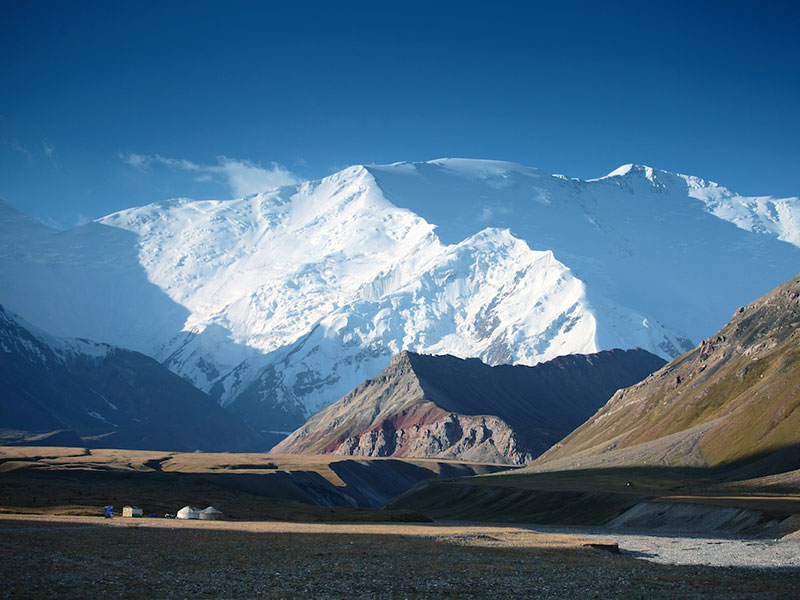
Climbing Lenin Peak by the classic route — a 21-day high-altitude expedition to a seven-thousander of the Pamir and one of the five summits of the Snow Leopard challenge.
The route counts as technically moderate only by the standards of seven-thousanders. Between the camps there is roped movement on the glacier, crevasses, steep snow slopes, cold nights and a long summit day. A participant needs previous experience at 5000–6000 m and confident use of crampons, ice axe, ascender and harness.
The trip includes two acclimatisation rotations, recovery at the lower camp and three reserve days. That scheme prepares you not only for the summit but for living independently in high camps — an important stage before harder seven-thousanders and eight-thousanders.
Important. The price is fixed in US dollars. Neither the summit nor a repeat attempt is guaranteed; the final tactics are set by the expedition leader according to the weather, the route and each participant's condition.
About the Lenin Peak expedition
Lenin Peak, 7135 m, stands in the Trans-Alai range of the Pamir on the border between Kyrgyzstan and Tajikistan. The classic northern route has well-developed camp logistics, but its relative popularity does not make the mountain safe, and it does not make it suitable for a first encounter with mountaineering.
The trip starts in Osh and in the Achik-Tash meadows at 3600 m. After a first excursion the group moves to the camp at 4400 m, acclimatises to 5100–5400 m and descends to recover. The second rotation reaches 6100 m, after which participants come down again. Only then does the summit cycle begin.
The key technical section runs along the glacier between the camps at 4400 m and 5400 m. Roped travel, crampons and the skills to deal with crevasses are needed here. Higher up the terrain becomes more open and windier, and a night at around 6100 m is a serious load in itself. Summit day calls for a large reserve of endurance and a safe return to camp.
High-altitude experience is not wanted as a formality: a participant should understand their own reaction to hypoxia, be able to service their equipment and make water in a tent, and stay effective after several weeks of expedition life. Admission is decided from the application form and the climbing history.
Lenin Peak belongs to the Snow Leopard challenge. Before the trip it is worth working through the standard material on altitude illness and on mountaineering insurance. Developed infrastructure helps in organising an expedition, but evacuation and rescue at any altitude are not guaranteed.
After a successful ascent of Lenin Peak, the next objectives in the Snow Leopard challenge can be Korzhenevskaya Peak and the harder Communism Peak, also known as Ismoil Somoni Peak. Admission to those is decided not only by the altitude of your previous summit but by your technical skills, your speed of recovery and your experience of working independently in high camps.
Lenin Peak climbing itinerary, 21 days
Day 1. Arrival in Osh.
A member of the team meets the group at the airport and arranges the transfer to the hotel. After a rest we meet the expedition leader, check equipment and go through communications, camp tactics and the turnaround criteria. Night in a hotel.
Day 2. Drive to Achik-Tash, 3600 m.
We drive to the lower camp in the Achik-Tash meadows. After settling in we go through the infrastructure, sort the loads and watch the first reactions to altitude. Night in tents.
Day 3. First acclimatisation excursion.
We make an easy walk around the camp and return for the night. The altitude and the duration are set by the leader. The day gives a gentle start and a check on footwear, pace and condition before the 18-kilometre stage. Night in tents.
Day 4. Move to the camp at 4400 m.
We cover about 18 km to the camp at 4400 m. The long approach leads to the glacier part of the route, so participants walk at an even pace and conserve energy. On arrival we prepare the technical kit for the training session and the rotation. Night in tents.
Day 5. Acclimatisation excursion above the camp.
We climb above the camp and return for the night. The guide checks movement in crampons, roped travel and the handling of each personal kit. The aim is to continue adapting and to correct technical mistakes before the climb to 5100–5400 m. Night in tents.
Day 6. Excursion to 5100–5400 m.
On the leader’s decision the group either climbs to the camp at about 5400 m or makes an acclimatisation ascent of a neighbouring summit at about 5100 m. The choice depends on the weather, the state of the glacier and the participants’ readiness. The night at altitude completes the first full rotation. Night in tents.
Day 7. Descent to the camp at 4400 m.
We come back down to recover after the first night at altitude. Losing altitude improves sleep and appetite and shows how the body has tolerated the rotation. Night in tents.
Day 8. Rest day.
We recover fully, dry our kit and check crampons, ropes and the high-altitude set. Rest is part of the acclimatisation and is not replaced by extra load without a decision by the leader. Night in tents.
Day 9. Climb to the camp at 5400 m.
We cross the glacier section roped up again and climb to 5400 m. A familiar route allows a calmer pace, but the state of the crevasses and snow bridges may have changed. Night in tents.
Day 10. Climb to the camp at 6100 m.
We climb the snow terrain to the camp at about 6100 m. A night at altitude tests pace, clothing, self-sufficiency in camp and tolerance of the zone above 6000 m before the return to recover. Night in tents.
Day 11. Descent to 4400 m.
We return to the lower camp and begin full recovery after the second rotation. The leader assesses whether the acclimatisation is sufficient for the summit cycle. Night in tents.
Day 12. Rest and the decision on the summit attempt.
We rest, restore food and fluid intake and prepare the high-altitude loads. The leader compares the forecast, the state of the route and the condition of the group, and confirms the plan for days 13 to 19. Night in tents.
Day 13. Climb to 5400 m.
The summit cycle begins and we cross the glacier again to the camp at 5400 m. The task is to climb without unnecessary load and conserve energy for the next stage. Night in tents.
Day 14. Climb to 6100 m.
We move to the upper camp. After settling in we rest, prepare clothing, headtorches, water and food, and confirm the start time. Continuing is possible only with an acceptable forecast and a stable condition. Night in tents.
Day 15. Ascent of Lenin Peak, 7135 m.
We set off early in the morning. The turnaround time is set by the leader according to the pace, the weather and the participants’ condition. Reaching the summit is not guaranteed; from the highest point reached you must return safely to the camp at about 6100 m. Night in tents.
Day 16. Descent to 4400 m.
We descend through the high camps to 4400 m. After summit day, fatigue raises the risk of mistakes on the glacier, so movement stays organised right into camp. Night in tents.
Days 17–19. Reserve days.
The reserve makes it possible to move the stages of the summit cycle for the weather or for extra recovery. It does not mean a guaranteed second attempt. If the mountain has been completed to the main plan, the days are used for rest and for bringing the high-altitude loads down safely. Nights in tents.
Day 20. Descent to Achik-Tash and drive to Osh.
We finish the mountain section, descend to the lower camp and drive to Osh. After checking in we sort out the baggage and recover. Night in a hotel.
Day 21. End of the trip.
At the agreed time there is a transfer to the airport. Participants check in for their flight themselves. Choose the return ticket with the full reserve schedule in mind.
What's included
- Professional mountain guides — one per 5–6 clients during the acclimatisation, one per 3 clients on summit day
- All transfers set out in the itinerary
- Hotel accommodation in Osh as set out in the itinerary
- Tented accommodation at Achik-Tash and at the base camps as set out in the itinerary
- Breakfasts in Osh
- Breakfast, lunch and dinner en route, at Achik-Tash (3600 m) and at Base Camp (4400 m)
- Food for the high camps
- Tents for the high camps
- Gas for the high camps, a first-aid kit, ropes and any consultation with the guide
- All the necessary documentation
- Kitchen equipment, apart from your own plate, mug and spoon
What's not included
- Air tickets
- Insurance
- Tips
- Porters
- Horses for carrying personal baggage (USD 3 per kg)
- Alcohol
- Any costs arising from change to the itinerary
Private groups
The climb can be arranged for a closed group of friends, a club or a corporate team, with no outside participants joining. Dates, the make-up of the guiding team and any extra services available on the route are agreed individually. For a closed team we can confirm a dedicated leader from the Mountain Guide team, extra support staff, transport for personal loads and single rooms in Osh. All services and baggage limits are fixed before booking. The acclimatisation scheme, the nights at altitude and the reserve are not shortened to make the trip shorter. Acceptance is assessed case by case, on previous altitude experience, technical skills and physical fitness. The price depends on the number of participants, the dates you choose, the make-up of the team and any extra services confirmed.
Documents you need
Document requirements depend on your nationality and can change. Check them before you buy non-refundable tickets, and again before you fly. The first name and surname on every booking must match the spelling in your passport exactly. Mountain Guide does not sell air tickets and does not arrange entry visas, but it does provide the booking confirmations it holds and the documents issued by the host team.
Documents
- A valid passport
- A visa or other entry permit for Kyrgyzstan, if one is required for your nationality
- International and domestic air tickets, or e-ticket receipts, for the trip
- Medical insurance covering high-altitude mountaineering, a maximum altitude of at least 7134 m, search and rescue, and emergency evacuation
- Your insurance policy number and the insurer’s 24-hour emergency contact details
- Your booking confirmation for the trip and the organisers’ contact details
- Passport copies and photographs in the format requested for permits and registration
- Documents for a participant under 18, where these apply
- Digital copies of your passport, visa, tickets and insurance on your phone and in cloud storage
- Waterproof wallet for your original documents
The documents needed for local permits, and the deadline for sending them, are confirmed for each departure. Carry the originals of your passport, insurance and permits in your hand luggage.
Weather and seasons
The main climbing season on Lenin Peak is July and August. The current camp operator also lists Achik-Tash as open across a wider period from June to September, but that does not mean a climb runs on any day in that range. Mountain Guide dates must allow the full acclimatisation cycle and are confirmed before you buy tickets. Achik-Tash can be sunny and relatively warm, but conditions turn wintry quickly higher up. The glacier can bring snow, crevasses, strong wind, poor visibility and a sharp drop in temperature. The state of the snow bridges changes through the season. Reserve days and repeated trips to altitude are there for adaptation and for choosing safe conditions; they are not a guarantee of the summit. The guide decides whether the climb can go ahead and when to turn back. The exact set of footwear, insulation and technical equipment is agreed before departure.
Accommodation and meals
In Osh participants stay in a hotel for the number of nights in the itinerary, with breakfast included. Room category, single occupancy and extra nights are confirmed separately. Tents are used at Achik-Tash and in the base and high camps. The higher the camp, the simpler the conditions and the less scope there is for recovery. You use your own sleeping bag, mat and personal equipment from the agreed list. Three meals a day are provided on the approach, at Achik-Tash and at base camp. Food and gas are supplied in the high camps, and participants may do the cooking themselves, depending on how the team is working at the time. Tell us about dietary restrictions in advance. A special menu in the high camps is limited by weight and by self-sufficient logistics.
Facilities on the route
Showers and toilets. Osh has the usual hotel facilities. According to the current description of the Achik-Tash camp at 3600 m, shared showers and toilets are available to participants in tented accommodation. The camp at 4400 m has a toilet tent and a washing area. The banya and some other facilities at Achik-Tash are paid separately unless they are expressly included in the Mountain Guide offer. There is no shower in the high camps at 5300 and 6100 m, and sanitation is at camping level.
Power and charging. The fixed tents at Achik-Tash have electricity and sockets. At the camp at 4400 m the generator runs in the evening, on the operator’s current information roughly from 18:00 to 22:00. Arrangements can change, so bring your own power banks, spare cells and batteries. You cannot count on charging in the high camps.
Internet and phone signal. Achik-Tash is listed as having Starlink and mobile coverage from Beeline and Megacom. At the camp at 4400 m, Wi-Fi is a paid extra. The quality and availability of a signal depend on the weather, the power supply and how busy the network is. The team having working radio communication does not mean participants have constant internet access.
Laundry and drying. Plan proper laundry for Osh. The operator lists a paid laundry service at Achik-Tash; availability and cost are confirmed on site. Higher up, drying depends on the weather, so bring spare base layers, socks and gloves.
High camps. At 5300 and 6100 m you are self-sufficient: participants set up their own sleeping place, use the agreed equipment and cook from the food issued, where the itinerary provides for this. No shower, permanent toilet, internet or guaranteed electricity is offered at these altitudes.
Insurance
НаверхEquipment list for the Lenin Peak climb
Скачать PDFYou bring all of your own personal equipment. Before the trip, agree your footwear, sleeping bag and technical kit with the guide, taking the season and the actual state of the route into account.
Documents
- Passport
- Air tickets or e-ticket receipts
- Medical insurance covering the stated activity and the maximum altitude of the trip
- We recommend keeping digital copies of your documents on your phone and in cloud storage
Personal equipment
- Rucksack of 70-80 litres
- Sleeping bag with a comfort rating of -20 to -30 °C
- Sleeping mat
- Trekking poles, which must have baskets of at least 70 mm
- Steel or aluminium crampons
- Classic ice axe with a steel pick, or a technical ice tool
- Climbing harness
- 5 karabiners
- Cow’s-tail lanyards
- Ascender
- Ice screw on its own karabiner
- Mug, spoon and bowl
- 5 metres of 5-6 mm accessory cord
Clothing and footwear
- Triple or double mountaineering boots. Doubles, plastic or leather, ideally with an outer overboot
- Trekking boots
- Trainers (for the towns)
- Waterproof shell: jacket and trousers. The market runs from simple 5,000/5,000 membranes through to Gore-Tex garments
- Fleece top and bottoms
- Base layer, top and bottoms
- Down jacket with a hood. Thick and warm
- Warm mittens
- Spare mittens
- Thick gloves
- Thin gloves
- Bandana (as well as sun protection in the valley, it can keep your throat or face warm in the cold)
- Warm hat
- Warm trekking socks for summit day
Other items
- LED head torch with at least 12 hours of battery life
- Sunglasses
- Ski goggles
- Vacuum flask, 1 litre. Preferably without a push-button lid
- Windproof face mask for the lower face (a scarf will do at a pinch)
- Gaiters
- Sun cream and lip balm
- Chemical hand warmers (not compulsory, but they can be very useful)
- Personal first-aid kit
- Elastic bandage and/or a support brace
You may also like
-
 6,650 $
Aconcagua Climb — 17-Day Guided Expedition
- Height (m)
- 6962
- Duration
- 17 days
- Difficulty
- Moderate
- Continent
- South America
- Children
- Ages 14+
- Accommodation
- Some nights in tents
-
 4,710 $
Climb Muztagh Ata, 7546 m — Classic Route Expedition
- Height (m)
- 7546
- Duration
- 22, 26 days
- Difficulty
- Challenging
- Continent
- Asia
- Children
- Not suitable for children
- Accommodation
- Some nights in tents