- Guides
- B2B
-
#19607 (no title)
-
#15972 (no title)
- Climb Elbrus Individually
- Climb Elbrus from the South, 9 Days
- Climb Elbrus from the South, 7 Days
- Climb Elbrus from the South with Oxygen
- Climb Elbrus from the North, 10 Days
- Two Summits of Elbrus, 9 Days
- Elbrus Traverse from South to North, 9 Days
- Elbrus Traverse from North to South, 10 Days
- Cross of Elbrus, South to North, 9 Days
- 「北からの十字架」プログラムに従ってエルブルス山を登る
- Climb Kazbek and Elbrus — 10-Day Two-Summit Programme
- Climb Elbrus from the West, 11 Days
- エルブルス山 ヘリコプター登頂
- Elbrus Region Holiday and Trekking, 9 Days
- Elbrus Region Holiday, 7 Days
- Elbrus登Tinderツアー
- Climb Elbrus from the South, 9 Days with Sergey Baranov
- #15539 (no title)
-
#15546 (no title)
- Climb Kilimanjaro: the Marangu Route
- Climb Kilimanjaro: the Lemosho Route
- Climb Ararat, 5137 m — 7-Day Classic Programme
- Climb Kazbek from the South, 5033 m — 8 Days in Georgia
- Climb Kazbek and Elbrus — 10-Day Two-Summit Programme
- メキシコで火山を登る
- Climbing Alpamayo — 16-Day Technical Expedition
- マーガレットピークを登る(スタンレー)
- Climbing Mount Kenya: Point Lenana, 4,985 m
- Climb Dykh-Tau by the North Ridge, 13 Days
-
#15554 (no title)
- Aconcagua Climb — 17-Day Guided Expedition
- Island Peak Climb — 18-Day Expedition
- Climb Mera Peak, 6476 m — 16-Day Hinku Valley Programme
- Climb Ama Dablam, 6812 m — 24-Day Expedition with Island Peak
- Climb Island Peak and Mera Peak — 24-Day Two-Summit Expedition
- Aconcagua and Ojos del Salado — 25-Day Combined Expedition
- Ojos del Salado Climb — 15-Day Expedition
- クライミングチンボラゾ、コトパクシ
- ワスカランクライミング
- Climb Razdelnaya Peak, 6148 m — 15-Day Pamir Expedition
- Climb Denali by the West Buttress, 23 Days
- #15565 (no title)
- #15572 (no title)
-
#15972 (no title)
-
#19592 (no title)
-
See 8000m
- K2 Base Camp Trek via the Gondogoro La
- Everest Base Camp Trek — 14 Days
- Everest Base Camp via Gokyo Lakes — 15 Days
- 一週間でエベレストへのトレッキング
- Annapurna Circuit and Tilicho Lake Trek
- Manaslu Circuit Trek
- Kanchenjunga Circuit Trek (XXL)
- Kanchenjunga North Base Camp Trek (Short)
- Kanchenjunga from India: the Goecha La Trek in Sikkim
- マカルベースキャンプへのトレッキング
- アンナプルナベースキャンプトレッキング
- South America
- Asia
- Africa
-
Russia
- Elbrus Region Holiday and Trekking, 9 Days
- Elbrus Region Holiday, 7 Days
- トレッキングオシュテン+カルディヴァッハ
- Lake Kardyvach — 5-Day Base-Camp Trek
- Route 30: Through the Mountains to the Sea, with Oshten — 4 Days
- Trekking in Arkhyz — 7 Days over the Ayulyu Pass
- Gvandra Trek — 7 Days to the Ullu-Kyol Lakes
- Trekking in Dombai — 7 Days with the Murudzhu Lakes
- Europe
-
See 8000m
-
Adventures
-
Africa
- モロッコツアー:北アフリカの中心
- トゥブカルの登山とモロッコの文化
- エリトリアツアー:ダラク諸島とラシャイダ遊牧民
- ルワンダツアー:マウンテンゴリラとビソーク火山
- エチオピアツアー:宇宙の風景とオモ渓谷の部族
- ウガンダツアー:クイーンズパークとマウンテンゴリラ
- Tanzania Safari: Serengeti, Ngorongoro and Tarangire
- ウガンダツアー:ホワイトサイとマウンテンゴリラ
- ジンバブエと南アフリカツアー:ビクトリアフォールズ、ケープタウン、ケープオブグッドホープ
- ナミビアツアー:エトーシャパークとヒンバ族
- ケニアツアー:アフリカのビッグファイブ
- ボツワナツアー:オカバンゴデルタとチョベ公園
- South America
- Asia
-
Africa
- Ski-touring
- VIP
- #19722 (no title)
- About
Climb Elbrus from the South with Oxygen
- Height (m)
- 5642
- Duration
- 2 days
- Difficulty
- Moderate
- Continent
- Europe
- Children
- From 10 years old
- Accommodation
- Without tents
1960 $
Why to go with us?
Dates for this tour can be arranged at any time when guides are available.
The minimum age for the oxygen programme is 12.
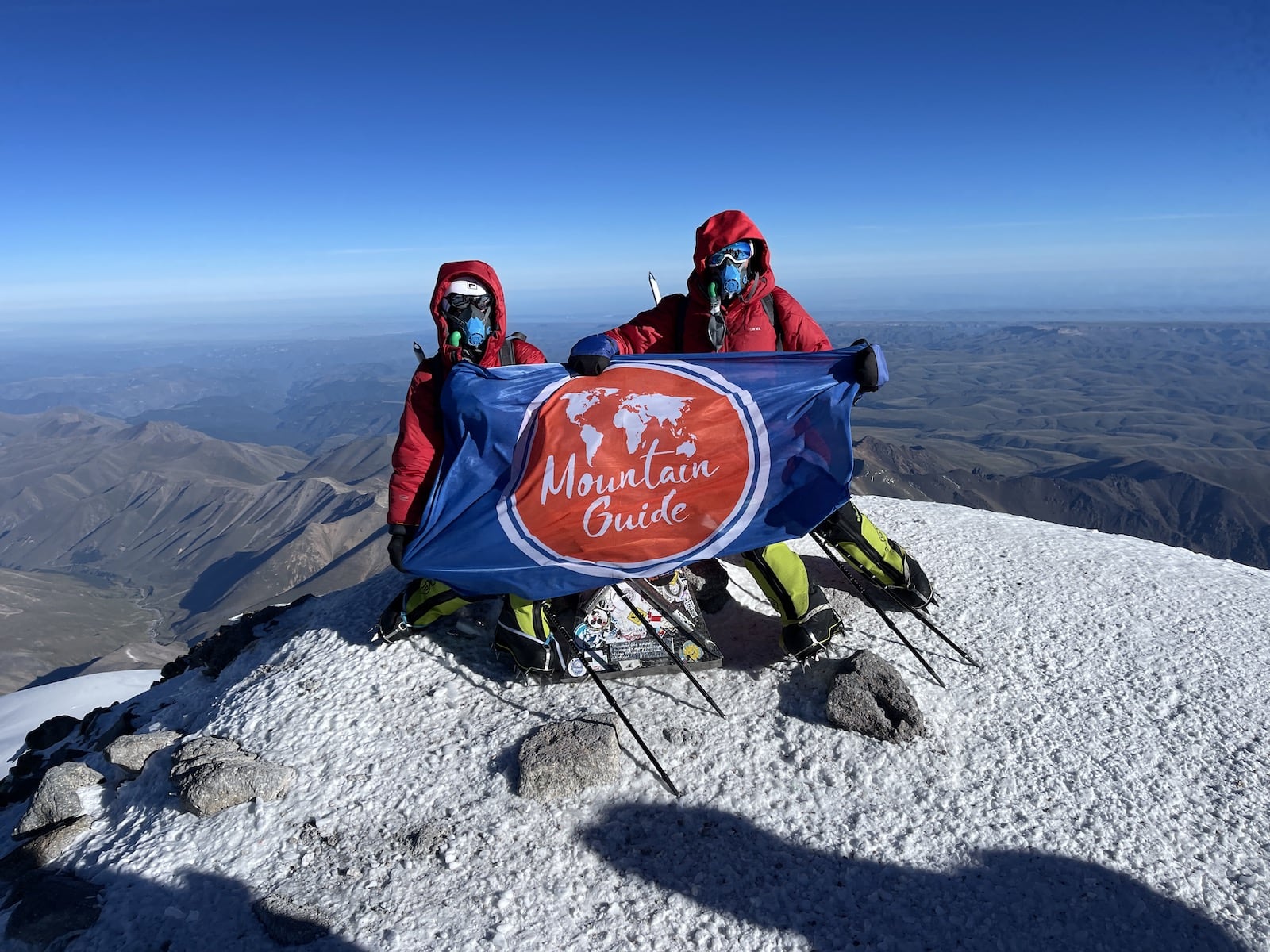
Climbing Elbrus from the south with oxygen is a special programme for participants who want more comfort and a better chance of a successful ascent of the highest summit in Europe. Supplemental oxygen is used during the high-altitude part of the route and helps reduce the effect of thin air on the body.
The format is particularly relevant for participants who are short of time, for those who want the ascent to be as comfortable as possible, and for people who are unsure how well they tolerate altitude. It is important to understand, however, that oxygen does not fully replace acclimatisation, physical preparation and sound organisation of the ascent. The altitude of Elbrus, 5642 m, remains the main factor of difficulty in the programme.
The main advantage of climbing Elbrus with oxygen is the ability to reduce the effect of altitude at exactly the most demanding moment of the route: during the climb to the summit and the work above 5000 metres. That lets participants concentrate on technique, pace and the route itself under the direction of experienced guides.
Why climb Elbrus with us? First of all because of the Mountain Guide team. We do not simply write about our guides; unlike many companies, we are not afraid to show you the people who actually lead our groups.
The price includes one summit attempt and one set of oxygen equipment. Additional attempts and additional oxygen sets are not part of the base price.
The comfort of the programme rests on good food at the hotel and at the shelter with fresh meat, fruit and vegetables, a hotel with large rooms and a comfortable dining room, a well-equipped shelter with individual beds in living units, bed linen and a clean toilet, and the option of hiring equipment separately.
We can also arrange a stay in the Elbrus region for family and friends, so that they can spend the time nearby while you are on the mountain.
Would you prefer a private Elbrus ascent with your own group only? We organise private ascents on any dates, with a personal guide and a programme adapted to your experience, pace and objectives. Any Elbrus route can be chosen — south, north or west — with extra acclimatisation days, a different standard of accommodation and a separate programme for accompanying guests.
Important
- Participants carry the food for the high-altitude section themselves. This is a standard feature of how ascents of Elbrus from the south are organised. The food travels up by cable car with the group and is moved onwards by snowcat; it only has to be carried by hand over short sections of no more than 20 m.
- All published departures run with a minimum group size of two participants.
- The price includes one summit attempt and one set of oxygen equipment.
- Any departure from the shelter on summit day counts as a summit attempt.
About the south route ascent with oxygen
This is an exclusive version of the south route ascent of Elbrus with oxygen, for participants who want to climb the highest summit in Europe within a limited amount of time and in a high-comfort format, using supplemental oxygen.
The defining feature of the programme is the use of supplemental oxygen during the high-altitude part of the route. It helps reduce the effect of thin air on the body and makes the ascent of Elbrus more comfortable for participants who cannot spend a long time in the mountains or who want to reduce the effect of altitude during the main climb.
It is important to understand that climbing Elbrus with oxygen is not a substitute for acclimatisation and preparation. The height of the summit, 5642 m, remains the main factor of difficulty in the programme, and every person’s reaction to altitude is individual. Supplemental oxygen is a tool that helps you carry the altitude more easily, but it does not remove the requirements for physical condition, a correct pace and the work of experienced guides.
The programme is built to use participants’ time as efficiently as possible. The preparation, the briefing on using the oxygen equipment, the mountain accommodation and the departure onto the route are all organised around the specifics of a fast ascent of Elbrus by the classic southern route.
Despite the compressed schedule, participants make a full ascent of the West summit of Elbrus, 5642 m, by the classic route from the south. The lead guide decides whether the group can set out, whether it can continue and whether the summit can be reached, taking account of the condition of the group, the weather forecast, the state of the route and the actual conditions on the mountain.
Climbing Elbrus with oxygen suits those who want to achieve the goal of reaching the highest summit in Europe but cannot commit to a long acclimatisation programme. It is also an option for participants who want a more comfortable ascent and less exposure to altitude during the most demanding stage of the route.
Programme for climbing Elbrus from the south with oxygen
Day 1. Arrival in the Elbrus region and preparation for the ascent.
Important: the oxygen programme is an exception to the arrival rules that apply to the standard south route programmes. You must choose a flight scheduled to land at Mineralnye Vody airport before 10:00. The group meets at the airport and travels straight to the Elbrus region.
On the day of arrival participants have to complete the drive to the Elbrus region and ride the cable car up to the high-mountain shelter, because the ascent of Elbrus begins during the night between the first and the second day. With a later arrival participants may miss the cable car and be unable to complete the programme as planned. When buying tickets, be sure to allow time for baggage reclaim and for leaving the terminal.
On arrival participants collect the necessary equipment from the hire shop, check their kit and prepare to go onto the route. The group then rides the cable car up the southern slope of Elbrus to the high-mountain shelter.
In September the cable car may be closed for scheduled maintenance. If the cable car cannot be used, the guide decides the onward logistics according to the actual situation; a vehicle is hired for the ascent if necessary. If the cost of the vehicle exceeds the price of a cable car ticket, participants pay the difference.
At the shelter the guides give a detailed safety briefing, explain the specifics of climbing Elbrus with oxygen, go through how the oxygen equipment is used and check that participants are ready for the high-altitude push. Where necessary there is a short session on moving in crampons and working with mountaineering equipment.
After the preparation participants rest before the main departure. Overnight in the high-mountain shelter.
Day 2. Ascent of the West summit of Elbrus, 5642 m.
The main day of the programme is the ascent of Elbrus with oxygen by the classic southern route to the West summit, 5642 m. The programme is intended for participants who want to make a high-altitude ascent within limited time and to use supplemental oxygen during the most demanding stage of the route.
The departure begins at night, usually between 02:00 and 04:00, depending on the weather, the state of the route and the lead guide’s decision.
Supplemental oxygen is used during the high-altitude part of the ascent and helps reduce the effect of thin air on the body, but it does not replace physical preparation, correct tactics or the supervision of experienced guides.
Where necessary, and by agreement with the group, a snowcat may be used on individual sections of the route. The lead guide decides whether it is used, taking account of the condition of the participants, the weather and the actual conditions on the mountain.
The ascent is led by experienced Mountain Guide guides and follows the safety requirements. After the summit the group descends the southern slope of Elbrus and returns to the valley.
This completes the programme for climbing Elbrus with oxygen.
What the ascent with oxygen includes
- Accommodation in the shelter for the number of nights set out in the programme
- All transfers within the programme
- The cable car
- Snowcat or snowmobile, ascent and descent
- Meals as set out in the programme: lunch and dinner on the first day, breakfast and a packed lunch on the second day
- One summit attempt
- One set of oxygen equipment
- Guides, at a strict ratio of one guide to three clients for the ascent
- Group equipment: rope, ice screws, radio, satellite navigator and other necessary items
- Personal equipment: oxygen equipment, double boots (Lowa, Boreal or La Sportiva), membrane jacket and trousers, down shorts or trousers, headtorch, flask, sunglasses, ski goggles, crampons, heavy down jacket, double mittens, gaiters, sleeping bag, ice axe, trekking poles, harness with lanyards and carabiners, medium rucksack
- Hire of a duffel bag for rented and personal equipment for the duration of the ascent
- Certificate of a successful ascent
What the ascent with oxygen does not include
- Single occupancy
- Other personal equipment
- National park permit, where applicable
- Guides and cooks if the programme changes
- Any costs connected with changes to the programme
- Additional summit attempts and additional oxygen sets beyond those included
- The supplement for an alternative ascent by vehicle if the cable car is closed for maintenance in September and the cost of the vehicle exceeds the price of a cable car ticket
Insurance
НаверхList of equipment for climbing mount Elbrus from the South.
Скачать PDFRock-and-Rentのレンタルには、必要なものがすべて揃っており、品質も非常に高水準です。事前にすべて予約していただければ、短パンのまま到着しても問題ありません(特に事前予約がおすすめです)。
私たちは装備選定において、ただ一つの基準だけを重視してきました。それは、2001年から案内しているエルブルスの環境条件に最大限適合していることです。
そして、このリストは非常に慎重に作成されています。会社のガイドたちはこれまでに合計で数千回の登頂を行ってきましたが、この中に不要なものが一つもあるとは考えていません。
書類:
- パスポート
- 航空券/鉄道チケット
- 医療保険
- バウチャー(外国籍の方)
個人装備:
- バックパック 30〜40リットル
- ダッフルバッグ 80〜100リットル
- 寝袋:快適使用温度 0℃〜+10℃(6月〜9月を含む)、−20℃〜−10℃(10月〜5月を含む)
- トレッキングポール(直径70mm以上のバスケット付き必須)
- アイゼン
- クラシックタイプのピッケル(5〜6mmの補助ロープ付き、ハーネス連結用、長さ2〜3m)
- クライミングハーネス
- ヘルメット
- カラビナ 3個(大きめ推奨。ミトン着用時に操作しやすい)
- セルフビレイ用ランヤード
衣類・靴:
- スキーウェアはエルブルスに適していますか?
- 登山靴(二重または三重構造)― プラスチック製または革製。シングルブーツはオーバーブーツ使用時のみ可(ゲイターとは別物)
- 防水レイヤー ― ジャケット+パンツ。防水透湿性能は10,000/10,000以上推奨
- フリース上下
- 保温インナー(上・下)
- フード付きダウンジャケット(厚手で保温性の高いもの。エルブルス用として適切なダウンは通常700g以上)
- 防寒ミトン
- 厚手グローブ(スキー用)
- 薄手グローブ(フリース)
- バンダナ(谷では日除け、防寒時は首や顔の保温に使用可能)
- ニット帽
- 登頂日に使用する暖かいトレッキングソックス
その他:
- ヘッドランプ(連続点灯時間12時間以上)
- サングラス(保護カテゴリー3〜4、側面からの光も完全に遮断するもの)
- スキーゴーグル(保護カテゴリー1〜2、悪天候用)
- 保温ボトル 1リットル(フタにボタンがないもの推奨)
- 防風フェイスマスク(スカーフで代用可能な場合もあり)
- 日焼け止め(有名ブランド、SPF30〜50。実際には30と50の差はほとんどありません)
- リップクリーム SPF15
- 個人用救急キット
- 伸縮包帯および/またはサポーター
- ゲイター(必須ではないが、特に5〜6月は役立つ場合あり)
- 使い捨てカイロ(必須ではないが、非常に役立つことがあります)