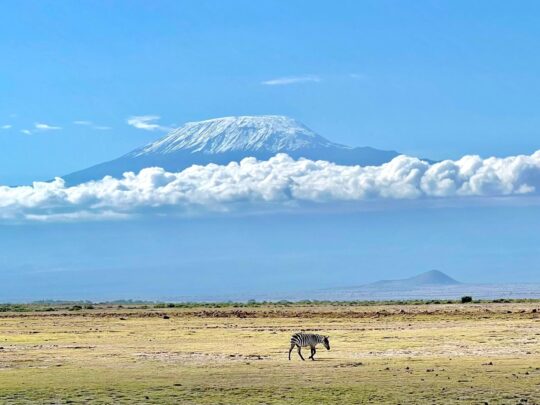
On a map, Lemosho, Machame and Marangu look like three lines drawn to one point – Uhuru Peak at 5895m. On the mountain they are three different journeys. Lemosho opens up the western side of Kilimanjaro and the Shira plateau slowly. Machame gathers the most striking scenery of the southern circuit more quickly. Marangu follows the classic eastern road, through huts, between Kibo and Mawenzi. The only thing they share is the summit. The pace, the overnight stops, the acclimatisation profile and what the week feels like all differ markedly.
So the question “which route is best?” is too general. For one person the best route is the one with an extra day at altitude and enough time to recover. For another the deciding factor is sleeping in a hut rather than a tent. A third cares about variety of scenery and the sense of a proper expedition. A fourth already knows how they react to altitude, is well prepared and deliberately chooses a tighter schedule.
Three programmes are published in the current Mountain Guide catalogue: Lemosho over 9 days, Machame over 8 days and Marangu over 7 days. What we compare below is precisely these programmes, not averaged versions from around the internet. On Kilimanjaro the same route name can hide a different number of mountain days, so what has to be compared is not just the word “Lemosho” or “Machame” but the actual schedule.
The short answer: which route to choose
| Route | Mountain Guide programme | Overnight stops | Main advantage | Main trade-off |
|---|---|---|---|---|
| Lemosho | 9 days, 7 of them on the mountain | Tents | The gentlest schedule of the three programmes and a varied western approach | Needs more time and a readiness for camp life |
| Machame | 8 days, 6 of them on the mountain | Tents | A dynamic route through the Shira plateau, Lava Tower and the Barranco Wall | Barranco – Karanga – Barafu is compressed into one full day |
| Marangu | 7 days, 5 of them on the mountain | Huts | A roof and a bed for the mountain part | The shortest and most direct acclimatisation profile |
If Kilimanjaro is going to be a first altitude of about 6000m and your holiday allows it, the sensible starting choice is Lemosho. If you already have experience, tents do not put you off and one day genuinely matters, Machame is worth considering. Marangu should be chosen not as “the easiest route” but as a hut-based programme for a prepared person who understands the price of gaining height more quickly.
What the three routes have in common
Kilimanjaro is often called a non-technical mountain. On the standard paths there is genuinely no multi-pitch rock climbing, no continuous belaying and no need for experience of hard snow and ice routes. But “non-technical” does not mean “easy”. All three programmes bring you into the same environment: the temperature drops at night, the air thins, appetite and sleep get worse, and the summit push starts after several days of accumulated fatigue.
On every route you pass through a sequence of natural zones. Low down there is wet montane forest, where your clothing can get soaked before any real altitude. Higher up the forest gives way to heath, then to open volcanic plateaus. The last camps stand among rock, dust and sparse vegetation. On summit night what is left is the cold, the torchlight, the slope of Kibo and the slow rhythm of your steps. After the summit, within a few hours, you are back down in warmer air and greenery.
The shared difficulty is not one steep section but the combination of altitude and duration. A good runner can walk faster than the group, but cannot will their physiological adaptation to speed up. Someone with strong legs may still sleep badly or lose their appetite. And the reverse: a person with no sporting ambitions but systematic preparation, a steady pace and normal recovery often gets through the route more solidly.
On all the programmes the decision to carry on is taken by the guide, taking the weather, the pace and each person’s condition into account. The summit is not guaranteed by an extra day, by expensive equipment or by good results in training. Choosing a route is not about obtaining a promise; it is about creating the most sensible starting conditions you can.
Lemosho: Kilimanjaro as a proper journey
Lemosho begins not where the mountain has already turned into open path but on its western side. The first hours pass through wet forest. Branches close over the sky, the air smells of earth and vegetation, and Kibo is barely visible. That is an important beginning: you are not dropped straight into severe high mountains but enter the scale of the mountain gradually.
The next day the forest falls away, the heath appears and with it the Shira plateau. This is where Kilimanjaro first reveals itself whole. Ahead the broad dome of Kibo rises, behind you are the ruined walls of the ancient Shira volcano, and all around is a space that did not exist in the forest. The route stops being simply a path upwards and becomes a journey through a volcanic landscape.
How the Lemosho programme is built
The nine-day Mountain Guide programme includes seven days on the mountain. After arriving and preparing in Moshi, the team sets off from the western side of the massif to a forest camp. The route then goes through Shira 1 and Shira 2, climbs to Lava Tower, drops into Barranco, crosses the Barranco Wall, goes via Karanga and reaches the summit camp at Barafu. After the climb to Uhuru the group descends through Millennium and the Mweka gate.
The key acclimatisation day is the walk from Shira 2 to Lava Tower at about 4360m, followed by a descent into Barranco at about 4000m. The body gets a stimulus at altitude but spends the night lower. This is the classic principle of “climb high, sleep low”. It does not protect you from altitude sickness automatically, but it makes for a better-judged profile than a continuous direct climb with no descents.
The next day goes over the Barranco Wall to Karanga. In distance it does not look enormous, but it matters to the logic of the whole programme. You cross a striking piece of ground and then get time to recover before moving on to Barafu. It is precisely this separate night at Karanga that distinguishes this programme from the tighter Mountain Guide Machame, where Karanga and Barafu are joined into one day.
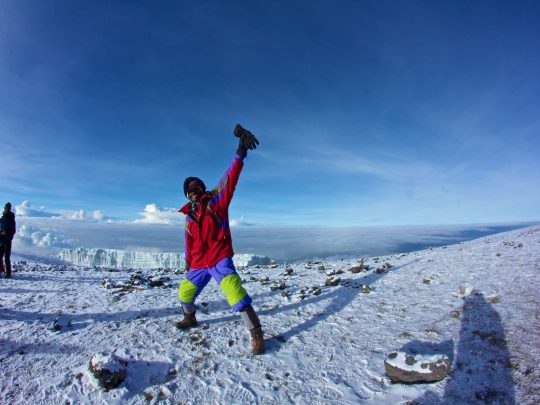
From Barafu the team sets off at night. Past the crater rim the way continues to Uhuru Peak, and then the long descent begins. The programme provides a night at Millennium camp, below the harsh zone of Barafu. That is no less important a part of the route than the photograph at the top: after a long day out, the body needs water, food, warmth and sleep.
Who Lemosho suits
Lemosho makes particular sense for a physically prepared beginner going to about 6000m for the first time. It does not make anyone acclimatised automatically, but it gives more time to watch how the body reacts and not to rush things. The route also suits people who see Kilimanjaro as a journey in its own right rather than only as an entry on a list.
It is worth choosing if the landscape matters to you. The western approach and the Shira plateau add a chapter of their own to the southern circuit. Lava Tower, the Barranco valley, the glaciers above Karanga and the harsh ground at Barafu follow one another quickly enough for each day to have its own character. For a photographer, and for anyone who enjoys watching a space change, Lemosho usually gives more to work with.
It also works as the first step of the “Seven Summits”. Camp life, checking your kit regularly, a night start and living to the team’s schedule all give useful expedition experience. At the same time Kilimanjaro does not demand the self-sufficiency that awaits on Aconcagua, Denali or Vinson. It makes a good bridge from trekking to mountaineering expeditions.
Who Lemosho may not suit
An extra day is only useful if you can live normally in a tent. If you barely sleep each night, get cold because your sleeping bag is not up to it, or find the absence of your usual comforts hard, part of the advantage of a longer schedule is lost. Before choosing, take an honest view not of the romantic image of camp but of your own experience of several consecutive nights under canvas.
In the wet months the western forest and the tented format call for particular care in protecting your kit. Sleeping bag, insulating layers, documents and electronics have to stay dry whatever the weather. Someone who is not ready to keep an eye on packing and layering all the time may find a long route harder than they expected.
Machame: the pace of the southern circuit
Machame starts on the southern side of the massif. On the first day the path goes through dense forest to a camp at about 3000m. It then comes out onto the Shira plateau, crosses high-altitude desert, climbs to Lava Tower and drops into Barranco. After that come the Barranco Wall, the Karanga area, the summit camp at Barafu and the night road to Uhuru.
In terms of scenery Machame is very close to Lemosho once the two join on the southern circuit. The difference is not that one route is beautiful and the other is not. The difference is in the time before they join and in how densely the programme is packed. Lemosho adds the western approach and a separate Karanga – Barafu day. Machame reaches the shared points faster and asks you to ration your energy more tightly.
How the Machame programme is built
The eight-day programme includes six days on the mountain. After the Machame camp the team climbs to Shira. Then comes the important day through Lava Tower to Barranco: a climb to about 4500m and a descent to a night at about 3900m. The altitude profile here works on the same “high by day, low by night” principle.
The most noticeable difference from Lemosho appears after Barranco. On the current Mountain Guide programme, the Barranco Wall, the Karanga area and the walk on to Barafu are all done in one day. It makes for a substantial stretch, after which clothing, water, torch and food have to be got ready for the night start. On the longer Lemosho programme there is a separate night at Karanga between Barranco and Barafu.
Summit day ends with the descent to Mweka. That means a large loss of height after the climb to Uhuru. You cannot switch off entirely on the way down: tired legs control the stride less well, and the elation of the summit sometimes makes people underestimate the work that is left.
Who Machame suits
Machame is reasonable to consider if you already have experience of altitude and of multi-day trekking. What matters is not only having once got above 4500 or 5000m but remembering how the nights, the eating and the recovery went. If your previous trip ended in a severe headache, sleeplessness and loss of appetite, a shorter schedule does not become a good choice simply because you reached the summit that time.
The route suits people with limited holiday who do not want to fall back on the shortest option. It keeps the tented expedition, Lava Tower and the Barranco Wall. But saving a day compared with Lemosho has to be a considered decision: you are accepting a denser approach to the summit camp, not getting the same programme in a smaller package.
Machame often appeals to people who like the sense of movement. The path climbs onto ridges, drops into valleys, skirts the southern slopes of Kibo and changes direction almost every day. But movement should not be confused with speed. At altitude what helps is not the pace of a training session but a rhythm you can hold for hours without gasping or having to stop abruptly.
When to pay in time rather than money
If this is your first high mountain, and the choice between Lemosho and Machame comes down to one day of holiday, it is usually wiser to keep the day on the mountain. That matters especially to anyone with no experience of recovering in a tent at altitude. An extra day does not guarantee success, but cutting the schedule for the formal convenience of a calendar is a poor exchange.
For a private group an individual duration can be discussed, but any change has to keep the acclimatisation logic intact. You cannot take the name Machame and remove another day simply because the group is physically strong. On Kilimanjaro, biology counts for more than ambition.
Marangu: huts, the saddle and the direct road
Marangu is the only one of the three Mountain Guide routes compared here where the mountain nights are spent in huts. The road starts on the south-eastern side of the massif, goes through Mandara and Horombo, crosses the broad saddle between Mawenzi and Kibo, reaches the Kibo hut and then makes for the crater rim.
Visually it is quite a different story. After the forest, the jagged silhouette of Mawenzi appears. The higher the path climbs, the more the landscape resembles dry volcanic desert. The saddle between Mawenzi and Kibo gives a sense of enormous open space. There is no Barranco Wall and no Lava Tower from the southern circuit here, but there is the severe geometry of two volcanoes and the classic road of the first expeditions.
How the Marangu programme is built
The seven-day programme includes five days on the mountain. After the Marangu gate the team spends the night at Mandara at about 2700m, then climbs to Horombo at about 3720m. The next day the route crosses the saddle straight away and arrives at the Kibo hut at roughly 4700m. At night the climb to Gilman’s Point on the crater rim begins, after which the way continues to Uhuru Peak. The group then descends through Kibo to Horombo, and the following day returns to the Marangu gate.
The main advantage is obvious at once: the nights are under a roof and in beds. That genuinely matters to anyone who sleeps badly on the ground, dislikes the cramped feel of a tent or finds damp hard to bear. But a hut is not a hotel. The sleeping rooms are shared, the noise depends on how full the place is, there is less personal space, and a sleeping bag is still essential.
The main drawback is equally obvious in the schedule: there is no separate acclimatisation day between Horombo and Kibo. The gain in height is direct, and the mountain part is the shortest of the three. Comfortable nights do not offset the speed of the profile.
Who Marangu suits
Marangu suits a person with endurance and experience of altitude for whom huts really matter. That might be someone who has already done a high-altitude trek and understands well how they react to consecutive nights at height. They have to be clear that what they are choosing is not “an easy path” but a fast hut-based route.
The programme can suit a private group that is prepared to discuss an extra acclimatisation day. It is precisely the private format that lets the pace and the length be tuned to the people involved without breaking the underlying logic of the route. Any change is always confirmed separately – it should never be assumed.
Marangu should not be chosen merely because of its common nickname, the “Coca-Cola route”. Labels like that create the false impression that having huts somehow reduces the altitude. The summit is the same, the night climb is still long, and a direct gain in height calls for particularly close attention to symptoms.
Lemosho or Machame: what the real difference is
Once they join on the southern circuit the routes see many of the same places. So the argument about which of them is “more beautiful” is often overstated. Lemosho gains through the western approach, the Shira plateau and a more spread-out programme. Machame reaches the same large landscape faster and gives a denser version of the journey.
The practical difference shows up most strongly before the summit. On Lemosho, Barranco, Karanga and Barafu are split into two stages. On the Mountain Guide Machame the stretch from Barranco through Karanga to Barafu is done in a day. For you that means a different amount of work immediately before a short rest and a night start.
If you have little experience of altitude, the answer usually needs no complicated philosophy: Lemosho. If you have the experience, your recovery is a known quantity and your holiday is limited, Machame becomes the rational choice. If someone simply wants “more action” but does not know their own reaction to 4000-5000m, that is not yet a reason to shorten the programme.
Tent or hut: where will you actually sleep better
A tent gives two people a space of their own, but calls for the ability to organise your daily life. You have to keep your sleeping bag and warm layers dry, not lose small items, pack up quickly in the morning and take condensation, wind and noise from the neighbouring camps in your stride. There is no proper shower, no mains electricity and no guaranteed internet on the mountain part.
A hut keeps the rain off better and saves you from sleeping on the ground. On the other hand a shared room can be stuffy or noisy, people get up at different times, and other people’s torches and conversations get in the way of rest. Earplugs and an eye mask are sometimes more important than an attractive description of “nights in cabins”.
The honest question is not “which is more comfortable in general?” but “where will I personally eat, sleep and recover better?”. Someone with plenty of backpacking behind them may be perfectly happy in a tent. Someone who has never slept several nights in a row in a camp should not be finding that out about themselves on Shira.
The Barranco Wall: more spectacular than technical
Lemosho and Machame both go up the Barranco Wall. In photographs it looks almost vertical, which sometimes puts beginners off the route altogether. On the standard path it is not multi-pitch rock climbing. In places you use your hands for balance and wait while other groups go through. What you need is stability on uneven ground and a calm attitude to an open slope.
In rain the rock becomes slippery, so progress slows. Anyone with a marked fear of heights would do well to practise beforehand on straightforward rocky paths. But buying a climbing course purely for the sake of the wall is usually unnecessary. It matters far more to place your feet carefully, not to hurry and to do what your guide says.
There is no Barranco Wall on Marangu. That is an argument for the route if open ground genuinely worries you. But the absence of the wall does not cancel out the faster altitude profile. You cannot compare only the most photogenic section and ignore the rest of the programme.
Summit night: two approaches to one Uhuru
Lemosho and Machame set off from the Barafu area on the southern side of Kibo. Marangu starts from the Kibo hut and reaches Gilman’s Point first. From there the routes follow the crater rim to the same summit. In every case most of the climb takes place in darkness and cold.
Summit day is rarely like a pleasant walk at dawn. For the first few hours you see a narrow circle of torchlight and the feet in front of you. The pace is deliberately slow. Clothing that felt far too warm lower down becomes a working system. Water can chill, batteries can run down faster, and a simple fastening unexpectedly demands attention in thick gloves.
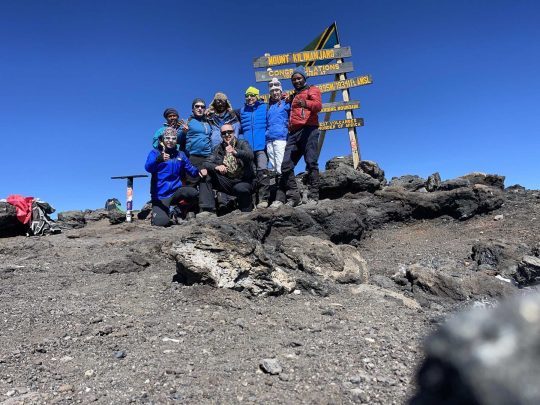
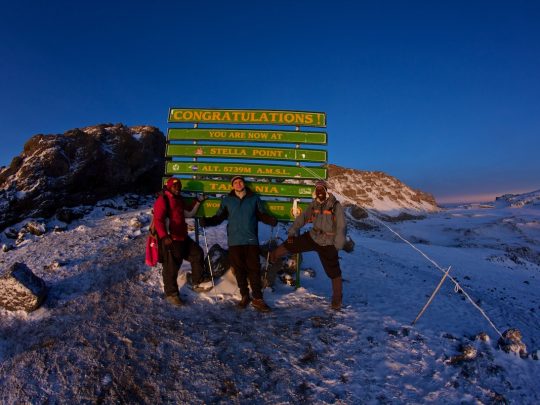
Dawn changes the psychology of the day but does not end the work. After the photograph on Uhuru you have to get down. On Lemosho and Machame the descent goes to the camps on the southern side; on Marangu it goes back through Kibo to Horombo. Good preparation takes into account not only the ability to climb slowly but the resilience of your legs on a descent lasting many hours.
Acclimatisation: why one day matters
The body adapts to altitude neither linearly nor to a tour schedule. On one trip you may feel fine and on another worse, with a similar profile. Your reaction is affected by pace, sleep, food, an infection picked up before the trip, dehydration and a great many individual factors. Previous success reduces the uncertainty but gives no guarantee.
A longer route does not give you a “percentage chance of the summit”; it gives you the chance to spread the work out. On Lemosho a separate day before Barafu means the Barranco Wall, Karanga and the walk to the summit camp are not joined together. On Machame that stretch is tighter. On Marangu the direct climb from Horombo to Kibo leaves less time still.
The most dangerous mistake is to treat fitness as a substitute for altitude adaptation. A fast marathon runner can have a magnificent heart and lungs and still get symptoms. More than that, the habit of walking fast sometimes gets in the way: you constantly outrun the natural pace of altitude and tire before you notice the problem.
Signs that you are feeling worse must be reported to the guide, not hidden for the sake of the summit. A decision about carrying on is not a punishment or a judgement on your character. At altitude, turning back often shows more maturity than trying to keep to the plan at any cost.
The question is looked at in detail in the article on acclimatisation on Kilimanjaro.
When to go: the dry season and the wet months
According to TANAPA, the main drier periods usually fall between late June and September and between December and early March. The long rains are typical of March to May and the short rains of October to November. This is not a forecast for any particular expedition: rain, snow, cloud and wind are possible in any month.
Lemosho begins in wet western forest. Machame goes up the southern side, where in wet weather the forest path and the Barranco Wall can both be slippery. Marangu gives you a roof at night, but you still walk in rain and mist, and your clothing still has to stay protected.
The season affects not only the likelihood of rain but the character of the experience. In the popular dry periods there are more people on the paths. In the wet months the mountain can be quieter, but the price of that quiet is damp, restricted views and more trouble drying your kit. What you are choosing is not “the best month in general” but an acceptable set of conditions.
Which route is more beautiful
If beauty means the greatest variety, the advantage goes to Lemosho. The western forest, the Shira plateau, Lava Tower, Barranco and the southern glaciers add up to a long visual story. The route is in no hurry to deliver you to the summit and has time to show the mountain as a world of its own.
Machame gives away very little once it reaches the southern circuit. It feels more strongly like movement: forest gives way quickly to Shira, then Lava Tower and Barranco appear, and the last days come together more tightly. For anyone who enjoys a rich succession of scenes, Machame can be the more powerful experience precisely because of its rhythm.
Marangu is beautiful in a different way. Its chief images are Mawenzi, the open saddle and the return by the same road through all the natural zones. There is less of the sense of a circular expedition here, but more of the classic simplicity of the route: from the bottom to the top between two volcanoes, and back.
A scheduled group or a private one
The route cannot be separated from the guiding arrangement. On the current Mountain Guide programmes, a Russian-speaking trek leader is provided with a group of four or more. A private format with a Russian-speaking guide is available for any group by individual costing. That matters to couples, families and groups of friends who want their own pace and dates.
A private group does not acquire the right to ignore the logic of altitude. Its advantage lies elsewhere: the guide knows each person’s history better, the team is not adjusting to strangers, and everyday decisions are taken among people who know each other. Where necessary an extra day can be discussed in advance, but any change is confirmed by the organiser and must not worsen the acclimatisation.
A scheduled group gives you the atmosphere of a large team and is usually easier on the budget. But you have to be ready for different paces and different personalities. At altitude the group moves on the guide’s decisions, not at the speed of its strongest member. If walking only as a pair, or keeping to a schedule of your own, is essential to you, say so before the dates are chosen.
How to compare the cost of the three routes
A price without the contents of the programme tells you almost nothing. Lemosho is longer and includes an extra mountain day; Machame and Marangu are shorter. What has to be compared is the guiding, the transfers, the number of hotel and mountain nights, the tent or hut format, the food, the local team’s work, the permits and any continuation after the mountain.
Do not choose a short route and then buy comfort in the hope that it will stand in for time. A more expensive tent does not create an acclimatisation day, and a hut does not lower Kibo. Choose the right profile first, and the level of service within it afterwards.
How to choose a route for your own profile
A first mountain above 5000m
Choose Lemosho, unless you are seriously short of time. The extra day and the separate Karanga stop make for the most sensible profile of the three programmes. Machame can be discussed if you have a good walking background, but do not shorten the route out of confidence in your fitness alone.
You have Elbrus or other experience around 5000-6000m
Look at more than the name of the summit. What matters is the altitude of the nights you slept at, how you felt, how long the programme was and when you went. If the experience was a good one and camp life is familiar, Machame becomes a real option. Lemosho still remains the more comfortable schedule and the more interesting one for landscape.
You sleep badly in a tent
Consider Marangu, but discuss your altitude experience and the possibility of an extra day. Do not choose huts while closing your eyes to the short profile. Sometimes it is better to practise sleeping in a tent beforehand and go by Lemosho than to get a roof at the price of gaining height too fast.
Your holiday is limited
Work out the whole calendar first: the international flights, arriving before the start, the mountain part and a margin afterwards. Saving a day on the route should not leave you with no slack before the flight home. If the calendar will not fit without risk, it is better to change the dates than to cut the acclimatisation out.
Kilimanjaro is the start of the Seven Summits
Lemosho gives you a fuller rehearsal of expedition rhythm and camp life. Machame is useful too, but asks you to ration your energy more tightly. Marangu gives you the altitude and the night climb, but teaches you less about the tented self-sufficiency you will need on the mountains that follow.
Preparation: what matters more than the choice of route
Even the gentlest route does not make up for a lack of training. You need aerobic endurance, the ability to walk several days in a row with a rucksack and resilient legs on the descent. Training has to be regular, not one heroic outing before the flight.
A useful week of preparation includes a long walk, climbing stairs or hills, easy aerobic work and strength exercises for the legs and trunk. The load is increased gradually. The final weeks are not for records but for consolidating your fitness and recovering before the trip.
Practise the everyday side separately. Put every layer of clothing on in the right order. Check whether you can work zips and a torch in gloves. Spend a night in your own sleeping bag. Pack your rucksack so that waterproofs, insulation, water and first-aid kit can be got at without unpacking everything.
For Lemosho and Machame, waterproof packing matters particularly. For Marangu, it is the ability to rest in a shared room. For every route it is boots you have broken in, socks you have tested and the habit of changing layers before you are either soaked in sweat or thoroughly cold. There is a detailed list in the article on equipment for Kilimanjaro.
Mistakes that spoil even a good route
- Choosing on price alone. What has to be compared is the duration, the mountain days, the overnight stops, the guiding and what the programme actually contains
- Thinking Marangu is easy because of the huts. Daily life is simpler, the altitude profile is faster
- Thinking Machame is Lemosho minus the western day. The stretch before Barafu is different too
- Going too fast in the first few days. Overtaking the group is no proof that you are ready for the summit
- Hiding symptoms. A guide cannot manage risk if what they are told is the picture you would like rather than the truth
- Trying new equipment out on the mountain. Boots, sleeping bag, torch and layering system are all tested before you fly
- Booking the flight home too tight. International travel needs an organisational margin
Frequently asked questions
Which route has the highest chance of the summit?
No honest universal percentage can be given without a single methodology, comparable groups and comparable conditions. Of the three current Mountain Guide programmes, Lemosho has the longest schedule. That is a sensible advantage, but not a guarantee: the weather and individual reactions remain.
Do you need mountaineering experience?
The standard routes do not require a technical career. What they require is physical preparation, experience of long walks, discipline and a readiness for altitude. The Barranco Wall on Lemosho and Machame calls for care, but it is not a classic rock climb.
Can a beginner go by Machame?
A physically prepared beginner can consider Machame after an individual assessment. But all else being equal, Lemosho leaves more time. Being new to altitude is an argument for the longer programme, not an occasion to prove your sporting credentials.
Can a beginner go by Marangu?
The basic seven-day programme has a short five-day mountain part. For a first experience of altitude it is worth discussing a private version with additional acclimatisation, or choosing a longer route.
Which route has fewer people on it?
How busy a route is varies with the season and the dates. In the popular periods all the main paths can be crowded, especially once the routes have joined. Do not choose Lemosho purely on a promise of solitude.
Where are the food and the service better?
That depends not on the name of the path but on the particular operator and what the programme includes. Compare the published inclusions, the make-up of the team and the guiding. The route itself does not determine the quality of the kitchen or the tents.
Can the climb be combined with a safari or Zanzibar?
Yes, Kilimanjaro is often followed by a safari in Tanzania or a stay on Zanzibar. The continuation is arranged around the actual dates with a reasonable margin after the mountain, rather than pressed right up against the planned descent.
What should I send a manager for a precise recommendation?
It is enough to describe the highest altitude you have reached, the altitude and quality of the nights you slept at, your experience of tents, your current training, the dates available to you and any requirements about daily life that really matter. The name of one summit without that detail says very little about readiness.
In summary
Lemosho is the choice for time, variety and a gentler logic. Machame is the choice for a dynamic tented expedition, for someone who understands the price of a tighter schedule. Marangu is the choice for huts and the classic eastern road, with a deliberate acceptance of a faster gain in height.
If you are still in doubt, do not try to settle it with a marketing ranking. Open the day-by-day programmes and compare three specific things: how many nights are spent before you reach about 4000m, how the approach to the summit camp is arranged and where you will be sleeping. Those answers matter more than a general list of pros.
The official TANAPA map shows how Lemosho, Machame and Marangu fit into the network of Kilimanjaro paths: the national park route map. A recent overseas Alpine Ascents 2025 webinar also goes into the differences between Lemosho and Machame, the daily logistics and the Barranco Wall in detail. But the final choice has to be made on the current Mountain Guide programmes and on your own experience, rather than by transplanting somebody else’s route wholesale.
To choose a route without guessing, write to us through Mountain Guide contacts and tell us the highest altitude you have reached, the number of nights you have spent above 4000m, your experience of tents and the dates available to you. With that we can compare Lemosho, Machame and Marangu for you in concrete terms.
What to read next
- A full account of the Lemosho route
- A full account of the Machame route
- A full account of the Marangu route
- How many days you need for Kilimanjaro
Kilimanjaro climbing programmes