- Guides
- B2B
-
#19607 (no title)
-
#15972 (no title)
- Climb Elbrus Individually
- Climb Elbrus from the South, 9 Days
- Climb Elbrus from the South, 7 Days
- Climb Elbrus from the South with Oxygen
- Climb Elbrus from the North, 10 Days
- Two Summits of Elbrus, 9 Days
- Elbrus Traverse from South to North, 9 Days
- Elbrus Traverse from North to South, 10 Days
- Cross of Elbrus, South to North, 9 Days
- 根据”来自北方的十字架”计划攀登厄尔布鲁士山
- Climb Kazbek and Elbrus — 10-Day Two-Summit Programme
- Climb Elbrus from the West, 11 Days
- 厄尔布鲁士乘坐直升机
- Elbrus Region Holiday and Trekking, 9 Days
- Elbrus Region Holiday, 7 Days
- Tinder 之旅,攀登厄尔布鲁士峰
- Climb Elbrus from the South, 9 Days with Sergey Baranov
-
#15539 (no title)
- Climb Carstensz Pyramid, 8 Days with Helicopter Access
- Climb Mont Blanc, 4810 m — 8-Day Guided Ascent
- Climb the Matterhorn, 4478 m — 8-Day Guided Ascent
- Climb Mount Vinson, 15-Day Antarctic Expedition
- Climb Kosciuszko and Travel in Australia, 7 Days
- Climb Fisht, 2868 m — 3-Day Ascent by the 1B Route
- Climb Mount Wilhelm, 6 Days
-
#15546 (no title)
- Climb Kilimanjaro: the Marangu Route
- Climb Kilimanjaro: the Lemosho Route
- Climb Ararat, 5137 m — 7-Day Classic Programme
- Climb Kazbek from the South, 5033 m — 8 Days in Georgia
- Climb Kazbek and Elbrus — 10-Day Two-Summit Programme
- 攀登火山在墨西哥
- Climbing Alpamayo — 16-Day Technical Expedition
- 攀登玛格丽特峰(斯坦利)
- Climbing Mount Kenya: Point Lenana, 4,985 m
- Climb Dykh-Tau by the North Ridge, 13 Days
-
#15554 (no title)
- Aconcagua Climb — 17-Day Guided Expedition
- Island Peak Climb — 18-Day Expedition
- Climb Mera Peak, 6476 m — 16-Day Hinku Valley Programme
- Climb Ama Dablam, 6812 m — 24-Day Expedition with Island Peak
- Climb Island Peak and Mera Peak — 24-Day Two-Summit Expedition
- Aconcagua and Ojos del Salado — 25-Day Combined Expedition
- Ojos del Salado Climb — 15-Day Expedition
- Climb Chimborazo and Cotopaxi — 14-Day Ecuador Programme
- 瓦斯卡兰攀岩
- Climb Razdelnaya Peak, 6148 m — 15-Day Pamir Expedition
- Climb Denali by the West Buttress, 23 Days
- #15565 (no title)
- #15572 (no title)
-
#15972 (no title)
-
#19592 (no title)
-
See 8000m
- K2 Base Camp Trek via the Gondogoro La
- Everest Base Camp Trek — 14 Days
- Everest Base Camp via Gokyo Lakes — 15 Days
- 一周内徒步前往珠穆朗玛峰
- Annapurna Circuit and Tilicho Lake Trek
- Manaslu Circuit Trek
- Kanchenjunga Circuit Trek (XXL)
- Kanchenjunga North Base Camp Trek (Short)
- Kanchenjunga from India: the Goecha La Trek in Sikkim
- 徒步前往马卡鲁大本营
- 徒步前往安纳布尔纳峰大本营
- South America
- Asia
- Africa
-
Russia
- Elbrus Region Holiday and Trekking, 9 Days
- Elbrus Region Holiday, 7 Days
- 徒步奥什滕 + 卡德瓦赫
- Lake Kardyvach — 5-Day Base-Camp Trek
- Route 30: Through the Mountains to the Sea, with Oshten — 4 Days
- Trekking in Arkhyz — 7 Days over the Ayulyu Pass
- Gvandra Trek — 7 Days to the Ullu-Kyol Lakes
- Trekking in Dombai — 7 Days with the Murudzhu Lakes
- Europe
-
See 8000m
- Adventures
- Ski-touring
- VIP
- #19722 (no title)
- About
Climb K2 (Chogori), 8611 m — 47-Day Expedition
53000 $
Почему такая цена?
Тур временно недоступен
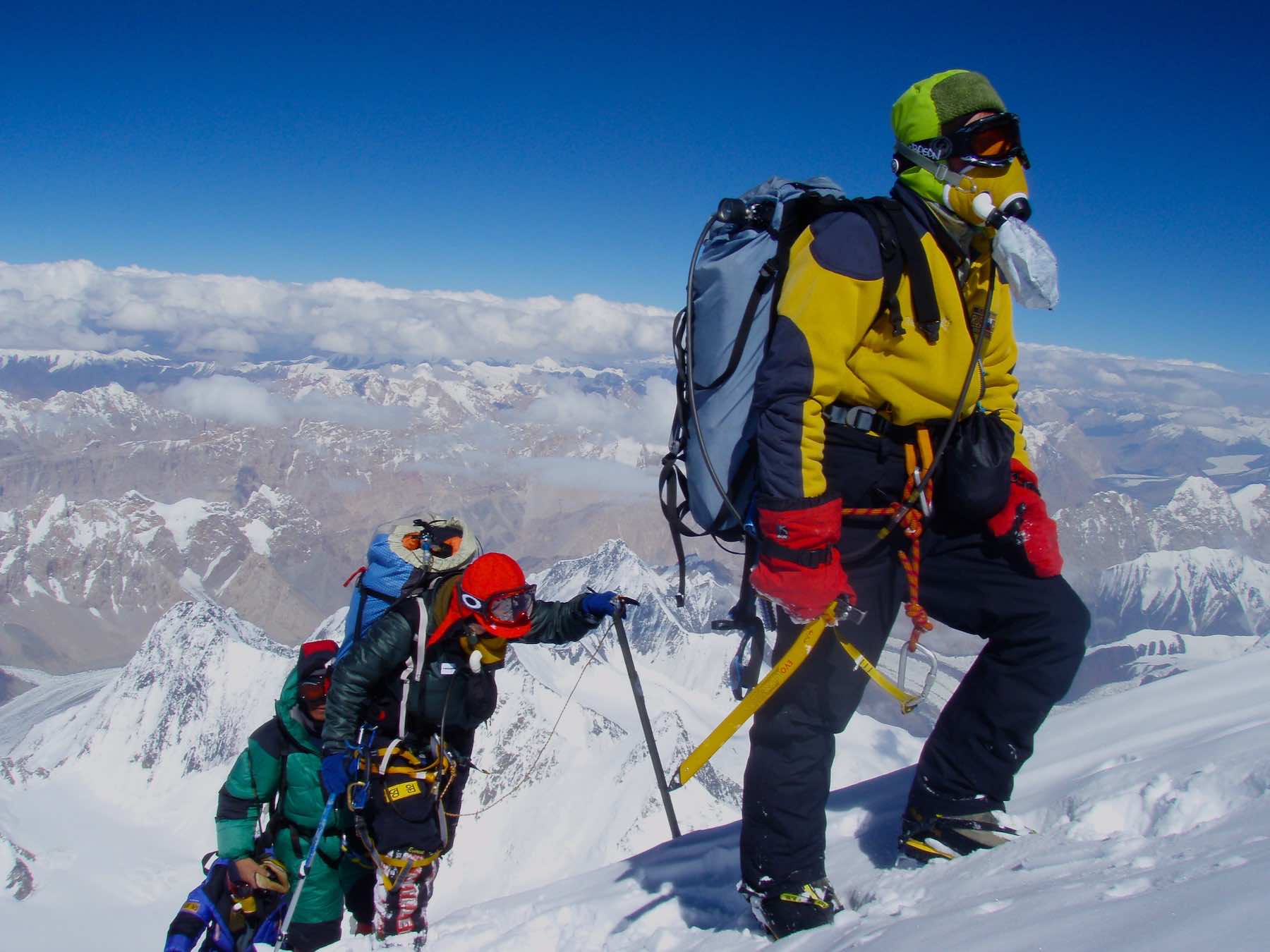
A guided expedition to K2 — a 47-day trip on the second-highest mountain in the world and one of the most serious objectives in high-altitude mountaineering. The approach runs through the Baltoro and Concordia, and the main part of the trip consists of acclimatisation rotations, the establishment of high camps and the wait for a safe weather window.
This is not a first eight-thousander. A candidate needs a confirmed record above 7000 m, successful technical ascents, confident work on fixed ropes and the ability to look after themselves in a high camp. Admission and the composition of the personal support are confirmed after a review of your experience.
The strength of the trip is the long period at altitude and a one-guide-to-one-participant format at the key stage, in line with the confirmed composition of the team. Expedition logistics, catering and Base Camp are organised as a single system.
Important. The price is fixed in US dollars. The summit, the weather window, helicopter operations and the completion of any individual rotation are not guaranteed. Mountain Guide does not sell air tickets and does not process visas.
About the K2 expedition
K2, also known as Chogori, rises to 8611 m in the Karakoram on the border between Pakistan and China. Its reputation does not rest on nicknames but on an objective combination of altitude, technical terrain, rockfall, avalanche hazard, wind and short weather windows. A strong record on another eight-thousander is not in itself an admission to this expedition.
The logistics begin in Islamabad and Skardu. Through the Braldu valley and the Baltoro glacier the team walks to Concordia and on to K2 Base Camp. The approach alone takes several days and serves as the first stage of acclimatisation, but it does not replace the rotations on the mountain itself.
Days 12 to 39 are not one continuous summit push. Within that period participants move up to the high camps in stages, carry personal and group equipment, sleep higher and return to Base Camp to recover. The number of rotations, the sleeping altitudes and the moment of the summit attempt are set by the expedition leader according to the condition of the route and of the team.
A candidate must be able to use an ascender and a descender without hesitation, change over on fixed ropes quickly in heavy mitts, move in crampons on steep snow and ice, and make decisions in cold and hypoxia. Equally necessary is the mental resilience to wait for weeks and the readiness to give up the summit after a large investment of energy and money.
A one-to-one ratio at the key stage improves control, but it does not remove the objective risks and it does not turn rescue at altitude into a guaranteed service. Every participant must hold specialist high-altitude insurance, have a clear evacuation plan and keep a financial reserve. Before booking, work through the standard preparation topics: the sequence of the fourteen eight-thousanders, the physiology of acclimatisation and altitude illness, and what a mountaineering insurance policy must actually cover.
In 2007 Russian climbers substantially extended their national record of ascents on K2. The historical experience of the team matters, but the decisions taken on the current expedition follow the actual conditions of the season, not past statistics.
K2 climbing itinerary, 47 days
Day 1. Arrival in Islamabad.
A member of the team meets each participant at the airport and arranges the transfer to the hotel. After a rest there is an introduction to the expedition leader and the group. The day is needed to recover from the flight and to make a first check of baggage and documents. Night in a hotel.
Day 2. Preparation in Islamabad.
We check personal and high-altitude equipment, documents and first-aid kits, distribute the expedition load and go through communications, the oxygen system and the procedure in the event of an evacuation. Anything missing or unsuitable must be replaced before the flight to Skardu. Night in a hotel.
Day 3. Flight to Skardu.
In suitable weather we fly to Skardu. On arrival we check in and follow up the delivery of the expedition baggage. The flight saves energy before the trek, but whether it operates depends on the weather. Night in a hotel.
Day 4. Skardu: briefing and packing the loads.
We complete the formalities, check equipment again and divide the load for the porters and for Base Camp. The day is also used to rest and adapt before the drive on mountain roads. Night in a hotel.
Day 5. Drive to Jhula.
Four-wheel-drive vehicles take us to the start of the walking route and the camp at Jhula. The drive depends on the state of the road. After settling in, the team checks the baggage and prepares for the first stage on foot. Night in tents.
Day 6. Jhula — Paiyu.
We walk along the Braldu to Paiyu. The first full stage sets the working pace and brings out any problem with footwear or with tolerance of the heat before we reach the Baltoro. Night in tents.
Day 7. Rest day in Paiyu.
We recover, dry our kit and prepare the loads for the glacier section. The rest is needed by the participants and by the porter team alike, and it also supports the gradual acclimatisation. Night in tents.
Day 8. Paiyu — Urdukas.
We move onto the moraine terrain of the Baltoro and continue to Urdukas. This long stage calls for care on the uneven surface and an even pace. Once in camp, food, water and dry clothing matter more than ever. Night in tents.
Day 9. Urdukas — Goro II.
We continue along the glacier to Goro II. Altitude and cold both increase, so the day is used not only to make distance but also to watch how each participant is reacting before Concordia. Night in tents.
Day 10. Goro II — Concordia.
We climb to Concordia, which opens up the central Karakoram and K2. This camp is the last intermediate point before Base Camp. The guide assesses pace and condition before the next gain in altitude. Night in tents.
Day 11. Concordia — K2 Base Camp.
We cross the Godwin-Austen glacier to Base Camp. After settling in we go through the layout of the camp, the radio procedure and the medical protocol, and prepare a personal kit for the first rotation. Night in tents.
Days 12–39. Acclimatisation rotations and the summit window.
Within this period the team establishes and stocks the high camps in stages, climbs the fixed ropes, completes the planned nights at altitude and returns to Base Camp to recover. The leader changes the schedule according to the weather, the state of the route, the work of the high-altitude team and the condition of the participants. A summit attempt is made only after sufficient acclimatisation and once an acceptable window appears; its start, the oxygen strategy and the turnaround points are confirmed on the expedition itself. Reserve time inside this period does not guarantee a second attempt. Nights in tents.
Day 40. End of the mountain section.
Once every participant is back in Base Camp we check the condition of the team, collect personal and group property and prepare the loads for the walk out. The day is also needed to recover from the technical descent. Night in tents.
Day 41. K2 Base Camp — Goro II.
We begin the return along the glacier. Fatigue after the high-altitude section calls for particular care on the moraine and for no acceleration until the stage is over. Night in tents.
Day 42. Goro II — Khoburtse.
We continue down the Baltoro to Khoburtse. Losing altitude helps recovery, but the stage remains long and crosses uneven ground. Night in tents.
Day 43. Khoburtse — Mundung.
We walk to Mundung, gradually leaving the glacier section of the route behind. The team keeps watch on the state of everyone’s feet, on dehydration and on the effects of many weeks of load. Night in tents.
Day 44. Mundung — Jhula — Skardu.
We finish the walking section at Jhula and change to four-wheel-drive vehicles for Skardu. After checking in, participants shower, sort their baggage and recover. Night in a hotel.
Day 45. Recovery in Skardu.
This day separates the mountain section from the return flight. The team puts documents and freight in order, reviews the expedition and confirms the departure according to the actual weather. Night in a hotel.
Day 46. Flight to Islamabad.
In suitable weather we fly to Islamabad and check into the hotel. If the air logistics change, the leader announces the actual return arrangement. Night in a hotel.
Day 47. End of the trip.
At the agreed time there is a transfer to the international airport. Participants check in themselves. Buy the return ticket only after the expedition schedule and the possible logistical delays have been agreed.
What's included
- Experienced Mountain Guide expedition leader with a substantial climbing record, for groups of 3 participants or more
- High-altitude porters (Sherpas): one per expedition member, plus Sherpas for the group equipment
- Individual support for each participant on the summit days, from the high camp to the summit
- Meeting and seeing off at the airport
- Four nights in Islamabad with breakfast, twin-share rooms
- Four nights in Skardu with breakfast, twin-share rooms
- Accommodation and meals in tents during the climb
- Group climbing equipment (high-altitude tents, gas, stoves, ropes and so on)
- Porters for the group equipment and food
- Breakfast, lunch, dinner and snacks on the trek; the catering on our expeditions is the envy of other teams on the mountain
- One welcome dinner at a restaurant in Islamabad
- The expedition fee and permit from the Government of Pakistan
- Processing of all the permissions required for the trek (trekking permit, national park entry fees and similar)
- All group equipment (tents, kitchen equipment, gas stoves and so on)
- Rope for fixing the route
- All the transfers required along the route for participants and expedition staff
- Jeep transport from Skardu to Jhula and back from Jhula to Skardu
- Five oxygen cylinders for each participant and three cylinders for each high-altitude Sherpa
- One Top Out mask and regulator set for each participant and each Sherpa
- A comprehensive medical kit for participants and staff
What's not included
- International flights to Islamabad and back
- Visa processing
- Insurance covering travel, high-altitude mountaineering, accidents, medical costs and emergency evacuation
- Additional oxygen cylinders (on request)
- Lunches and dinners on the days spent in Islamabad
- Additional nights in Islamabad in the event of an early arrival, a late departure or an early return from the expedition for any reason
- Personal expenses, including telephone calls, internet, laundry, any alcoholic drinks, personal equipment and shopping
- The minimum summit bonus for the K2 Sherpas of USD 2000
- Tips for the Base Camp staff and the porters
- Any departure from the itinerary
- Any costs arising from change to the itinerary
- Search, rescue and transportation operations
Private groups
The expedition can be arranged for a closed group of friends, a club or a corporate team, with no outside participants joining. Dates, the make-up of the guiding team and any extra services available on the route are agreed individually. For a private team we can separately confirm a Russian-speaking leader from the Mountain Guide team, the ratio of high-altitude guides to participants, the oxygen plan and the level of personal support. These are fixed in the offer before payment. The schedule can only be changed in ways that do not cut the compulsory acclimatisation, the high-altitude rotations or the weather reserve. Every member of a private group is still screened in advance on technical and altitude experience. The price depends on the number of participants, the dates you choose, the make-up of the team and any extra services confirmed.
Documents you need
Document requirements depend on your nationality and can change. Check them before you buy non-refundable tickets, and again before you fly. The first name and surname on every booking must match the spelling in your passport exactly. Mountain Guide does not sell air tickets and does not arrange entry visas, but it does provide the booking confirmations it holds and the documents issued by the host team.
Documents
- A valid passport
- A visa or other entry permit for Pakistan, if one is required for your nationality
- International and domestic air tickets, or e-ticket receipts, for the trip
- Medical insurance covering high-altitude mountaineering, a maximum altitude of at least 8611 m, search and rescue, and emergency evacuation
- Your insurance policy number and the insurer’s 24-hour emergency contact details
- Your booking confirmation for the trip and the organisers’ contact details
- A summary of your altitude and technical experience, for the pre-selection
- Application forms, photographs and passport copies in the format the host team requests for permits
- Documents for a participant under 18, where these apply
- Digital copies of your passport, visa, tickets and insurance on your phone and in cloud storage
- Waterproof wallet for your original documents
The documents needed for local permits, and the deadline for sending them, are confirmed for each departure. Carry the originals of your passport, insurance and permits in your hand luggage.
Weather and seasons
Expeditions to the Karakoram eight-thousanders run in the summer high-altitude season. The exact dates depend on permits, on base camp being operational, on the state of the glacier, and on the time needed for the approach, acclimatisation and waiting for a weather window. The trekking section can bring heat, dust, rain and a sharp drop in temperature on the Baltoro glacier. Weather at base camp changes quickly, and in the high camps the decisive factors are strong wind, deep cold, snow, poor visibility and the state of the fixed ropes. The longer schedule builds in rotations, recovery and reserve, but it does not guarantee that a safe window will appear. The expedition leader decides on setting out, on the use of oxygen, on continuing the summit push and on turning back, based on the actual conditions and on your own condition. Exact temperatures cannot be promised reliably in advance. The final set of clothing, footwear and high-altitude equipment is agreed with the guide before the trip.
Accommodation and meals
The town nights are in hotels in Islamabad, Skardu and the other places named in the itinerary for each expedition. Check the number of nights and the type of accommodation against your booking confirmation. A single room and any extra nights are paid separately unless they are part of the package option you choose. On the Karakoram approach, at base camp and in every high camp, participants sleep in tents. Base camp has a kitchen and a shared dining space; in the high camps everyday comfort is stripped right back and participants use high-altitude tents and their own sleeping systems. Meals on the trekking and expedition sections, high-altitude food, fuel and the kitchen arrangements are part of the confirmed services. Breakfasts are normally included in the towns; lunches and dinners are paid separately, as set out under “What’s not included”. Tell us before booking about any allergies, dietary restrictions and foods you do not eat. Whether a special diet can be provided in the high camps depends on logistics and is confirmed separately.
Facilities on the route
Showers and toilets. Town hotels have the usual facilities. On the trek and at base camp the toilet and washing facilities are basic; a hot shower depends on the site and may cost extra. There is no shower in the high camps, and the toilet is as basic as it gets.
Power and charging. Charging is available in the hotels. Whether you can charge devices at base camp depends on the equipment the team actually carries, and is confirmed before the trip. Above base camp there are no ordinary sockets; you need power banks, spare cells and batteries.
Internet and phone signal. Coverage in town tells you nothing about conditions in the Karakoram. On the approach and in the camps the internet can be unreliable or absent. The working communication plan for the expedition is agreed before departure, and you should warn family in advance that there may be long gaps without messages.
Laundry and drying. Plan your laundry for the towns. There is no proper laundry on the trek or at altitude, and drying depends on sun and wind. You need enough underwear, socks and gloves, and dry bags to keep clothing dry.
Self-sufficiency. Once you are on the trail there is no way to buy or replace personal equipment quickly. Everything critical is checked before you leave Skardu.
Страхование
НаверхEquipment and useful extras for the K2 climb
Скачать PDFYou bring all of your own personal equipment. Before the trip, agree your footwear, sleeping bag and technical kit with the guide, taking the season and the actual state of the route into account.
Documents
- Passport
- Air tickets or e-ticket receipts
- Medical insurance including helicopter evacuation
- We recommend keeping digital copies of your documents on your phone and in cloud storage
Personal equipment
- Rucksack of 50-60 litres
- Duffel bag (120-150 litres)
- Sleeping bag with a comfort rating of -20 to -30 °C
- Sleeping mat
- Trekking poles, which must have baskets of at least 70 mm
- Steel or aluminium crampons
- Classic ice axe with a steel pick
- Climbing harness
- 5 karabiners
- Cow’s-tail lanyards
- Ascender
- Descender
- Ice screw on its own karabiner
- Mug, spoon and bowl
- 5 metres of 5-6 mm accessory cord
Clothing and footwear
- Triple mountaineering boots, 8000 m class
- Trekking boots
- Trainers (for the towns)
- A down suit, or a down jacket with a hood plus down trousers
- Waterproof shell: jacket and trousers. The market runs from simple 5,000/5,000 membranes through to Gore-Tex garments
- Fleece top and bottoms
- Base layer, top and bottoms
- Warm mittens
- Spare mittens
- Thick gloves
- Thin gloves
- Bandana (as well as sun protection in the valley, it can keep your throat or face warm in the cold)
- Warm hat
- Warm trekking socks for summit day
Other items
- LED head torch with at least 12 hours of battery life
- Sunglasses
- Ski goggles
- Vacuum flask, 1 litre. Preferably without a push-button lid
- Windproof face mask for the lower face (a scarf will do at a pinch)
- Gaiters
- Sun cream and lip balm
- Chemical hand warmers (not compulsory, but they can be very useful)
- Personal first-aid kit
- Elastic bandage and/or a support brace