- Guides
- B2B
-
#19607 (no title)
-
#15972 (no title)
- Climb Elbrus Individually
- Climb Elbrus from the South, 9 Days
- Climb Elbrus from the South, 7 Days
- Climb Elbrus from the South with Oxygen
- Climb Elbrus from the North, 10 Days
- Two Summits of Elbrus, 9 Days
- Elbrus Traverse from South to North, 9 Days
- Elbrus Traverse from North to South, 10 Days
- Cross of Elbrus, South to North, 9 Days
- 根据”来自北方的十字架”计划攀登厄尔布鲁士山
- Climb Kazbek and Elbrus — 10-Day Two-Summit Programme
- Climb Elbrus from the West, 11 Days
- 厄尔布鲁士乘坐直升机
- Elbrus Region Holiday and Trekking, 9 Days
- Elbrus Region Holiday, 7 Days
- Tinder 之旅,攀登厄尔布鲁士峰
- Climb Elbrus from the South, 9 Days with Sergey Baranov
-
#15539 (no title)
- Climb Carstensz Pyramid, 8 Days with Helicopter Access
- Climb Mont Blanc, 4810 m — 8-Day Guided Ascent
- Climb the Matterhorn, 4478 m — 8-Day Guided Ascent
- Climb Mount Vinson, 15-Day Antarctic Expedition
- Climb Kosciuszko and Travel in Australia, 7 Days
- Climb Fisht, 2868 m — 3-Day Ascent by the 1B Route
- Climb Mount Wilhelm, 6 Days
-
#15546 (no title)
- Climb Kilimanjaro: the Marangu Route
- Climb Kilimanjaro: the Lemosho Route
- Climb Ararat, 5137 m — 7-Day Classic Programme
- Climb Kazbek from the South, 5033 m — 8 Days in Georgia
- Climb Kazbek and Elbrus — 10-Day Two-Summit Programme
- 攀登火山在墨西哥
- Climbing Alpamayo — 16-Day Technical Expedition
- 攀登玛格丽特峰(斯坦利)
- Climbing Mount Kenya: Point Lenana, 4,985 m
- Climb Dykh-Tau by the North Ridge, 13 Days
-
#15554 (no title)
- Aconcagua Climb — 17-Day Guided Expedition
- Island Peak Climb — 18-Day Expedition
- Climb Mera Peak, 6476 m — 16-Day Hinku Valley Programme
- Climb Ama Dablam, 6812 m — 24-Day Expedition with Island Peak
- Climb Island Peak and Mera Peak — 24-Day Two-Summit Expedition
- Aconcagua and Ojos del Salado — 25-Day Combined Expedition
- Ojos del Salado Climb — 15-Day Expedition
- Climb Chimborazo and Cotopaxi — 14-Day Ecuador Programme
- 瓦斯卡兰攀岩
- Climb Razdelnaya Peak, 6148 m — 15-Day Pamir Expedition
- Climb Denali by the West Buttress, 23 Days
- #15565 (no title)
- #15572 (no title)
-
#15972 (no title)
-
#19592 (no title)
-
See 8000m
- K2 Base Camp Trek via the Gondogoro La
- Everest Base Camp Trek — 14 Days
- Everest Base Camp via Gokyo Lakes — 15 Days
- 一周内徒步前往珠穆朗玛峰
- Annapurna Circuit and Tilicho Lake Trek
- Manaslu Circuit Trek
- Kanchenjunga Circuit Trek (XXL)
- Kanchenjunga North Base Camp Trek (Short)
- Kanchenjunga from India: the Goecha La Trek in Sikkim
- 徒步前往马卡鲁大本营
- 徒步前往安纳布尔纳峰大本营
- South America
- Asia
- Africa
-
Russia
- Elbrus Region Holiday and Trekking, 9 Days
- Elbrus Region Holiday, 7 Days
- 徒步奥什滕 + 卡德瓦赫
- Lake Kardyvach — 5-Day Base-Camp Trek
- Route 30: Through the Mountains to the Sea, with Oshten — 4 Days
- Trekking in Arkhyz — 7 Days over the Ayulyu Pass
- Gvandra Trek — 7 Days to the Ullu-Kyol Lakes
- Trekking in Dombai — 7 Days with the Murudzhu Lakes
- Europe
-
See 8000m
- Adventures
- Ski-touring
- VIP
- #19722 (no title)
- About
Manaslu Circuit Trek
- Height (m)
- 5160
- Duration
- 15 дней
- Difficulty
- Moderate
- Continent
- Asia
- Children
- From 14 years old
- Accommodation
- Without tents
1800 $
Почему такая цена?
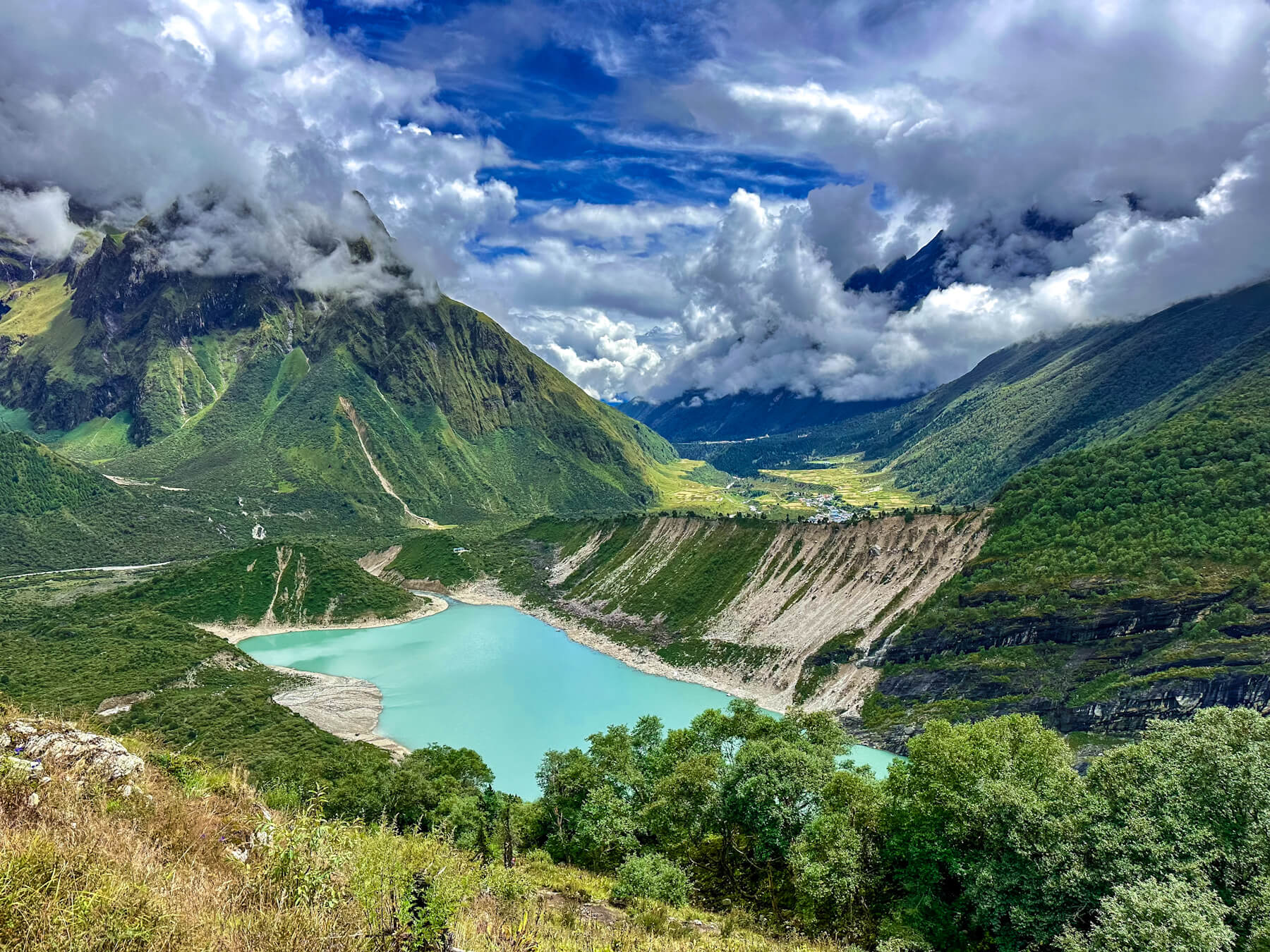
The Manaslu Circuit trek is a fifteen-day route around the eighth-highest mountain in the world, through the Budhi Gandaki valley and over the Larkya La pass. It suits travellers who want to see a more remote and less crowded part of Nepal and are ready for simple lodges, long stages and altitude above 5000 m.
- A circular route around the Manaslu massif
- Larkya La pass, 5160 m
- An acclimatisation day in Samagaon, 3520 m
- Views of Manaslu, Himalchuli and Ganesh Himal
- Tibetan villages, monasteries and the traditional culture of the region
- The Budhi Gandaki valley, suspension bridges and waterfalls
- A Mountain Guide team leader with groups of four participants or more
- The ground transfers to the start and from the end of the trek are included
In normal conditions the route requires no mountaineering technique, but the pass day is long and may cross snow, ice and rocky ground. Good endurance, experience of multi-day walking and a readiness to keep strictly to the acclimatisation pace are required.
The trip price is fixed in US dollars.
Important
- International flights, the visa, meals on the trek, a personal porter and insurance are paid separately
- There is no confirmed domestic flight in this trip
- The state of Larkya La depends on snow and weather, and the decision to cross is taken by the guide
- Any additional equipment for the pass is confirmed before the trip
- Mountain Guide does not sell air tickets and does not arrange visas
About the Manaslu Circuit trek
The Manaslu Circuit runs through a remote region north-west of Kathmandu. After the road transfer to Machha Khola the route climbs along the Budhi Gandaki river through forest, gorges and settlements with a Tibetan cultural influence. The high-altitude section leads through Samagaon and Samdo to Larkya Phedi, after which the group crosses Larkya La and descends to Bimthang.
Compared with the Everest and Annapurna routes there is less tourist infrastructure here and more of a sense of self-reliance. The lodges are simpler, communications less stable and the road journeys longer. It is precisely that remoteness, and the way Manaslu is revealed gradually, that make the circuit a product in its own right rather than a substitute for the popular treks.
Acclimatisation is built on a gradual gain in altitude and an extra day in Samagaon. A possible outing to Pungyen Gompa or Birendra Lake gives an altitude load with a return to the same overnight stop. Short stages to Samdo and Larkya Phedi then prepare the group for the pass. That sequence is compulsory and must not be accelerated to shorten the trip.
Larkya La at 5160 m is the key physical and meteorological threshold. The start is early, and a long descent follows the pass. Snow, ice, wind and poor visibility can change the tactics. The guide assesses the state of the trail and of the participants, sets the turnaround time and, if necessary, declines the crossing.
The trip suits someone in good physical condition who can walk five to seven hours on several consecutive days. Experience of multi-day trekking is desirable, and previous exposure to 4,000–5000 m will help you judge your own reaction. Reading about the prevention of altitude sickness before the trip is essential.
The circuit should not be confused with an expedition to the summit of Manaslu: this is a lodge trek without the high camps of an eight-thousander. A Mountain Guide team leader accompanies groups of four participants or more; a smaller group is given a Nepali guide under the confirmed package.
Itinerary of the Manaslu Circuit trek
Day 1. Arrival in Kathmandu.
Participants fly into Kathmandu independently. A team representative meets the group and arranges the transfer to the hotel. After check-in there is an introduction to the guide, an equipment check and a briefing on the remote route. The day is set aside for rest after the flight and for settling practical arrangements. Night at the hotel.
Day 2. Road transfer from Kathmandu to Machha Khola.
Early in the morning the group travels by jeep through valleys and mountain roads to the start of the walking section. The drive takes about seven to eight hours with the necessary stops and can depend on the state of the road. On arrival participants settle in and prepare their baggage for the first trekking day. Night at a lodge.
Day 3. First stage along the Budhi Gandaki.
The trail follows the river valley, passing through bamboo groves, waterfalls and suspension bridges, alternating climbs and descents. The stage takes about six to seven hours and brings the group into the rhythm of a multi-day route. The Tibetan influence in the architecture of the settlements becomes gradually more noticeable. Night at a lodge.
Day 4. Trek to Philim.
In five to six hours the group continues along the Budhi Gandaki through forest and rocky sections to one of the larger villages on the route. Philim serves as a cultural point with traditional architecture and monasteries. Rest and preparation for the further gain in altitude matter on arrival. Night at a lodge.
Day 5. Trek to Deng.
The trail gradually leaves the warmer zone for cooler high-mountain terrain, staying close to the river and its tributaries. The stage takes about five to six hours. The remoteness becomes more noticeable and the infrastructure simpler. The day continues the smooth acclimatisation. Night at a lodge.
Day 6. Trek to Namrung.
The group passes through several Tibetan villages and gains altitude gradually. As Namrung approaches, views of Ganesh Himal and the neighbouring peaks open up. The stage takes about five to six hours; after check-in the guide assesses the condition of participants. Night at a lodge.
Day 7. Trek through Lho.
The route continues through high mountain settlements and the large Tibetan village of Lho with its traditional houses and monasteries. About five hours of walking give the next altitude step without forcing the pace. Manaslu becomes more prominent and the vegetation thinner. Night at a lodge.
Day 8. Trek to Samagaon, 3520 m.
A short stage of about four to five hours leads to the key village of the high-altitude section. Samagaon lies close to the routes towards Manaslu Base Camp and is suited to a two-night stay. On arrival the group rests and prepares for the acclimatisation outing. Night at a lodge.
Day 9. Acclimatisation in Samagaon.
Participants stay at the same altitude and make an outing that the guide chooses between the available directions, including Pungyen Gompa or Birendra Lake. The aim is to gain altitude during the day and return to a recovery night, to check how everyone feels and to prepare the body for Samdo and the pass. Night at a lodge.
Day 10. Trek to Samdo.
In four to five hours the group walks up the open valley towards Tibet, crosses rivers on bridges and reaches the high settlement of Samdo. The short day allows acclimatisation to continue while strength is conserved. After check-in participants rest and monitor how they feel. Night at a lodge.
Day 11. Trek to Larkya Phedi.
The stage to Dharamsala, also known as Larkya Phedi, takes about four to five hours and takes the group above 4000 m. This is the last overnight stop before the pass. In the evening the guide checks clothing, head torches, water and the forecast, and announces the time of the early start and the rules of movement. Night at a lodge.
Day 12. Larkya La pass, 5160 m, and descent to Bimthang.
The group sets out early in the morning and climbs rocky, snow-covered or glaciated ground to the pass. After the high point a long descent to Bimthang begins. This is the hardest day of the route; participants must keep strength for the descent, and the decision on whether to continue and on the turnaround time belongs to the guide. Night at a lodge.
Day 13. Descent after the pass.
After a demanding day the group continues down through pine forest, pastures, villages and river valleys. The stage takes about four to five hours and helps recovery at lower altitude. Fatigue is still considerable, so the pace remains steady. Night at a lodge.
Day 14. End of the trek and return to Kathmandu.
The last walking section leads down to the Besisahar area, where the active part ends. The group then returns to Kathmandu by road transfer. The actual arrival time depends on the state of the mountain road. Rest and a group dinner in the evening. Night at the hotel.
Day 15. End of the trip.
At the agreed time there is a transfer to the international airport. Participants check in on their own. Departure should be planned with a margin against the long road return from the mountains.
What's included
- A Mountain Guide team leader with groups of four participants or more
- A Nepali guide
- Meeting and seeing off at Kathmandu airport
- Accommodation in a four-star hotel in Kathmandu – two nights
- Lodge accommodation on the trek
- Group equipment – first aid kit and satellite navigator
- A duffel bag for personal belongings – provided on site
- The permits, authorisations and entry fees required for the confirmed route
- The ground transfer to the start of the trek
- The ground transfer after the trek ends
What's not included
- International flights to Kathmandu and back
- Nepal visa – $30 for a 15-day visa, which matches the length of the trip
- Medical insurance covering trekking to at least 5160 m, search and rescue and helicopter evacuation
- Lunches and dinners in Kathmandu
- Meals during the trek – approximately $30–50 a day in the lodges
- A personal porter for participant baggage – $30 a day including transport. In a trekking group one porter may carry the belongings of two participants
- Single occupancy
- Early check-in, late check-out and additional nights
- Tips for the local team
- Costs arising if you leave the trip early
- Additional costs caused by road conditions, weather or a forced change to the itinerary
Private groups - a bespoke Manaslu Circuit
The Manaslu Circuit can be arranged for a family, friends, a club or a corporate team, with no outside participants joining. Dates, Russian-speaking support, personal porters, the standard of accommodation in Kathmandu and extra reserve are all agreed individually. The itinerary can take account of a closed group’s pace, but the acclimatisation day at Samagaon and the sequence of overnight stops before Larke La are kept. The remoteness of the region limits how quickly accommodation and transport can be changed, so any additions are fixed in advance. The tactics for the pass are decided by the guide. A Russian-speaking leader from the Mountain Guide team must be confirmed before booking.
Documents for the Manaslu Circuit trek
Start preparing your documents well in advance, as the route runs through a region with its own separate permits. The first name and surname on every booking and on the policy must match your passport exactly. Check the current visa requirements and the passport validity you need on the website of the Nepal Department of Immigration. Mountain Guide does not arrange visas and does not sell air tickets.
Documents
- A passport that meets Nepal’s current requirements
- A tourist visa or another valid entry permit
- International air tickets
- An insurance policy covering trekking to at least 5160 m, rescue and helicopter evacuation
- Your policy number and the insurer’s 24-hour emergency contact details
- Your booking confirmation and the organisers’ contact details
- Documents for a participant under 18, where these apply
- Digital copies of your passport, visa, tickets and insurance
- Waterproof document wallet
The local team arranges the special and route permits required for the confirmed itinerary. You must supply copies and photographs of your documents in advance, in the format requested.
Weather and seasons on the Manaslu Circuit
The circuit is usually planned for spring and autumn, when the high pass is more often open and visibility is steadier than during the summer monsoon. Specific dates are assessed on the state of the trail, snow on the Larke La and whether the lodges are open. The lower valley can bring rain, humidity and landslide-prone ground. It grows colder in Samagaon, Samdo and Larke Phedi, and the pass can bring snow, ice, wind and poor visibility. Conditions can change overnight. The weather and the state of the roads affect not only the walking stages but the ground transfers as well. The guide may move the start time, shorten an acclimatisation day or drop the pass. Leave a margin when you plan your international flight.
Accommodation and meals on the Manaslu Circuit
Two nights in a 4-star hotel in Kathmandu are included. On the walking section the group stays in lodges. Properties are chosen on availability; the higher and more remote the village, the simpler the rooms, heating and sanitation. Samagaon offers more choice than Samdo or Larke Phedi, but even the best lodges available are still mountain guest houses. A private bathroom, a permanent hot shower and heating in the room are not guaranteed. A sleeping bag is needed at every high-altitude overnight stop. Meals on the trek are not included and are paid for from the lodge menus. On the remote section the choice of dishes is limited, and fresh food depends on deliveries. Lunches and dinners in Kathmandu, drinks and your own snacks are also at your own expense.
Facilities on the Manaslu Circuit
Showers and water. A hot shower may be offered for a charge in some lodges, but it is not guaranteed in Samdo or Larke Phedi. Bring your own toiletries for several days without a shower.
Toilets. Washing facilities become more basic as you climb. The type of toilet depends on the lodge, and at night you need a head torch and a separate pair of shoes.
Power and charging. Charging may cost extra and may be limited. Bring your own power bank, cables and spare batteries.
Internet and phone signal. Wi-Fi and mobile signal are unreliable and may be absent for several days. Warn your family that there will be gaps in your messages.
Laundry and drying. Do not plan on proper laundry above Samagaon. Clothing dries slowly in the cold, so bring spare socks, underwear and a dry set in a waterproof bag.
Страхование
НаверхEquipment and useful extras for the Manaslu Circuit trek
Скачать PDFThe standard route does not require constant use of a harness or ice axe. You bring all of your own personal equipment. Your footwear, sleeping bag and any additional kit for the snow pass are agreed with your guide according to the conditions on your particular departure.
Documents
- Passport
- Air tickets or e-ticket receipts
- Medical insurance with altitude cover and evacuation
- Digital copies of your documents
- Waterproof cover
Baggage and personal equipment
- Rucksack of 30-50 litres
- Soft duffel bag, provided locally
- Sleeping bag with a comfort rating no higher than -5 °C
- Two trekking poles with baskets
- Waterproof rucksack cover
- Dry bags for clothing and electronics
Clothing and footwear
- Broken-in waterproof trekking boots
- Light footwear for towns and lodges
- waterproof shell jacket and waterproof trousers
- Fleece jacket or fleece set
- Base layer, top and bottoms
- Down jacket with a hood
- Thick and thin gloves
- Buff or bandana
- Warm hat
- Warm trekking socks
- Gaiters
Useful extras
- Head torch with at least 12 hours of battery life
- Power bank
- Sunglasses
- Rain jacket
- Vacuum flask or water bottle, 1 litre
- SPF 50 sun cream
- Lip balm with sun protection
- Personal first-aid kit
- Elastic bandage or a personal support brace
- Personal toiletries and a quick-drying towel
- Toilet paper