- Guides
- B2B
-
#19607 (no title)
-
#15972 (no title)
- Climb Elbrus Individually
- Climb Elbrus from the South, 9 Days
- Climb Elbrus from the South, 7 Days
- Climb Elbrus from the South with Oxygen
- Climb Elbrus from the North, 10 Days
- Two Summits of Elbrus, 9 Days
- Elbrus Traverse from South to North, 9 Days
- Elbrus Traverse from North to South, 10 Days
- Cross of Elbrus, South to North, 9 Days
- 根据”来自北方的十字架”计划攀登厄尔布鲁士山
- Climb Kazbek and Elbrus — 10-Day Two-Summit Programme
- Climb Elbrus from the West, 11 Days
- 厄尔布鲁士乘坐直升机
- Elbrus Region Holiday and Trekking, 9 Days
- Elbrus Region Holiday, 7 Days
- Tinder 之旅,攀登厄尔布鲁士峰
- Climb Elbrus from the South, 9 Days with Sergey Baranov
-
#15539 (no title)
- Climb Carstensz Pyramid, 8 Days with Helicopter Access
- Climb Mont Blanc, 4810 m — 8-Day Guided Ascent
- Climb the Matterhorn, 4478 m — 8-Day Guided Ascent
- Climb Mount Vinson, 15-Day Antarctic Expedition
- Climb Kosciuszko and Travel in Australia, 7 Days
- Climb Fisht, 2868 m — 3-Day Ascent by the 1B Route
- Climb Mount Wilhelm, 6 Days
-
#15546 (no title)
- Climb Kilimanjaro: the Marangu Route
- Climb Kilimanjaro: the Lemosho Route
- Climb Ararat, 5137 m — 7-Day Classic Programme
- Climb Kazbek from the South, 5033 m — 8 Days in Georgia
- Climb Kazbek and Elbrus — 10-Day Two-Summit Programme
- 攀登火山在墨西哥
- Climbing Alpamayo — 16-Day Technical Expedition
- 攀登玛格丽特峰(斯坦利)
- Climbing Mount Kenya: Point Lenana, 4,985 m
- Climb Dykh-Tau by the North Ridge, 13 Days
-
#15554 (no title)
- Aconcagua Climb — 17-Day Guided Expedition
- Island Peak Climb — 18-Day Expedition
- Climb Mera Peak, 6476 m — 16-Day Hinku Valley Programme
- Climb Ama Dablam, 6812 m — 24-Day Expedition with Island Peak
- Climb Island Peak and Mera Peak — 24-Day Two-Summit Expedition
- Aconcagua and Ojos del Salado — 25-Day Combined Expedition
- Ojos del Salado Climb — 15-Day Expedition
- Climb Chimborazo and Cotopaxi — 14-Day Ecuador Programme
- 瓦斯卡兰攀岩
- Climb Razdelnaya Peak, 6148 m — 15-Day Pamir Expedition
- Climb Denali by the West Buttress, 23 Days
- #15565 (no title)
- #15572 (no title)
-
#15972 (no title)
-
#19592 (no title)
-
See 8000m
- K2 Base Camp Trek via the Gondogoro La
- Everest Base Camp Trek — 14 Days
- Everest Base Camp via Gokyo Lakes — 15 Days
- 一周内徒步前往珠穆朗玛峰
- Annapurna Circuit and Tilicho Lake Trek
- Manaslu Circuit Trek
- Kanchenjunga Circuit Trek (XXL)
- Kanchenjunga North Base Camp Trek (Short)
- Kanchenjunga from India: the Goecha La Trek in Sikkim
- 徒步前往马卡鲁大本营
- 徒步前往安纳布尔纳峰大本营
- South America
- Asia
- Africa
-
Russia
- Elbrus Region Holiday and Trekking, 9 Days
- Elbrus Region Holiday, 7 Days
- 徒步奥什滕 + 卡德瓦赫
- Lake Kardyvach — 5-Day Base-Camp Trek
- Route 30: Through the Mountains to the Sea, with Oshten — 4 Days
- Trekking in Arkhyz — 7 Days over the Ayulyu Pass
- Gvandra Trek — 7 Days to the Ullu-Kyol Lakes
- Trekking in Dombai — 7 Days with the Murudzhu Lakes
- Europe
-
See 8000m
- Adventures
- Ski-touring
- VIP
- #19722 (no title)
- About
Kenya Safari: the African Big Five
- Height (m)
- 2200
- Duration
- 9 дней
- Difficulty
- Low
- Continent
- Africa
- Children
- From 2 years old
- Accommodation
- Hotels only
2500 $
Почему такая цена?
This nine-day trip combines the Maasai Mara National Reserve, Lake Naivasha and the Amboseli and Tsavo national parks, followed by two days on the Indian Ocean coast. Morning and evening game drives are run with a professional guide; specific wildlife encounters, including the Big Five, depend on the season and on the behaviour of the animals and cannot be guaranteed.
Please note that our company does not buy or sell air tickets and does not arrange visas, and is therefore not responsible for disruption beyond its control involving flights or border crossings.
In some African countries small, worn or pre-2009 US dollar notes may be refused. We recommend bringing recent notes in good condition.
About the Kenya safari
This nine-day safari in Kenya brings together four different natural areas and a stay on the Indian Ocean coast. The route starts in Nairobi, runs through the Maasai Mara, Lake Naivasha, Amboseli and Tsavo, and finishes in the Mombasa area. It is a complete first introduction to Kenya: savannah, the lakes of the Great Rift Valley, the view of Kilimanjaro, volcanic landscapes and the ocean follow one another in sequence.
The core of the journey is morning and evening game drives in four-wheel-drive vehicles. In the Maasai Mara the group watches life on the open savannah; at Naivasha the route adds a trip on the water; Amboseli is known for its elephant herds and its panorama of Kilimanjaro; and Tsavo shows the drier, wilder side of the country. Encounters with particular animals, with the Big Five and with the Great Migration depend on the season and on the behaviour of the wildlife and cannot be guaranteed.
The trip suits participants without special physical preparation, but it involves early starts and long road transfers between the parks. Inside the national parks you must follow the guide’s instructions, stay in the vehicle except where leaving it is permitted, and never approach animals on your own.
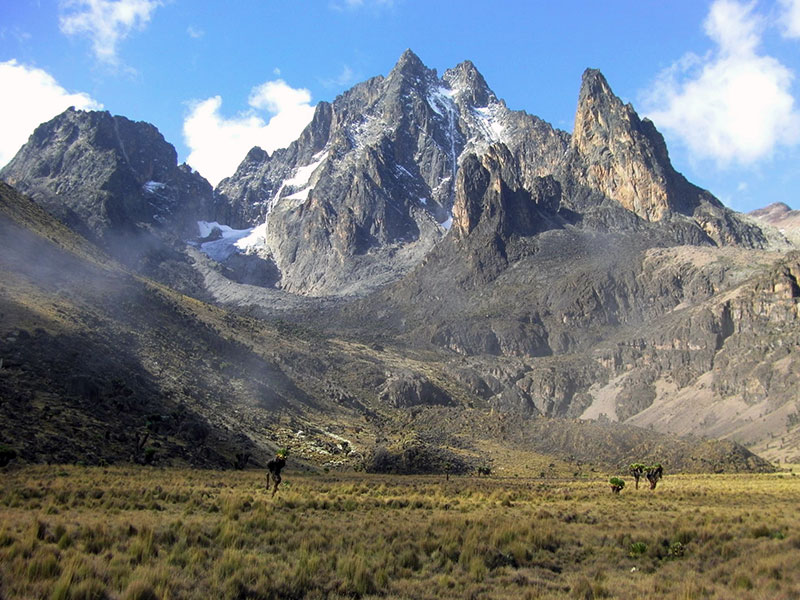
Time on the coast follows the intensive safari section. It can be spent resting or on marine activities agreed in advance. Anyone who wants to extend the journey can consider a Mount Kenya climb or a Kilimanjaro ascent by the Lemosho route as a separate trip.
Itinerary of the Kenya safari
Day 1. Arrival in Nairobi.
Hakuna Matata, and welcome to Africa. Our representative meets you at the airport and you check in at the hotel. In the evening there is a welcome dinner at the most famous restaurant in Africa, where you can taste crocodile, ostrich and other African game. The guide gives a short briefing covering practical arrangements and the safety rules on safari. Night at the hotel.
Day 2. Nairobi to the Maasai Mara.
Breakfast and departure from the hotel. The day is long, so we recommend bringing your favourite snacks. Powerful jeeps take the group towards the Kenyan-Tanzanian border and into one of the best known reserves in East Africa, the Maasai Mara. It adjoins Serengeti National Park in Tanzania; together the two territories form the single transboundary Serengeti-Mara ecosystem. On the way there is time to take in the local colour and buy ripe mangoes and watermelons. The culmination of the day is an evening game drive: as the heat falls away, many animals become more active. Particular encounters, including animals of the Big Five, depend on the season and on wildlife behaviour. Accommodation in a lodge, dinner. Night in a comfortable lodge.
Day 3. A full day in the Maasai Mara.
The whole day is spent in the Maasai Mara National Reserve. Lions, leopards and hyenas hold strictly limited territories that they cross only in exceptional circumstances, such as a change of power in a pride, while the ungulates migrate constantly. This is where most wildlife films about Africa are shot. After an early start in the pre-dawn twilight the group heads out on a morning game drive: wide savannah, hills, winding rivers, endless herds of wildebeest and zebra, giraffe families, groups of antelope and rare birds, of which the park holds more than 400 species, from ostriches, marabou storks and vultures to much smaller birds. The morning hours matter most on safari, because that is when predators are at their most active. You may find them hunting, playing with their cubs, patrolling their territory or simply lying in the early sun. With luck, the morning hours give particularly striking photographs.
There is a picnic on the Mara River overlooking the savannah. After lunch the group visits the Maasai, a semi-nomadic indigenous people of Africa who have kept their traditional way of life almost entirely intact. Bright red cloths, beaded jewellery, scars and tall stature are the marks of a Maasai. You will see the traditional dance with which the Maasai greet mzungu, the dwellings and the cattle enclosures, learn what the community eats, visit the school where children receive their first and only education, and learn how the Maasai keep a fire going without lighters or matches. The trip then includes a visit to a small souvenir market, where you can support the community by buying small crafts, beadwork, painted plates or carved wooden animals. Return to the lodge. Dinner.
Day 4. To Lake Naivasha.
After breakfast the group drives to Lake Naivasha, whose name translates as rough water, because the region is known for storms that begin without warning. On the way the road crosses a pass with a wide view over the Great Rift Valley, the geological fracture that runs from the Dead Sea in Israel to Mozambique in the south-east of the continent. Scientists say that in roughly five million years this piece of Africa will break away and become a separate island. At the lake the group takes a boat safari, passing snorting hippos and watching water birds, then lands on an island where the walking part of the excursion begins, through green meadows where families of zebra and giraffe graze. This is perhaps the most memorable evening of the trip: a barbecue in the middle of wild country. In the morning, opening the tent, you may see groups of zebra close by in the rising sun. Accommodation: comfortable tents on the peninsula.
Day 5. Naivasha to Amboseli.
An early start, farewell to the peninsula and a fairly long transfer to the next park, Amboseli. Amboseli in two phrases is the best existing view of Kilimanjaro and, of course, huge herds of elephants. The park combines plains with marshes that never dry out, whose lush grass draws grazing animals, above all the largest land mammal, the elephant, and the many birds that live alongside them. Here you can take the photograph that has become the emblem of Kenya and perhaps of Africa as a whole: an elephant against Kilimanjaro. This park offers the best view of the Roof of Africa, the snow-capped summit of Kilimanjaro, even though the mountain itself stands in Tanzania. Return to the lodge. Dinner.
Day 6. Amboseli to Tsavo and on towards Mombasa.
Breakfast with a view over Amboseli, then a morning game drive as the first light reaches Kilimanjaro, the nocturnal animals finish hunting and the daytime ones are already awake. The group moves on to the fourth park, Tsavo. Here it is finally possible to leave the vehicle: the day takes in a lava field black to the horizon, a look at the inhabitants of a wild river from below the water line, with luck even a hippo or a crocodile, and a climb of a small hill from which forests and savannah can be seen for many kilometres, with a picnic there if the site is free. In the evening the group leaves the park towards Mombasa. Ahead lie three days of rest on kilometres of white beaches, the blue water of the Indian Ocean and fresh seafood.
Day 7. Rest on the Indian Ocean coast.
A free day on the coast, which can be spent on the beach or on a boat trip, snorkelling, diving or fishing ordered in advance. The range of activities depends on the chosen stretch of coast, the weather and the state of the sea.
Day 8. A second free day by the ocean.
Another free day by the ocean. If you wish, you can visit a sea turtle rehabilitation centre, which treats animals injured by nets, trauma and poaching and introduces guests to marine conservation in Kenya. The visit and the transfer are agreed in advance and depend on the chosen area of accommodation.
Day 9. Departure.
Transfer to Mombasa airport and departure.
What's included
- A Mountain Guide team leader with groups of four participants or more
- An English-speaking guide
- All the transfers set out in the itinerary
- All the hotels and lodges set out in the itinerary
- Half board in the national parks and breakfasts in the cities
- Park entry fees, both per person and per vehicle
- Permits for the overnight stays inside the parks
What's not included
- International flights
- Medical insurance
- A Kenyan visa
- Lunches and snacks
- Single occupancy
- Tips
- Any costs arising from change to the itinerary
The Kenya safari for private groups
The Kenya safari can be arranged for a private group on your own dates, once the vehicle, driver-guide, accommodation and national park entries are confirmed. This format suits families, groups of friends, photographers and closed corporate groups.
On a private trip the length of the stay on the coast, the standard of accommodation and extra days in particular parks can all be quoted separately. Any change to the route is confirmed before booking, taking account of road logistics, park rules and seasonal access. Seeing particular animals, and the Great Migration itself, remains a natural event rather than a guaranteed service.
Whether children can join depends on their age, the length of the drives and the requirements of the lodges and activities chosen. For a family group these conditions are checked before payment.
Documents for the Kenya safari
Most foreign travellers need to obtain electronic travel authorisation for Kenya in advance, through the official eTA portal. Exemptions depend on your nationality and status. We provide visa support and the documents needed for the authorisation.
- A passport valid for at least 6 months beyond your intended date of entry and with at least one blank page
- An approved eTA, or confirmation that you are exempt
- Air tickets and a confirmed travel itinerary
- Medical insurance covering safari, four-wheel-drive travel, water excursions and medical evacuation
- An international yellow fever vaccination certificate, where your country of departure and transit require one
- Copies of your accommodation confirmation and the host’s contact details
We recommend keeping digital copies of your documents on your phone and in cloud storage. The general principles for choosing a policy are set out in our piece on insurance for active travel, and prophylaxis should be discussed with your doctor, taking account of the advice in our article on avoiding malaria.
Weather and seasons on the Kenya safari
A Kenya safari is possible all year round, but both the experience and the road conditions change with the season. The Kenya Wildlife Service treats July to March as the main game-viewing season. Dry or relatively dry weather and shorter grass often make animals easier to see, but how many are in any one place is determined by water, grazing and natural migration.
The long rains normally run from April to June. The landscape turns greener and there are fewer visitors, but some unsurfaced roads soften and drives take longer. Four-wheel-drive vehicles are used on the route, but the guide decides what is actually passable and how the safari runs.
The coast is warmer and more humid; Nairobi and dawn game drives can be cool, while the savannah is hot in the middle of the day. You need layers, and protection from sun and rain. The timing of the Great Migration varies from year to year, so neither the date it begins nor where the herds will be can be guaranteed in advance.
Accommodation and meals on the Kenya safari
The itinerary uses a town hotel in Nairobi, lodges in the national park areas, equipped tented accommodation at Lake Naivasha and a hotel on the coast. The specific properties and room categories are confirmed for your chosen date once you have booked.
Half board is provided in the national parks and breakfasts in the towns. Lunches, snacks and personal drinks are paid separately unless the itinerary states otherwise. On the longer drives it is worth carrying a small supply of snacks you are used to.
Tell us before booking about food allergies, medical restrictions and any vegetarian or vegan diet. Whether a special menu is possible depends on the particular lodge and is confirmed in advance.
Day-to-day conditions on the Kenya safari
A safari means early starts, long drives and several hours a day in a vehicle on unsurfaced roads. In the vehicle you must follow the driver-guide’s instructions, wear a seatbelt where one is fitted, and not get out anywhere it is not permitted. Dust, heat and a bumpy ride are a normal part of the route.
The level of comfort depends on the particular hotel, lodge or tented camp. Wi-Fi, air conditioning, hot water, laundry and a constant power supply are confirmed property by property. Signal can be unreliable in the remote parks, so bring a power bank.
Keep valuables, documents, medication, water and sun protection with you. Compact soft baggage loads into a safari vehicle better than a large hard suitcase.
Страхование
НаверхEquipment and packing list for the Kenya safari
Скачать PDFDocuments:
- Passport
- Air tickets
- Medical insurance
- Yellow fever vaccination certificate
- Malaria prophylaxis
Clothing and footwear:
- Boots and trainers, two pairs
- A fleece set or an equivalent set of warm clothing.
- Bandana or buff
- Sun hat or cap
- Long-sleeved shirts and tops
- Lightweight trekking trousers
- Shorts
- T-shirts
Other items:
- Powerbank
- Sunglasses
- Rain jacket
- SPF 50 sun cream
- Mosquito repellent
- SPF 10-15 lip balm
- Personal first-aid kit
- Toiletries, wet wipes and flip-flops
- Insect repellent
- Malaria medication
- Swimming things
- Mosquito net for the bed
Вам также будет интересно:
-
 1,100 $
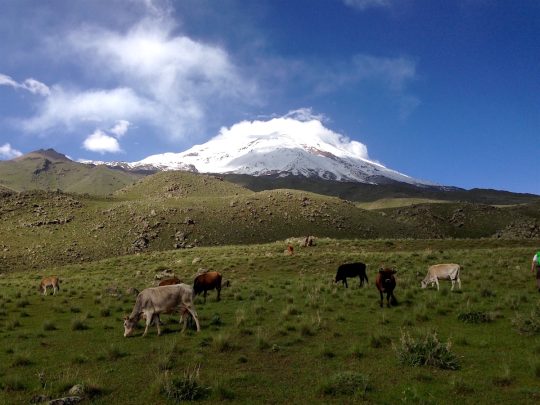
Climb Ararat, 5137 m — 7-Day Classic Climb
- Height (m)
- 5137
- Duration
- 7 дней
- Difficulty
- Low
- Continent
- Europe
- Children
- From 10 years old
- Accommodation
- There are tents
-
 1,500 $
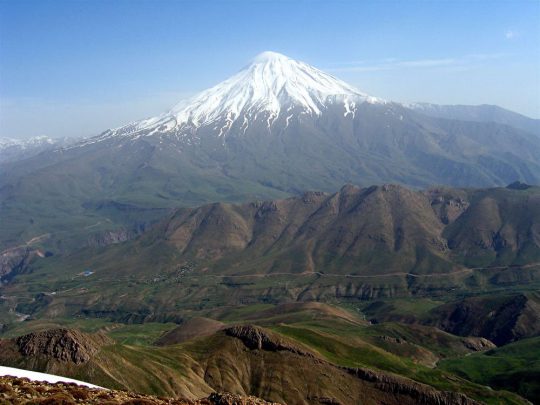
Climb Damavand, 5610 m — 7-Day Southern Route
- Height (m)
- 5610
- Duration
- 7 дней
- Difficulty
- Low
- Continent
- Asia
- Children
- From 12 years old
- Accommodation
- Without tents
-
 3,136 $
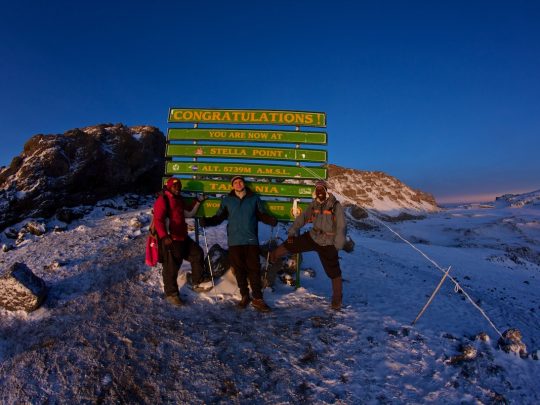
Climb Kilimanjaro: the Marangu Route
- Height (m)
- 5895
- Duration
- 7 дней
- Difficulty
- Low
- Continent
- Africa
- Children
- From 14 years old
- Accommodation
- Without tents
-
 5,238 $
Climb the Matterhorn, 4478 m — 8-Day Guided Ascent