- Guides
- B2B
-
#19607 (no title)
-
#15972 (no title)
- Climb Elbrus Individually
- Climb Elbrus from the South, 9 Days
- Climb Elbrus from the South, 7 Days
- Climb Elbrus from the South with Oxygen
- Climb Elbrus from the North, 10 Days
- Two Summits of Elbrus, 9 Days
- Elbrus Traverse from South to North, 9 Days
- Elbrus Traverse from North to South, 10 Days
- Cross of Elbrus, South to North, 9 Days
- 根据”来自北方的十字架”计划攀登厄尔布鲁士山
- Climb Kazbek and Elbrus — 10-Day Two-Summit Programme
- Climb Elbrus from the West, 11 Days
- 厄尔布鲁士乘坐直升机
- Elbrus Region Holiday and Trekking, 9 Days
- Elbrus Region Holiday, 7 Days
- Tinder 之旅,攀登厄尔布鲁士峰
- Climb Elbrus from the South, 9 Days with Sergey Baranov
- #15539 (no title)
-
#15546 (no title)
- Climb Kilimanjaro: the Marangu Route
- Climb Kilimanjaro: the Lemosho Route
- Climb Ararat, 5137 m — 7-Day Classic Programme
- Climb Kazbek from the South, 5033 m — 8 Days in Georgia
- Climb Kazbek and Elbrus — 10-Day Two-Summit Programme
- 攀登火山在墨西哥
- Climbing Alpamayo — 16-Day Technical Expedition
- 攀登玛格丽特峰(斯坦利)
- Climbing Mount Kenya: Point Lenana, 4,985 m
- Climb Dykh-Tau by the North Ridge, 13 Days
-
#15554 (no title)
- Aconcagua Climb — 17-Day Guided Expedition
- Island Peak Climb — 18-Day Expedition
- Climb Mera Peak, 6476 m — 16-Day Hinku Valley Programme
- Climb Ama Dablam, 6812 m — 24-Day Expedition with Island Peak
- Climb Island Peak and Mera Peak — 24-Day Two-Summit Expedition
- Aconcagua and Ojos del Salado — 25-Day Combined Expedition
- Ojos del Salado Climb — 15-Day Expedition
- 厄瓜多尔钦博拉索和科托帕希攀登
- 瓦斯卡兰攀岩
- Climb Razdelnaya Peak, 6148 m — 15-Day Pamir Expedition
- Climb Denali by the West Buttress, 23 Days
- #15565 (no title)
- #15572 (no title)
-
#15972 (no title)
-
#19592 (no title)
-
See 8000m
- K2 Base Camp Trek via the Gondogoro La
- Everest Base Camp Trek — 14 Days
- Everest Base Camp via Gokyo Lakes — 15 Days
- 一周内徒步前往珠穆朗玛峰
- Annapurna Circuit and Tilicho Lake Trek
- Manaslu Circuit Trek
- Kanchenjunga Circuit Trek (XXL)
- Kanchenjunga North Base Camp Trek (Short)
- Kanchenjunga from India: the Goecha La Trek in Sikkim
- 徒步前往马卡鲁大本营
- 徒步前往安纳布尔纳峰大本营
- South America
- Asia
- Africa
-
Russia
- Elbrus Region Holiday and Trekking, 9 Days
- Elbrus Region Holiday, 7 Days
- 徒步奥什滕 + 卡德瓦赫
- Lake Kardyvach — 5-Day Base-Camp Trek
- Route 30: Through the Mountains to the Sea, with Oshten — 4 Days
- Trekking in Arkhyz — 7 Days over the Ayulyu Pass
- Gvandra Trek — 7 Days to the Ullu-Kyol Lakes
- Trekking in Dombai — 7 Days with the Murudzhu Lakes
- Europe
-
See 8000m
- Adventures
- Ski-touring
- VIP
- #19722 (no title)
- About
Ojos del Salado Climb — 15-Day Expedition
- Height (m)
- 6893
- Duration
- 15 дней
- Difficulty
- Moderate
- Continent
- South America
- Children
- From 14 years old
- Accommodation
- There are tents
6000 $
Почему такая цена?
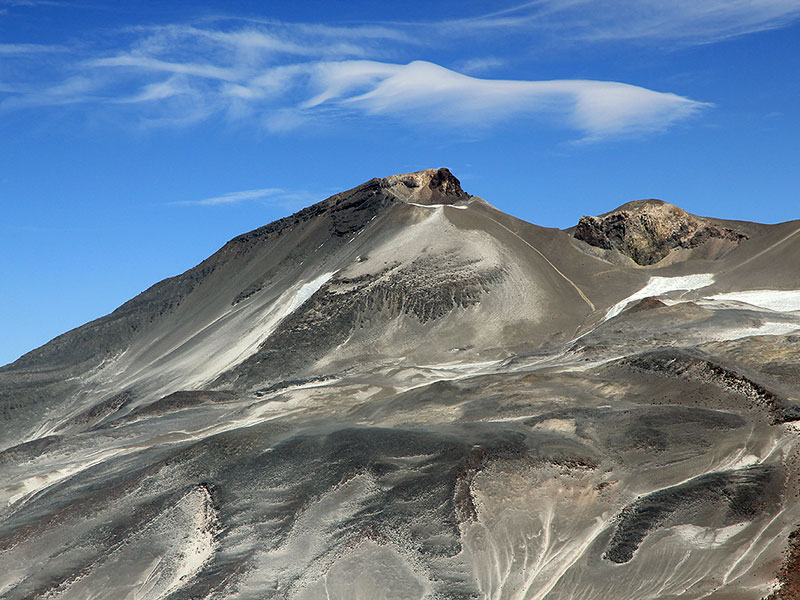
Ojos del Salado, 6893 m, is the highest volcano in the world and the second highest summit in South America. This fifteen-day programme works its way through the high lakes of the Atacama, a series of acclimatisation ascents including the summit of San Francisco, and the Atacama and Tejos camps.
Vehicle support removes much of the load carrying, but it does not lower the demands of altitude. The final part of the ascent includes a rock section, and the weather of a high-altitude desert can change quickly. The programme suits well-prepared participants with previous altitude experience and basic technical skills.
The price covers a Mountain Guide expedition leader for groups of three or more, the stated transfers, one hotel night in Copiapó, local mountain guides on the ascent, and food and group equipment as listed. The permit, insurance, porters and personal equipment are paid separately.
Important
- Access, road conditions and the requirements of the controlling authorities are checked before every departure.
- Vehicle support is not a substitute for acclimatisation or physical preparation.
The strength of the fifteen-day route is its sequential acclimatisation in the Atacama. The group raises its sleeping altitude through Laguna Santa Rosa and Laguna Verde, makes ascents of "Seven Brothers" and San Francisco, and gets to know Tejos before the final move up. Two reserve days leave room for decisions about weather and road conditions, but they do not guarantee the summit.
This programme does not drive you to the top: the final attempt remains a long, high-altitude climb.
If you want two summits in one altitude chain, see the Aconcagua and Ojos del Salado combined expedition.
About the Ojos del Salado climb
Ojos del Salado stands in the high Atacama desert on the border between Chile and Argentina. The programme starts in Copiapó and then climbs in stages to Laguna Santa Rosa, Laguna Verde, the Atacama camp and the Tejos refuge. Acclimatisation ascents of “Seven Brothers” and San Francisco prepare the group for the 6893 m summit.
Most of the logistics are handled by four-wheel-drive vehicles, but the upper camps remain remote and self-contained. The cold desert-mountain climate brings a large daily temperature range, strong wind and possible snow even in summer. The state of the access roads and entry to individual sections depend on the weather.
The route runs mainly over scree and snowfields. Immediately below the summit there is a short rock section where a belay may be needed. The guide decides on the start, the equipment and whether the team can continue, based on the conditions on the day.
Why the route starts a long way from the summit
The good vehicle access to Ojos del Salado creates a dangerous illusion of simplicity. A four-wheel-drive can carry people, water, food and camp equipment, but it does not speed up physiological adaptation. That is why the programme does not drive straight to Atacama or Tejos. Sleeping altitude is raised in stages, and the there-and-back ascents let you go high and come back down to sleep.
The ascent of San Francisco, 6018 m, is a serious day in its own right. It shows how you move above 5000 m, how you stay warm, drink, eat and recover. Reaching that summit is useful, but it is not an automatic clearance for Ojos del Salado. After each stage we assess the state of the team, the weather and the logistics of the next camp.
How Ojos del Salado differs from an ordinary trekking volcano
The route combines high altitude, a cold desert, strong wind, remoteness and unreliable roads. Snow and ice are possible in the upper section, and there is a short rock step immediately before the summit. Its actual condition determines what equipment and what protection will be needed. Even where the bulk of the route is technically straightforward, fatigue at nearly 7000 m changes both speed and precision of movement.
Dry air makes fluid loss easy to miss. You need to drink and eat on an agreed schedule rather than by thirst or appetite. At the same time water has to be used carefully, because the camps are remote and the supply is part of the vehicle logistics.
How the two reserve days are used
The reserve is not allocated in advance to a second attempt. Snow or wind can affect the road between the camps well before summit day. Extra time may be needed for rest, for waiting until a section is safe to drive, for postponing the move to Tejos or for organising the descent. The team on the ground makes that decision, keeping enough fuel, water and margin to get out of the area.
Who the fifteen-day programme suits
- a participant with previous high-altitude experience and systematic physical preparation;
- someone ready for camp life, dry cold and several days of remoteness;
- a climber with basic skills in crampons and in working with a belay;
- a person who reports symptoms honestly and accepts the guide’s decision to turn back;
- a participant who does not treat vehicle access as a substitute for acclimatisation.
Departure availability is published in the Mountain Guide calendar. If you already hold fresh high-altitude acclimatisation from Aconcagua or another 6000 m peak, a short eight-day Ojos del Salado format also exists; it is being prepared as a separate English page.
Ojos del Salado climbing programme, 15 days
Day 1. Arrival in Copiapó.
Meeting at the airport and transfer to the hotel. Food for the climb is bought and the necessary paperwork is completed. An optional walk around the town. Night in a hotel.
Day 2. Drive to Laguna Santa Rosa, 3700 m — one of the scenic lakes around Ojos del Salado, with large numbers of flamingos.
Setting up camp. Lunch. Walks on the surrounding hills for better acclimatisation, then rest. Night in camp.
Day 3. Acclimatisation ascent of “Seven Brothers”, 4800 m.
Descent to camp. Rest. Dinner.
Day 4. Drive to Laguna Verde — the Green Lake — 4250 m, about 2 hours.
Night in tents.
Day 5. Acclimatisation ascent of San Francisco, 6018 m.
It is possible to drive to 4900 m, from where a straightforward slope leads to the summit in about 4–6 hours. Descent to Laguna Verde. Night in tents at 4250 m.
Day 6. Rest and acclimatisation at Laguna Verde.
Day 7. Drive to the Atacama camp, about 5300 m.
Camp is set up beside the Atacama refuge, followed by rest.
Day 8. Acclimatisation walk to the assault camp of Ojos del Salado (Tejos refuge, 5800 m) and return to the Atacama camp.
Day 9. Rest day at the Atacama camp.
A drive down to the Laguna Verde camp for a day’s rest is possible; the night is spent at the Atacama camp.
Day 10. Final preparation and move to the Tejos camp, 5800 m.
An early dinner and a night in the refuge or in tents.
Day 11. Summit attempt on Ojos del Salado, 6893 m.
An early start at 5 a.m. The way to the summit usually takes around 9–12 hours. Descent to the Atacama refuge at about 5300 m. A further drive to the refuge at 4500 m is possible. Dinner and rest.
Day 12. Reserve day.
Day 13. Reserve day.
Day 14. Drive to Copiapó.
Flight to Santiago.
Day 15. Departure.
What the Ojos del Salado climb includes
- Mountain Guide expedition leader throughout the programme, for groups of 3 participants or more
- Airport–hotel–airport transfer
- Hotel in Copiapó, 1 night, twin room with breakfast
- Assistance with obtaining the necessary permits
- Transfer Copiapó — Ojos del Salado — Copiapó
- Food and fuel for the high camps
- Mountain guides — one guide for every 3 climbers on the ascent
- Group equipment — tents, stoves, cooking pots
- Group first-aid kit
What the Ojos del Salado climb does not include
- International flights
- Climbing permit, charged separately at the tariff in force at the time of the climb
- Porters
- Personal equipment
- Additional costs arising from any deviation from the programme
- Medical insurance covering the stated activity and the maximum altitude of the programme
- Personal expenses such as drinks, internet and phone calls
- Any costs arising from changes to the programme
Страхование
НаверхEquipment for Ojos del Salado ascent.
Скачать PDF文件:
- 护照
- 机票
- 医疗保险
个人装备:
- 登山包 50–60 升
- 睡袋(舒适温度 –25°C 至 –15°C)
- 防潮垫
- 登山杖(必须带雪圈)
- 冰爪,可以是铝制
- 冰镐(经典款,带自我保护绳;可使用轻量款或与滑雪杖组合式)
- 头盔
- 安全带
- 主锁 3 个
- 杯子-勺子-碗
服装和鞋类:
- 三层或双层高山靴。双层靴可为塑料或皮质;推荐 Scarpa Vega(最暖的双层塑料靴之一)
- 运动鞋或徒步鞋(理想是两者都带;运动鞋用于前期行程,轻徒步鞋用于基地营及适应性行走,也可只带运动鞋)
- 防水外层(冲锋衣 + 冲锋裤,膜层可从 5000/5000 到 Gore-Tex)
- 抓绒套装
- 保暖内衣(上衣 + 裤子)
- 羽绒服(带帽子,厚且保暖)
- 保暖连指手套
- 厚手套
- 薄手套
- 头巾(除防晒外,也可用于保暖颈部或脸部)
- 帽子
- 登顶日保暖徒步袜
其他:
- 头灯(续航不少于 12 小时)
- 太阳镜
- 滑雪护目镜
- 保温瓶 1 升(建议无按压式盖子)
- 防风面罩(可用围巾替代)
- 绑腿
- 防晒霜、护唇膏
- 化学暖宝宝(非必须,但可能非常有用)
- 个人急救包
- 弹性绷带和/或支撑护带
Вам также будет интересно:
-
 8,785 $
Aconcagua and Ojos del Salado — 25-Day Combined Expedition
- Height (m)
- 6893, 6957
- Duration
- 22 дня
- Difficulty
- Moderate
- Continent
- South America
- Children
- From 14 years old
- Accommodation
- There are tents
-
 3,900 $
厄瓜多尔钦博拉索和科托帕希攀登
- Height (m)
- 5897, 6384
- Duration
- 11 дней
- Difficulty
- Moderate
- Continent
- South America
- Children
- From 14 years old
- Accommodation
- Hotels only
-
 18,690 $
Climb Denali by the West Buttress, 23 Days
- Height (m)
- 6193
- Duration
- 21 день
- Difficulty
- Average
- Continent
- North America
- Children
- No
- Accommodation
- There are tents
-
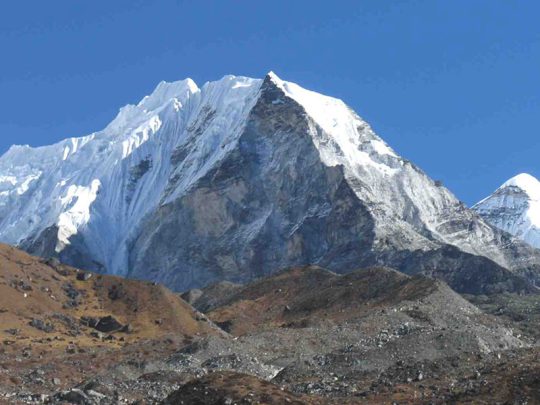 3,129 $
Island Peak Climb — 18-Day Expedition