- Guides
- B2B
-
#19607 (no title)
-
#15972 (no title)
- Climb Elbrus Individually
- Climb Elbrus from the South, 9 Days
- Climb Elbrus from the South, 7 Days
- Climb Elbrus from the South with Oxygen
- Climb Elbrus from the North, 10 Days
- Two Summits of Elbrus, 9 Days
- Elbrus Traverse from South to North, 9 Days
- Elbrus Traverse from North to South, 10 Days
- Cross of Elbrus, South to North, 9 Days
- 根据”来自北方的十字架”计划攀登厄尔布鲁士山
- Climb Kazbek and Elbrus — 10-Day Two-Summit Programme
- Climb Elbrus from the West, 11 Days
- 厄尔布鲁士乘坐直升机
- Elbrus Region Holiday and Trekking, 9 Days
- Elbrus Region Holiday, 7 Days
- Tinder 之旅,攀登厄尔布鲁士峰
- Climb Elbrus from the South, 9 Days with Sergey Baranov
-
#15539 (no title)
- Climb Carstensz Pyramid, 8 Days with Helicopter Access
- Climb Mont Blanc, 4810 m — 8-Day Guided Ascent
- Climb the Matterhorn, 4478 m — 8-Day Guided Ascent
- Climb Mount Vinson, 15-Day Antarctic Expedition
- Climb Kosciuszko and Travel in Australia, 7 Days
- Climb Fisht, 2868 m — 3-Day Ascent by the 1B Route
- Climb Mount Wilhelm, 6 Days
-
#15546 (no title)
- Climb Kilimanjaro: the Marangu Route
- Climb Kilimanjaro: the Lemosho Route
- Climb Ararat, 5137 m — 7-Day Classic Programme
- Climb Kazbek from the South, 5033 m — 8 Days in Georgia
- Climb Kazbek and Elbrus — 10-Day Two-Summit Programme
- 攀登火山在墨西哥
- Climbing Alpamayo — 16-Day Technical Expedition
- 攀登玛格丽特峰(斯坦利)
- Climbing Mount Kenya: Point Lenana, 4,985 m
- Climb Dykh-Tau by the North Ridge, 13 Days
-
#15554 (no title)
- Aconcagua Climb — 17-Day Guided Expedition
- Island Peak Climb — 18-Day Expedition
- Climb Mera Peak, 6476 m — 16-Day Hinku Valley Programme
- Climb Ama Dablam, 6812 m — 24-Day Expedition with Island Peak
- Climb Island Peak and Mera Peak — 24-Day Two-Summit Expedition
- Aconcagua and Ojos del Salado — 25-Day Combined Expedition
- Ojos del Salado Climb — 15-Day Expedition
- Climb Chimborazo and Cotopaxi — 14-Day Ecuador Programme
- 瓦斯卡兰攀岩
- Climb Razdelnaya Peak, 6148 m — 15-Day Pamir Expedition
- Climb Denali by the West Buttress, 23 Days
- #15565 (no title)
- #15572 (no title)
-
#15972 (no title)
-
#19592 (no title)
-
See 8000m
- K2 Base Camp Trek via the Gondogoro La
- Everest Base Camp Trek — 14 Days
- Everest Base Camp via Gokyo Lakes — 15 Days
- 一周内徒步前往珠穆朗玛峰
- Annapurna Circuit and Tilicho Lake Trek
- Manaslu Circuit Trek
- Kanchenjunga Circuit Trek (XXL)
- Kanchenjunga North Base Camp Trek (Short)
- Kanchenjunga from India: the Goecha La Trek in Sikkim
- 徒步前往马卡鲁大本营
- 徒步前往安纳布尔纳峰大本营
- South America
- Asia
- Africa
-
Russia
- Elbrus Region Holiday and Trekking, 9 Days
- Elbrus Region Holiday, 7 Days
- 徒步奥什滕 + 卡德瓦赫
- Lake Kardyvach — 5-Day Base-Camp Trek
- Route 30: Through the Mountains to the Sea, with Oshten — 4 Days
- Trekking in Arkhyz — 7 Days over the Ayulyu Pass
- Gvandra Trek — 7 Days to the Ullu-Kyol Lakes
- Trekking in Dombai — 7 Days with the Murudzhu Lakes
- Europe
-
See 8000m
- Adventures
- Ski-touring
- VIP
- #19722 (no title)
- About
Climb Ararat, 5137 m — 7-Day Classic Climb
- Height (m)
- 5137
- Duration
- 7 дней
- Difficulty
- Low
- Continent
- Europe
- Children
- From 10 years old
- Accommodation
- There are tents
1100 $
Почему такая цена?
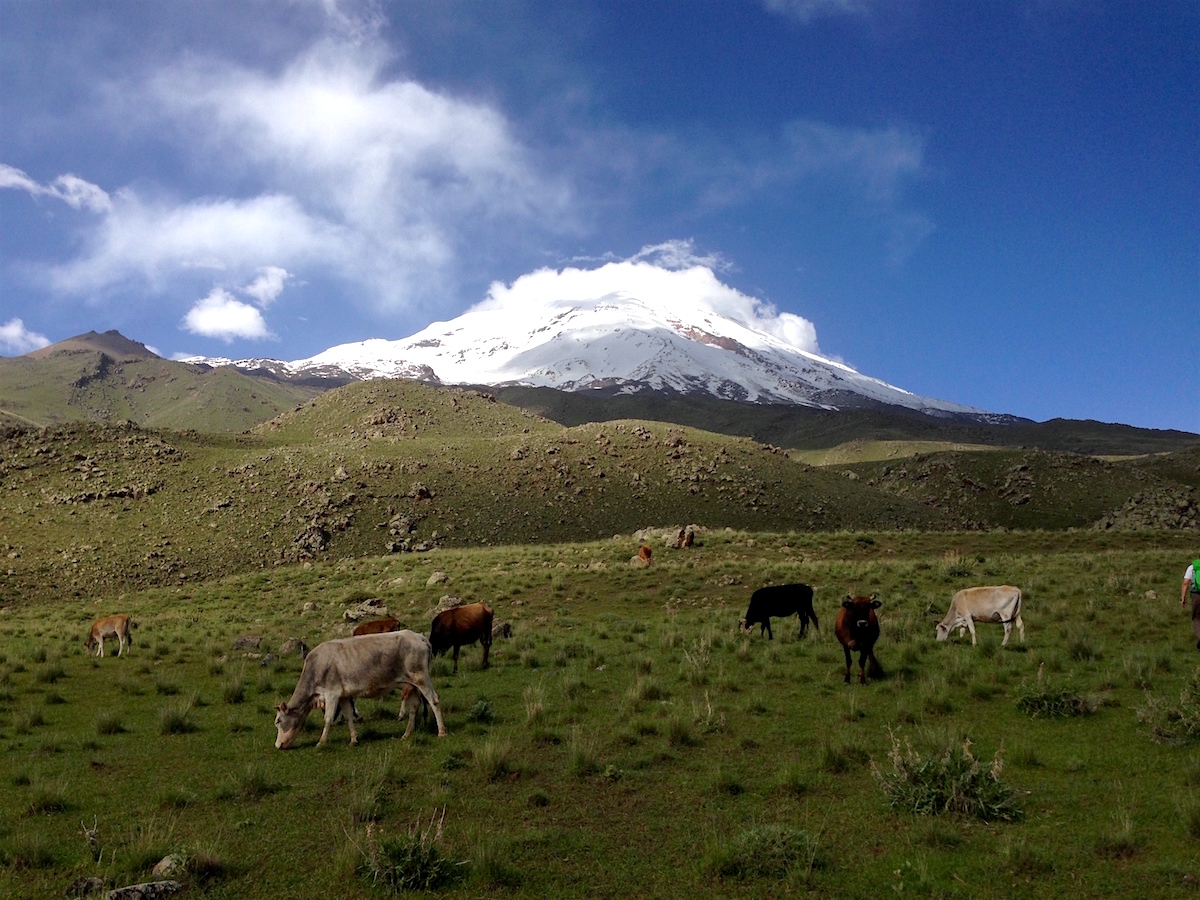
A guided ascent of Ararat — a seven-day trip on the highest summit in Turkey, 5137 m. The classic route suits physically prepared beginners who want a first ascent above 5000 m, and equally participants with mountain experience who want a short but complete high-altitude trip.
Ararat is known not only as the highest point in Turkey but as the biblical mountain where, according to tradition, Noah's Ark came to rest. On the climb, dry volcanic foothills give way step by step to high-mountain terrain, snow and ice. In clear weather the summit opens up panoramas of the mountain regions of Turkey, Armenia, Iran and Azerbaijan.
The classic trip provides a staged gain in altitude, an acclimatisation excursion to 4200 m and a reserve day. That schedule gives the body time to adapt and makes the route suitable for a first encounter with 5000 m. Previous mountaineering experience is not required, but good fitness, regular training and a readiness to act on the guide's decisions are.
- The ascent of Ararat, 5137 m, the highest summit in Turkey
- A suitable first 5000 m peak for physically prepared beginners
- A seven-day trip with staged acclimatisation
- An acclimatisation excursion to 4200 m before the move to the high camp
- A reserve day in case of unfavourable weather
- Varied landscapes, from dry volcanic foothills to snow and ice
- Horses to carry the main part of the baggage where the state of the route allows
- No more than 4 participants per assistant guide on summit day
Which Ararat format to choose
- The classic seven-day trip is the main option for a first 5000 m peak, for participants without high-altitude experience and for anyone who needs full acclimatisation
- The three-day Ararat blitz is a short format for a long weekend, intended only for experienced or recently acclimatised participants
- Kazbek and Elbrus followed by the Ararat blitz is a combination for strong participants who want to use the acclimatisation they have gained within one season
- Classic Ararat before Kazbek from the south, or before Elbrus from the south, is a sequential strategy for beginners who plan to build altitude, endurance and mountain experience gradually
- Ararat combined with the Lycian Way trek pairs a 5000 m peak with a journey along the Mediterranean coast of Turkey
The timing of consecutive trips, the flights between regions and the recovery time needed are agreed individually.
Important
- For a group of 1 to 3 people the cost is calculated individually
- The price is fixed in US dollars
- Mountain Guide does not sell air tickets and does not process visas, and therefore bears no responsibility for circumstances connected with flights or border crossings
About the Ararat climb
The ascent of Mount Ararat follows the classic high-mountain route in eastern Turkey. Ararat is a stratovolcanic massif of the Armenian Highlands, and its main summit, 5137 m, is the highest point in the country. According to the biblical tradition it was at this mountain that Noah’s Ark came to rest after the Flood.
The classic route is considered one of the most accessible options for a first ascent above 5000 m. On the main part of the way there is no difficult rock climbing and there are no long technical sections. Even so, Ararat should not be treated as an ordinary trek: the altitude, the cold, the wind, the snow, the long summit day and the considerable height gain all demand endurance, proper acclimatisation and suitable equipment.
The route is fairly direct, so altitude is gained and lost quickly. That simplifies the overall logistics of the climb but raises the demands on acclimatisation, on watching how you feel and on pacing your effort. You need to keep energy in reserve not only for the summit but for a long descent.
The trip provides for staged adaptation. After the climb to the camp at 3340 m, participants make an acclimatisation excursion to 4200 m and return to sleep lower down. On the next stage the group moves up to the high camp, from which the summit climb begins. This scheme helps prepare you for the altitude, but it does not rule out symptoms of altitude illness.
Before the trip, read up on acclimatisation in the mountains and start your preparation for a high-altitude ascent well in advance. Good fitness does not replace acclimatisation, but it helps you cope with long stages and keep energy for a safe descent.
In terms of terrain the classic route on Ararat is technically more accessible than many popular high-mountain ascents. There are no long sections of rock climbing, but the state of the snow and ice changes with the month and the weather. On the upper part of the route crampons, an ice axe and confident movement on a snow slope may all be needed.
Early in the season, June included, a significant part of the route may be under snow. Early in the morning the snow is usually firmer and easier to move on in crampons. Once it warms it softens, becomes deep and noticeably increases the effort of the descent. The time of departure and the pace are therefore set by the guide.
The snow conditions also affect the carriage of baggage. Where the state of the trail and the weather allow, horses carry the main part of personal belongings and the camp load. In deep or wet snow they may not reach the planned camp, so a participant must be ready to carry some of their own kit.
On each stage every participant carries a day pack with water, warm clothing, protection from precipitation and sun, a personal first-aid kit and whatever else they need during the day. Having the main baggage carried makes the route easier, but it does not replace physical preparation.
The classic trip suits beginners who train regularly, have sufficient endurance and are ready to follow the guide’s recommendations. The accelerated three-day trip is intended only for experienced or recently acclimatised participants and is not a substitute for full acclimatisation.
Mountain Guide has a successful ascent of Ararat with a group of participants from Armenia behind it. That completed trip forms part of the team’s practical route experience, on which the briefing, the organisation of the camps and the tactics of the climb are based.
The guide manages the pace, watches the condition of the group and adjusts the tactics for the weather, the snow conditions and how the participants are feeling. Reaching the summit depends on the actual conditions and cannot be guaranteed. Participation requires mountaineering insurance covering an altitude of at least 5137 m, search and rescue and emergency evacuation.
Guided Ararat climbing itinerary, 7 days
Day 1. Arrival in Igdir.
Participants fly independently to Igdir airport, where a Mountain Guide representative meets the group. Arriving via Van is also possible, but the transfer from Van is paid for separately and must be agreed in advance. After checking into the hotel there is an introduction to the guide and the group, an equipment check and a briefing on the trip. Anything missing or unsuitable must be replaced before the departure for the mountain. In the evening, dinner and rest. Night in a hotel.
Day 2. Move to the first camp, 3340 m.
After breakfast the group transfers to the village of Eli at 2200 m. The walking part of the route starts here. The climb to the first camp is made at a steady pace, which is what gradual adaptation to altitude requires. On arrival participants settle in, rest and prepare for the acclimatisation excursion. Night in tents. The walking section starts at 2200 m; the overnight altitude is 3340 m; the stage takes about 5 hours.
Day 3. Acclimatisation excursion to 4200 m.
After breakfast the group climbs from the first camp to 4200 m. At the high point participants rest and have a light snack, then descend to sleep back at the first camp. The excursion helps the body adapt to the altitude and lets the guide assess the pace and condition of the participants before the move to the high camp. Night in tents. Maximum altitude 4200 m; overnight altitude 3340 m.
Day 4. Move to the high camp, 4200 m.
After breakfast the group climbs the now familiar route again, this time to the high camp. A steady pace conserves energy before the early summit start. After settling in, participants rest, have dinner and prepare their clothing and equipment. The guide gives the final briefing, checks each personal kit and announces the departure time, taking the forecast, the state of the route and the group’s pace into account. Night in tents. Overnight altitude 4200 m.
Day 5. Ascent of the summit of Ararat, 5137 m.
The group sets off early in the morning. The start time and the tactics are set by the guide, taking into account the weather, the state of the snow and ice, the group’s pace and how the participants are feeling. On the upper part of the route crampons and an ice axe may be used. The decision to continue or to turn around rests with the guide. Reaching the summit is not guaranteed: the safety of the participants and a safe return take priority over any sporting result. From the summit, or from the turnaround point, the group descends to the high camp for a short rest and a snack, and then continues down to the lower camp. This is a long and physically demanding day, so it is important to keep energy for the full descent. Night in tents. Maximum altitude 5137 m.
Day 6. Reserve day and return to Dogubayazit.
The day is provided as a reserve in case of unfavourable weather or a change in the state of the route. If the ascent took place the day before, the group strikes camp after breakfast, descends to the village of Eli and transfers back to Dogubayazit. In the evening there is a visit to a local family and a celebratory dinner of Turkish dishes. If the reserve day is needed for a second attempt, the guide will adjust the subsequent schedule, the time of return and the evening activities. Night in a hotel.
Day 7. End of the trip.
After breakfast there is a group transfer to Igdir airport. The departure time is set by the flight schedule and the margin needed for the journey and for check-in. A transfer to Van airport is possible for an additional charge and is confirmed in advance. On arrival at the airport, participants check in for their flight themselves.
What's included
- Guiding — for a group of 4 people or more, a Mountain Guide team leader throughout the trip; for a group of up to 3 people, a local guide under the package option selected
- Local assistant guides on summit day — no more than 4 participants per guide
- Hotel accommodation in Dogubayazit in twin or triple rooms, for the number of nights set out in the itinerary
- Group transfers on the route Igdir – Dogubayazit – Ararat – Igdir
- Three meals a day as set out in the itinerary, from dinner on the day of arrival to breakfast on the day of departure
- All the permissions and registrations required for the route
- Tents for the nights during the mountain part of the trip
- Horses to carry the group equipment and up to 15 kg of personal baggage per participant
What's not included
- International and domestic air tickets to Igdir or Van and back
- Transfers from and to Van airport
- A visa and any other entry documents for Turkey, where these are required for your nationality
- Personal climbing and trekking equipment
- Medical insurance covering a high-mountain ascent
- The costs of search and rescue, medical assistance and emergency evacuation
- Personal expenses, including drinks, internet, telephone calls and shopping
- Additional costs if a participant ends the climb early or leaves the trip
- Costs arising from a change to the itinerary, from delayed or cancelled flights, from unfavourable weather or from other circumstances
Private groups: a private Ararat climb
For a family, a group of friends, a climbing club or a corporate team, Mountain Guide arranges a private Ararat climb with its own guiding team and your own dates. Whether it can run depends on the season, on obtaining permits, on the local team’s availability and on the actual conditions on the route. When quoting a private trip you can discuss extra acclimatisation or reserve days, a transfer from Van, single occupancy and an agreed continuation through eastern Turkey. All extras are confirmed separately. For newcomers the full acclimatisation scheme is kept, with a day up to 4200 m and a return to the lower camp for the night. Shortening the trip must not worsen adaptation to altitude. The Ararat Blitz format is considered only for experienced or recently acclimatised participants. Whether a family can take part is assessed individually for each person. Age, fitness, health, previous altitude experience and readiness for nights under canvas are all taken into account. For companions who do not plan to go to the summit, a separate arrangement in Doğubayazıt can be discussed. For corporate groups the requirements on participants’ preparation and the set guide ratio on summit day still apply. The trip can be extended with an agreed cultural section, provided it does not disturb acclimatisation or the reserve held for bad weather. The price of a private climb depends on the number of participants, the dates, the guiding team, the accommodation and any extras.
Documents you need for the Ararat climb
Start preparing your documents before you buy air tickets. Entry requirements depend on your nationality and can change, so check them before booking and again before you fly. Mountain Guide does not arrange visas, but on request will provide the documents it holds confirming your booking. Your medical insurance must be valid in Turkey and cover mountaineering, the maximum altitude of the route, search and rescue, and emergency evacuation.
Documents
- A valid passport
- International and domestic air tickets, or e-ticket receipts
- Medical insurance covering mountaineering, an altitude of at least 5137 m, search and rescue, and emergency evacuation
- A visa or other entry permit for Turkey, if one is required for your nationality
- A birth certificate and the necessary travel consent for a participant under 18, where these apply
- Digital copies of your passport, tickets and insurance policy on your phone and in cloud storage
- Waterproof wallet for your passport, tickets and insurance policy
Weather and seasons on the Ararat climb
The main season for climbing Ararat runs from June to September. The state of the route changes from date to date, so agree your footwear, whether you need crampons and an ice axe, and the final set of warm clothing with your guide before departure. There is usually more snow on the route in June. Early in the morning it is firmer and easier to move on in crampons, but once it warms it becomes soft and deep. That makes the descent harder and can limit how high the horses go. In midsummer there is usually less snow on the lower part of the route, but snow and ice remain higher up. Crampons and an ice axe may be needed whatever the calendar date, if the actual state of the slope calls for them. Even in summer, conditions at altitude can change within a few hours. Strong wind, precipitation, poor visibility or the state of the snow slope can all mean postponing the start, using the reserve day, or ending the climb. The reserve day gives the group more options in poor weather, but it does not guarantee a second attempt or the summit. The guide takes the final decision on setting out, on continuing and on turning back.
Accommodation and meals on the Ararat climb
On days one and six participants stay in a hotel in Doğubayazıt. The standard arrangement is 2-3 people to a room. Single occupancy and a higher room category must be agreed in advance; availability and price are confirmed separately. The mountain section includes four nights in tented camps. Tents are included in the price. You bring your own sleeping bag and the other items on the personal equipment list. Meals are provided from dinner on the day you arrive to breakfast on the final day. Three meals a day are provided on the mountain section. After the descent there is a celebratory dinner of Turkish dishes with a local family. The diet in the camps is planned for sustained physical effort and for a self-sufficient mountain route. The exact menu depends on the food available and on what the local team can provide. Tell us before booking about vegetarian meals, food allergies, medical restrictions and any other dietary requirements, so that substitutions can be confirmed in advance.
Day-to-day conditions on the Ararat climb
The hotel in Doğubayazıt offers the usual town facilities. Exactly what is available depends on the property actually confirmed. The mountain section is spent in tented camps. Facilities and sanitation here are basic. A shower, hot water and mains electricity are not guaranteed, so bring your own toiletries, a quick-drying towel and enough charge for your electronic devices. Use a power bank charged in advance for your phone, watch, camera and head torch. A mobile signal may appear in places, but it stays unreliable. Continuous internet during the mountain section is not guaranteed. There is no regular laundry on the route. Bring spare dry underwear and socks, and dry bags to protect your clothing and electronics from snow, rain and condensation. Horses carry the group equipment and up to 15 kg of personal baggage per participant, where the state of the route allows them to reach the camp. You carry your own day pack with water, warm clothing, protection from rain and sun, a first-aid kit and personal items. Collect your rubbish and hand it to the support team. You must not separate from the group, change the route or leave camp without telling the guide.
Страхование
НаверхEquipment and useful extras for the Ararat climb
Скачать PDFYou bring all of your own personal equipment. Before the trip, agree with your guide the models of footwear, the compatibility of your boots and crampons, your ice axe and your sleeping bag, taking account of the month and the current state of the route. If you are missing part of the set, look into the terms for hiring climbing equipment in advance and check whether items can be supplied for a trip abroad. Boots, crampons and ice axe must be tested together before departure.
Documents
- Passport
- Air tickets or e-ticket receipts
- Medical insurance covering mountaineering and an ascent to at least 5137 m
- Digital copies of your documents on your phone and in cloud storage
- Waterproof document wallet
Personal equipment
- Rucksack of 30-50 litres
- Sleeping bag with a comfort rating no higher than -10 °C
- Folding trekking poles with baskets at least 70 mm across
- Waterproof rucksack cover
- Dry bags or liner bags for clothing and electronics
Technical equipment
- Crampons compatible with the boots you choose
- Classic ice axe
Crampons and an ice axe matter especially on June and other early departures. Whether they are needed on later dates depends on the actual state of the route. The guide takes the final decision, so do not leave agreed technical equipment out of your baggage on your own initiative.
Clothing and footwear
- Double plastic or leather mountaineering boots for early departures, as agreed with the guide
- Waterproof trekking or lightweight mountaineering boots with a dependable sole that will take crampons, for summer ascents
- Light spare footwear for town and the hotel
- waterproof shell jacket with a hood
- waterproof shell trousers
- Fleece jacket or fleece set
- Base layer, top and bottoms
- Warm down jacket with a hood
- Quick-drying trekking trousers
- Quick-drying T-shirts or long-sleeved shirts
- Thin gloves
- Warm gloves
- Buff or bandana
- Warm hat
- Sun hat
- Warm trekking socks for summit day
- Spare underwear and trekking socks
- Gaiters
Useful extras
- LED head torch with at least 12 hours of battery life
- A spare set of batteries, or a rechargeable cell, for your torch
- Sunglasses with UV protection
- Ski goggles for wind, snow and poor visibility
- Vacuum flask of 1 litre, preferably without a push-button lid
- Insulated reusable bottle of 1 litre
- Windproof mask for the lower face, or a warm scarf
- Sun cream
- Lip balm with sun protection
- Power bank and charging cables
- Quick-drying towel
- Personal toiletries and wet wipes
- Chemical hand warmers, optional
- A personal first-aid kit suited to your own medical needs
- Elastic bandage or a personal support brace
We also recommend reading our pieces on choosing equipment for high-altitude climbs and on a personal first-aid kit in the mountains.