- Guides
- B2B
-
#19607 (no title)
-
#15972 (no title)
- Climb Elbrus Individually
- Climb Elbrus from the South, 9 Days
- Climb Elbrus from the South, 7 Days
- Climb Elbrus from the South with Oxygen
- Climb Elbrus from the North, 10 Days
- Two Summits of Elbrus, 9 Days
- Elbrus Traverse from South to North, 9 Days
- Elbrus Traverse from North to South, 10 Days
- Cross of Elbrus, South to North, 9 Days
- 根据”来自北方的十字架”计划攀登厄尔布鲁士山
- Climb Kazbek and Elbrus — 10-Day Two-Summit Programme
- Climb Elbrus from the West, 11 Days
- 厄尔布鲁士乘坐直升机
- Elbrus Region Holiday and Trekking, 9 Days
- Elbrus Region Holiday, 7 Days
- Tinder 之旅,攀登厄尔布鲁士峰
- Climb Elbrus from the South, 9 Days with Sergey Baranov
-
#15539 (no title)
- Climb Carstensz Pyramid, 8 Days with Helicopter Access
- Climb Mont Blanc, 4810 m — 8-Day Guided Ascent
- Climb the Matterhorn, 4478 m — 8-Day Guided Ascent
- Climb Mount Vinson, 15-Day Antarctic Expedition
- Climb Kosciuszko and Travel in Australia, 7 Days
- Climb Fisht, 2868 m — 3-Day Ascent by the 1B Route
- Climb Mount Wilhelm, 6 Days
-
#15546 (no title)
- Climb Kilimanjaro: the Marangu Route
- Climb Kilimanjaro: the Lemosho Route
- Climb Ararat, 5137 m — 7-Day Classic Programme
- Climb Kazbek from the South, 5033 m — 8 Days in Georgia
- Climb Kazbek and Elbrus — 10-Day Two-Summit Programme
- 攀登火山在墨西哥
- Climbing Alpamayo — 16-Day Technical Expedition
- 攀登玛格丽特峰(斯坦利)
- Climbing Mount Kenya: Point Lenana, 4,985 m
- Climb Dykh-Tau by the North Ridge, 13 Days
-
#15554 (no title)
- Aconcagua Climb — 17-Day Guided Expedition
- Island Peak Climb — 18-Day Expedition
- Climb Mera Peak, 6476 m — 16-Day Hinku Valley Programme
- Climb Ama Dablam, 6812 m — 24-Day Expedition with Island Peak
- Climb Island Peak and Mera Peak — 24-Day Two-Summit Expedition
- Aconcagua and Ojos del Salado — 25-Day Combined Expedition
- Ojos del Salado Climb — 15-Day Expedition
- Climb Chimborazo and Cotopaxi — 14-Day Ecuador Programme
- 瓦斯卡兰攀岩
- Climb Razdelnaya Peak, 6148 m — 15-Day Pamir Expedition
- Climb Denali by the West Buttress, 23 Days
- #15565 (no title)
- #15572 (no title)
-
#15972 (no title)
-
#19592 (no title)
-
See 8000m
- K2 Base Camp Trek via the Gondogoro La
- Everest Base Camp Trek — 14 Days
- Everest Base Camp via Gokyo Lakes — 15 Days
- 一周内徒步前往珠穆朗玛峰
- Annapurna Circuit and Tilicho Lake Trek
- Manaslu Circuit Trek
- Kanchenjunga Circuit Trek (XXL)
- Kanchenjunga North Base Camp Trek (Short)
- Kanchenjunga from India: the Goecha La Trek in Sikkim
- 徒步前往马卡鲁大本营
- 徒步前往安纳布尔纳峰大本营
- South America
- Asia
- Africa
-
Russia
- Elbrus Region Holiday and Trekking, 9 Days
- Elbrus Region Holiday, 7 Days
- 徒步奥什滕 + 卡德瓦赫
- Lake Kardyvach — 5-Day Base-Camp Trek
- Route 30: Through the Mountains to the Sea, with Oshten — 4 Days
- Trekking in Arkhyz — 7 Days over the Ayulyu Pass
- Gvandra Trek — 7 Days to the Ullu-Kyol Lakes
- Trekking in Dombai — 7 Days with the Murudzhu Lakes
- Europe
-
See 8000m
- Adventures
- Ski-touring
- VIP
- #19722 (no title)
- About
Climb Fisht, 2868 m — 3-Day Ascent by the 1B Route
- Height (m)
- 2868
- Difficulty
- Moderate
- Duration
- 3 дня
- Continent
- Europe
- Children
- From 10 years old
- Accommodation
- There are tents
580 $
Почему такая цена?
Тур временно недоступен
The ascent of Fisht, 2868 m, by the 1B route is a short three-day trip for a first proper look at mountaineering. The walk in to the shelter, two nights in tents and a long day of ascent and descent give a far more honest picture of the mountains than a stroll to a viewpoint.
Previous mountaineering experience is not required, but you do need good physical condition, the readiness to spend about ten hours on the route and a calm attitude to height, snow, scree and simple tent life.
Important
- Access to the route depends on the official opening of the Caucasus Nature Reserve territory and on the actual state of the slopes
- The decision to go for the summit, and the decision to turn round, rests with the guide
- A short trip does not make this an easy walk
About the Fisht ascent
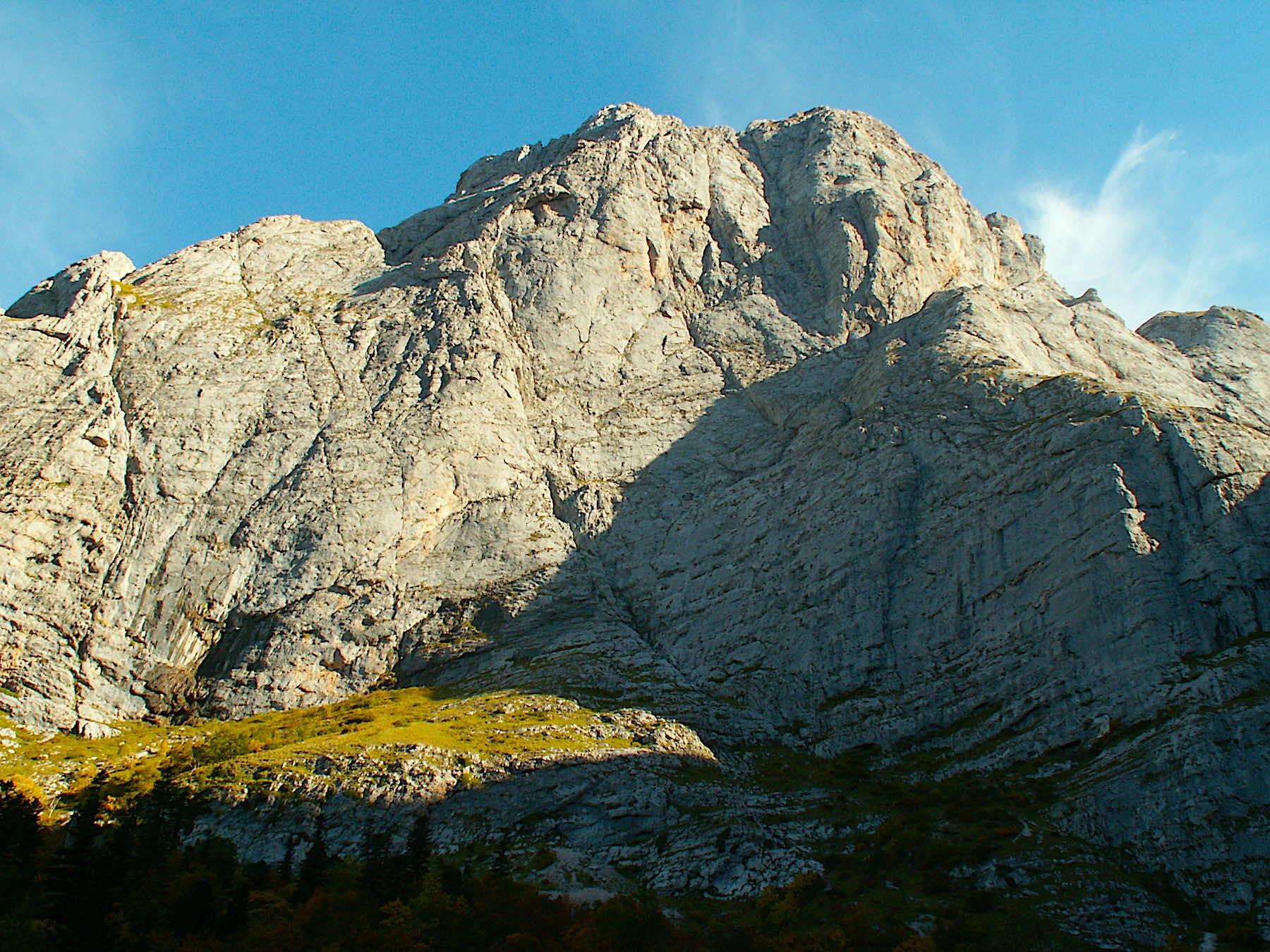
Fisht stands in the western part of the Main Caucasus Range and rises above the Lagonaki plateau. The route lies inside the Caucasus State Natural Biosphere Reserve and combines forest trail, alpine meadows, scree, snowfields and rock sections.
The trip uses a route of grade 1B. For a newcomer it is a chance to learn the basic principles of moving in the mountains and of using mountaineering equipment under a guide’s direction. At the same time, grade 1B means a real route rather than a decorative helmet for a photograph: the state of the snow, the ice and the rock affects both technique and pace.
On the first day the group walks in from Yavorovaya Polyana to the Fisht shelter and settles into a tented camp. The second day is given entirely to the ascent and the descent; the early start leaves more time to complete the route in the most suitable conditions. On the third day the group returns to Yavorovaya Polyana.
The trip suits physically active beginners and participants who need a first experience before higher summits. To prepare, walk on rough ground with a pack beforehand, choose footwear according to our guidance on selecting trekking boots and use the entry level of our mountain training plan.
Fisht climbing itinerary, 3 days
Day 1. Arrival at Yavorovaya Polyana, the start of the route. Meeting the guides and the other members of the group. After the equipment check and the briefing the group sets off on the walk in to the Fisht shelter. The trail runs through fine forest and alpine meadows with excellent mountain views. On arrival at the clearing by the Fisht shelter the group pitches camp, has dinner in the open air and takes the briefing for the ascent. Night in tents under the stars.
Day 2. An early rise, a hot breakfast and a start on the route at about four in the morning. The ascent of Fisht follows the 1B route. The trail crosses snowfields, scree and rock sections that call for skill with mountaineering equipment. The scenery on the route is striking: glaciers, steep slopes and wide Caucasus panoramas. On the summit, 2868 m, there is time for photographs, for the view and for the satisfaction of reaching the objective. The ascent and descent together take about 10 hours. Back at the Fisht shelter a hot dinner and rest in the tents are waiting.
Day 3. After breakfast the group strikes camp and starts the descent from the Fisht shelter to Yavorovaya Polyana. The way passes through now familiar country that still impresses. The route ends at the clearing, with contacts exchanged among new friends and future climbing partners. Transfer home.
What's included
- The work of a mountain guide throughout the three-day trip
- Trekking meals from the start of the route to the return to Yavorovaya Polyana: lunch or a trail snack and dinner on the first day, breakfast, food on the ascent and dinner on the second day, breakfast and a trail snack on the third day
- Tent accommodation on the clearing by the Fisht shelter — two nights, as set out in the itinerary
- Group camp equipment: tents, stoves, gas and shared cooking utensils
- Group technical equipment for the route: ropes, ice screws and the necessary belay equipment
- Group first-aid kit, communication equipment and satellite navigation
- The Caucasus Nature Reserve permit and the compulsory charge for staying at the designated campsite on the trip
- Registration of the group with the emergency service before setting out on the route
What's not included
- Air or rail tickets to the region and back
- The transfer to Yavorovaya Polyana and back, where it is not separately included in the confirmation for the specific group
- Medical insurance covering mountaineering, search and rescue and evacuation
- Personal trekking, camping and mountaineering equipment
- Rental of personal equipment
- Horses or porters to carry personal baggage
- The banya, showers and other additional services at the Fisht shelter
- Personal expenses, meals in transit and services not listed in the included section
- Additional costs arising from a change to the itinerary at the participant’s initiative
The Fisht climb for private groups
The trip can be arranged for a family, a group of friends, a walking club or a corporate group on its own dates, once the route has officially opened and subject to guides being free.
A private group can discuss an extra day, a gentler pace on the approach, separate instruction in basic technique and its own ratio of participants to guides. Any changes must not reduce the time needed to climb the summit safely.
Documents required for the Fisht climb
To join this trip you will need:
- A valid passport
- Tickets to the trip’s starting point and back, if your own travel arrangements need them
- Medical insurance covering mountaineering and the maximum altitude of the trip, at least 2868 m
- The details needed to arrange a permit for the Caucasus Nature Reserve
- Digital copies of your main documents, saved on your phone and in cloud storage
How the permit is issued and the visiting rules are checked before every departure, against the Caucasus Nature Reserve’s requirements in force. It is worth checking the terms of your policy against our guide to insurance for mountaineers.
Weather and season for the Fisht climb
The usual summer season for routes around the Fisht hut runs from June to September, but the exact dates are set each year once the continuous snow cover has gone, and are published by the Caucasus Nature Reserve. Before the official opening the route cannot be walked.
Even in summer, Fisht can bring rain, thunderstorms, mist, strong wind and snowfields. After rain the rock becomes slippery, and poor visibility makes navigation harder. The weather in the valley tells you nothing about what is happening near the summit.
Your guide may change the start time, shorten the outing or turn the group back. The climb is not pursued at any cost: a short trip demands particular discipline and a readiness to accept a decision to abandon the summit.
Accommodation and meals on the Fisht climb
Both nights on the route are spent in tents on the meadow by the Fisht hut. You need a sleeping bag and mat suited to the season, and a willingness to share in camp life.
The trip includes a hot dinner after the approach, breakfast before the climb and a meal on your return. The final menu, and your own snacks for the day of the climb, are agreed with participants before the start.
Day-to-day conditions on the Fisht climb
The trip is run in camping format. On the meadow by the hut, conditions are simpler than in a hotel: limited personal space, everything subject to the weather, and minimal scope for washing or drying clothes.
Do not count on mains electricity, a mobile signal or internet. Bring a power bank, spare batteries for your head torch, wet wipes and dry bags for documents and electronics.
Participants keep the camp tidy and follow their guide’s advice on stowing kit, preparing equipment and resting before an early start.
Страхование
НаверхEquipment and useful extras for the Fisht climb
Скачать PDFYour guide checks the final kit before you set out. The state of the Great Fisht glacier and of the snowfields changes with the season, so crampons, an ice axe, a helmet and a climbing harness remain compulsory even when the route looks almost like a walk in photographs.
Anything you are missing can be reserved in advance from Rock and Rent. Whether the kit can be delivered to the starting point is confirmed separately before the trip.
Documents
- A valid passport
- Tickets to the region and back
- Medical insurance covering mountaineering, altitudes to at least 2868 m, search and rescue and evacuation
- Digital copies of your documents on your phone and in cloud storage
Personal equipment
- A 50-60 litre rucksack with a rain cover
- A small 20-30 litre summit pack, or a rucksack that can be cinched down for the day of the climb
- A sleeping bag with a comfort rating of -5 to 0 °C for the summer season
- Foam sleeping mat
- Trekking poles
- Crampons, fitted to your boots beforehand
- Classic ice axe
- Climbing harness
- Helmet
- Two large screwgate karabiners
- Cow’s-tail lanyards
- Dry bags or heavy-duty waterproof bags for your sleeping bag, clothing and documents
Clothing and footwear
- High waterproof trekking boots or light mountaineering boots with a sufficiently stiff sole, compatible with crampons
- waterproof shell jacket and waterproof trousers
- A fleece jacket or another warm mid layer
- Base layers – top and bottom
- A light down or synthetic insulated jacket
- Trekking trousers
- A T-shirt or a thin long-sleeved top
- Warm hat
- Sun hat
- Thin gloves and warm waterproof gloves
- Trekking socks and one spare dry pair
- Gaiters – depending on the snow and the weather
- Light footwear to change into at camp
Other items
- A head torch with a spare set of batteries or a spare battery pack
- Category 3-4 sunglasses with side protection
- SPF 30-50 sun cream and lip balm with SPF
- A bottle or soft container for 1-1.5 litres of water
- A 0.5-1 litre vacuum flask – depending on the weather and your guide’s advice
- Your own mug, bowl and spoon
- A personal first-aid kit and your own medication
- Toiletries, a small towel and wet wipes
- Power bank and the charging cables you need
- Insect repellent
- Your own snacks – ones you know you will be able to eat during a long climb