On Elbrus you need both sunglasses and ski goggles. Sunglasses protect your eyes from bright sun and from glare off the snow; goggles help in wind, falling snow and poor visibility. The kit list for the nine-day programme from the south specifies category 3-4 glasses with side protection and category 1-2 goggles for difficult weather.
Why dark glasses alone are not enough
In clear weather dark lenses cut the glare and screen out ultraviolet. In cloud, mist or falling snow a lens that is too dark hides the bumps and hollows in the ground. Goggles with a light lens cover most of the face and keep your view usable in wind.
Doing it the other way round is no better either. Walking all day in goggles on a warm, clear day can be hot, and ventilation and field of view vary from model to model. The two items cover different conditions and give you something in reserve if one breaks or fogs up.
Tint category and ultraviolet protection
A lens category describes how much visible light gets through; on its own it is no proof of full ultraviolet protection. Look for a 100% UV or UV400 marking from a reputable manufacturer. For snowy high mountains the UIAA recommends good-quality category 3 or 4 glasses with side protection, or suitable goggles.
Category 4 is very dark and is not intended for driving. If you are going to be driving, keep a separate ordinary pair for that. On the mountain you choose the lens for the conditions in front of you, not for the pleasure of making the snow as dark as possible.
Side protection
Light does not only come at you from the front. Gaps at the side let in bright glare and wind. What works in the mountains is glasses that wrap closely round the face, or models with side shields fitted as standard. An everyday street frame with large open gaps does the job less well.
When you try them on, look up, down and to each side. The frame should not block a meaningful part of your field of view or press on your temples under a hat. Check the arms with your hood up and with the helmet straps done up.
Goggle compatibility
- No strip of bare skin between the goggles and your hat or helmet
- The frame does not press on the bridge of your nose once the strap is tightened
- The lens does not touch your eyelashes or distort the view
- The strap holds the goggles in place over your headwear
- The vents are not blocked by fabric
- You can put the goggles on and take them off in thick gloves
If you wear corrective glasses, try the goggles over them or have an optical insert made in advance. Contact lenses do not solve the problem of wind and ultraviolet.
How to reduce fogging
Fogging gets worse when warm, damp air from under a buff is directed at the lens. Do not block the goggle vents, and do not wipe the inner coating with a dry cloth unless you have to: on many models it is easily damaged.
If the lens gets wet, let it dry and put it back in a clean case from the manufacturer. Do not put the goggles down lens first, and do not carry them uncased next to crampons, karabiners or an ice axe.
Spares and the check before you set off
Even a good frame can break and a lens can be scratched. Simply having two different pieces of eye protection already gives you a partial reserve. Before a night start, make sure both are somewhere you can reach and have not been left at the hotel.
If you are hiring the kit, try it on in advance. At Rock and Rent check the sizes and lens categories, then check the fit with your own hat or hood. The full list is set out in the Elbrus equipment list.
Prescription glasses and contact lenses
If you struggle to read the ground without correction, sort it out before the trip. The options are prescription sports glasses, an inner optical insert, or goggles designed to go over an ordinary frame. Test each of them on the move, not just in front of a mirror.
Contact lenses need the usual care and clean hands, which is harder to manage on a route. Take a spare form of correction with you and tell your guide about anything significant to do with your eyesight. Do not switch to a new type of lens just before you travel.
Testing the set at home
On a clear day, spend a few hours on snow or somewhere else bright and open, keeping your eye protection on unless you have a reason to take it off. Judge the pressure on the bridge of your nose, the glare coming in at the sides, the fogging and how well it all works with your headwear. A short try-on in a shop will not tell you any of that.
Put the glasses and the goggles in the cases and pockets they will live in on Elbrus. Try swapping one for the other with gloves on. If doing that means putting a lens down on the snow or taking both gloves off, change the arrangement now. Keep a spare cloth and case to hand so that you are not hunting for them in the dark. Check as well that the case closes with gloves on.
Related programmes
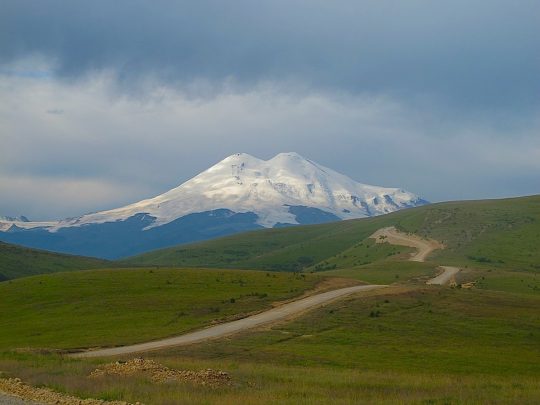
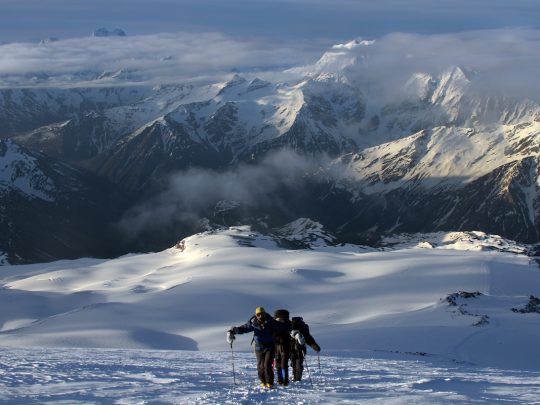
Eye protection is needed on any snow route. The cards below lead to the programmes from the south and from the north.
In summary
Category 3-4 glasses with full UV protection work in bright weather, and a light-lensed pair of goggles covers the face in wind and falling snow. Both need trying on with the rest of your clothing, and both need to stay within reach. Advice: Mountain Guide, +7(988)382-98-44.
Putting a kit together? Open the full contents page for mountain equipment: clothing, footwear, technical kit, hire and route-by-route lists.