- Guides
- B2B
-
Climbs
-
Climb Elbrus
- Elbrus individually
- Elbrus from the South, 9 days
- Elbrus from the South, 7 days
- Elbrus from the South in 1 day
- Elbrus from the North
- Elbrus Two Summits
- Elbrus Traverse South to North
- Elbrus Traverse North to South
- Elbrus "Cross" from South
- Elbrus "Cross" from North
- Kazbek+Elbrus
- Elbrus from the West
- Elbrus by helicopter
- Elbrus holidays, 9 days
- Elbrus holidays, 7 days
- Tinder Tour: Climbing Mount Elbrus
- Climb Elbrus from the South, 9 days with Sergey Baranov
- Under 5000 m
- 5000+ meters
- 6000+ meters
- 7000+ meters
- 8000+ meters
-
Climb Elbrus
-
Trekking
-
See 8000m
- K2 base camp
- Everest base camp
- Everest base camp via Gokyo
- Everest base camp in a week
- Annapurna circuit
- Trekking the Manaslu Circuit
- Trekking to Kanchenjunga Base Camp
- Trekking to Kanchenjunga Base Camp (Short)
- Trekking to Kanchenjunga Base Camp (India)
- Trekking to Makalu Base Camp
- Trekking to Annapurna BC
- South America
- Asia
- Africa
- Russia
- Europe
-
See 8000m
-
Adventures
-
Africa
- Tour to Morocco for New Year
- Morocco: Toubkal and the mysteries of the Sahara
- Tour to Eritrea: Dahlak Archipelago and Rashaida Nomads
- Tour to Rwanda: Mountain Gorillas and Mount Bisoke
- Ethiopia
- Tour to Uganda: Queen Elizabeth National Park and Mountain Gorillas
- Safari Tanzania
- Safari Uganda
- Tour to Zimbabwe and South Africa: Victoria Falls, Cape Town, and Cape of Good Hope
- Namibia
- Safari Kenya
- Tour to Botswana: Okavango Delta and Chobe National Park
- South America
- Asia
-
Africa
- Ski-touring
- VIP
- Useful
- About
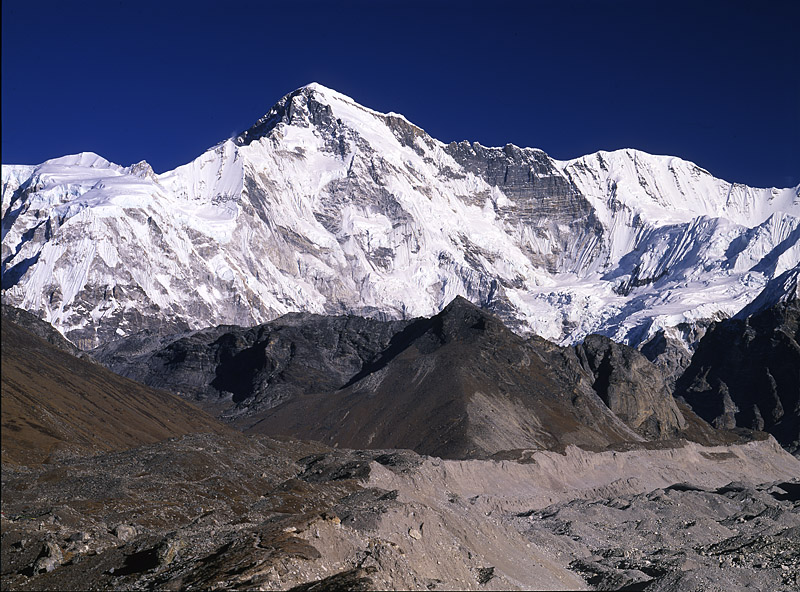
Climb Cho-Oyu
43500 $
Why to go with us?
Temporarily unavailable
About the tour The leader guide for Cho-Oyu climb is the current leader of Russian national team, who summited K2 twice without O2, summited Everest twice without O2 as well as some other 8000+ peaks. Cho-Oyu is considered to be the easiest of the 8000m summits in the world. And this is the reason why […]
НаверхAbout the tour
The leader guide for Cho-Oyu climb is the current leader of Russian national team, who summited K2 twice without O2, summited Everest twice without O2 as well as some other 8000+ peaks.
Cho-Oyu is considered to be the easiest of the 8000m summits in the world. And this is the reason why we recommend climbing Cho-Oyu to those climbers, who have no previous experience of ascending these altitudes but would like to try it. Climbing Cho-Oyu is an excellent choice for the first experience of 8000m ascent, as the route isn’t technically difficult, and it presents a good chance to try a new level in climbing. This summit is also considered to be a good exercise before Everest attempt.
To make Cho-Oyu climb safer, we provide our clients – upon their request – with a container of oxygen along with the necessary equipment. They may be useful on the day of summiting. On that day the group will be accompanied by sherpas and a leader guide with vast experience of climbing Cho-Oyu and other similar routes.
The weather in the area is usually stable in spring as well as in autumn. However, we carefully observe weather forecasts in the internet and carefully select the most suitable period for acclimatization hikes and Cho-Oyu climb.
The Cho-Oyu climbing expedition beings in Kathmandu. Since members of the group may be arriving by different flights, we can arrange several airport–hotel transfers. The first several days we’ll be busy obtaining Tiber visas and getting prepared for our departure, along with sightseeing in Nepal’s capital.
After spending two days in Kathmandu, we will leave for Zangma in Tibet, or we can fly right to Lhasa (though this scenario is more expensive and depends on the political situation in China). We will have two rest days for acclimatization on our way, before we get to Cho-Oyu’s base camp at 5100m. Then we will spend a day or two at base camp, after which we’ll begin our Cho-Oyu climb with the help of yaks, heading towards advanced base camp (ABC).
Usually, for summiting only ABC is used, while BC is needed only for acclimatization. Climbers and sherpas usually set up three more camps on higher altitudes.
In ABC and BC you will be served three meals prepared by Tibetan and Nepal cooks in the specially equipped kitchen-tents. There you can get also hot water to wash yourself and boiled water to fill your thermos. There are also special dining tents with tables and chairs. In camps on higher altitudes climbers cook their meals themselves on gas stoves, and water is made from snow. Of course, our guides are always there to help you cook a meal and melt some snow.
After climbing Cho-Oyu, the group comes back to Kathmandu to take their flights back home.
The expedition will have only medical oxygen. In case you want to have oxygen on the summit day, please inform us when booking the tour.
Itinerary of climbing Cho-Oyu.
Day 1. Arrival in Kathmandu. Meet at the airport, transfer to the hotel, rest after the flight, and introduction to the team. In the evening, a briefing about the upcoming expedition and a group dinner, meeting the guide and participants.
Days 2–4. Equipment check, submission of applications for permits to travel to Tibet, and visa processing. Thorough inspection of all gear, as well as time to purchase any missing items. During these days, training sessions on basic safety and mountaineering techniques are also conducted.
Day 5. Flight to Lhasa. A short flight to the capital of Tibet and accommodation at a hotel for further acclimatization. Upon arrival, there is time to walk around the city and begin adapting to the altitude.
Day 6. Acclimatization and exploration of Lhasa. Visits to monasteries and cultural landmarks, introduction to local culture. We will visit the famous Potala Palace and Jokhang Temple, helping us gradually adapt to the altitude.
Day 7. Drive to Shigatse (3,800 m). A long drive with stops for rest and opportunities to enjoy the landscapes of Tibet. Upon arrival, hotel accommodation, a walk around the city, and a visit to Tashilhunpo Monastery.
Days 8–9. Drive to Tingri (4,350 m), rest day and acclimatization. Walks in the surrounding area for better altitude adaptation. Light acclimatization hikes to prepare the body for further ascent.
Day 10. Drive to Base Camp (4,800 m). Accommodation at Base Camp and the start of preparations for the ascent. Briefing on camp rules and high-altitude safety measures.
Day 11. Rest and organization of equipment at Base Camp. Gear check and distribution, route discussion. A day for altitude adaptation and rest before the active phase of the climb.
Days 12–14. Review of technical skills and acclimatization with short hikes. Training in the use of mountaineering equipment and skill reinforcement. Focus on rope work skills and negotiating snow and ice sections.
Days 15–38. Ascents to Advanced Base Camp, Camps 1–3, and the summit attempt. Establishment of intermediate camps, gradual acclimatization, and the final summit push. Progressive altitude gain, adaptation, and strengthening of acclimatization. The summit attempt will depend on weather conditions and the group’s condition; the decision will be made by the lead guide.
Day 39. Trek to the starting point and drive to Shigatse. Return to civilization and rest at the hotel. In the evening, celebration of the successful completion of the main part of the expedition.
Day 40. Drive to Lhasa. Return to Lhasa for the final day in Tibet. Opportunity to visit local markets and buy souvenirs before departure.
Day 41. Flight to Kathmandu. Arrival in Kathmandu, free evening for shopping and rest. Group dinner with the team and sharing impressions of the expedition.
Day 42. End of the expedition, transfer to the airport and departure home. Farewell to the team and time for new mountain plans!
Included in the cost of Cho-Oyu climb:
- Experienced high-altitude guide with extensive climbing experience
- High-altitude porters (Sherpas): 1 per expedition member + additional Sherpas for group equipment
- Domestic flight Kathmandu – Lhasa – Kathmandu
- All transfers according to the program
- Establishment of group camps and load carries above 6400 m by Sherpas
- Individual support for each participant during summit push days from the high camp to the summit
- Meet and greet / airport transfers
- Accommodation in a hotel in Kathmandu, double occupancy (number of nights according to the program)
- Accommodation in lodges during the trek, double occupancy (number of nights according to the program)
- Accommodation in tents during the ascent
- Group climbing equipment (high-altitude tents, gas, stoves, ropes, etc.)
- Porters for group equipment and food
- Porters for personal luggage (limit 60 kg per participant)
- Professional chef
- Kitchen assistants
- Breakfast / lunch / dinner / snacks — the food on our expeditions is considered among the best on the mountain
- Climbing permit for Cho Oyu
- Processing of all necessary permits and documentation required for trekking (trekking permits / national park entry fees, etc.)
- Garbage disposal fee
- Breakfasts in Kathmandu
- All group equipment (tents, kitchen equipment, gas stoves, etc.)
- Fixed ropes for route preparation
- Radios
- Oxygen mask + regulator — 2 sets per climber (for use) and for accompanying Sherpas
- Oxygen cylinders (4L): 4 per climber (used above 7400 m) and 2 per Sherpa
Not included in the cost of Cho-Oyu climb:
- Mask, oxygen and regulator system above Advance base camp (it is 450 USD per bottle, along with Poisk system mask and regulator at 250 USD).
- Other than Kathmandu-Lhasa international flights.
- Reentry visa for Nepal (that can be obtained at the immigration office in Kodari).
- Meals in Kathmandu.
- Hotel stay in Kathmandu after the 5 nights planned by the program.
- Nepal entry visa (can be obtained at the airport upon arrive)
- Personal climbing gear
- Any applicable customs charges and permit fees, and charges for SAT phone, commercial filming and communication equipment
- Personal insurance such as accident, travel, medical, emergency evacuation and lost luggage
- International airport departure tax at Kathmandu Airport.
- Any applicable import license and customs duty fees for any expedition goods arriving to Nepal as air/road cargo
- Such personal expenses as drinks, laundry, telephone and Email, postage, etc.
- Tips and bonuses
- Any costs associated with program changes
Insurance
НаверхYou may also like
-
 3,200 $
Climb Lenin peak
-
 4,710 $
Climb Muztagh Ata
- Height (m)
- 7546
- Duration
- 22, 26 days
- Difficulty
- Above average
- Continent
- Asia
- Children
- No
- Accomodation
- There are tents