- Guides
- B2B
-
Climbs
-
Climb Elbrus
- Elbrus individually
- Elbrus from the South, 9 days
- Elbrus from the South, 7 days
- Elbrus from the South in 1 day
- Elbrus from the North
- Elbrus Two Summits
- Elbrus Traverse South to North
- Elbrus Traverse North to South
- Elbrus "Cross" from South
- Elbrus "Cross" from North
- Kazbek+Elbrus
- Elbrus from the West
- Elbrus by helicopter
- Elbrus holidays, 9 days
- Elbrus holidays, 7 days
- Tinder Tour: Climbing Mount Elbrus
- Climb Elbrus from the South, 9 days with Sergey Baranov
- Under 5000 m
- 5000+ meters
- 6000+ meters
- 7000+ meters
- 8000+ meters
-
Climb Elbrus
-
Trekking
-
See 8000m
- K2 base camp
- Everest base camp
- Everest base camp via Gokyo
- Everest base camp in a week
- Annapurna circuit
- Trekking the Manaslu Circuit
- Trekking to Kanchenjunga Base Camp
- Trekking to Kanchenjunga Base Camp (Short)
- Trekking to Kanchenjunga Base Camp (India)
- Trekking to Makalu Base Camp
- Trekking to Annapurna BC
- South America
- Asia
- Africa
- Russia
- Europe
-
See 8000m
-
Adventures
-
Africa
- Tour to Morocco for New Year
- Morocco: Toubkal and the mysteries of the Sahara
- Tour to Eritrea: Dahlak Archipelago and Rashaida Nomads
- Tour to Rwanda: Mountain Gorillas and Mount Bisoke
- Ethiopia
- Tour to Uganda: Queen Elizabeth National Park and Mountain Gorillas
- Safari Tanzania
- Safari Uganda
- Tour to Zimbabwe and South Africa: Victoria Falls, Cape Town, and Cape of Good Hope
- Namibia
- Safari Kenya
- Tour to Botswana: Okavango Delta and Chobe National Park
- South America
- Asia
-
Africa
- Ski-touring
- VIP
- Useful
- About
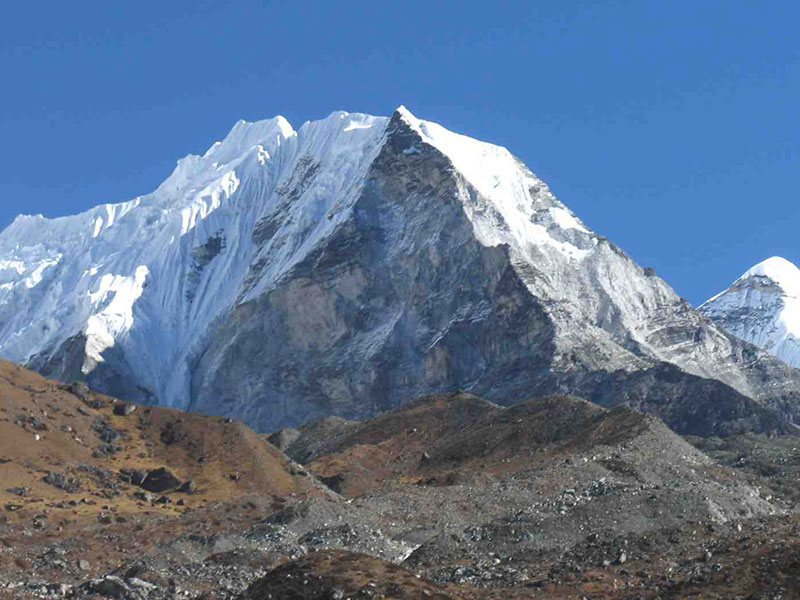
Island Peak Climb — 18-Day Expedition
- Height (m)
- 6165
- Duration
- 18 days
- Difficulty
- Moderate
- Continent
- Asia
- Children
- No
- Accomodation
- There are tents
3129 $
Why to go with us?
The Island Peak climb combines the classic trek to Everest with a first technical summit above 6000 m. Over 18 days the group travels through Namche Bazaar, Everest Base Camp and Kala Patthar, then moves across to Chhukhung and climbs Island Peak (Imja Tse) from a high tented camp.
- The summit of Island Peak, 6165 m
- Everest Base Camp, 5364 m
- Kala Patthar, 5645 m
- Acclimatization along the classic Khumbu route
- Work with crampons, harness, ice axe and ascender
- A high camp before summit day
- Mountain Guide expedition leader in groups of 4 participants or more
- Assistant guides on summit day — no more than 3 participants per guide
The programme is designed for well-prepared beginners and entry-level mountaineers, but it is not an ordinary trek. It calls for good endurance, experience of using basic technical equipment and readiness for a long night start on snow and ice.
Programme price — $3,129. The price is fixed in US dollars.
The approach is deliberately built through the key points of the classic Everest route — Lukla, Namche Bazaar, Pangboche, Pheriche, Lobuche, Gorak Shep, Everest Base Camp and Kala Patthar. Only after that acclimatization phase does the group head through Dingboche to Chhukhung and up to the high camp. This solves two tasks at once: you see Base Camp and the panorama from Kala Patthar, and your body gets a consistent build-up before a 6165 m summit.
Island Peak is considered an accessible technical summit, but that description belongs to the scale of Himalayan mountaineering and does not mean the climb is physically easy. Summit day includes snow and ice terrain and work with crampons, a harness, an ice axe, an ascender and a descender. Route conditions change, so the guide sets the belaying arrangements and the use of ropes on the spot. One guide works with a maximum of three participants on summit day.
Important:
- Domestic flights and the Ramechhap transfers, meals in the lodges and a personal porter are paid separately
- All personal technical equipment is agreed with the guide before the trip
- The condition of the glacier and of the summit section determines the tactics of the climb
- Everest Base Camp, Kala Patthar and the summit are not guaranteed — safety takes priority
- Mountain Guide does not sell air tickets and does not arrange visas
If you want the Khumbu without a technical summit, see the classic trek to Everest Base Camp. Published groups are listed in the Mountain Guide calendar.
About the Island Peak climb
Island Peak stands in the Imja valley in the Khumbu region of Nepal. The approach to the summit is built through the key points of the classic Everest route: Lukla, Namche Bazaar, Pangboche, Pheriche, Lobuche, Gorak Shep, Everest Base Camp and Kala Patthar. Only after that acclimatization phase does the group head through Dingboche to Chhukhung and climb to the high camp.
This kind of route solves two tasks. Participants see Everest Base Camp and the panorama from Kala Patthar, while the body receives a consistent build-up of adaptation before a summit of 6165 m.
Island Peak is considered an accessible technical summit, but that definition relates to the level of Himalayan mountaineering rather than to physical ease. Summit day includes snow and ice terrain and work with crampons, a harness, an ice axe, an ascender and a descender. Conditions on the route change, so the guide decides the belaying arrangements and the use of ropes directly on the ground.
Participants need regular endurance training, experience of multi-day hiking and basic technical skills practised in advance. Kala Patthar serves as an important acclimatization point and at the same time as a check on readiness for further altitude gain. The day in the high camp is used for rest, for checking equipment and for an early start. On summit day one guide works with a maximum of three participants.
The main risks are altitude, cold, wind, crevasses and icy terrain, fatigue after a night start and changeable weather. The guide may change the start time, limit the ascent or turn a participant around. Before the trip you should read up on the prevention of altitude sickness and agree your personal kit, including a suitable pack for Nepal.
A Mountain Guide expedition leader works with groups of 4 people or more; in a group of up to 3 participants a Nepali guide is confirmed instead.
Guided Island Peak climbing programme
Day 1. Arrival in Kathmandu.
Participants fly to Kathmandu international airport independently. A team representative arranges the transfer to a hotel in the Thamel district. After check-in there is an introduction, a check of technical equipment and a briefing. This day is needed to recover from the flight and to replace any unsuitable kit before leaving for the mountains. In the evening, dinner in a Nepali restaurant. Night in the hotel.
Day 2. Drive to Ramechhap, flight to Lukla, 2860 m, and walk to Phakding, 2610 m.
The group drives to Ramechhap airport in line with the confirmed flight time and flies to Lukla. Once the baggage has been collected the walking part begins: a calm stage through the villages and farms of the Dudh Koshi valley down to Phakding. Sleeping below the altitude of Lukla allows acclimatization to start without unnecessary altitude gain. Night in a lodge.
Day 3. Walk to Namche Bazaar, 3440 m.
The route crosses the river on suspension bridges and passes through Monjo and the entrance to Sagarmatha National Park. After Jorsale the long climb to Namche Bazaar begins. The guide sets an even pace and monitors how everyone feels, because this is the first serious altitude load. Night in a lodge.
Day 4. Acclimatization in Namche Bazaar, 3440 m.
The group spends a second night at the same altitude and makes an acclimatization walk with a return to Namche. The exact route depends on the weather and on the condition of the participants. The day helps the body adapt and lets the guide assess the pace before the stages above 3900 m. Free time can be used to explore Sherpa culture. Night in a lodge.
Day 5. Walk to Pangboche, 3928 m.
In 5–6 hours the group covers a section that alternates between descents and climbs, with forest and suspension bridges. As you gain height the views of Ama Dablam open up. Rest and attention to how you feel matter on arrival, because the night is spent at almost 4000 m. Night in a lodge.
Day 6. Walk to Pheriche, 4240 m.
The trail emerges into more open high-mountain terrain and in places runs above gorges and fast-flowing streams. The pace stays calm. After check-in the guide assesses how the participants are reacting to altitude and repeats what to do if symptoms of altitude sickness appear. Night in a lodge.
Day 7. Walk to Lobuche, 4940 m.
The group climbs on to the plateau and approaches the moraine of the Khumbu glacier. At this altitude recovery slows down, so the pace must not be forced. In the lodge participants prepare warm clothing, water and head torches for the next long day. Night in a lodge.
Day 8. Gorak Shep, 5164 m, and Everest Base Camp, 5364 m.
After the stage from Lobuche the group checks in at Gorak Shep and walks out to Everest Base Camp over rocky ground beside the Khumbu glacier. This walk adds an altitude load and requires energy in reserve for the return. The guide decides the timing and the furthest point according to the weather and the condition of the participants. Night in a lodge.
Day 9. Kala Patthar, 5645 m, and descent to Dingboche.
In suitable conditions the group makes an early start for Kala Patthar. The climb is not technically difficult but is physically hard because of the altitude, and it serves as an important check before Island Peak. After descending to Gorak Shep participants continue down to Dingboche, where the lower altitude helps recovery. Night in a lodge.
Day 10. Walk from Dingboche to Chhukhung.
The route turns into the Imja valley and leads to Chhukhung. The day is used to move closer to Island Peak, to recover after Kala Patthar and to make a final assessment of the group’s readiness. In the evening the guide checks personal technical equipment and explains the plan for moving up to the high camp. Night in a lodge.
Day 11. Ascent to the Island Peak high camp.
The stage takes about 5–6 hours over rocky high-mountain terrain. Once the tents are pitched participants rest, eat and prepare crampons, harness, ice axe, ascender, head torch and clothing for the night start. The guide announces the rope teams and the provisional departure time. Night in tents.
Day 12. Climb of Island Peak, 6165 m, and descent to Chhukhung.
The start is made deep in the night. The ascent takes roughly 6–7 hours and includes a snow and ice section where technical equipment is used. After a short stop at the point reached, the group descends to camp in about 3–4 hours, rests and continues to Chhukhung. The decision on the summit or on turning back is made by the lead guide. Night in a lodge.
Day 13. Contingency day.
This day is held in case of bad weather, a change in the condition of the glacier or the need to postpone the attempt. Whether a second attempt is possible depends on the resources of the group and on the decision of the lead guide. If the reserve is not needed, participants rest in Chhukhung and prepare for the descent. Night in a lodge.
Day 14. Descent to Pangboche.
The group leaves the Imja valley and returns to the main Khumbu trail. Losing altitude helps recovery after the climb, but tired muscles and rocky ground still call for care. On arrival participants rest and dry their equipment. Night in a lodge.
Day 15. Walk to Namche Bazaar.
The route returns to the greener part of the valley and includes climbs as well as descents. The group keeps an even pace. In Namche Bazaar the guide checks the onward logistics and the condition of the participants before the final walking stage. Night in a lodge.
Day 16. Walk from Namche Bazaar to Lukla.
The final stage follows the familiar trail along the Dudh Koshi and across the suspension bridges. After check-in the local team prepares the baggage for the flight and the guide confirms the flight details. Night in a lodge.
Day 17. Flight to Ramechhap and return to Kathmandu.
In suitable weather the group flies from Lukla to Ramechhap and returns to Kathmandu by transfer. The arrival time depends on how the mountain airport is actually operating. After check-in participants rest and prepare for their international departure. Night in the hotel.
Day 18. End of the programme.
Breakfast in the hotel and transfer to the international airport at the agreed time. Participants check in themselves. The return ticket should be chosen with a possible delay of the Lukla flight in mind.
What the Island Peak climb price includes
- Mountain Guide expedition leader in groups of 4 participants or more
- Nepali mountain guide in groups of up to 3 participants
- Assistant guides on summit day — no more than 3 participants per guide
- Meeting and send-off at Kathmandu airport
- Accommodation in a 4* hotel in Kathmandu — 2 nights
- Accommodation in lodges on the trek
- Accommodation and meals in tents during the climb
- Group equipment — high-altitude tents, gas, stoves and ropes
- Porters for group equipment and for the food of the high camp
- Duffel bag for personal belongings — provided on site
- Island Peak climbing permit and the permits for the confirmed trekking route
- Compulsory garbage fee
What the Island Peak climb price does not include
- International flights
- Domestic flights Ramechhap — Lukla — Ramechhap
- Transfers Kathmandu — Ramechhap airport — Kathmandu
- Nepal visa — $50 for a 30-day visa; the validity matches the length of the programme
- Personal mountaineering and trekking equipment
- Medical mountaineering insurance covering climbing to an altitude of at least 6165 m, search and rescue operations and helicopter evacuation
- Single occupancy
- Early check-in, late check-out and additional nights
- Meals in the lodges during the trek — $30–50 per day
- Personal porter for a participant’s baggage — $30 per day, including transport. In a trekking group one porter can carry the belongings of two participants
- Tips for the local team
- Costs arising if you leave the programme early
- Additional costs caused by delays, weather or unavoidable changes to the programme
Insurance
Back to topEquipment.
Download PDFDocumentation:
- international passport
- Airplane tickets
- Medical insurance covering helicopter evacuation
Personal equipment:
- Backpack 30-50l.
- Sleeping bag, comfort temperature from -20C.
- Mat
- Trekking poles
- Cats of steel
- Ice axe with self-insurance
- climbing system
- Helmet
- Carabiners – 4 pcs.
- Lanyard mustache
- Zhumar
- descender
- Mug-spoon-bowl
Clothes and shoes:
- Climbing boots triple or double. Double – plastic or leather
- Trekking boots are WELL impregnated in advance with a special anti-water agent
- Sneakers (for the city)
- Waterproof membrane layer – jacket + trousers
- fleece suit
- Thermal underwear top+bottom
- Middle class puff
- Warm mittens
- Gloves are thick
- Thin gloves
- Bandana or buff (in addition to protection from the Sun in the valley, it can be used to warm the throat or face in the cold)
- Cap
- Warm trekking socks for climbing day
- Windproof mask for the lower part of the face
Travel Accessories:
- LED flashlight for head
- Powerbank
- Sunglasses
- Raincoat
- Rain cover for backpack
- Ski goggles
- Thermos – 1l. Preferably without a button in the lid
- Sunblock spf 50
- lip balm spf 10-15
- Leggings
- Chemical heating pads (not required, but can be very helpful)
- Personal medical kit
- Elastic bandage and/or support bandage
- Toothpaste, brush, soap, shampoo, slippers
- Towel
- Toilet paper (sold in loggias along the way)
You may also like
-
 4,500 $
Climb Aconcagua, 12 days
- Height (m)
- 6957
- Duration
- 12 days
- Difficulty
- Moderate
- Continent
- South America
-
 3,200 $
Climb Lenin peak
-
 2,950 $
Climb Mera peak