- Guides
- B2B
-
Climbs
-
Climb Elbrus
- Elbrus individually
- Elbrus from the South, 9 days
- Elbrus from the South, 7 days
- Elbrus from the South in 1 day
- Elbrus from the North
- Elbrus Two Summits
- Elbrus Traverse from South to North, 9 Days
- Elbrus Traverse from North to South, 10 Days
- Elbrus "Cross" from South
- Elbrus "Cross" from North
- Kazbek+Elbrus
- Elbrus from the West
- Elbrus by Private Helicopter, 3 Days
- Elbrus Region Holiday and Trekking, 9 Days
- Elbrus Region Holiday, 7 Days
- Elbrus Dating
- Climb Elbrus from the South, 9 Days with Sergey Baranov
- Under 5000 m
- 5000+ meters
- 6000+ meters
- 7000+ meters
- 8000+ meters
-
Climb Elbrus
-
Trekking
-
Trekking in Nepal: routes to the eight-thousanders
- K2 base camp
- Everest base camp
- Everest base camp via Gokyo
- Everest base camp in a week
- Annapurna Circuit and Tilicho Lake Trek
- Manaslu Circuit Trek
- Kanchenjunga Circuit Trek (XXL)
- Kanchenjunga North Base Camp Trek (Short)
- Kanchenjunga from India: the Goecha La Trek in Sikkim
- Makalu Base Camp Trek
- Annapurna Base Camp Trek
- Trekking in South America
- Asia
- Trekking in Africa
-
Trekking in Russia
- Elbrus Region Holiday and Trekking, 9 Days
- Elbrus Region Holiday, 7 Days
- Oshten + Kardyvach — 9-Day Western Caucasus Trek
- Lake Kardyvach — 5-Day Base-Camp Trek
- Route 30: Through the Mountains to the Sea, with Oshten — 4 Days
- Trekking in Arkhyz — 7 Days over the Ayulyu Pass
- Gvandra Trek — 7 Days to the Ullu-Kyol Lakes
- Trekking in Dombai — 7 Days with the Murudzhu Lakes
- Europe
-
Trekking in Nepal: routes to the eight-thousanders
-
Adventure expeditions
-
Trekking in Africa
- Tour to Morocco for New Year
- Morocco: Toubkal and the mysteries of the Sahara
- Eritrea: the Dahlak Archipelago and the Rashaida Nomads
- Rwanda: Mountain Gorillas and the Bisoke Volcano
- Ethiopia: Otherworldly Landscapes and the Peoples of the Omo Valley
- Tour to Uganda: Queen Elizabeth National Park and Mountain Gorillas
- Tanzania Safari: Serengeti, Ngorongoro and Tarangire
- Safari Uganda
- Zimbabwe and South Africa: Victoria Falls, Cape Town and the Cape of Good Hope
- Namibia: Etosha National Park and the Himba
- Kenya Safari: the African Big Five
- Tour to Botswana: Okavango Delta and Chobe National Park
- Trekking in South America
- Asia
-
Trekking in Africa
- Ski touring and ski mountaineering: chasing freedom in the mountains
- VIP tours
- Useful
- About
Kanchenjunga North Base Camp Trek (Short)
- Height (m)
- 5136, 5947
- Duration
- 16 days
- Difficulty
- Moderate
- Continent
- Asia
- Children
- Ages 14+
- Accommodation
- No nights in tents
1600 $
Why to go with us?
The trek to Kanchenjunga Base Camp is a sixteen-day trip to the northern side of the third-highest mountain in the world. The route runs through Ghunsa, Kambachen and Lhonak to Pangpema, but does not include the long crossing of the passes to the southern base camp.
- Pangpema northern base camp, 5388 m
- Lhonak, 4800 m, and an acclimatisation day in Kambachen
- Remote valleys without a mass flow of tourists
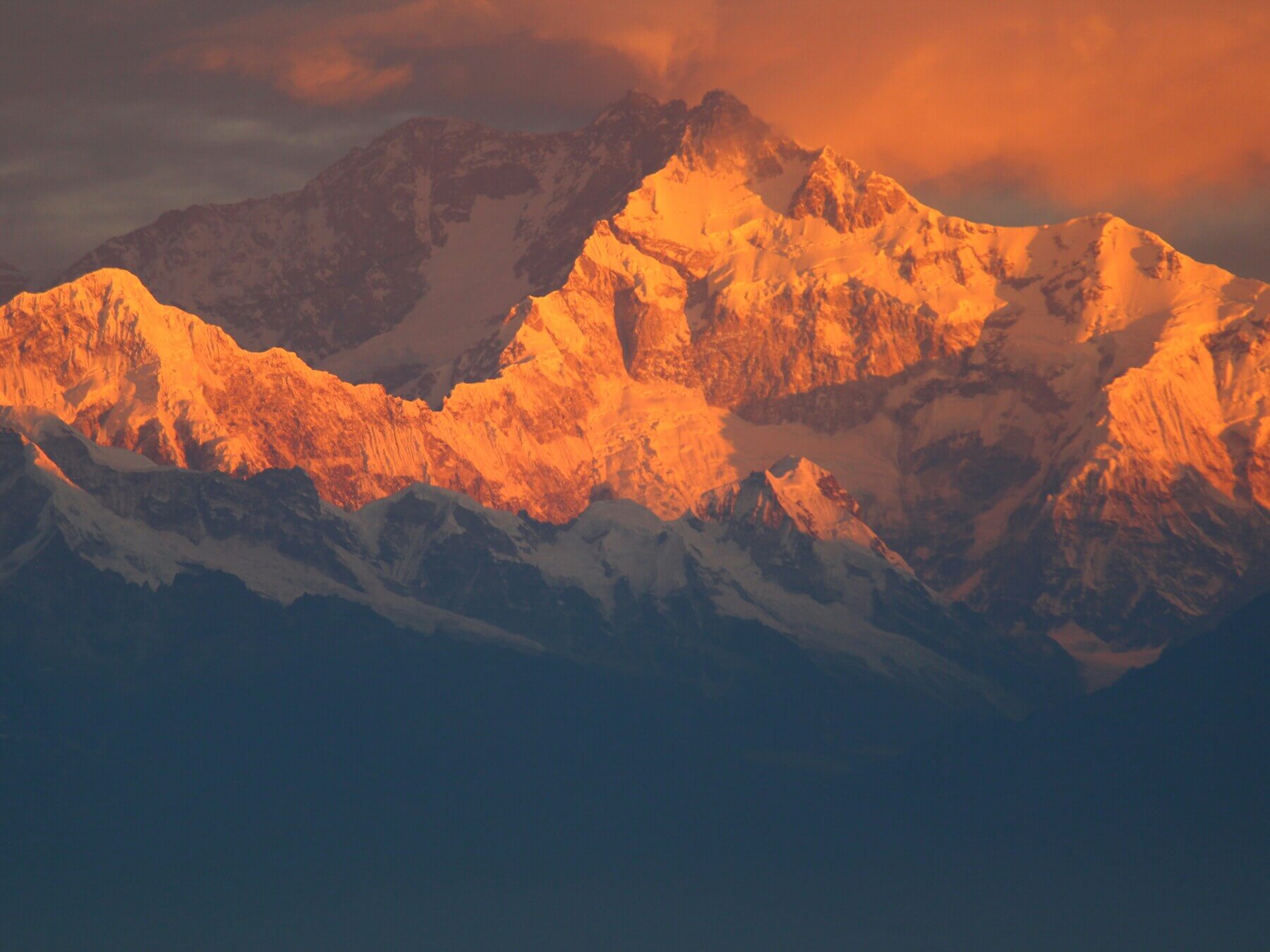
- Forests, waterfalls, moraines and close views of the Kanchenjunga massif
- Sixteen days instead of nineteen on the full circuit around the massif
- A Mountain Guide team leader with groups of four participants or more
- A Nepali guide for groups of up to three participants
The trip is designed for prepared trekkers able to sustain long stages, altitude above 5000 m and basic conditions. A possible outing to a point at about 5900 m is made only after separate confirmation of the objective, of the equipment required and of the current state of the route.
The trip price is fixed in US dollars.
Important
- International and domestic flights, meals on the trek, a personal porter, the visa and insurance are paid separately
- Whether the jeep transfers between Bhadrapur, Taplejung and the start of the trek are included must be confirmed before booking
- A helicopter shortening of the route is not part of the confirmed sixteen-day trip
- The high-altitude outing to about 5900 m is not guaranteed; the exact objective and the equipment requirements are confirmed separately
- Road conditions, trail conditions and domestic flights can affect the schedule
- Mountain Guide does not sell air tickets and does not arrange visas
About the trek to Kanchenjunga Base Camp
Kanchenjunga stands on the border of Nepal and India and is the third-highest mountain in the world. This route runs through the northern valley of the Kanchenjunga Conservation Area, one of the most remote trekking districts in Nepal. After demanding road logistics the group climbs through Amjilosa, Gyabla, Ghunsa and Kambachen to Lhonak and the Pangpema northern base camp.
The main objective of the trip is Pangpema at 5388 m, which opens the northern side of the Kanchenjunga massif. The route is shorter than the full circuit around the mountain: after base camp the group returns down the northern valley and does not cross the Sele La, Mirgin La and Sinelapche Bhanjyang passes to the Yalung Glacier.
The region differs noticeably from the popular trails of Everest and Annapurna. Settlements are further apart, the infrastructure is simpler, and at Pangpema the shelter is basic.
The acclimatisation day at Kambachen, at about 4100 m, is kept in the short trip too. It is needed before the night at Lhonak at 4800 m and the walk out to Pangpema. Participants must know the signs of altitude illness in advance and study the guidance on preventing altitude sickness.
The published itinerary mentions a possible outing to an unnamed peak of about 5900 m. This is not a guaranteed part of the tour: the exact objective, the nature of the terrain, the technical equipment required and whether the outing is permissible at all are confirmed separately. The main result of the trip remains the safe completion of the trek to Pangpema and back.
The route suits participants with experience of multi-day walking, steady physical condition and a readiness for damp forest, landslide-prone sections, moraine and long descents. If both sides of the massif matter to you, choose the full circuit around Kanchenjunga instead. A Mountain Guide team leader accompanies groups of four participants or more; a group of up to three people is led by a Nepali guide.
If Kanchenjunga will be your first trip to the Himalaya, study the practical advice for a first journey to Nepal in advance. It will help you prepare for the flights, the trekking routine and the altitude, without replacing the route briefing.
Itinerary of the trek to Kanchenjunga north base camp
Day 1. Arrival in Kathmandu.
Participants fly into Kathmandu independently, where a team representative meets them and takes them to the hotel. After check-in there is an introduction to the guide, an equipment check and a briefing. The day is set aside for recovery after the flight and for preparing for the early domestic flight. Night at the hotel.
Day 2. Flight to Bhadrapur and drive to Taplejung.
Early in the morning the group flies from Kathmandu to Bhadrapur; the flight lasts about 45 to 50 minutes. Local transport meets participants at the airport, after which the drive to Taplejung begins and takes about eight to ten hours. The actual time depends on the state of the road and the weather. Night at the confirmed accommodation.
Day 3. Drive to the start of the trek and walk to Amjilosa.
The second part of the journey in off-road vehicles takes about three to four hours. On the way the team passes a permit check at the entrance to the Kanchenjunga Conservation Area. The walking part then begins: about 9 km with a gain of roughly 200 m to Amjilosa. The day combines road logistics with the first full stage. Night at a lodge.
Day 4. Trek to Gyabla.
The trail passes through dense forest, close to waterfalls and along a remote section with no permanent settlements. An encounter with a red panda is possible only with luck and is not guaranteed. An even pace helps everyone adapt to the daily load. Night at a lodge.
Day 5. Trek to Ghunsa.
For about five hours the group follows the forest trail to Ghunsa, the main settlement of the northern valley. Altitude continues to increase gradually. After check-in participants rest and prepare for the harder section towards Kambachen. Night at a lodge.
Day 6. Trek to Kambachen.
The route crosses landslide-prone ground, so the final line and the pace are set by the guide. Views of Jannu open along the way. On arrival the group stays at Kambachen for two nights, to prepare the body for the further gain in altitude. Night at a lodge.
Day 7. Acclimatisation in Kambachen, about 4100 m.
Participants stay at the same altitude and make a short outing to an accessible viewpoint or glacier. The direction depends on the weather and the state of the trail. The main task of the day is adaptation before the night at Lhonak, and an assessment of how each participant feels. Night at a lodge.
Day 8. Trek to Lhonak, 4800 m.
The group moves over glacial and moraine terrain, passes the area of the Ramdang monastery and reaches Lhonak in about six hours. At this altitude the pace is set by safe acclimatisation rather than by fitness. On arrival participants rest and prepare for Pangpema. Night at a lodge.
Day 9. Pangpema northern base camp, 5388 m.
The trail climbs gradually over moraines to the northern base camp of Kanchenjunga. On reaching Pangpema the group settles into a basic shelter. This is a high, remote overnight stop with minimal comfort, so the guide monitors everyone’s condition closely. Night at the shelter.
Day 10. Possible high-altitude outing and descent to Lhonak.
If the weather, the state of the route, the equipment and the readiness of participants allow, the guide may propose an outing to a point at about 5900 m. The exact objective is not named in the published itinerary and must be confirmed before the trip. Taking part is not compulsory. After the outing, or after resting, the group descends to Lhonak. Night at a lodge.
Day 11. Descent to Ghunsa, 3600 m.
The group returns along the familiar trail to Ghunsa. Losing altitude aids recovery, but the long descent over moraine and uneven ground demands attention to knees and balance. Night at a lodge.
Days 12 and 13. Descent to the start of the trek.
Over two days the group continues down the northern valley to the point reachable by off-road vehicle. The specific overnight stops depend on the state of the road, the state of the trail and the actual pace. These stages complete the walking part without a sharp increase in the daily load.
Day 14. Drive to Bhadrapur.
The group travels by jeep to Bhadrapur. The long drive takes about eleven hours and depends on the state of the road. On arrival participants check into a hotel and rest before the domestic flight. Night at a hotel.
Day 15. Flight from Bhadrapur to Kathmandu.
Participants take a morning flight with a local airline. On arrival a team representative arranges the transfer and hotel check-in. The rest of the day is for rest and for preparing for the international flight. Night at a hotel.
Day 16. End of the trip.
At the agreed time there is a transfer to the international airport. Participants check in on their own. The international ticket must be chosen with a margin in case the domestic flight or the road logistics change.
What's included
- A Mountain Guide team leader with groups of four participants or more
- A Nepali guide for groups of up to three participants
- Meeting and seeing off at Kathmandu airport
- Accommodation in a four-star hotel in Kathmandu – two nights
- Accommodation in lodges and in the base camp shelter on the trek
- Group equipment – first aid kit and satellite navigator
- A duffel bag for personal belongings – provided on site
- The permits, authorisations and entry fees required for the confirmed route
Whether the jeep transfers in the itinerary are included, and what they cost, must be confirmed before booking: the published service list assigns this service neither to the included nor to the additional items.
What's not included
- International flights
- The domestic flights Kathmandu – Bhadrapur – Kathmandu
- Nepal visa – $50 for a 30-day visa, which matches the length of the trip
- Medical insurance covering trekking to at least 5900 m, search and rescue and helicopter evacuation
- Lunches and dinners in Kathmandu
- Meals during the trek
- A personal porter for participant baggage – $30 a day including transport. In a trekking group one porter may carry the belongings of two participants
- Single occupancy
- Early check-in, late check-out and additional nights
- Tips for the local team
- Costs arising if you leave the trip early
- Additional costs caused by road conditions, flights, weather or a forced change to the itinerary
Private groups - the trek to Kangchenjunga Base Camp
The route can be arranged for a closed group of friends, a club or a corporate team. The dates, a Russian-speaking leader, personal porters, additional reserve days and the accommodation in Kathmandu are agreed individually. The remoteness of the region limits how quickly transport and lodges can be changed. The acclimatisation day at Kambachen and the sequence in which height is gained are kept. The possible outing to 5900 m goes ahead only once the exact objective and the equipment have been confirmed and the guide has decided in favour. A Russian-speaking leader from the Mountain Guide team must be confirmed in advance.
Documents for the trek to Kangchenjunga
Start preparing your documents early: the route runs through a protected border region, and the trip includes domestic flights. The details on every ticket, permit and insurance policy must match your passport. The current visa requirements are published on the website of the Nepal Department of Immigration. Mountain Guide does not arrange visas and does not sell air tickets.
Documents
- A passport that meets Nepal’s current requirements
- A tourist visa or another valid entry permit
- International and domestic air tickets
- An insurance policy covering altitudes to at least 5900 m, rescue and helicopter evacuation
- Your policy number and the insurer’s 24-hour emergency contact details
- Your booking confirmation and the organisers’ contact details
- Documents for a participant under 18, where these apply
- Digital copies of your passport, visa, tickets and insurance
- Waterproof document wallet
The special permits for the Kangchenjunga region are arranged by the local team. You supply photographs and copies of your documents in the format and by the deadline requested.
Weather and seasons for the trek to Kangchenjunga
The route is usually planned for spring or autumn, when the high-altitude section is more often open and the visibility steadier than during the monsoon. In spring the rhododendrons may be in flower, but the state of the trail always depends on rain and snow. The lower forested valleys can bring rain, humidity and landslides. At Kambachen, Lhonak and Pangpema there is snow, ice, wind and a sharp drop in temperature. The remoteness of the region magnifies the consequences of any delay. Internal flights and long jeep transfers depend on the weather and the state of the roads. Your guide may shorten a high-altitude outing or change the schedule of the walking days. Plan your international departure with plenty of time in hand.
Accommodation and meals on the Kangchenjunga trek
Two nights in a 4-star hotel in Kathmandu are included. On the mountain section the group stays in simple lodges, and at the northern base camp in a very basic shelter. The particular places you stay depend on the season and on what is actually available. The infrastructure along this route is simpler than in the Everest and Annapurna regions. A private bathroom, a hot shower, heating and reliable electricity are not guaranteed. You need a suitable sleeping bag of your own. Meals on the trek, and lunches and dinners in Kathmandu, are not included. You order from the menu available. Choice is limited in the remote villages, so your own snacks and any dietary requirements declared in advance matter especially.
Day-to-day conditions on the route to Kangchenjunga
Showers and water. A hot shower is only possible in some villages and often costs extra. At Lhonak and Pangpema there is no guarantee of one.
Toilets. The washing facilities are basic and depend on the lodge or shelter. You need a head torch and separate footwear for moving about at night.
Power and charging. Charging may cost extra, may be limited, or may be unavailable for several days. You need a power bank, cables and spare batteries.
Internet and phone signal. Mobile signal and Wi-Fi are unreliable. On the remote stages there may be no coverage for long periods, which is worth warning your family about.
Laundry and drying. Do not plan on doing proper laundry on the high-altitude section. Things dry slowly, so bring spare socks, underwear and dry bags.
Insurance
Back to topEquipment and useful extras for the trek to Kangchenjunga
Download PDFYou bring all of your own personal equipment. Your choice of boots, sleeping bag and outer clothing must be agreed with your guide in advance. If the possible outing to 5900 m is planned, the additional technical kit is decided only once the exact objective and the nature of the route have been confirmed.
Documents
- Passport
- International and domestic air tickets
- A visa or entry permit
- Medical insurance with the necessary altitude cover and evacuation
- Waterproof document wallet
Baggage and personal equipment
- A soft holdall for the kit carried by a porter – provided on arrival
- Rucksack of 30-50 litres
- Waterproof rucksack cover
- Dry bags for clothing and electronics
- Sleeping bag with a comfort rating no higher than -5 °C
- Folding trekking poles with baskets – 2
- Vacuum flask or water bottle, 1 litre
Clothing and footwear
- Broken-in waterproof trekking boots
- Light footwear for towns and lodges
- Waterproof shell jacket and waterproof trousers
- Fleece jacket or fleece set
- Base layer, top and bottoms
- Down jacket with a hood
- Thick and thin gloves
- Buff or bandana
- Warm hat
- Warm trekking socks
- Gaiters
Useful extras
- Head torch with at least 12 hours of battery life
- Power bank
- Sunglasses
- Rain jacket
- SPF 50 sun cream
- Lip balm with sun protection
- Personal first-aid kit
- Elastic bandage or a personal support brace
- Personal toiletries and a quick-drying towel
- Toilet paper