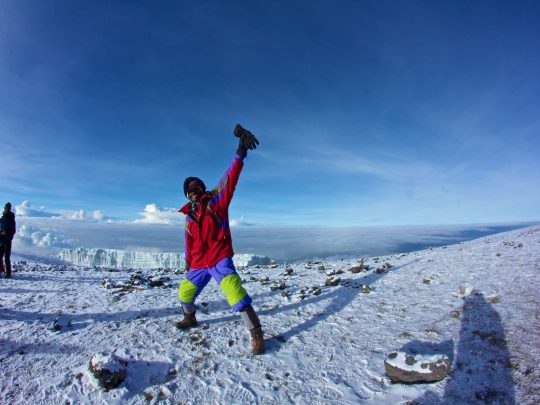
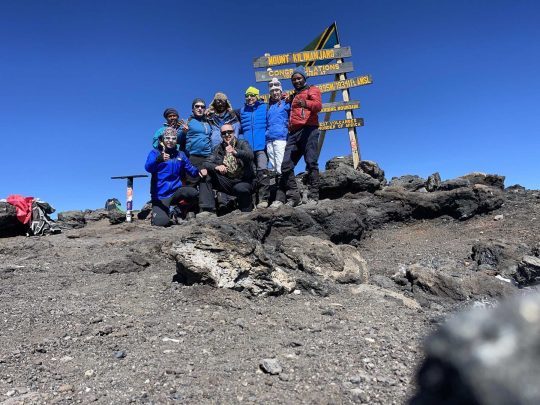
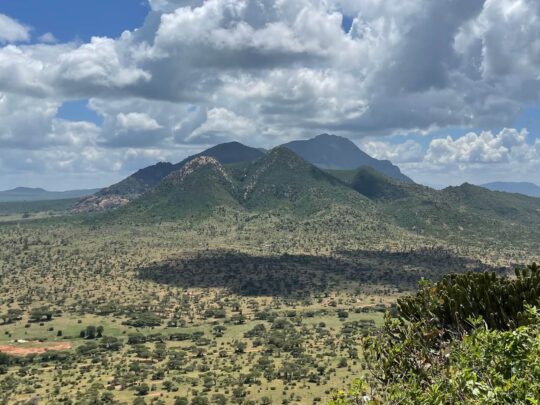
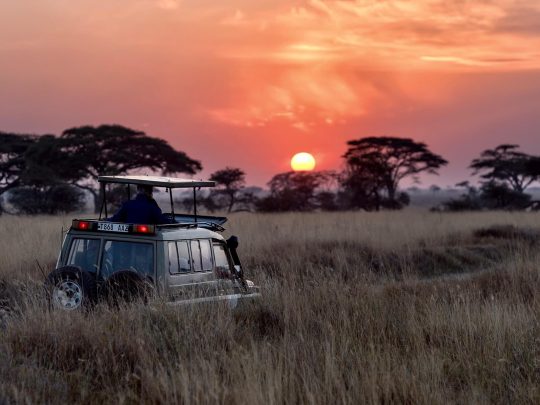
Once you have climbed Kilimanjaro, travelling in Tanzania is only just beginning. Within a single trip you can see the volcanic landscapes of Arusha National Park, the baobabs and elephants of Tarangire, the savannahs of the Serengeti, the Ngorongoro caldera and Lake Manyara, or carry on to the coast of Zanzibar. The best continuation depends not on how many attractions there are on the map but on the free days you have, the budget, the season and how much energy is left after the mountain.
The general logic is simple: one free day is worth spending near Arusha, three or four days go to a compact safari, and a week to a full route through the main parks of northern Tanzania. Time by the Indian Ocean needs a separate stretch of the trip. No park guarantees an encounter with a particular animal, so a route is built around different ecosystems and enough time to watch, not around a promise to tick off a list of species.
What to choose after climbing Kilimanjaro
If a single day is left after the descent, it makes little sense to try to reach the Serengeti. Arusha National Park lies in the north of the country and suits a short introduction to Tanzanian wildlife. Its landscape is shaped by Mount Meru, the Ngurdoto Crater, forest and the Momella Lakes. It is not a scaled-down Serengeti but a separate, greener park with different terrain and a different experience to offer.
With three or four days in hand you can put together a route through Tarangire, Lake Manyara and Ngorongoro. It gives you the contrast between a river valley with baobabs, forest at the foot of the Great Rift Valley escarpment, and the open floor of a large caldera. The exact order depends on where you are staying, on the state of the roads and on which gates are available for your dates.
If you have six or seven days for a safari, it is worth adding the Serengeti and not turning it into a brief transit. The current Mountain Guide safari programme in Tanzania links Tarangire, the central Serengeti, Ngorongoro and Lake Manyara. It is a journey in its own right, which can be placed after a Kilimanjaro climb or done on its own.
People choose Zanzibar when the main aim after the mountain is recovery, the ocean and an unhurried pace. A safari and the island answer different needs, so with enough time they can be combined — but not by taking away the days each of them requires.
Arusha National Park in a day
Arusha National Park is often overshadowed by better-known parks, although it is the one that works particularly well as a self-contained sequel to the mountain part of the trip. According to TANAPA, the park brings together Mount Meru, the Ngurdoto Crater, the Momella Lakes and a network of roads and trails. Visits by vehicle and certain other kinds of visit are possible here, but which activities are permitted, and whether an escort is required, are confirmed at the time of booking.
The park’s chief value is not the greatest possible number of large animals but the variety of landscape in a small area. Rainforest, open ground, volcanic terrain and lakes make a quite different picture from the dry savannah of Tarangire or the plains of the Serengeti. In clear weather Kilimanjaro can come into view from the area, but visibility cannot be promised in advance.
Arusha suits anyone who wants a full day out without turning the rest after the descent into another multi-day drive. The park is also of interest to travellers who want to see Mount Meru and understand the geography of northern Tanzania. Calling it acclimatisation before Kilimanjaro, without a separate climb, is wrong: an ordinary visit by vehicle is no substitute for gaining height gradually.
Tarangire for elephants, baobabs and dry savannah
Tarangire is recognisable by its large baobabs, its wide open spaces and the river that gave the park its name. The official TANAPA description stresses the importance of the Tarangire river as a water source in the dry season. It is precisely this seasonal distribution of water that shapes the animals’ movements and the character of what you see.
The park works especially well as the first day of a northern safari. After the town, the road gradually delivers you into an African landscape, and the watching begins without the long drive into the far-off Serengeti. That said, Tarangire should not be described only as a place for elephants: the birds, the antelope, the predators, the vegetation and the pattern of the savannah itself all matter here.
In the dry months animals gather more often at the water that is available, but that does not turn an encounter with a particular species into a guarantee. In wetter periods the landscape is greener, some animals spread more widely, and travel on certain unsurfaced roads depends on the conditions on the day. A good safari is judged by the work of the driver-guide, the hours spent in the park and the range of what you see, not by one promised photograph.
Lake Manyara as a contrasting park
Lake Manyara lies at the foot of the Great Rift Valley escarpment. TANAPA describes the park as a mosaic of groundwater forest, open ground and an alkaline lake. The transitions between ecosystems come quickly, so the park offers a great many different scenes in a single day.
Manyara is often advertised through its tree-climbing lions and its pink gatherings of flamingos. Both images are real for the region, but neither should become a promise. Lions move freely and may stay out of sight, and the number and position of waterbirds change with the water level, the food supply and the season.
The park is worth including when the route already passes through the Mto wa Mbu and Karatu area, when the group is interested in birds and forest landscapes, or when you want one more day unlike the others. If time is short and the choice is between Manyara and a longer stay in the Serengeti, the answer depends on the aims of the whole trip rather than on a ranking of parks.
Ngorongoro and the descent to the crater floor
Ngorongoro is not a national park but a conservation area under a special management regime. UNESCO describes it as a landscape of highland plains, savannah, forest and volcanic forms, where conservation objectives sit alongside the historic presence of the Maasai. The best-known part of the area is the Ngorongoro Crater, the largest unbroken caldera in the world.
A safari usually includes the descent by the permitted road to the crater floor and travel along the established routes. Visitors stay in the vehicle except at specially designated places, and driving off the roads is not allowed. These restrictions protect the animals and make the driver-guide’s experience, the choice of entry time and patience while watching all the more important.
The animals are not shut inside the crater. The system is connected to the surrounding landscapes, and individual species move across the area. A high density of animals widens the range of possible encounters, but a black rhino, a leopard or any other particular species is not guaranteed. Ngorongoro is better seen as a complete volcanic world than as a Big Five checklist.
The Serengeti needs time
The Serengeti covers an enormous area, and one short visit does not open the park up. UNESCO states that the World Heritage site covers about 1.5 million hectares of savannah and forms the central part of a large ecosystem shaped by the annual migration. Within the park, the central valleys, the southern plains, the western corridor and the northern section near the Kenyan border are all distinct.
The choice of area is bound up with the month you travel, but the Great Migration does not move to the timetable of a tourist brochure. Rain, the state of the grazing and the water all affect where the herds are. Away from a migration gathering the Serengeti does not become empty: resident populations of grazers, predators and birds remain in different areas all year round.
For a first trip it is sensible to allow at least two full periods of watching inside the park, rather than automatically counting the drive to the lodge as a safari day. The central Serengeti has the advantage that its river valleys and permanent water support good watching in different seasons. If a particular phase of the migration is the main aim, the area you stay in is confirmed nearer the dates and room is left for uncertainty.
Zanzibar after the mountain
After the cold, the early starts and several nights in a tent or a hut, the shore of the Indian Ocean feels like an abrupt change of world. But Zanzibar is not a single beach. The north, the east and the south-east of the island differ in their tides, in the character of the shore, in how dense the infrastructure is and in atmosphere. Choosing a hotel from a photograph alone often ends in disappointment.
It is worth leaving at least a few nights for the island, particularly if Stone Town, a boat trip or a drive through the interior are in the plan. A day of flying and transfers is not the same as a full day on the beach. Before booking, check the timing of the international departure, the baggage rules of the domestic flight you have chosen, and how much slack there is for changes.
The practicalities of combining the two are set out in the article on how to add Zanzibar after Kilimanjaro. If the trip takes in both a safari and the island, it is usually easier to finish all the driving on the mainland first and only then move on to the beach. The final order depends on the actual flights and on the confirmed ground programme.
Safari before or after Kilimanjaro
A safari before the climb suits anyone who wants to settle into the rhythm of the country calmly and not be at the mercy of post-summit tiredness later on. Its drawback is that several days in a vehicle create no altitude acclimatisation, and a late return or a tight schedule can eat into the rest before the mountain. A realistic margin is needed between the last safari day and the start of the trek.
A safari after the climb lets you deal with the main physical objective first and then travel without summit day hanging over you. Against that, people may be tired, may have sore feet or may need extra sleep. The first day is better built without an unreasonably early departure, if the programme and the accommodation allow that choice.
Zanzibar is more often placed at the end of the whole trip, since it gives the calmest finish. A tight international schedule may dictate another arrangement, though. Buying individual segments on lowest price alone, without checking the connections, the baggage allowances and the conditions for changing a ticket, is a mistake.
The climbing season and the best season for watching wildlife do not always line up perfectly, but that does not make the combination a poor one. In January and February interest often shifts to the southern part of the Serengeti ecosystem and the Ndutu plains; in summer the herds may be considerably further north; and in the transitional months their position depends more heavily on the rains. The main Mountain Guide route goes through the central Serengeti, where the value of the trip is not limited to the migration. If one particular phase of the migration is the chief motive, the standard programme needs discussing in advance rather than an expectation that the herds will happen to be near a lodge chosen months earlier.
After rain it is not only the animals that change but the visual character of the journey. Green savannah, dramatic clouds and fewer vehicles can all be an advantage for a photographer. At the same time rain becomes more likely, some unsurfaced roads become harder going, and the plan for the day may need adjusting. The dry season usually brings more predictable roads and animals concentrated around water, but the popular spots attract more vehicles.
How to work out the length
One extra day — Arusha National Park, or time in town. Two or three days — a short combination of the nearest parks without the Serengeti, or one or two parks with realistic drives. Four or five days let you add Ngorongoro and part of the northern route. Six or seven give you time for the Serengeti, Tarangire and other contrasting areas without a constant rush.
This scale is not a ready-made programme. The exact boundaries depend on the starting point, the overnight stops, the entry gates and the road conditions. The same list of parks can be assembled as a rewarding journey or as a series of long drives. What is judged is not the number of names but the hours spent watching and the number of changes of accommodation.
For Zanzibar, count a day of travel on top. Three nights give a short recovery; five to seven let you combine the beach with getting to know the island. With an early international departure, the last night is sometimes better spent closer to the airport, but that decision is taken on the actual flight.
If the trip includes children or relatives who are not climbing, their programme cannot simply be pinned to the mountain group’s schedule. The descent date may hold, but how a climber feels and how quickly they come back down cannot be known in advance. Companions are better off with a confirmed itinerary of their own and a clear meeting point. Age restrictions for particular parks, activities, accommodation and flights are checked before payment.
The budget, too, is worked out line by line rather than as a single figure. The total is affected by the number of safari days, whether the vehicle is private or shared, the standard of accommodation, the season, the entry fees, the domestic flights and single occupancy. The cheapest programme may turn out to be built on long drives and minimal time watching. Compare offers on the same route, the same number of nights inside or beside the parks, and the full list of what is included.
What to check before booking
- How many full days are left after the mountain programme
- Which parks are in the confirmed route and which are mentioned as possibilities
- Where the overnight stops are and how long the drives take
- Which entry fees, meals and transport are included
- How the vehicle is laid out and how many people sit by each window
- Whether there is slack between the safari, the domestic flight and the international departure
- What the baggage rules are on each flight
- Whether separate medical advice is needed for the lowland areas and the coast
- Which charges and personal expenses are paid separately
- What happens if the weather, the road or the schedule changes
Before the trip it is worth going through the medical advice with a doctor, since after the descent the route returns to lowland areas. A general summary is collected in the article on malaria prevention. It is no substitute for individual advice or for the current requirements of any country you pass through.
The rules for watching wildlife matter no less than the logistics. Animals must not be fed, chased for a photograph or forced to change direction. Getting out of the vehicle is allowed only where the authority for the area permits it and the guide confirms it. Drones, professional filming and certain activities may need special permits. An honest driver-guide does not promise to pull right up to a predator and does not break the rules for the sake of one picture.
When choosing accommodation, ask not only about the star rating but about the position relative to the gates and to the area you plan to watch in. A lodge outside the park may be comfortable, but entering it each day takes time. A camp inside the protected area cuts out some of the driving, but has rules of its own, limits on electricity and its own night-time routine. The name of a category is no substitute for an exact address and a description of the actual property.
Ready-made combinations from Mountain Guide
For anyone who wants to climb first, the starting point can be Lemosho, Machame, Marangu or Rongai. The differences between them are set out in the comparison of Kilimanjaro routes.
The safari programme through Tarangire, the Serengeti, Ngorongoro and Lake Manyara gives you a full continuation through northern Tanzania. A private format lets you agree the pace and the make-up of the trip, but the availability of accommodation, gates and transport is confirmed for the dates you choose. Watching wildlife remains a natural process with no guaranteed script.
The main rule is not to try to fit the whole of Tanzania into the last two days of a holiday. Kilimanjaro, a safari and Zanzibar reinforce one another when each stage is given enough time. The trip then changes rhythm naturally: from high camps to savannah, and then to the ocean.
Before final payment Mountain Guide assembles the trip into a single timeline: the international arrival, the margin before the start, the mountain programme, recovery, the safari, any domestic flight and the journey home. That makes the weak points visible before non-refundable tickets are bought. If the calendar cannot absorb a delay to even one segment, it is better to take a park or an excursion out of it than to leave a critical connection in. A good African trip is remembered not for the number of marks on a map but for the fact that there was time to stop, to watch and to live through each change of landscape.
Authoritative sources
- TANAPA – official visit planning for Tanzania’s national parks
- TANAPA – Tarangire National Park
- TANAPA – Lake Manyara National Park
- UNESCO – Serengeti National Park
- UNESCO – Ngorongoro Conservation Area
- NCAA – rules for visiting Ngorongoro