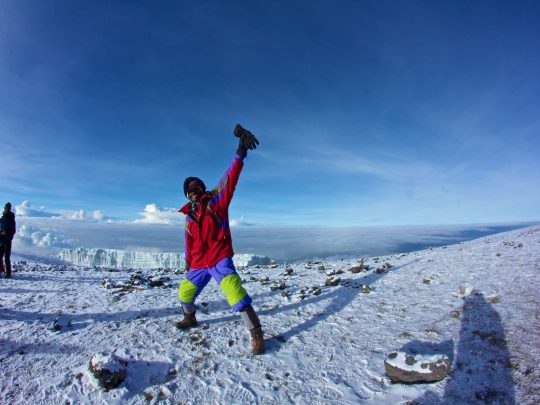
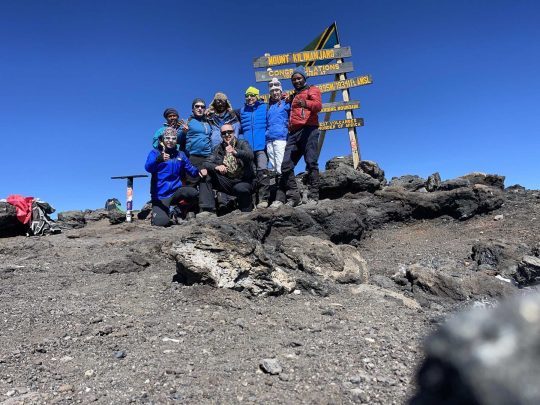
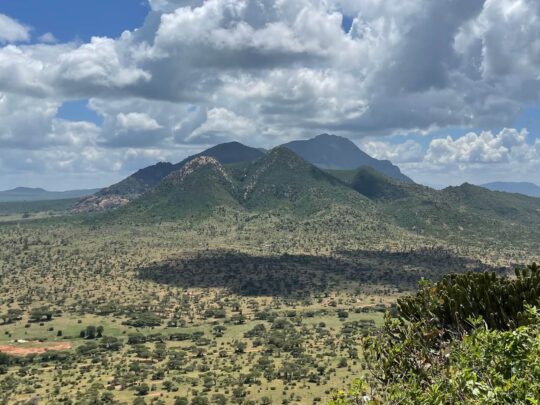
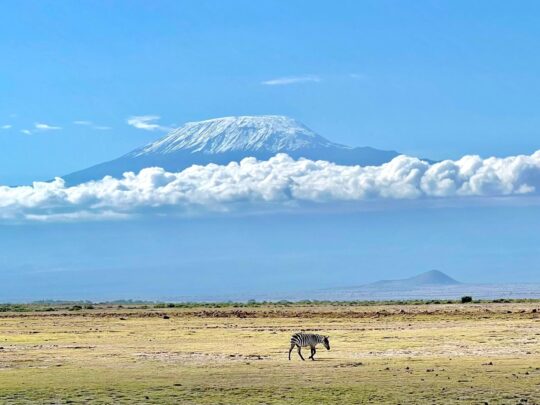
The Rongai route approaches the Kilimanjaro massif from the north, near the Kenyan border. It crosses more open and remote slopes, gradually approaches the jagged Mawenzi, traverses the high saddle and leads to Kibo Camp. After Uhuru Peak at 5895m, the team descends via Marangu, so the journey reveals two different sides of the mountain.
Rongai is chosen not for an abstract idea of ‘ease’, but for its northern line, fewer encounters with the popular southern trails and the distinctive atmosphere of the high-altitude desert. The complete programme is published on the Kilimanjaro climb via Rongai page. Here we examine the stages, acclimatisation and practical requirements.
Short Answer
- Rongai begins its ascent on the northern side of the massif
- The route passes through the Mawenzi area and crosses the saddle to Kibo
- After the summit, the descent follows Marangu rather than the ascent route
- The remote character does not eliminate cold, wind or altitude risk
- Technical climbing is not required, but endurance is
How the Northern Approach Works
The first days in the north feel different from the humid beginnings of Machame or Lemosho. The landscape opens up sooner, and the view of Kibo develops gradually. Depending on cloud cover, it may be possible to see the plains towards Kenya. The remoteness creates a sense of a genuine traverse but demands particular care with personal belongings: a forgotten item cannot be replaced quickly.
The Mawenzi area adds the dramatic silhouette of the massif’s second volcanic summit. The overnight stay and walks in this area support a gradual gain in elevation. The team then crosses the broad saddle to Kibo. Wind and monotonous open terrain make the crossing feel psychologically long, so participants maintain a steady pace and eat small portions regularly.
Mawenzi and the High-Altitude Saddle
Rongai should not be chosen solely because of the common claim that this side is drier. Seasonal patterns do not rule out rain, snow or cloud in a particular week. Current principles for choosing a month are collected in the article on the Kilimanjaro season. Protection from precipitation remains compulsory throughout the year.
Who Rongai Suits
The summit section uses Kibo Camp and a night ascent to the crater rim. The route then continues to Uhuru Peak if the weather and the team’s condition allow. After returning, the descent begins along Marangu through a different set of ecological zones. This layout makes the route a full traverse rather than a repetition of one corridor.
Rongai suits those who value a secluded atmosphere, are ready to camp on the ascent and want to see Mawenzi at close range. It can also be a sensible seasonal option, but the final choice depends on the dates, logistics and trail conditions. For someone who considers huts essential throughout the route, the standard Rongai does not meet the requirement.
What Happens on the Route
Skin protection, eyewear and temperature control are especially important on the exposed northern slopes. The sun can be strong in a cold wind, making it easy to become sunburnt and chilled at the same time. In the evening, dry clothes, a hot drink and an early night matter more than long conversations. Energy will be needed on the saddle and during summit night.
Why the Northern Approach Feels Different
Rongai begins on the northern side, then passes through the Mawenzi area and crosses the high-altitude saddle between the two massifs. During the first days, there are generally fewer encounters with other groups than on the popular southern lines. The space gradually opens up, vegetation grows lower and Mawenzi long remains a distinct part of the landscape rather than merely a backdrop to Kibo.
The northern side is often chosen for its drier reputation, but rain, wind and cold are possible on every Kilimanjaro route. Waterproof packing for the sleeping bag and clothing is compulsory regardless of the forecast. Rongai should be considered for the character of its approach and the logic of the route, not as a promise of good weather. The guide determines the final pace and departure decisions according to the conditions and the particular group.
Common Mistakes
- Treating the northern side as guaranteed dry and economising on waterproof clothing
- Expecting huts on the ascent merely because the descent follows Marangu
- Underestimating the wind and exposure of the saddle between Mawenzi and Kibo
- Choosing the route without considering the remote start and the programme’s overall logistics
How to Decide
Rongai suits those for whom the northern approach, the Mawenzi area and a descent on the other side matter. For a greener western start, choose Lemosho; for the longest circuit of the northern slopes, choose the Northern Circuit.
Checklist
- A confirmed overland transfer route to the northern trailhead
- The duration of the camping section and nights near Mawenzi
- The descent via Marangu and programme finishing point
- Complete protection from rain, wind and sun
- Buffer days before the next flight or safari
Eight days on the mountain and a separate acclimatisation day near Mawenzi.
Mountain Guide’s ten-day programme includes arrival, eight days on the mountain and completion. The ascent begins at Nalemuru Gate in the north, passes Simba, Second Cave, Kikelewa and Mawenzi Tarn. After a separate acclimatisation day, the team crosses the saddle to Kibo and descends via Marangu.
This schedule distinguishes the current programme from shorter versions of Rongai. Compare the exact days, because the route name does not guarantee an acclimatisation hike or a night near Mawenzi.
Key stages of Rongai.
| Stage | Character | Objective |
|---|---|---|
| Nalemuru to Simba | Northern forest and open slopes | Begin calmly |
| Simba to Second Cave to Kikelewa | Heather moorland | Gain elevation gradually |
| Kikelewa to Mawenzi Tarn | Cirque beneath rocky towers | Prepare for acclimatisation |
| Acclimatisation day | Climb higher and return | Give the body time |
| Mawenzi Tarn to Kibo | High-altitude saddle | Move to the summit camp |
| Uhuru to Horombo | Night ascent and eastern descent | Descend safely |
The northern side does not mean another country.
The trail comes close to the Kenyan border, but the programme remains inside Tanzania’s national park. Participants do not cross the border or arrange separate entry to Kenya. The road to the gate goes around the massif on mainland Tanzania’s side.
The plains to the north create an unusual horizon, while Kibo is seen from a different angle. This is one reason to choose Rongai after experiencing other Kilimanjaro routes.
Drier does not mean dry.
The northern slopes are often considered less humid than the southern ones, but rain, mist and a wet trail are possible. The route must not be sold as guaranteed protection from the rainy season.
Waterproof packing, a waterproof shell and a dry sleeping bag are required year-round. The forecast is assessed before departure, but the equipment list is not shortened because of a general climate description.
Mawenzi Tarn.
The camp occupies a striking cirque beneath Mawenzi’s jagged walls. It is not merely a beautiful place, but also the base for a separate acclimatisation day. The guide selects the direction of the acclimatisation hike according to conditions.
The participant climbs higher and returns to the same overnight camp. It is not a day off: it requires movement, food and monitoring of wellbeing, but provides more time before Kibo.
The Saddle Between Mawenzi and Kibo.
The crossing traverses a dry, open expanse with almost no vegetation. The distance is visually deceptive: the summit camp remains ahead for a long time. Wind and sun can increase fatigue.
On arrival at Kibo, the team prepares for the night. Equipment is laid out in advance, water is protected from the cold and symptoms are reported before departure.
Summit Day.
The route climbs to Gilman’s Point and continues along the crater rim to Uhuru Peak at 5895m. The guide decides whether the team may continue. After the summit, the group descends through Kibo to Horombo.
It is a long day, so energy must not be wasted by accelerating at the beginning. After the photograph, the scree descent and onward journey to a lower overnight stop still remain.
Who Rongai Suits.
The programme suits someone who wants the less familiar northern side, a camping format and a long itinerary. It is of interest both to returning participants and to first-time climbers ready for eight days on the mountain.
It may not suit those for whom the Barranco Wall and southern views matter, or those who want huts. In that case, compare Lemosho, Machame and Marangu.
People on the Route.
Rongai is often chosen for a quieter approach, but the number of groups depends on the season and dates. Trails converge after reaching Kibo. Complete solitude cannot be promised.
A private format gives a group its own team and dates, but does not close the park or alter shared infrastructure.
Equipment and Private Format.
Participants need a complete set of camping clothing, a warm sleeping bag, waterproof shell, down jacket, head torch, poles and waterproof packing. The programme confirms the precise permitted duffel weight.
A Russian-speaking guide can be included in a private climb under an individual quotation. The price depends on group size and dates. An extra day is not added without confirmation of logistics and permits.
Eight Mountain Days on Rongai.
Mountain Guide’s current programme uses a long northern itinerary: Nalemuru, Simba, Second Cave, Kikelewa, Mawenzi Tarn, a separate day in the Mawenzi area, the saddle crossing to Kibo, Uhuru Peak at 5895m and the descent via Marangu through Horombo. This sequence provides time to experience the northern part of the massif rather than merely cross it quickly.
When comparing other offers, count the mountain days themselves. The name ‘Rongai’ may be used for programmes of different lengths. Removing the day near Mawenzi or combining adjacent camps changes the workload and time at elevation.
Beginning at Nalemuru.
The approach to the northern entrance differs from the transfer to Machame or Lemosho gates. The exact journey time depends on the starting point and actual road conditions, so it should not be promised from a universal template. The programme must clearly state the meeting point, pre-climb overnight stay and included transfers.
After registration, the route climbs to Simba Camp. The northern slope opens broad views sooner, but rain gear remains compulsory. Weather on Kilimanjaro is local, and seasonal statistics do not guarantee a dry day.
Second Cave and Kikelewa.
The stages through Second Cave and Kikelewa gradually bring the team closer to Mawenzi. The landscape becomes drier and more austere, while the volcanic forms of the two massifs become increasingly distinct. This section is valuable for its sense of a separate journey, not merely as preparation for the summit.
Open terrain intensifies the effects of sun and wind. The daypack should contain sunscreen, glasses, a buff, waterproof shell, warm top and water. Layers are adjusted before a participant becomes completely soaked in sweat or chilled.
Acclimatisation Day Near Mawenzi.
The extra day in the Mawenzi Tarn area makes it possible to hike without moving camp and return to the same overnight stop. The guide chooses the actual line according to the weather and the group’s condition. The objective is not an elevation record, but moderate exertion and observation of the body’s response.
The day is not free holiday time and does not guarantee freedom from altitude sickness. Participants continue drinking, eating and reporting symptoms. If their condition deteriorates, the guide decides whether to continue.
The Saddle Between Mawenzi and Kibo.
The crossing to Kibo traverses open ground between the two volcanic massifs. Here, the scale of the mountain, wind and thin air are especially apparent. The terrain may look level, but elevation makes a normal pace inappropriate.
On arrival at the summit camp, the participant prepares for the night departure: arranging clothing, checking the head torch and food supply, preparing water and resting. The summit line passes via Gilman’s Point to Uhuru Peak at 5895m. Continuation beyond the crater rim depends on time and wellbeing.
Descent via Marangu.
After the summit, Rongai does not return to the north. The team descends along the Marangu line through the Horombo area. This makes the route a traverse and reveals another side of the massif. Participants must preserve energy for a long descent that begins after the hardest night.
Encountering a larger flow of people on the southeastern side is possible and does not contradict the quieter northern approach. A promise of total solitude would be inaccurate.
Rongai and the Northern Circuit Are Not the Same.
Both routes use the northern part of Kilimanjaro, but Rongai approaches Mawenzi and then crosses the saddle to Kibo. The Northern Circuit starts from the Lemosho side and circles Kibo via the northwest. Choose between them according to the actual trajectory and number of days.
Rongai suits those interested in the contrast between Mawenzi and Kibo, a separate acclimatisation day and a descent on the other side. The Northern Circuit provides a more complete circuit but requires an even longer holiday.
Who the Northern Line Does Not Suit.
The route does not suit someone who wants huts throughout the ascent or seeks to make the trip as short as possible. Nor do extra days alone remedy inadequate physical preparation.
Before booking, check the duration of the mountain section, support team, transfers, luggage limit and mandatory equipment. Anything absent from the written ‘Included’ section must not be treated as part of the price.
Preparing for Rongai.
A training plan must account for eight consecutive mountain days. It should include regular walking, ascent and descent, strength work for the legs and core, and several blocks of training without a complete rest day. The main objective is a sustainable slow pace, not high speed on a single climb.
Before the trip, check boots, sleeping bag, waterproof shell, down jacket, gloves, poles and head torch. The exposed northern sections require sun protection, while summit night requires the complete warm kit. Belongings are waterproofed regardless of the forecast.
Continuing After the Mountain.
Rongai combines conveniently with a safari in northern Tanzania, but the route must first finish with a safe exit via Marangu. The first post-mountain transfer is planned with a buffer for the group’s pace and park logistics. Promising a tight connection to a flight that same evening would be risky.
Zanzibar is added as a separate module after the domestic flight, luggage and island-entry rules have been agreed. Neither a safari nor a beach stay is included in the climb price unless stated explicitly.
Choosing a season does not eliminate the need for layered clothing. The northern side may receive less precipitation in particular periods, but temperature, wind and local cloud change with elevation. Equipment is assembled for the full range of conditions, not an average forecast at the foothills.
In a private group, dates and support are easier to coordinate, but good weather cannot be ordered and the summit cannot be guaranteed. The principal value of a private Rongai climb is attention to the particular team and the selected calendar while retaining every safety rule.
The route is especially interesting to a traveller who has already seen the southwestern lines or wants to discover Kilimanjaro through Mawenzi. Photographs should not replace a practical decision: assess duration, elevation profile and readiness for camping first, then the scenery.
If a participant is deciding between Rongai and the Northern Circuit, compare specific camps rather than advertising percentages. Rongai emphasises Mawenzi and the saddle; the Northern Circuit emphasises a long circuit of Kibo from west to north.
Frequently Asked Questions
Below are short answers to common questions about the Rongai route on Kilimanjaro and the mountain’s northern side. They supplement the main discussion but do not replace checking the terms of a specific departure.
Is Rongai drier than other routes?
The northern side often has a different rainfall pattern, but the weather on a particular trip is not guaranteed. Rain gear is always required.
Are there few people on Rongai?
Traffic may be lower than on popular southern lines, but the exact number of groups changes with the dates.
Where do participants sleep?
The ascent uses tents. The route follows the Marangu line on descent, but the programme determines the overnight arrangements.
Is mountaineering experience required?
No. Physical preparation, discipline at elevation and readiness for a multi-day trek are required.
Next Step
View the complete Rongai programme and compare it with the Northern Circuit.
Sources and check date
This material was checked on 4 August 2026. National-park rules, aviation conditions, health requirements and route availability may change. We recheck current information before the trip.
Compare Kilimanjaro Climbing Routes