On Elbrus you need sun protection even in cold, cloudy weather. Altitude and light reflected off the snow both increase the load on exposed skin and on your eyes. The current kit list for the southern programme specifies SPF 30-50 sunscreen, an SPF lip balm, a hat and mountaineering sunglasses. These items belong in an accessible pocket, not in a bag down in the valley.
Why the cold is no protection against burning
How warm you feel depends on temperature and wind, and says nothing about the intensity of the ultraviolet. On snow, light reaches your face and eyes from above and again by reflection from below. As a result you may notice nothing while you are walking and only see the redness clearly that evening.
Cloud reduces the glare but is no guarantee that the ultraviolet has gone. Use protection from the start of the acclimatisation walk, not once you begin to feel uncomfortable.
The areas most often left exposed
- The nose, cheekbones and the area under the eyes
- The ears and the hairline
- The lips and the skin around the mouth
- The neck between collar and hat
- The hands when gloves come off
A hood, cap or bandana reduces the exposed area but does not replace sunscreen. Check that your collar and neck gaiter do not leave a strip of skin when you turn your head.
Choosing a sunscreen
The programme calls for SPF 30-50. What matters is that it suits your skin, does not sting your eyes when you sweat, and fits in a small bottle in your pack. Test any new product before the trip on a long training session.
Apply it in advance to clean skin and reapply according to the manufacturer’s instructions, after heavy sweating or after wiping your face. There is no universal interval that covers every formulation. Read the label on the specific product.
Protecting your lips
Lips dry out quickly in the wind, and cracks make eating, drinking and talking painful. Keep an SPF lip balm in an inside pocket and use it regularly. It is a personal item: do not expect one stick to go round the group.
The UIAA’s general list for snow routes recommends strong protection for skin and lips. If you are buying something new, choose a product with clear labelling and check the expiry date, not just the scent or the texture.
Protecting your eyes
The UIAA warns of the risk of snow blindness and recommends glasses with full UV protection, category 3 or 4, with protection against light from the side, or a suitable goggle. Ordinary town sunglasses with no confirmed filter may simply darken the view without solving the real problem.
Wind and snowfall call for a separate goggle with a light lens. Try both on with a hat, a hood and a helmet. If glasses press or fog up constantly in training, the problem does not usually disappear at altitude.
What to keep in your pack
Sunscreen, lip balm and spare glasses must be reachable without unpacking the whole rucksack. Seal the bottle in its own bag: a crushed tube can ruin gloves, a first-aid kit and electronics. Carry glasses and goggles in a hard or at least a substantial case.
The full list of clothing and small items is in the Elbrus equipment list. Do not trim the list by dropping the small things: their modest weight bears no comparison with the consequences of having no protection.
If the protection has failed
If you have eye pain, marked sensitivity to light, deteriorating vision or badly damaged skin, tell your guide. Do not carry on while hiding symptoms, and do not take anyone else’s medication without a clear indication for it. What happens next depends on your condition and on conditions on the route.
Prevention is simpler: apply protection in advance, cover your skin with clothing and do not take your glasses off on snow without good reason. Equipment can be arranged in advance with Rock’N’Rent.
Clothing as part of your protection
Sunscreen is above all for exposed skin. A long sleeve, a high collar, a hood, gloves and a hat reduce the area you have to cover and do not rub off with sweat as quickly as a cream does. At the same time, clothing must not get in the way of ventilation or movement.
Thin fabric and stretched areas can let through more light than you expect. If a garment is meant for sun protection, look for the manufacturer’s rating. An ordinary sleeveless T-shirt leaves your shoulders and neck exposed even down in the valley.
A personal set, not a group tub
Every member of the group needs their own sunscreen and lip balm. One large shared bottle easily ends up in somebody else’s pack or frozen in the baggage. A small personal container lets you top up your protection at your own stop instead of waiting for the whole group.
Label your products and check the caps and the expiry dates. If your skin is sensitive or has reacted to cosmetics before, try the product at home. Altitude is no place for a first experiment with a new cream.
Related programmes
The cards below lead to the southern route and to the self-contained western programme. Check the list on each page separately.
-
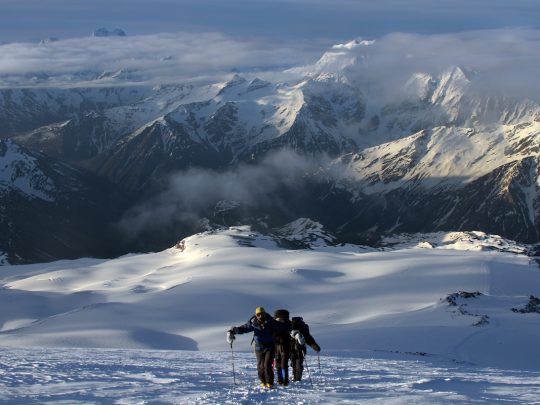 2,070 $
Climb Elbrus from the South, 9 Days
-
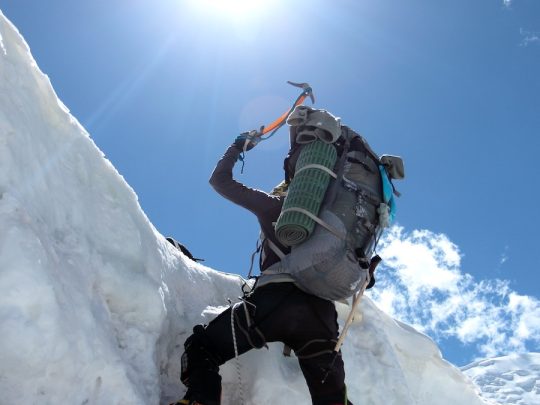 3,610 $
Climb Elbrus from the West, 11 Days
- Height (m)
- 5642
- Duration
- 11 days
- Difficulty
- Average
- Continent
- Europe
- Children
- Not suitable for children
- Accommodation
- Some nights in tents
In short
On Elbrus you protect skin, lips and eyes at the same time. Sunscreen, lip balm, covering clothing, sunglasses and a goggle each do a different job. Use them before symptoms appear. Questions about kit: Mountain Guide.