- Guides
- B2B
-
Climbs
-
Climb Elbrus
- Elbrus individually
- Elbrus from the South, 9 days
- Elbrus from the South, 7 days
- Elbrus from the South in 1 day
- Elbrus from the North
- Elbrus Two Summits
- Elbrus Traverse from South to North, 9 Days
- Elbrus Traverse from North to South, 10 Days
- Elbrus "Cross" from South
- Elbrus "Cross" from North
- Kazbek+Elbrus
- Elbrus from the West
- Elbrus by Private Helicopter, 3 Days
- Elbrus Region Holiday and Trekking, 9 Days
- Elbrus Region Holiday, 7 Days
- Tinder Tour: Climbing Mount Elbrus, 9 Days
- Climb Elbrus from the South, 9 Days with Sergey Baranov
- Under 5000 m
- 5000+ meters
- 6000+ meters
- 7000+ meters
- 8000+ meters
-
Climb Elbrus
-
Trekking
-
See 8000m
- K2 base camp
- Everest base camp
- Everest base camp via Gokyo
- Everest base camp in a week
- Annapurna Circuit and Tilicho Lake Trek
- Manaslu Circuit Trek
- Kanchenjunga Circuit Trek (XXL)
- Kanchenjunga North Base Camp Trek (Short)
- Kanchenjunga from India: the Goecha La Trek in Sikkim
- Makalu Base Camp Trek
- Annapurna Base Camp Trek
- South America
- Asia
- Africa
-
Russia
- Elbrus Region Holiday and Trekking, 9 Days
- Elbrus Region Holiday, 7 Days
- Oshten + Kardyvach — 9-Day Western Caucasus Trek
- Lake Kardyvach — 5-Day Base-Camp Trek
- Route 30: Through the Mountains to the Sea, with Oshten — 4 Days
- Trekking in Arkhyz — 7 Days over the Ayulyu Pass
- Gvandra Trek — 7 Days to the Ullu-Kyol Lakes
- Trekking in Dombai — 7 Days with the Murudzhu Lakes
- Europe
-
See 8000m
-
Adventures
-
Africa
- Tour to Morocco for New Year
- Morocco: Toubkal and the mysteries of the Sahara
- Eritrea: the Dahlak Archipelago and the Rashaida Nomads
- Rwanda: Mountain Gorillas and the Bisoke Volcano
- Ethiopia: Otherworldly Landscapes and the Peoples of the Omo Valley
- Tour to Uganda: Queen Elizabeth National Park and Mountain Gorillas
- Tanzania Safari: Serengeti, Ngorongoro and Tarangire
- Safari Uganda
- Zimbabwe and South Africa: Victoria Falls, Cape Town and the Cape of Good Hope
- Namibia: Etosha National Park and the Himba
- Kenya Safari: the African Big Five
- Tour to Botswana: Okavango Delta and Chobe National Park
- South America
- Asia
-
Africa
- Ski-touring
- VIP
- Useful
- About
Climb Mount Sidley, 18-Day Antarctic Volcano Expedition
- Height (m)
- 4285
- Duration
- 18 days
- Difficulty
- High
- Continent
- Antarctica
- Children
- Not suitable for children
- Accommodation
- Some nights in tents
- suitable-for-beginners
- No
5859092 $
Why to go with us?
Climbing Mount Sidley is an expedition to the highest volcano in Antarctica and one of the most remote summits of the Seven Volcanoes project. Above the white desert of Marie Byrd Land rises an enormous mountain with a caldera about 5 km across, the walls of the Weiss Amphitheatre, patches of blue ice and strange snow formations on the summit ridge. There are no busy camps and no beaten tourist path here, only polar light, wind and the ice sheet stretching to the horizon.
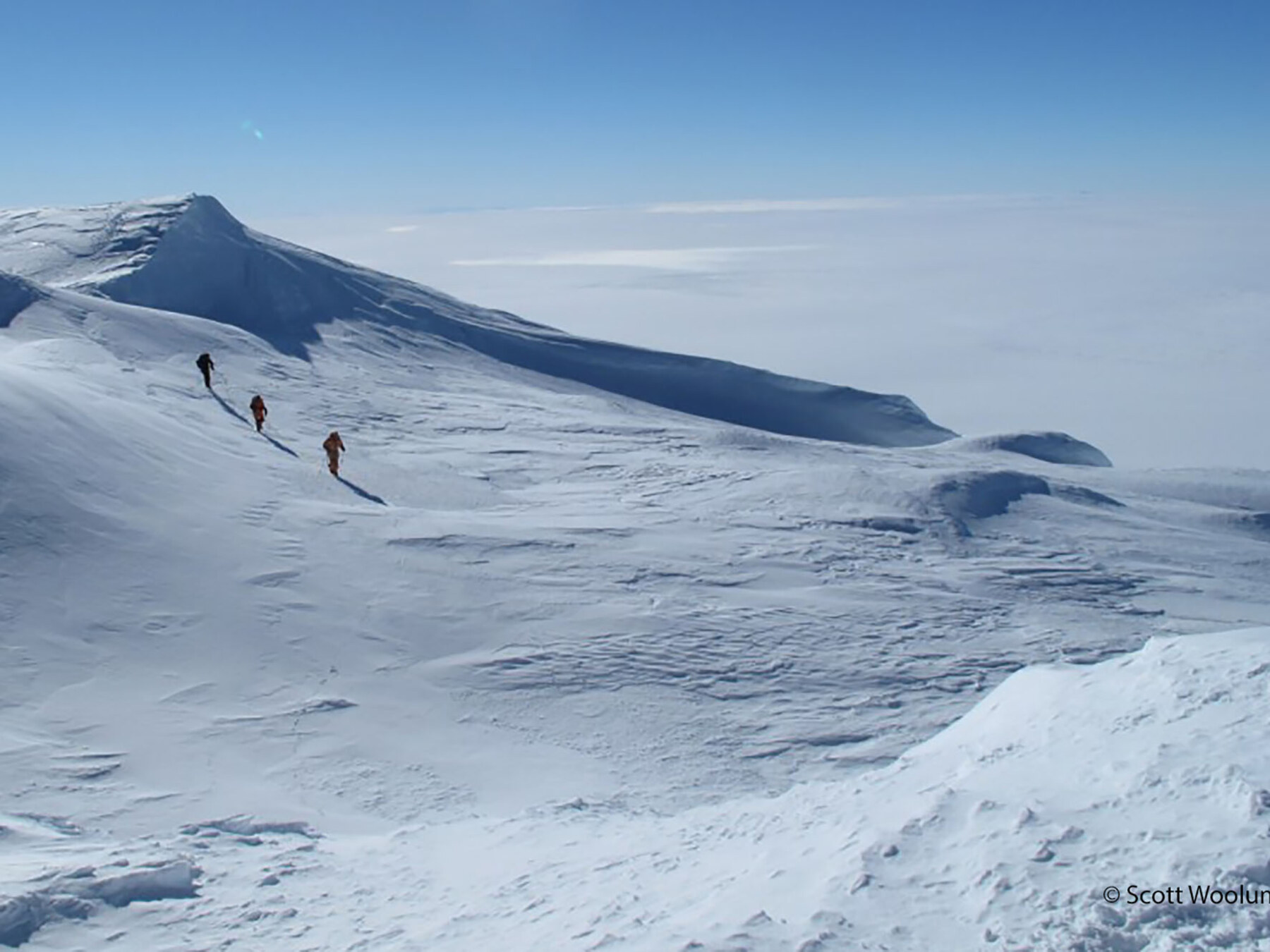
The team flies from Punta Arenas by way of Union Glacier to the Mount Sidley base camp and spends seven days in the area of the mountain. Depending on the condition of the route and the preparation of the participants, the guide chooses either the longer northern option or the steeper west ridge from the Bennett Saddle. The climb is made in alpine style: participants set up intermediate camps, move loads on sleds, carry personal and part of the team equipment, and cover most of the route in crampons.
The trip is intended for experienced climbers who are confident working roped up on a glacier, who have self-arrest and crevasse-rescue technique and who are ready for several days of self-supported work in severe cold. The expedition is accompanied by an experienced Mountain Guide team leader and by polar expedition guides.
Important
- Antarctic flights depend on the weather. We recommend buying a changeable return ticket with a margin of about five days after the planned end of the trip
- Accommodation and meals in Punta Arenas are paid separately
- Mountain Guide does not buy or sell air tickets and does not arrange visas, and accepts no responsibility for disruption beyond its control involving international flights and border crossings
About the Mount Sidley climb
Mount Sidley, 4285 m, stands in Marie Byrd Land in West Antarctica. It is the highest volcano on the continent and one of the summits of the Seven Volcanoes project. The mountain was formed by powerful eruptions: a caldera about 5 km across cuts into its broad summit, and inside it lies the steep-walled Weiss Amphitheatre. Wind exposes hard snow and blue ice on the slopes and builds large snow formations on the upper ridge, between which the way to the summit runs. The first confirmed ascent was made by the New Zealander Bill Atkinson in 1990.
In character the trip differs noticeably from a Vinson climb. On Vinson several teams work during the season and there is an established sequence of camps. Sidley lies considerably further from the main Antarctic logistics, is very rarely visited and keeps the feel of an exploratory expedition. After the intercontinental flight the team prepares at Union Glacier, going over roped travel, self-arrest and crevasse rescue, and then flies on to the foot of the volcano on a separate polar flight.
From base camp to the summit there is about 2225 m of ascent. The mountain has no single obligatory line: either a longer and technically calmer approach from the north or a steeper exit along the west ridge from the Bennett Saddle is possible. The expedition leader makes the final choice after assessing the snow and ice conditions, visibility, wind, the skills of the participants and the available weather window. The lower part can be covered on skis, but the main work is done in crampons on hard snow and sections of blue ice. Higher up the gentle terrain gives way to steeper slopes, and the summit day leads out to the rim of the caldera above the walls of the Weiss Amphitheatre.
The team moves in alpine style and does not rely on a permanent chain of established camps. Participants move loads on sleds, carry personal and shared team equipment, pitch and strike tents together, help to run the camp and melt snow for water. That degree of self-sufficiency calls not only for strength but for careful teamwork: in a remote part of Antarctica, pace, discipline, staying warm and following the guide's decisions exactly all matter especially.
Sidley is not a mountain for a first ascent. Before the trip you need experience of cold multi-day expeditions, of moving in crampons, of working with an ice axe and of roped travel on a closed glacier. Skills in ascending a rope, setting up belays and abseiling are useful. Preparation should begin well in advance, combining sustained aerobic work, strength endurance and training with a rucksack. Even at a moderate absolute altitude it is important to understand the principles of acclimatisation and to arrange insurance for a mountaineering expedition in advance.
Aviation and the climb depend entirely on the weather. The charter flight may wait for a safe window in Punta Arenas, internal polar flights may be rescheduled and the route on the mountain may change. The summit is not guaranteed: the expedition leader has the right to turn the team round or change the plan if continuing would endanger safety. For the international return flight you need a changeable ticket and a margin of at least five days after the planned end of the trip.
Sidley is the Antarctic and most remote objective of the Seven Volcanoes of the World project.
Mount Sidley climbing itinerary, 18 days
Day 1. Arrival in Punta Arenas. Meeting at Punta Arenas airport and transfer to the hotel. After check-in the guides carry out a full check of personal equipment and discuss how the expedition is organised. In the evening the team gathers for dinner together. Accommodation and meals in Punta Arenas are paid separately. Night in a hotel.
Days 2-3. Preparation and reserve in Punta Arenas. These days are used to complete the pre-expedition requirements that apply at the time, to finish preparations and to wait for the remaining procedures. The exact order is confirmed before departure. Participants must remain in Punta Arenas and be ready to follow the instructions of the expedition office.
Day 4. Pre-flight briefing. After breakfast the team attends the compulsory briefing given by the Antarctic air operator. It covers the flight, conduct and safety rules on the continent, baggage limits and what happens in the event of a delay. Expedition duffel bags are handed over for checking and loading. Night in Punta Arenas.
Day 5. Flight to Antarctica. Weather permitting, the group flies out of Punta Arenas. The flight across the Drake Passage takes about four hours and ends with a landing on the ice runway beside Union Glacier camp. The team normally spends one or two nights here before the onward flight. Night at Union Glacier.
Day 6. Technical preparation on the glacier. The guides go over roped travel, ice-axe self-arrest and what to do if a member of the team falls into a crevasse. Equipment compatibility and the team's readiness for self-supported work in a remote area are checked. Night at Union Glacier.
Day 7. Flight to Mount Sidley. In favourable weather the team flies to Mount Sidley. After landing, participants unload the aircraft, set up base camp, share out food and group equipment and prepare the sled systems. Night at base camp.
Days 8-14. Climbing Mount Sidley, 4285 m. Seven days are set aside for the mountain part, within which the exact sequence of moves, camp relocations, rest and the summit attempt is decided on the ground. The guide chooses either the longer northern route or the steeper west ridge from the Bennett Saddle, taking account of the team's experience and the condition of the mountain. From base camp to the summit there is about 2225 m of ascent. Participants move in alpine style, establish intermediate camps and carry their food and equipment with them. Skis may be used on the lower part; the main part of the climb is done in crampons on hard snow and blue ice. On the summit day the route reaches the ridge along the rim of the caldera, passes among large snow formations and leads to the highest point of the volcano. After the ascent the team returns to the upper camp and then descends to base camp. Every push depends on the weather, visibility, the condition of the route and the state of the participants.
Day 15. Return to Union Glacier. After striking base camp the team waits for a suitable aviation window and flies to Union Glacier. The departure time may change because of the weather and the state of the ice runway. Night at Union Glacier.
Day 16. Flight to Punta Arenas. In favourable conditions the group flies out of Antarctica to Chile. On arrival a transfer to the hotel is arranged. Accommodation and meals in Punta Arenas are paid separately. Night in a hotel.
Day 17. Reserve and rest in Punta Arenas. The day is for rest, a walk around the city and preparation for the international flight. If Antarctic aviation has been delayed, the actual schedule shifts. Night in a hotel.
Day 18. End of the trip. Check out of the hotel and make your own way home. We recommend buying a changeable ticket departing about five days after the planned end of the trip, since bad weather can delay any Antarctic flight. Days 19 to 23 should be kept as personal reserve, with no firmly fixed commitments planned for them.
What's included
- An experienced Mountain Guide team leader accompanying the group
- The work of the other expedition guides
- Meeting at Punta Arenas airport and transfer to the hotel on the day of arrival
- Charter flights from Punta Arenas to Antarctica and back
- All internal Antarctic flights to the Mount Sidley base camp and back
- Accommodation and camp services throughout the stay in Antarctica
- Meals throughout the Antarctic part of the trip
- Group expedition equipment – tents, ropes and kitchen equipment
- Team communications – VHF radios and a satellite phone
- A daily specialist weather forecast during the climb
What's not included
- International and domestic flights to Punta Arenas and back
- Accommodation and meals in Punta Arenas
- Visas and transit permissions where these are required by nationality and flight routing
- Personal equipment, clothing, sleeping bag and other items from the compulsory kit list
- A waterproof, hard-wearing 150 l expedition duffel bag for the sled
- Medical and evacuation insurance – compulsory for participation
- Trip cancellation or interruption insurance – strongly recommended
- Bank and payment system fees
- Costs arising from weather and aviation delays, from ending participation early or from other circumstances beyond the organisers' control
Private groups - a bespoke Mount Sidley climb
The Mount Sidley climb can be arranged for a private team. The format suits experienced climbers who want to take on one of the Seven Volcanoes as their own team, keep a single working pace and agree their preparation in advance with a dedicated Russian-speaking Mountain Guide leader.
The make-up of the team, the dates, the price and the ratio of participants to guides are confirmed individually. Polar flights run only within the current aviation season and depend on seats being available, so even a private expedition cannot pick its departure date freely. The sequence of camps and the line chosen for the climb are decided by the leader, after assessing the participants' experience and the actual conditions on the mountain.
On request, Sidley can be combined into a single Antarctic trip with the Vinson climb or with a polar trip to the South Pole. Whether the dates fit together, the reserve required, the logistics and the price are confirmed separately. In any format, participants must meet the expedition's technical and physical requirements.
Documents required for the Mount Sidley climb
An Antarctic expedition needs its documents prepared early. Before buying non-refundable international tickets you must have your place on the trip confirmed, obtain the expedition office's current requirements and check the entry and transit rules for the whole route.
- A passport valid for the whole trip and for the additional period after your return required by the countries on the route
- International tickets to Punta Arenas and back, with the return date changeable
- Visas and transit permits, where these are required for your nationality and your chosen connections
- Medical insurance expressly covering mountaineering in Antarctica, search and rescue, medical transport and evacuation, for the sum required
- Trip cancellation and curtailment insurance - strongly recommended, given the non-refundable expedition payments and the weather risks
- The questionnaires, medical information, participation agreements and other forms sent out by the expedition office, completed
- Confirmation that you have the complete set of compulsory personal equipment
Send us your policy for checking in advance. An ordinary travel policy often excludes Antarctica, mountaineering, high-altitude climbing or evacuation by private aircraft. Keep electronic copies of your passport, tickets, insurance policy and emergency contacts separately from the originals.
Weather and seasons for the Mount Sidley climb
The climb takes place in the Antarctic summer, when the polar day gives natural light almost round the clock and the seasonal flights are running. The current Sidley expedition is planned for January. Dates for future seasons are confirmed once the flight schedule is published and bookings open.
A summer season does not make the Antarctic interior warm. On the open ice sheet the cold is sharpened by the wind, and conditions can turn from clear visibility to a blizzard and a complete loss of reference points within a short time. Sidley's slopes are wind-scoured: the route crosses hard snow and patches of blue ice, and the ground steepens higher up. Round-the-clock sun increases the reflected ultraviolet and makes sleeping difficult without an eye mask.
The weather governs the whole logistics. The intercontinental charter, the internal flight to Sidley, the flight in and the return can all be postponed indefinitely. A specialist daily forecast helps in planning the outings, but it guarantees neither a flight nor the summit. You therefore need at least five days in hand on your international tickets, in your budget and in your own diary, beyond the trip's scheduled end.
Accommodation and meals on the Mount Sidley expedition
In Punta Arenas participants stay in a hotel, which they book and pay for themselves. The room category, single occupancy, early check-in and extra nights depend on the hotel chosen. Meals in the city are likewise not part of the Antarctic trip.
In Antarctica, accommodation and camp services are included. At Union Glacier the team stays in the main polar camp and waits for the internal flight. At Sidley participants sleep in expedition tents: first at base camp, then at the intermediate camps, which the group moves up as the climb progresses. The exact plan of camps is set by the guide once the line has been chosen and conditions assessed.
All main meals in Antarctica are included. On Sidley the food is cooked on expedition stoves and water is melted from snow. We recommend bringing several days' worth of your favourite sweet and savoury snacks from the compulsory list. Allergies and dietary restrictions must be reported before booking, though whether a special diet is possible is confirmed separately.
Day-to-day conditions on the Mount Sidley expedition
Sidley is climbed in self-sufficient alpine style. There are no permanent huts, no porters and no prepared chain of camps. Participants pack their loads into waterproof duffels, haul them on sleds, carry rucksacks, pitch and strike the tents, share out the group equipment, and help with cooking and melting snow. The pace and the amount of work are set by the guide, according to the route and the state of the team.
The mountain camps have no shower, no fixed heating and none of the infrastructure of a town. Toilet arrangements follow the field rules of an Antarctic expedition. For sleeping you need two mats and a sleeping bag rated to -40 °C. Anything that could get wet or be lost while being moved should be kept in dry bags and labelled duffels.
The VHF radios and the satellite phone are the team's communications and safety equipment, not a promise of continuous personal internet access. You supply your own power for your own devices, through your own independent charging set-up. Cold drains batteries quickly, so keep phones, batteries and cameras warm; an eye mask helps you rest in round-the-clock daylight.
Insurance
Back to topEquipment and useful extras for the Mount Sidley climb
Download PDFThis list follows the mandatory requirements of the current Sidley expedition. Buy or hire all your personal equipment in advance, test it in cold conditions and present it at the check in Punta Arenas. Boots and crampons that do not fit together, an unsuitable sleeping bag or a missing compulsory item can all be grounds for being refused a place on the Antarctic flight. The final version of the list, issued before departure, takes precedence.
Mountaineering and expedition equipment
- An expedition rucksack of at least 80 litres
- A hard-wearing waterproof 150-litre duffel for the sled
- Compression sacks to reduce the bulk of your sleeping bag, down jacket and other items
- Dry bags to line your rucksack and protect your sleeping bag, clothing and electronics
- Adjustable trekking poles with winter baskets
- A classic ice axe about 65 cm long
- A leash for the ice axe, attached to your harness
- Mountaineering crampons compatible with your expedition boots
- A climbing helmet that fits over a warm hat
- An ascender for your dominant hand
- 9 m of 6 mm accessory cord
- A lightweight climbing harness with adjustable leg loops
- Snapgate karabiners - 6
- Standard-sized screwgate karabiners - 2
- Large screwgate karabiners for use with the harness - 2
- A belay and descending device
Clothing
- Synthetic underwear - 4 sets
- Lightweight base layer, top and bottom - 2 sets
- Warm base layer, top and bottom - 2 sets
- Synthetic T-shirts - 1-2
- Softshell jacket
- Softshell trousers
- An insulating mid layer
- Light walking trousers - 1-2 pairs
- Waterproof shell jacket with a hood
- Waterproof shell trousers with full-length side zips
- An expedition down jacket with a hood
- Insulated trousers with full-length side zips
Headwear, face and hand protection
- A warm synthetic or wool hat
- Balaclava
- Cap or other sun hat
- Buff or bandana
- Windproof face mask
- A nose guard against the sun - optional
- Thin synthetic gloves - 2 pairs
- Softshell working gloves
- Insulated membrane gloves
- Expedition mittens to go over the thin gloves
- Electrically heated gloves - optional
Footwear and socks
- Expedition mountaineering boots compatible with crampons
- Warm camp boots
- Thin socks - 3 pairs
- Warm wool or synthetic socks - 3 pairs
- Down booties - optional
- Electrically heated insoles - optional
Sleeping
- An expedition sleeping bag rated to -40 °C
- A full-length self-inflating mat
- A full-length closed-cell foam mat
- Earplugs
- An eye mask for sleeping during the polar day
Eyewear and sun protection
- Glacier sunglasses with side shields
- Ski goggles - 2
- SPF 50 or higher sun cream
- SPF 50 or higher lip balm - 2
Utensils, water and personal items
- A mug of at least 470 ml
- Large plastic bowl
- A sturdy spoon
- Wide-mouthed 1-litre bottles - 2-3
- Insulated bottle covers - 2
- A 1-litre vacuum flask
- Chemical hand and foot warmers - 10
- Several days' worth of your favourite snacks for the move
- Toiletries, a small towel and wet wipes
- A pee bottle of at least 1 litre
- A female urination device, if needed
- A simple knife or multi-tool
- A personal first-aid kit, blister treatment and enough of your own medication
For the journey, and optional electronics
- A small lockable bag for the things you leave at the hotel
- Hand luggage within the international airlines' limits
- Town clothes and shoes
- Suitable plug adapters
- A self-sufficient charging set-up and power banks
- Camera, spare batteries, charger and memory cards - optional
- A personal satellite communicator and an avalanche transceiver - as agreed with your guide