The greatest or the best-known mountaineer in the world is not settled by a follower count, the budget of a project or one run of speed records. Mountaineering history was shaped by first ascensionists, by the makers of new routes, by winter and oxygen-free climbers, by outstanding rope teams, by rescuers and by the people who changed the technical culture. We have chosen exactly 50 names – with no artificial ordering from first to fiftieth.
The main conclusion. A great mountaineer leaves behind more than a summit. He changes what style is possible, creates a route, shows a new physiological limit, rescues partners, builds a school or opens the discipline to people who used to be shut out of it.
The encyclopaedia continues. There are separate pieces on the great women of mountaineering, the mountaineers of the USSR and Russia, Polish winter Himalayism, alpine and expedition style and the first ascents of the 14 eight-thousanders.
How we chose the best-known mountaineers in the world
This is an editorial pantheon, not a mathematical ranking. No single figure can compare the first ascent of Everest, the free ascent of El Capitan and a winter eight-thousander. We used six criteria: historical primacy; how new and how technically hard the line was; purity of style; the mark left on the next generation; a proven readiness to act for the team; and the widening of the profession and of access to it.
| Criterion | What it shows | What it does not prove |
|---|---|---|
| A first summit | Work in the unknown, and historical primacy | That the route was technically harder than everything that came after it |
| A new route | Route-finding, technical decisions and the acceptance of risk | That the climber is stronger in every discipline |
| Without oxygen | A different physiological price for altitude | Full self-sufficiency, if a ready-made line was used |
| Winter | Cold, wind, a short day and unsettled weather | Automatic superiority over a hard summer face |
| Speed | A margin of movement, and efficiency | That different conditions, support and routes are comparable |
| Rescue and leadership | Decisions, responsibility and value to the team | That a whole career was free of error |
We deliberately do not assign numbers. A ranked list creates a false precision and provokes an argument about taste instead of a conversation about facts. It is more useful for the reader to see why a famous mountaineer entered history and how the achievement differs from a repeat of a standard route. For the high-altitude part there is a separate list of all fourteen eight-thousanders.
Four revolutions that made mountaineering a different sport
From siege to the small team. The early Himalayan expeditions resembled a military campaign: hundreds of porters, dozens of members, camps set up one after another and a long supply line. The first ascent of Broad Peak in 1957 pointed another way: four mountaineers worked without high-altitude porters and without a leader who allocated the roles single-handed. Later Messner, Habeler, Kurtyka and Loretan carried minimalism through to the small rope, fast movement and the refusal of large infrastructure.
From the summit at any price to the value of the route. Once the main alpine and Himalayan summits had been climbed, historical primacy stopped answering the question of what came next. Cassin, Bonatti and the generations after them chose harder faces and more logical lines. Kukuczka could have closed out the fourteen eight-thousanders by the standard ways, but he looked for new routes and for winter. Kurtyka never completed the list, yet his Shining Wall came to matter more to technical history than a great many complete collections.
From dependence on oxygen to physiological proof. Before 1978 many specialists held Everest without supplementary oxygen to be impossible or irresponsible. Messner and Habeler proved otherwise, and the climbers who followed extended the oxygen-free style across a series of eight-thousanders. That does not mean a commercial client is obliged to do without oxygen. The revolution was scientific and sporting: the human limit turned out to lie further off than had been supposed.
From a closed male canon to a shared sport. Tabei, Rutkiewicz, Hill, Destivelle, Hargreaves and Kaltenbrunner did not simply add women’s records. They changed the question itself. Lynn Hill’s free ascent of The Nose was the best result among all rock climbers, not a win in a separate, condescending category. Kaltenbrunner’s oxygen-free set is compared with every complete set. When an achievement is technically shared, the language should be shared too.
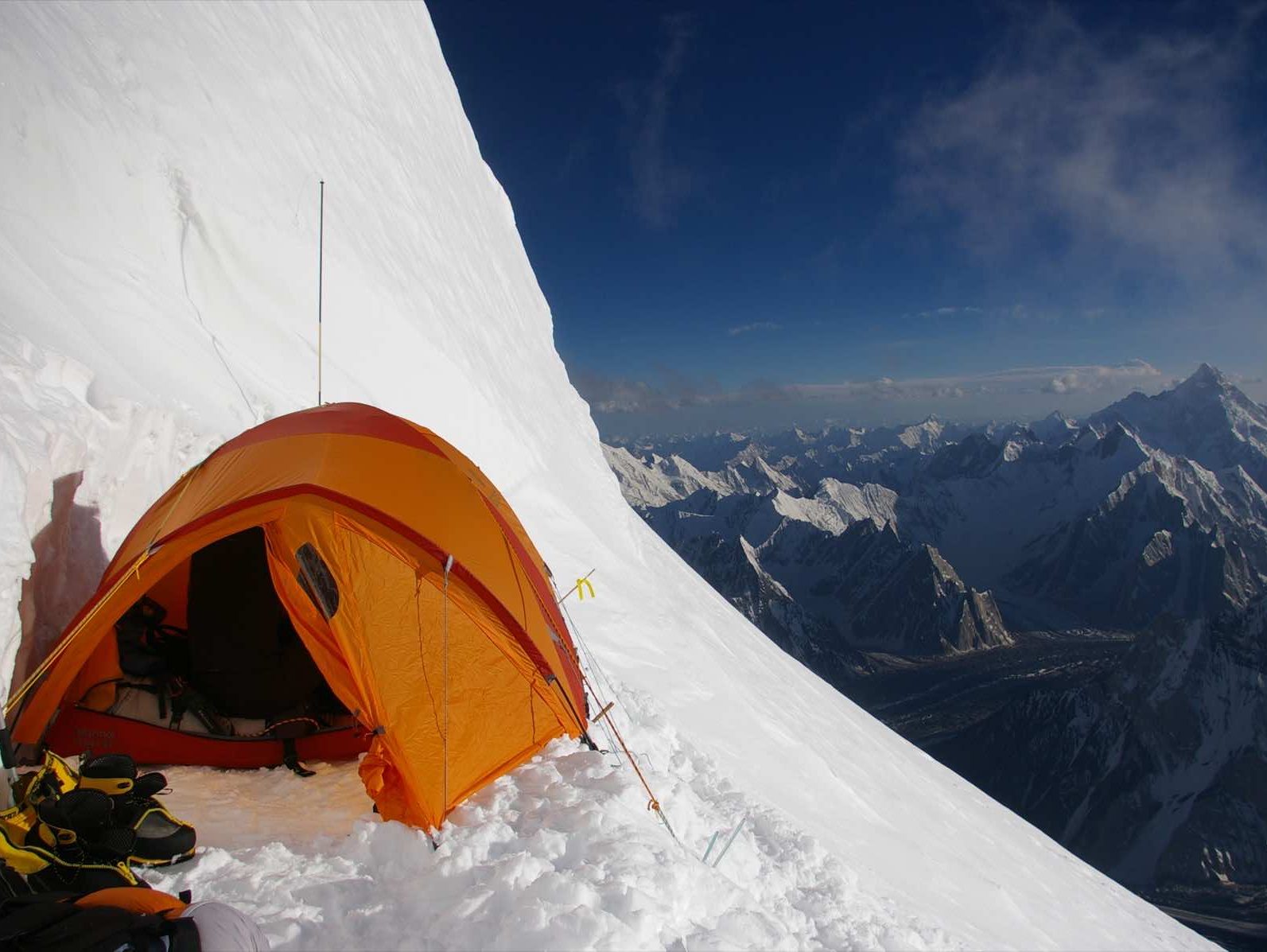
50 great mountaineers from around the world
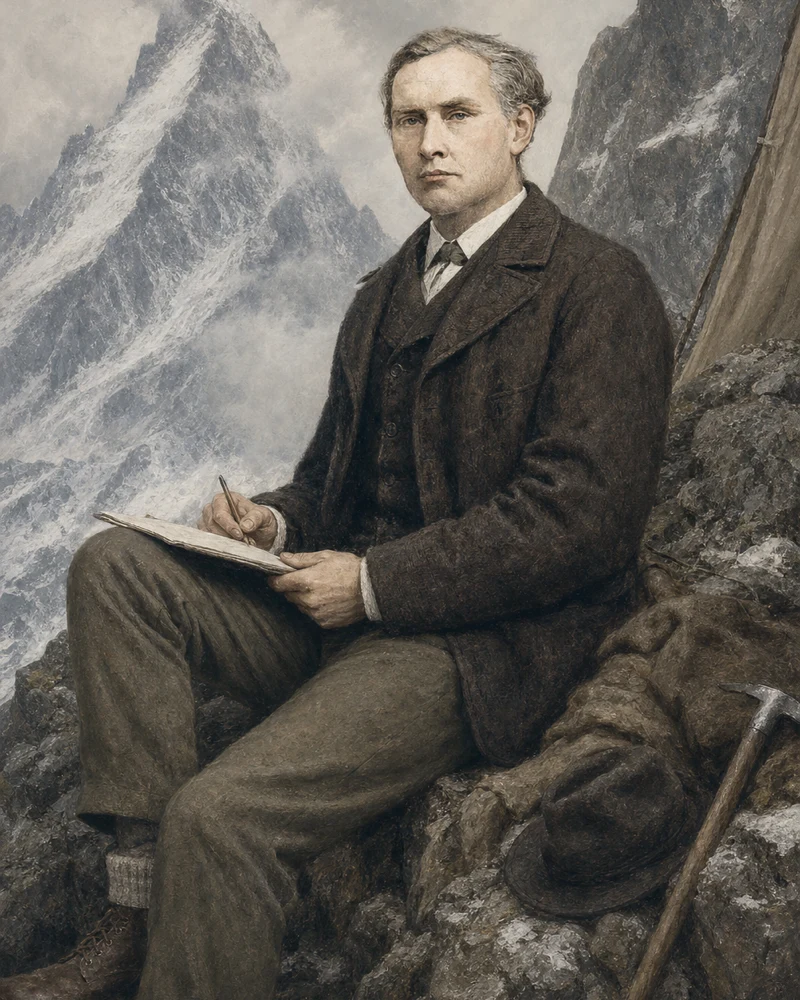
Edward Whymper
The first ascent of the Matterhorn in 1865 was at once a triumph and a disaster: four of the seven on the rope died on the descent. Whymper showed the price of the race for the last great summit of the Alps and left one of the most important early texts on the fact that success does not end at the top. His routes in the Alps and the Andes made first ascents a distinct genre of mountaineering.
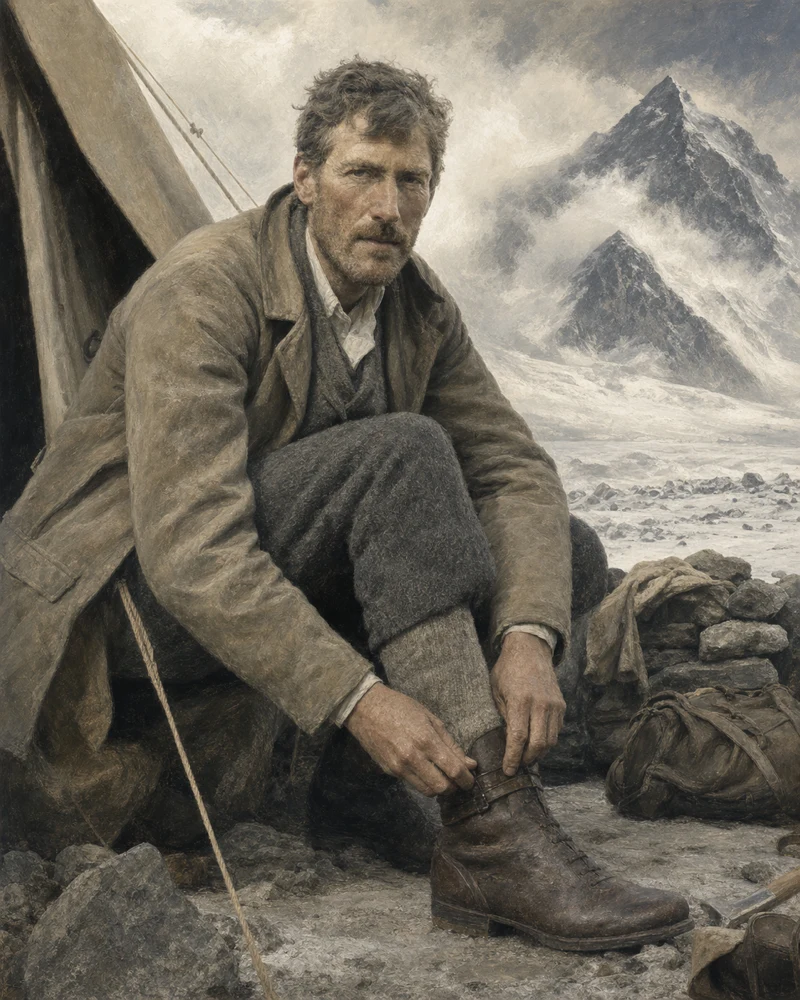
George Mallory
Mallory took part in three British expeditions to Everest and in 1924 disappeared with Andrew Irvine high on the north-east ridge. Whether they reached the summit is not proven; Mallory’s greatness does not need a hypothesis turned into a fact. What he contributed was the reconnaissance of an unknown mountain, movement in woollen clothing and leather boots, work with heavy early oxygen apparatus and a willingness to enter ground where no ready-made route yet existed.
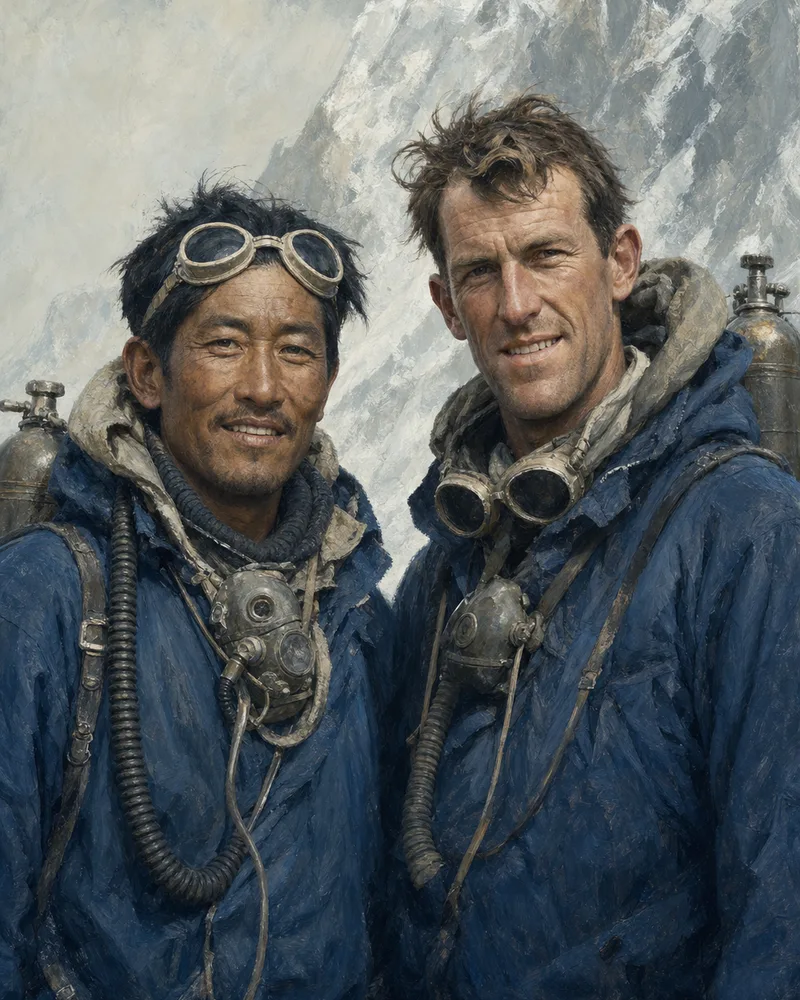
Tenzing Norgay and Edmund Hillary
On 29 May 1953 they reached the summit as a rope of two, after a large team had built nine camps and set up the push. Hillary climbed the key rock step; Tenzing brought the enormous experience of seven earlier expeditions and had saved his partner during the preparation. Their main legacy is not the argument about who stepped first but a model of mutual recognition, in an age when what the Sherpas did was often left in the footnotes.
Maurice Herzog and Louis Lachenal
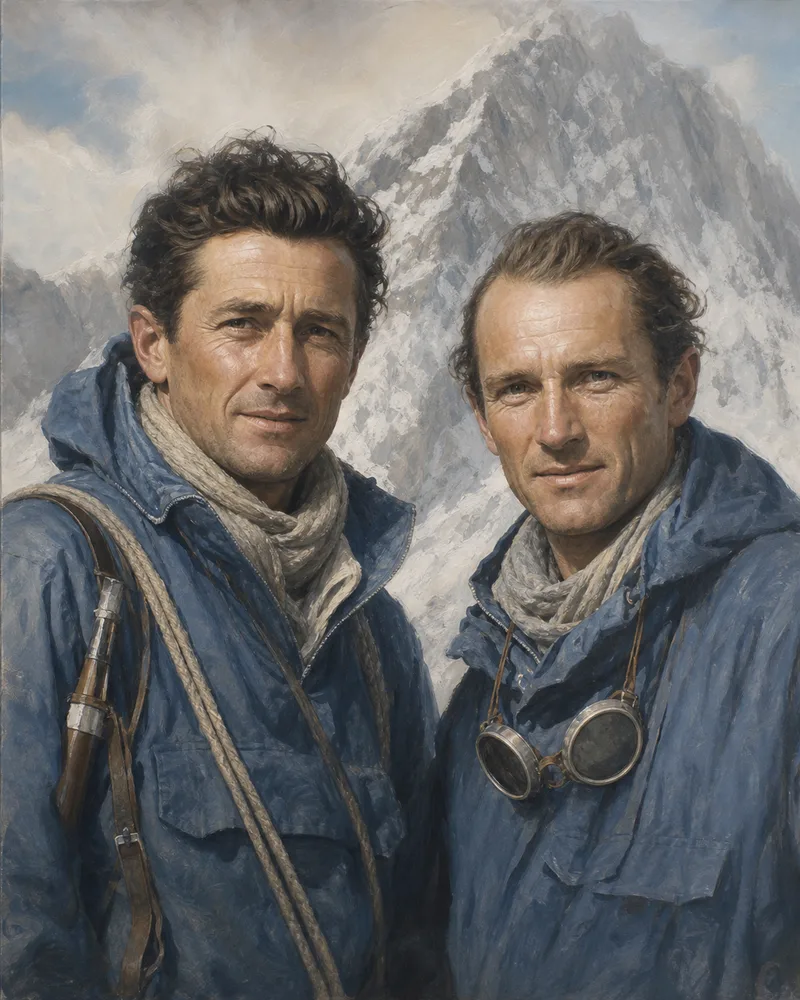
The French expedition of 1950 was the first to climb an eight-thousander – Annapurna. Herzog became the face of the victory, but the part played by Lachenal, who went to the summit understanding his partner’s condition and the need to go down at once, is just as substantial. Both suffered severe frostbite. Later research disputes the editing of the official story, so this chapter is better read as the achievement of a team rather than of one hero on a cover.
Hermann Buhl
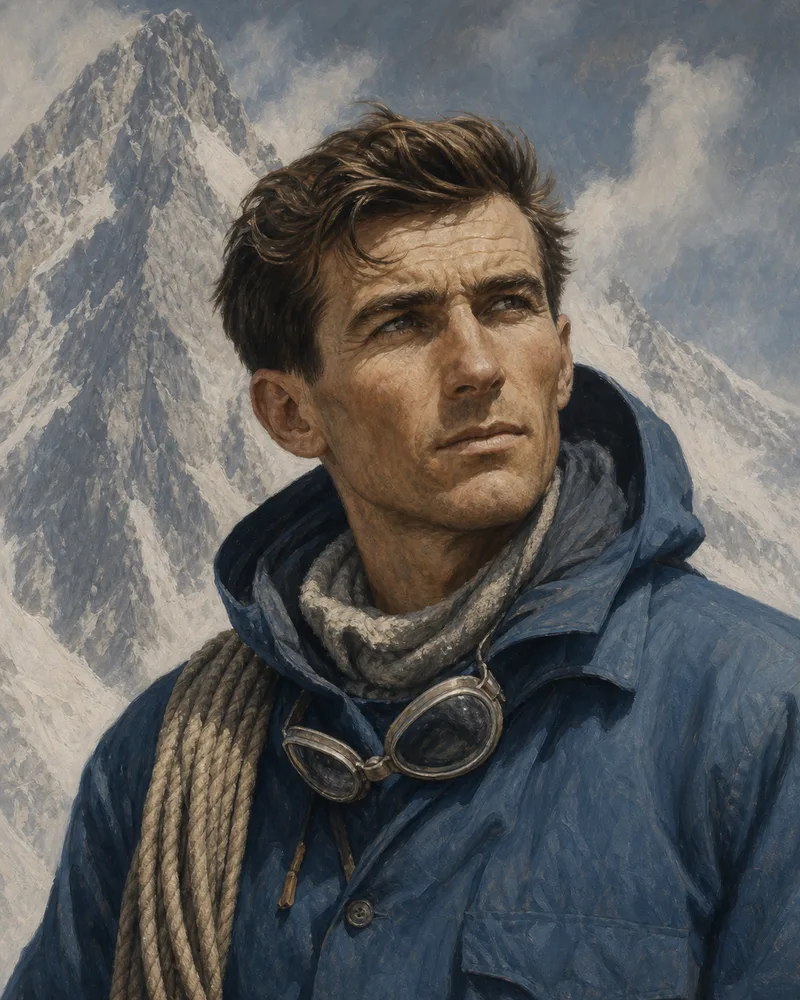
In 1953 Buhl made the first ascent of Nanga Parbat, carrying on to the summit alone and surviving a standing bivouac through the night with no tent. In 1957 he was one of the four on the first ascent of Broad Peak, made by a small team without high-altitude porters. A few days later Buhl died on Chogolisa when a cornice collapsed. His legacy is the shift from the siege expedition to personal responsibility, speed and minimalism.
Riccardo Cassin
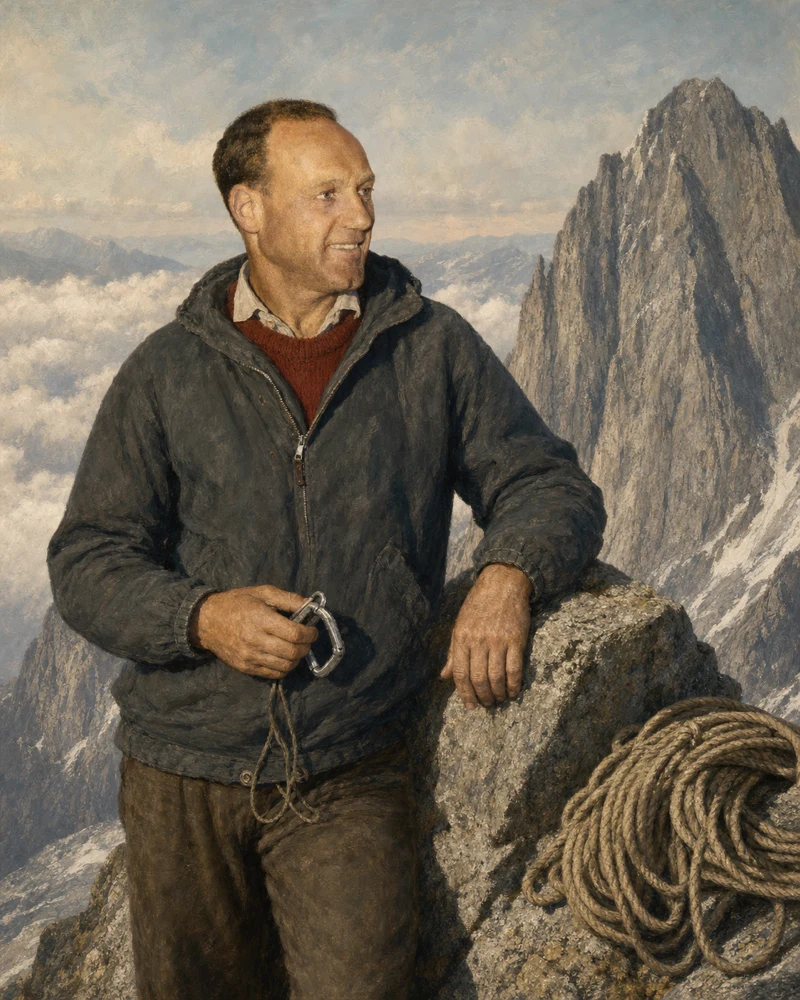
Cassin created routes that became the measure of an era: the north-east face of the Piz Badile, the Walker Spur on the Grandes Jorasses and the Cassin Ridge on Denali. He knew how to carry the logic of technical alpine climbing from the Alps to big remote mountains. His influence shows not only in a list of first ascents but in the culture of equipment: the brand he founded made karabiners, hammers and ice tools for decades.
Walter Bonatti
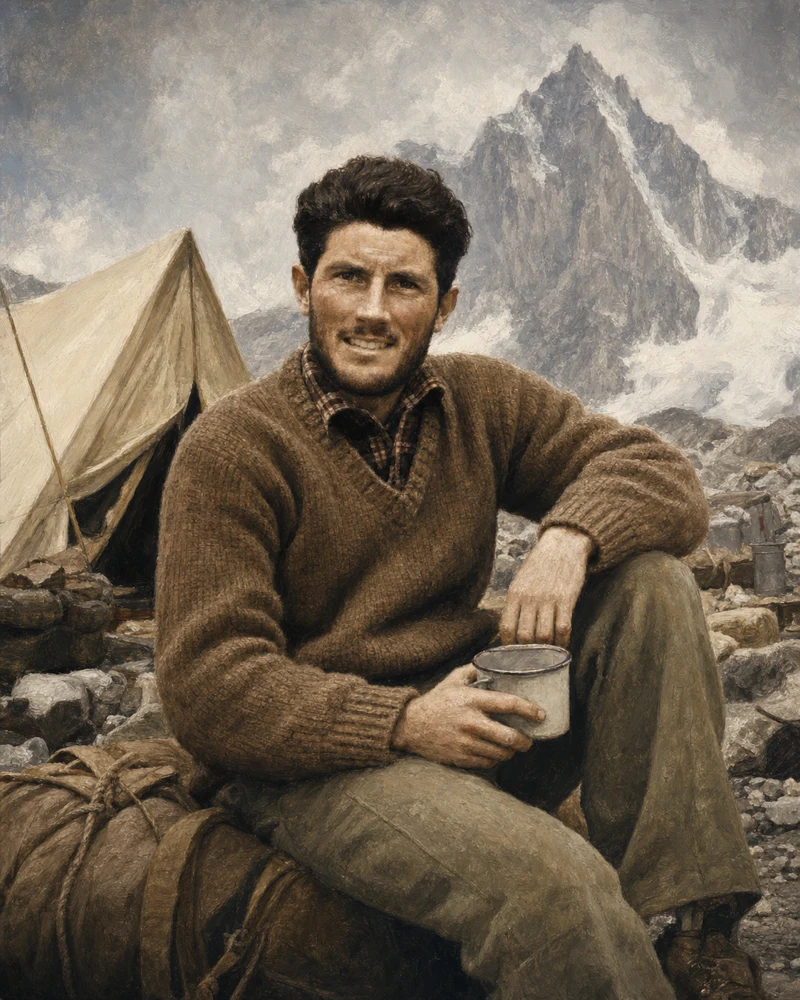
Bonatti survived the scandalous high-altitude bivouac on K2 in 1954, soloed a new route on the south-west pillar of the Dru and ended his career with a solo winter ascent of the north face of the Matterhorn. The Piolets d’Or named its career award after him. Bonatti matters because he made style – honesty, self-sufficiency and the difficulty of the line – a value in its own right, one that cannot be reduced to the height of a summit.
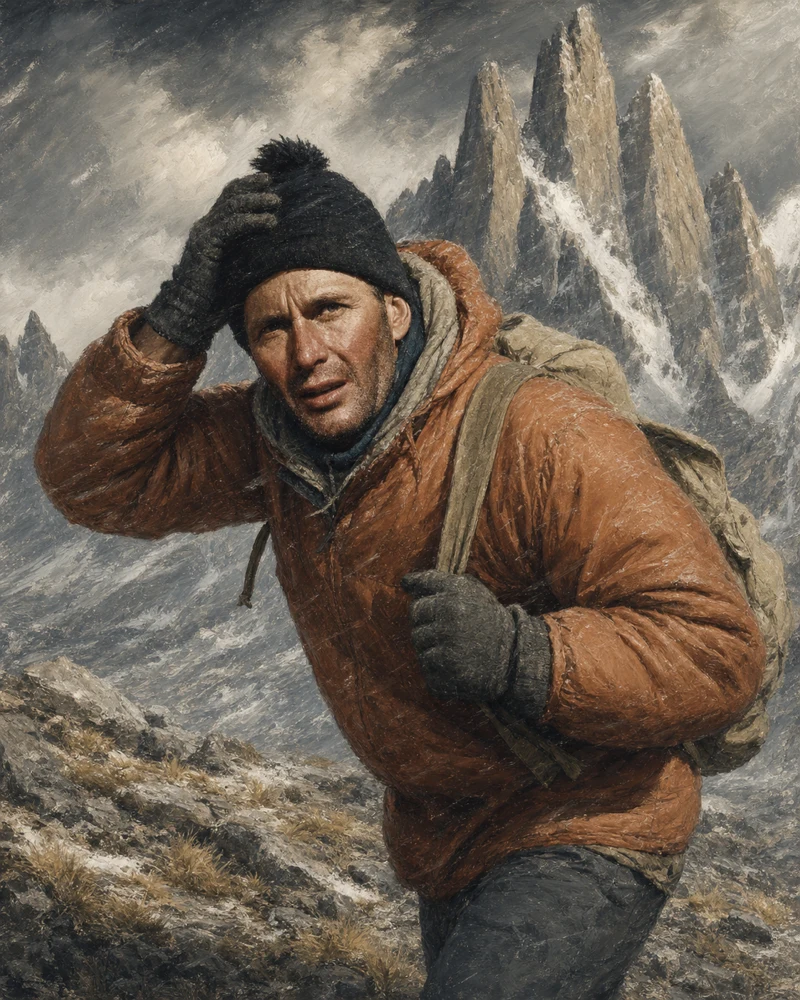
Lionel Terray
Terray was on Annapurna in 1950, climbed Makalu and Jannu, made routes in the Andes and in Alaska and worked many times on rescues. His book “Conquistadors of the Useless” became one of the best explanations of the inner logic of mountaineering. In this pantheon he stands not for a single record but for a rare combination of technical strength, altitude, leadership and responsibility for other people.
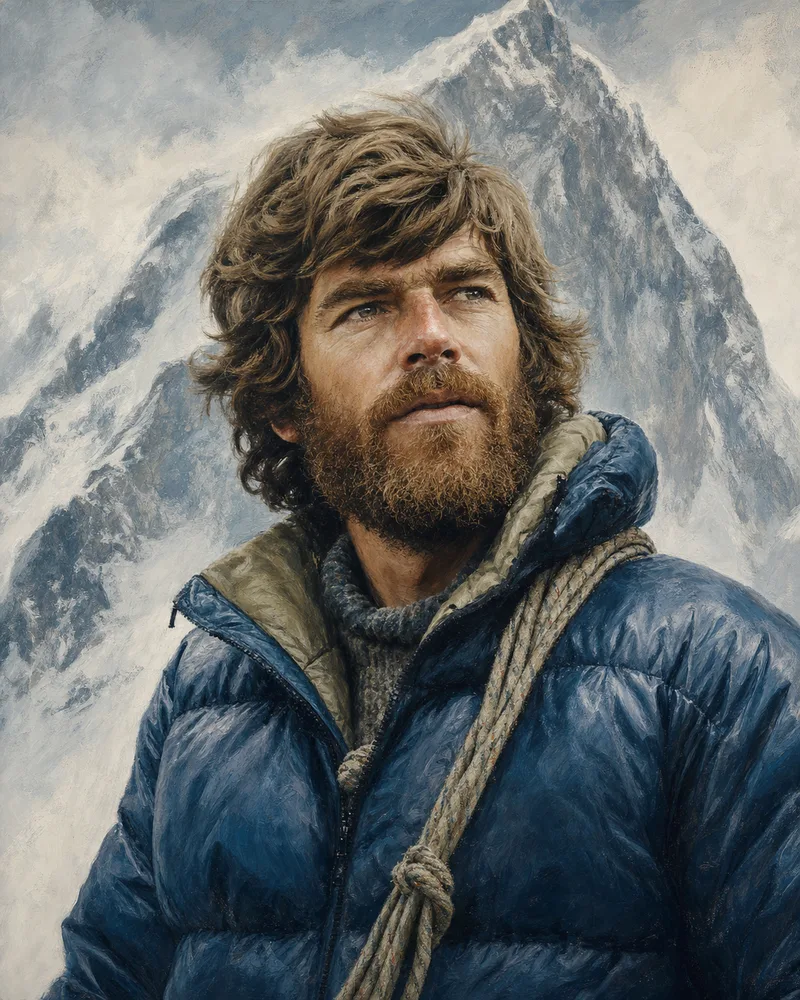
Reinhold Messner
In 1978 Messner and Peter Habeler were the first to climb Everest without supplementary oxygen, overturning the idea that such an ascent was physiologically impossible. In 1980 Messner climbed Everest solo without oxygen, and in 1986 he was the first to complete all fourteen eight-thousanders. His influence is wider than the statistics: he made light style and the refusal of artificial oxygen central criteria of high-altitude mountaineering.
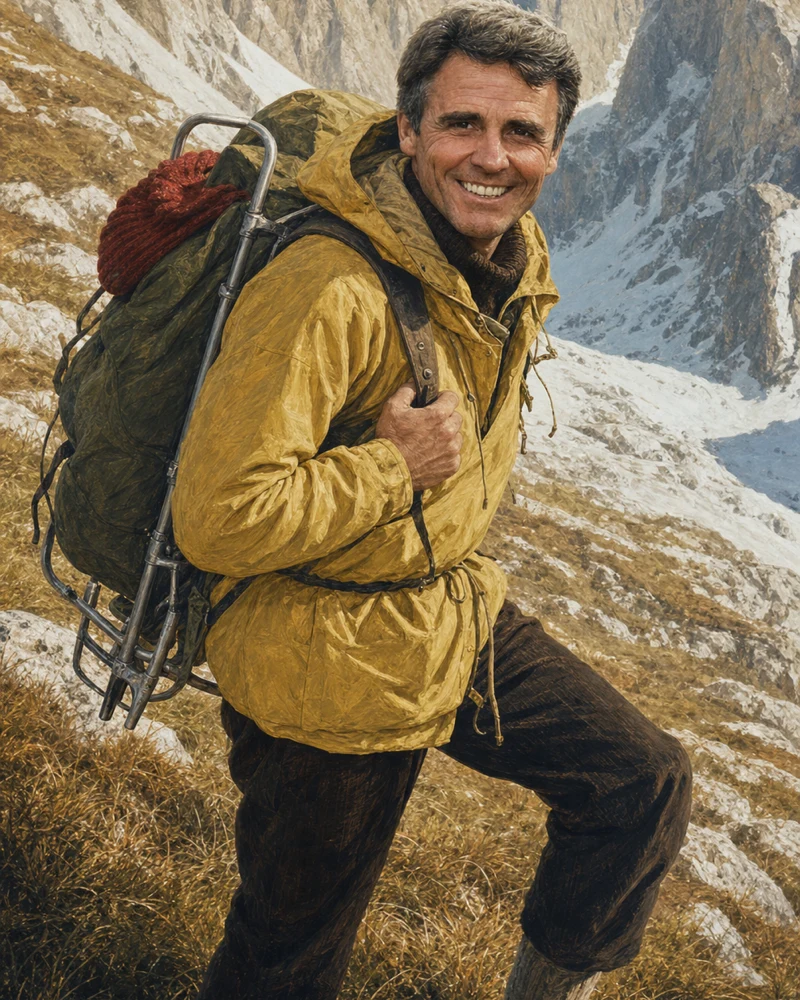
Peter Habeler
Habeler is often left as the second name beside Messner, although the first oxygen-free ascent of Everest was an equal achievement by two climbers. Before the Himalaya their rope had already shown unheard-of speed in the Alps. Habeler proved that a partner can be not a star’s helper but a co-author of a change to a whole discipline; later he went on making hard ascents well into his mature years.
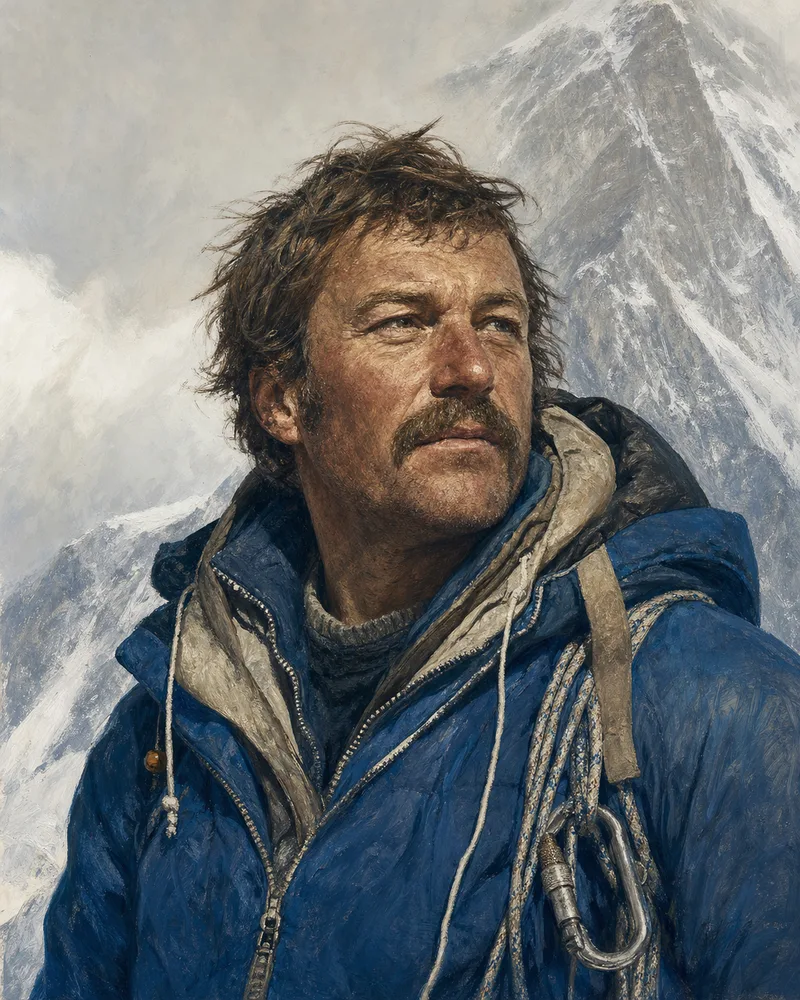
Jerzy Kukuczka
Kukuczka was the second to climb all fourteen eight-thousanders, but he turned almost every stage into a sporting problem of its own: new lines, first winter ascents, small budgets and a minimum of resources. The American Alpine Journal noted that every summit except Lhotse he climbed either by a new route or in winter. Kukuczka died in 1989 on the south face of Lhotse. His set remains an argument against judging a mountaineer by how fast a list was closed out.
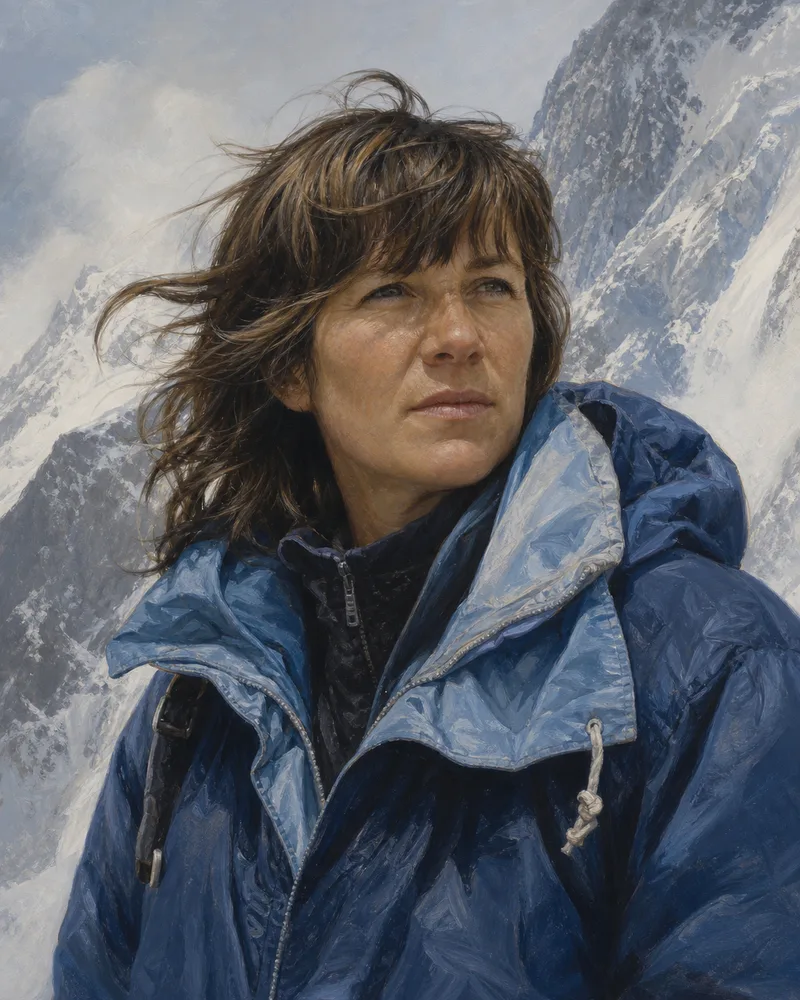
Wanda Rutkiewicz
Rutkiewicz became the first European woman on Everest and the first woman on K2, climbed eight of the eight-thousanders and organised women’s expeditions at a time when the high mountains remained an almost entirely male world. She disappeared on Kangchenjunga in 1992. The American Alpine Journal stressed not only her results but her part in breaking the male monopoly on the highest summits.
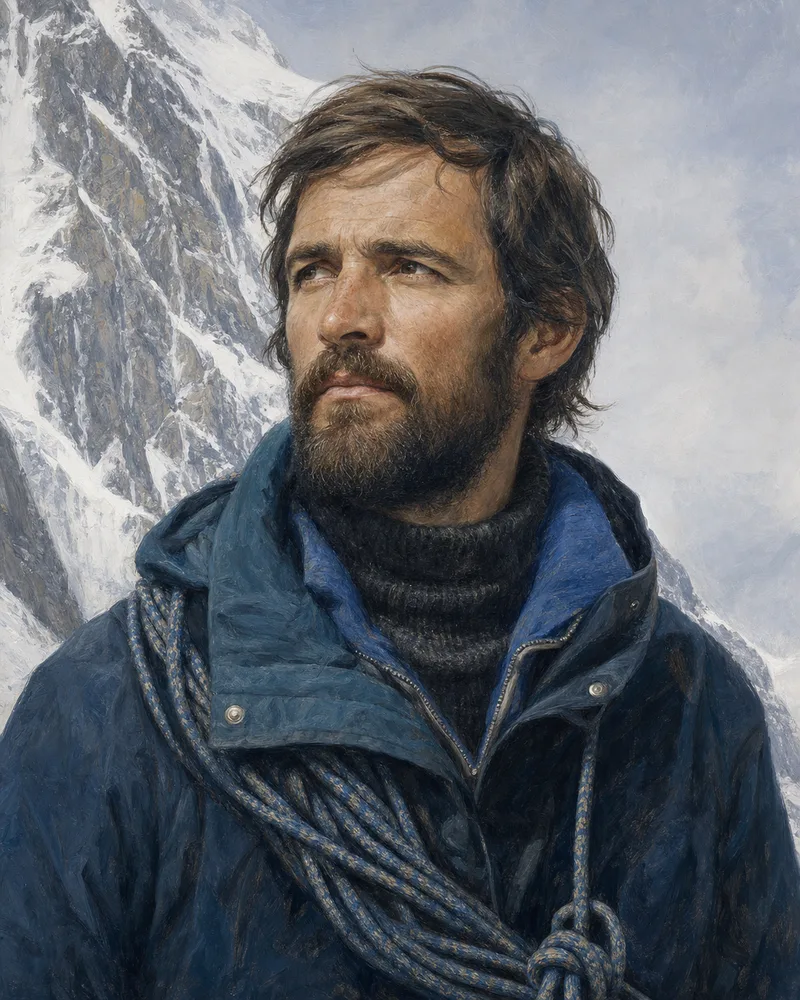
Wojtek Kurtyka
Kurtyka deliberately kept clear of the race for a complete set of eight-thousanders. His ascent with Robert Schauer of the west face of Gasherbrum IV in 1985 – the “Shining Wall” – is counted among the highest achievements of alpine style. The career Piolets d’Or confirmed his standing. Kurtyka shows why one new line can mean more to history than dozens of repeats of standard routes.
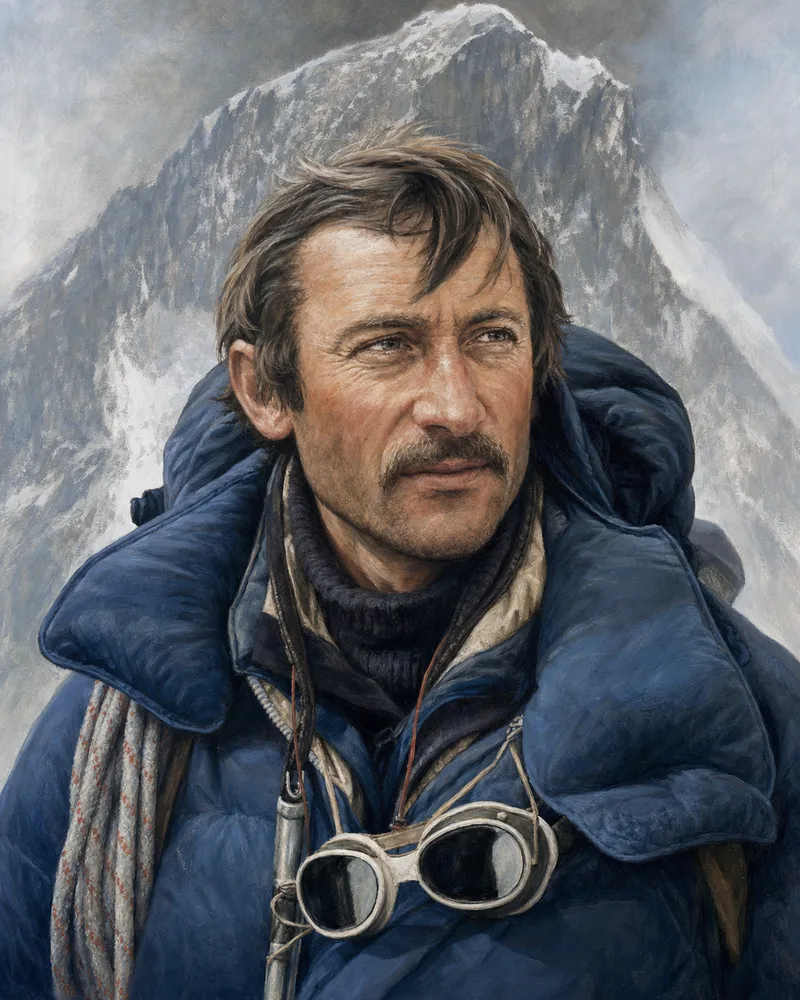
Krzysztof Wielicki
In 1980 Wielicki and Leszek Cichy were the first to climb Everest in winter. Wielicki completed the fourteen eight-thousanders, made fast and solo ascents, and later led Polish winter expeditions. His career joins a personal result to the building of a school. The Piolets d’Or honoured him for a contribution that inspired the generations after him, not for one fortunate summit.
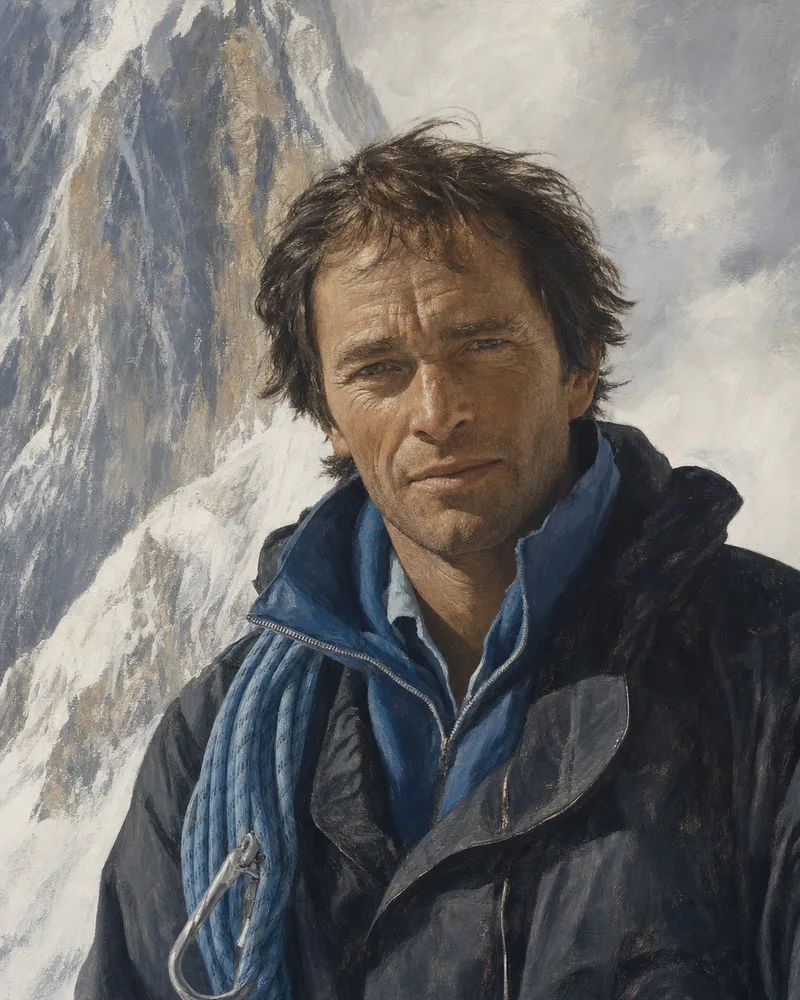
Erhard Loretan
Loretan was the third person to complete all fourteen eight-thousanders and one of the most consistent advocates of a fast, light style. With Jean Troillet he climbed the north face of Everest without oxygen and without a tent, in a radically short format. His methods are not a general recommendation: they demanded enormous experience and left little in reserve, but they changed what speed at altitude was thought to be.
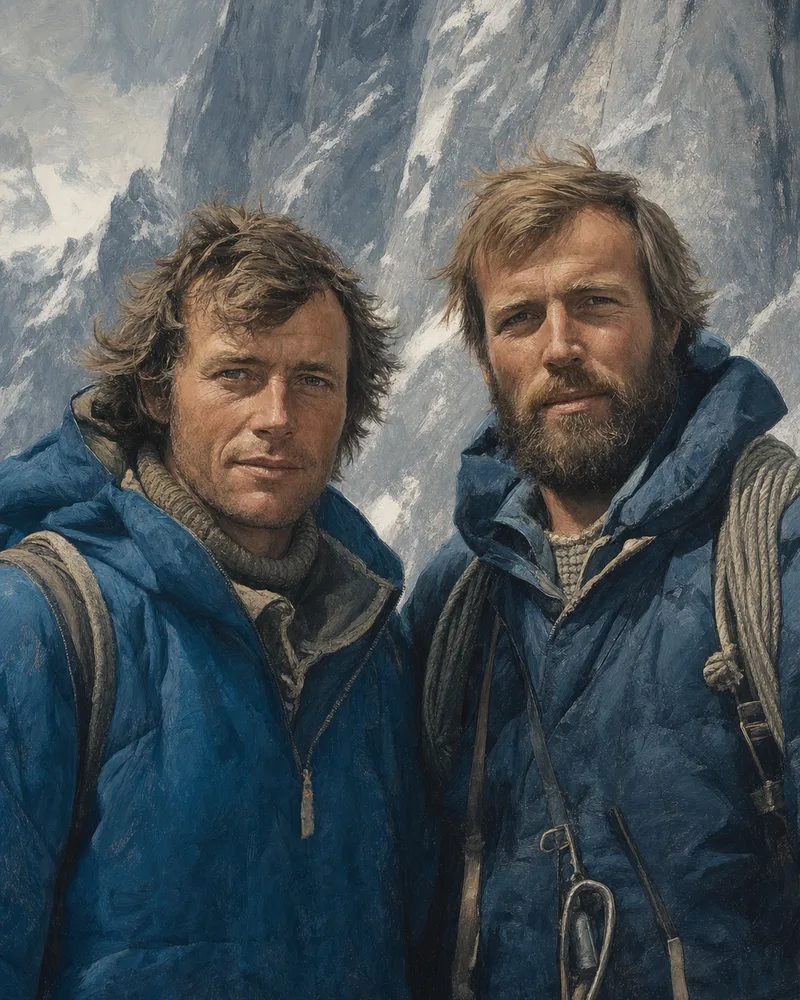
Doug Scott and Chris Bonington
Bonington led difficult British expeditions, among them the south-west face of Everest, while Scott became one of the strongest high-altitude wall climbers. Their first line on the Ogre in 1977 passed into legend because of the descent: Scott broke both legs, and the team spent almost a week getting itself off the mountain unaided. Both received a career Piolet d’Or. Greatness here is measured not only by the climb but by the ability of a whole party to bring an injured man back.
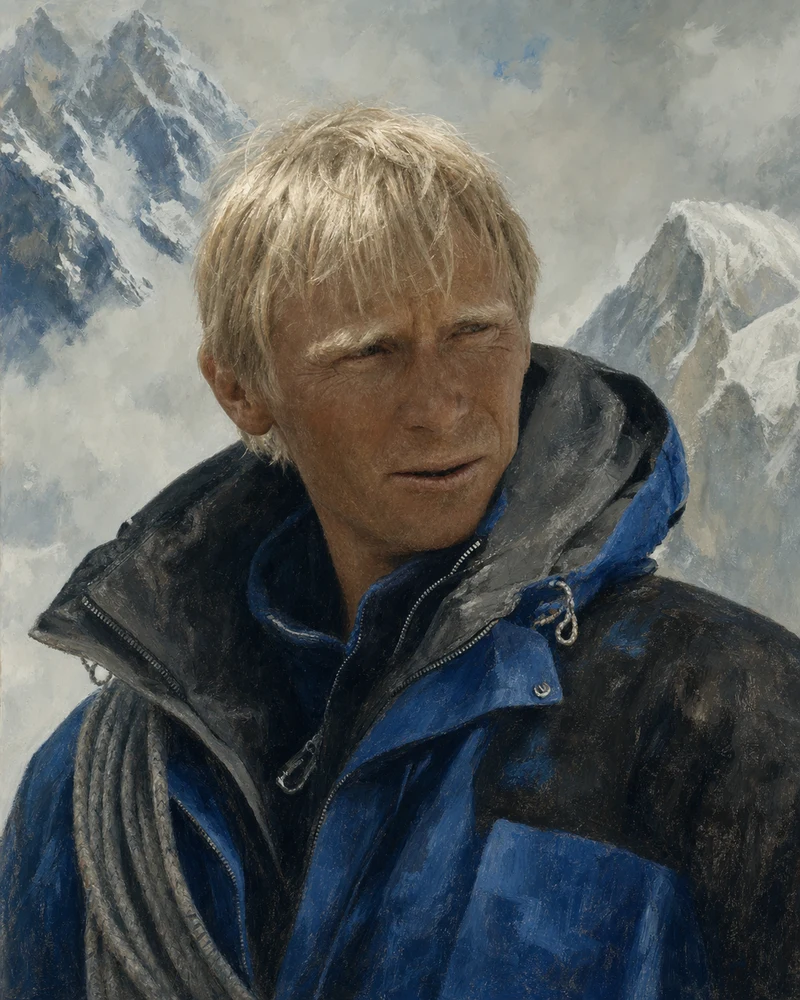
Anatoli Boukreev
Boukreev was one of the strongest high-altitude mountaineers of the 1990s, climbed eight-thousanders many times without supplementary oxygen and worked as a guide. During the Everest disaster of 1996 he went out from the South Col several times through the night and brought lost members back to camp. The arguments about that expedition’s tactics do not cancel those particular acts of rescue. In 1997 Boukreev was killed by an avalanche on Annapurna.
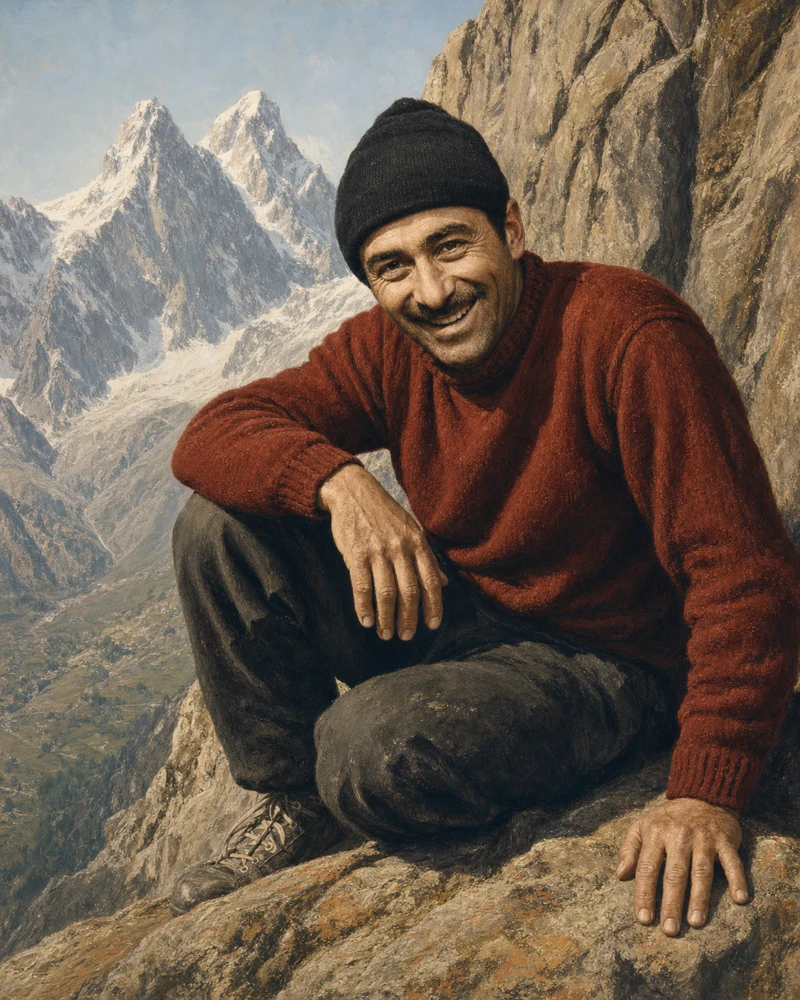
Mikhail Khergiani
Khergiani, who was called “the Tiger of the Rocks”, became a symbol of Soviet technical mountaineering. His speed, the fluency of his movement and his hard routes in the Caucasus and the Pamirs shaped a school in which the mastery of a rope of two counted for more than a record in the press. He was killed in 1969 on the wall of Su Alto in Italy. For the Russian-language history Khergiani matters as proof that greatness exists away from the eight-thousanders as well.
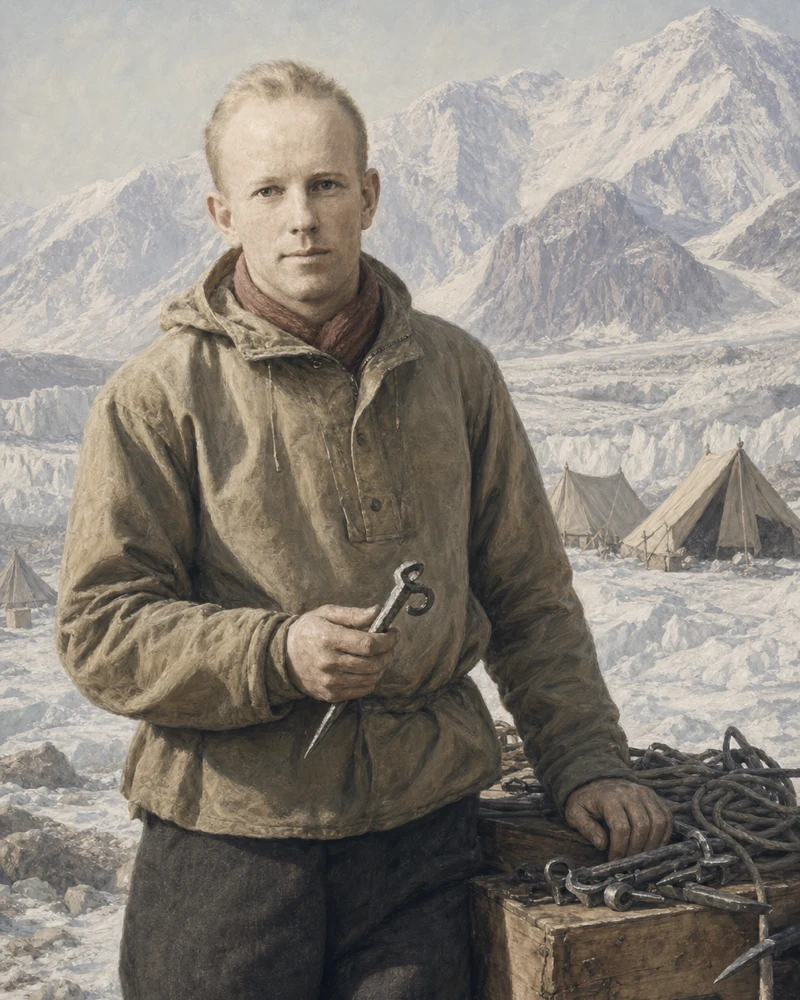
Vitaly Abalakov
Abalakov took part in the first ascent of Stalin Peak, now Ismoil Somoni Peak, in 1933 and became one of the architects of the Soviet climbing school. His engineering work – from ways of arranging a belay to equipment – outlived the individual expeditions; the term V-thread, or “the Abalakov thread”, is used by ice climbers all over the world. His contribution is measured by how many people still use the idea he created.
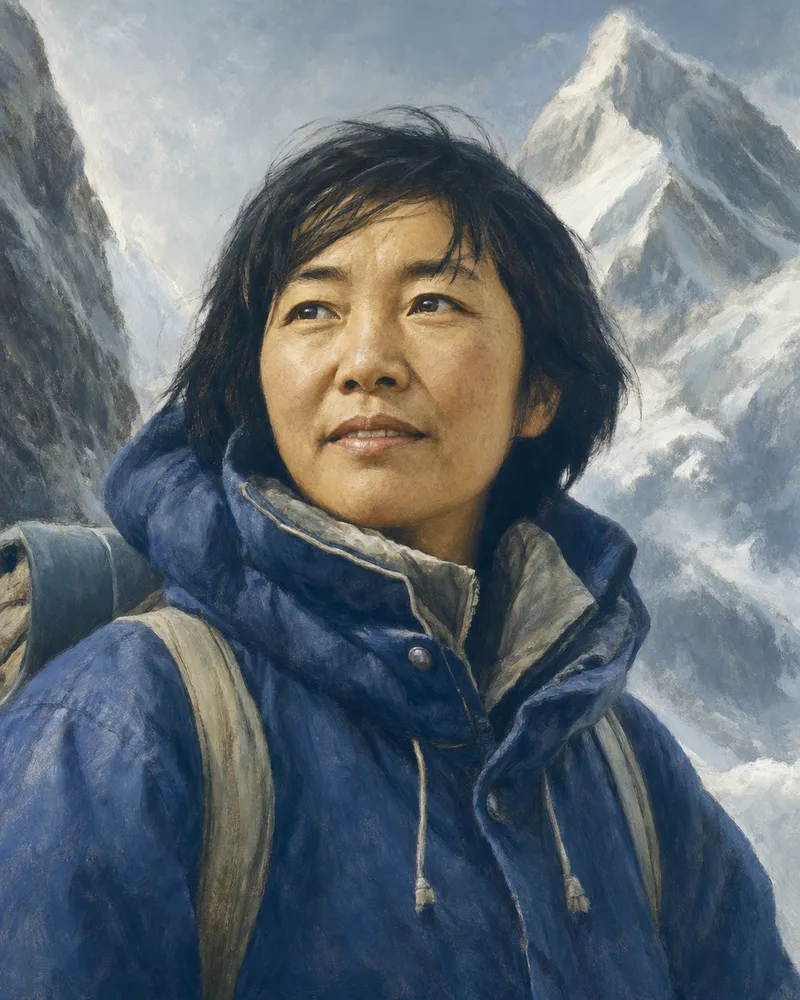
Junko Tabei
In 1975 Tabei became the first woman on Everest, having survived an avalanche that hit the camp beforehand. In 1992 she was the first woman to complete the “Seven Summits”. Her path ran through the resistance of the Japanese sporting world, which did not treat a women’s expedition as serious. Tabei widened more than a list of records: she widened the right of women to plan big objectives in the mountains.
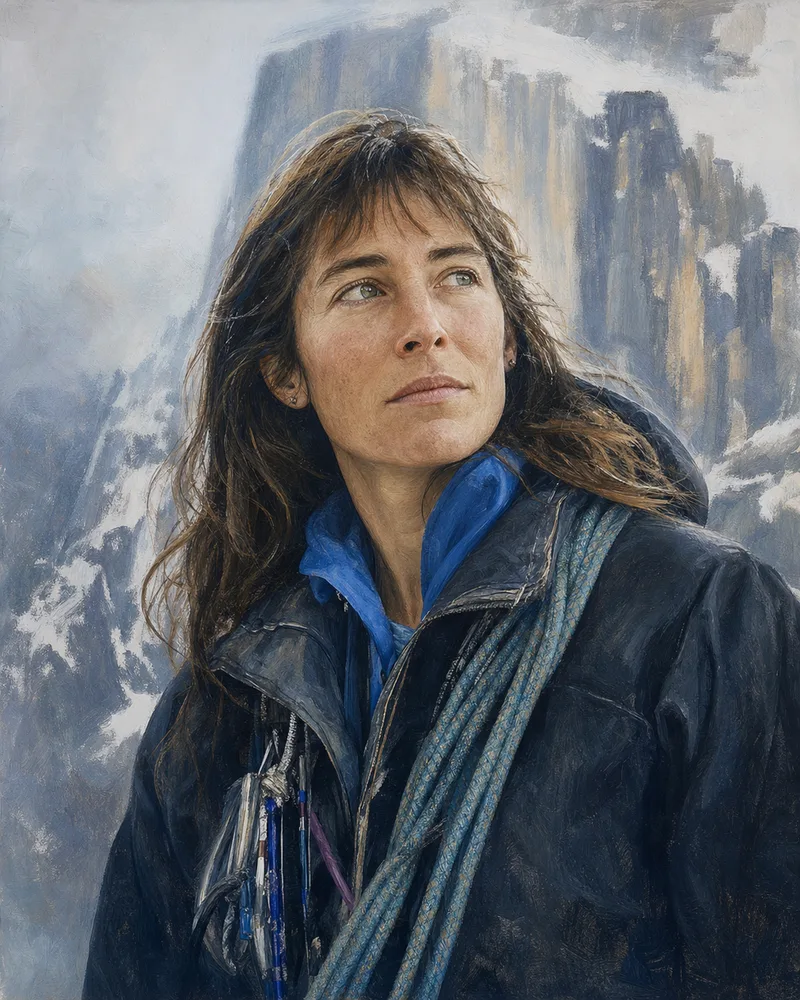
Lynn Hill
In 1993 Lynn Hill made the first free ascent of The Nose on El Capitan, and a year later repeated it free in under a day. This was not “the best women’s achievement” but a result no man had managed before her. Hill changed both the technical ceiling of big-wall climbing and the language in which climbers are compared: the grade of a route is not divided by sex.
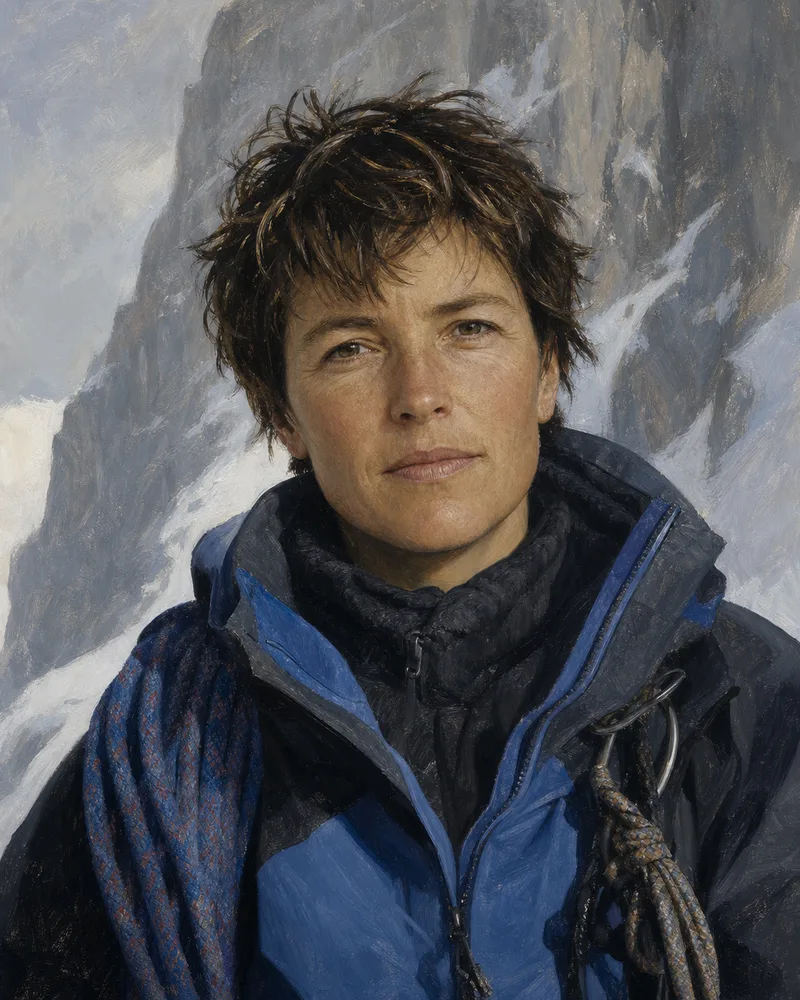
Catherine Destivelle
Destivelle climbed the hardest rock routes and then carried that mastery into the big Alps: solo winter ascents of the north faces of the Eiger, the Grandes Jorasses and the Matterhorn made her one of the central figures of modern mountaineering. In 2020 she became the first woman to receive the career Piolet d’Or named after Bonatti. Her record joins sport climbing, soloing and classical mountaineering.
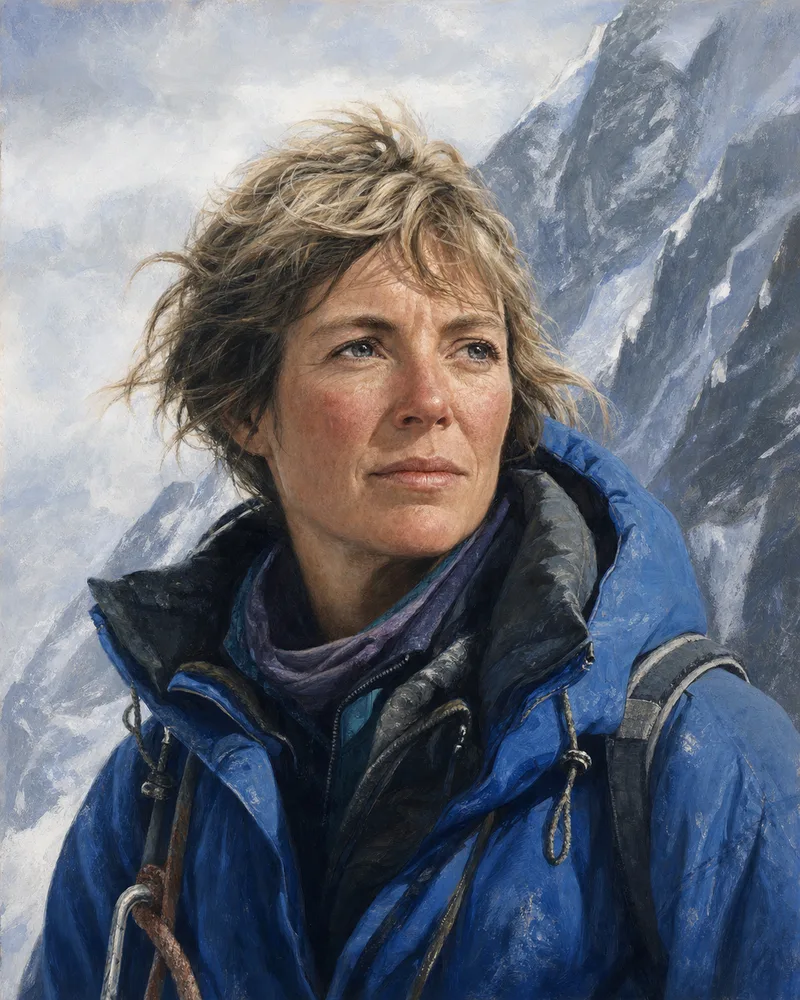
Alison Hargreaves
In 1995 Hargreaves climbed Everest without supplementary oxygen and without the help of high-altitude Sherpas, and then went to K2, where she reached the summit and died on the descent in a storm. Her life is often discussed through motherhood, as though men’s risks called for no comparable explanation. What matters more historically is her self-reliant style and her hard solo climbs in the Alps.
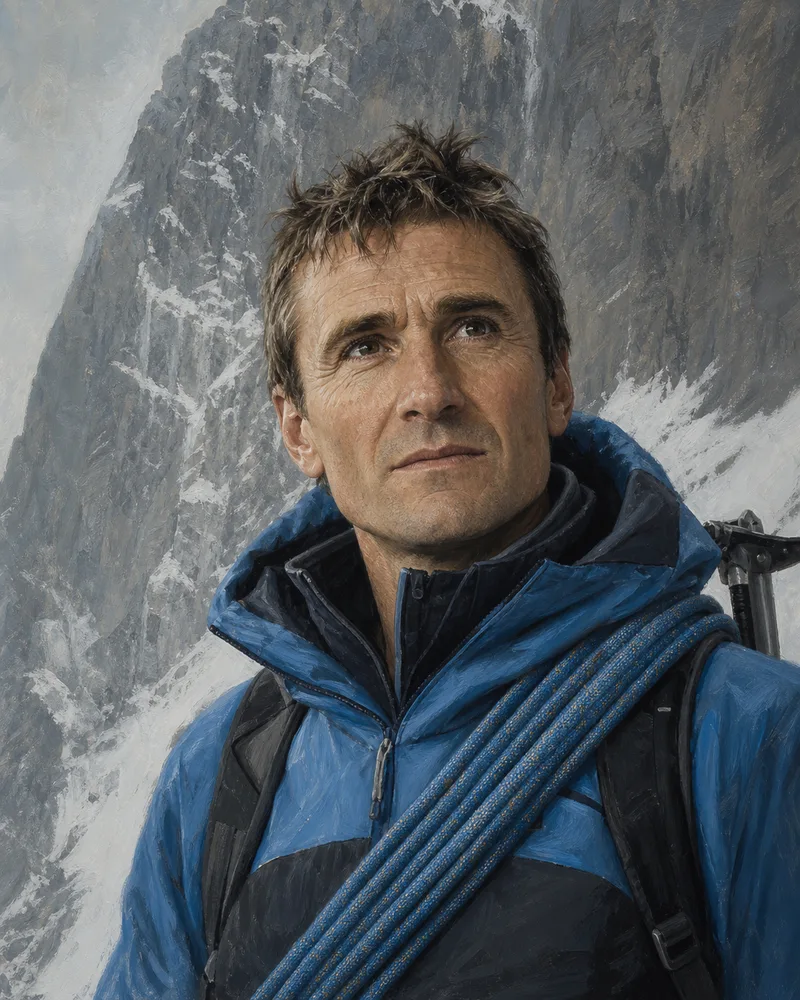
Ueli Steck
Steck set outstanding speed times on the north face of the Eiger and made a solo ascent of the south face of Annapurna in 2013, marked with a Piolet d’Or. Some of his high-altitude claims were argued over on the evidence, so precision matters more here than legend. In 2017 he died on Nuptse during an acclimatisation outing. His influence was to turn speed into a technical style in its own right, rather than simply a record time.
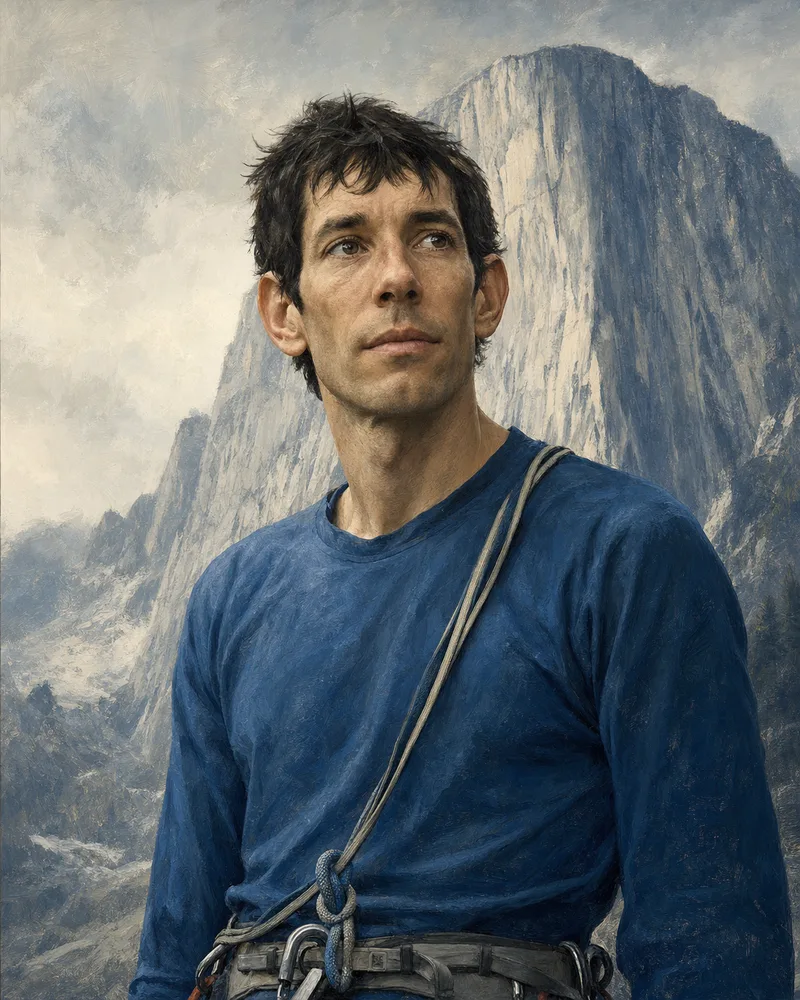
Alex Honnold
The free solo of the Freerider route on El Capitan in 2017 made Honnold the best-known rock climber of his generation. This is not high-altitude mountaineering, but he cannot be left out of a conversation about the great mountaineers from around the world: he shifted what is thought possible in psychological steadiness, the rehearsal of movement and acceptable risk. His style cannot be copied from a film; behind that one day stood years of climbing and rehearsal on a rope.
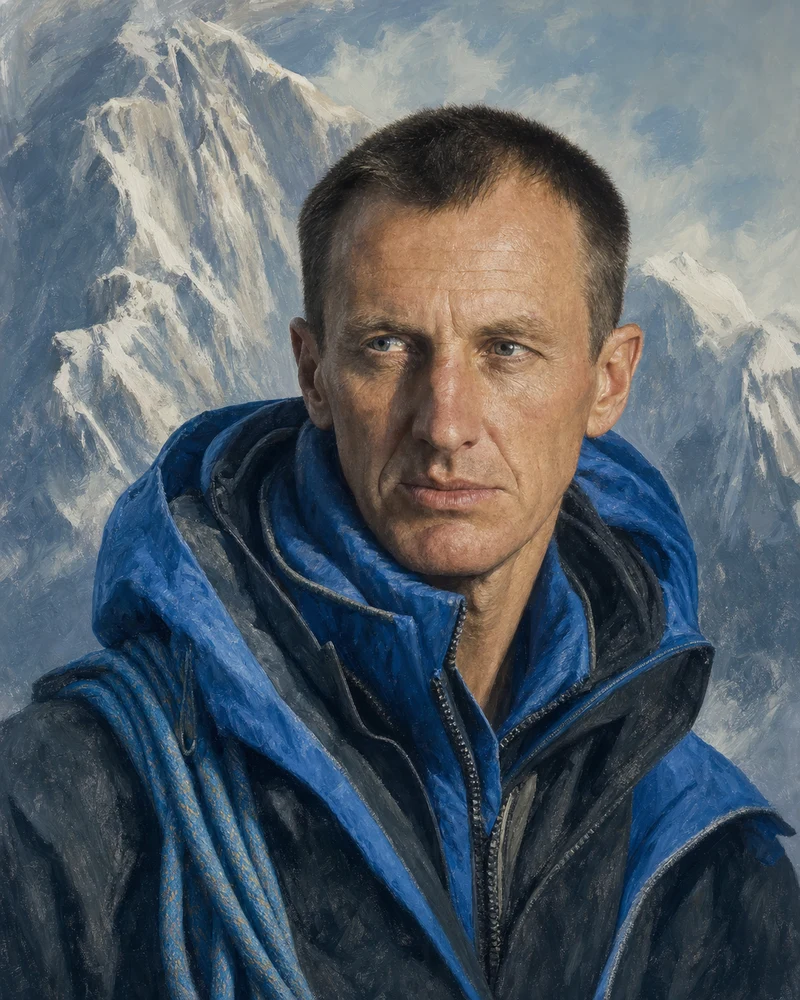
Denis Urubko
Urubko climbed all fourteen eight-thousanders without supplementary oxygen, created new routes and, with partners, made the first winter ascents of Makalu and Gasherbrum II. His career also takes in well-known rescue efforts, among them one on Nanga Parbat. For the post-Soviet school he matters for a combination of speed at altitude, technical work and a readiness to change his own plan to help someone else.
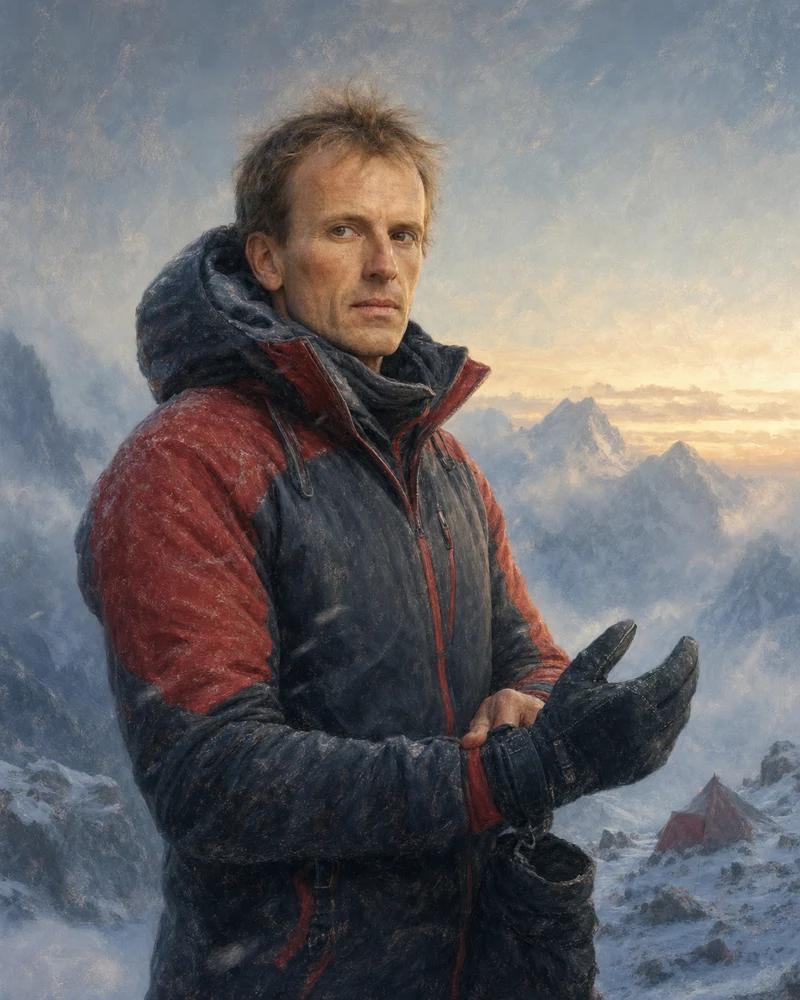
Simone Moro
Moro took part in the first winter ascents of Shishapangma, Makalu, Gasherbrum II and Nanga Parbat. Four different mountains and four different teams point not to a lucky window but to a long specialisation in the harshest discipline of high-altitude mountaineering. Alongside that he developed helicopter rescue capability in Nepal. His contribution joins sporting primacy to the infrastructure that helps other people.
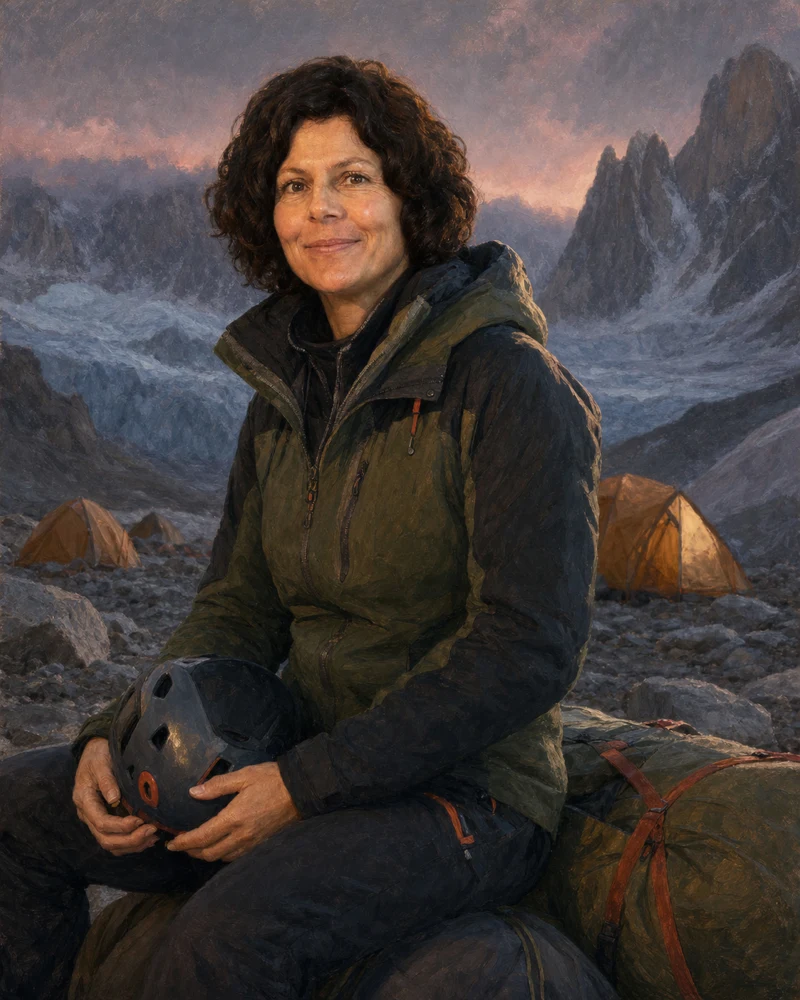
Gerlinde Kaltenbrunner
In 2011 Kaltenbrunner completed all fourteen eight-thousanders on K2 and became the first woman to climb the set without supplementary oxygen. She consistently chose small teams and refused to turn the list into a race at any price. Her result matters not as a separate “women’s category” but as one of the cleanest complete projects in modern high-altitude mountaineering.
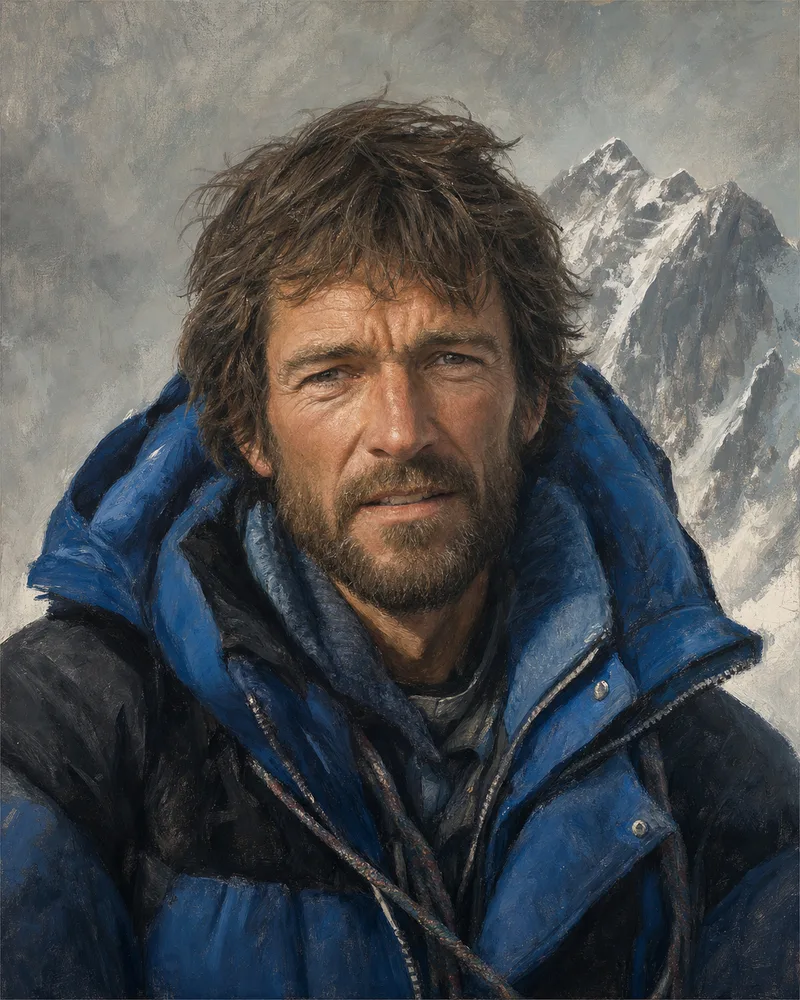
Maciej Berbeka
Berbeka took part in the first winter ascents of Manaslu and Cho Oyu. In 1988 on Broad Peak he reached Rocky Summit, taking it for the main peak, and learned the truth only after he had come back. 25 years later he returned, and on 5 March 2013, with Adam Bielecki, Tomasz Kowalski and Artur Małek, made the first winter ascent of the main summit. Berbeka and Kowalski died on the descent.
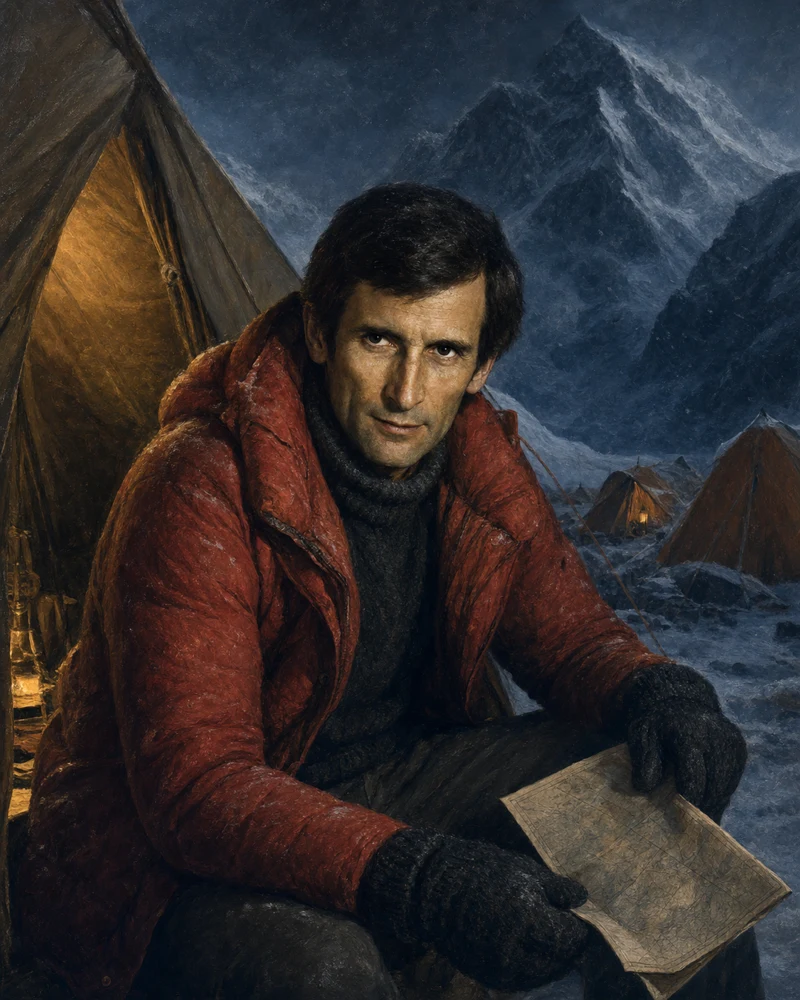
Andrzej Zawada
Zawada turned winter on the eight-thousanders from an almost hopeless idea into a Polish school of its own. He led the expedition of 1979–1980 on which Leszek Cichy and Krzysztof Wielicki made the first winter ascent of Everest – at the same time the first winter ascent of any eight-thousander. Zawada’s strength lay not in one personal summit day but in the choice of the problem, the organisation of the team and the creation of a tradition that carried on to Manaslu, Dhaulagiri, Cho Oyu and other giants.
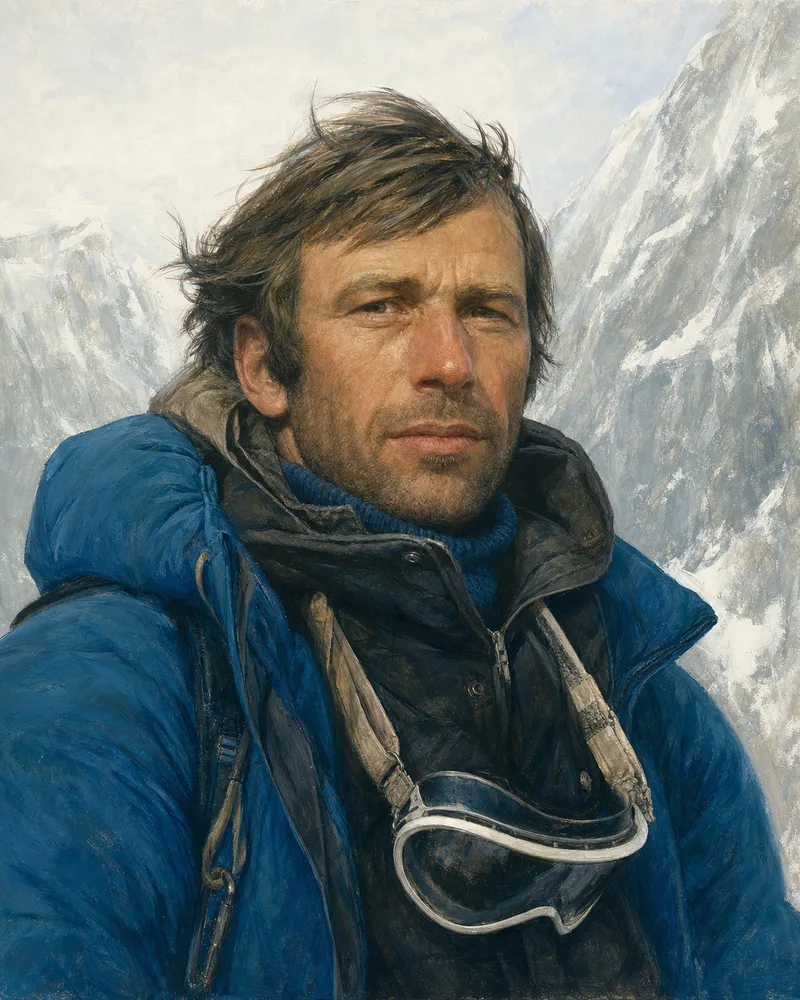
Leszek Cichy
On 17 February 1980 Cichy and Wielicki reached the summit of Everest in the calendar winter. This was not the usual season repeated at a lower temperature: a short day, hurricane winds, cold and complicated logistics change the entire equation of a route. Cichy later completed the “Seven Summits”, yet in world history his name is attached above all to the words sent down from the top – “Hello, base? Do you hear us?” – and to the moment when winter Himalayism on the eight-thousanders was born.
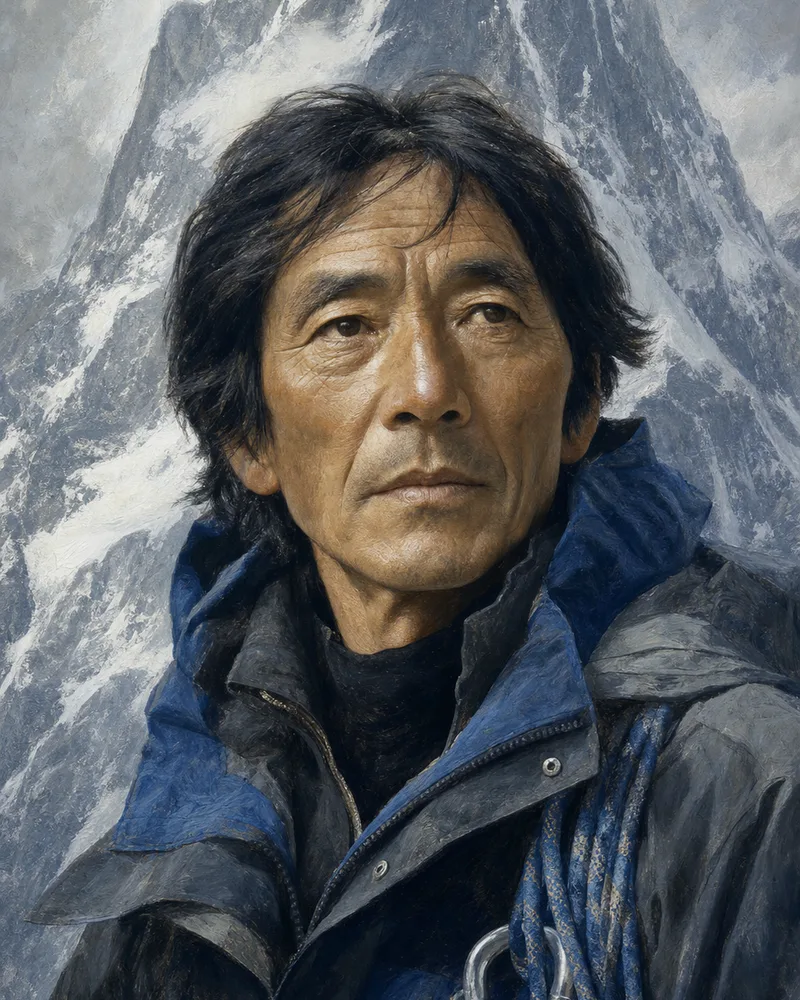
Yasushi Yamanoi
Yamanoi carried the logic of hard solo climbing from the big walls up to altitude: Fitz Roy in winter, a solo new route on Cho Oyu and a fast solo ascent of the Cesen route on K2 without supplementary oxygen. After the worst of frostbite on Gyachung Kang he lost parts of his fingers, but he came back to hard climbing. The career Piolet d’Or of 2021 marked not the number of summits collected but decades of self-reliant, technically difficult and minimalist routes.
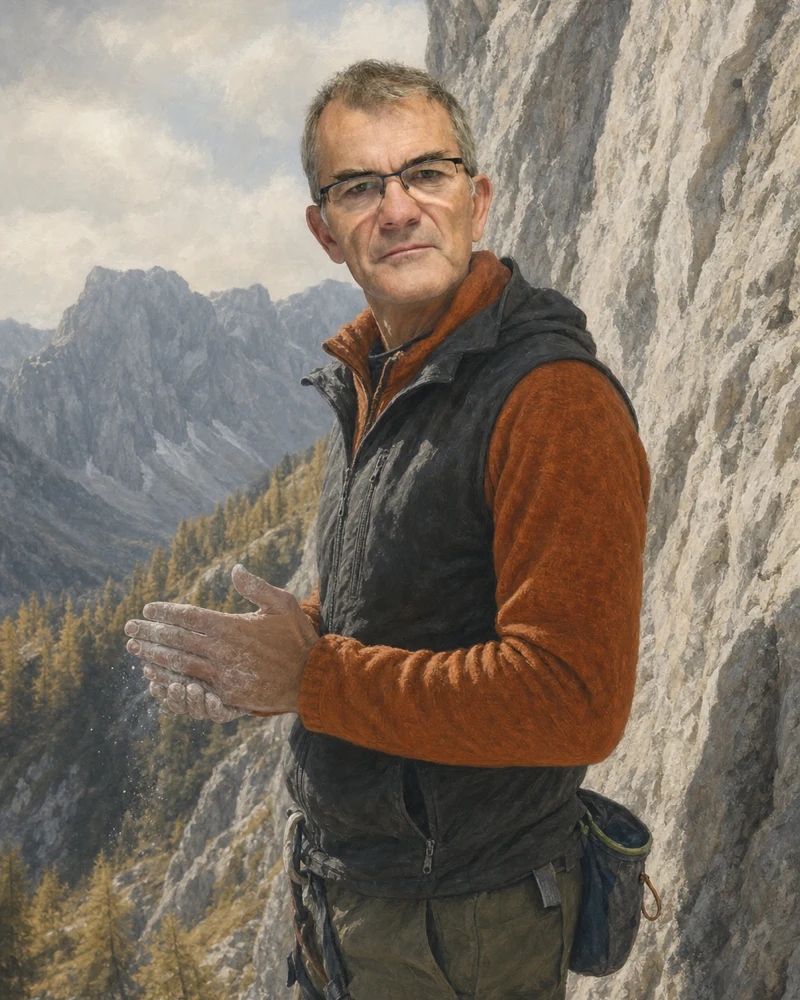
Tomo Cesen
Cesen influenced a generation with bold solo projects in the Alps and the Himalaya, yet his best-known claim – a solo of the south face of Lhotse in 1990 – remains the subject of serious documentary dispute. He can only be included together with that qualification. His place in history is a double one: he widened the imagined limits of the fast solo and at the same time showed why an extraordinary claim calls for photographs, observations, a coherent report and independent checking.
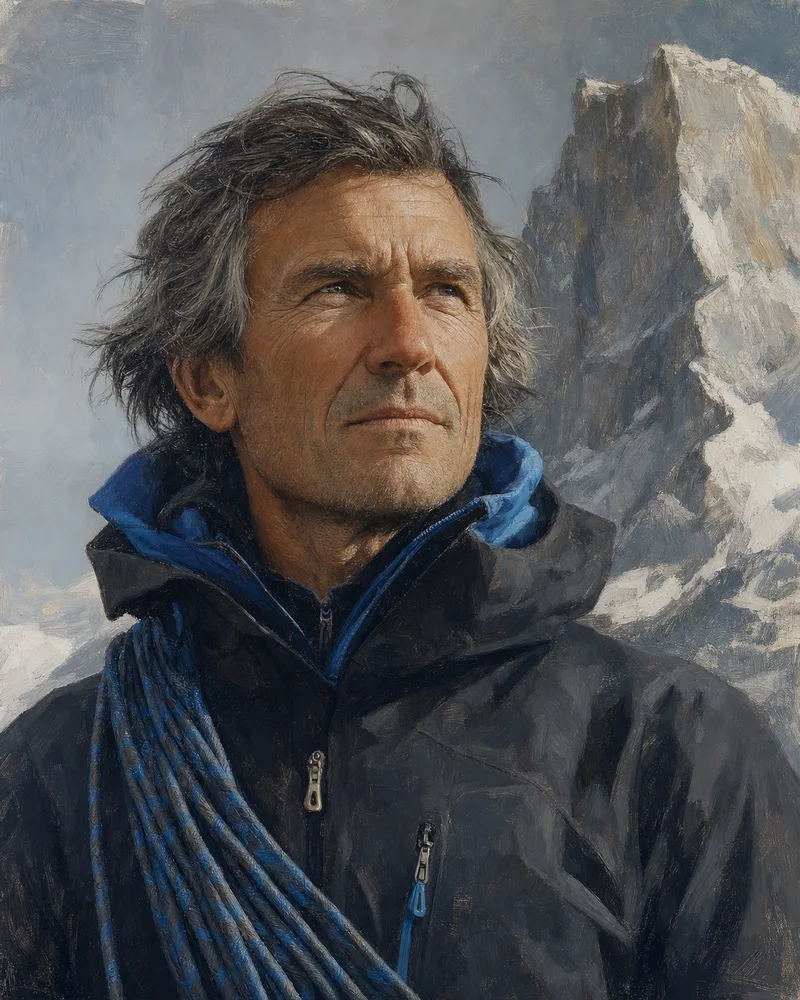
Marko Prezelj
Prezelj is one of the leading masters of modern alpine style: a small rope, a new route, a minimum of infrastructure prepared in advance and an exact public report. His lines from Kangchenjunga to Chomo Lonzo and the Indian Himalaya brought him four Piolets d’Or. His influence as a mentor matters no less: Prezelj consistently defends the team nature of a climb and criticises the turning of a shared route into a personal advertising trophy.
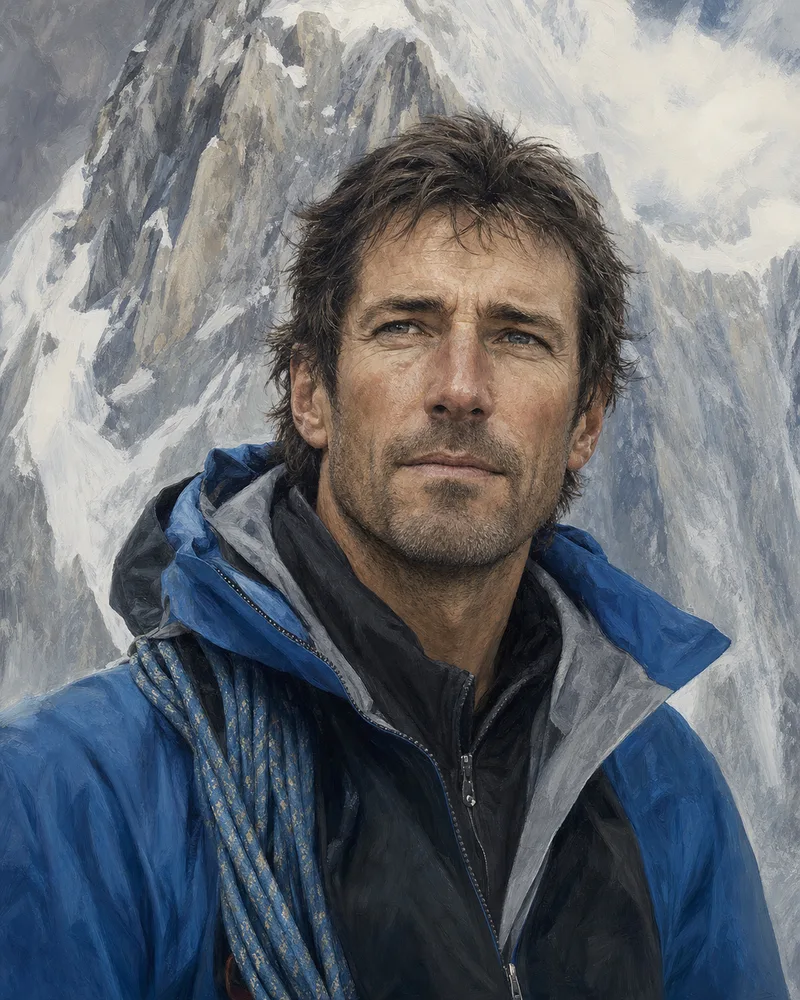
Steve House
In 2005 Steve House and Vince Anderson climbed the central part of the Rupal Face of Nanga Parbat in light alpine style. An enormous wall, a small rope, no fixed chain of camps and high technical difficulty made the route one of the benchmarks of a generation and brought a Piolet d’Or. House matters as a teacher too: he set out a systematic approach to a climber’s specific training, in which strength, endurance and technique serve a particular objective rather than a general fitness metric.
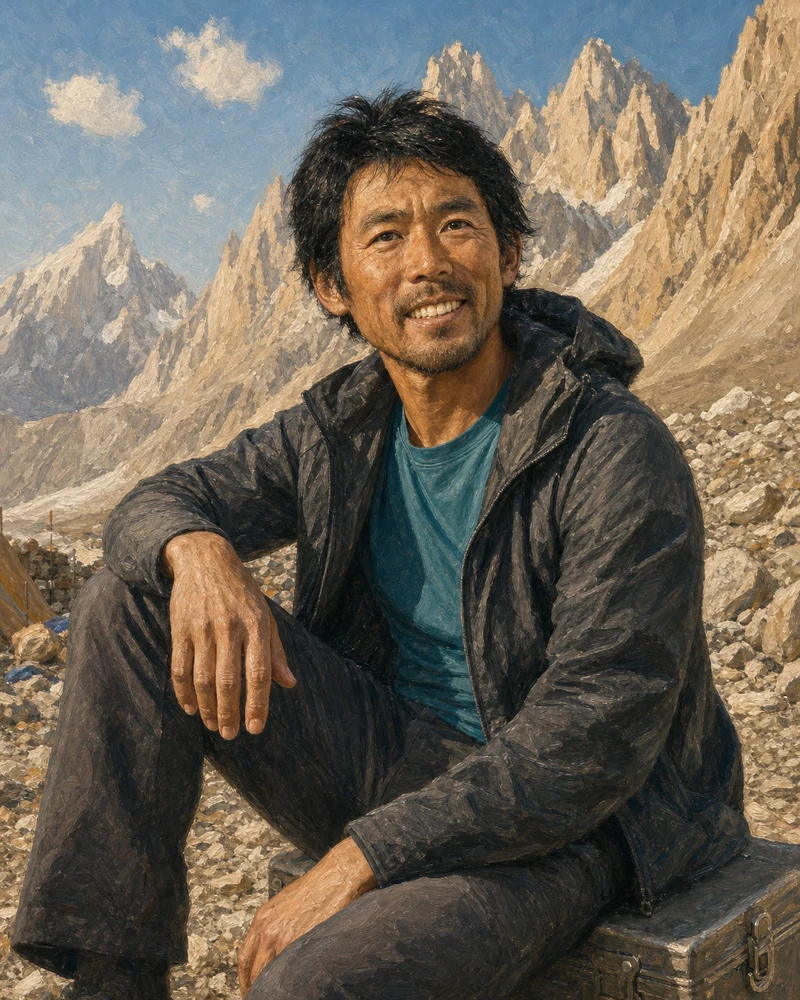
Kazuya Hiraide
Hiraide built a career around remote peaks and unclimbed lines rather than around a collection of standard routes. With Kenro Nakajima he received several Piolets d’Or for Shispare, Rakaposhi and other difficult projects. In 2024 both died attempting a new route on the west face of K2. Their legacy is a rare consistency: expedition reconnaissance, technical climbing, a small team and a willingness to return year after year to one elegant line.
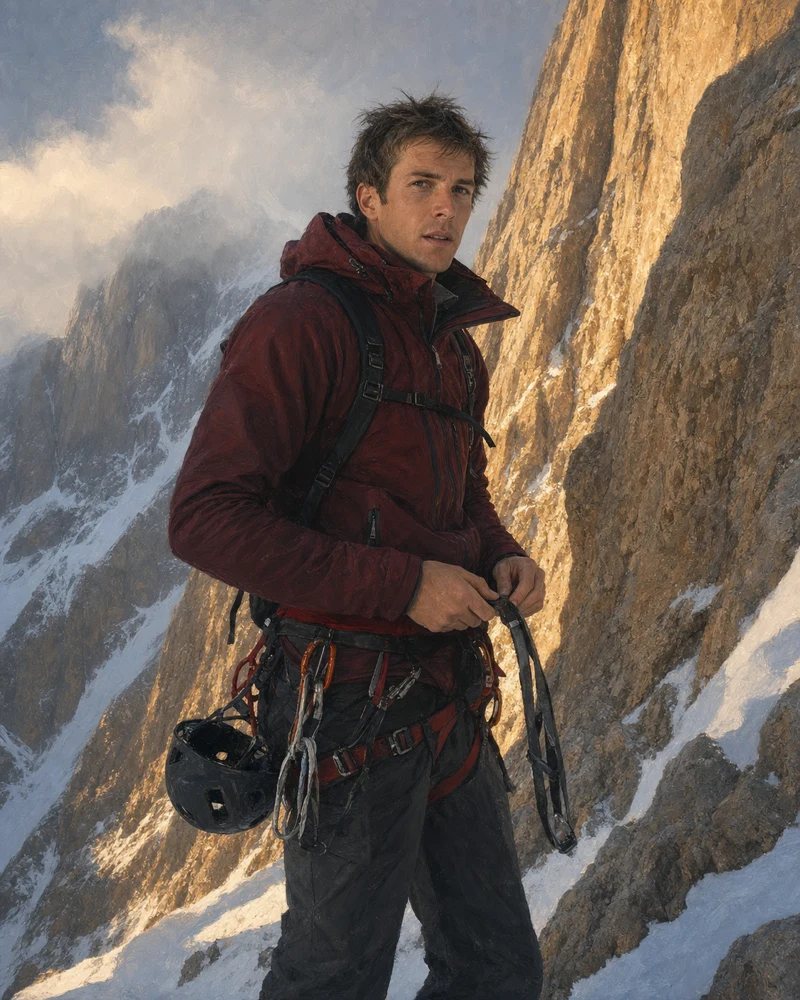
Tom Ballard
In the winter of 2014–2015 Ballard soloed six of the classic north faces of the Alps – the Cima Grande, the Piz Badile, the Matterhorn, the Grandes Jorasses, the Petit Dru and the Eiger. The project tied the historical canon to the modern fast solo. In 2019 Ballard and Daniele Nardi died on Nanga Parbat during an attempt on the Mummery Spur. What sets his place on this list is not the tragedy but his technical range: rock, mixed ground, ice and a high degree of self-sufficiency.
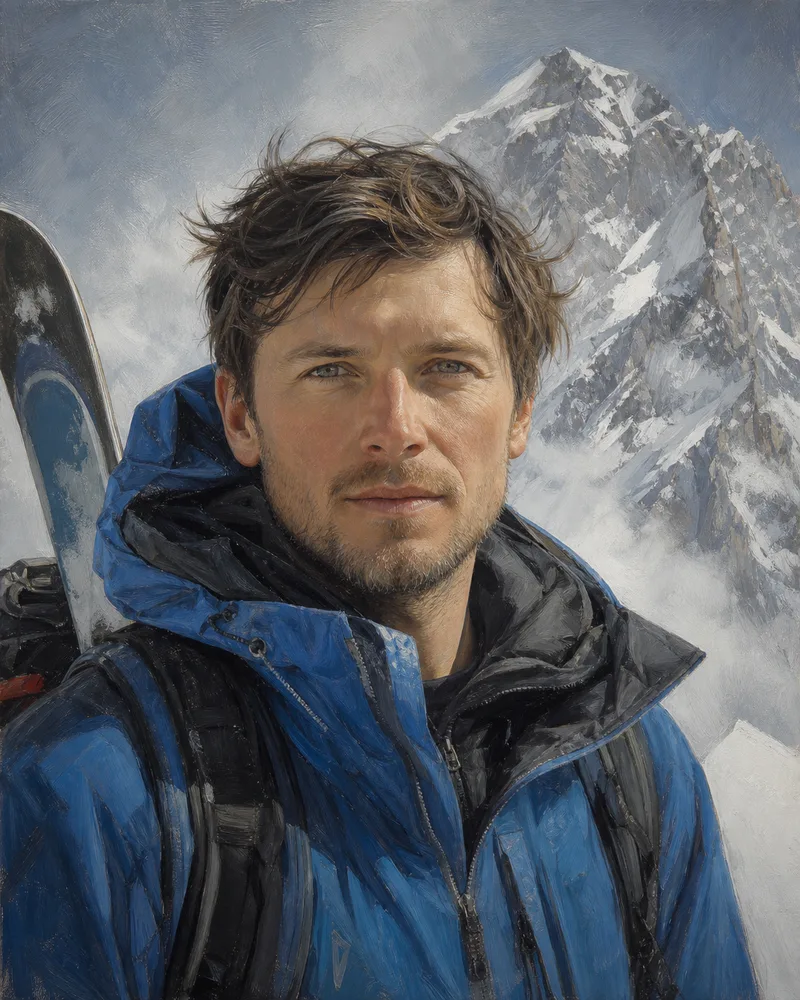
Andrzej Bargiel
In 2018 Bargiel was the first to make a complete ski descent from the summit of K2 to base camp, linking sections of different routes into one skiable line and using no supplementary oxygen on the way up. The team’s drones helped with reconnaissance and on one occasion delivered medicine, but they were no substitute for precision on steep ground. The project showed that high-altitude ski mountaineering is not a spectacular postscript to a summit but a separate discipline, with its own search for a line, its own snow conditions and its own price for a mistake.
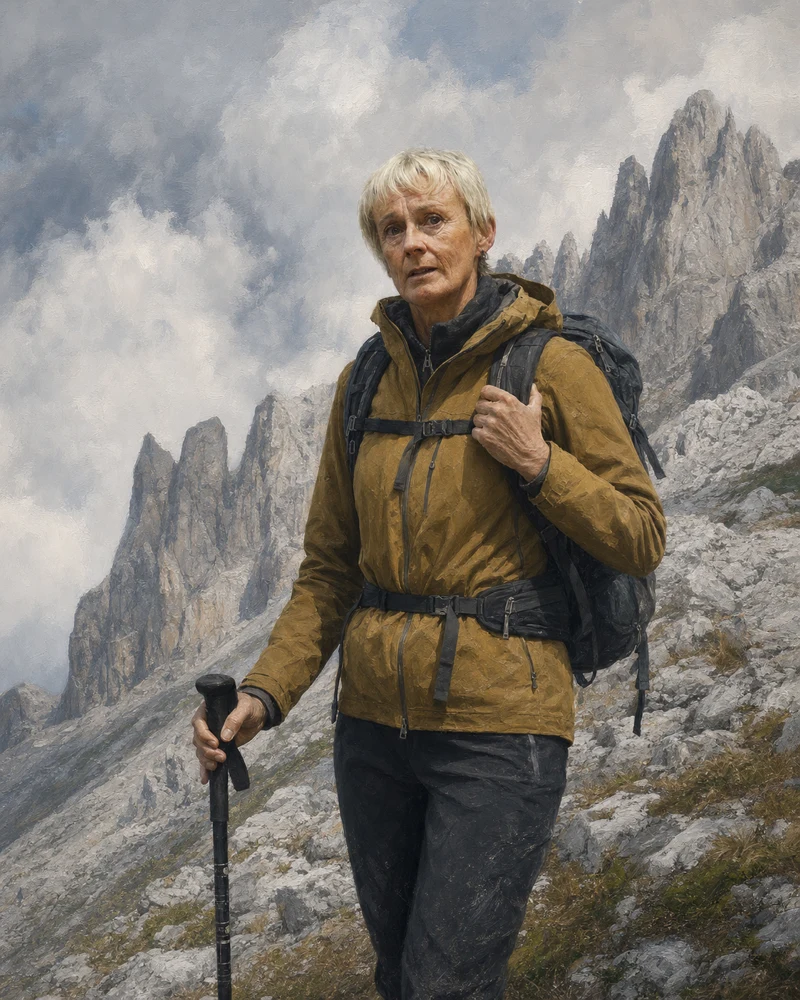
Nives Meroi
Meroi completed all fourteen eight-thousanders without supplementary oxygen and without high-altitude porters, working through the project with her husband and permanent partner Romano Benet. When Benet was found to have a serious illness, the race for the women’s record was stopped; after his treatment the pair went back to the mountains. Her set therefore matters not only for its clean style but for putting a partner ahead of a record – a principle that is easy to declare and hard to back up with an act.
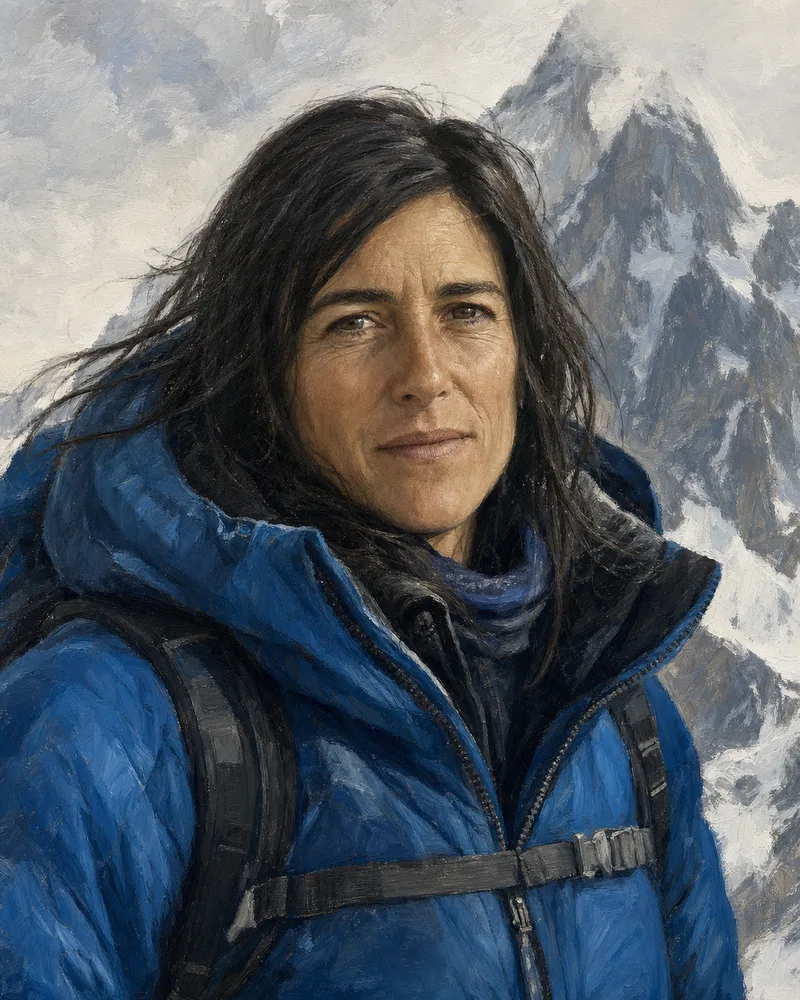
Edurne Pasaban
On 17 May 2010 Pasaban completed the classic set on Shishapangma and was recognised as the first woman to have climbed all fourteen eight-thousanders. The story of that record includes the checking of a rival’s disputed claim, which makes it a particularly good illustration of the value of an independent chronicle. Pasaban need not be set against Kaltenbrunner or Meroi: the first completed the set earlier, the other two built oxygen-free projects that differ in style.
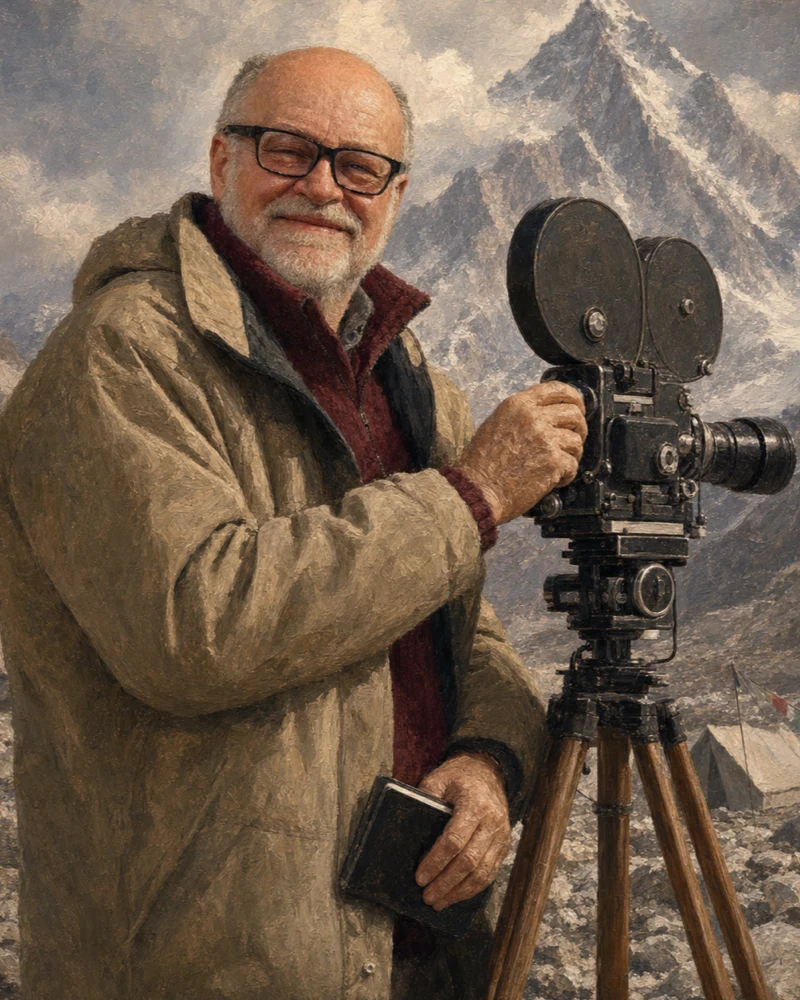
Kurt Diemberger
Kurt Diemberger entered history as a member of the first ascents of two eight-thousanders at once: Broad Peak in 1957 and Dhaulagiri in 1960. The Broad Peak team was just four mountaineers, working without high-altitude porters and without supplementary oxygen, and showing an early version of light expedition style. Diemberger later became a high-altitude cameraman and writer, and climbed Makalu, Everest, Gasherbrum II and K2. His life joins first ascents, exploration and the documenting of an age when there was still no ready-made infrastructure on the eight-thousanders.
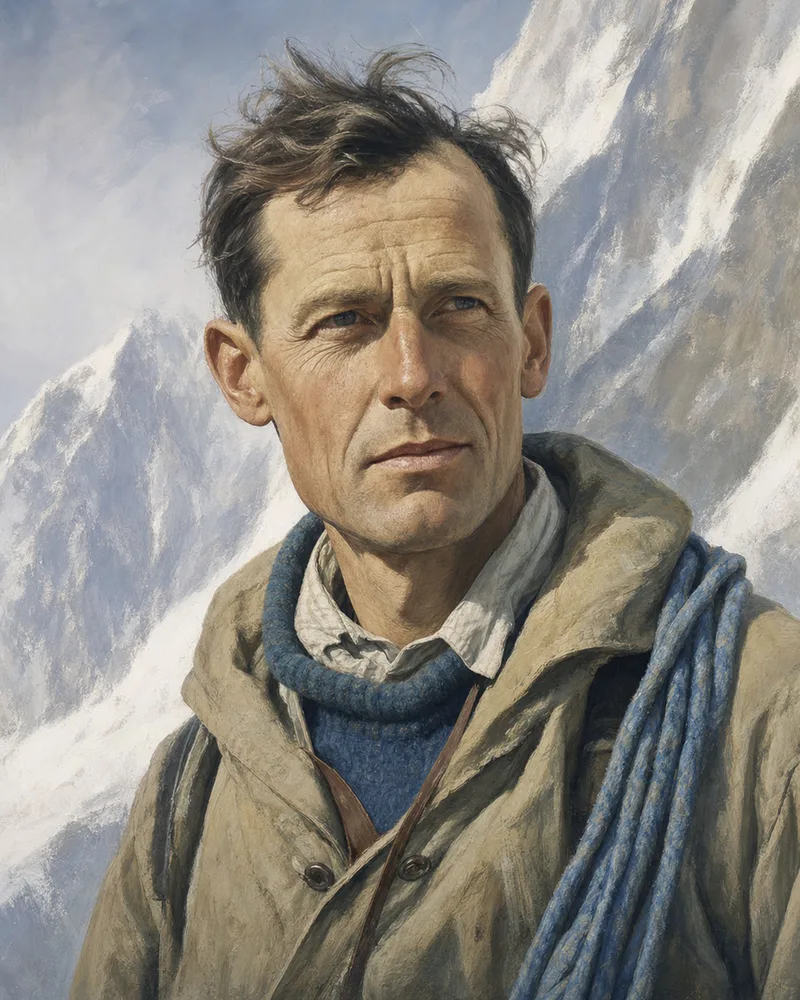
Eric Shipton
Shipton explored the Karakoram, the Himalaya and the mountains of Central Asia with small parties, setting them against the heavy expedition caravans. His reconnaissances of the Everest region and of the Gasherbrum valley helped the ascents that followed, though his own legacy cannot be reduced to preparing other people’s victories. He made the unknown, and the journey through a mountain range, a value in itself – an important reminder to an age in which success too often equals nothing but the point of a summit.
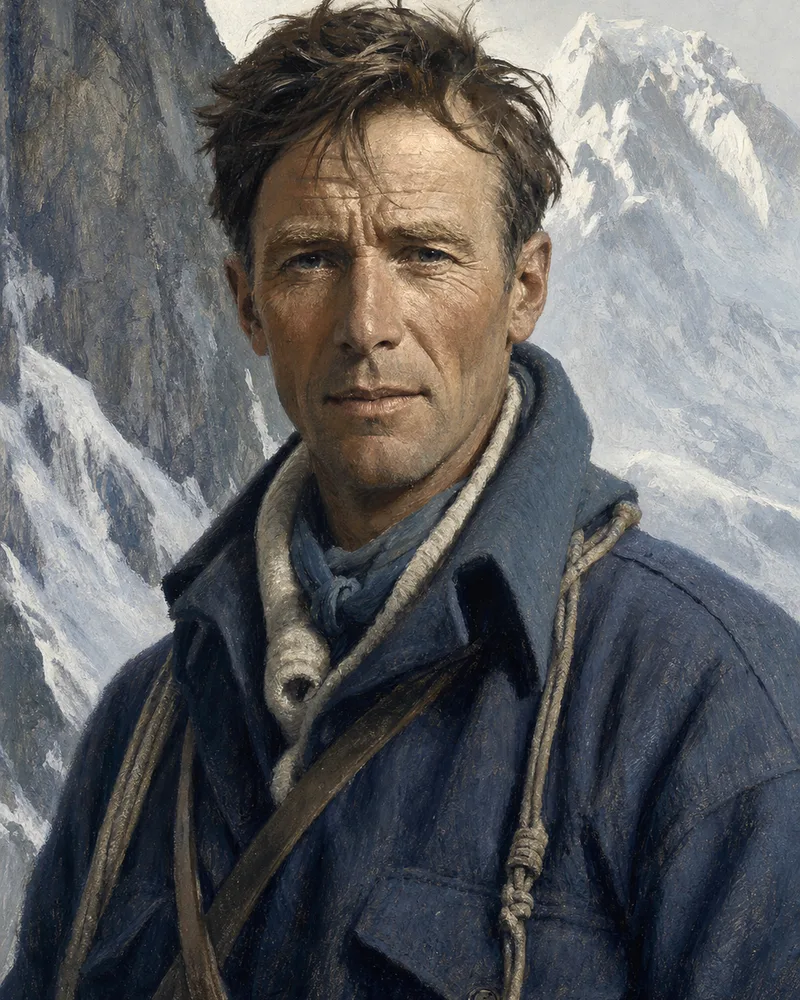
Bill Tilman
Tilman, with Shipton, became a symbol of light reconnaissance expeditions long before “alpine style” turned into a familiar term. He took part in the first ascent of Nanda Devi in 1936, explored parts of the Himalaya that were hard to reach, and later carried his expedition life on under sail. His approach proved a point: a small team can move more freely, decide faster and see in the mountains not a backdrop to a record but a place to explore.
John Roskelley
Roskelley took part in the first ascents of Dhaulagiri V, Uli Biaho and Gauri Shankar, climbed new routes on big peaks and became one of the leading American high-altitude climbers of the 1970s and 1980s. A career Piolet d’Or recognised exactly that quality in his projects: remoteness, technical difficulty and little dependence on large infrastructure. This is the record of a mountaineer the general public knows less well than the media record-holders, though the professional canon rates him very highly.
Jeff Lowe
Lowe was one of the people who turned ice and mixed faces into a modern technical discipline. His solo route Metanoia on the north face of the Eiger in 1991 stayed an almost mythical line for decades, while his development of equipment and method influenced thousands who came after him. A career award from the Piolets d’Or confirmed Lowe’s significance not as a collector of altitudes but as an innovator of movement, of tools and of the psychological work on a wall.
Ines Papert
Papert dominated ice-climbing competition and then carried that technical reserve onto remote walls: Kyzyl Asker, Likhu Chuli and hard mixed routes in a range of mountain systems. That transition is fundamental to the modern canon. A champion’s title shows controlled difficulty, but a big route also demands route-finding, weather, self-sufficiency and decisions taken on a rope. Papert proved she could work on both sides of that line.
David Lama
Lama came from competition climbing and at first drew sharp criticism for the way he prepared a free ascent of the Compressor Route on Cerro Torre. He changed his approach, went back, and in 2012 climbed the line free; later he made the first ascent of Lunag Ri by a solo route. Being able not only to climb but to answer ethical criticism made him a figure of the sport growing up. In 2019 Lama, Hansjörg Auer and Jess Roskelley died on Howse Peak.
Why fame and sporting greatness keep parting company
The media prefer a simple metric: first, fastest, most of all. A new route is hard to explain in a headline, because the reader has to be shown the ground, the state of the face, the way protection was arranged and the degree of uncertainty. Ten standard summits are easy to turn into a counter. So the public picture almost inevitably overrates the achievements that are convenient to count, and underrates the lines where the mere return of a small rope was itself remarkable.
Sponsorship budgets widen the gap. A big project gets a forecast, communications, logistics, a team of photographers and the ability to move quickly between regions. That can be an outstanding organisational achievement, but the money should not vanish from the description of the conditions. A mountaineer on a small budget often spends years on one route and has no media team, although the technical novelty of the work is greater.
The national myth simplifies as well. It is convenient to attach a winning story to one hero and to leave partners, porters and those who turned back to save someone else in the margins. That is how Herzog’s official book shaped the perception of Annapurna for decades; that is how the first Everest was reduced to an argument about whose foot was in front. Archive work gives achievements back to ropes and to teams.
Finally, a tragic death often adds to a reputation, but it should not automatically raise a sporting assessment. A mountaineer who dies deserves an accurate memory, not a romanticised mistake. Some disasters show objective danger and an outstanding attempt; others show a chain of decisions that the next generation should study and not repeat. Respect for a person is compatible with a critical reading of the tactics.
That is why a record-holder, an instructor, a rescuer, a first ascensionist and a rock climber stand side by side in this article. We are not trying to reduce them to a single currency. A strong canon explains the differences and leaves the reader free to decide what he counts as greatness: the maximum result, a clean style, an influence on others or loyalty to a partner.
Oxygen, fixed ropes and evidence: why the same summit does not mean the same result
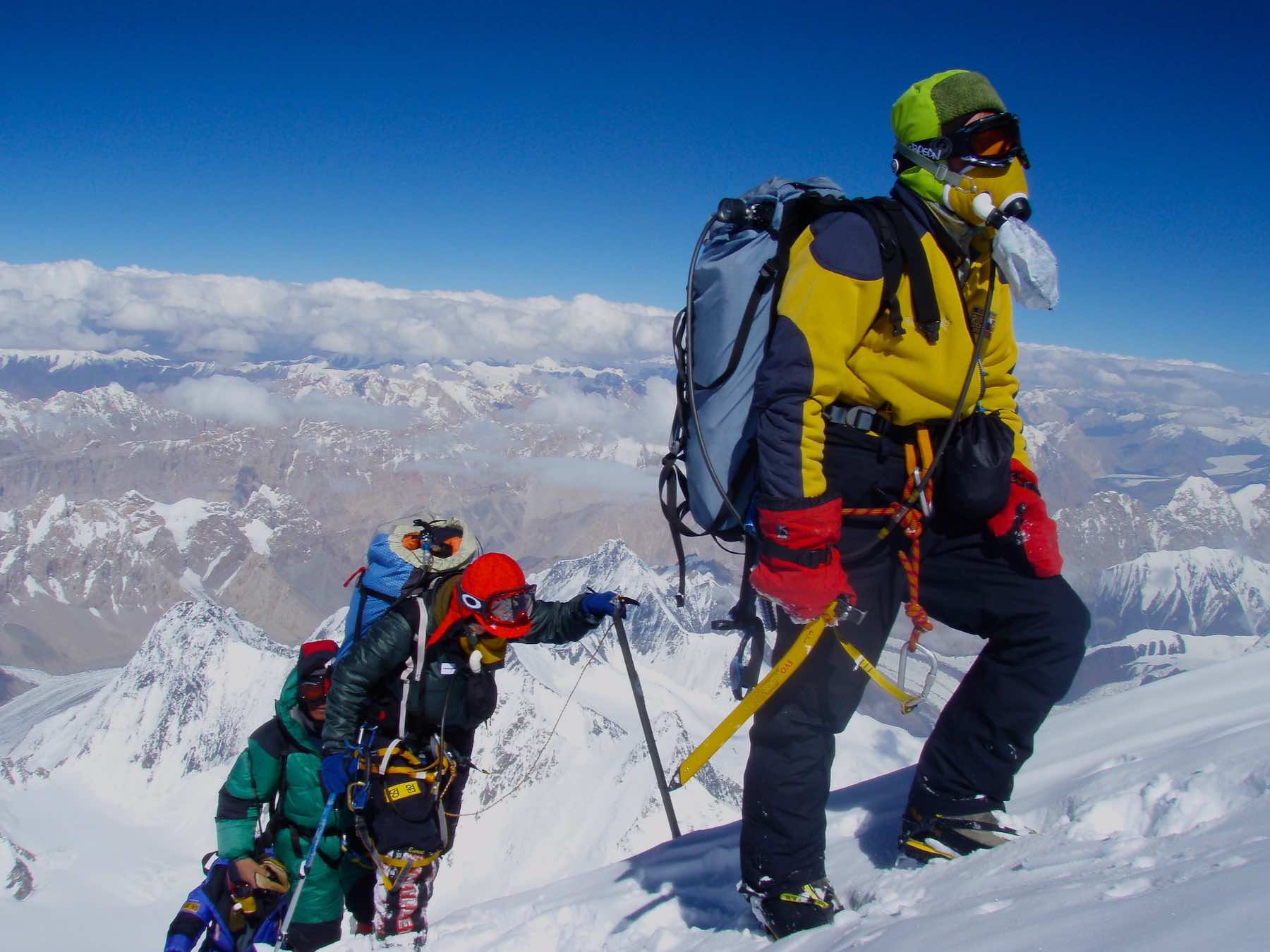
Supplementary oxygen is a legitimate and often sensible tool on a commercial expedition. It raises the margin of working capacity, helps hold on to warmth and removes part of the physiological load. But a sporting comparison is bound to state that it was used. The same goes for high-altitude porters, camps set up in advance, fixed ropes and the repetition of a known line.
An oxygen-free claim calls for evidence no less than the summit itself: a report from partners, photographs, a track log, times, the expedition’s data and independent verification wherever it is possible. The absence of a cylinder in a photograph does not prove a whole route. Nor, conversely, is doubt without specific data a refutation. The strongest criticism of modern record-chasing mountaineering is not an accusation but a transparent table of conditions.
Historical results are revised too. Archives reveal the part played by partners, the editing of official books and the contribution of local teams. So our formula “the greatest mountaineer” is always provisional: the facts can be checked, but the final judgement remains an editorial one.
Why there are 50 names here and not a top 100
Fifty biographies are already enough to show the main lines of the history while keeping an explanation attached to each person, rather than a surname and a single summit. A list of a hundred inside one article would inevitably become superficial or unwieldy. The next level is better built as a separate encyclopaedia: an index by country, era and discipline, from which the reader moves on to full biographies.
National schools exist in their own right. Poland created winter Himalayism; Italy and Slovenia, strong big-wall traditions; Britain, expedition leadership and an ethic of adventure; France, a school of guides and technical climbers; the USSR, a system of mass training and complex team routes; and Nepal, a professional high-altitude infrastructure and a new generation of its own leaders, covered in a separate article, “Great Mountaineers of Nepal”. Absence from the first fifty does not mean a lower class: it is a limit of the format, not a final verdict.
From history to a route of your own
History does not ask anyone to copy the most dangerous decisions. For most people the path starts with the “Seven Summits” programme, classical mountaineering training and a steady build-up of experience. If the goal lies above 8000 m, start by looking at how expeditions to the eight-thousanders are put together and how a summit differs from being ready to come back safely.
Short answers
Who counts as the greatest mountaineer in the world?
There is no single official answer. Reinhold Messner is most often named the foremost high-altitude mountaineer of the twentieth century; Walter Bonatti, the benchmark of style; Jerzy Kukuczka, the master of new and winter routes; Lynn Hill, the author of one of the most important technical breakthroughs on rock.
Who is the most famous mountaineer?
For a wide audience today that means Messner, Hillary, Tenzing, Mallory, Honnold and a few contemporary media figures. Fame measures reach, not sporting value, so a list of the famous and a list of the strongest will never coincide completely.
Why are there rock climbers on the list?
Modern mountaineering grew out of the meeting of rock, ice, altitude and expedition self-sufficiency. Lynn Hill and Alex Honnold are not Himalayan record-holders, but they changed the technical and psychological ceiling of climbing on big walls.
The historical facts and the links that change are rechecked regularly. This material is not an official ranking by a federation or a prize.