Climbing Elbrus in 2027 can be done by the classic route from the south, by the more self-sufficient northern slope, by taking in both summits, or by crossing the mountain and coming out on the other side. This page gathers only the Mountain Guide programmes that are currently running and the confirmed dates from the calendar. If a date, a price or the availability of a place changes, it is the information on the page for the particular trip that counts.
Elbrus in 2027 in brief
- The highest point on these routes is the West Summit of Elbrus, 5642 m
- The main season for the regular southern programmes runs from late April to the end of September
- The main season for the northern route is the summer months
- For a first climb we recommend the nine-day programme from the south
- The northern, western and eastern routes require previous experience at altitude; the exact requirements are on the programme pages
- The prices below are shown on the product cards and are updated along with the programmes themselves
Which Elbrus programme to choose
A first climb: Elbrus from the south in 9 days
The nine-day programme from the south is Mountain Guide’s main option for someone with no previous mountaineering experience. The first days are spent in the valley, then the group moves up to the high mountain hut, does its acclimatisation outings, rests before the summit and keeps a reserve within the programme. The infrastructure on the south side makes the logistics easier, but it does not remove the altitude, the cold, the wind or the length of summit day.
If you only have a week: Elbrus from the south in 7 days
The seven-day programme from the south contains the same key elements — acclimatisation, a stay in the hut, the preparation and a spare day — but the schedule is tighter. A difference of two days looks small only on a calendar. At altitude it means two extra days of adaptation and of watching how someone is doing, so a beginner should choose nine days where possible.
Both summits, or crossing Elbrus
The two-summits programme takes in the East and West Summits and returns to the southern side. The traverse from south to north means climbing one summit and descending the opposite slope. “The Cross” joins both summits with a finish on the other side. These are not attractive names for the same trip: what changes is the length of the work at altitude, where you finish, what is asked of your preparation, and the logistics of your luggage.
The northern route
A climb of Elbrus from the north runs without cable cars and without the developed infrastructure of the southern slope. The programme takes 10 days and requires previous experience above 5000 m. For 2027, three summer departures are published. From the northern side, the traverse from north to south and other extended formats are also available.
The oxygen programme
Elbrus from the south with oxygen is a separate short product with its own logic, requirements and organisation. It cannot be treated as a shortened substitute for the ordinary acclimatisation programme. Before booking, discuss your previous experience at altitude, your health and the purpose of the trip with a manager.
The main Elbrus programmes for 2027
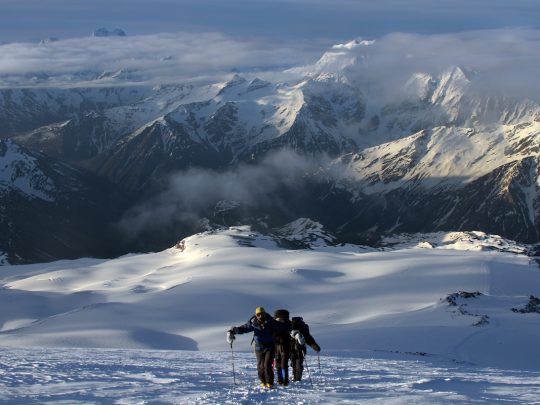
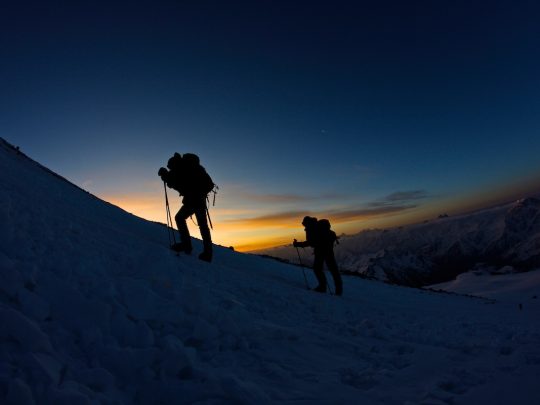
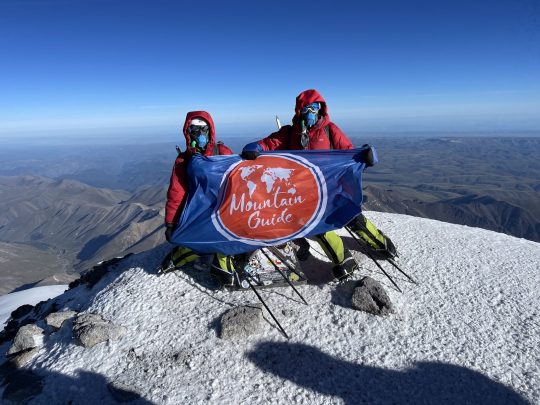
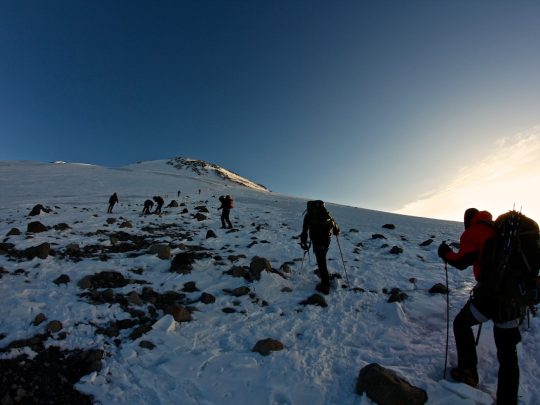
What the price covers and what is paid for separately
The price on the card is the cost of the programme itself, not a promise that the whole trip will come to exactly that sum. Depending on the route you may separately need flights, personal equipment or hire, insurance, the snowcat, single occupancy, a private transfer if you miss the group one, and your own spending money. The full logic of the budget is set out on the page “What a climb of Elbrus costs”.
When comparing programmes, look first at the duration and the acclimatisation, then at what services are included, and only after that at the price on the card. The shortest programme does not always give the lowest total cost: a change of route, an extra night, the snowcat or private logistics can turn out to cost more than two days built in from the start.
How conditions change month by month
Late April and May give you an almost wintry Elbrus without attempting the calendar winter. There is usually more snow on the slope, temperatures are lower, and more is asked of your warm clothing and your protection from the wind. The southern infrastructure already allows regular programmes to run, but the weather cannot be counted as summer simply because the valley has turned green.
June is the start of the main summer season. Snow remains on parts of the route, the day is long, and there are more regular dates. The northern programmes begin in summer: the state of the approach roads, the snow and the glaciers has to allow a group to complete a self-sufficient route.
July and August are the busiest part of the calendar. That is no guarantee of cloudless weather: frost, strong wind, snow and zero visibility are all possible on the summit in any summer month. The advantage of the season is a better chance of a suitable window, not the turning of Elbrus into a warm trek.
September often brings clear air and fewer people, but it gets colder. The cable car can be closed for scheduled maintenance. If it cannot be used, the guide decides the logistics as the situation requires; a vehicle is hired if necessary, and participants pay the difference over the price of a cable car ticket.
Three mistakes before a first Elbrus
The first: worrying in advance instead of preparing. Anxiety before a trip rarely helps if you have not checked your boots, started walking training or worked through the budget. It is more useful to turn the unknown into a list of actions: choose the programme, do the benchmark training sessions, gather the documents and ask your manager specific questions.
The second: rushing. On Elbrus a fast pace at the start of the day proves nothing about your strength. It uses more energy, makes it harder to monitor how you feel and often ends in a sharp slowdown higher up. The guide sets the pace; your job is to walk steadily, drink regularly and report symptoms, not to race the group next to you.
The third: overestimating yourself once you are on the mountain. A good marathon, a successful trek or a past climb gives you no immunity to altitude. A decision to turn back may be unwelcome, but it does not devalue your preparation or your trip. Hiding how you feel for the sake of a summit photograph is far more dangerous.
What to know before you buy your tickets
- Choose the programme and get your place confirmed first, then buy the tickets
- Allow time to collect your luggage and leave the terminal before the group transfer
- Check that your insurance covers mountaineering and the maximum altitude of the route
- Reserve any equipment you are missing in advance from Rock’N’Rent
- Start your preparation before the trip, not after the first acclimatisation day out
- Do not hide from the guide that you are feeling worse, and do not try to beat the altitude by force of character
Preparing for Elbrus 2027
Elbrus does not require a sporting qualification, but it does require the ability to walk on broken ground for several days in a row, to recover after effort and to hold a steady pace. Good condition reduces fatigue but does not guarantee fast acclimatisation. Detailed plans for a year, six months and 8–12 weeks are published in the section on preparing for Elbrus, and the benchmark sessions are in a separate article on physical training.
Can the summit be guaranteed?
No. The weather, the state of the route and how your body reacts to altitude do not answer to advertising copy. The guide can change the start time, or turn back one person or the whole group, if going on becomes unsafe. A spare day increases the number of options available, but it does not turn the summit into a paid-for service.
Mountain Guide has worked on Elbrus since 2001. Before booking you can have a free written consultation with Sergey Baranov: send your experience, your dates and your objective, and read the answer whenever it suits you, with no call required.