- Guides
- B2B
-
Climbs
-
Climb Elbrus
- Elbrus individually
- Elbrus from the South, 9 days
- Elbrus from the South, 7 days
- Elbrus from the South in 1 day
- Elbrus from the North
- Elbrus Two Summits
- Elbrus Traverse from South to North, 9 Days
- Elbrus Traverse from North to South, 10 Days
- Elbrus "Cross" from South
- Elbrus "Cross" from North
- Kazbek+Elbrus
- Elbrus from the West
- Elbrus by Private Helicopter, 3 Days
- Elbrus Region Holiday and Trekking, 9 Days
- Elbrus Region Holiday, 7 Days
- Elbrus Dating
- Climb Elbrus from the South, 9 Days with Sergey Baranov
- Under 5000 m
- 5000+ meters
- 6000+ meters
- 7000+ meters
- 8000+ meters
-
Climb Elbrus
-
Trekking
-
Trekking in Nepal: routes to the eight-thousanders
- K2 base camp
- Everest base camp
- Everest base camp via Gokyo
- Everest base camp in a week
- Annapurna Circuit and Tilicho Lake Trek
- Manaslu Circuit Trek
- Kanchenjunga Circuit Trek (XXL)
- Kanchenjunga North Base Camp Trek (Short)
- Kanchenjunga from India: the Goecha La Trek in Sikkim
- Makalu Base Camp Trek
- Annapurna Base Camp Trek
- Trekking in South America
- Asia
- Trekking in Africa
-
Trekking in Russia
- Elbrus Region Holiday and Trekking, 9 Days
- Elbrus Region Holiday, 7 Days
- Oshten + Kardyvach — 9-Day Western Caucasus Trek
- Lake Kardyvach — 5-Day Base-Camp Trek
- Route 30: Through the Mountains to the Sea, with Oshten — 4 Days
- Trekking in Arkhyz — 7 Days over the Ayulyu Pass
- Gvandra Trek — 7 Days to the Ullu-Kyol Lakes
- Trekking in Dombai — 7 Days with the Murudzhu Lakes
- Europe
-
Trekking in Nepal: routes to the eight-thousanders
-
Adventure expeditions
-
Trekking in Africa
- Tour to Morocco for New Year
- Morocco: Toubkal and the mysteries of the Sahara
- Eritrea: the Dahlak Archipelago and the Rashaida Nomads
- Rwanda: Mountain Gorillas and the Bisoke Volcano
- Ethiopia: Otherworldly Landscapes and the Peoples of the Omo Valley
- Tour to Uganda: Queen Elizabeth National Park and Mountain Gorillas
- Tanzania Safari: Serengeti, Ngorongoro and Tarangire
- Safari Uganda
- Zimbabwe and South Africa: Victoria Falls, Cape Town and the Cape of Good Hope
- Namibia: Etosha National Park and the Himba
- Kenya Safari: the African Big Five
- Tour to Botswana: Okavango Delta and Chobe National Park
- Trekking in South America
- Asia
-
Trekking in Africa
- Ski touring and ski mountaineering: chasing freedom in the mountains
- VIP tours
- Useful
- About
Ski Touring on Damavand, 7 Days
- Height (m)
- 5610
- Duration
- 7 days
- Difficulty
- Low
- Continent
- Asia
- Children
- Ages 12+
- Accommodation
- No nights in tents
1500 $
Why to go with us?
Temporarily unavailable
Private groups only. There are currently no open departures and no fixed cost. Whether the ski tour is possible, and its timing, team composition and cost, are confirmed individually after the current situation, the snow, the logistics and the availability of the local team have been checked.
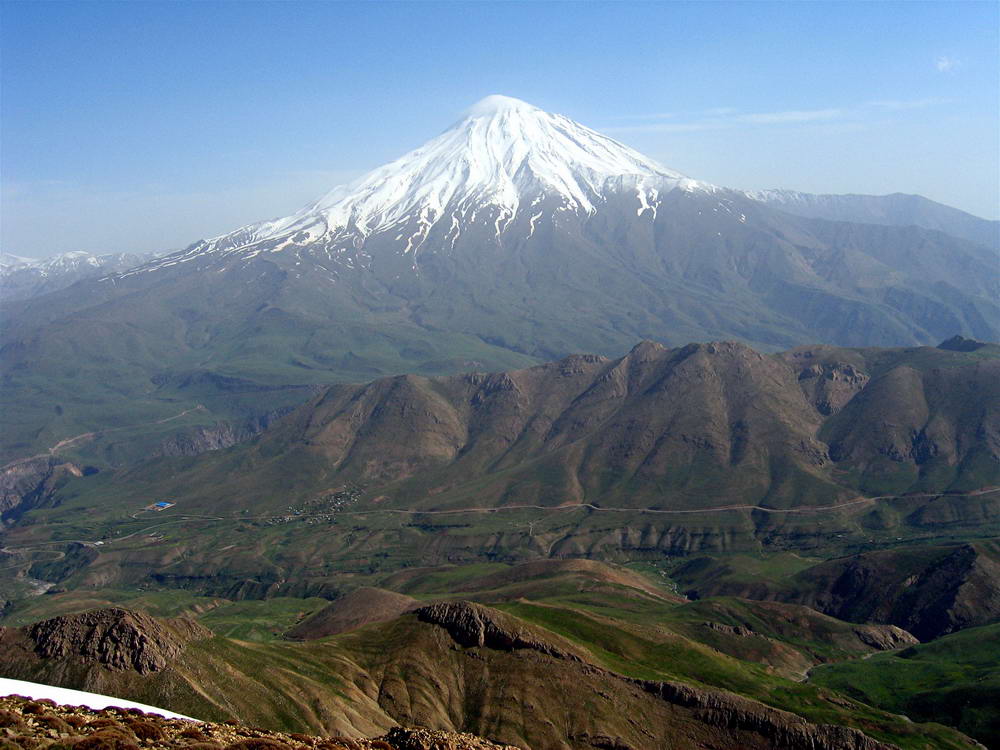
The 7-day ski tour on Damavand is a high-altitude trip on the southern route to the 5610 m summit. The group travels by way of Polur and the high-mountain Bargah Sevom hut, climbs without cable cars and uses skis for the ascent and the descent wherever the snow, the ice and the state of the route allow.
The trip suits participants with previous ski-touring experience, a confident and controlled descent off prepared pistes and sufficient altitude preparation. You need to be able to use skins and ski crampons, to move in mountaineering crampons and to keep working through a long day at altitude. This is not a trip for beginner skiers and not a ski-touring course from scratch.
Damavand is distinguished by its volcanic terrain, its views of the Alborz range and the sulphurous fumes possible on the upper part of the route. The seven-day plan includes initial acclimatisation in Polur, the climb to Bargah Sevom, a separate training outing and a reserve day. That order helps you prepare for the summit, but it does not remove the effect of altitude, wind and rapidly changing snow.
Mountain Guide arranges the lead guide, the high-altitude support, the transfers, the accommodation, the meals and the permits set out in the itinerary. A full ascent and an unbroken ski descent from the summit are not guaranteed: the start time, the line of travel, the use of skis or crampons and whether the attempt continues are all decided by the guide according to the actual conditions and the state of the group.
Important
- The trip is built for participants with ski-touring experience, a confident controlled off-piste descent and altitude preparation
- An avalanche transceiver, probe and shovel are compulsory for every participant; one set for the group is not acceptable
- A full ascent and an unbroken ski descent from the summit are not guaranteed; the way the group moves is decided by the guide according to actual conditions
- Mountain Guide does not buy air tickets and does not arrange visas; entry requirements must be checked against your nationality before non-refundable tickets are bought
About the Damavand ski tour
The Damavand ski tour is a seven-day high-altitude trip on the southern route, by way of Polur, the base point of the route and the high-mountain Bargah Sevom hut. The maximum altitude of the trip is 5610 m. The ascent is made without cable cars, and skis are used wherever the snow, the ice, the wind and the state of the slope allow.
Damavand is a dormant stratovolcano and the highest point of Iran. Sulphurous fumes and strong wind are possible on the upper part of the route. The altitude, the long summit day and the changeable state of the snow all require previous ski-touring experience, good endurance and readiness to change from skis to mountaineering crampons.
The acclimatisation logic is built up in sequence: a night in Polur at 2270 m, the climb to Bargah Sevom at 4250 m and a separate acclimatisation outing above the hut. The summit day and a reserve day follow. This plan softens the gain in altitude, but it does not remove an individual reaction to 5000 m and above.
This is not a trip for beginner skiers. Participants must be able to control their skis confidently off prepared pistes, use skins and ski crampons, move in mountaineering crampons and keep working through a long day at altitude.
A full ascent and an unbroken ski descent from the summit are not guaranteed. On hard firn, on ice, on sections without snow or in strong wind, the guide may leave the skis lower down, move the group onto crampons, change the line of travel or end the attempt.
Damavand ski tour itinerary, 7 days
Day 1. Arrival in Tehran. A team representative meets participants at the airport. After the transfer the group checks into the hotel and rests after the journey. In the evening they meet the guide, go over the southern route and have their ski-touring, avalanche and mountaineering equipment checked. Any incompatibility between skis, bindings, skins, ski crampons, boots and mountaineering crampons must be found before the group leaves for the mountains. Night in a hotel.
Day 2. Transfer to Polur, 2270 m. The group travels from Tehran to the Polur hut. After settling into rooms with bunk beds, the day is used for unhurried acclimatisation, a walk and the final preparation of personal loads. The guide checks the avalanche transceivers, skis, bindings, skins and ski crampons again and explains how the next altitude stage will work. Night in Polur.
Day 3. Climb to Bargah Sevom, 4250 m. In the morning the group drives to the start of the southern route, as high as the road and the snow allow. The climb to Bargah Sevom then begins on foot. Whether the group moves on skis or walks is decided by the guide according to the actual snow cover. The stage takes roughly 4 to 6 hours and is the main gain in altitude before the acclimatisation day. Night in the Bargah Sevom hut.
Day 4. Acclimatisation and training outing. The group climbs above the hut without the aim of reaching the summit. The outing helps assess how the body responds to altitude and allows travel on skins, the use of ski crampons and the changeover to mountaineering crampons to be checked. The high point and the form of the descent are set by the guide. After returning, rest, equipment preparation and an early night. Night in Bargah Sevom.
Day 5. Summit attempt on Damavand, 5610 m. The start is early in the morning. The climb takes roughly 5 to 7 hours and is made on skis or in mountaineering crampons depending on the snow, the ice, the wind and the state of the group. Sulphurous fumes are possible on the upper part. The decision to continue the ascent, the turnaround point and the place where the ski descent begins are all taken by the guide. After the attempt the group returns to Bargah Sevom. Night in the hut.
Day 6. Reserve day or return to Tehran. If conditions did not allow a summit attempt the day before, the day may be used for a second outing at the guide’s decision. If the ascent took place, the group descends to the start of the route, travels by way of Polur to Tehran and checks into the hotel. The shape of the day depends on when the mountain part actually ends. Night in a hotel if the group has returned to the city.
Day 7. End of the trip. After breakfast a transfer to the airport is arranged. The departure time is agreed with the international flights and with the group’s actual time of return from the mountain.
What's included
- Mountain Guide’s guides: a lead guide throughout the trip and additional assistant guides on summit day
- All transfers according to the itinerary
- Accommodation according to the itinerary in a city hotel and in mountain huts
- Permits and climbing permissions
- Meals on the mountain part of the trip and breakfasts in the city
- Group equipment and a group first-aid kit
What's not included
- International and domestic flights
- The visa and other entry documents where these are required by the participant’s nationality
- Personal ski-touring, avalanche and mountaineering equipment
- Medical insurance and the costs of search and rescue, transport and evacuation
- Lunches and dinners in the city
- Tips
- Drinks and personal expenses
- Costs arising from change to the itinerary beyond the included scope of services
The Damavand ski tour for private groups
The ski tour runs only for a private group of adults, formed in advance, whose ski touring and off-piste experience has been confirmed. There is currently no open-group departures, no fixed dates and no published price.
Before confirming the trip we check afresh the current situation, the entry requirements, the permits, whether the mountain huts are open, the snow conditions, the compatibility of the equipment and the availability of the local team. The dates and the costing are worked out for the particular group.
Documents required for the Damavand ski tour
To join the Damavand ski tour you need to prepare:
- A passport valid for the whole of the trip
- Tickets to the start of the trip and back
- A visa and any other entry documents required for your nationality
- Medical insurance valid in Iran and covering ski touring, off-piste skiing, mountaineering to at least 6000 m, search and rescue, transport and medical evacuation
Check the entry requirements before you buy non-refundable tickets. We recommend keeping electronic copies of your passport, visa, insurance and tickets on your phone and in a cloud service, separately from the originals.
Weather and seasons for the Damavand ski tour
In practice the season for high-altitude ski touring on Damavand runs from the second half of winter to the start of summer, but the exact window depends on the amount of snow, the wind and access to the southern route. A date in the calendar guarantees nothing about continuous snow cover from the lower camps to the summit.
In winter, conditions are a great deal harsher: strong wind, low temperatures, blizzards, avalanche danger and the closure of the high-altitude hut are all possible. In spring the approach is usually gentler, though the snow changes quickly during the day and hard névé and ice can persist on the upper part of the route.
A complete ascent and descent on skis cannot be guaranteed. Your guide may change the start time or the line, leave the skis lower down, switch the group to mountaineering crampons or call off the attempt. The decision is taken according to the actual weather, the state of the snow, the avalanche conditions and the participants’ readiness.
Accommodation and meals on the Damavand ski tour
The trip combines a city hotel in Tehran with two mountain huts on Damavand’s southern route. At Polour the group stays in rooms with bunk beds. At 4250 m the Bargah-e Sevom hut is used. The standard itinerary involves no nights in tents.
Under the terms of the trip, breakfasts are included in the city and meals are provided for the group on the mountain section. Lunches and dinners in Tehran are paid separately. The exact menus, and whether a special diet is possible, depend on what food is available and on the conditions at the huts.
Food allergies, medical restrictions and a vegetarian or other special diet must be reported before booking. Whether a separate menu is possible is confirmed in advance.
Day-to-day conditions on the Damavand ski tour
The hotel in Tehran has the usual facilities. Polour has beds, a kitchen, hot water and a shower. It is a good place to make a final check of your equipment and get it ready before going up to altitude.
At Bargah-e Sevom conditions are more basic: accommodation is shared, personal space is scarce, and water, electricity, device charging, phone coverage and the chance to dry things all depend on how the hut is actually running and on the weather. Do not count on continuous internet.
We recommend bringing a power bank, spare batteries for your head torch and waterproof packing for documents and electronics. Ski touring equipment should be stowed compactly, and before every outing you should check that your skis, bindings, skins, ski crampons, boots and mountaineering crampons are compatible.
Insurance
Back to topEquipment and useful extras for ski touring on Damavand
Download PDFA high-altitude ski tour calls for a full set of ski touring, avalanche and mountaineering equipment. Check that your skis, bindings, skins, ski crampons, boots and mountaineering crampons are all compatible before you fly.
Ski-touring and avalanche kit
- Ski-touring skis with bindings that have a walk mode
- Skins, trimmed to your own skis
- Ski crampons compatible with your bindings
- Touring boots compatible with your bindings and with mountaineering crampons
- Adjustable ski poles with winter baskets
- Avalanche transceiver
- Avalanche probe
- Avalanche shovel
- Helmet
- A 30-50 litre rucksack with a ski carry system
Climbing equipment
- Mountaineering crampons compatible with ski-touring boots
- Classic ice axe
- Climbing harness
- Three screwgate karabiners
- Two prusik loops, or accessory cord, as your guide advises
- Cow’s-tail lanyard
- Head torch and a spare set of batteries
Clothing and footwear
- Base layer, top and bottoms
- Warm mid layer
- Softshell jacket and trousers for walking
- Waterproof shell jacket with a hood
- Waterproof shell trousers that can be pulled on over your boots
- Warm down or synthetic jacket with a hood
- Thin gloves for the ascent
- Warm ski gloves
- High-altitude mittens
- Warm hat and a buff or balaclava
- Warm ski-touring socks
- Light footwear for the city and for Polour
Personal items
- A sleeping bag with a comfort rating of -10 °C or lower
- Insulated sleeping mat
- Category 3-4 mountain sunglasses
- Ski goggles for wind and poor visibility
- Vacuum flask, 1 litre, without a push-button lid
- SPF 30-50 sun cream and lip protection with an SPF
- Personal first-aid kit and any medication you take
- Power bank, and waterproof packing for documents and electronics
You may also like
-
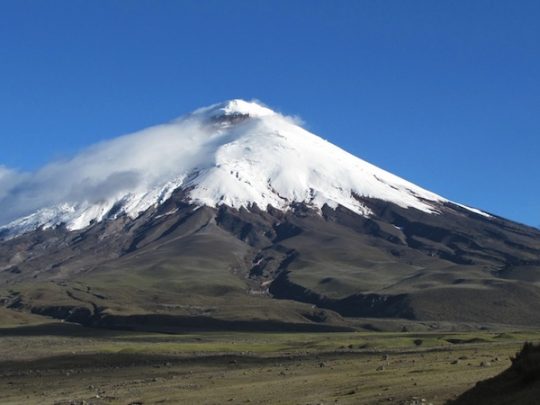 3,900 $
Climb Chimborazo and Cotopaxi — 14-Day Ecuador Expedition
- Height (m)
- 5897, 6384
- Duration
- 11 days
- Difficulty
- Moderate
- Continent
- South America
- Children
- Ages 14+
- Accommodation
- Hotels only
-
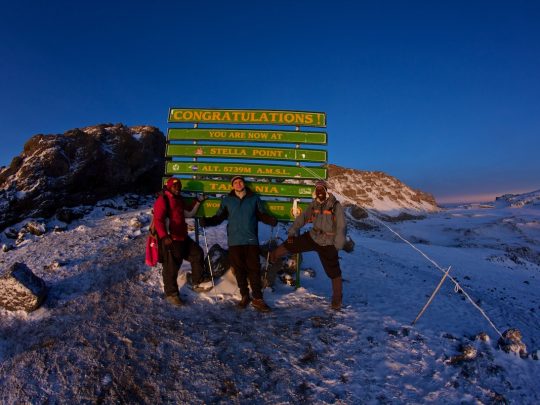 3,136 $
Climb Kilimanjaro: the Marangu Route
-
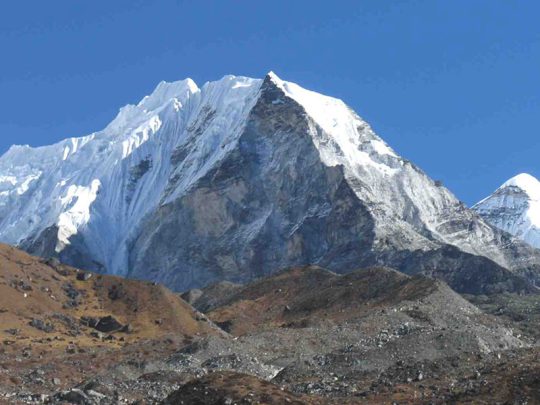 3,129 $
Island Peak Climb — 18-Day Expedition
- Height (m)
- 6165
- Duration
- 18 days
- Difficulty
- Moderate
- Continent
- Asia
- Children
- Not suitable for children
- Accommodation
- Some nights in tents
-
 6,000 $
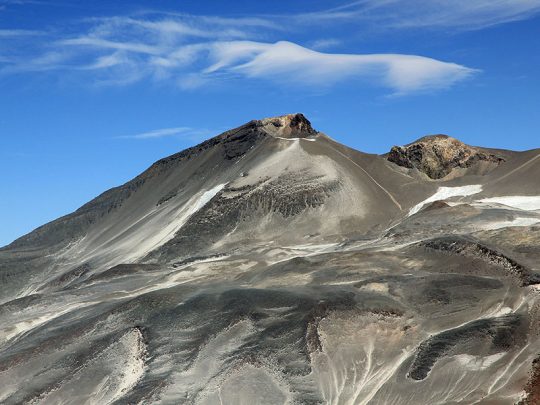
Ojos del Salado Climb — 15-Day Expedition
- Height (m)
- 6893
- Duration
- 15 days
- Difficulty
- Moderate
- Continent
- South America
- Children
- Ages 14+
- Accommodation
- Tented accommodation
- suitable-for-beginners
- No