- Guides
- B2B
-
Climbs
-
Climb Elbrus
- Elbrus individually
- Elbrus from the South, 9 days
- Elbrus from the South, 7 days
- Elbrus from the South in 1 day
- Elbrus from the North
- Elbrus Two Summits
- Elbrus Traverse from South to North, 9 Days
- Elbrus Traverse from North to South, 10 Days
- Elbrus "Cross" from South
- Elbrus "Cross" from North
- Kazbek+Elbrus
- Elbrus from the West
- Elbrus by helicopter
- Elbrus Region Holiday and Trekking, 9 Days
- Elbrus Region Holiday, 7 Days
- Tinder Tour: Climbing Mount Elbrus
- Climb Elbrus from the South, 9 Days with Sergey Baranov
- Under 5000 m
- 5000+ meters
- 6000+ meters
- 7000+ meters
- 8000+ meters
-
Climb Elbrus
-
Trekking
-
See 8000m
- K2 base camp
- Everest base camp
- Everest base camp via Gokyo
- Everest base camp in a week
- Annapurna Circuit and Tilicho Lake Trek
- Manaslu Circuit Trek
- Kanchenjunga Circuit Trek (XXL)
- Kanchenjunga North Base Camp Trek (Short)
- Kanchenjunga from India: the Goecha La Trek in Sikkim
- Trekking to Makalu Base Camp
- Trekking to Annapurna BC
- South America
- Asia
- Africa
-
Russia
- Elbrus Region Holiday and Trekking, 9 Days
- Elbrus Region Holiday, 7 Days
- Trekking Oshten+ Kardyvach
- Lake Kardyvach — 5-Day Base-Camp Trek
- Route 30: Through the Mountains to the Sea, with Oshten — 4 Days
- Trekking in Arkhyz — 7 Days over the Ayulyu Pass
- Gvandra Trek — 7 Days to the Ullu-Kyol Lakes
- Trekking in Dombai — 7 Days with the Murudzhu Lakes
- Europe
-
See 8000m
-
Adventures
-
Africa
- Tour to Morocco for New Year
- Morocco: Toubkal and the mysteries of the Sahara
- Tour to Eritrea: Dahlak Archipelago and Rashaida Nomads
- Tour to Rwanda: Mountain Gorillas and Mount Bisoke
- Ethiopia
- Tour to Uganda: Queen Elizabeth National Park and Mountain Gorillas
- Tanzania Safari: Serengeti, Ngorongoro and Tarangire
- Safari Uganda
- Tour to Zimbabwe and South Africa: Victoria Falls, Cape Town, and Cape of Good Hope
- Namibia
- Safari Kenya
- Tour to Botswana: Okavango Delta and Chobe National Park
- South America
- Asia
-
Africa
- Ski-touring
- VIP
- Useful
- About
Climb Mount Giluwe and Mount Wilhelm, 14 Days
- Height (m)
- 4367
- Duration
- 14 days
- Difficulty
- Low
- Continent
- Australia
- Children
- From 8 years old
- Accommodation
- There are tents
4400 $
Why to go with us?
Temporarily unavailable
Climbing Mount Giluwe and Mount Wilhelm is a 14-day expedition through the highland districts of Papua New Guinea. In a single trip participants climb the highest volcano in Oceania, one of the Seven Volcanoes, and the highest point of the country.
The route crosses tropical mountain forest, wet alpine meadows, a boggy volcanic plateau and rocky high ground. Two different summits, a separate acclimatisation outing and a reserve day make this a full expedition rather than a short trip to a single mountain.
- Ascent of Mount Giluwe, 4367 m – the highest volcano in Oceania
- Ascent of Mount Wilhelm, 4509 m – the highest point of Papua New Guinea
- Two summits and three consecutive altitude stages in one trip
- An acclimatisation outing on Mount Hagen before the main ascents
- Treks through tropical forest, wet highland meadows and volcanic landscapes
- An expedition leader, local guides and porters
- Two nights under canvas on the mountain part of the route
- A reserve day in case of unfavourable weather or a change in the condition of the route
Difficult technical mountaineering experience is not required, but the programme cannot be treated as easy trekking. Participants face days of 7 to 9 hours on wet and uneven tracks, early summit starts, altitudes above 4000 m and simple conditions in tented camps.
The programme suits physically prepared travellers with experience of long days on foot. Beginners should start preparing for a high-altitude climb well in advance, check their state of health and be ready to follow the decisions of the group leader.
Local guides and porters work on the routes in Papua New Guinea. The composition of the accompanying team and the working language are confirmed before booking.
Important
- The make-up of the accompanying team and whether domestic flights are included are confirmed before booking
- Mountain Guide does not sell international air tickets and does not arrange visas, and therefore accepts no responsibility for circumstances connected with flights and border crossings
About the Mount Giluwe and Mount Wilhelm expedition
Mount Giluwe stands in the Southern Highlands of Papua New Guinea. Its height is 4367 m. It is the second highest mountain in the country, the highest volcano in Oceania and one of the seven summits of the international Seven Volcanoes project.
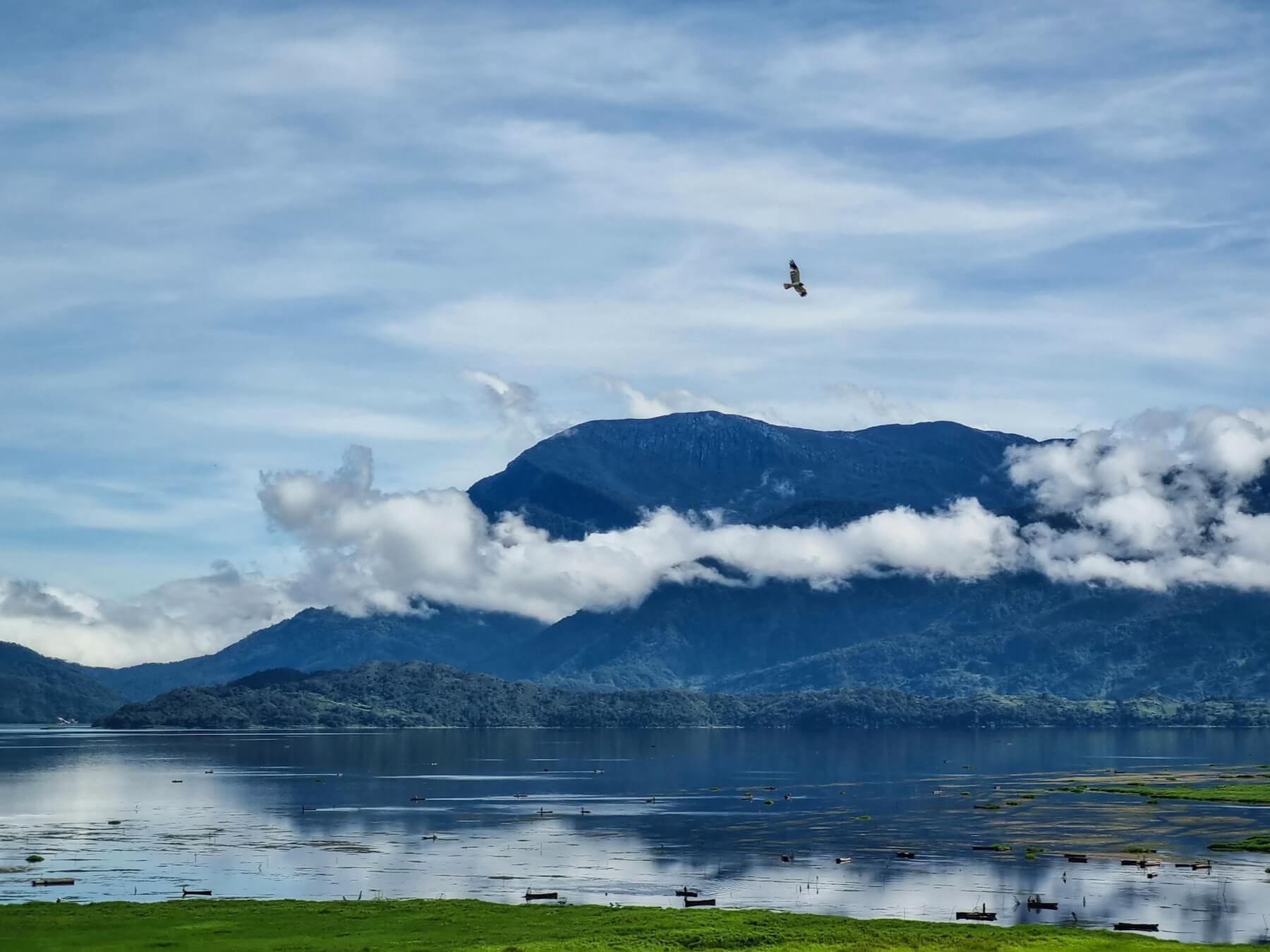
Giluwe is an ancient volcanic massif with broad, heavily dissected terrain. There is no classic cone with dry scree slopes here. The approach goes through forest, wet high meadows, numerous streams and boggy ground, so the defining features of the route are water, mud, slippery going and a long physical effort.
The highland districts of Papua New Guinea are home to endemic orchids, birds of paradise and other local flora and fauna. Wildlife watching is not a guaranteed part of the programme, but the natural diversity of the region remains one of its important advantages.
The second objective of the expedition is Mount Wilhelm, 4509 m, the highest point of Papua New Guinea. Its route differs noticeably from Giluwe: after an approach through mountain forest the group spends the night beside high lakes and then climbs rocky terrain to the summit.
The expedition begins in Port Moresby. After the international flight, participants take a domestic flight to Mount Hagen, where the overland part of the programme starts. The domestic flight schedule and the permitted baggage weight must be agreed before tickets are bought, because a change to one flight affects the onward transfers and the mountain part of the journey.
The first altitude stage is an acclimatisation outing on Mount Hagen, 3789 m. It allows the pace of the group, the footwear, the clothing and the body’s response to altitude to be checked before the self-supported part of the route begins. In clear weather the upper part of the massif gives views over the highlands of Papua New Guinea.
Good physical condition helps you cope with long days on foot, but it does not replace a gradual gain in altitude.
The trek to the Giluwe camp takes about 7 to 9 hours. Even in a relatively dry period the track can stay waterlogged and boggy. This part of the route requires high rubber boots, trekking poles, waterproof clothing and watertight protection for your sleeping bag, dry clothes and electronics.
The ascent of Giluwe begins early in the morning. In favourable conditions the climb from camp to the summit takes about 3 hours, but the day does not end there: after the descent the group strikes camp and walks the whole route back out to the road. Participants therefore need to pace themselves with the long exit from the mountain area in mind.
After a rest the group travels to Mount Wilhelm. The approach to base camp goes through mountain forest to the lakes Piunde and Aunde. The summit start is before dawn and makes the second long day of the expedition. After the summit you have to descend first to base camp and then to the accommodation.
In clear weather the upper part of Wilhelm gives panoramas of the highland valleys and distant views towards the Bismarck Sea. An early start increases the chance of covering the upper part of the route before daytime cloud builds, but clear weather and visibility are not guaranteed.
In Papua New Guinea the group works with a local team that knows the highland roads, the Giluwe tracks and the Wilhelm route. The expedition leader coordinates the guides, the porters and the overall tactics. The composition of the team and the working language are confirmed before booking.
Reaching Giluwe or Wilhelm is not guaranteed. Poor visibility, heavy rain, wind, the state of the track, a delay to the group or a decline in how a participant feels can all be reasons to turn back. Insurance for climbers and high-altitude trekkers covering an ascent to at least 4509 m, search and rescue and emergency evacuation is compulsory for participation.
Participation by children and by accompanying travellers is considered individually. Physical preparation, experience of long days on foot, readiness for nights under canvas, response to altitude and the ability to follow the decisions of the group leader are all assessed.
Giluwe is the Australia and Oceania summit of the Seven Volcanoes of the World project, where a comparatively modest altitude does not make this tropical expedition a formality.
Mount Giluwe and Mount Wilhelm climbing programme, 14 days
Day 1. Start of the international flight. Participants begin the international journey to Papua New Guinea independently. The exact routing depends on the airline and the transit airports chosen. Tickets must be agreed with Mountain Guide before purchase so that the arrival time fits the onward logistics of the programme.
Day 2. International flight. The flight and transit continue on the way to Port Moresby. Participants are themselves responsible for checking visa and transit requirements, baggage rules and the minimum connection times between flights.
Day 3. Arrival in Port Moresby, flight to Mount Hagen and transfer to the hotel. After arriving in Port Moresby, participants complete the entry formalities and change to the agreed domestic flight to Mount Hagen. Payment for the domestic flight depends on the fare chosen. A representative of the local team meets the group at Mount Hagen airport. The drive to the first mountain hotel takes about 45 minutes. After checking in, participants rest after the long journey, meet the expedition leader and prepare clothing and equipment for the acclimatisation day. Night in a hotel.
Day 4. Acclimatisation outing on Mount Hagen, 3789 m. After breakfast the group sets off on an acclimatisation route through tropical mountain forest. The purpose of the day is to gain height gradually, check how the participants feel and prepare the body for the two ascents that follow. The pace, the length and the turnaround point are set by the leader according to the weather and the state of the group. In favourable conditions the route continues towards the upper part of the Mount Hagen massif. After the descent we return to the hotel, rest and pack for the self-supported part of the route. Night in a hotel. Maximum altitude – up to 3789 m. Duration of the outing – about 5 to 6 hours.
Day 5. Transfer to Mailka village and trek to the Giluwe camp. After breakfast the group drives in 4WD vehicles to the village of Mailka. The drive takes about 1.5 hours. Local guides and porters join the group here, after which the walking part of the route begins. The track first runs through forest and then comes out onto open high meadows with streams and boggy sections. The state of the track depends on rainfall, so participants need high rubber boots, waterproof clothing and watertight packing for their belongings. The group moves at a steady pace, keeping strength for the following day. On arrival we settle into the tented camp, have dinner and prepare clothing and equipment for an early start. Night in tents. Length of the trek – about 7 to 9 hours.
Day 6. Ascent of Mount Giluwe, 4367 m, and return to the hotel. The wake-up call and the start on the route are planned for early morning, around 5:00. The exact time is set by the leader according to the weather, visibility, the state of the track and the pace of the group. In favourable conditions the climb from camp to the summit takes about 3 hours. The decision to continue or to turn back is taken by the leader. Reaching the summit is not guaranteed. After descending to camp the group has breakfast, packs and begins the long trek back to the road. The local team meets participants at the vehicles, after which there is a transfer to the hotel. This is one of the physically hardest days of the programme: after the summit outing the whole mountain area has to be walked out. Night in a hotel. Maximum altitude – 4367 m.
Day 7. Transfer to Mount Wilhelm and introduction to the region. After breakfast the group travels to the area at the foot of Mount Wilhelm. The road passes through the highland districts of the country and takes about 3 to 4 hours depending on its condition. On the way or after arrival there may be an agreed introduction to local settlements and traditions. What the cultural part contains depends on the availability of the local team and on the current situation. After checking in, participants rest after Giluwe and prepare their belongings for the trek to the Wilhelm base camp. Night in a hotel.
Day 8. Trek to the Mount Wilhelm base camp. After breakfast we begin the climb through mountain forest to the base camp beside the high lakes Piunde and Aunde. The group moves at a steady pace, continuing to adapt to altitude before the second ascent. On arrival we settle into the camp, rest and prepare clothing, sleeping bags and head torches for the night start. The leader gives a briefing and announces the provisional wake-up time. Night in camp. Sleeping altitude – about 3575 m.
Day 9. Ascent of Mount Wilhelm, 4509 m. The wake-up call, a light breakfast and the start on the route are planned for before dawn. The exact time is set by the leader according to the weather, the state of the track, the pace of the group and how the participants feel. The first part of the route is covered in darkness over rocky high-mountain terrain. The early start makes it possible to cover the main part of the climb before daytime cloud builds and, in clear weather, to see sunrise over the highlands. The decision to continue or to turn back is taken by the leader. After the summit, or the turnaround point, the group descends to base camp, stops to rest and eat, and then continues down to the accommodation. This is a long day that demands confident movement over uneven terrain and enough strength in reserve for the full descent. Night in a hotel. Maximum altitude – 4509 m.
Day 10. Reserve day or cultural programme. This day is provided as a reserve in case of unfavourable weather, a change in the condition of the route or a delay at an earlier stage of the expedition. If the reserve is not needed, there may be an agreed introduction to local villages and to the traditions of the region. What the cultural part contains depends on the availability of the local team and on the current situation. Participants rest after the two ascents and prepare to return to Port Moresby. Night in a hotel.
Day 11. Return to Mount Hagen and flight to Port Moresby. After breakfast the group drives to Mount Hagen airport. The road journey takes about 4 hours, although its length depends on the state of the road. Participants fly to Port Moresby on the agreed domestic flight. Payment for the flight depends on the fare chosen. On arrival there is a transfer to the hotel, check-in and rest. Night in a hotel.
Day 12. Rest and logistical reserve in Port Moresby. This day is provided for rest after the mountain part and as a logistical reserve before the international departure. Walking on your own in outlying districts of Port Moresby is not recommended. Excursions and trips around the city must be agreed with the local team in advance and made in organised transport. Night in a hotel.
Day 13. International departure or the start of an agreed extension. At the agreed time there is a transfer to Port Moresby airport. Participants check in themselves and begin the international flight home. The departure time from the hotel is set by the flight schedule and the time needed for the journey and check-in.
Day 14. Arrival home. The international flight continues and you arrive home according to the schedule of the flights chosen.
What the Giluwe and Wilhelm expedition includes
- An expedition leader who coordinates the local team. The composition of the team and the working language are confirmed before booking
- Local mountain guides who know the Giluwe and Wilhelm routes, and the porters provided for by the programme
- Group transfers and journeys along the route in Papua New Guinea
- Domestic flights Port Moresby – Mount Hagen – Port Moresby, only where a fare with flights included is chosen
- Permits, local fees, import taxes and compulsory payments provided for by the programme
- Accommodation in hotels, lodges and other confirmed places to stay according to the programme
- Breakfasts at places to stay that operate on a bed and breakfast basis
- Food, fuel and cooking equipment during the mountain part
- Tents and group camping equipment needed to complete the route
- Group medical equipment and first-aid consumables
What the Giluwe and Wilhelm expedition does not include
- International flights to Port Moresby and back
- Domestic flights Port Moresby – Mount Hagen – Port Moresby where a fare without flights included is chosen
- Visa, entry documents, departure fees and compulsory medical documents
- Medical insurance covering a high-altitude ascent to 4509 m, search and rescue and emergency evacuation
- Individual clothing, footwear and personal trekking equipment
- A personal first-aid kit and individual medical supplies
- Food and drinks in hotels, restaurants and towns where these are not provided for by the programme
- Excess baggage on international and domestic flights
- Personal use of paid communications and communication equipment
- Tips for local guides, porters, drivers and support staff
- Costs arising if the programme is ended early or a participant leaves the group
- Additional costs caused by delayed or cancelled flights, unfavourable weather, changes in road conditions and other circumstances