- Guides
- B2B
-
Climbs
-
Climb Elbrus
- Elbrus individually
- Elbrus from the South, 9 days
- Elbrus from the South, 7 days
- Elbrus from the South in 1 day
- Elbrus from the North
- Elbrus Two Summits
- Elbrus Traverse from South to North, 9 Days
- Elbrus Traverse from North to South, 10 Days
- Elbrus "Cross" from South
- Elbrus "Cross" from North
- Kazbek+Elbrus
- Elbrus from the West
- Elbrus by helicopter
- Elbrus Region Holiday and Trekking, 9 Days
- Elbrus Region Holiday, 7 Days
- Tinder Tour: Climbing Mount Elbrus
- Climb Elbrus from the South, 9 Days with Sergey Baranov
- Under 5000 m
- 5000+ meters
- 6000+ meters
- 7000+ meters
- 8000+ meters
-
Climb Elbrus
-
Trekking
-
See 8000m
- K2 base camp
- Everest base camp
- Everest base camp via Gokyo
- Everest base camp in a week
- Annapurna Circuit and Tilicho Lake Trek
- Manaslu Circuit Trek
- Kanchenjunga Circuit Trek (XXL)
- Kanchenjunga North Base Camp Trek (Short)
- Kanchenjunga from India: the Goecha La Trek in Sikkim
- Trekking to Makalu Base Camp
- Trekking to Annapurna BC
- South America
- Asia
- Africa
-
Russia
- Elbrus Region Holiday and Trekking, 9 Days
- Elbrus Region Holiday, 7 Days
- Trekking Oshten+ Kardyvach
- Lake Kardyvach — 5-Day Base-Camp Trek
- Route 30: Through the Mountains to the Sea, with Oshten — 4 Days
- Trekking in Arkhyz — 7 Days over the Ayulyu Pass
- Gvandra Trek — 7 Days to the Ullu-Kyol Lakes
- Trekking in Dombai — 7 Days with the Murudzhu Lakes
- Europe
-
See 8000m
-
Adventures
-
Africa
- Tour to Morocco for New Year
- Morocco: Toubkal and the mysteries of the Sahara
- Tour to Eritrea: Dahlak Archipelago and Rashaida Nomads
- Tour to Rwanda: Mountain Gorillas and Mount Bisoke
- Ethiopia
- Tour to Uganda: Queen Elizabeth National Park and Mountain Gorillas
- Tanzania Safari: Serengeti, Ngorongoro and Tarangire
- Safari Uganda
- Tour to Zimbabwe and South Africa: Victoria Falls, Cape Town, and Cape of Good Hope
- Namibia
- Safari Kenya
- Tour to Botswana: Okavango Delta and Chobe National Park
- South America
- Asia
-
Africa
- Ski-touring
- VIP
- Useful
- About
Climb Huascaran
- Height (m)
- 6768
- Duration
- 8 days
- Difficulty
- Above average
- Continent
- South America
- Children
- No
- Accommodation
- There are tents
7200 $
Why to go with us?
Temporarily unavailable
- Climb to Huascarán — the highest peak in Peru
- The second-highest mountain in South America
- Top-level service at base camp and high camps
- Support of mules and porters for transporting equipment
- Suitable for both experienced mountaineers and beginners
*Please note that our company does not provide services related to the purchase or sale of airline tickets or the arrangement of visa documents and therefore is not responsible for any force majeure circumstances related to flights or border crossings.
Important information:
Check-in and check-out times are regulated by the hotel: check-in from 3:00 PM, check-out by 11:00 AM–12:00 PM. Luggage can be left at the hotel reception while you explore the city, or, subject to availability, you may pay extra for early check-in or late check-out.
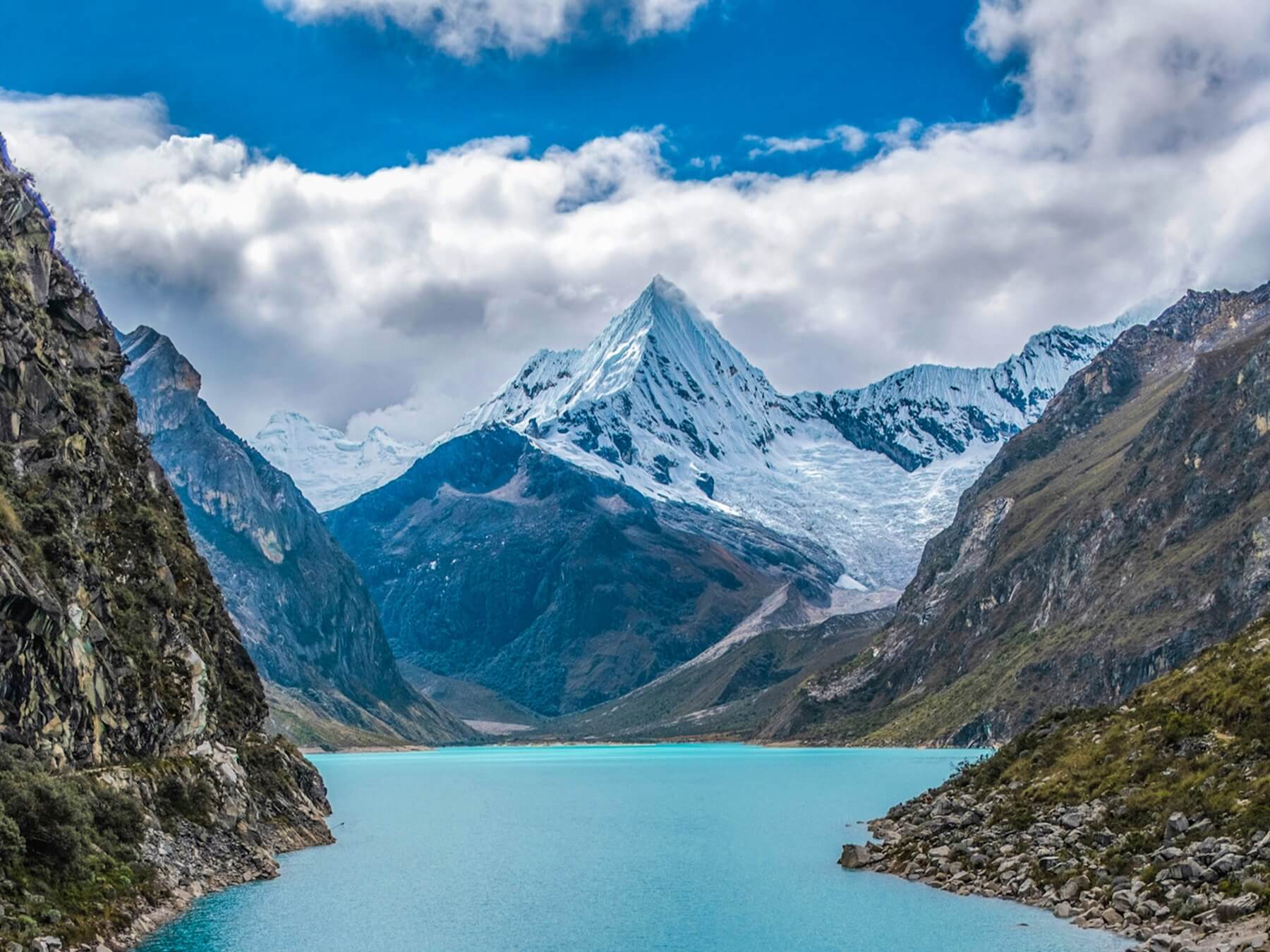
Climbing Huascarán is an extraordinary experience of reaching the highest peak in Peru and the second-highest mountain in South America. Located in the heart of the Cordillera Blanca, Huascarán offers unique natural landscapes, including majestic glaciers, picturesque lakes, and breathtaking views of the surrounding mountains.
The history of ascents on Huascarán dates back to 1932, when climbers Julio Tejada and Augusto Rivera successfully reached its summit. Since then, the mountain has become a popular destination for mountaineers from all over the world, attracting both beginners and experienced climbers eager to test themselves at an altitude of over 6,768 meters.
This ascent is suitable for both experienced mountaineers and motivated beginners. We provide a high level of comfort and safety: you will find well-developed infrastructure at the base camp and high camps. Our experienced guides, who have summited 8,000-meter peaks, will help you overcome all challenges of the route, ensuring support and safety throughout the entire journey.
Join this unforgettable adventure and fulfill your dream of climbing Huascarán, enjoying not only the physical challenge but also the truly mesmerizing moments in the world of high mountains.
Day 1. The Huascarán climbing program begins in Huaraz, where you will be met at the airport by a representative of our company and transferred to the hotel. There you will be able to rest after a long flight and regain your strength. In the evening, you will meet the other participants and the guide, who will conduct a short briefing about the upcoming ascent. Overnight at the hotel.
Day 2. We set off toward Yungay, pass through the village of Mancos, and reach Musho. Here, at an altitude of 3,000 meters, our route begins. On foot, we cross a small cemetery next to a picturesque eucalyptus forest. Gradually, the eucalyptus trees are replaced by queñual trees, which are now rare in South America. At an altitude of 4,100 meters, we reach a vegetation-free zone, ideal for setting up camp, where we pitch our tents. On this section, with an altitude gain of 1,000 meters, pack animals will assist us. Further on, in rocky and icy zones, mules are replaced by porters, as movement for animals becomes impossible. Overnight in tents.
Day 3. On this day, we gain another 1,000 meters of elevation, but fortunately without carrying heavy loads. The route passes through panoramic high-altitude plateaus with interesting vegetation. We approach the lower edge of the glacier, where we put on crampons for the first time. The glacier has a maximum incline of 30 degrees, and small crevasses do not pose a danger. Our camp is located at an altitude of 5,100 meters on a flat ice platform. Overnight in tents.
Day 4. Early in the morning, we leave the Huascarán camp, as today’s section will be steeper—the ice slope reaches 40 degrees at the beginning. We reach the key section of the route, the so-called “Canaleta,” an ice couloir with a slope of up to 70 degrees. Our mountain guide ensures safety by belaying from above. After this, the steep section gives way to gentler terrain, though with crevasses. Next, we cross an avalanche-prone zone. After completing this stage, we set up camp below the wide ice wall known as the Garganta. The camp is located at an altitude of 5,900 meters, in a relatively wind-protected place. From here, we will begin the summit ascent tomorrow. Overnight in tents.
Day 5. The most important day begins: at 2:00 a.m., we set out to summit the highest peak in Peru — Huascarán. First, we overcome the Garganta, where the slope reaches 45 degrees. Massive seracs tower around us as we make our way through them. Then the slope becomes less steep, and soon we reach the summit. From here, breathtaking views open up over the Santa Valley and the endless icy peaks of the Cordillera Blanca. However, we cannot stay long due to the cold. The descent follows the same route as the ascent. Overnight at Camp I or at the moraine camp. Overnight in tents.
Day 6. Depending on the progress of the previous day, today we can allow ourselves to relax a bit and enjoy the beautiful mountain scenery. We descend to Huascarán Base Camp at an altitude of 4,250 meters, where a more comfortable climate awaits us for rest. Overnight in tents.
Day 7. Today we do not need to wake up early, as there is enough time to descend 1,100 meters. We return along the ascent route through beautiful mountain forests and old shepherd trails. Transport will be waiting for us in Musho to take us back to Huaraz. In the evening, a celebratory dinner with the whole team. Overnight at the hotel.
Day 8. Transfer to the airport, departure home.
- International flights
- Visa
- Insurance covering mountaineering activities and helicopter evacuation
- Single room accommodation
- Early check-in / late check-out at the hotel before or after the program (we always try to arrange additional bonuses for our guests with our partners; often early check-in / late check-out is provided free of charge)
- Lunches and dinners in cities
- Fees for transportation of personal luggage (if required)
- Tips
- Any deviations from the program
- Any expenses related to changes in the program
Insurance
Back to top Download PDFDocuments:
- Passport
- Flight tickets
- Medical insurance covering mountaineering
Personal equipment:
- Backpack 50–60 liters
- Sleeping bag, comfort temperature from -20°C to -10°C
- Sleeping pad (self-inflating or foam)
- Trekking poles with wide baskets
- Crampons (steel or aluminum, compatible with boots)
- Ice axe (classic, with leash)
- Helmet
- Climbing harness
- Safety lanyards with carabiners (preferably auto-locking or screw-lock)
- Carabiners (at least 4 pcs, at least two with locking mechanism)
- Accessory cord (6–7 mm diameter, 2–3 m long for Prusik knot)
- Ascender (jumar)
- Belay/rappel device (e.g. figure eight or similar)
- Mug, spoon, bowl
Clothing and footwear:
- Double or triple mountaineering boots
- Trekking footwear (boots or trail shoes)
- Waterproof jacket and pants (membrane at least 5000/5000, preferably Gore-Tex)
- Fleece jacket and pants
- Thermal underwear (top and bottom)
- Down jacket with hood, thick and warm
- Warm mittens
- Thick gloves
- Thin working gloves
- Bandana or buff
- Warm hat
- Trekking socks (several pairs, including warm ones for summit day)
Miscellaneous:
- Headlamp with at least 12 hours of runtime and spare batteries
- Sunglasses (category 3–4)
- Ski goggles (for wind protection)
- Thermos (1 liter, preferably with a reliable lid)
- Windproof face mask or scarf
- Gaiters for snow protection
- Sunscreen (SPF 50+)
- Lip balm
- Personal first-aid kit (including altitude medication, bandages, painkillers)
- Elastic bandage and/or support brace
- Chemical hand warmers (optional)
Equipment rental prices on Huascarán (2024):
Waterproof jacket — $70
Trekking poles — $30
Mountaineering boots (double) — $120
Backpack 50–70 l — $50
Down jacket — $100
Sleeping bag (-20°C) — $80
Sleeping bag (-30°C) — $130
Crampons — $50
Ice axe — $50
Helmet — $40
Climbing harness — $40
Carabiners (locking) — $10 per piece
Safety lanyards — $20
Ascender (jumar) — $35
Belay/rappel device — $30
Gaiters — $25
High-altitude tent (2–3 persons) — $150
Kitchen set — $30